(Header Image: Lake Kissimmee pre-dawn, light fog.)
“It’s something different.”
A phrase guaranteed to increase a birder’s pulse rate.
“Yellow face, dark eye line, greenish on the back, white wing-bars, white underneath, dark throat – what in the world?”
Gone.
A couple of pictures. Sigh. Drive on.
“There it is! There are two of them!”, Gini yelled and braced for impact as I slammed on the brakes. The two birds were in plain view on an oak tree branch over the road. As I swung the camera up – gone again.
Reviewing the field guide showed our little friends were NEW BIRDS for us! Black-throated Green Warblers!
We had stopped after spotting quite a bit of activity on the sides of the dirt road ahead and movement in the scrub oak trees on either side of us. On the road, a half-dozen Palm Warblers scooted around, tails a-wagging, snapping up bugs from the dirt and grass. In the trees, we saw more Palm Warblers, Blue-gray Gnatcatchers, Tufted Titmice, Downy Woodpeckers, a Yellow-throated Warbler, a White-eyed Vireo and our new warbler. A group such as this is fairly common during migration. Safety in numbers.
It was mid-morning and the day had been another spectacular adventure in central Florida! Just before sunrise, we stopped to admire huge Lake Kissimmee (35,000 acres) from the State Road 60 bridge. A few miles farther east, we turned onto the rut-filled entrance road to the Three Lakes Wildlife Management Area.
Up until around the mid-19th century, it is estimated there were more than one million acres of grass prairie in Florida. Over 500 years ago, Spanish explorers left cattle in the state which had been brought from Spain to provide food. These cattle were small, lanky and had wide horns. Not the best beef cattle, but they could survive in Florida’s harsh environment. Improvements to the stock were made after the Civil War and around the turn of the 20th century Florida ranked second only to Texas in United States beef production. Although the state’s vast prairies were being reduced due to population increases and development, better management, newer grass species and more effective pest control for cattle all combined to create a thriving cattle industry which continues today.
The vast (64,000+ acres) Three Lakes Wildlife Management Area on the east side of Lake Kissimmee offers an incredible opportunity to explore remnants of Florida’s dry grass prairie as well as the wet prairies near each of the three lakes (Kissimmee, Marian and Jackson). Also in the area are groves of scrub oak, upland pine woods and wet cypress domes. Each of these different habitats host an amazing diversity of life. Not to mention the three lakes, which not only offer fabulous fishing but provide nesting, hunting and wintering territory for an incredible number of birds.
It’s difficult to top a new life bird, but the entire day was filled with discovery. Migrating birds, beautiful resident birds, white-tailed deer, raccoons, fox squirrels, gorgeous flowers, aroma of fresh pine trees, bright blue water of the lakes – exciting and relaxing all at the same time!
A small sample of what we saw today.
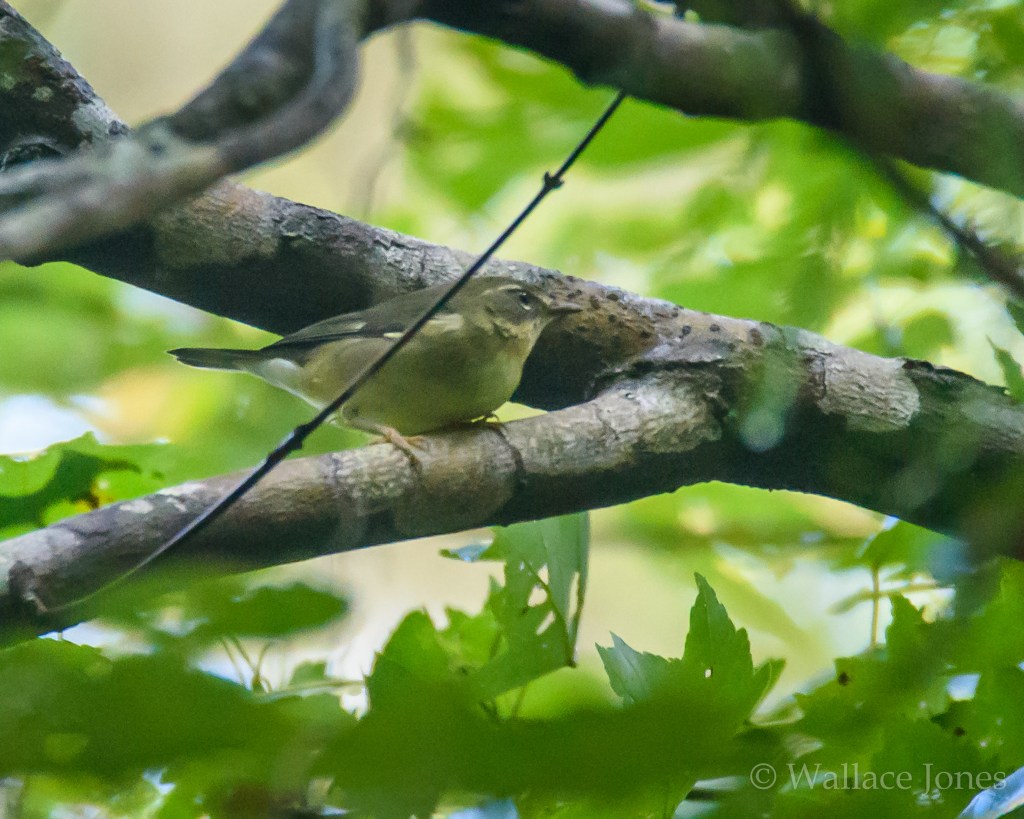
Our new life bird! He promised to pose for a better photograph – next time. Black-throated Green Warbler.

A female Common Yellowthroat doesn’t sport the black mask of her male counterpart, but both prefer to remain low in the brush where they hope to escape a predator’s attention.

Another female, an Indigo Bunting, sports only a hint of color at the shoulder and in the tail.

Wet areas abound around the lakes and in low places which catch runoff from rains falling on the prairie. Many plants take advantage of the dampness and flourish in these spots. One of the more spectacular examples is the Swamp Rosemallow (Hibiscus grandiflorus) which can grow to nearly ten feet (3+ meters) tall. A butterfly visitor, the Twin-spot Skipper (Oligoria maculata), appreciates the nectar and has agreed to transport a bit of pollen to a nearby plant.

Normally skulking on a low limb just above water, this Green Heron takes advantage of a higher altitude branch to scout for breakfast.

A healthy apple snail population attracts a female Snail Kite. She has been banded in an effort to keep tabs on her travels. The Snail Kite is endemic to Florida within the United States and is on both Federal and state endangered lists. In 1972, it was estimated there were less than 70 individuals in Florida. Today there may be more than 1,000 but it’s future is of extreme concern.

Part of the Three Lakes WMA consists of open pine forest. Dead or dying trees are a preferred nesting spot for the Red-headed Woodpecker. From 1966 to 2014, this beautiful woodpecker declined in population nearly 70% in North America. Causes of the decline include landowners clearing away dead trees and the overall decline of nut crops.

There be dragons in the prairie! Who knew? We found several Odonata throughout the day.

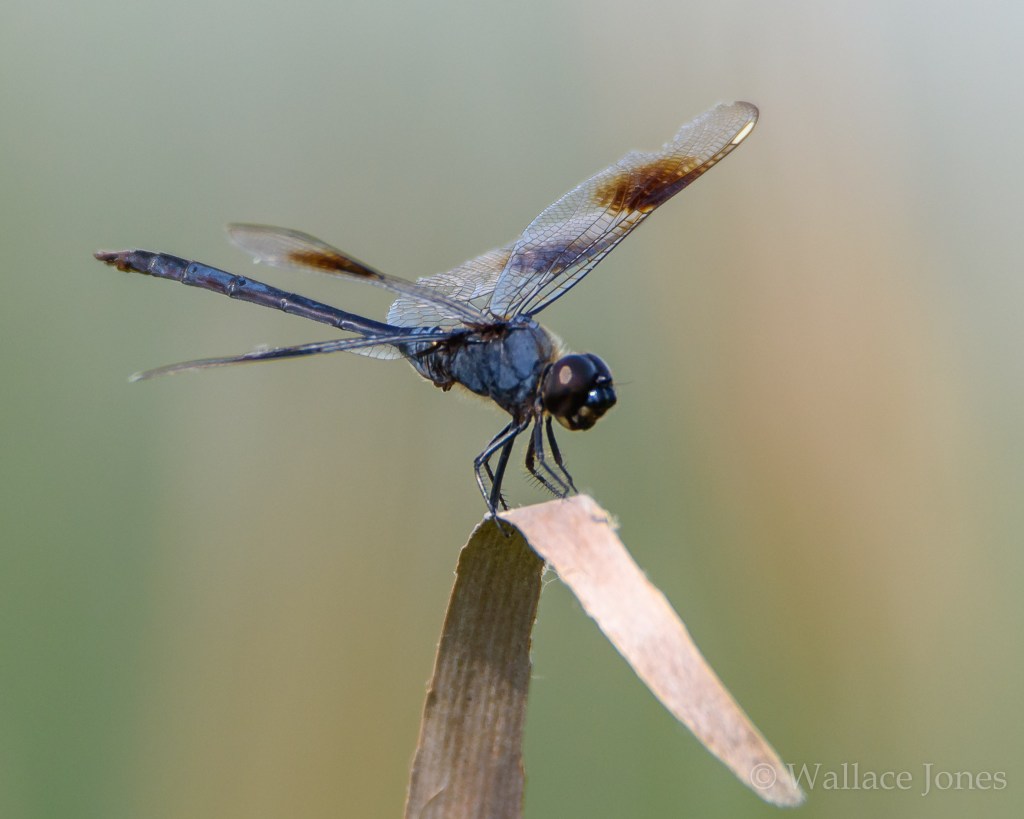
Guardians of the lakes. A Great Blue Heron and large Peninsula Cooter (Pseudemys peninsularis) share a lily pad patch near the shore of Lake Kissimmee.

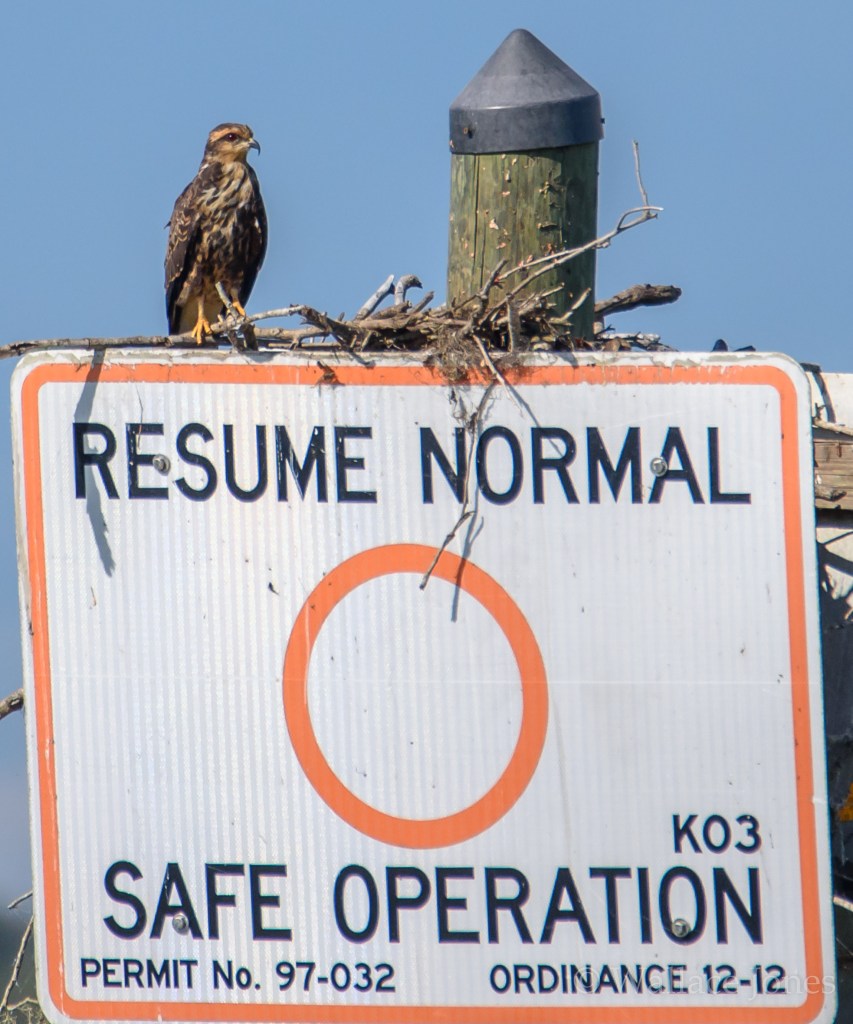
Another female Snail Kite, this one without ankle jewelry, perches atop a channel marker which has the remnants of an Osprey nest.
Remember the fabulous fishing I mentioned earlier? A Little Blue Heron demonstrates how easy it is. Simply dip your long beak into the wet grass and, voilà!

Speaking of lunch. We enjoyed cold chicken and fruit on a sun-filled day as we gazed out over blue water and watched a sky filled with birds putting on a show – just for us.
We had a terrific morning of exploring this vast area and were amply rewarded with observations of nature at every turn. A return trip is already planned.
Enjoy your search for a natural place and come back for a visit!
Additional Information
Stepping into the warm water of Tampa Bay, a school of mullet moved ahead of me as though it was one large organism. Occasionally one would jump and smack the water’s surface and I would once again wish for proficiency in the art of throwing a cast net. A much larger splash behind me turned out to be a Brown Pelican crashing onto a school of sardines.
The East Beach turnaround is at the southeastern boundary of Fort De Soto Park. Earlier, we were at North Beach, at the park’s northwestern extremity. The actual “East Beach” is a nice beach, although it is located on Tampa Bay and not the Gulf of Mexico (as North Beach is). As such, the sand is not the pure white sugary stuff produced by the Gulf’s pounding surf but there is a very nice grove of trees and picnic area. That grove of trees can fill with migrating warblers in the fall and especially in the spring.
As you drive beyond the East Beach parking lot, the road continues for about a half-mile and ends in a circular turn-around. There is an outstanding view of the Sunshine Skyway Bridge in the distance and on either side of the road are tidal flats offering fantastic fishing. Wading these waters is a bit different than it was at the North Beach. Instead of a firm, sandy bottom, deep mud makes walking a challenge. Old tennis shoes with tightened laces work well.
Once again, I waded a few yards offshore which did not seem to alarm the feeding birds. Approaching them from the land side, they were quick to fly away, apparently nervous I might be a predator. The main attraction for most shorebirds here is the wrack line of accumulated seaweeds and grasses.
The number of birds here was nowhere near what we encountered on the sand bars earlier. This was not a place for birds to rest, rather it was a buffet where the patrons jostled and ran for a better position in line. Constantly active, the diversity of species may have been relatively small, but it was great fun trying to keep up with them.
Dripping, muddy and sandy, I begged Gini for “just one more stop”. Not really. She eagerly asked where we were headed next. However, we both agreed since it was nearing high noon that the ultimate goal of our trip should soon be realized. Our favorite seafood place is not far from here and is our not-so-secret actual destination any time we find ourselves within 50 miles (or more).
The last stop today was a walk on the fishing pier which juts 1000 feet (305 meters) into the Gulf of Mexico. The pilings supporting the pier, as well as the shade provided by the pier, attracts all sorts of small fish and crustaceans. These, in turn, attract all sorts of bigger fish and large amounts of birds, each hoping for an easy meal. No wading involved here! The stroll in the sunshine helped dry out my shorts and shoes a bit.
Our morning visit to one of our favorite parks was extremely satisfying. We enjoyed the sun, sand, water, birds and each other’s company. Plans to return are already in progress.
Since we ended our visit to the North Beach (in part II) by saying farewell to a Reddish Egret, it seemed only fitting to be welcomed to the East Beach area by – another Reddish Egret!

Even in non-breeding plumage, a Ruddy Turnstone has a wonderfully complex plumage which allows it to blend in on a beach quite well.


A Great Egret was almost too “great” for my lens to get it all in the frame.

Replete in her golden slippers, a Snowy Egret scans the shallow water for lunch.

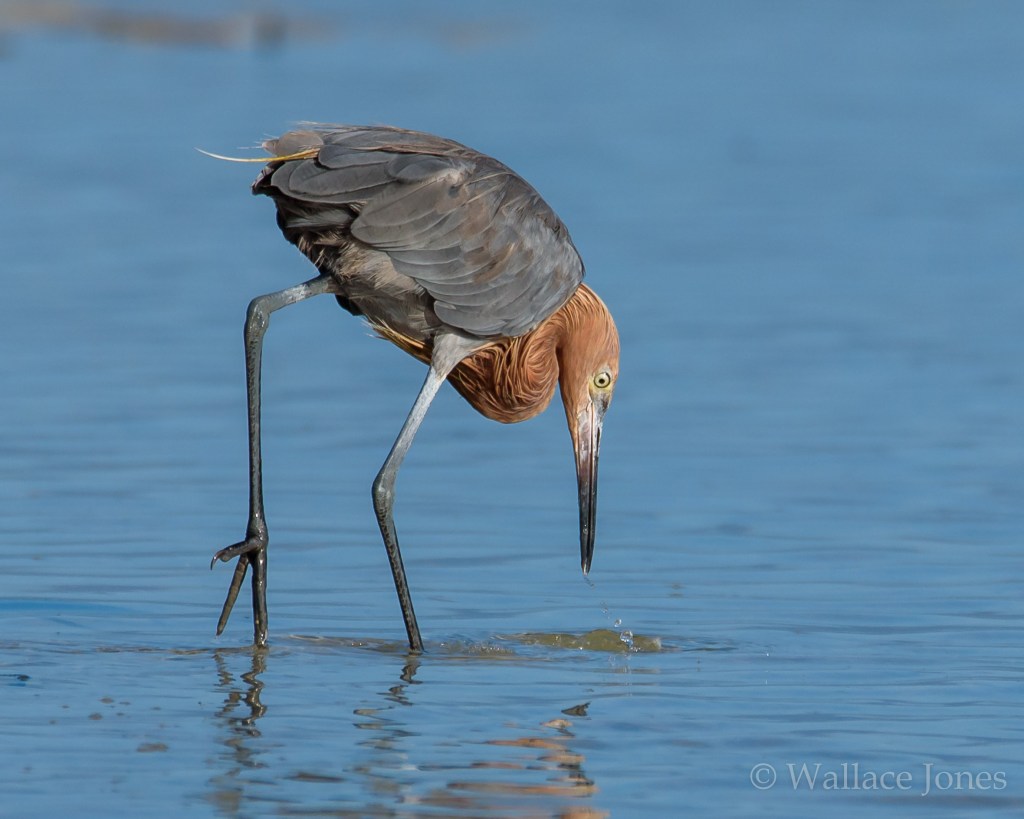
Our companion, the Reddish Egret, is all business as a small crab gets his attention. He grabbed the crab and downed it before I could even think about snapping a photo.

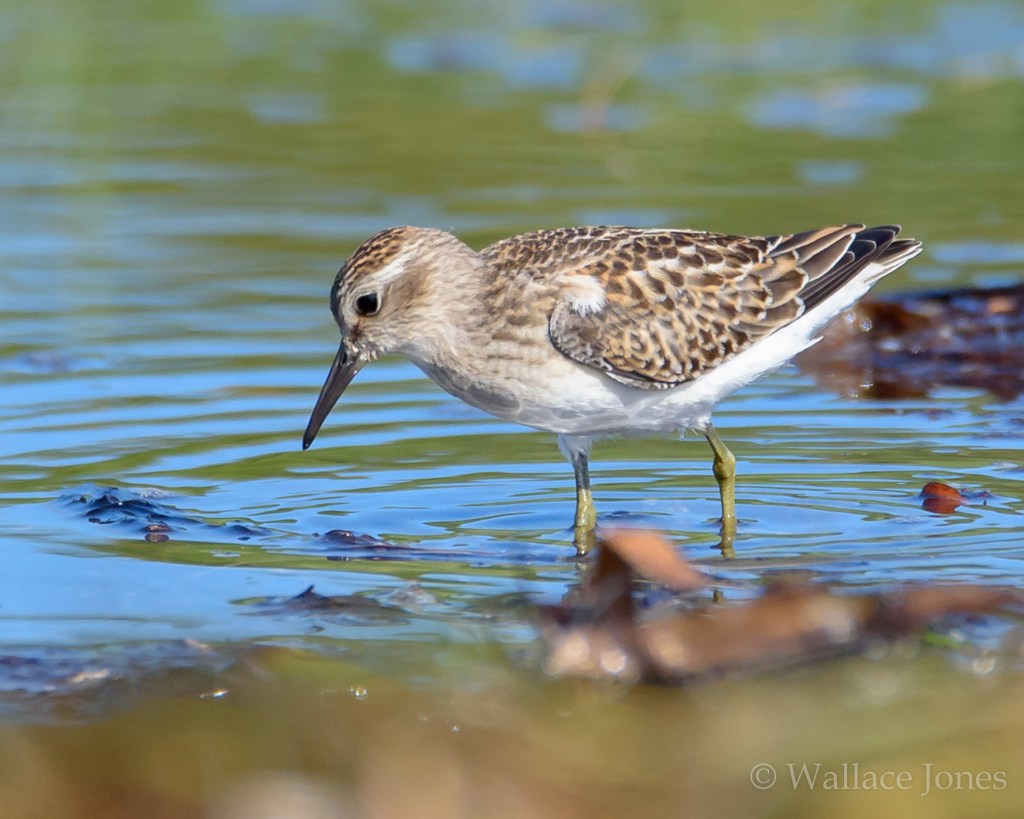
From the tall to the small. Not as big as an egret, a Least Sandpiper is just as effective at hunting. At less than six inches (15 cm) long, this is the world’s smallest shorebird.
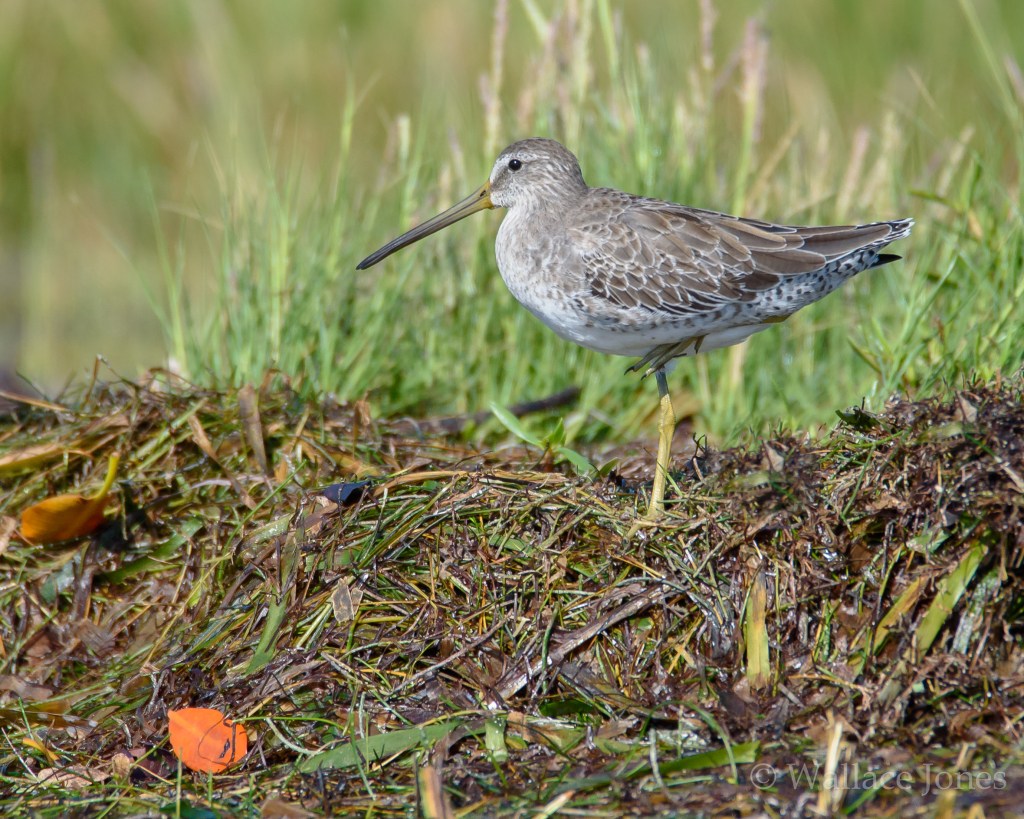
We counted 18 Short-billed Dowitchers in this spot. Their long bills come in quite handy for probing deep into the mud. “Short-billed” certainly does not seem accurate, but it is to distinguish them from their close relative, the Long-billed Dowitcher. In truth, bill length of both species can be similar, with females often sporting longer bills than males.
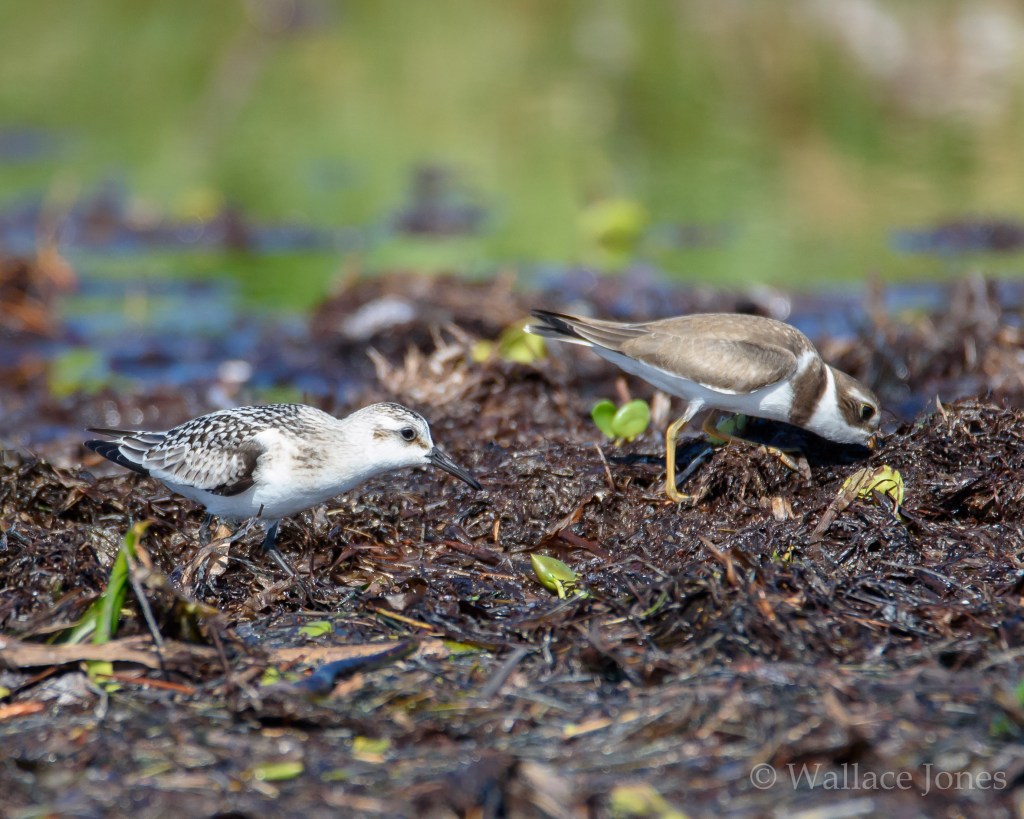
In non-breeding plumage, a Semipalmated Plover is much paler than it was during the summer. The name “semipalmated” refers to webbing between the bird’s toes which is difficult to see in the field.

Nearly the same size, a Sanderling and Semipalmated Plover race along the wrack line in the never-ending quest for food. The Sanderling’s gray and white non-breeding plumage is quite different from the mottled brown/rusty feathers of breeding season.
The namesake black belly has faded until the spring, but size, plumage and bill shape help identify the Black-bellied Plover.


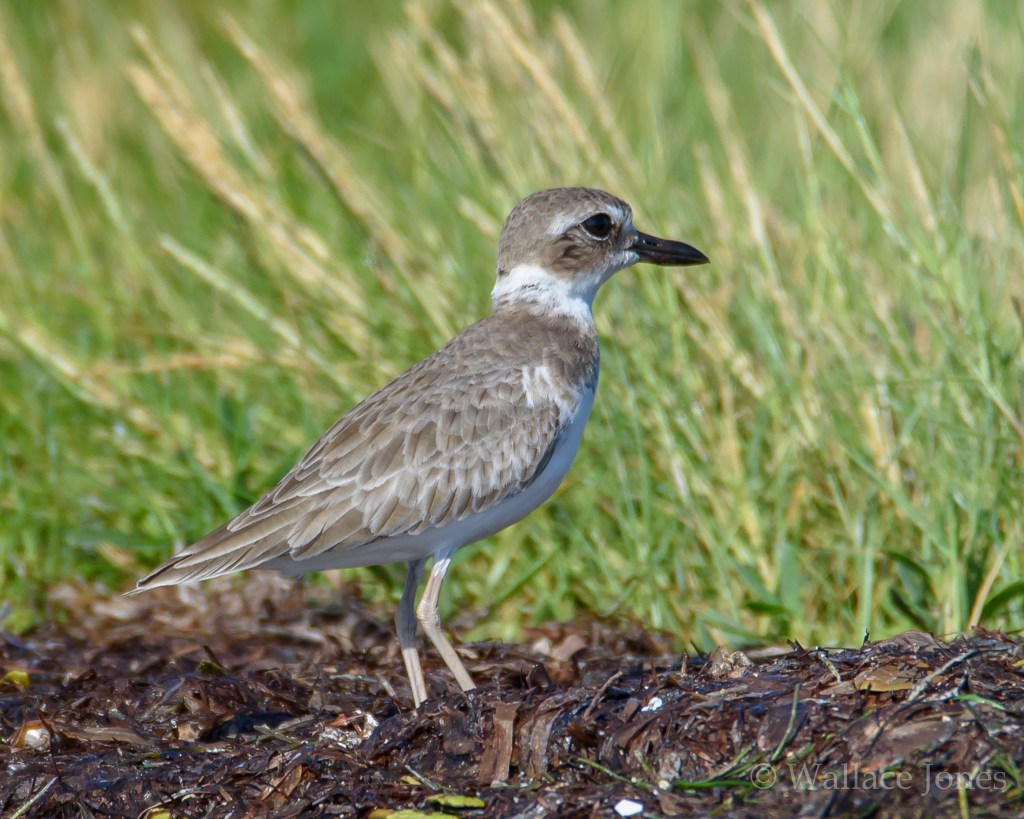
A much stouter bill and pale (instead of yellow) legs help distinguish the Wilson’s Plover from his cousins.
Gini-with-the-spectacular-eyes spotted an Eastern Wood-Pewee in a nearby tree. We normally see a small number of these flycatchers during migration but they seldom hang around very long.

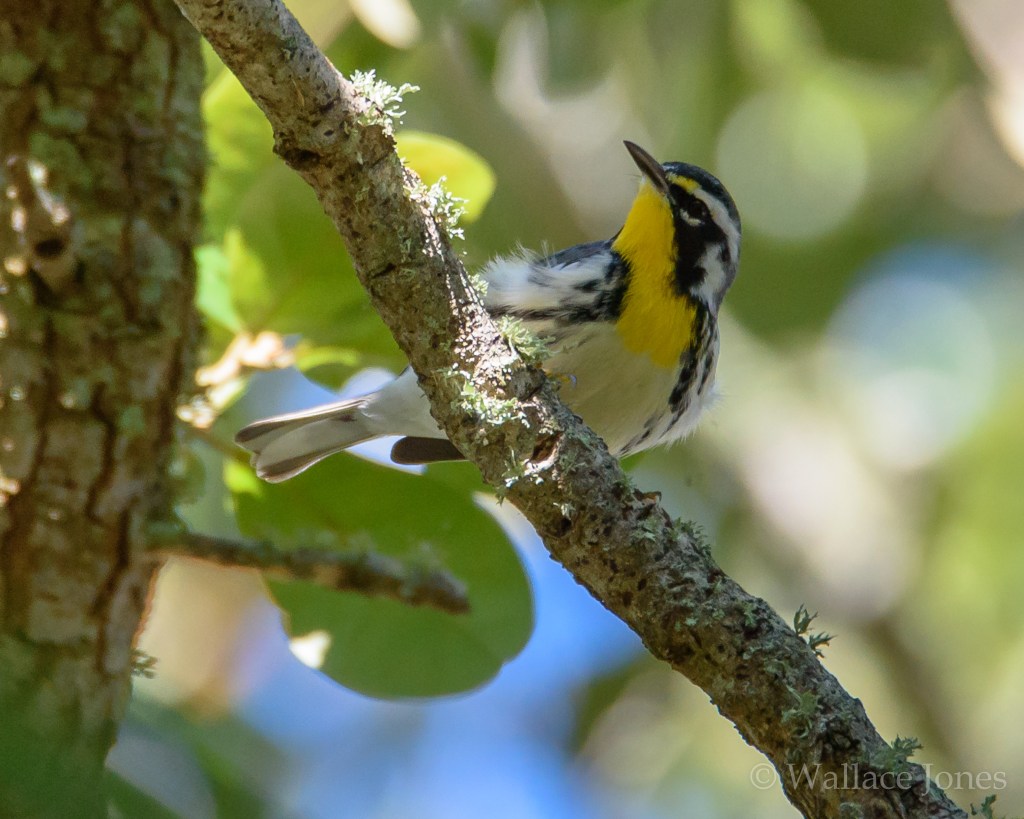
While chasing the Wood-Pewee, a movement higher in the same tree turned out to be a Yellow-throated Warbler.
As I stepped onto the fishing pier, a pair of Ruddy Turnstones were engrossed in a conversation about a nearby clam bar.

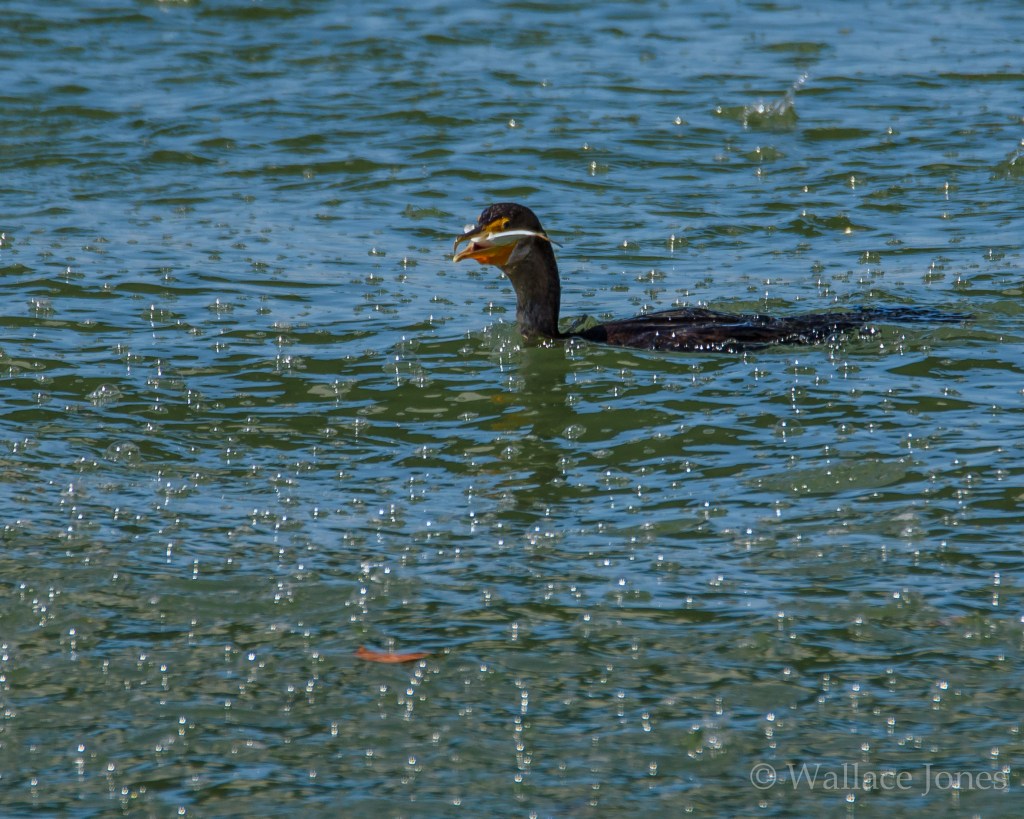
Looking down onto a Double-crested Cormorant provided a unique perspective of this diving expert. A sleek design, powerful legs with webbed feet, a long hooked bill and a fan-shaped tail to act as a rudder under water combine to make this a very efficient fisherman. (The bubbles are caused by schools of fish.)

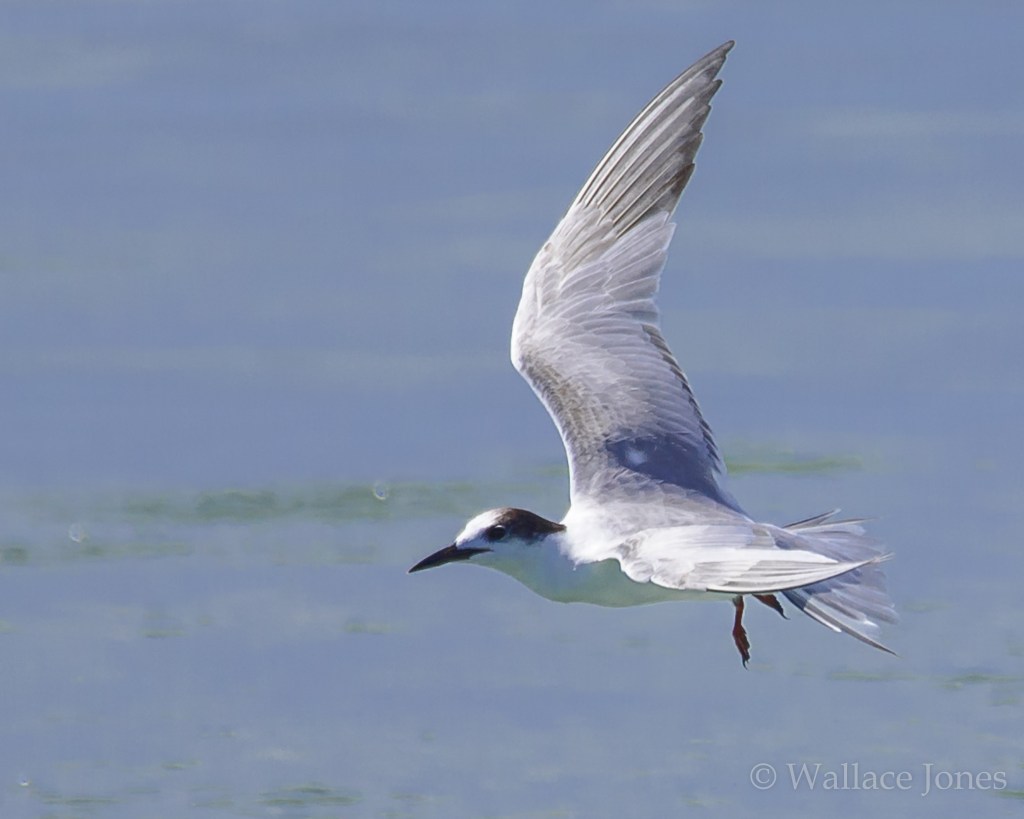
Common Terns in non-breeding plumage show a dark cap behind the eye and onto the back of the head. Wingtips are a bit darker than the similar Forster’s Tern.
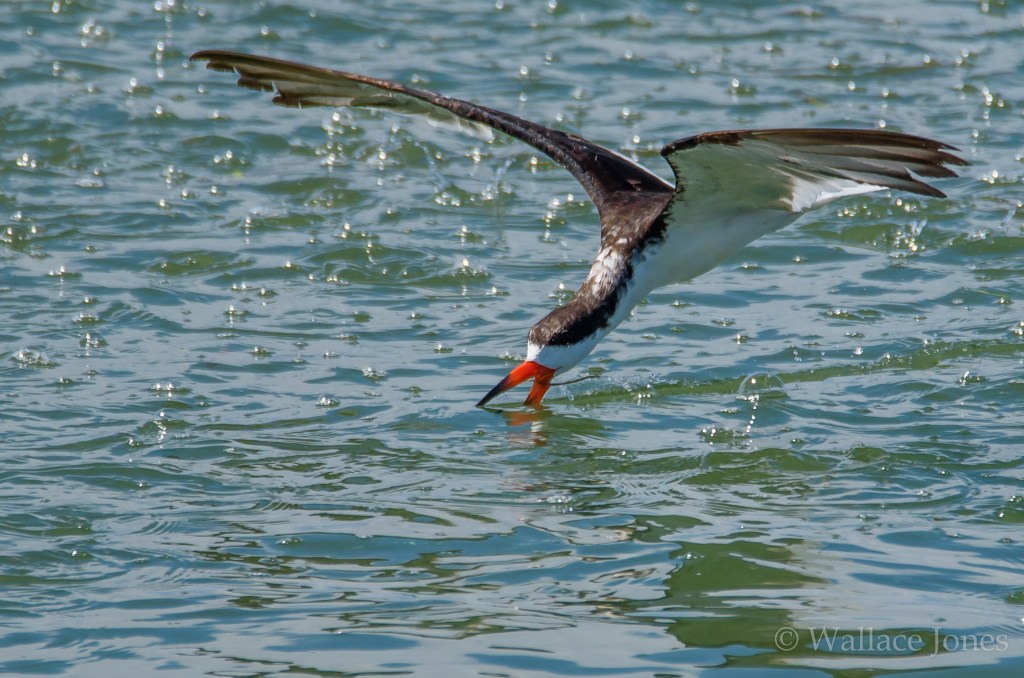
A wide wingspan for gliding and long lower mandible specially designed for dipping just below the water’s surface make the Black Skimmer a very distinct-looking bird!

Two dozen Brown Pelicans floated around the pier scooping up fish when they felt like it. These huge birds seem ungainly when perched but in the air they transform into something altogether – elegant.

Beyond the pier, clouds begin to form in the distant Gulf of Mexico.

Our morning adventure was packed with excitement! We have been here before. We shall be here again. Anticipation is, indeed, an emotion. We can’t wait.
(Fin)
Enjoy your search for a natural place and come back for a visit!
Postscript.
Lunch was exceptional. Remember the mullet I encountered above? We had two of their friends fried to perfection. The portions required two separate plates for each of us. Happy campers we were!
Additional Information
“Have any luck?”
The broad smile on my face seemed to be sufficient answer as Gini just asked: “Where to next?”.
It had, indeed, been a good morning. The sheer number of birds was overwhelming and selecting subjects to photograph was a challenge. Attempting to isolate a single bird which was in the midst of two-hundred of her closest friends proved to be an exercise in frustration.
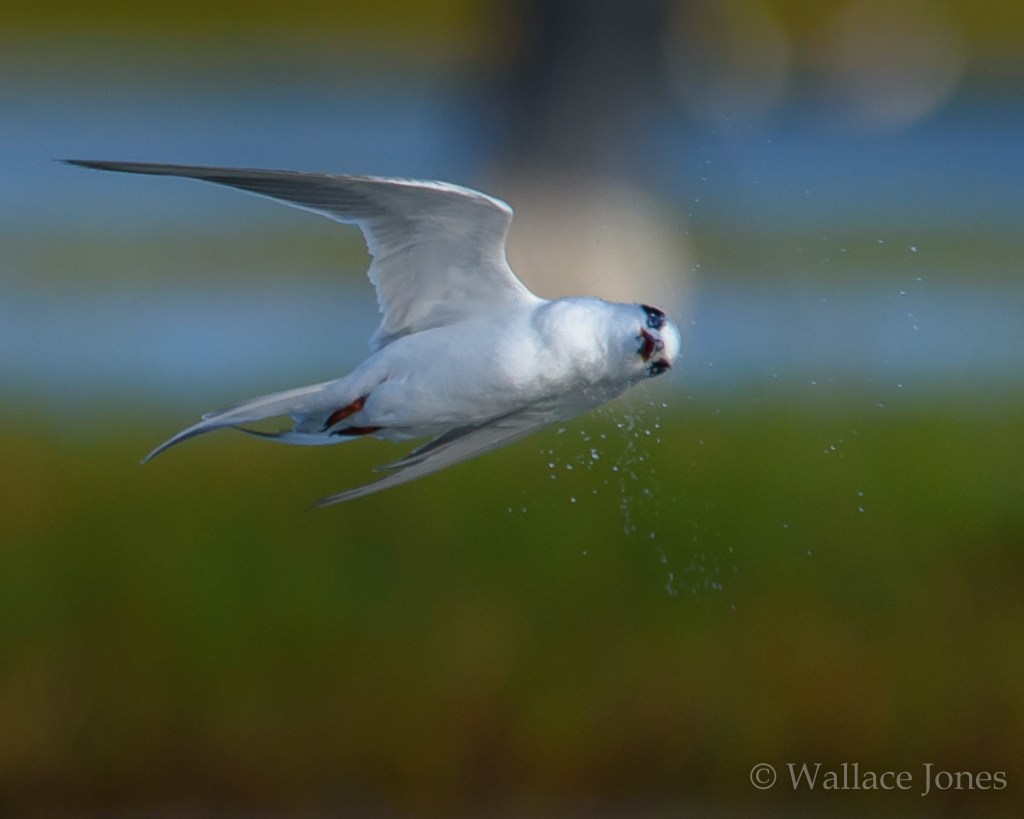
Even in the seeming chaos, patterns emerged. Wind. Determine the direction of the wind. Birds will use the breeze in their face to provide lift for taking off and for braking power as they land. Watch for preening. Once all the cleaning is finished, birds will typically stretch head, wings and tail a few times. Terns and gulls will hover above a potential target just before they drop onto it with open bill and once they spring back into the air will shake vigorously to rid their feathers of excess water.
Take care of yourself and your equipment. Since I grew up fishing in these waters, I know there are things under the surface which can hurt you. It’s important to learn the “stingray shuffle”. Simply slide your feet (which you do have covered, right?) as you move in order to encourage stingrays resting on the bottom to move out of your way. If you were to walk normally, you risk surprising one of these nice flat-bodied beauties and could be rewarded with a nasty sting. Much of the time, you can spot any jellyfish in your path and simply walk around them. Sharks? They hunt mostly at night. Mostly …..
There will be sand. Clean cameras, lenses and tripods thoroughly but carefully. Try to blow or lightly brush everything before attempting deeper cleaning. Take tripods apart, rinse with fresh water, wipe dry and add a small amount of lithium grease to threads. Consult owners’ manuals for cleaning camera bodies and lenses.
The latter part of the morning consisted of walking along the sand bars, wading out to waist-depth and moving parallel to the shore for photographing birds on the beach and remembering to look up as the sky was filled with birds most of the time.
Although the entire morning was extremely satisfying, a couple of highlights made it even more special. Any opportunity to watch a Reddish Egret is one I cherish. During the day we observed four different individuals. Although not extremely rare, the Lesser Black-backed Gull is anything but a common sight on the west coast of Florida.
Back on the main shore, dripping and sandy, I turned and just watched from a distance all the birds on the outer bar. Screeching, flapping, fishing, preening, resting. Daily activity. The rhythm of life. It was a privilege to be among them for a short time.
A pair of Forster’s Terns were unperturbed by my presence on their sandbar. Since I was offshore in deeper water, perhaps they thought I was some sort of weird Pelican. (Save the beached whale jokes. Heard ’em all.)

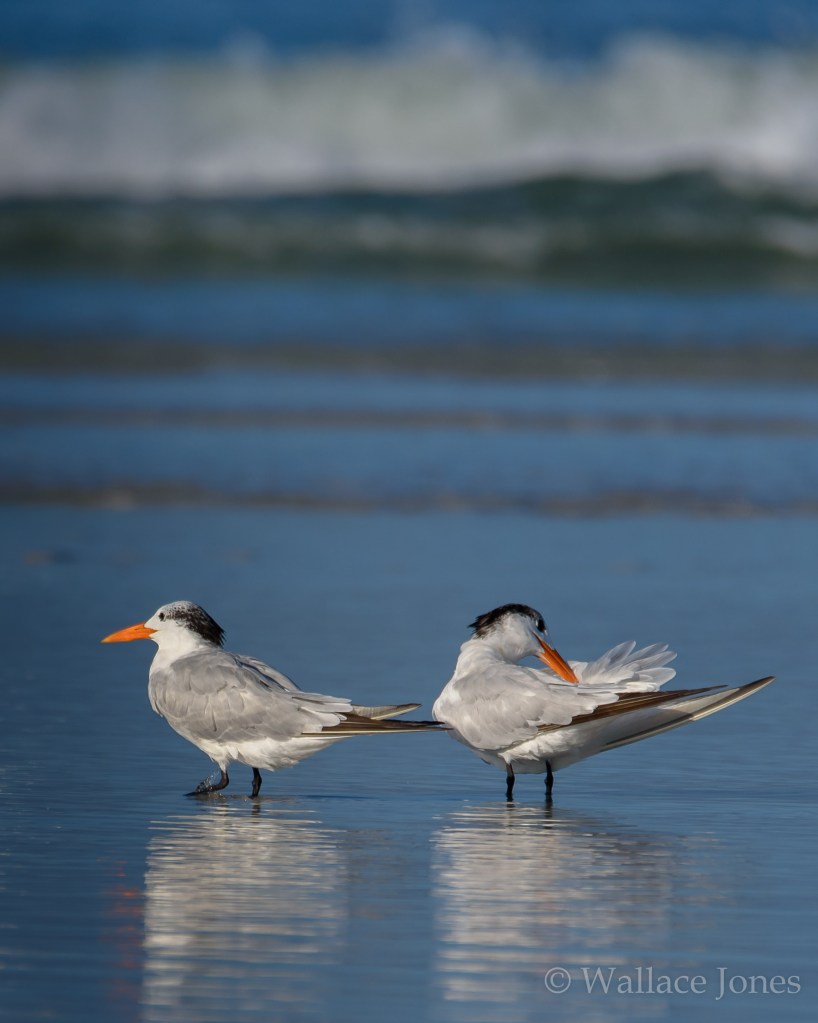
The Royal Tern does look fairly regal with a golden bill and neatly coiffed hairdo (“featherdo”?). A pair rest in ankle-deep water as the Gulf of Mexico roars ashore behind them.

Following an unsuccessful dive into the briny, this Forster’s Tern shakes off excess water and provides a rather comical look in the process.
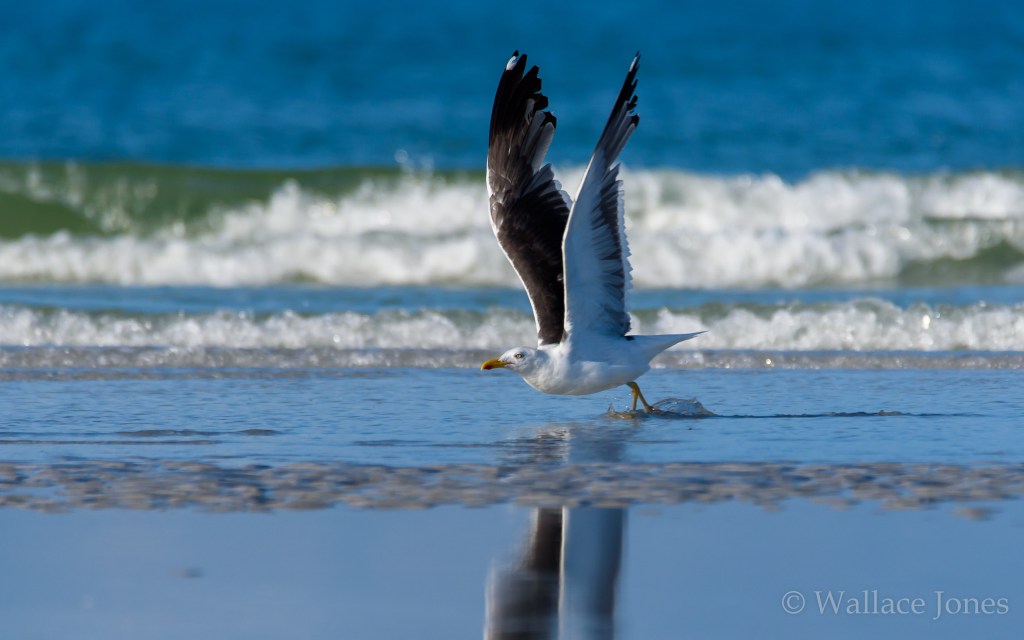
Visits by Lesser-black Backed Gulls to North America have increased over the past few years but experts aren’t sure why. Most of these wintering gulls come from Iceland, Britain or western Europe. With a wingspan of up to 59 inches (150 cm), this big gull needs a lot of space to take off.



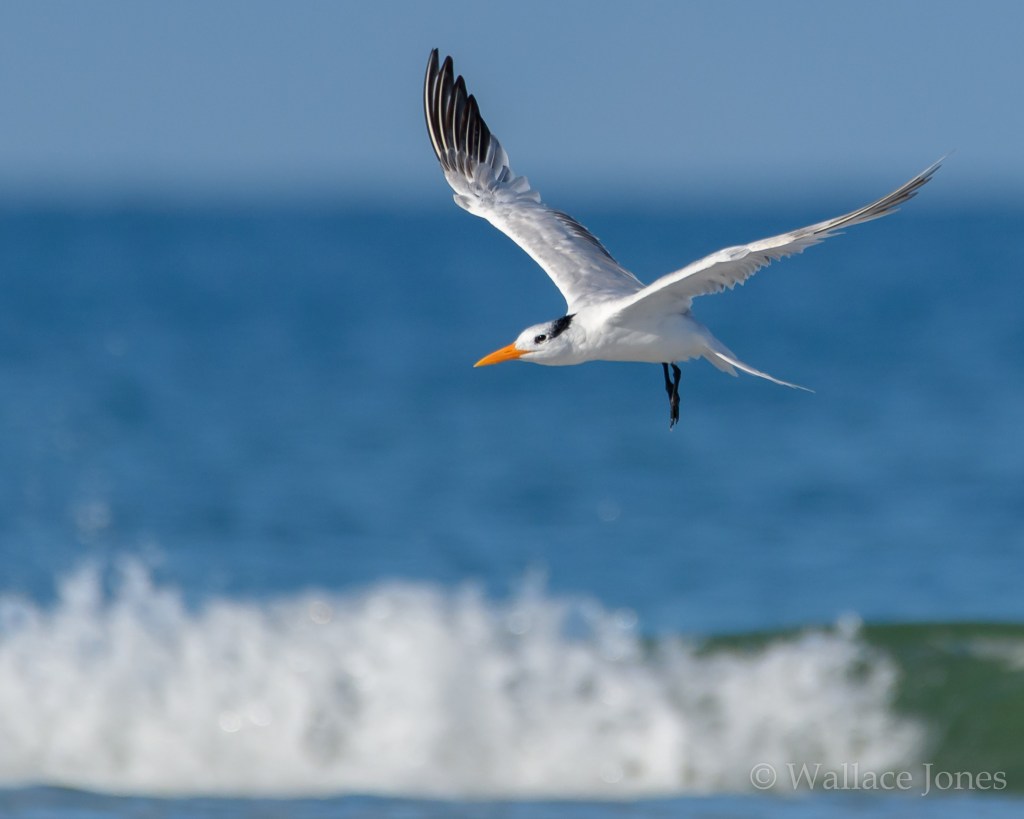
Landing in a crowd. The Royal Tern demonstrates how it’s done.


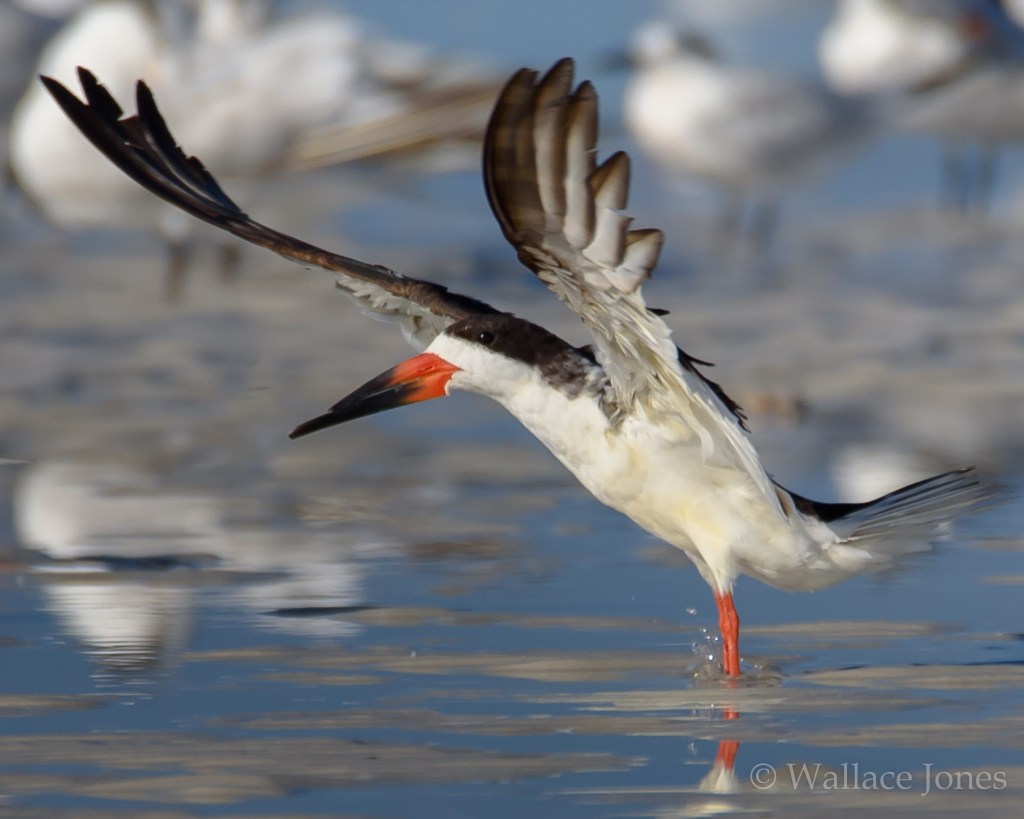
Although not in a crowd, the Black Skimmer is still quite pleased with her own landing skills.
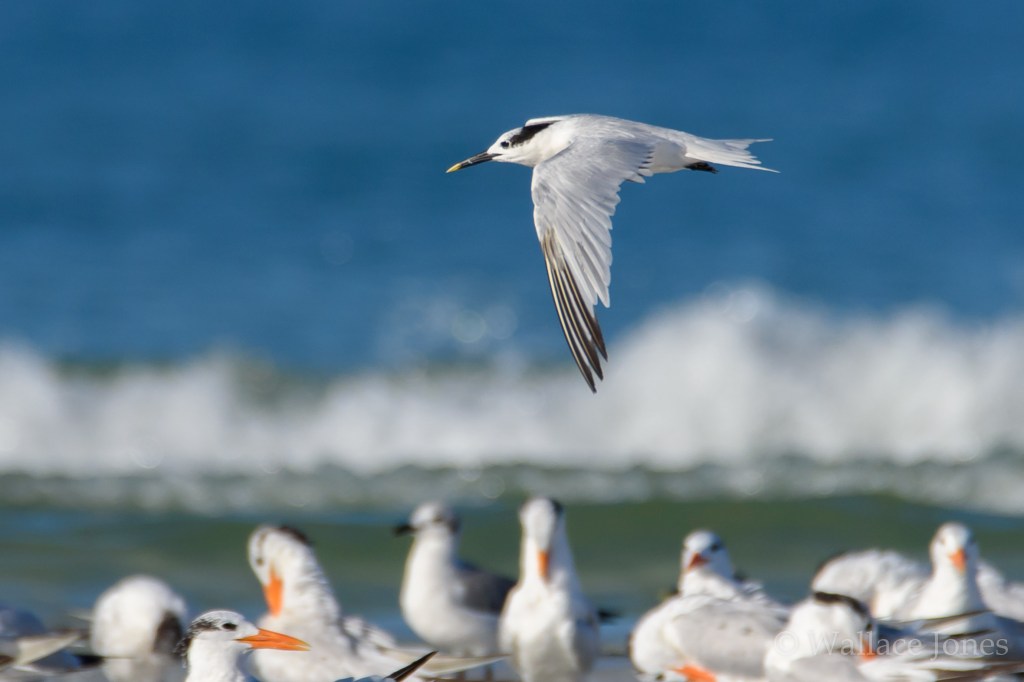
The Sandwich and Royal Terns are simply gorgeous as they navigate above the sandbar heading for shallow water and a sardine brunch.
Not much escapes the large eyes and big bill of a Reddish Egret.
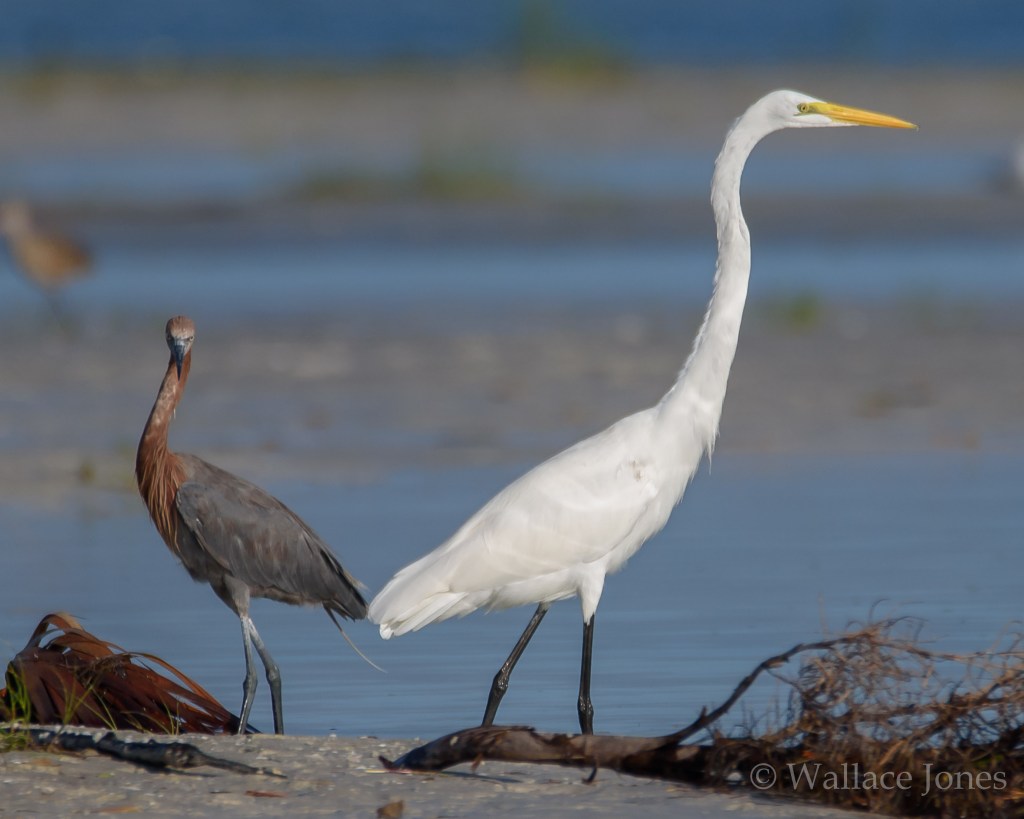
A comparison in size between the Great Egret and Reddish Egret. I believe the current phrase for what I am receiving from the Reddish Egret is: “The Stink-Eye”.
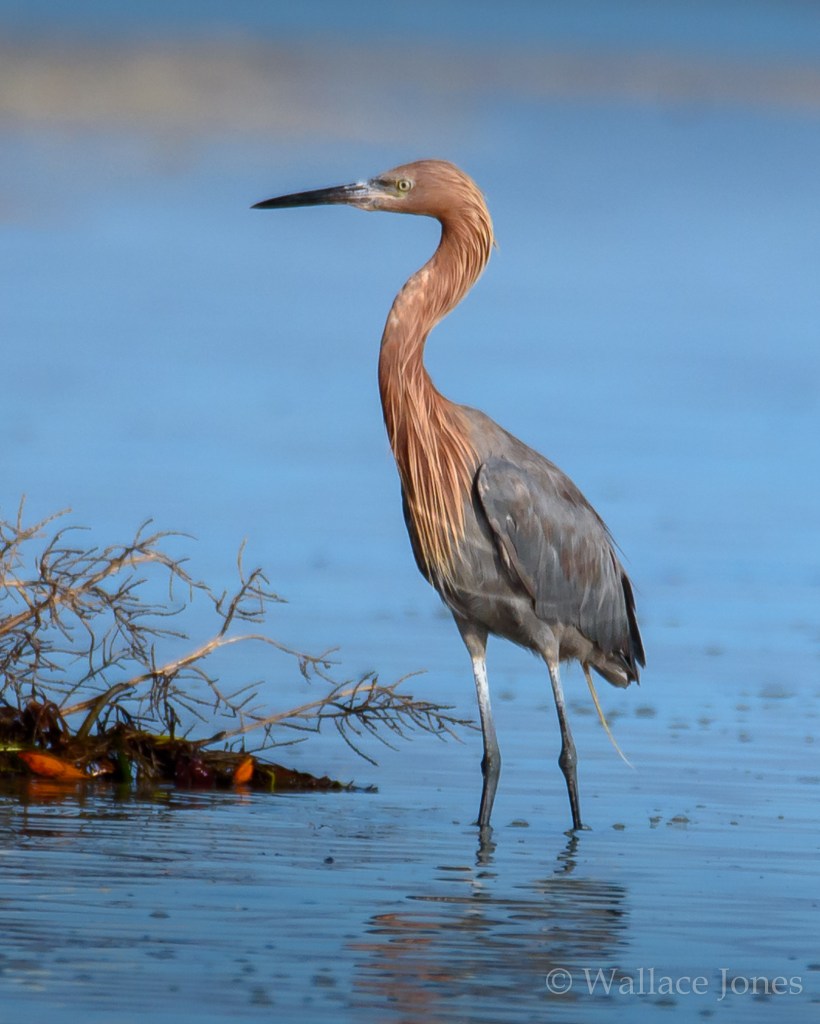
Once he became comfortable with my presence, “Big Red” struck a very nice pose.
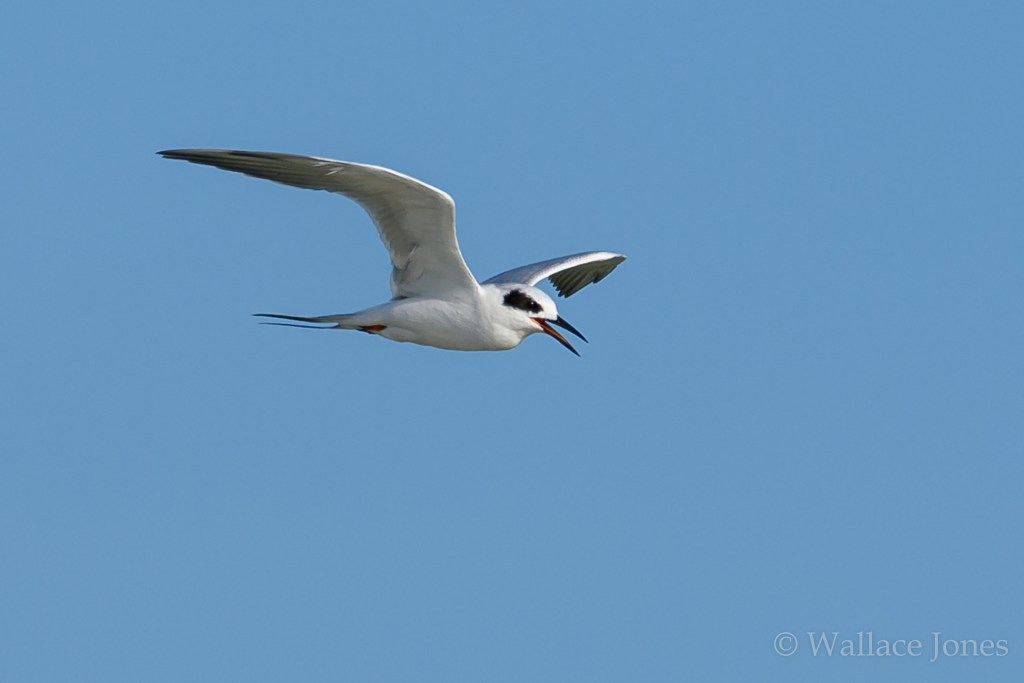
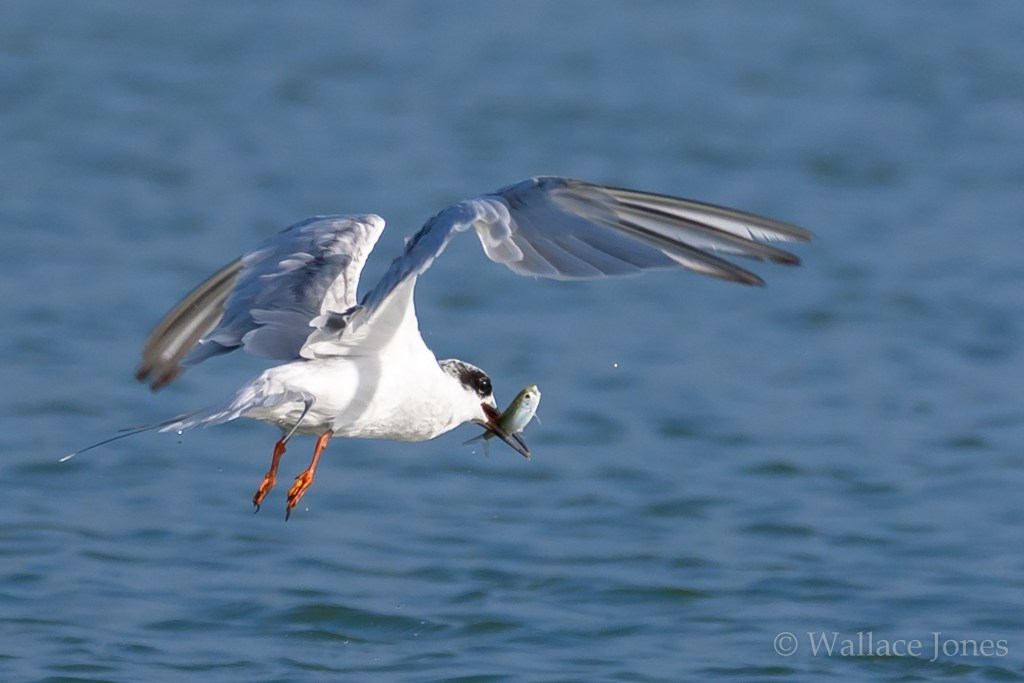
Shrieking overhead got my attention. I looked up to find a Forster’s Tern yelling (probably at me) as he dropped into the lagoon and emerged with a tasty morsel.
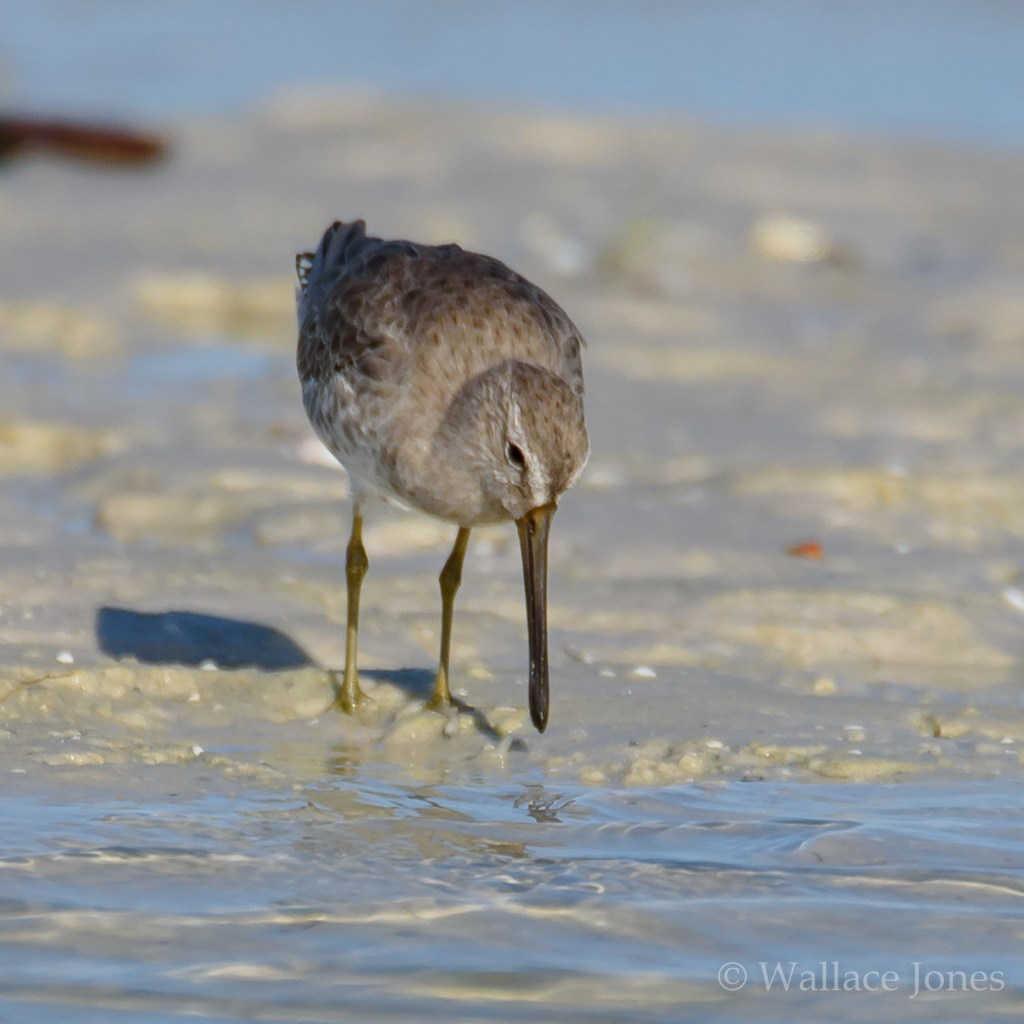
Despite their name, Short-billed Dowitchers have very long bills which they use to probe deeply into the soft, damp beach sand. They will often feed with their bills in a vertical position and move their heads up and down like the needle of a sewing machine.

It was time to go. “Big Red” flapped in and landed just up the beach. Okay. Just one more photograph.
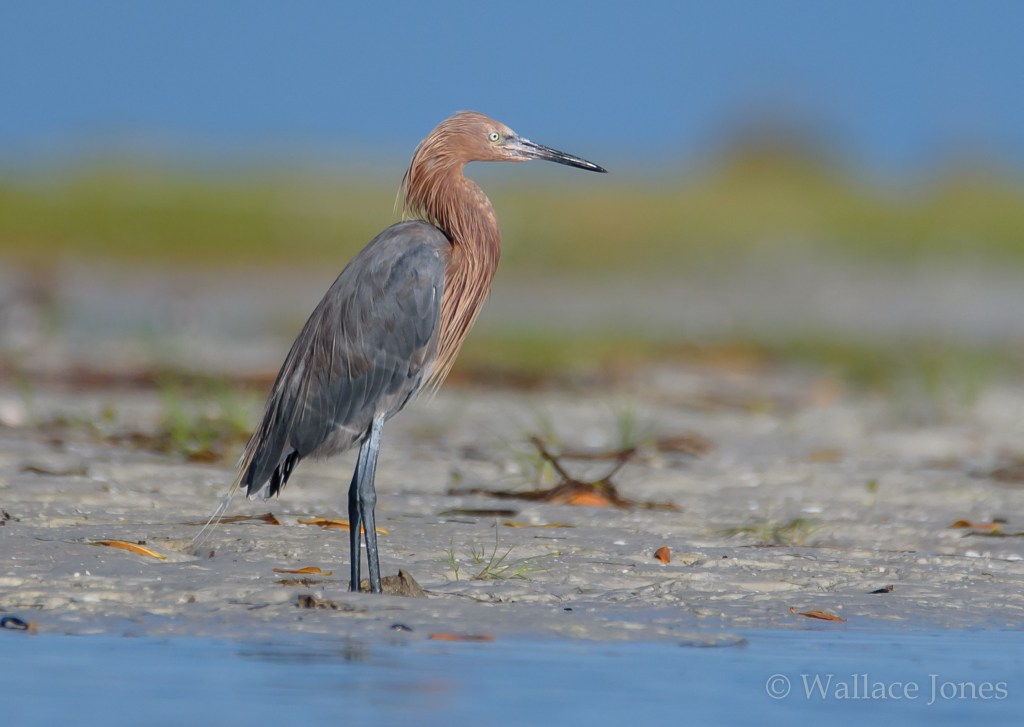
“East Beach!” My answer to Gini’s question was logical (to me). It was the opposite extreme of where we had spent the morning at Fort De Soto Park and its location, surrounded by large areas of shallow water, was attractive to many shore birds. The ten minute driving time was enough to enjoy a fresh apple.
(To be continued …)
Enjoy your search for a natural place and come back for a visit!
Is anticipation an emotion?
We had been traveling in darkness for about an hour. The eastern sky began to lighten and in the distance shadowy urban landscapes formed a backdrop for the expansive Tampa Bay. Scanning the water’s surface below the tall Sunshine Skyway Bridge, we hoped for a glimpse of dolphins, pelicans, terns or schools of sardines rippling the blue-green water. To the west, the lighthouse at Egmont Key faithfully flashed the beacon which identifies the entrance to Tampa Bay for ships arriving from around the planet.
From the apex of the big bridge, we coasted downhill toward our destination, Fort De Soto Park, bordering Tampa Bay and the Gulf of Mexico. Every light pole seemed to host an Osprey, some already picking at their freshly caught breakfast of mullet or sea trout. Squadrons of Brown Pelicans cruised across the highway. Laughing Gulls screeched their greeting to the rising sun.
Along the causeway leading to the park, Gini said: “Roll down the windows!” We took in gulps of salt air and arrived at the North Beach parking area just as the first rays of morning sun began to break above the tree line.
A few years ago, this location was prime “sun-bather beach” territory. Pristine white sand was continually refreshed by wave action from the gulf. Then geology and meteorology happened. Hurricanes can affect topography even if they don’t actually make landfall. Strong currents from off-shore storms combined with some pretty good blows which came ashore have altered this area completely. The once exposed beach is now protected by a series of sand-bars. Between beach and bars are shallow lagoons. The sun-bathers have migrated a bit south. Birds populate the sandbars in great numbers as they offer protection as well as a launching point for feeding in the gulf and along the shoreline.
I waded across the first lagoon, stopping to photograph a Marbled Godwit feeding in shallow water just a few yards from a pounding surf. The golden morning light enhanced the bird’s buffy plumage. Reaching an intermediate sandbar, I walked a short distance in the sugary sand and slipped into another lagoon and waded toward the outer bar which was packed with birds.
For the next couple of hours, it seemed I was in another world. Waist deep in the warm gulf water, I moved slowly, stopped often and was accepted by hundreds of birds as they did not consider me a threat.
Birding usually means observing birds through binoculars at some distance in order to avoid frightening the creatures into flight. This – this was something different. Being almost among the birds is a unique experience. Hearing the beating wings of a Black Skimmer as it takes off in search of food. Terns splashing head-first into the water mere feet from where I was standing. A glorious symphony produced by the chaotic cacophony of an incredibly diverse choir.
With so many birds jammed into the available space, attempting to photograph individual subjects was challenging. Patience and exploring eventually resulted in a few images. My weak efforts in no way provide a hint of the overwhelming delight provided by nature. For that, well, you will just have to go and get wet yourself.
Wrackline Reverie
Serenity is within our reach,
We find it among the shells at our secret beach
Where we struggle to form the words
Which describe the beauty of our birds.
The sun rises and warms the salty air;
If only we had the power to share
This serenity within our reach,
Paradise on earth, this, our beach.
Rich brown plumage highlighted by the early morning sunshine gave the Marbled Godwit a very special spotlight as she probed the shallow water within a few feet of waves crashing onto the sandbar.

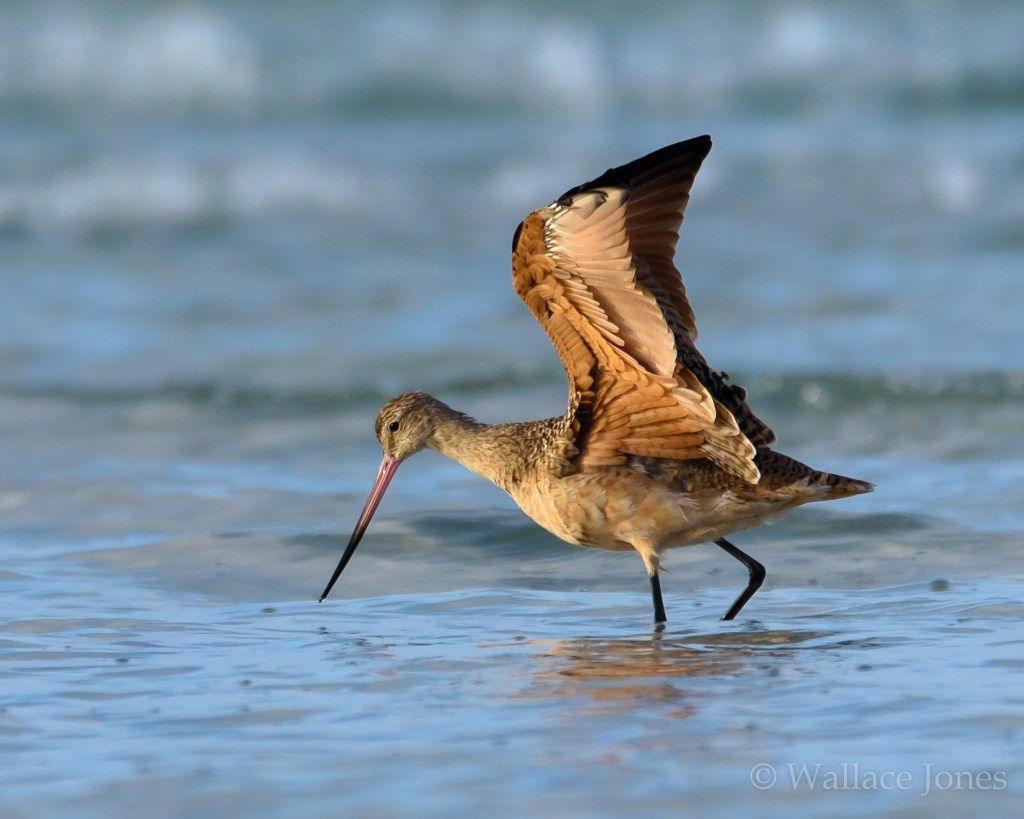
Golden eyes reflect golden sunlight. A Great Egret patiently scans the waters for a potential meal.

Bobbing tail, crouched posture, always in a hurry – the Spotted Sandpiper loses the spots from its underside during the winter and is mostly gray above and white below.

With its shaggy black crest, clean white forehead (in non-breeding plumage) and black bill with yellow tip, a Sandwich Tern returns to the beach to enjoy a freshly caught breakfast snack.

Often seen in very large flocks on beaches (where they run in unison trying to avoid getting their feet wet), today most of the Sanderlings spotted were in small groups or singles, such as this one.

One of the three small sandpipers known collectively as “peeps”, the Western Sandpiper is about 6.5 inches (16.5 cm) long and has a drooping bill which is a bit longer on average than the other two (Least and Semipalmated Sandpiper).

A wingspan of up to 45 inches (115 cm) helps the Black Skimmer to cruise low as it keeps its outsized lower mandible just below the water’s surface ready to scoop up small fish and crustaceans. A Laughing Gull lounges to the right.

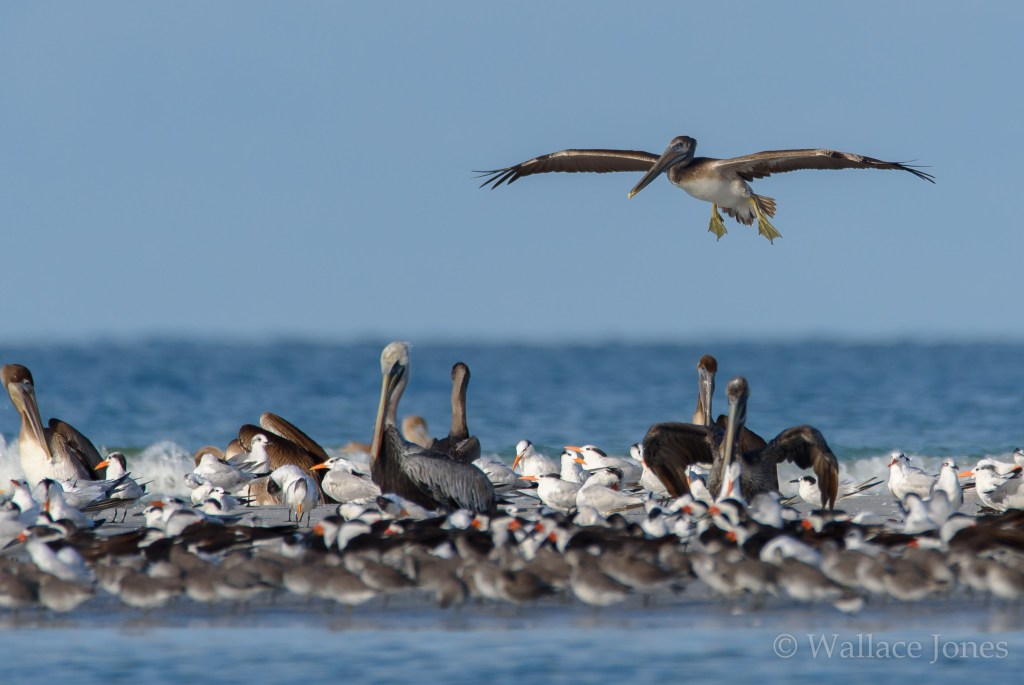
On a crowded sandbar, a huge Brown Pelican makes a landing. One has to admire whatever sort of flight control is involved in such a feat!

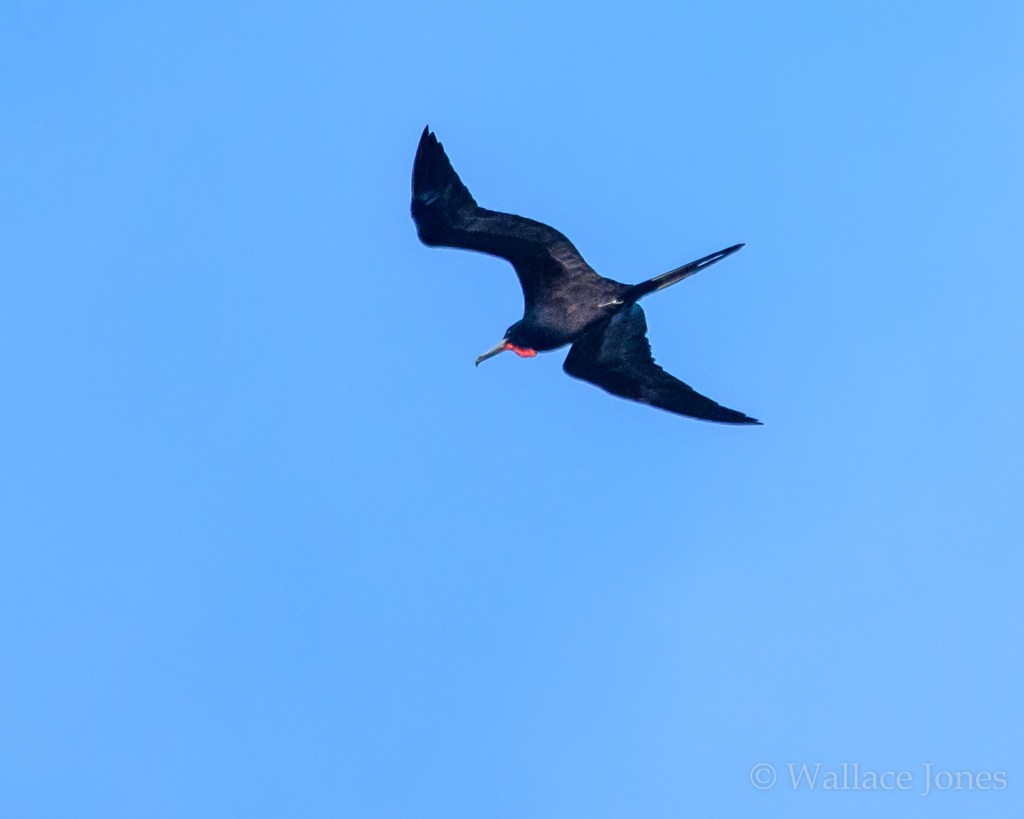
“Man-O-War Bird.” “Pirate of the sky.” Magnificent Frigatebirds are a joy to watch as they soar effortlessly over the water using their long forked tails to steer. Their nicknames, however, are well-earned. They will harass other birds mercilessly until they regurgitate or drop freshly caught food which the frigatebird retrieves in mid-air. The male has a red throat patch and the female a white breast.

The Semipalmated Plover nests in the Arctic and many will spend the winter on Florida’s beaches. This diminutive shorebird has been successful in diversifying its diet and habitat more than some of its cousins. As a result, its population has seen increases in the past few years.


Apparently, Ruddy Turnstones will also turn over seaweed when looking for a meal.

More Marbled Godwit candids. I couldn’t resist.


For such a large, ungainly-looking bird, Brown Pelicans certainly do appear graceful in flight. Landing – well – as a pilot friend once remarked, “any landing you walk (waddle?) away from is a successful one”.

They look plain and gray but when the Willet spreads its wings, a beautiful black and white striping is revealed. Some guy named John James Audubon advised they can be mighty tasty. Here, the Willet shares the breakfast buffet with a Marbled Godwit.

A medium to large heron, Reddish Egrets probably number less than 5,000 within the United States. Their distinctive “dance” while foraging is an unforgettable experience.

My strategy emulated the herons this morning as I steadily plodded along the shoreline, entered the water up to my waist (which helped to photograph birds on the sandbar close to eye-level), slowly moved along the lagoon, holding still for long periods – all helped the birds remain calm as they went about their daily routine. I know, it’s a lot of pictures. With more to come. Total images for the day = 725. Be thankful I’m only forcing you to look at a few!
Up next, more terns, more gulls, Big Red with an attitude and a rare European tourist!
To be continued …..
Additional Information
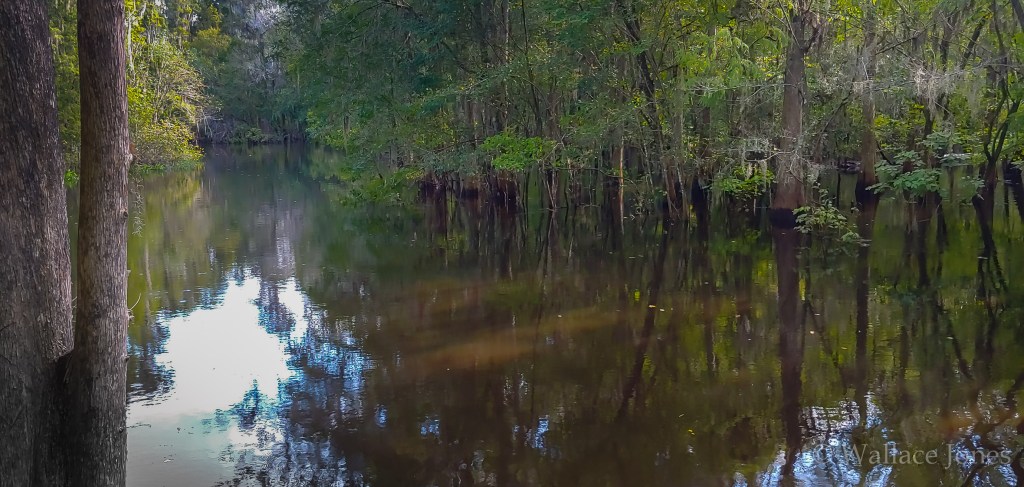
(Header image: Peace River swamp.)
“The Butcher Bird’s been busy!” This was the third insect Gini had spotted stuck on a fence barb. The Butcher Bird is a nickname for members of the shrike family, in our case it’s the Loggerhead Shrike. They will capture a bug and impale it on a fence barb or thorn to make it easier for them to eat. It is not unusual to find caches of insect carcasses the birds have stored in the crevice of a tree for later.
We were on our way home after spending the morning wandering around in the dark. Well, okay, not actually dark, but pretty dim. Mosaic Peace River Park is a few miles south of the city of Bartow in west-central Florida and about a 40 minute drive from the house.
The Peace River flows south from Lake Hancock between Bartow and Lakeland for over 100 miles to Port Charlotte where it empties into the Gulf of Mexico. Along the way are several places for access where one can launch a boat or canoe as well as a few parks for picnicking, hiking and some pretty good birding.
Our current location at the Mosaic Peace River Park offers a small network of boardwalks crisscrossing a swampy area which leads to the banks of the Peace River. The dense canopy of mostly cypress trees blocks much of the sunlight resulting in that “dark swamp” environment. It also means some pretty low light for attempting photography.
This park was closed for almost two years due to damage from Hurricane Irma in September 2017. The boardwalk system had to be completely replaced. They did a good job and it’s nice to be back.
Typical of Florida’s swamps, this one has plenty of what one would expect to find: alligators, snakes, turtles, raccoons, opossums, mosquitoes, owls – did I mention mosquitoes? At this time of year, we are also blessed with a few seasonal visitors. Fall migration brings a host of warblers and other passerines who take advantage of the vast numbers of insects which call the swamp home. Actually spotting these small hunters within the subdued light and in the tops of dense 60-foot tall trees is another matter. Getting an acceptable photograph is – challenging.
Although we didn’t find an unusually large number of migratory travelers, we did observe a few and that made the day better. As often happens, we also enjoyed some of the swamp’s special treats and like to think we may be the only ones to have been fortunate enough to see a mushroom tree, a phantom of the swamp, a leaf suspended in mid-air or a tiny dancing damsel. Our mysterious swamps are amazing!
Watch your footing! The damp leaves on the boardwalk make for slippery walking.

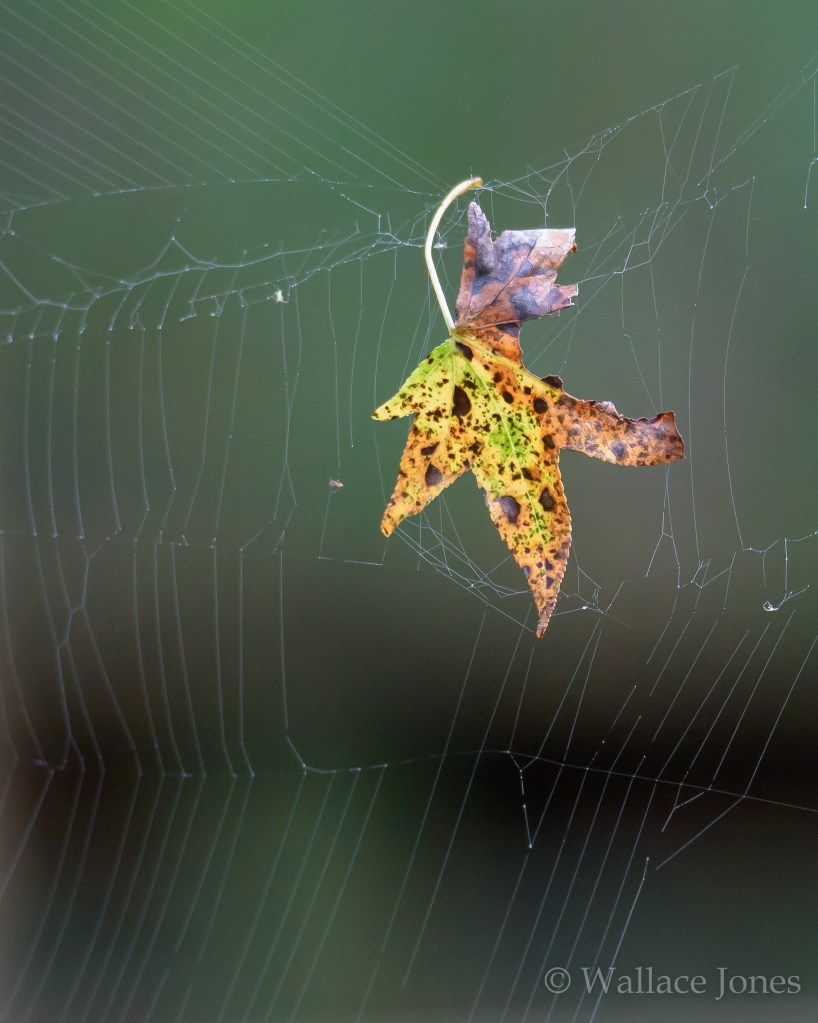
A small bit of autumn color has been captured by a spider’s web and held for us to enjoy.
Sexual dimorphism is common in the natural world. Here, the Black-throated Blue Warbler male and female provide an example.

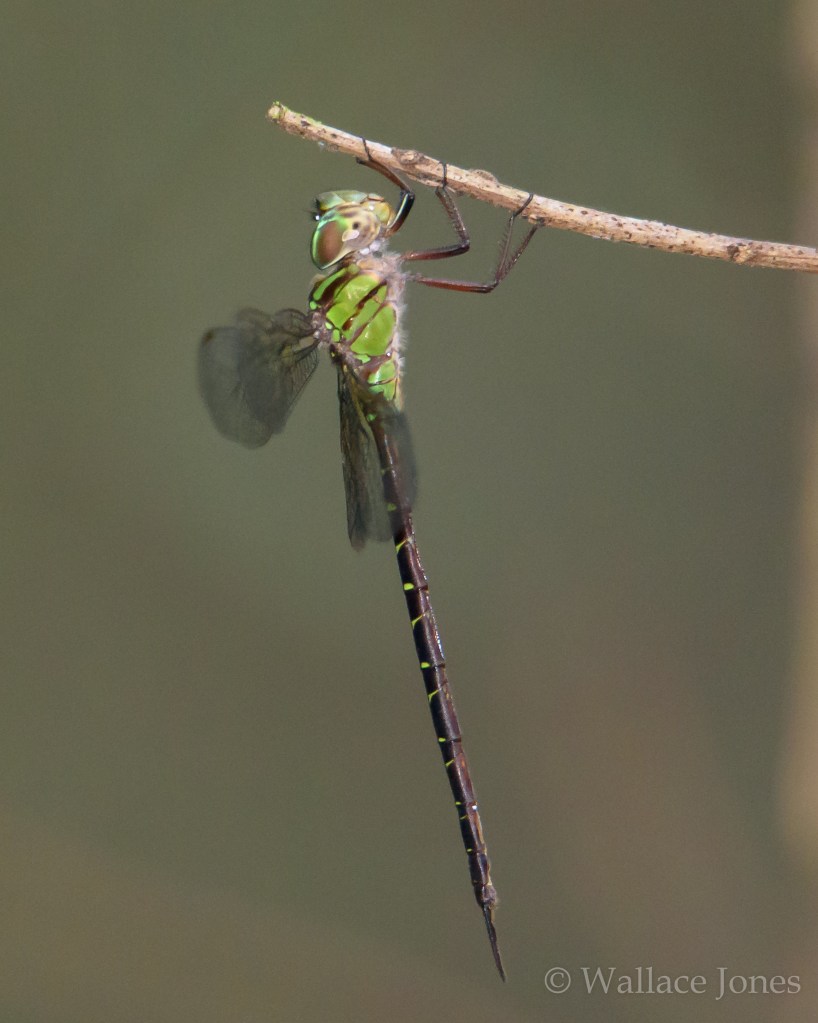
One of the larger members of the dragonfly family, a Phantom Darner (Triacanthagyna trifida), hangs vertically while waiting for his next meal to arrive. (I pointed out plenty of mosquitoes buzzing in front of my face, but he didn’t budge.)
Fairly non-descript except for a striped head, a Worm-eating Warbler specializes in searching dead leaf clusters for the prize inside. They especially like grubs and caterpillars, thus the name.

Who needs splashy color? A Black-and-White Warbler makes just two shades a thing of beauty.

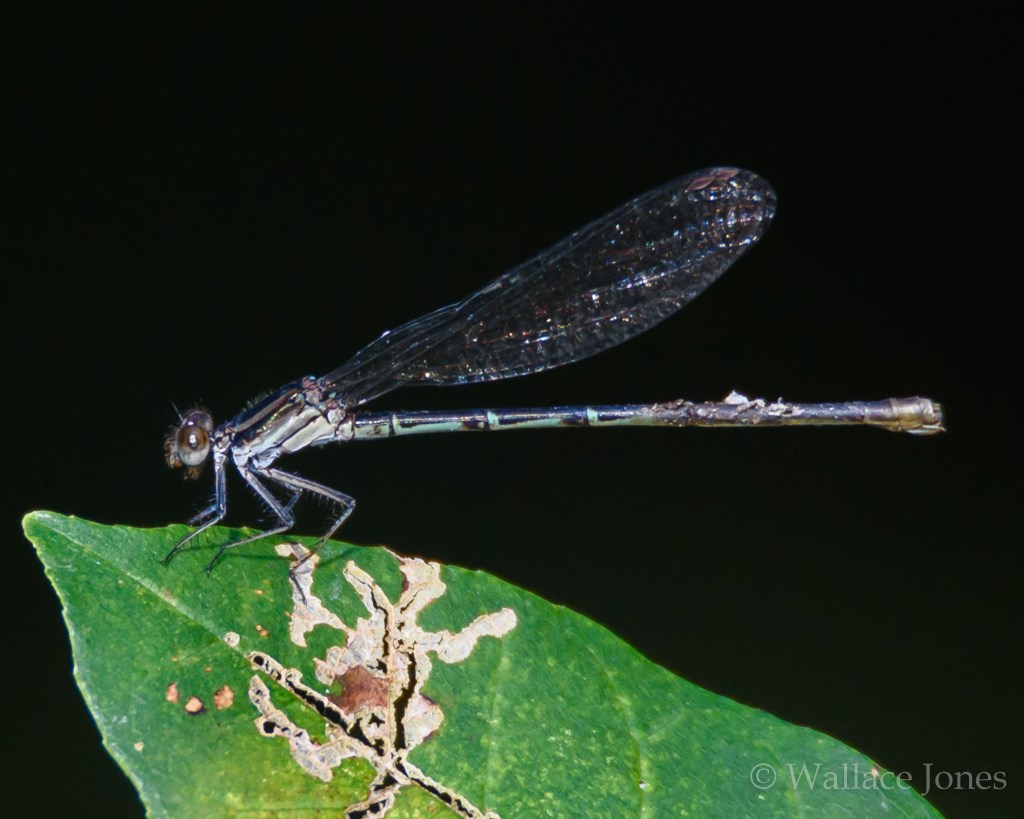
I think this small damselfly is a Blue-ringed Dancer (Argia sedula) and would be appreciative of anyone who could offer an opinion. It appears to be either a female or immature male. We found five of them but couldn’t locate an adult male.
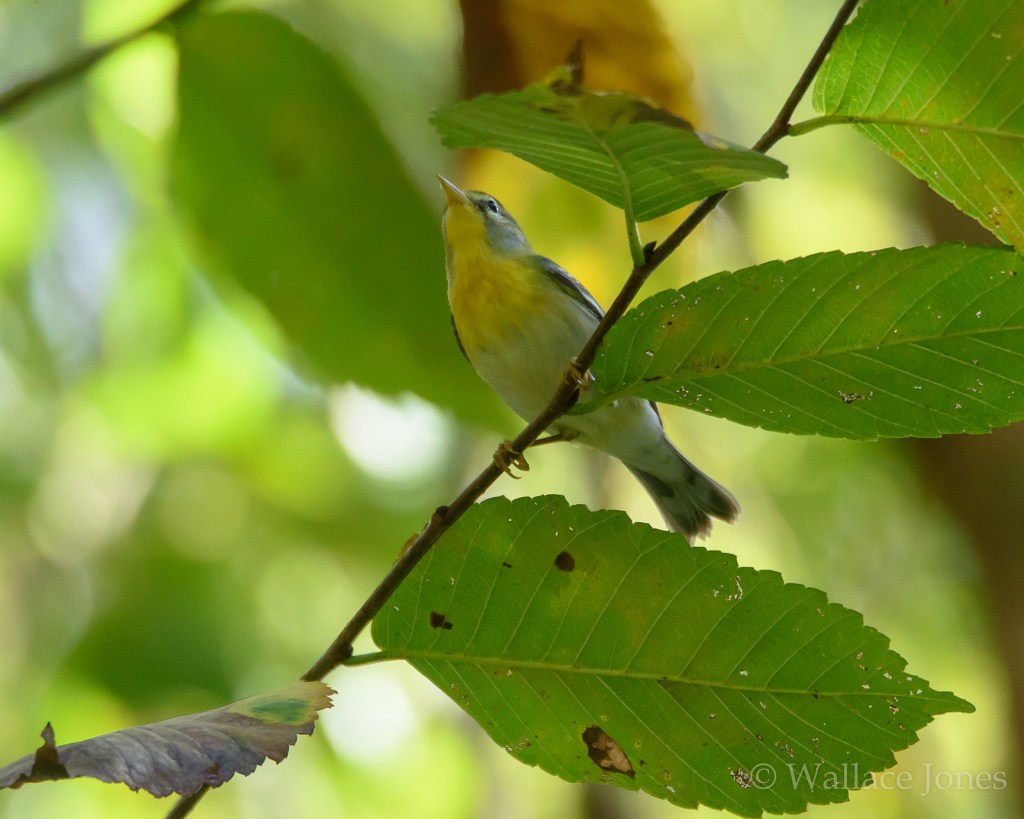
Gini’s superior hearing detected several Northern Parula warblers long before we ever saw one. Heard or seen – they are gorgeous!
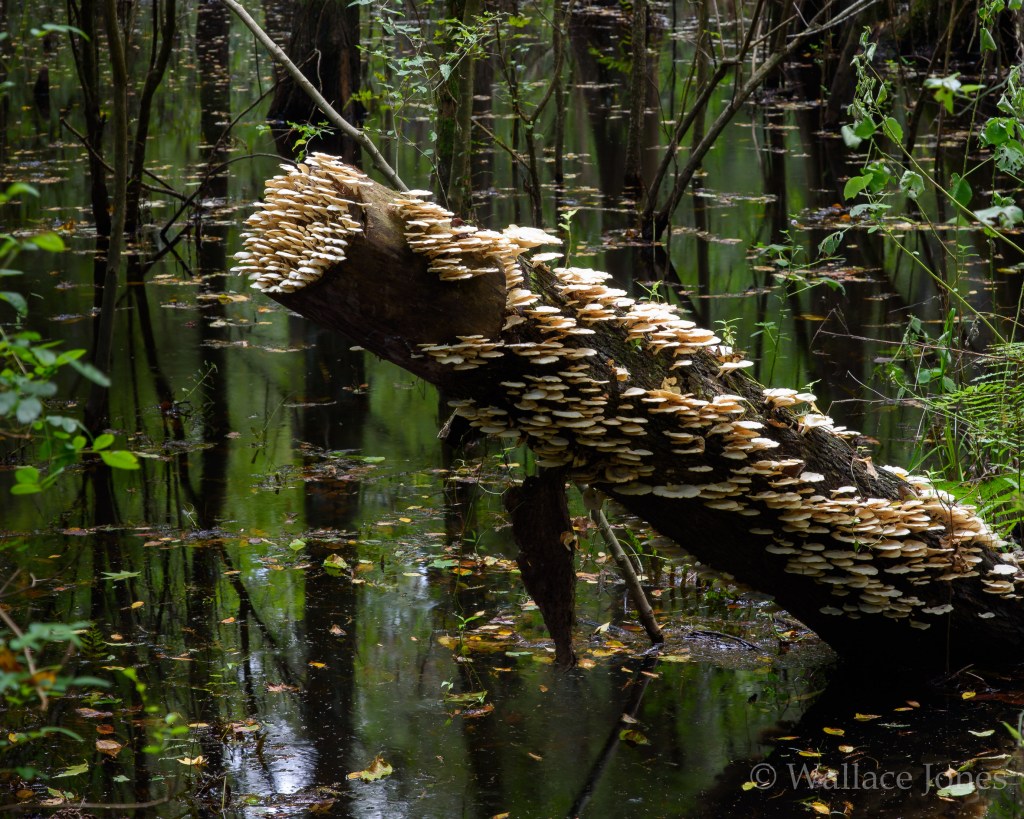
During cleanup from Hurricane Irma, many trees were removed and some were trimmed of broken branches. This large section of remaining trunk has developed into an impressive mushroom farm.

A common dragon for our area, a male Eastern Pondhawk (Erythemis simplicicollis) looks good in his powdery blue coat against the green of a cypress branch.

Flashing his bright orange wing and tail patches to frighten insects from hiding places, the male American Redstart really brightened up the place!

The Peace River. It is still at near-flood stage after a bit higher than normal rainfall during our wet season.
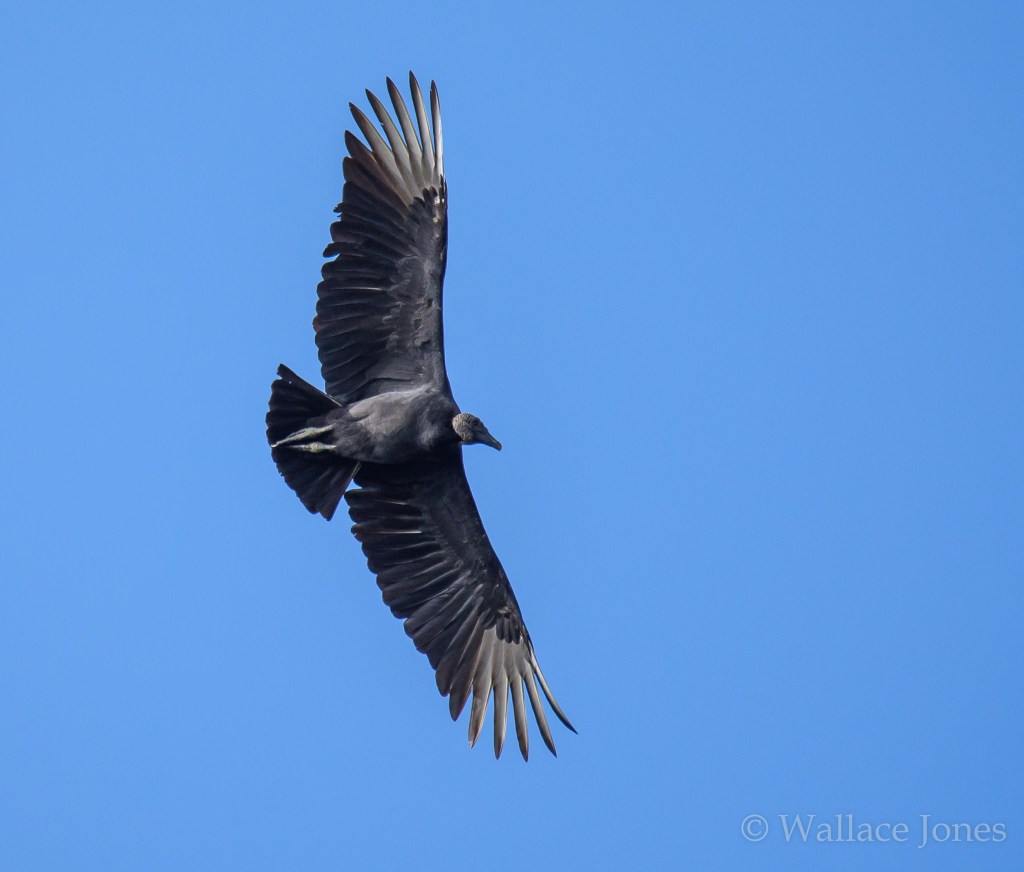
Soaring above the river, an Anhinga and Black Vulture navigate southward as they each search for somewhat different prey.

Meanwhile, back at the parking lot. Returning to the car, we were greeted by a female Ruby-throated Hummingbird.

On the way home, Gini saw what looks like a species of Sphinx moth left on a barbed-wire fence by a Loggerhead Shrike.

Not far from the park, a pair of male Wild Turkey skulked through the grass looking for lunch.

Time for us turkeys to do the same!
It was a great day under the cover of the cypress trees, leisurely peering into the dark waters of the swamp from the boardwalk. Enjoying the sights and sounds of Nature unique to the habitat is the ultimate form of relaxation therapy. Highly recommended.
We hope you enjoy your search for a natural place and come back for a visit!
 Our Natural Places