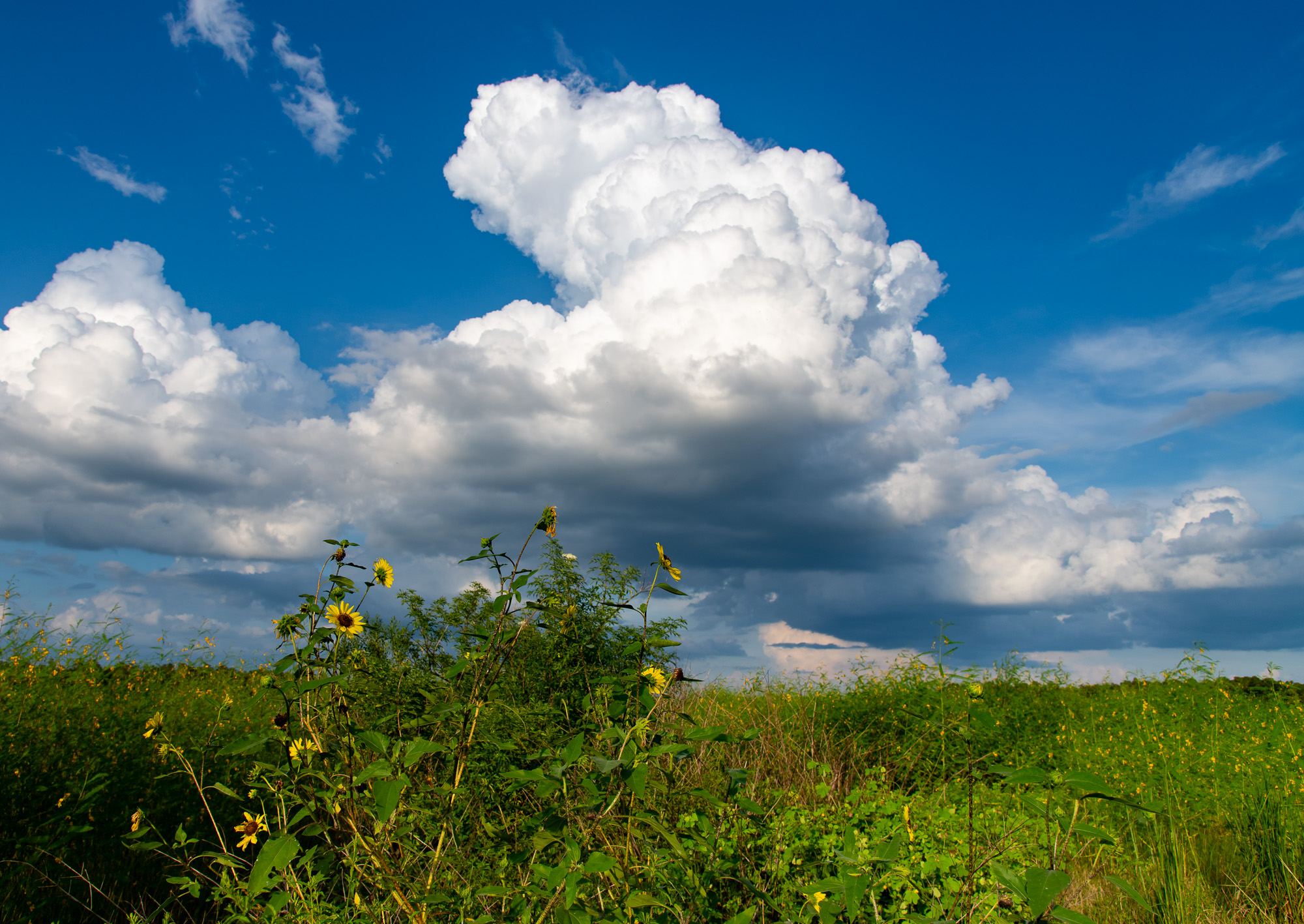
(Click on image to enlarge, click again to zoom.)
Previously, in “Falling In The Morning”, I alluded to the fact that Ranger Sunny provided a nugget of information which I had hoped to hear. It put into motion our plan to have a relatively short morning at Colt Creek State Park in order to return later in the day.
She let us know the lilies were blooming. One of those, the Pine (also known as Catesby’s) Lily is the largest member of the wild lily family in North America and mighty colorful. Additionally, she said there were Celestial Lilies also in bloom. That’s what I’d hoped for. These lovely flowers only bloom late in the day. Try to find them before 4 or 5 o’clock and all you’ll see is what could be blades of grass.
Again, thank you to our “Ranger Extraordinaire “! (She, along with the rest of the park staff and volunteers have been incredibly busy working to restore the damage caused by Hurricane Milton. Kudos to all who are helping.)
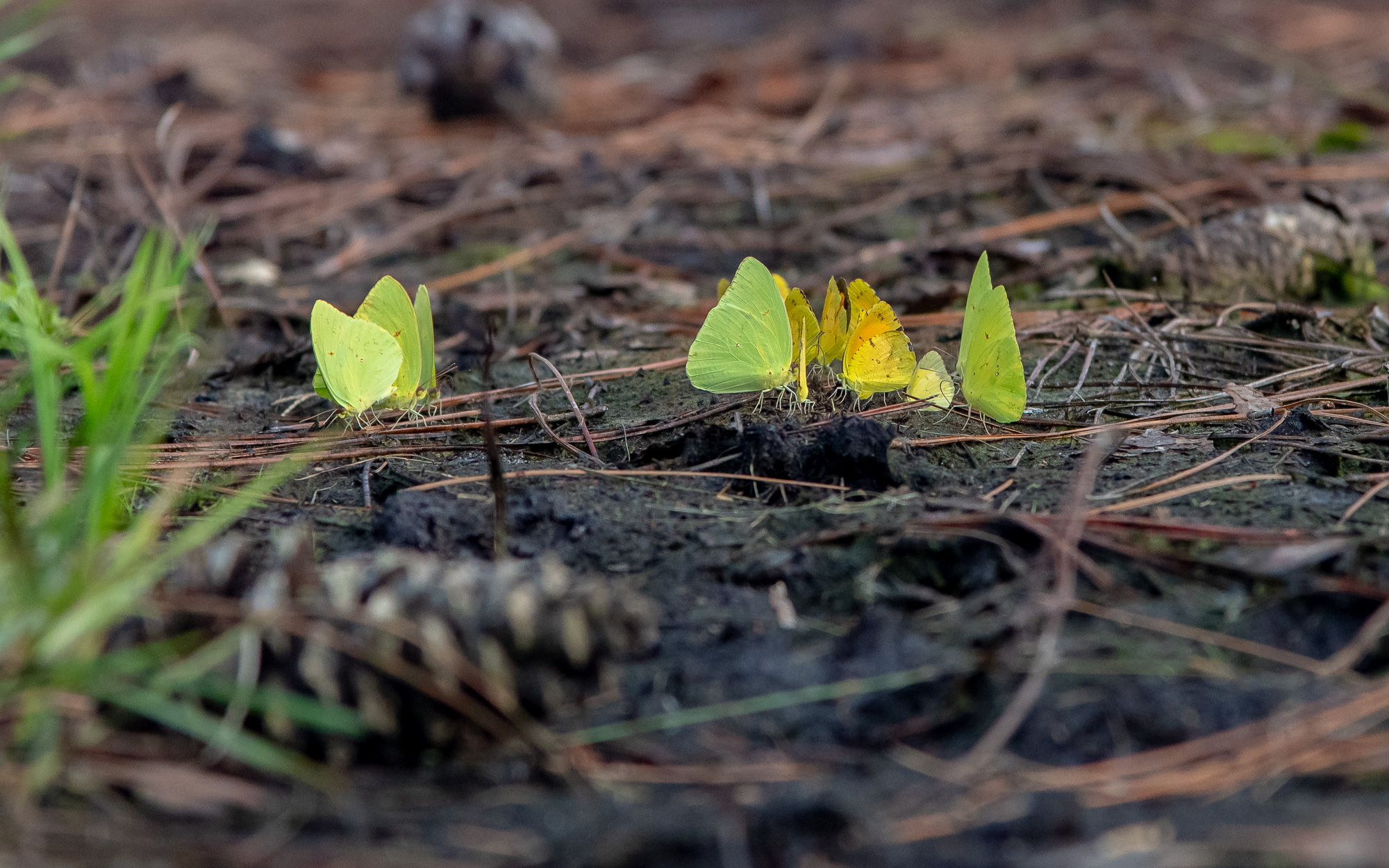
On the walk to an area where I had seen the lilies before, I ran across three different groups of butterflies “puddling”. They are able to extract minerals from damp ground which are vital to their health. A nice bonus appeared in the form of a Longhorn Bog Orchid.
Once our target lilies had been recorded, we still had about an hour before sunset so we wandered around a bit. It’s amazing how different the same landscape can appear at a different time of day. More flowers, birds, butterflies, a young alligator and more than a few deer rounded out an incredibly rewarding day enjoying nature.
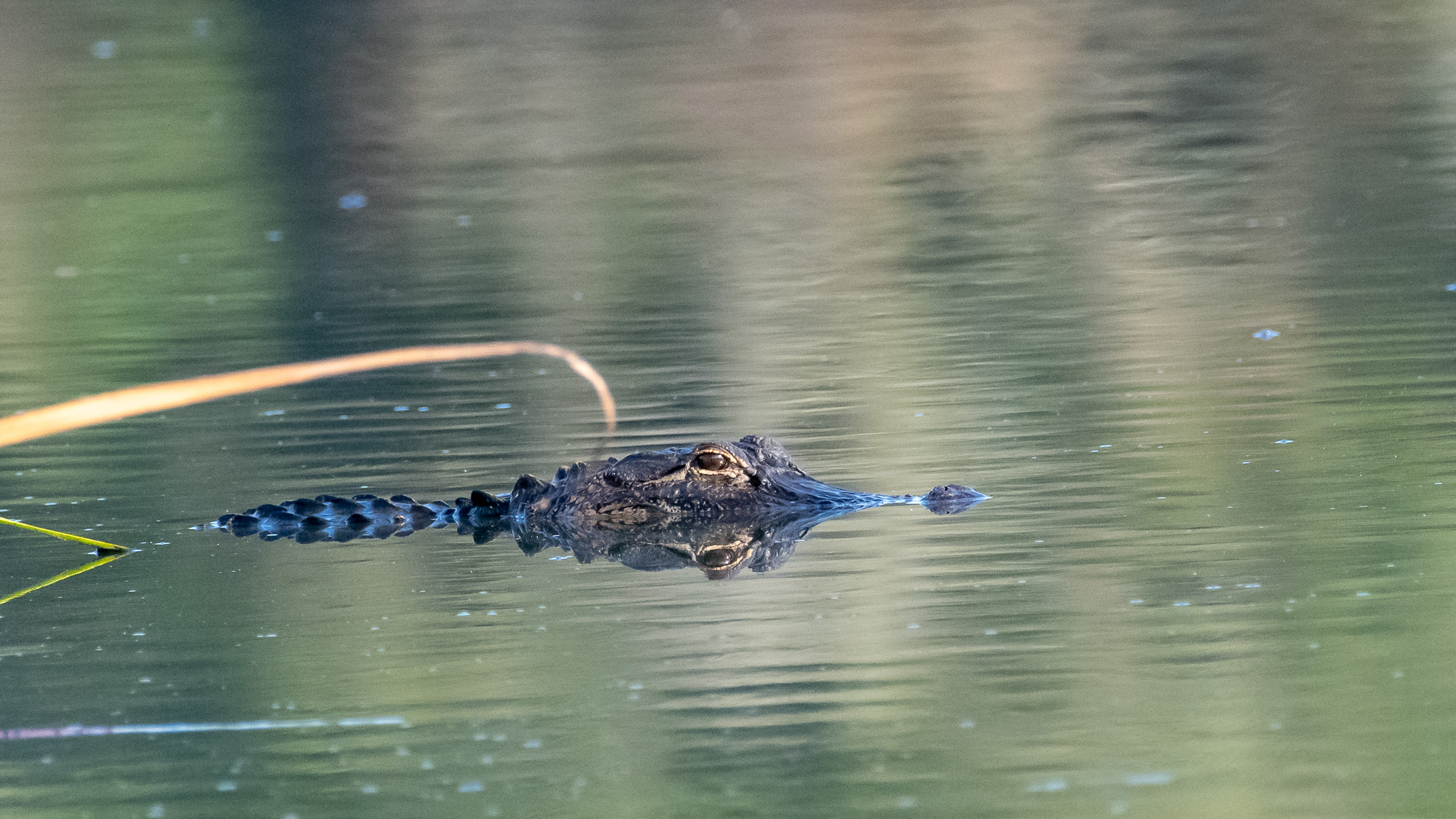
Yes. Another American Alligator. A young one barely three feet long and quite colorful. The epitome of “cute“.

A new plant for us! I failed to get a decent photograph but hope to find a Longhorn Bog Orchid (Habenaria quinqueseta) again.

Our main target. The Celestial Lily (Nemastylis floridana). Dozens of these lovely flowers littered the pine forest this afternoon.
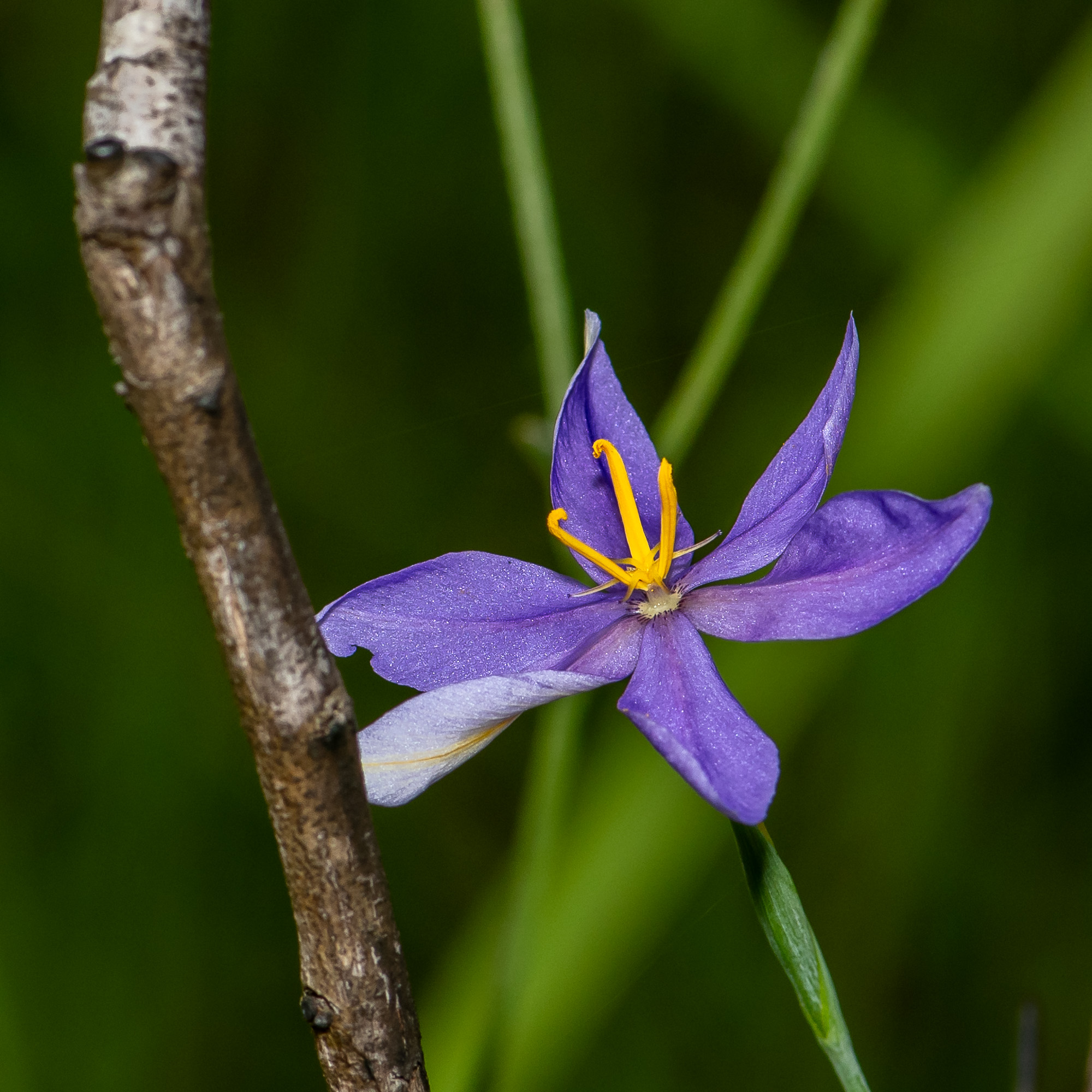
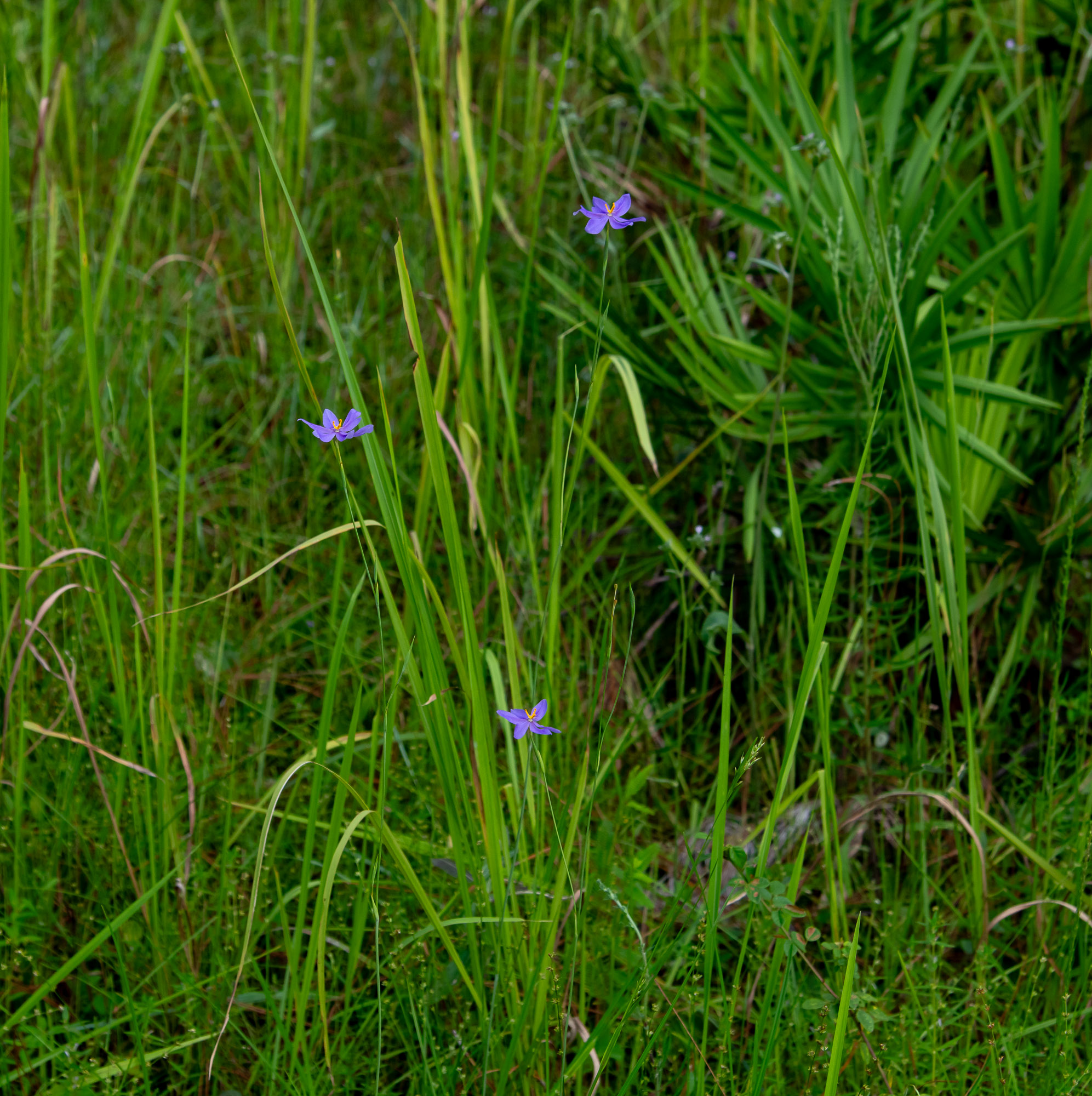

Puddling butterlies. Species in this group include Cloudless Sulphur (the yellow-green larger ones), Sleepy Orange (brighter yellow) and at least one Little Yellow (smallest one).
Big and boldly colored, it is always a delight to find the Pine (or Catesby’s) Lily (Lilium catesbae).

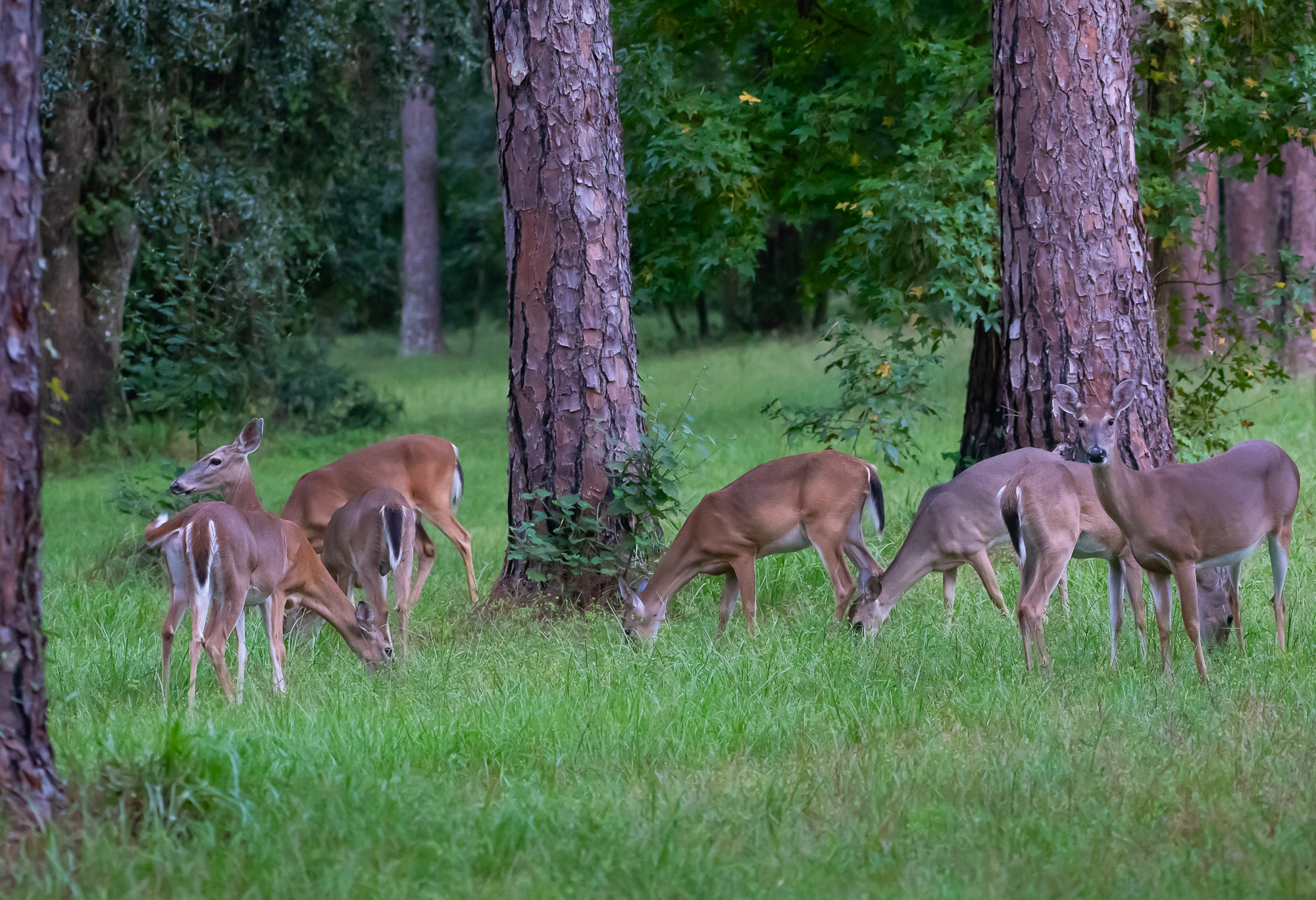
Just at sunset, White-tailed Deer begin to materialize from the edges of the forest to browse. Groups of does, fawns and first-year bucks remain together and mature bucks typically stay apart from these herds.

What a day! Florida autumns may not offer the awesome display of colorful foliage found further north, but we have a few specialties all our own of which to be proud. Gini and I “fall” for them every year.
Enjoy your search for a natural place and come back for a visit!
(Medical Update. Gini had successful heart valve replacement surgery last week and is resting well at home. Thank you so very much to all who wished her well.)
(Click on images to enlarge, click again to zoom.)
(Note: This visit to Colt Creek State Park occurred on September 17, 2024. On October 8, during the night and the following morning, this area received between 15-20 inches of rain and experienced the 100 mph winds of Hurricane Milton. The roads and trails we enjoyed were inundated and completely covered in water for days. Thanks to amazing work by park employees and volunteers, the park is again open for limited exploring.)
Ahhh! Autumn! That time of year in which we say farewell to Summer and look down life’s path in anticipation of cooler days, ripening fruit among trees bearing a kaleidoscope of changing hues.
However……
Those of us in the sub-tropical paradise of La Florida have slightly different expectations of the coming Fall Season. Although not quite sweater weather, our average high temperatures may drop from 92 to 88 F. That blanket of humidity which wraps itself comfortably around us as soon as we walk outdoors should even dip to 90%. And, just as the sun is rising or setting, assuming you have a fairly generous imagination, some of those tree leaves take on the golden glow of a Spanish doubloon left by one of Ponce de Leon’s intrepid explorers. (Okay, let’s face it. Those leaves are dying and are just brown. You see what’s real and I’ll just keep pretending, thank you very much.)
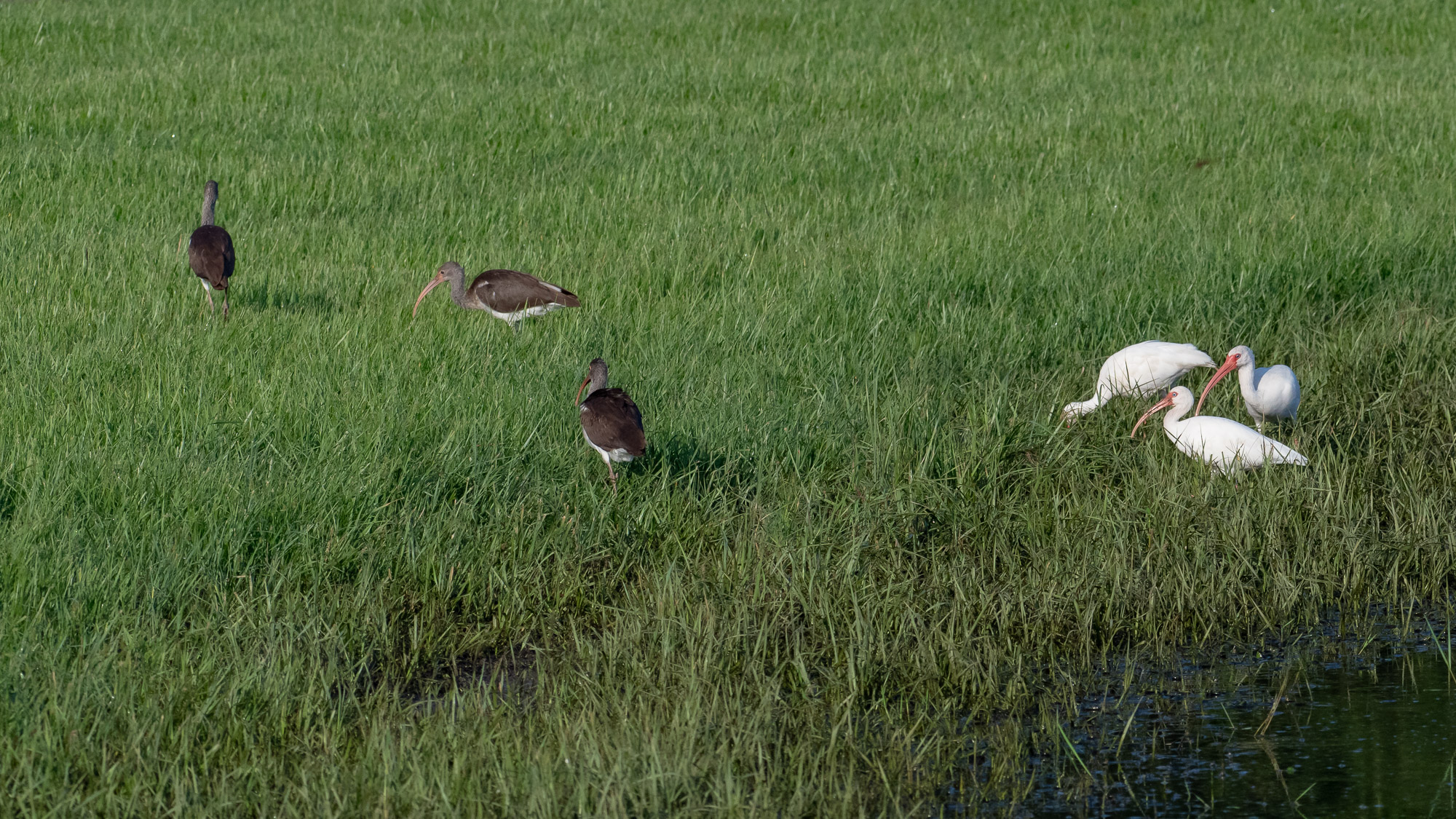
With Gini by my side, we entered Colt Creek State Park as the front gate swung open. A half-dozen White Ibises, three immature and three adults, welcomed us by continuing to probe the wet grass for grubs and totally ignoring the park’s first visitors of the day.
At the park headquarters, we happily forked over our fee and had the extra-added attraction of visiting with Park Ranger Extraordinaire, Sunny Clark. Her intricate knowledge of the park has always helped us have a more focused and enjoyable visit. Today was a perfect example. Not only is she aware of nature’s calendar, she knows all the good hiding places for stuff. It’s also helpful that she is an outstanding photographer and is willing to share techniques and provide suggestions. She passed along exactly the piece of information I was seeking – but that will have to wait for the next blog post.
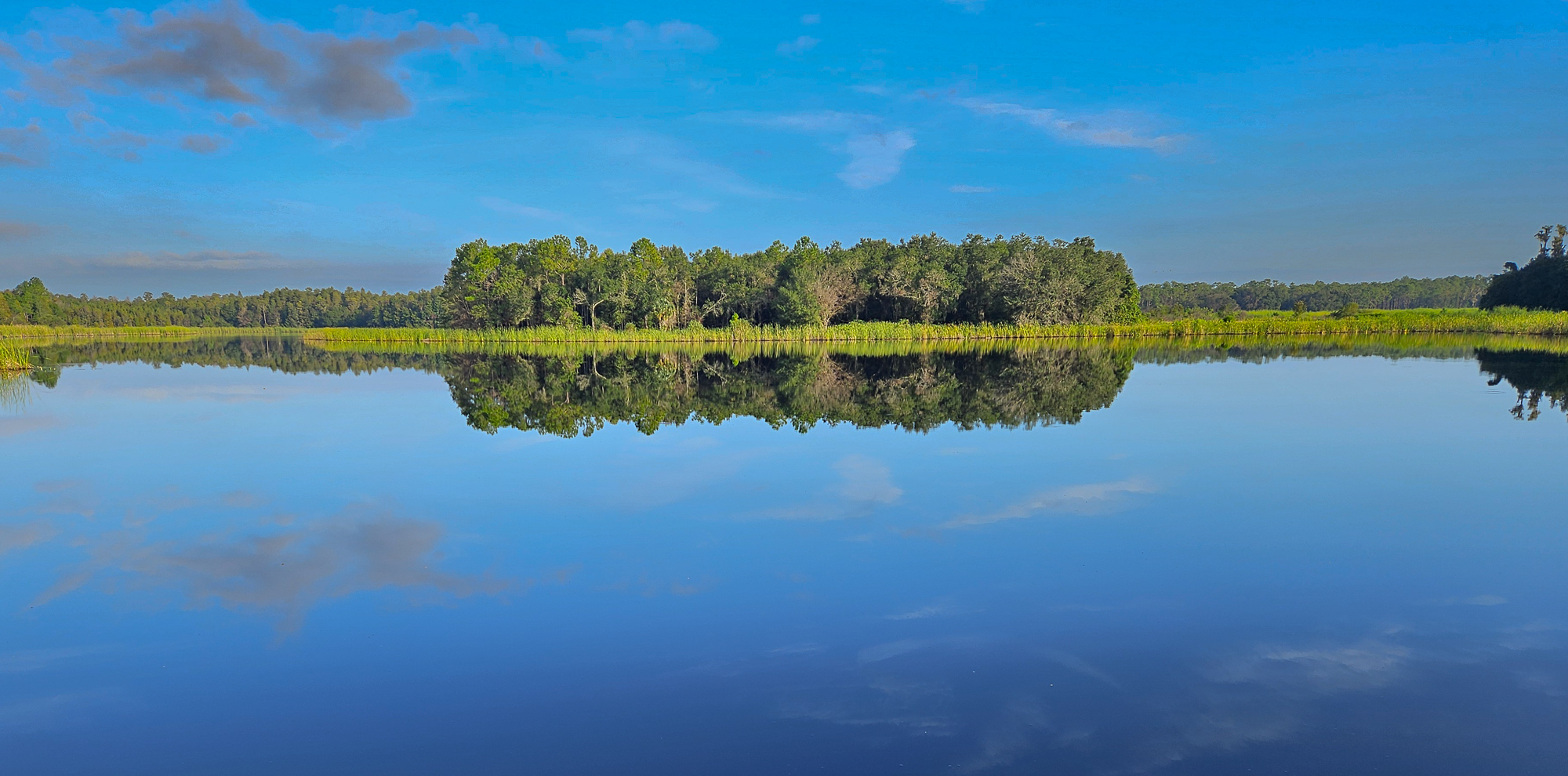
As usual, our morning was filled with the sights and sounds of Florida’s diverse natural environment. Breakfast at the edge of Mac Lake provided near endless entertainment. An alligator invited us to come closer to the cattails to better appreciate their vivid green color and texture. He made a compelling case, but our attention was diverted down the shoreline by a calling Common Yellowthroat. In the nearby grass were Gulf Fritillary, Great Southern White, Little Yellow and Sleepy Orange butterflies. A Red-tailed Hawk screamed in the distance. Nothing disturbed the glassy surface of the lake as a Green Heron cruised past in a cloudless sky.
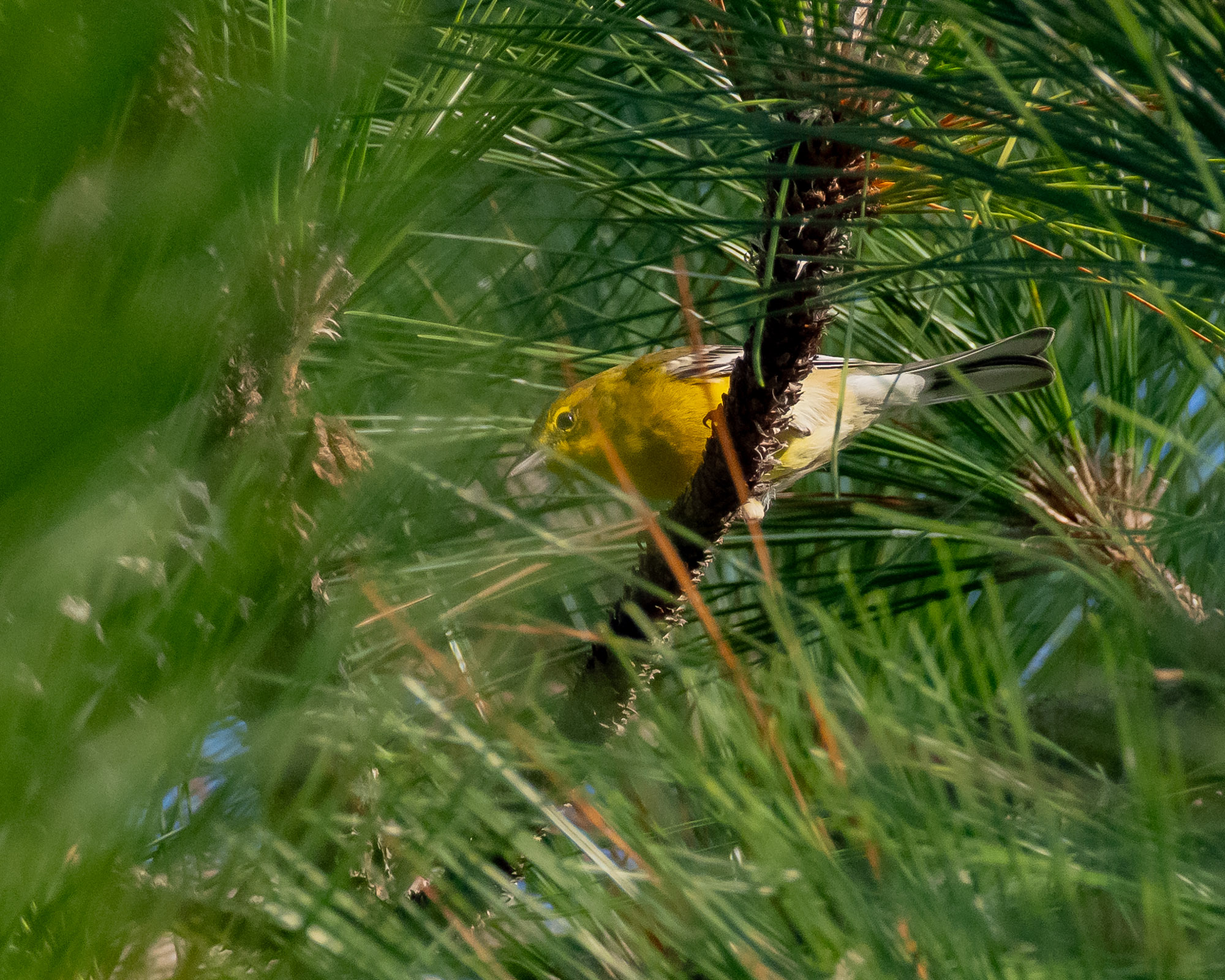
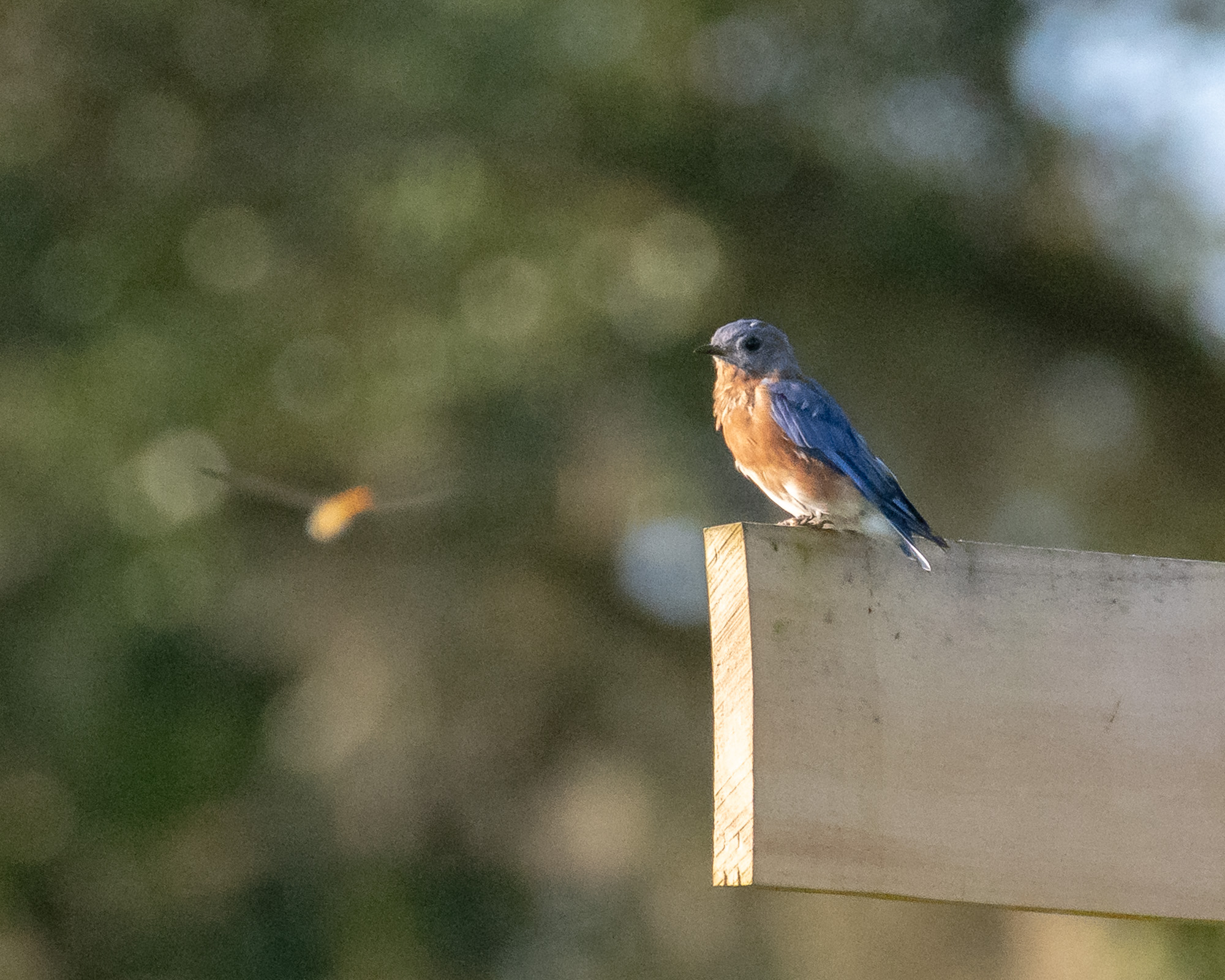
A few migratory birds were beginning to filter into the area. Black-and-White, Pine and Prairie Warblers were busy fueling up on insects. Nearby were small gangs of Blue-gray Gnatcatchers, Tufted Titmice and Carolina Chickadees. Eastern Bluebirds breed within the park and the families are now spreading out to see more of their world.
Once upon a time, I took fall flowers for granted. I grew up in central Florida and although I knew there were flowers all around as I tramped through the forest or drifted along a lake shore while fishing, I never took the time to examine them. Gini says “with age comes wisdom“. I reckon I am becoming wiser as now I simply MUST know the names of all these blooms.
For once, we were not reluctant to head home after a splendid morning at Colt Creek State Park. That’s because, thanks to the secret information we received from Ranger Sunny, we shall be returning later in the day.
Here are some reasons we really like visiting this park.
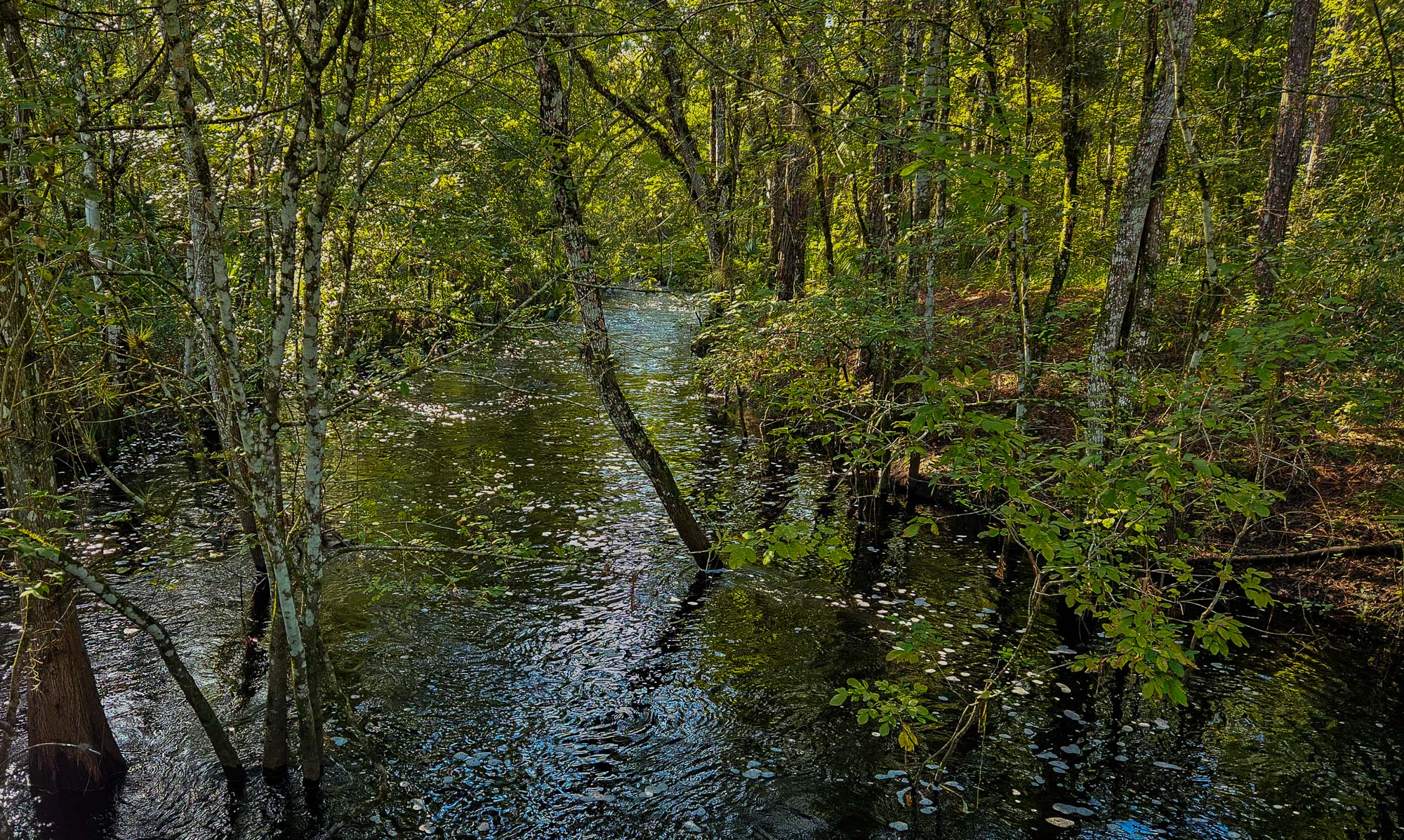
Summer rains have kept Gator Creek flowing. The River Otters, frogs, turtles and fish appreciate it. So do we.
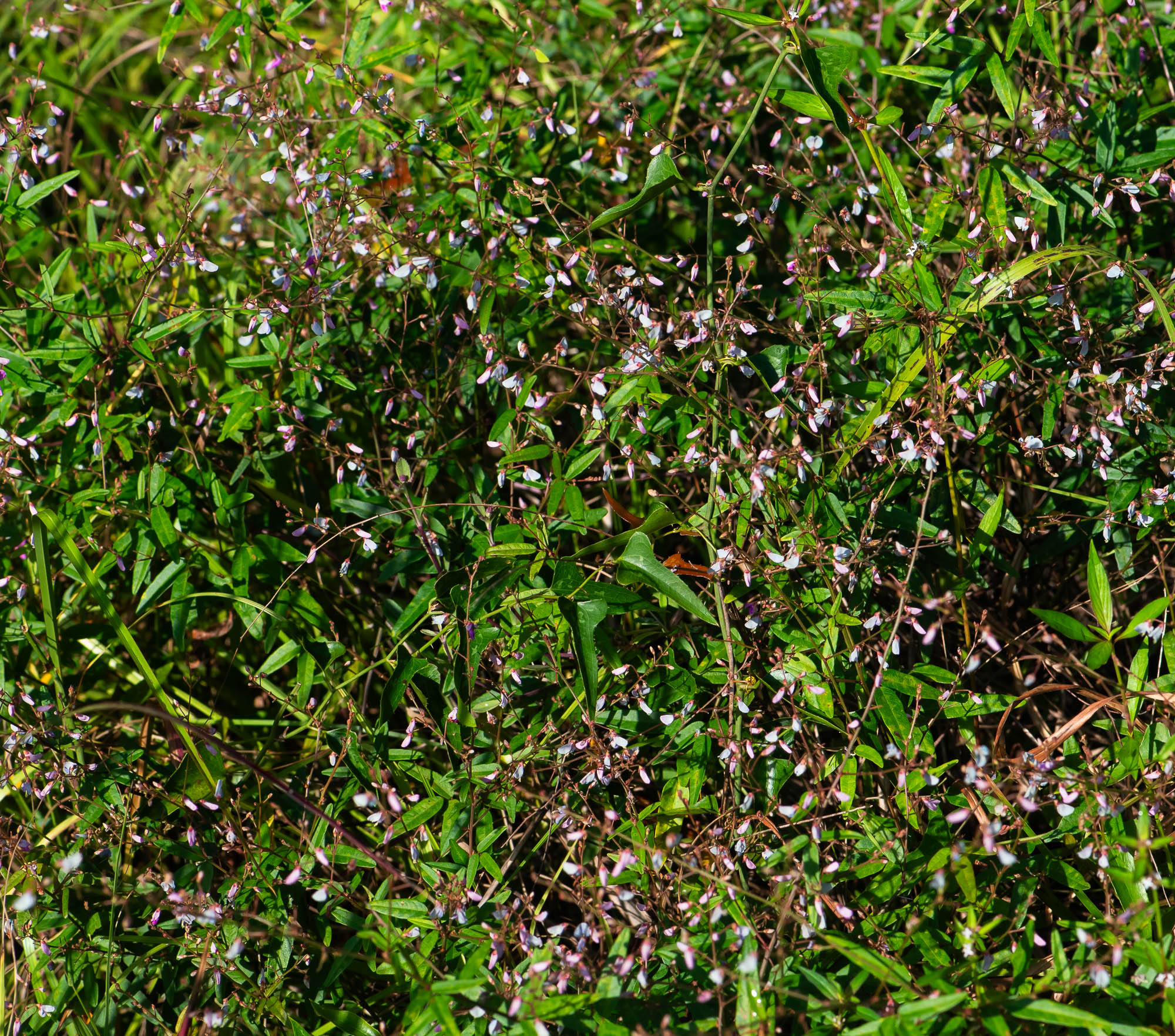
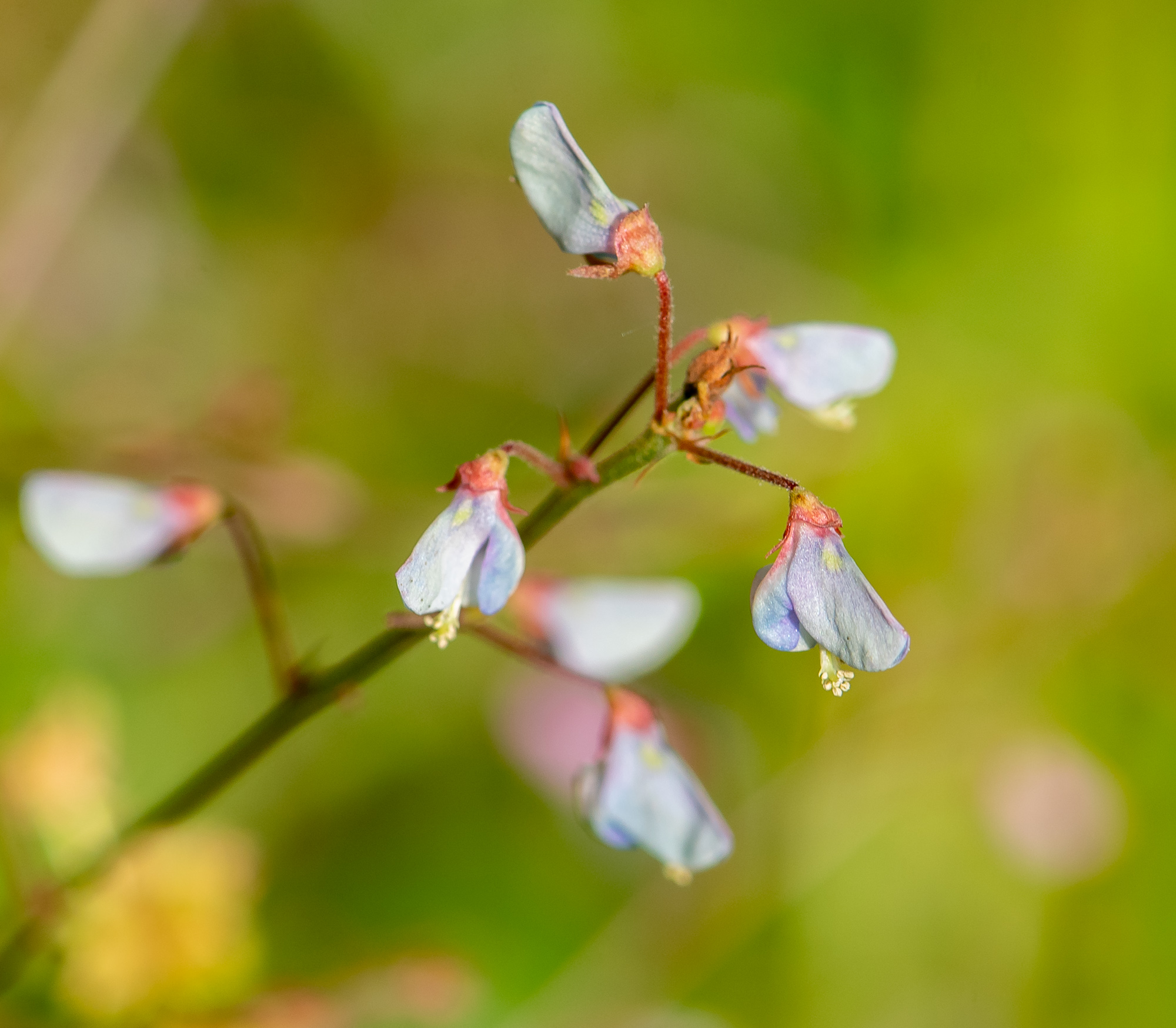
Panicled Ticktrefoil (Desmodium paniculatum). Long name for a very small flower. It forms fairly dense undergrowth which is fun to slog through. We grew up calling it “beggarlice”. Some call it “velcro plant”. The seeds love to stick to your clothing which provides endless hours of fun when you return home and she says you have to remove all those things before tossing your pants into the laundry.
You know it’s autumn around here when the Pine Warblers show up in flocks and no bug is safe.
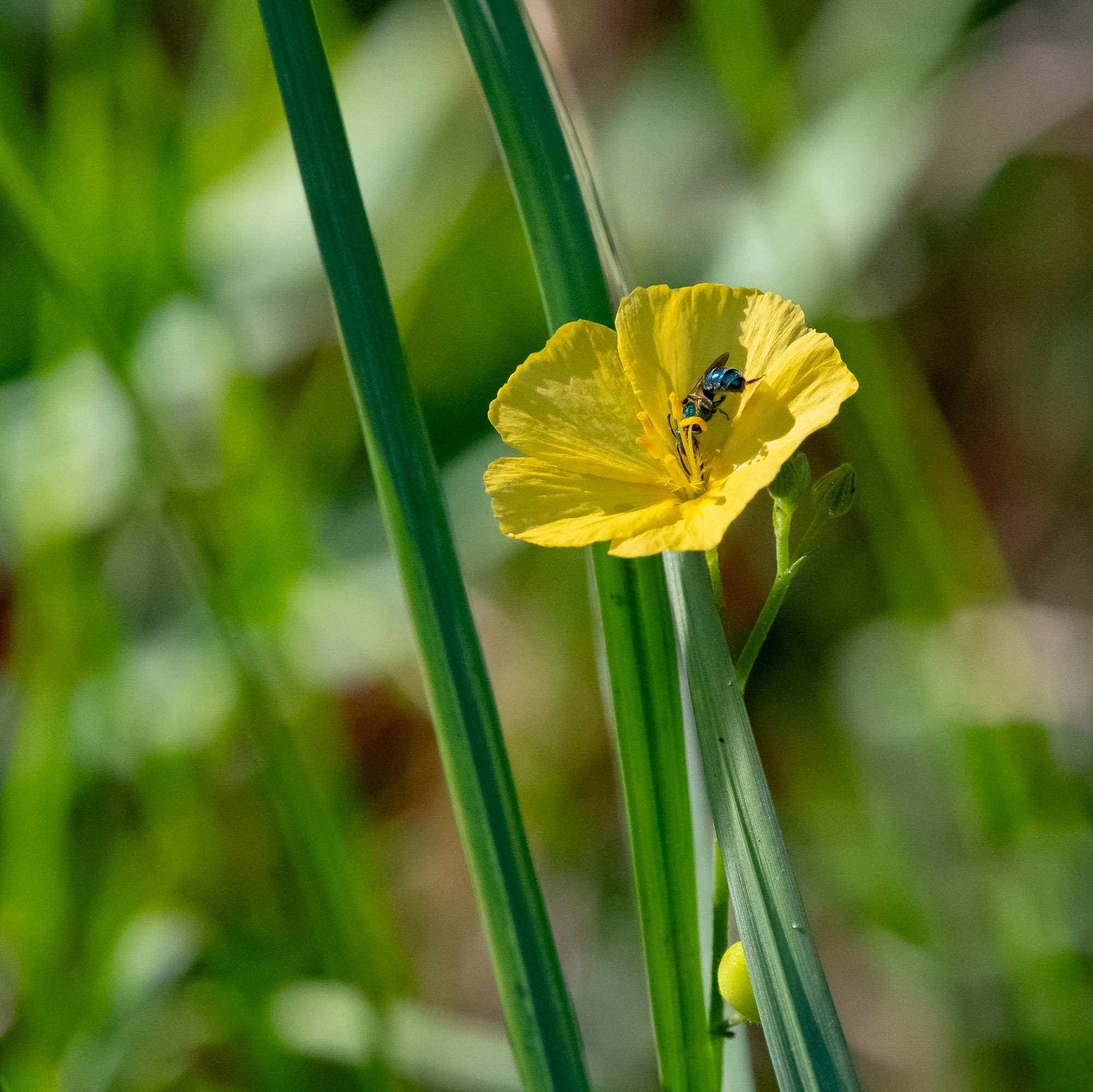
With petals which remind me of paper, the butter-colored Pitted Stripeseed (Piriqueta cistoides subsp. caroliniana) offers sweet nectar for a Brown-winged Striped Sweat Bee (Agapostemon splendens).
A group of White Ibises greeted us as we entered the park this morning. Immature birds are brown during most of their first year and become mottled before attaining the pure white of an adult.
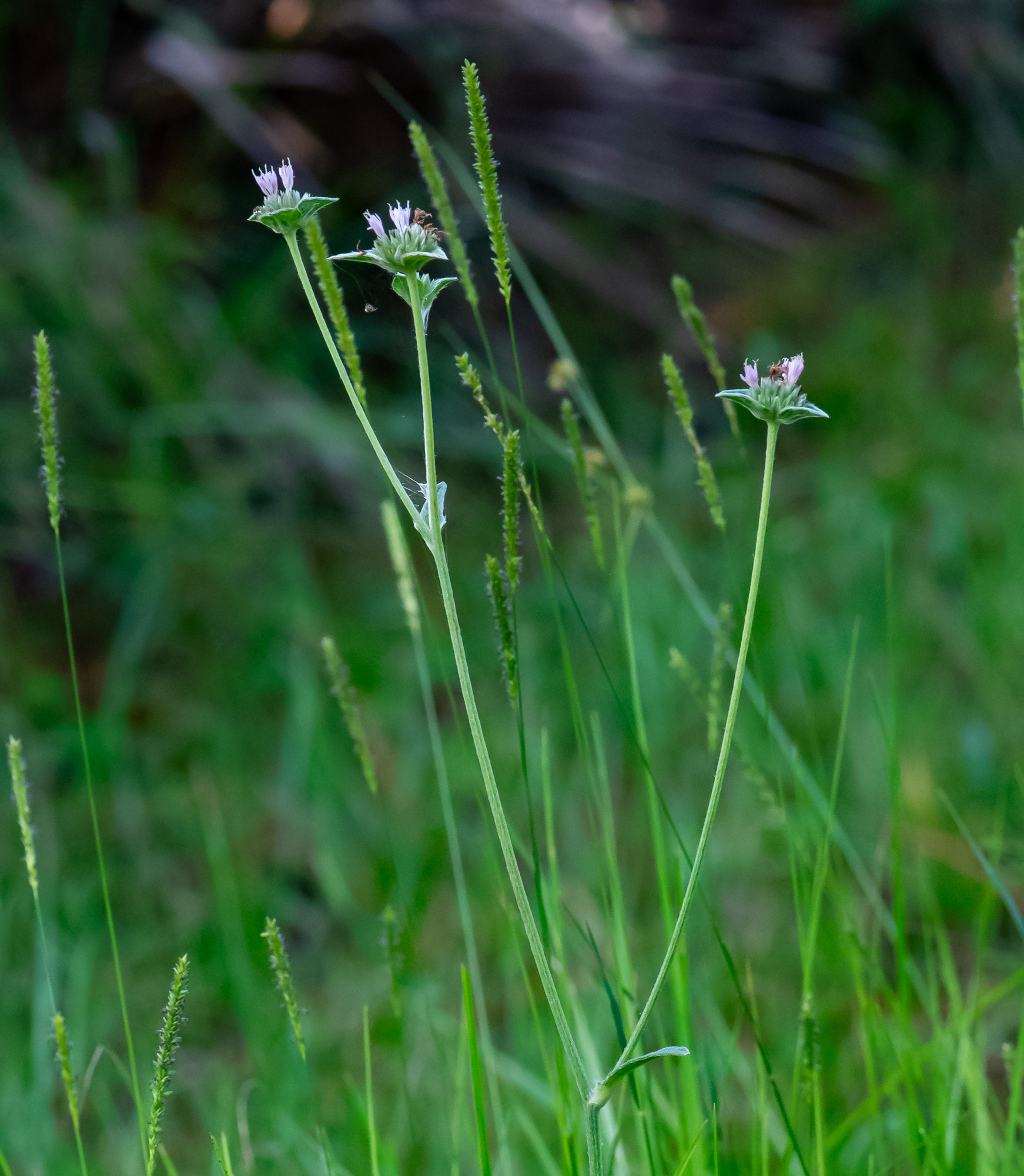
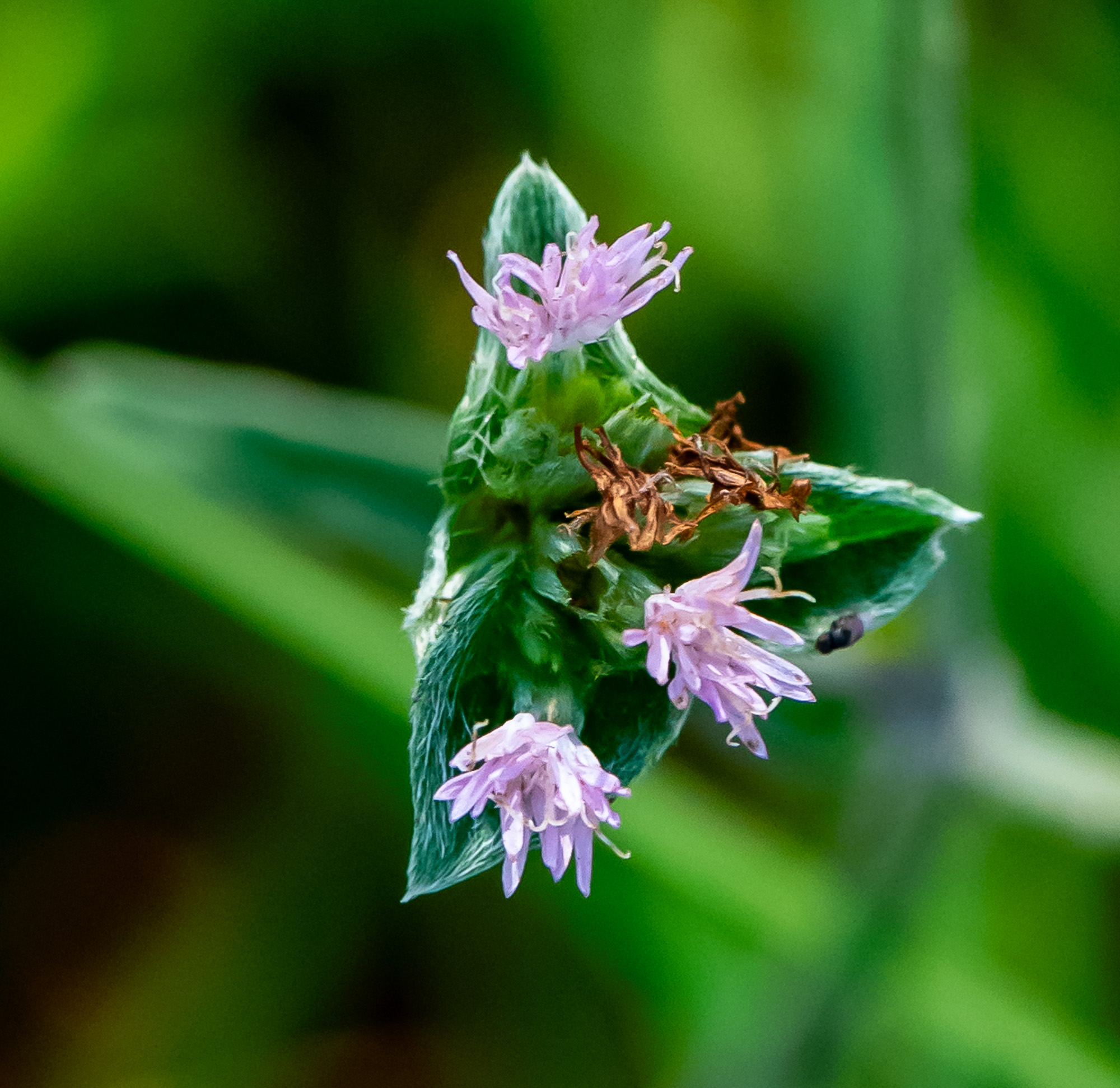
I have tried, but just can’t conjure up what some botanist saw when they named the Tall Elephantsfoot (Elephantopus elatus). No matter. It’s a unique plant with lovely flowers.
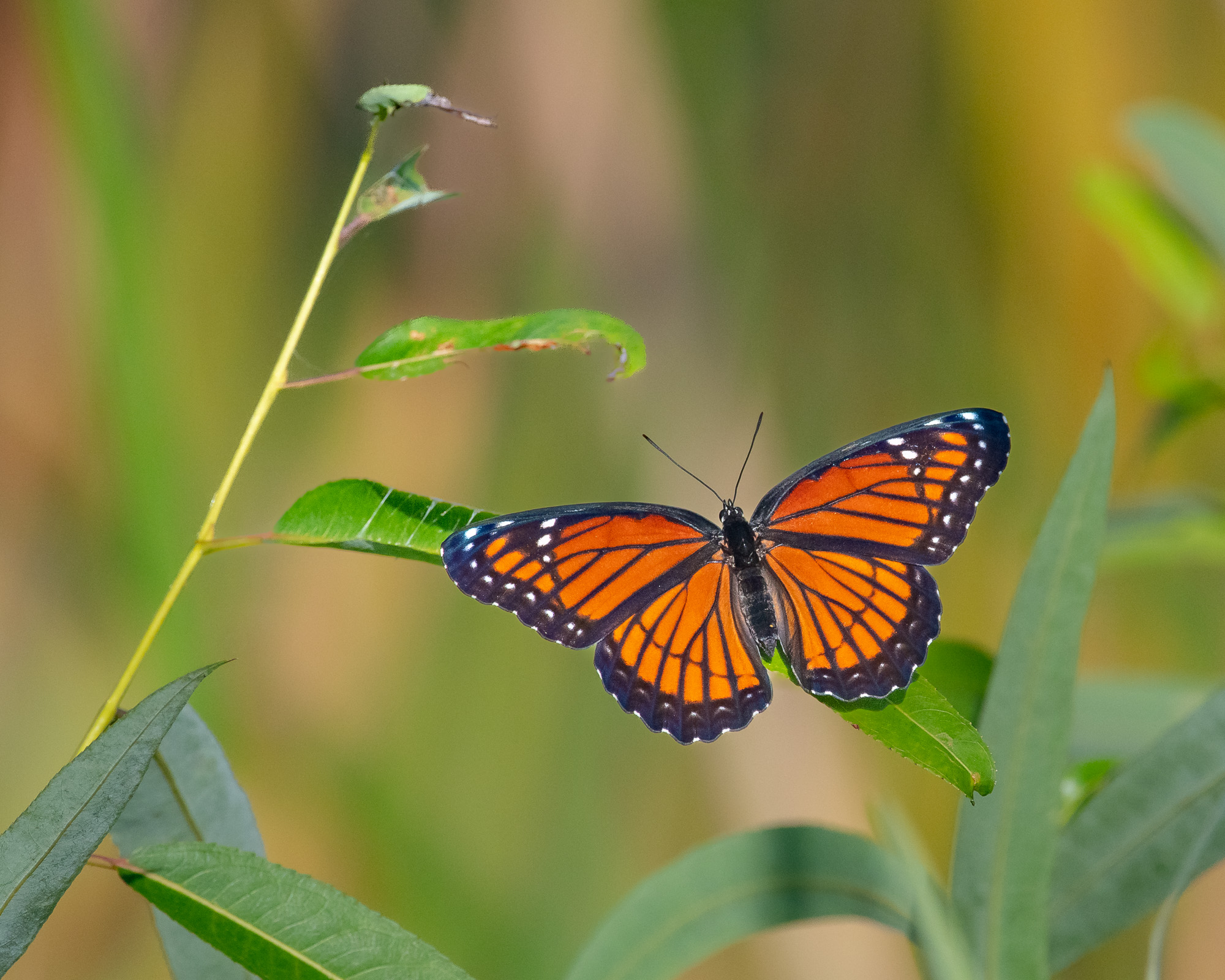
Although they are only very distantly related, the Viceroy (Limenitis archippus) is similar in appearance to the Monarch (Danaus plexippus). The scientific community is divided on whether the Viceroy is a Batesian mimic (a butterfly that is palatable, but mimics an unpalatable species to avoid predation) or a Mullerian mimic (a mimicry involving two unpalatable species). We did not taste this one to check for palatability.
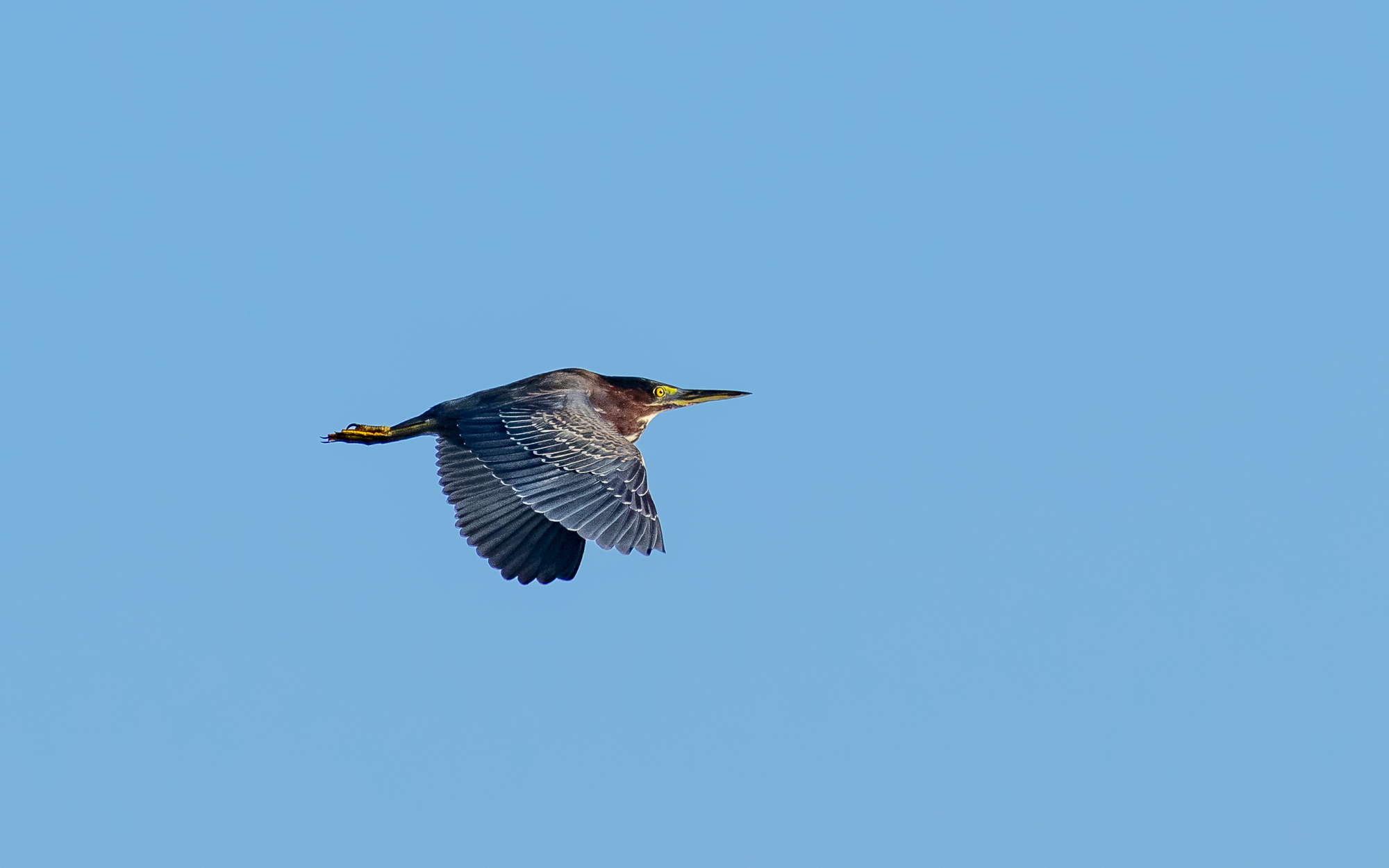
As we finished breakfast, a Green Heron flew from one side of Mac Lake to the other.
American Alligator (Alligator mississippiensis). To clarify statements from past blog posts, Florida does not actually have a law that says we must include an image of an alligator in each post. But how can we resist anything this cute?
Sleepy Orange (Abaeis nicippe) was one of the most abundant butterfly species we saw throughout the day.

As we focused on the Eastern Bluebird, it was focusing on a photo-bombing dragonfly.
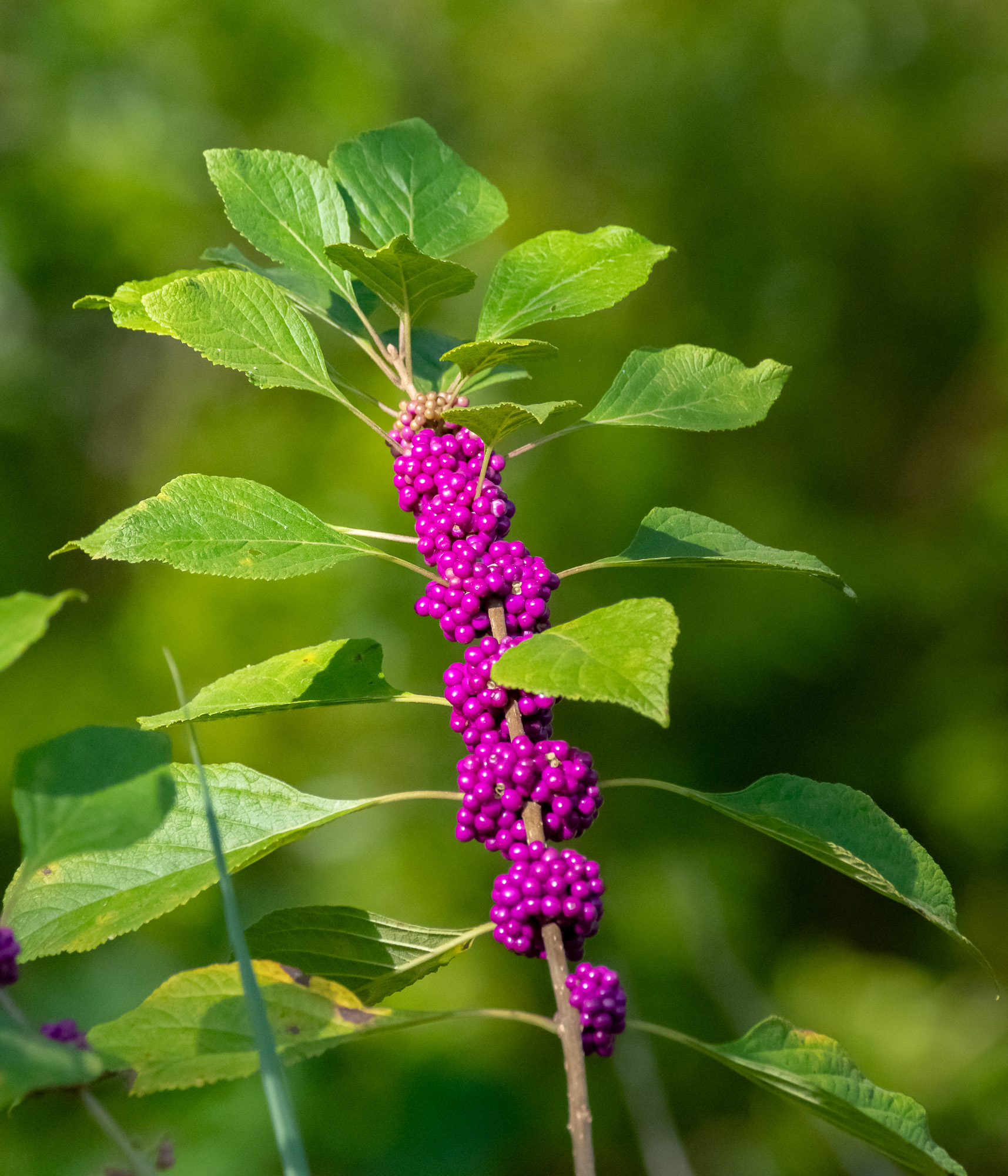
Part of our “autumn color” is the bright American Beautyberry (Callicarpa americana). We have read that the berries can be made into jelly and that the leaves, when crushed and rubbed on the skin, may repel biting insects. Verify these things BEFORE you decide to try them!
Another fall visitor, the Prairie Warbler, showed up in several locations this morning. More evidence that fall migration is underway.

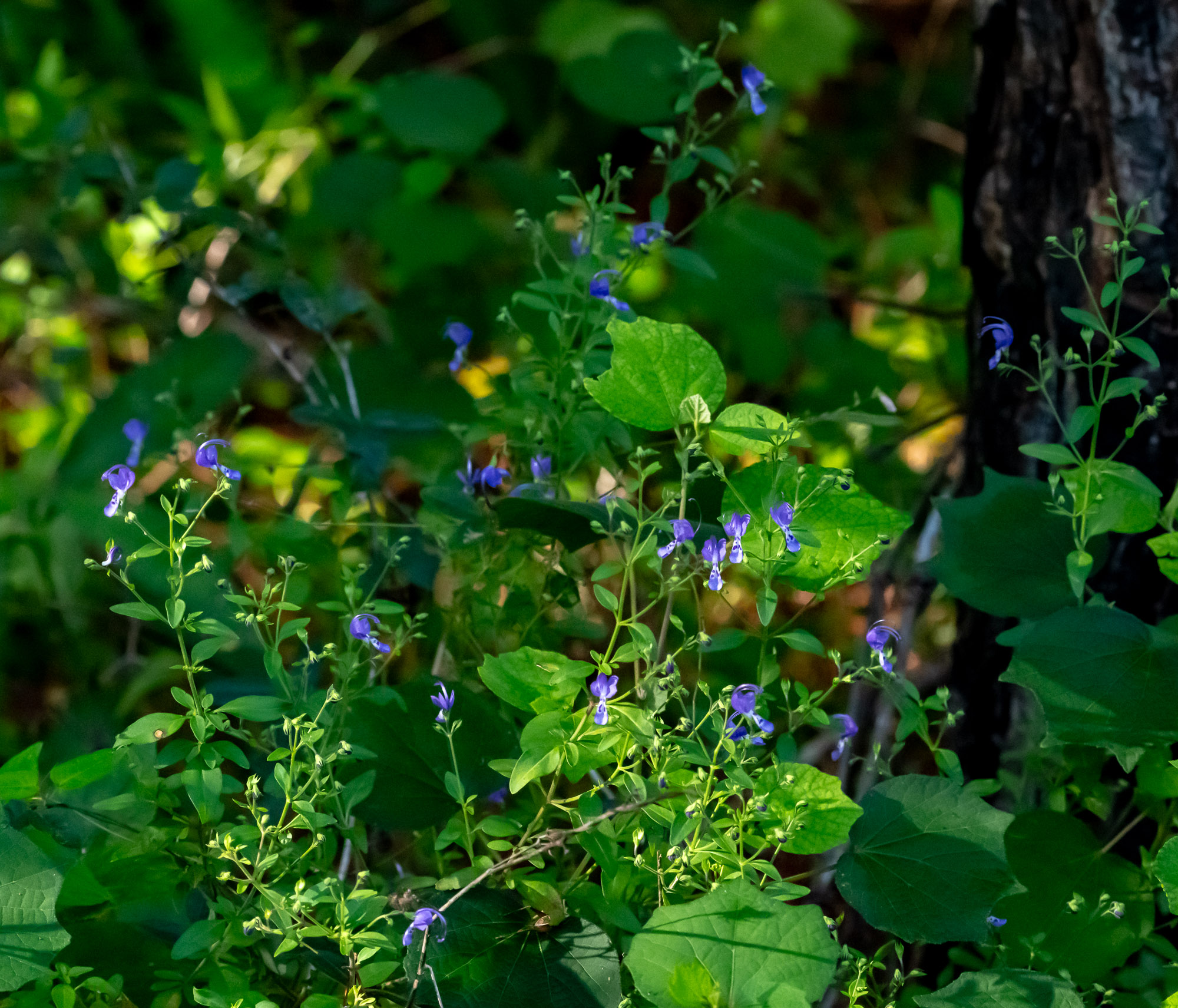
With lovely bluish-purple blooms, Forked Bluecurls (Trichostema dichotomum) attract plenty of nectar seekers, especially bees.

Once again, we spent a couple of very satisfying hours exploring Colt Creek State Park. Stay tuned for the thrilling conclusion of the day’s events as next time we will still be Falling Down On The Job.
Enjoy your search for a natural place and come back for a visit!
Additional Information
Colt Creek State Park – https://www.floridastateparks.org/parks-and-trails/colt-creek-state-park
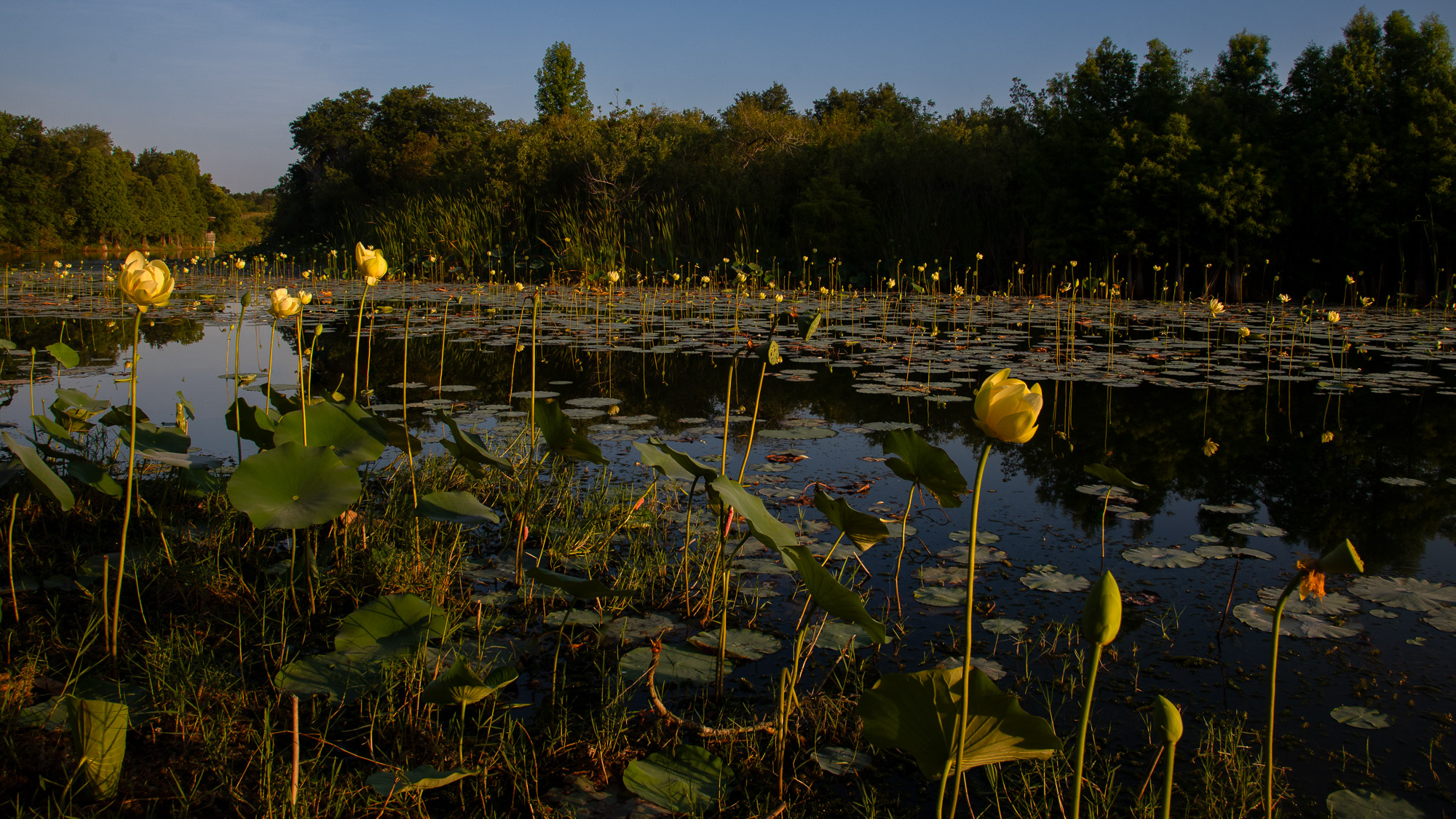
(Click on images to enlarge, click again to zoom.)
Summertime. Hot. Humid. Perfect.
Starting early helps maintain a modicum of comfort. Until the sun rises above the tree line. Now it’s like a sauna. With bugs.
Sauntering around in a sweltering swamp is, admittedly, not everyone’s cup of chai. The distant calls of Barred Owls and an overflight of a couple dozen White Ibises help take one’s mind off any discomfort. Our day has begun.
It was early June of this year and the stresses of impending heart surgery and destructive hurricanes were not on our radar. Flowers were blooming, the birds were feeding new chicks, dragonflies lounged among the reeds. We relaxed in each other’s company. Conversation about family, interrupted by the scream of a Limpkin. Breakfast by the lake as the sun put its spotlight on an alligator in the shallows waiting for his own breakfast to swim by.
We still marvel at our good fortune of having this oasis exactly seven minutes and thirty-five seconds away from our house. Amazing.
Return with us now, to those thrilling days of summer in central Florida!
Breakfast bar for ‘gators.
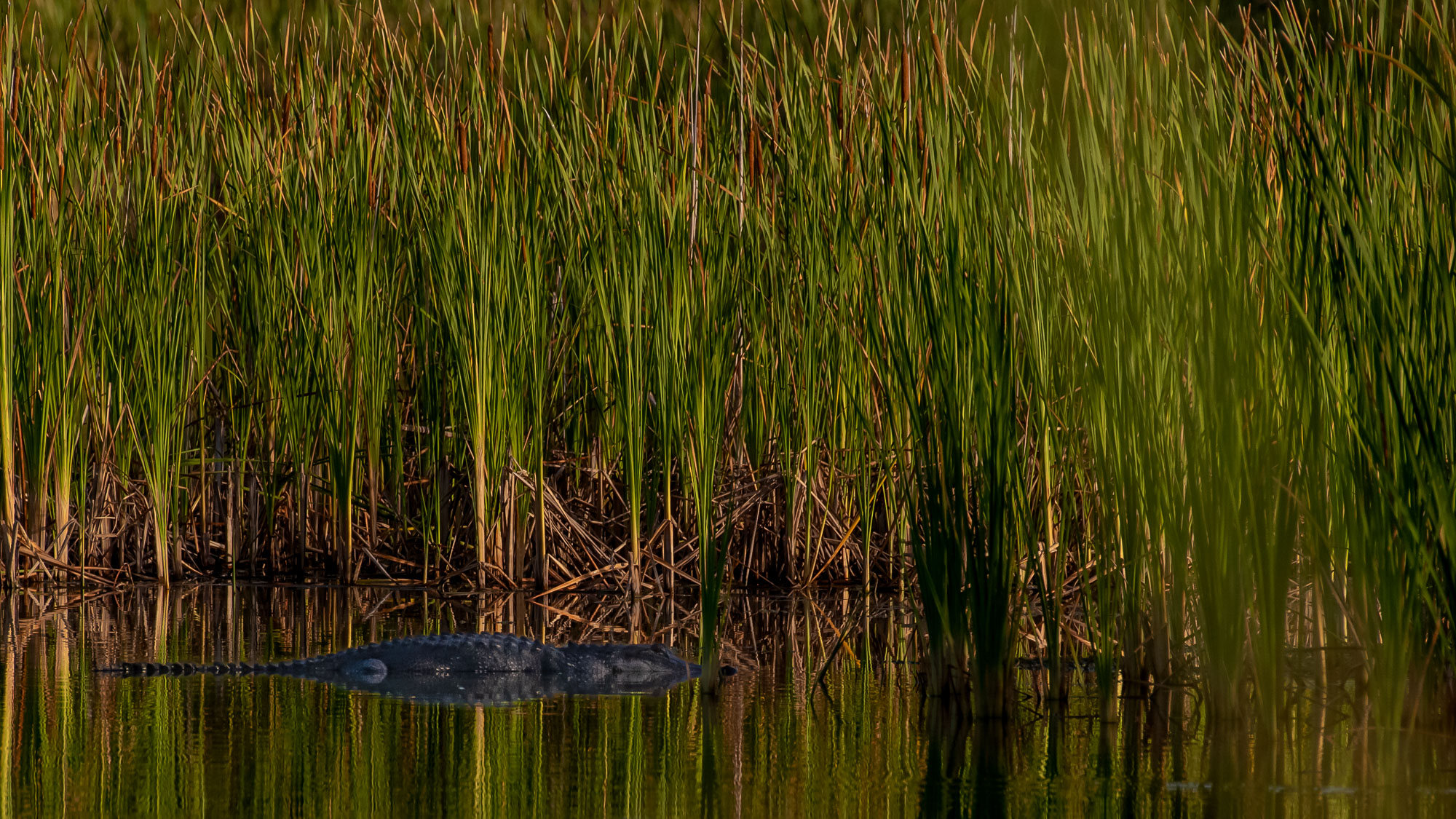
We are constantly surprised at the things a Great Blue Heron will attempt to eat. This one eventually proved too much to swallow. Perhaps the above alligator will find it later.

Trumpet Creeper (Campsis radicans) loves to climb. It’s been known to reach 30 feet and more as it wraps around tall tree limbs. Hummingbirds love the nectar of these blooms. Alas, not today.
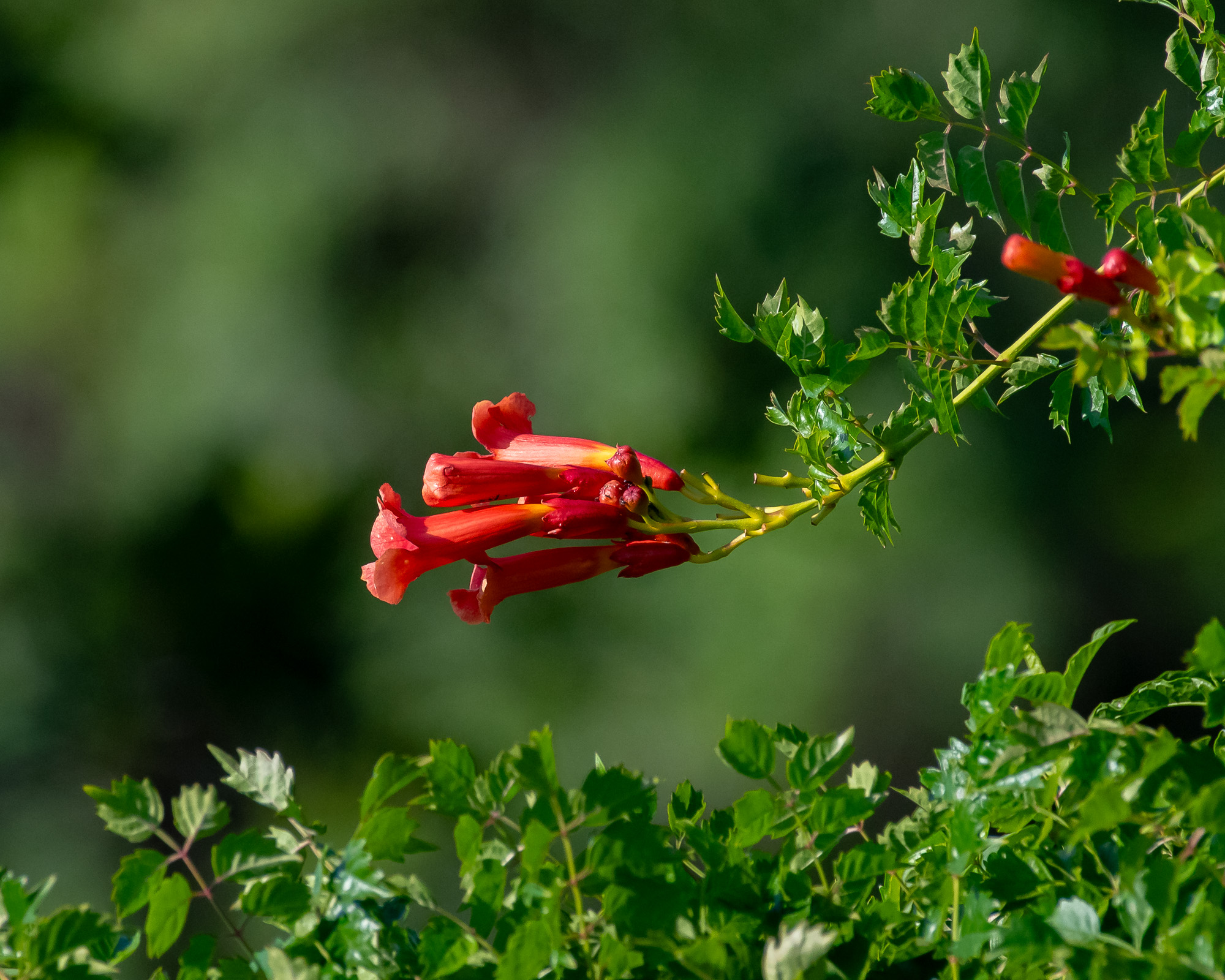
Escargot hunter. Limpkins are the only member of their genus. Watching them use their scissor-like bill to extract an Apple Snail from its shell is fascinating.

Camphorweed, Stinkweed, Salt marsh fleabane, Sourbush and Cattle-tongue are a few of the common names of the plant known as Sweetscent (Pluchea odorata). Having crushed the leaves and inhaled, I don’t detect the “sweet” part. At all. Other members of the camphorweed family are even less appealing.

This male Eastern Pondhawk (Erythemis simplicicollis) may appear to be relaxing. If another insect flies by, he’ll become active in a hurry.

Quite the versatile plant, Climbing Hempvine (Mikania scandens) has been used for livestock fodder, cover crops and even medicinally. We love finding it as it is a larval host for the small and lovely Little Metalmark (Calephelis virginiensis) butterfly.

At first glance, some are confused as to what species this bird might be. Female Red-winged Blackbirds can be a challenge.
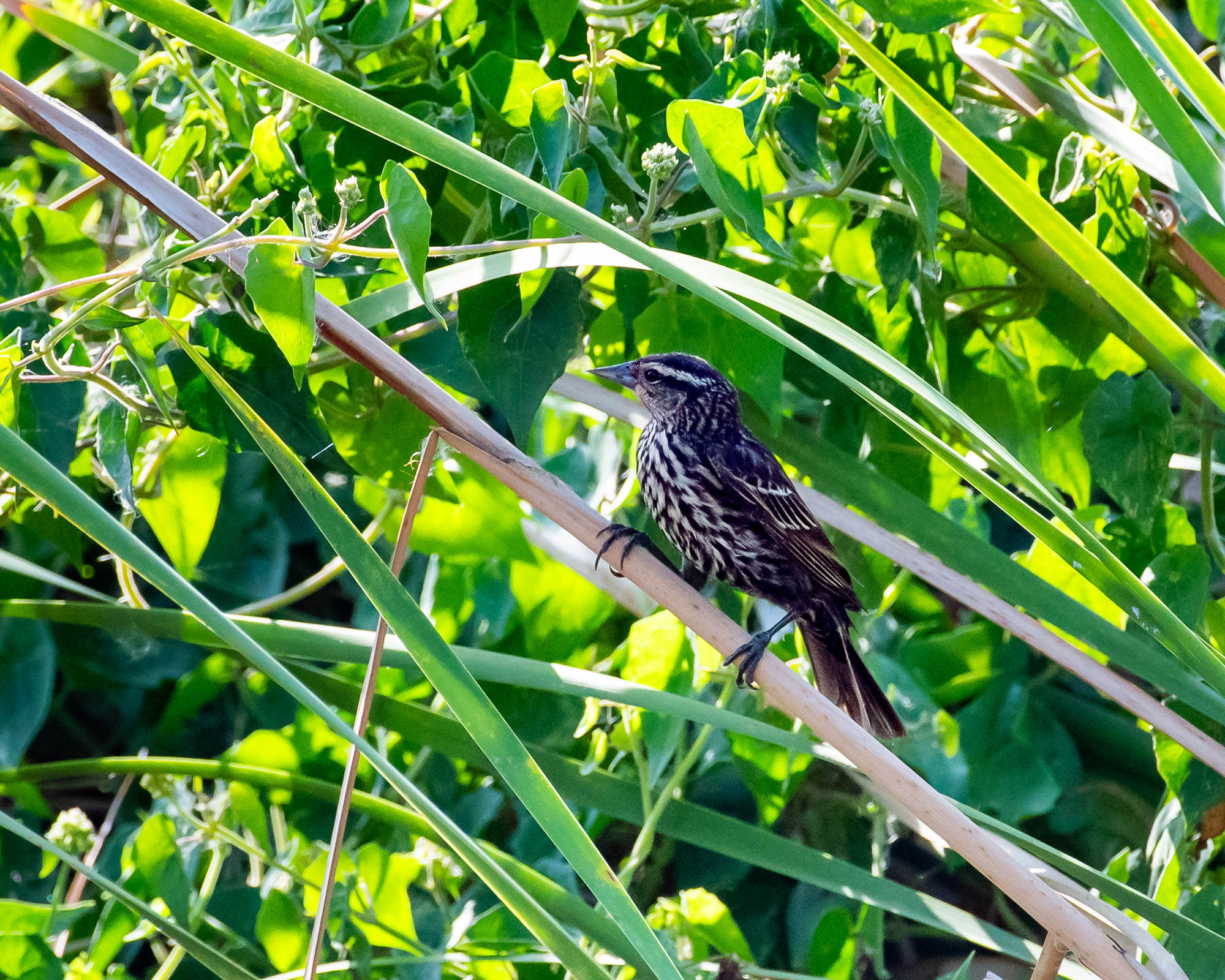
More often than not, Grassleaf Lettuce (Lactuca graminifolia) looks very scraggly and unkempt. Then you see the flower. Suddenly, the plant transforms into quite the beauty.

Our most common raptor is the Red-shouldered Hawk. Their sharp eyes don’t miss much. Especially lizards and frogs.

A patch of small sky-blue blooms grabbed our attention. As we drew near, the familiar forms of Whitemouth Dayflowers (Commelina erecta) brought our morning to a close.
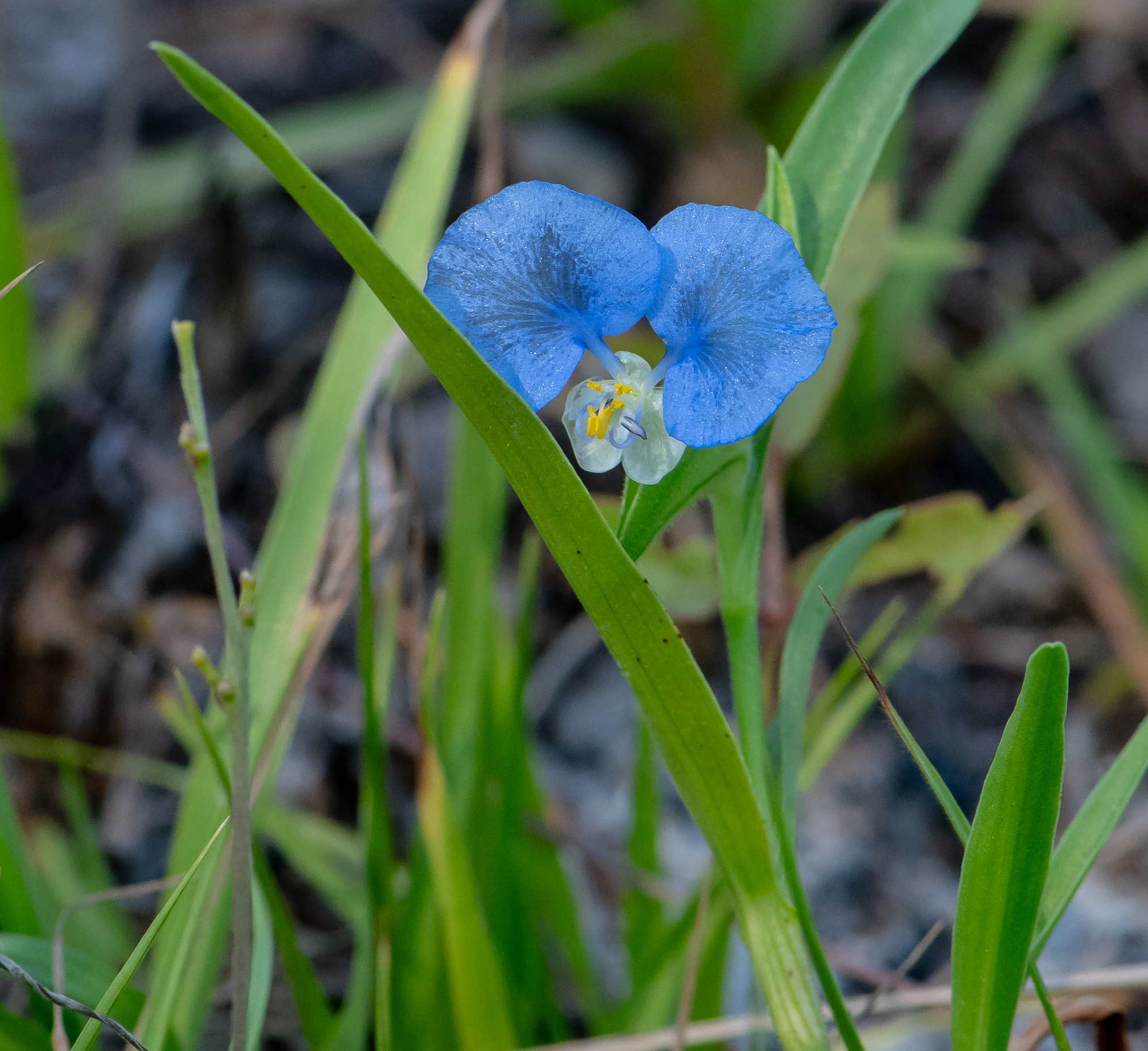
Yes, our central Florida summers are hot and humid. Yes, we have gnats and mosquitoes. Yes, we have snakes and alligators. Yes, we wouldn’t have it any other way.
Enjoy your search for a natural place and come back for a visit!

(Click on images to enlarge, click again to zoom.)
The turn-off is immediately after the bridge. I almost always miss it and have to do a U-turn. One problem is the highway is a shortcut for 18-wheelers heading for Interstate 75, typically from Interstate 4 to the south. The road saves them quite a bit of time as they don’t have to travel to where the two expressways intersect on the edge of Tampa. Early morning commuter traffic in that area is legendary. (The meeting of those two roads is referred to as “malfunction junction“.
Our little two-lane road through the swamp is a straight shot for 50 miles and the big trucks waste no time moving north. In the dark and often foggy pre-dawn, poking along searching for our turn-off can get dicey in a hurry as several behemoth transports traveling at 80+ mph are loathe to brake for small animals and cars who might be in their way. So, now you know my excuse for driving past my target and opting for a safer U-turn.
Now that we are off the highway, we are in a completely different world. Dirt road, dense pine forest on either side, drainage ditches full of water, green palmetto understory. This continues for a couple of miles and gradually evolves into small bayous among oak hammocks. Here there be alligators. The scenery changes again as we are now in pine savanna habitat. Listen as the noted naturalist explorer, William Bartram, describes the exact scene at which we’re now looking (from his journals in the late 1700’s):
“We find ourselves on the entrance of a vast plain which extends west sixty or seventy miles…This plain is mostly a forest of the great long-leaved pine (Pinus palustris), the earth covered with grass, interspersed with an infinite variety of herbaceous plants, and embellished with extensive savannahs, always green, sparkling with ponds of water…”
Our Green Swamp is a very special place. With its incredibly diverse habitat, it attracts an equally diverse population of insects, amphibians, reptiles and mammals. Two of those latter are extremely thankful we are able to enjoy such boundless natural riches.
(Today’s post is from a visit we made to the Green Swamp during the last week of May this year. Our attempt to check on the condition of the area yesterday was thwarted due to flooding of all the access roads from Hurricane Milton May 9-10 last week. It’s okay. The swamp is now doing what swamps do. It collected excess water and will slowly release it into the vast underground limestone aquifer. We’ll return once the process is complete.)
A woody shrub native to the pine forests of the southeast, Tarflower (Bejaria racemosa) gets its common name from sticky flowers which entrap insects. These plants often exceed ten feet in height. They smell nice, too.
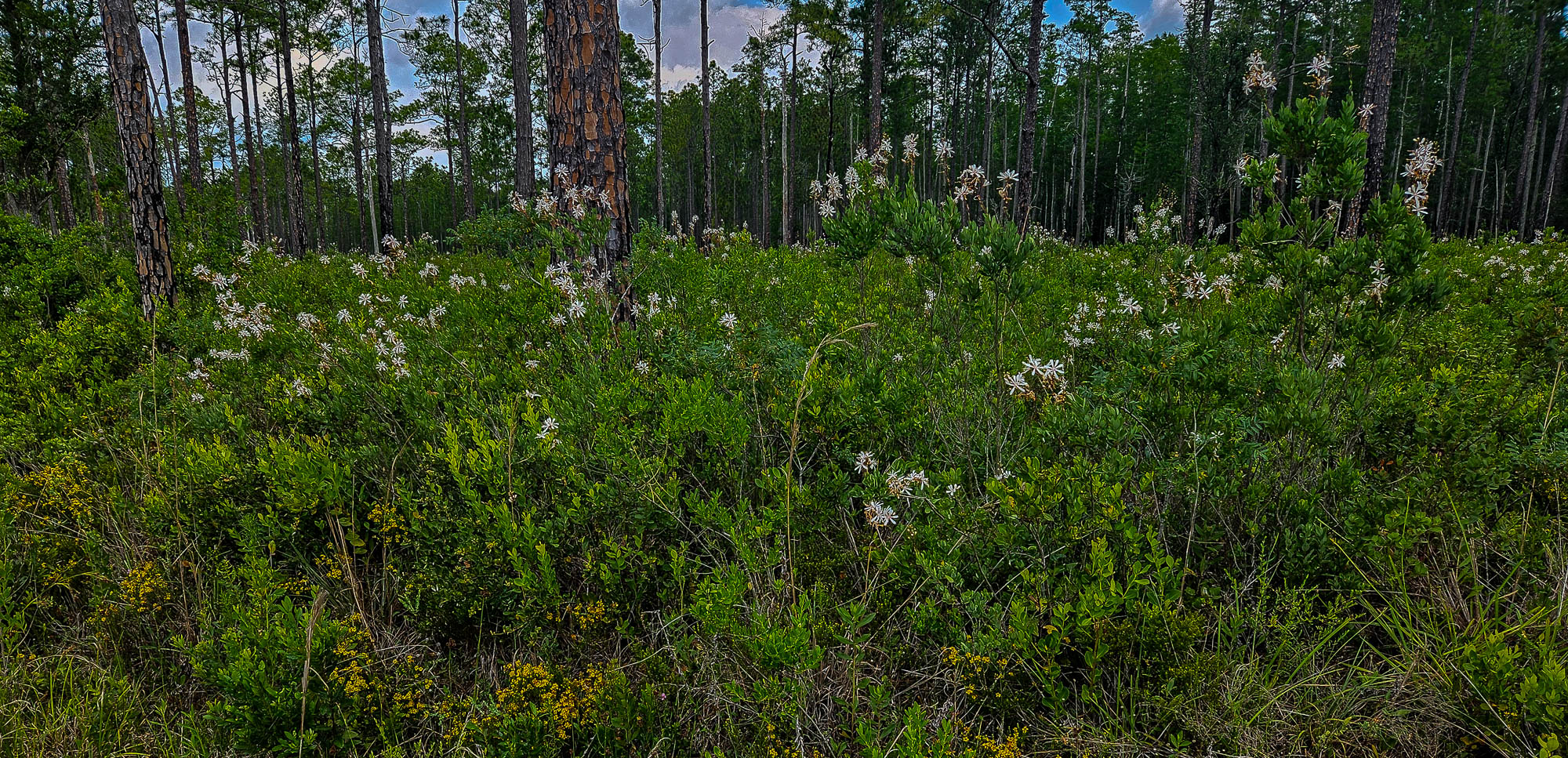

An immature male Roseate Skimmer (Orthemis ferruginea) blends nicely with his cattail perch. In a few weeks, his incredible change to lavender and pink will make him a neon sign flashing through the swamp. At which time he’ll be able to catch insects AND attract a potential mate.


Roundpod St. John’s-Wort (Hypericum cistifolium) is one of the five-petal St. John’s-Worts. It usually consists of a single stem with many flowers on top.

Always alert to potential danger, it seems there is a Tufted Titmouse at each new place we decide to explore. That’s just fine with us.

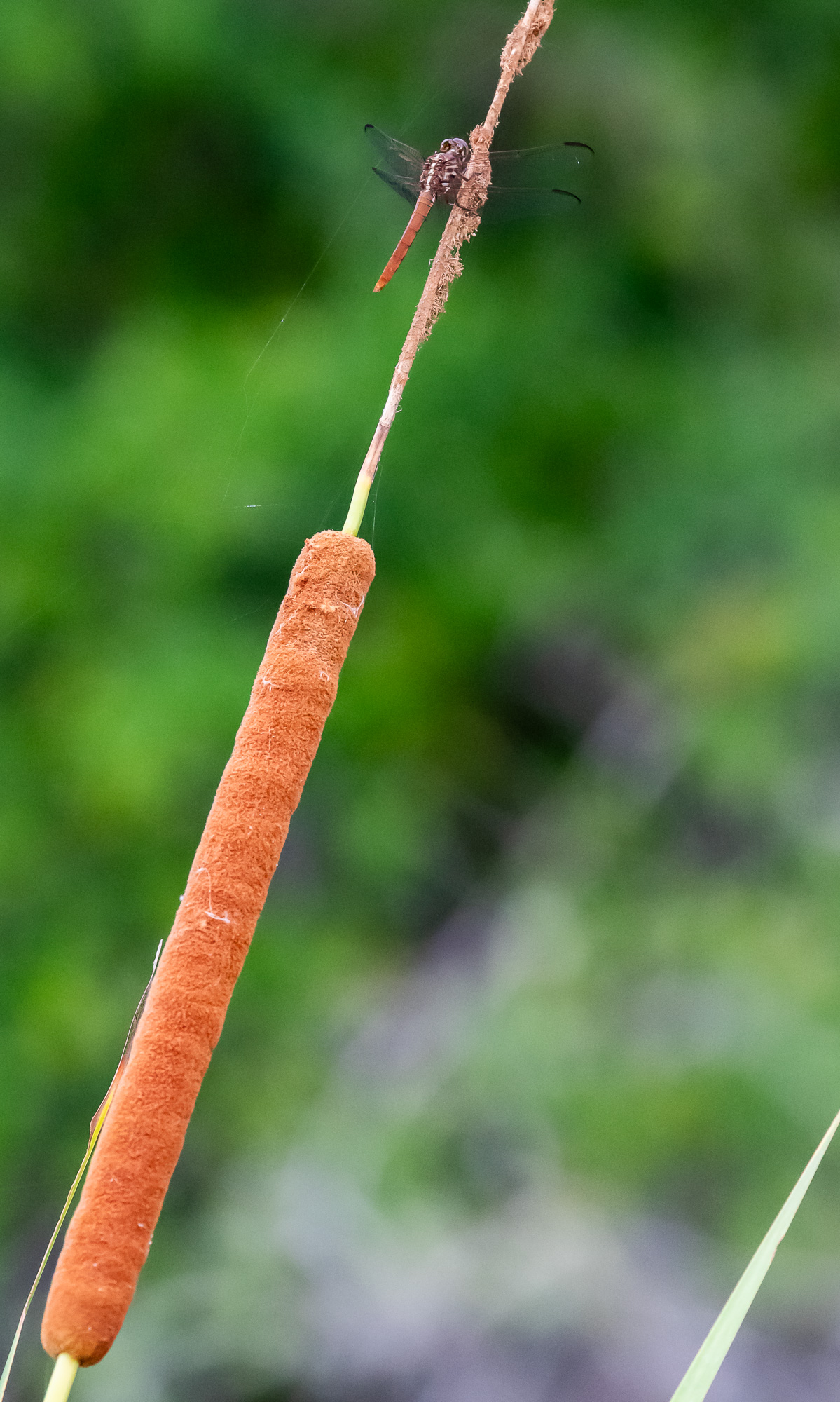
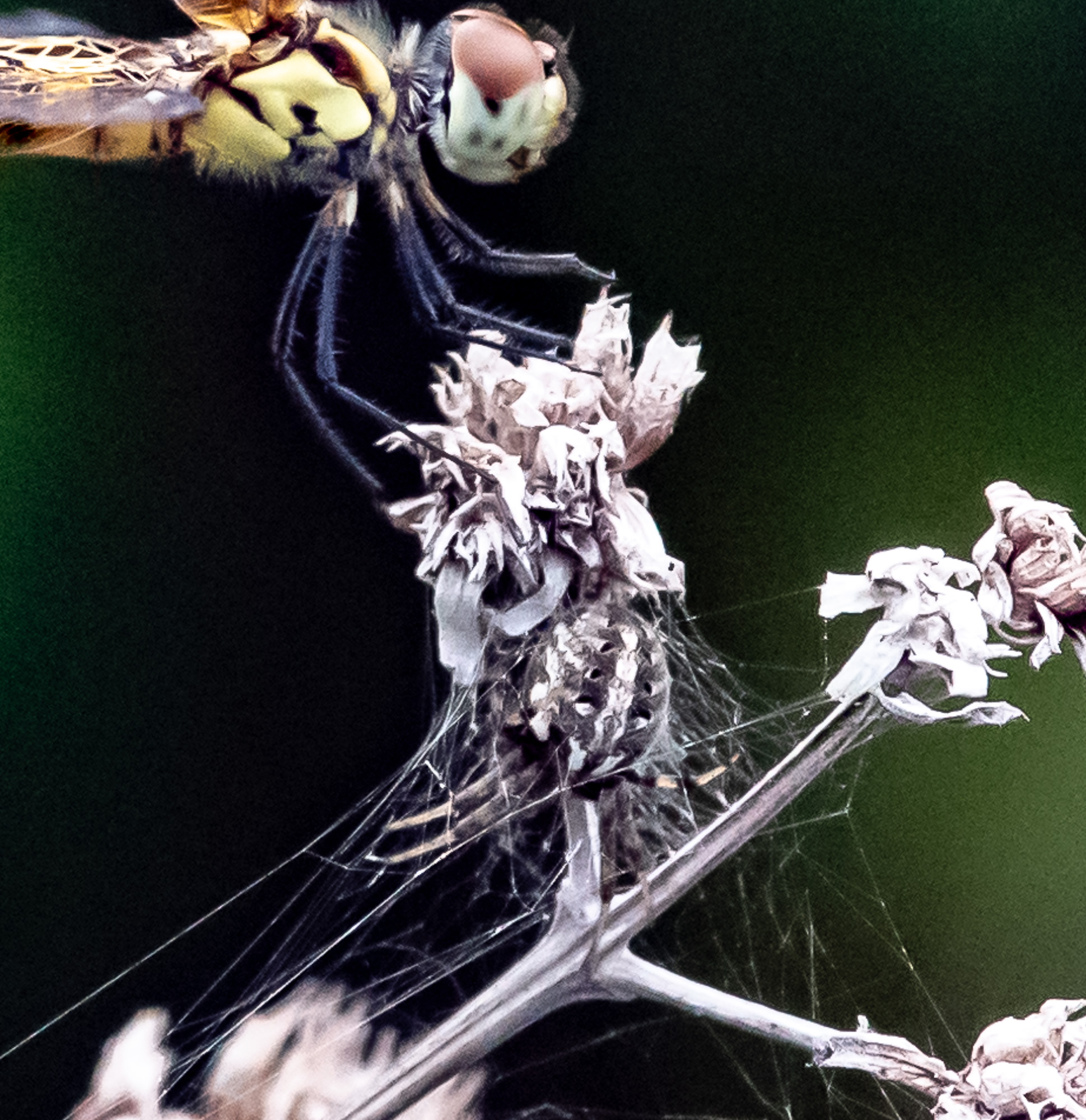
Hooray! A new dragon for us! We appear to be near the southern limit of the range for Amanda’s Pennant (Celithemis amanda). Hopefully, she won’t linger too long at this perch. Astute observers will have already noted why this wouldn’t be a good idea. A Spotted Orbweaver (Neoscona sp.) might think this lovely morsel would be perfect for brunch.

A lovely Eastern Black Swallowtail (Papilio polyxenes ssp. asterius) has no problem navigating the sharp spines of a Nuttall’s Thistle (Cirsium nuttallii).

Gini is of two minds on the small gorgeous bloom of the Showy Milkwort (Asemeia violacea). On the one hand, the flower reminds her of an elephant’s head. She also thinks these plants are very orchid-like. I agree with her on all points.

When the light is right, a Golden-winged Skimmer (Libellula auripennis) can shine as bright as any jewel.

Beautiful green leaves, simple 5-petal flowers, bright yellow and plentiful. What’s not to like about the Pitted Stripeseed (Piriqueta cistoides)?

One of our area’s larger all-dark dragonflies, a male Bar-winged Skimmer (Libellula axilena) perches atop a blooming young pine.

Also known as Sandweed, the Peelbark St. John’s-Wort (Hypericum fasciculatum) offers yet another shade of yellow in the pine forest. We love how this plant always seems to have a profusion of blooms.

Loblolly Bay (Gordonia lasianthus). I like saying the name almost as much as I love looking at this large tree with the big white flowers. A resident of wet areas, pollinators don’t care how you say the name, they really like the nectar offered by these stunning blooms.


A morning in the swamp provides so many benefits. We see, hear and experience so much that nature has to offer. Our spirits are lifted.
Enjoy your search for a natural place and come back for a visit!
We are safe and doing well. Long night with steady winds 70-80 mph with many gusts up to 100. Over 12 inches of rain in less than 12 hours. We never lost power, no damage to house, lost one small tree and wood fence is damaged. Now, cleanup begins. Again. Well, right after coffee.
Back in business soon.
Our very best wishes to you all.
Gini and Wally
Enjoying the wrath of Nature up close and personal so you don’t have to.
 Our Natural Places