Header Image: American Kestrel (Female)
The sun had been up for half an hour as we made our way along the crushed shell road. Summer. We miss the numbers of migrating birds which spend winter with us but relish the sights and sounds of our local avian residents as they go about the routine of courtship, mating, nest building and rearing a family. Northern Cardinals seem to be everywhere! Florida’s long warm season encourages them to have two or three broods each year. Eastern Towhees sing from the tall grass: “Drink-Your-Teeeeeeea“. An Osprey swoops low overhead with a fresh fish clutched in his talons and lands on a huge nest where he is greeted by Mom and Junior with open beaks. Spider webs spun during the night glisten in the morning sunshine as they have captured thousands of jewel-like dew drops. Raucous Blue Jays and Fish Crows try to chase a Red-shouldered Hawk out of the neighborhood.
A new day is underway.
One of my favorite memories from childhood is a Sunday-after-church visit to a local cafeteria style restaurant. Moving along the buffet line, I was mesmerized by the choices in front of me. I can still smell the roast beef and gravy! Unfortunately, my Mother would always insist my plate included “green stuff” or boiled carrots. Yuk. At the end of the line, the sheer volume of desserts available was almost too much for my undeveloped senses to handle. Cake? Pie? Pudding? Ice cream? Mother again: “Only one.” Sigh.
Today, Gini and I experience that sort of feeling each time we venture into Florida’s natural world. An additional benefit is Mother Nature allows us to enjoy as much as we can stand! No limits. We are so fortunate!
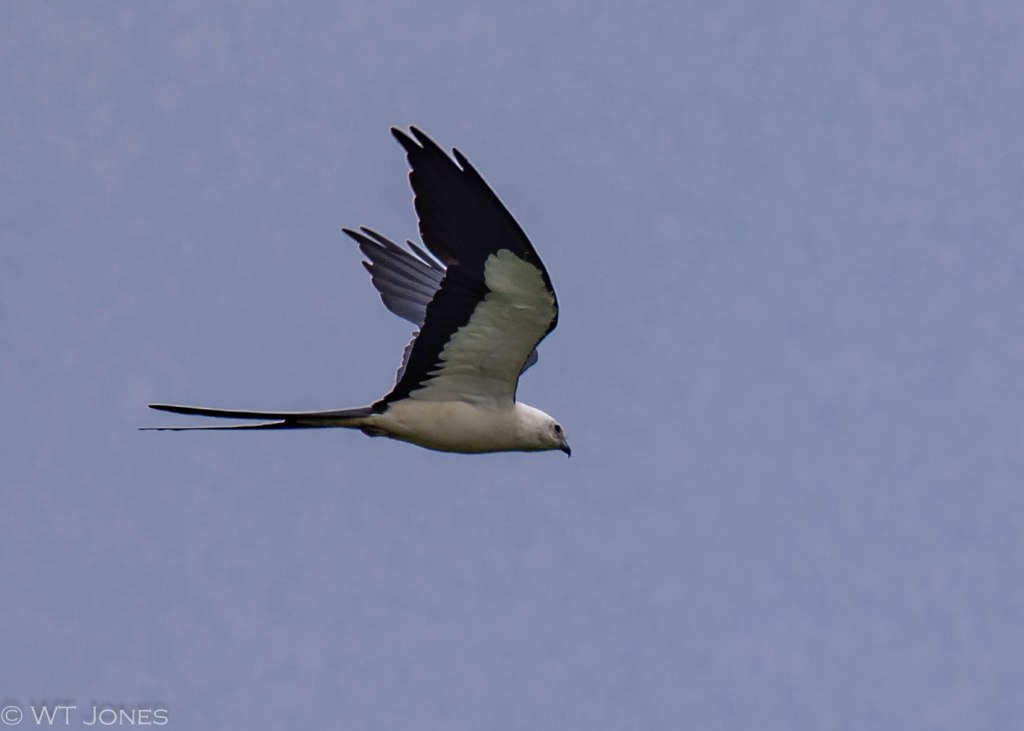
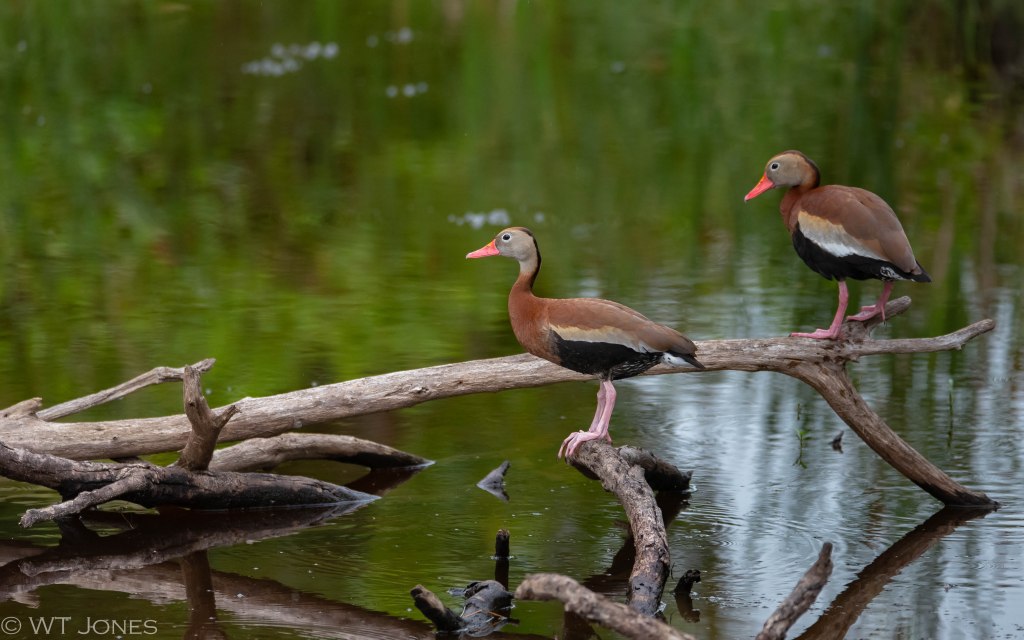
Highlights of our morning were a new family of Swallow-tailed Kites, a pair of unafraid Black-bellied Whistling-ducks, our largest hawk and our smallest falcon. Bonus: damsels, dragons and butterflies. (Oh, my!)
Grab a tray and go through the buffet line with us.
It is a joy to watch these graceful raptors hunt and often munch on their prey as they continue to fly. Habitat destruction has greatly reduced the Swallow-tailed Kites’ numbers over the years. We are very thankful they spend the summer with us.
Black-bellied Whistling-Ducks are, like most wild things, skittish and take flight when we get close. This pair remained on their log and permitted a few photographs. It occurred to me they may have a nest nearby, so I backed off and thanked them for the opportunity.
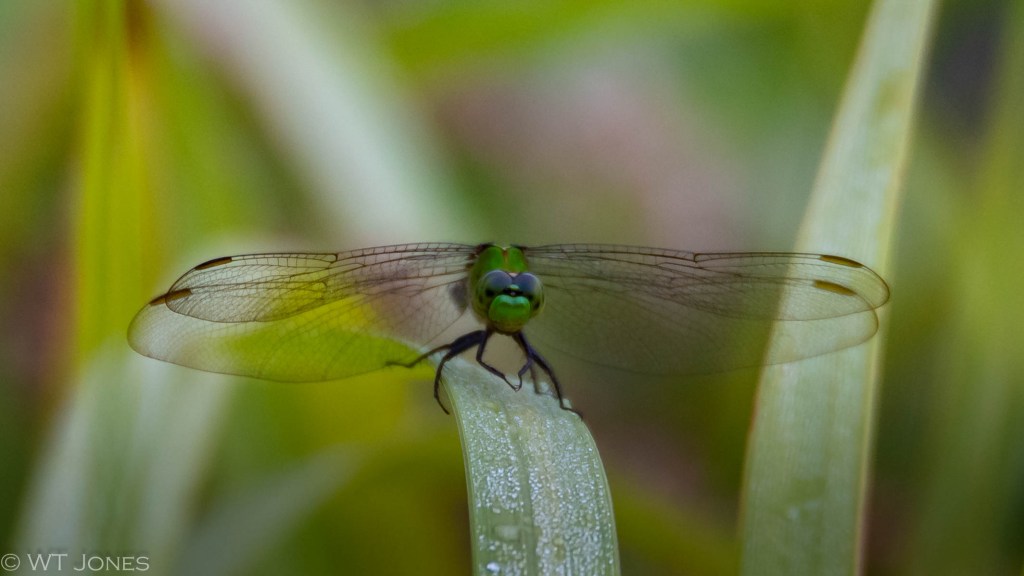
An emerald green female Eastern Pondhawk (Erythemis simplicicollis) contemplates whether to fly or attack. She remained for a moment.
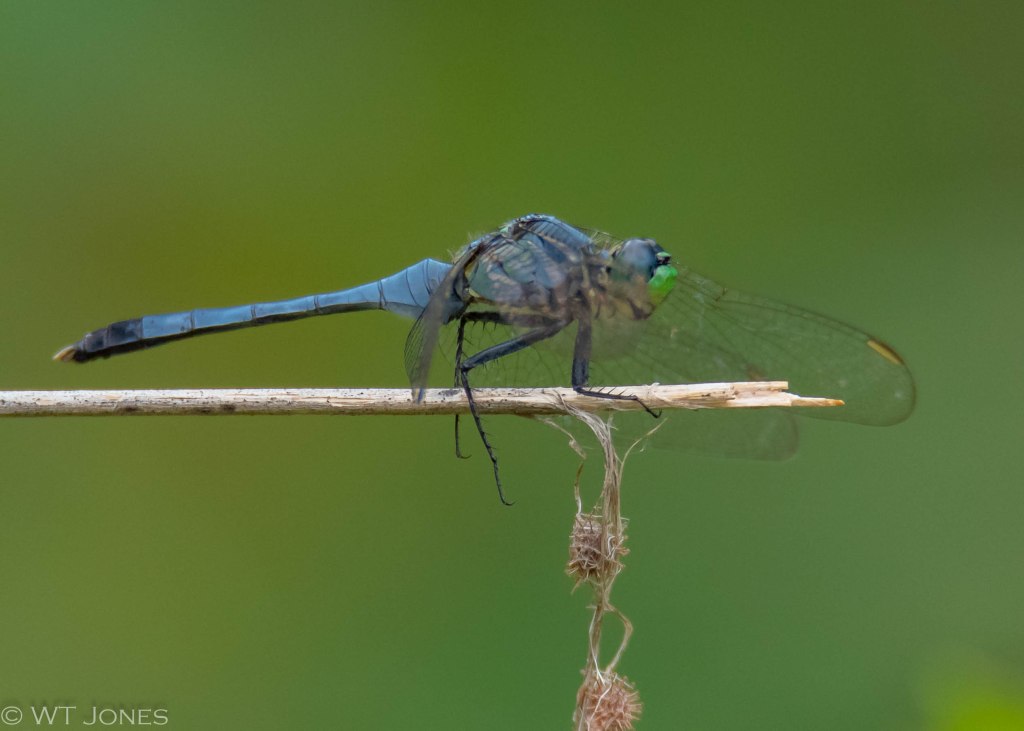
Down the road, a slate blue male Eastern Pondhawk (Erythemis simplicicollis) lies in wait for breakfast.
A young Osprey has fully fledged and we watched as he practiced his flight training for awhile. Mom was perched nearby clucking her approval.

It may be one of our more common butterflies, but the Gulf Fritillary (Agraulis vanillae) is like a flying bundle of sunshine. Bright and beautiful!

Yet another new family. Biologists have concluded American Kestrels which breed in Florida are a sub-species (Southeastern American Kestrel – Falco sparverius paulus) of the northern species Falco sparverius sparverius. We were quite fortunate to find an adult male and female with two immature birds hunting insects in a large field. North America’s smallest falcons – it was a fascinating treat to watch them work!

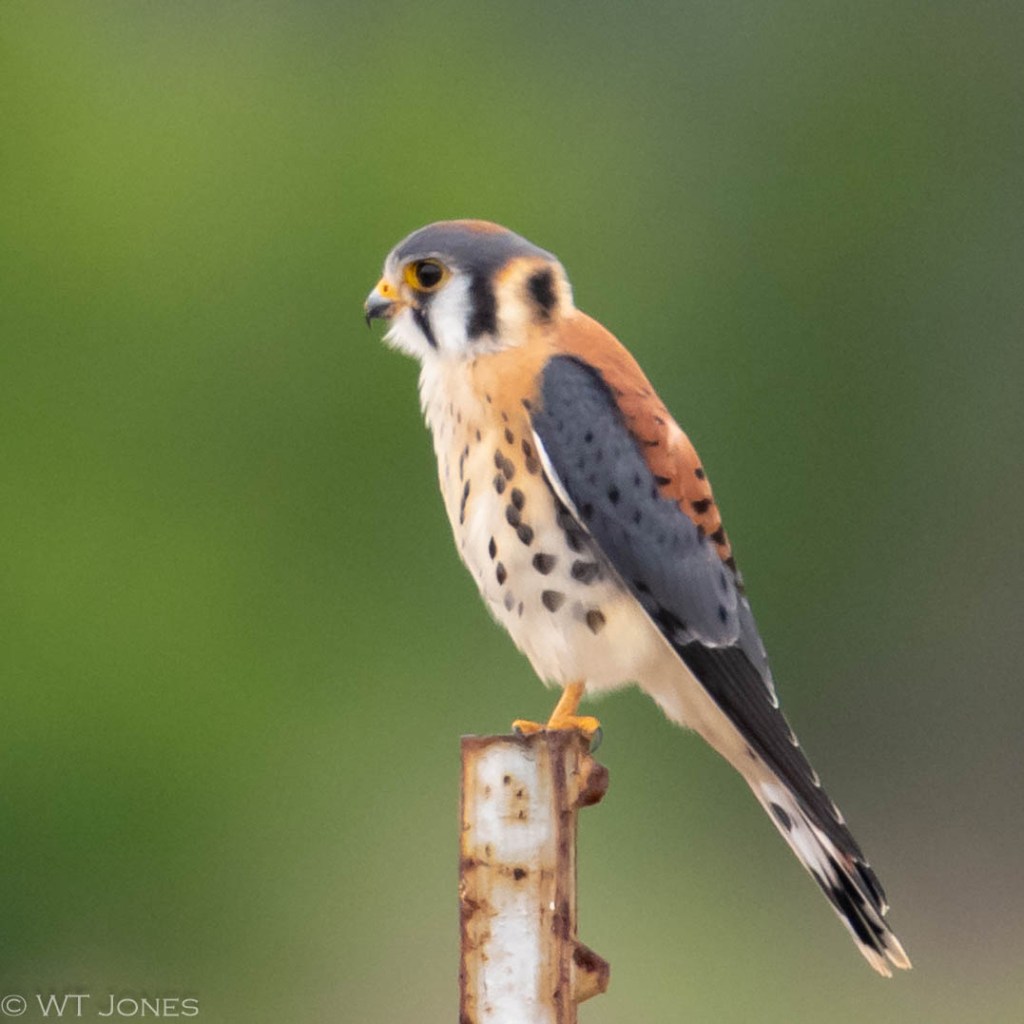
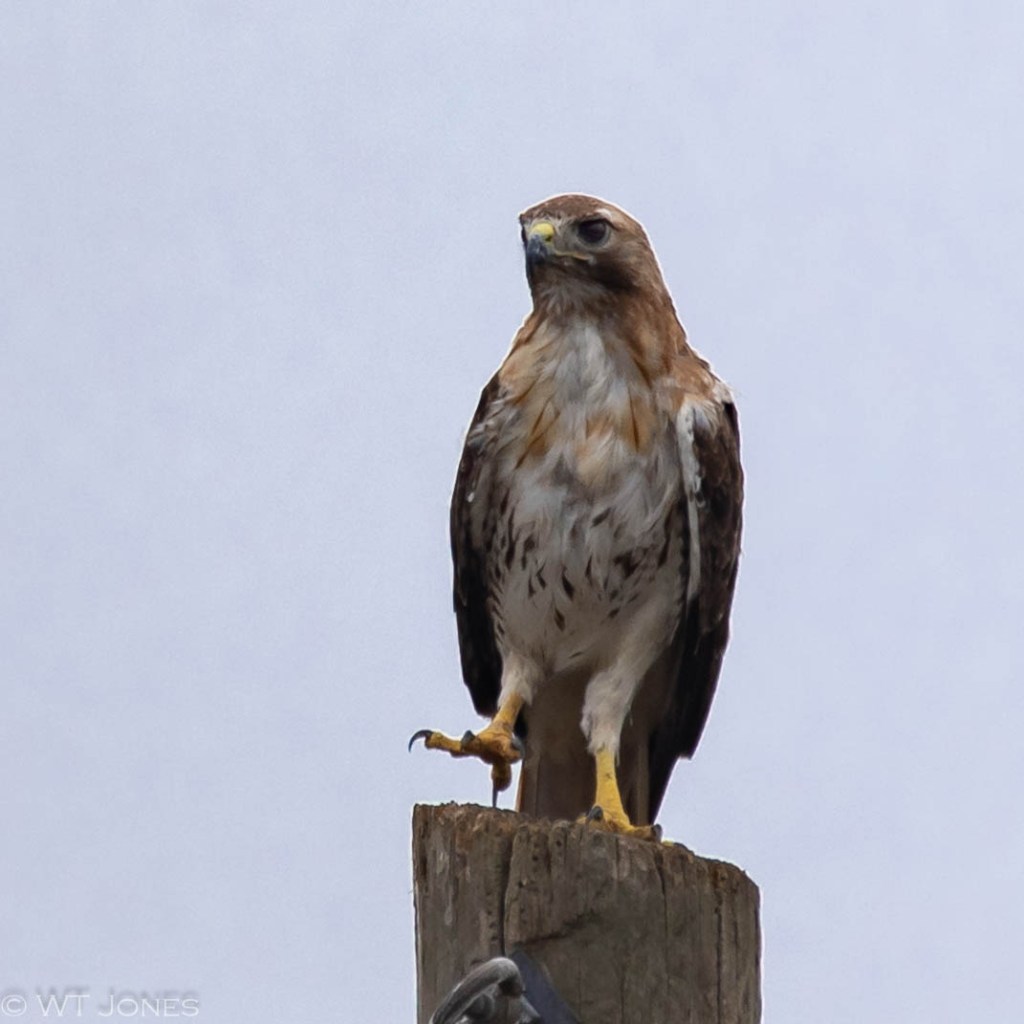
At the other end of the field where we found the Kestrels, Florida’s largest resident hawk, the Red-tailed Hawk, kept watch atop a utility pole. Once we arrived, she didn’t hang around and went in search of a hunting spot without humans pointing and gawking.

A pair of Brown Thrashers were busy flying back and forth to and from a particular tree. We suspect nest-building was in progress but didn’t actually see them carrying construction material. Perhaps they were just shopping for a good location.

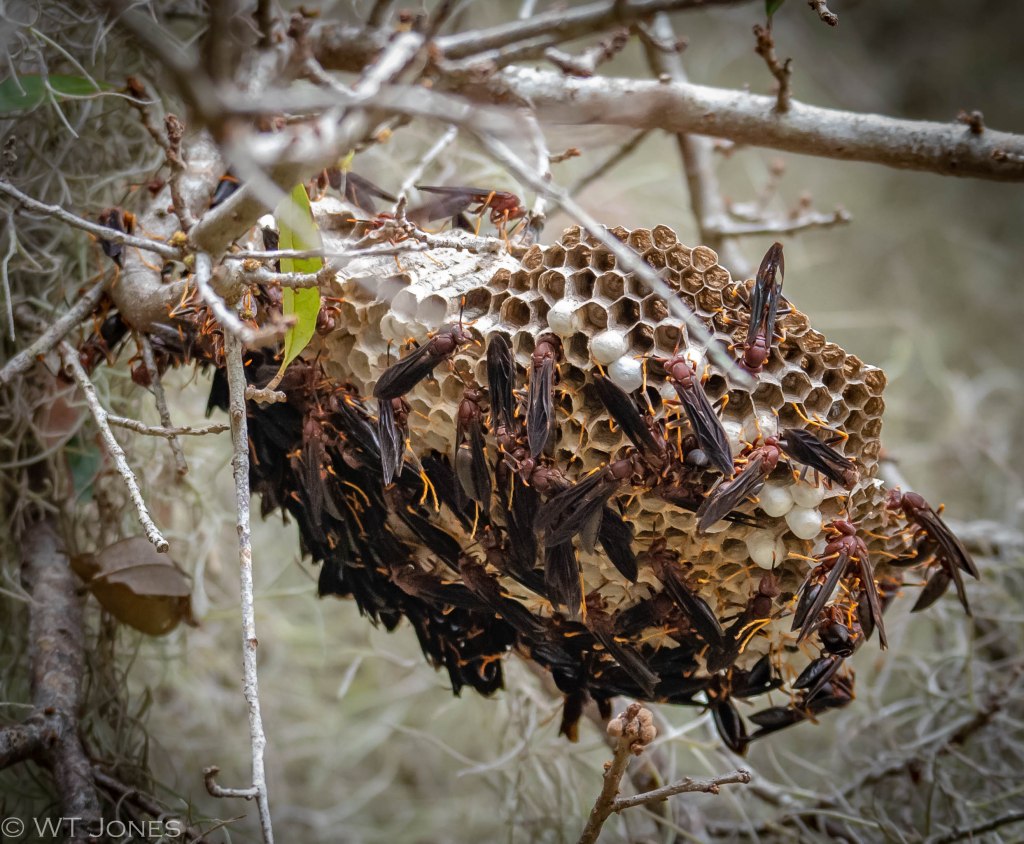
For me, more feared than toothy alligators are some of our large wasps. Painful memories! These are Ringed Paper Wasps (Polistes annularis).
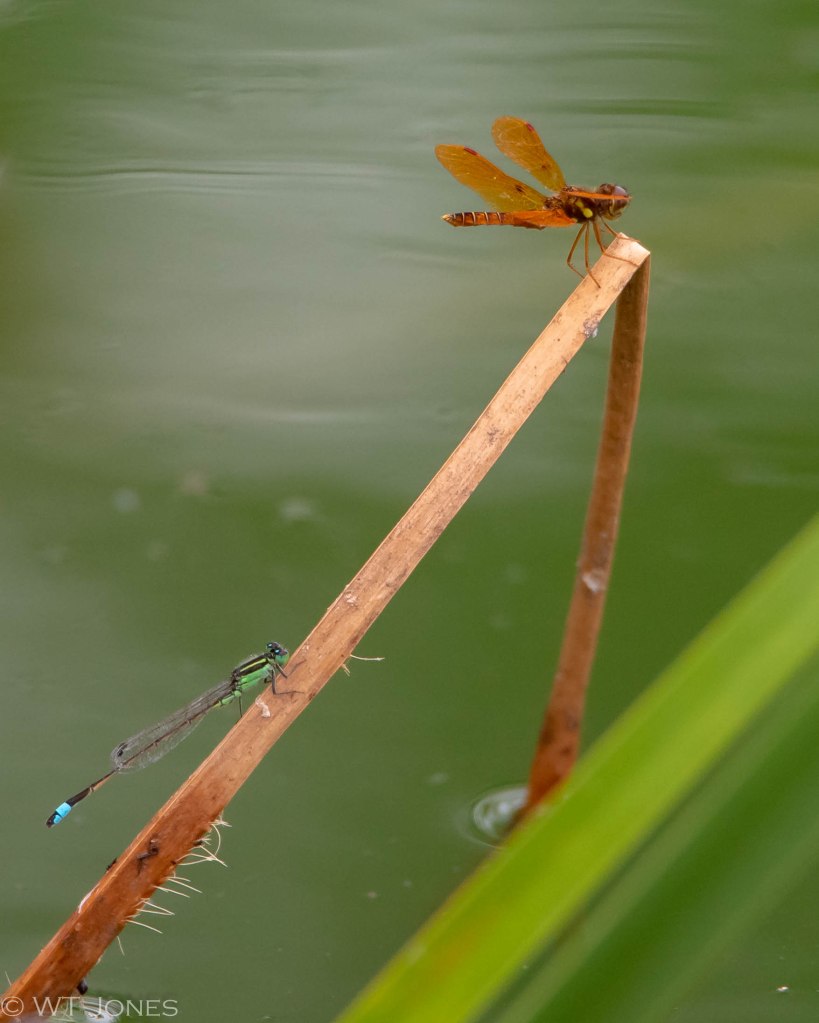
Once in awhile, my photographic motto (“Better Lucky Than Good”) actually works. Today I found an Eastern Amberwing (Perithemis tenera) and a Rambur’s Forktail (Ischnura ramburii) sharing the same reed.
Our dessert today came in the form of a Cicada exuvia. A few years ago, a female Cicada laid eggs at this location. The eggs hatched and the ant-sized nymphs fell and burrowed into the ground. They found a root of grass or tree to feed upon and remained underground for several years, undergoing a series of molts. The final molt causes the nymph to exit from the ground, climb a tree or weed and fasten itself securely. The adult Cicada emerges, sings its summer buzzy song, eats, mates and dies within a few weeks. The cycle begins again.

Our morning buffet was truly outstanding! Nature has a similar offering for you not too far away.
Enjoy your search for a natural place and come back for a visit!
Header Image: Pygmy Rattlesnake
Hot. Wet. Oppressive. Taking a breath almost requires effort. In the time it takes to walk from the car to the trailhead, your clothes are soaked through from the humidity. There is not even a hint of a breeze. We are in central Florida. The Green Swamp surrounds us. It is summer.
Glorious!
It is that time of year we simply LOVE to be outside! The stillness of early mornings allows us to hear the Common Nighthawks “booming” over the pine forest. Distant drumming by a Pileated Woodpecker changes in pitch as he tries to locate just the “right” sound which will attract a mate. Cicadas buzz in waves which wash over us like warm waves breaking on a beach. Shortly after lunch, dark clouds will gather on the horizon as thunderstorms move across the peninsula dumping fresh water on the land which will filter into the underground aquifer providing life-sustaining liquid to over 20 million Floridians.
On this summer day, we are in the Richloam Wildlife Management Area in Sumter County, Florida. Old logging roads crisscross the Green Swamp and provide slightly different environments for us to explore. We begin near a wetland which is bordered by a meadow and a small pond. A short drive through a section of hardwood trees (oak, hickory, bay) brings us to a vast pine forest. The understory of palmetto is interrupted by occasional potholes which fill with water during the wet season. Another mile along the road and we are crossing a small river and are enveloped in what most people think about when envisioning a “swamp”. Large cypress trees standing in shallow water, alligators slinking in nearby weeds, herons and egrets wading as they hunt for breakfast. Beyond the “wet” swamp, we enter upland pine woods where there are many open areas, lots of white sand and a variety of plant life.
Gini had thoughtfully (as usual) packed a bit of nourishment which we enjoyed while Eastern Bluebirds and Carolina Chickadees flew back and forth in a stand of tall pines. The strong scent of the conifer trees, bright blue sky and a perfect companion made it difficult to continue. Can’t we just stay here a few more minutes/hours/days? Okay. A few more minutes. She is SO good to me.
Somehow, I remembered to take a few pictures.
The grass adjacent to a wetland was an agreeable hunting ground for a Familiar Bluet (Enallagma civile), a small and fairly common damselfly in this area. Laying down in the damp grass provided a unique perspective, not only for the damsel, but for all of the surrounding habitat. Getting up – we shall not mention the process.


Although we didn’t spot the bright red male Scarlet Skimmer (Crocothemis servilia), the female is quite attractive, thank you very much.

Our largest grasshopper, the Eastern Lubber Grasshopper (Romalea microptera), wasn’t interested in posing for a portrait. She held still just long enough for an intimate close-up then exited into the tall weeds never to be seen again.
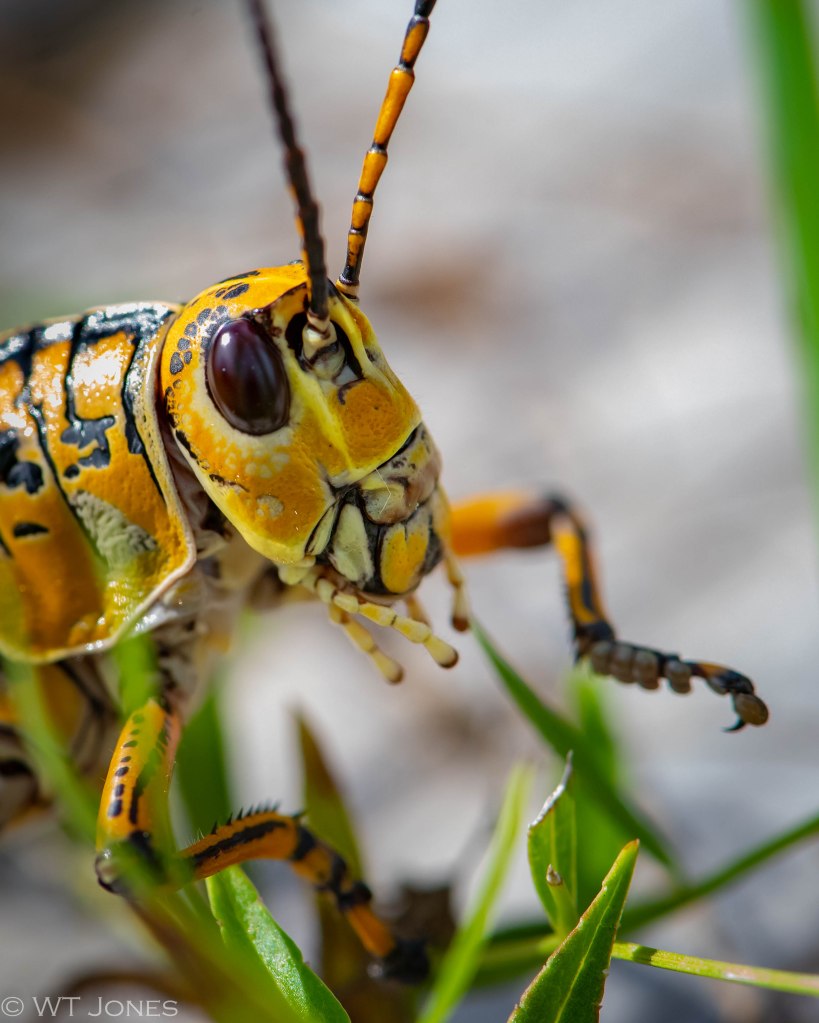
With a total length of about one inch (25-27 mm), the Little Blue Dragonlet (Erythrodiplax minuscula) is the second-smallest dragonfly in North America. I chased after this pretty female for awhile before she sat still for a microsecond.

At the edge of a pond, we found a large male Gray-green Clubtail (Arigomphus pallidus). We normally only see these dragons on the ground but this one obliged by perching on a nice twig over the water.

Dragons in flight. Not my forte, but I keep trying. A very unique wing pattern helps identify a male Prince Baskettail (Epitheca princeps). They fly back and forth tirelessly patrolling a specific area to protect a female during her egg-laying efforts.

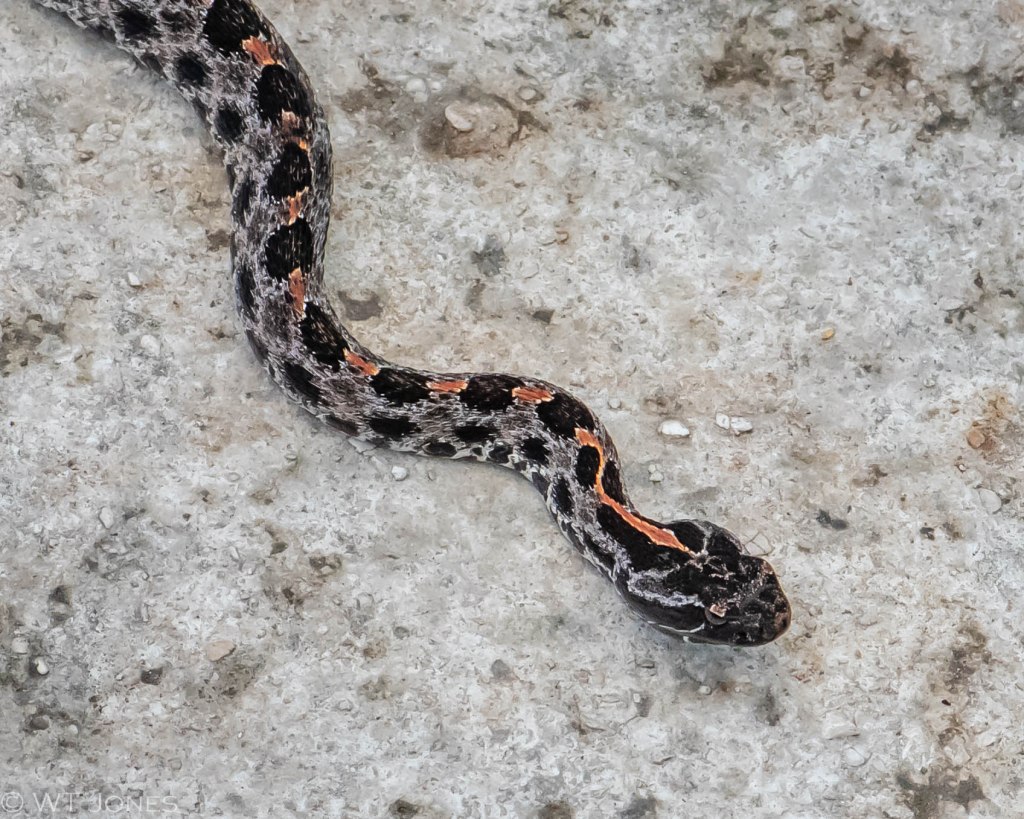
Fortunately, we found this fellow crossing a nice white road. The Pygmy Rattlesnake (Sistrurus miliarius) is well-camouflaged for his typical habitat on the pine forest floor. This is an immature snake. Soon, the yellow tail will evolve into the namesake “rattles” which will allow him to “buzz” and warn us of his proximity when we pass by here next year.

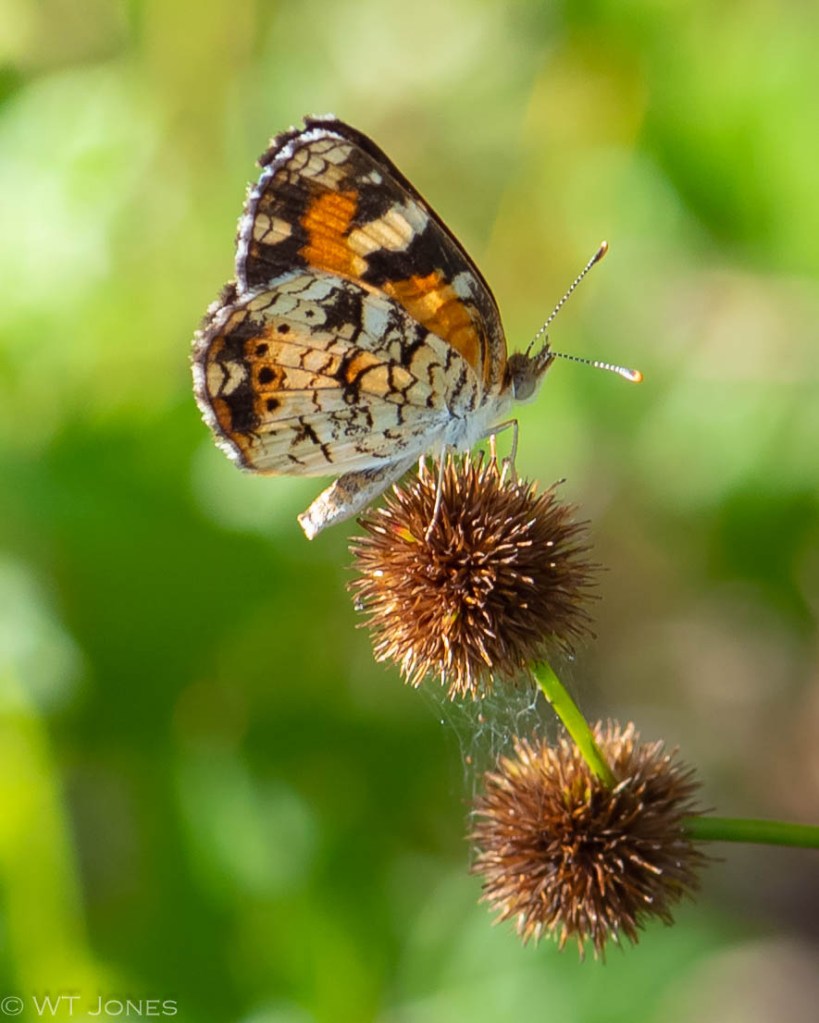
With our rainy season comes abundant new life. Insects of all types flourish during this season. A particularly beautiful example is a Phaon Crescent (Phyciodes phaon), a small butterfly with a wonderful wing design.
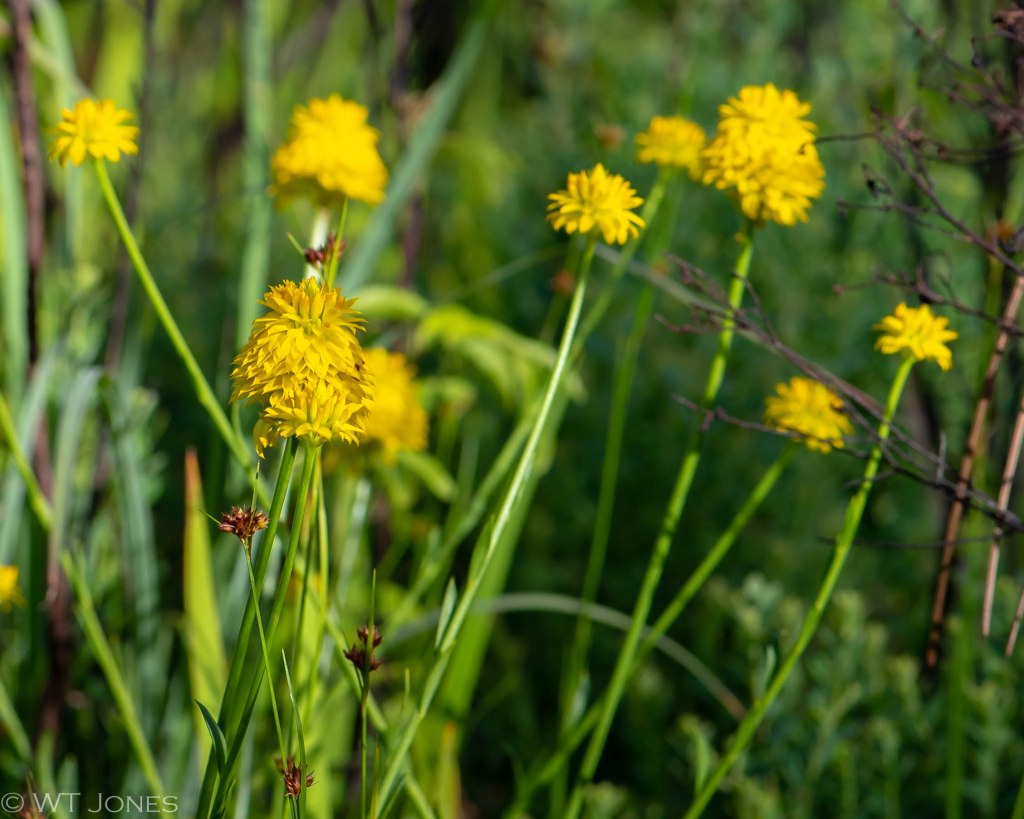
Splashes of color greeted us all throughout the morning. We found a small bed of Yellow Milkwort (Polygala rugelii) providing a bit of sunshine among the dull green palmetto fronds. Beautiful from a distance, a close-up of a flower seemed like a completely different world.

Perhaps not as showy as the milkwort above, a Rosy Camphorweed (Pluchea baccharis) still has an attractive quality all its own. This is actually a member of the sunflower family and they are sometimes referred to as “stinkworts”. When crushed, the leaves give off a unique odor.


At one time, the Tarflower (Bejaria racemosa) was thought to be an insectivorous plant due to the sticky nature of its stems and flower parts. Instead, this turns out to be a defensive strategy used to prevent physical damage from some insects. This woody evergreen shrub can grow to ten feet tall and provides a load of beautiful blooms throughout the summer.


A new plant for us! The Clustered Bushmint (Hyptis alata) is pretty unique looking. The four stamens of the flower remain hidden until a pollinator lands on the bloom. As one can tell from the name, this member of the mint family emits a slight aroma when crushed which is reflected in its alternate name, “Musky Mint”. Whatever you call it, insects love it.


Gini’s outstanding hearing skill led us to a section of older pine trees where we found what was likely a couple of family groups of Brown-headed Nuthatches (eight individuals). Typical of small birds, this species has an extremely aggressive nature and they wasted no time letting us know we were trespassing!

It’s possible one must be a native to tolerate our hot, humid weather. Having said that, we give thanks to the inventor of modern air-conditioning! If you can stand to be warm and damp, find a road through a swamp to explore!
Enjoy your search for a natural place and come back for a visit!
Header Image: Swallow-tailed Kite
“Are you a birder?”
The question was simple enough. My answer was quick: “Yes.”
Once upon a time, I considered myself a “bird watcher”, but somewhere along the way I discovered that term had become replaced with the more trendy “birder”. Sitting next to Gini that evening, sipping tea and taking comfort in her physical proximity, what’s left of my mind drifted into dangerous territory. Deep thought.
Are we really “birders”? Well, the dictionary defines a birder as: “a person who observes or identifies wild birds in their habitats.” So, yes, we are birders.
BUT WAIT, THERE’S MORE!
For us, a typical “birding” trip consists of looking for birds, identifying them, perhaps photographing them and maybe sending an electronic report of our observations. Also, we see trees. Not just the ones where the birds may be perched, but whole forests. Big trees, small trees, flowering trees, dead trees. We are easily distracted during our “birding” trips by flowers, vines, shrubs and even weeds. Looking at all that vegetation we can’t help but notice there are bugs living among the leaves, branches, stems and buds. Lots of bugs. While we are outside, we find ourselves marveling at a sunrise, cloud formations, rainbows, streaks of lightning, sunsets, stars, the moon.
So, shall we call ourselves “birders who like a lot of other stuff, too”? Not very succinct. How about “naturalists”? Sounds good, but connotes a level of knowledge we don’t really possess. Let’s approach this from a different perspective. What do we actually DO?
We visit places in nature. We look at things. We like the things we see. We like doing this more than going other places which are not in nature.
Just before I drifted off to sleep, I put the tea cup aside so as not to drop it (experience!), squeezed Gini’s leg and revealed the results of my deep thinking.
We are simply tourists. Rather than visiting monuments, museums or massive commercial theme-parks, we prefer the sights and sounds of forest, swamp, field and coast.
Here are our postcards from a natural place. (Tenoroc Fish Management Area, Polk County, Florida.)
The early morning sun created a somewhat ethereal effect at the edge of the woods where spiders had been busy during the night.

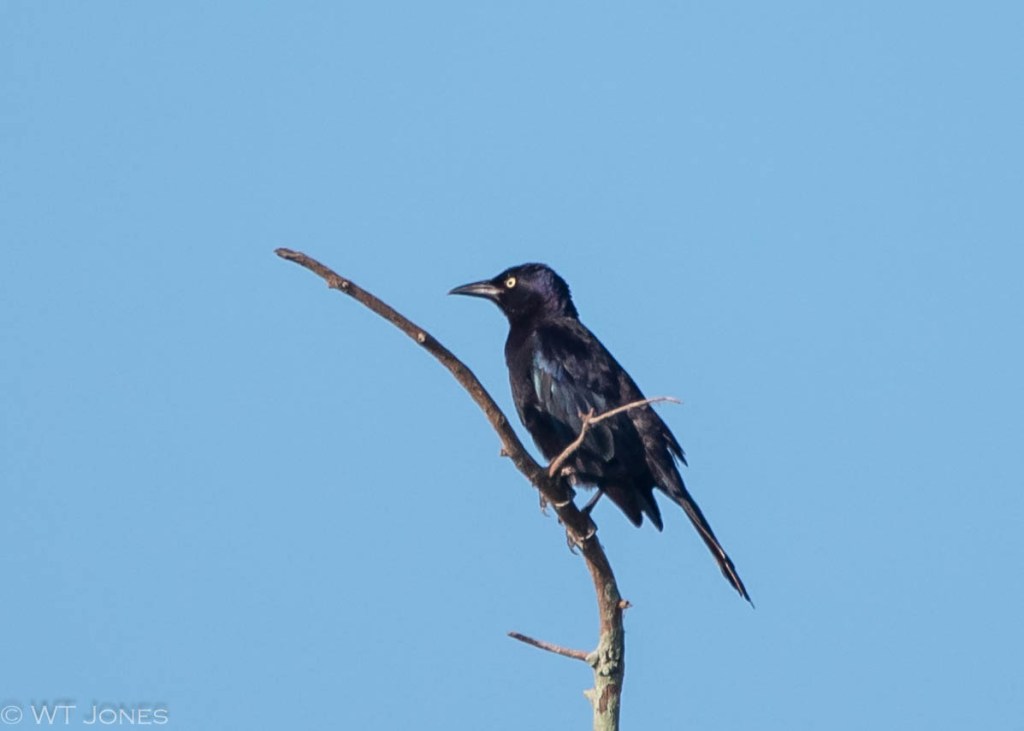
Despite his name, the Common Grackle is less common here than the slightly larger Boat-tailed Grackle.
The male Slaty Skimmer (Libellula incesta) is a fairly large, all dark dragonfly.

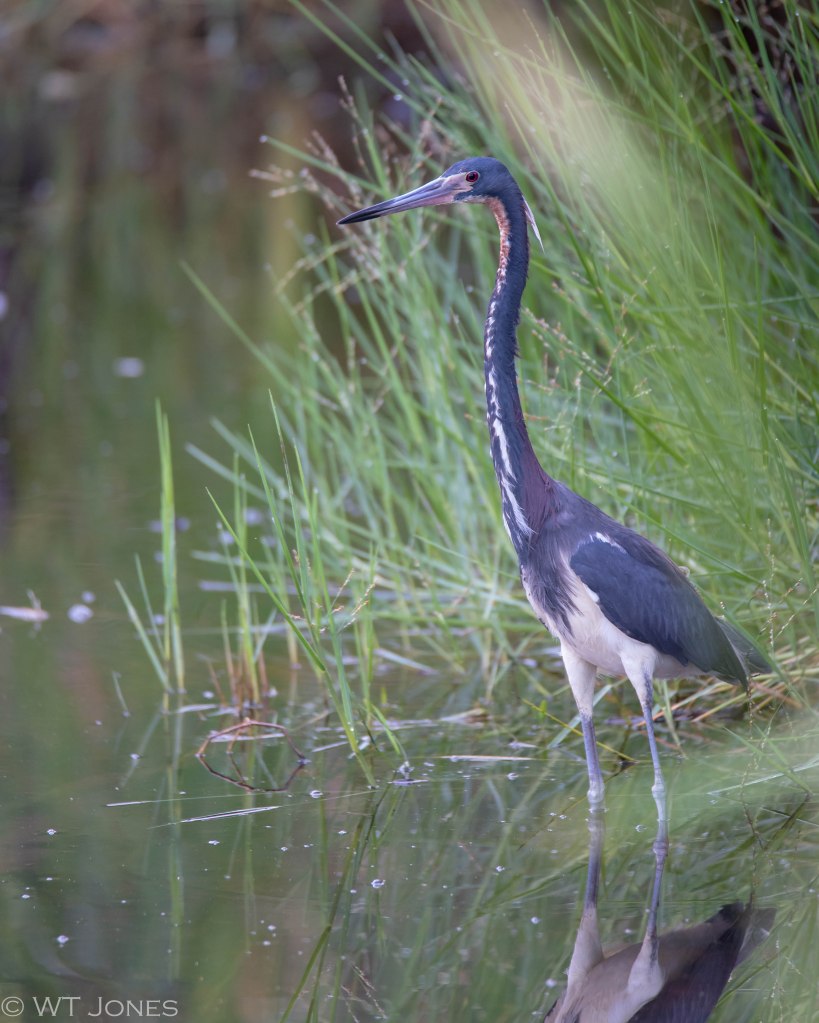
Blue, maroon, white. The aptly named Tricolored Heron concentrates its red eyes on the shallow water waiting for breakfast to swim into view.
A large patch of yellow caught our eye. Walking toward the area revealed there had been a fire, likely a prescribed burn to stimulate new growth. The flowers of Yellow-eyed Grass (Xyris Spp.) are small and not very showy, but closer inspection showed us a beauty we couldn’t see from afar.


One of our favorite insects to find is the Robber Fly (Asilidae spp.). Worldwide, there are over 7,000 species of this unique creature. This one may be Promachus, a species of Giant Robber Fly.

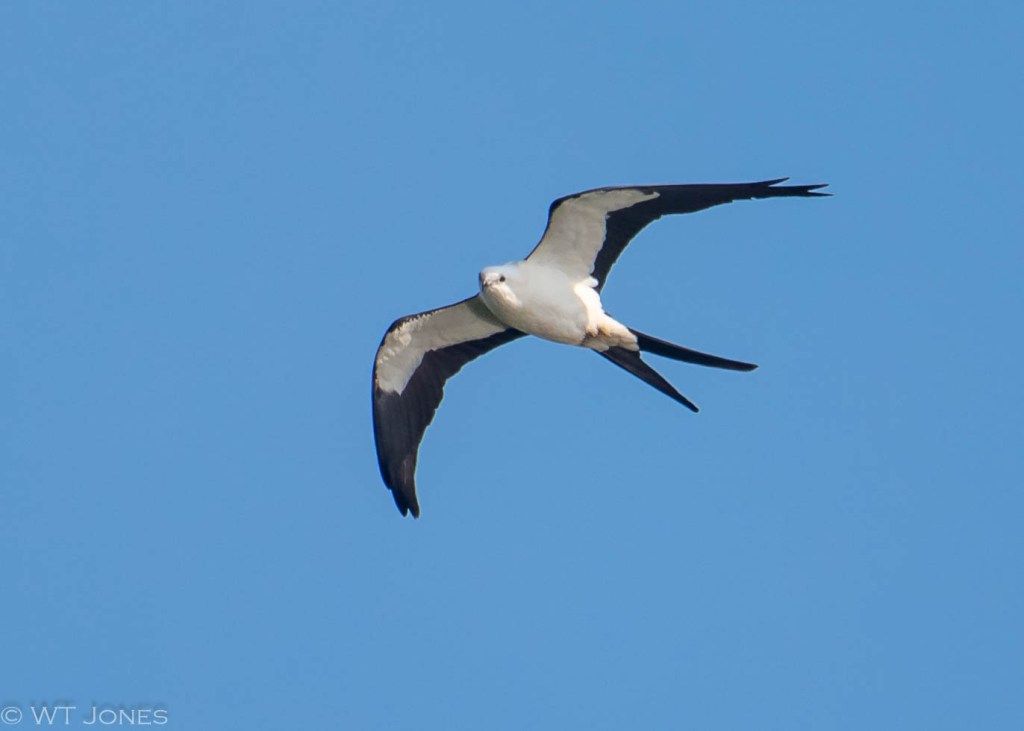
Each spring, toward the end of February, we begin to see Swallow-tailed Kites returning from South America. These aerobatic raptors remain through the summer, breed and by the third week of August are gone again. I managed a series of photographs of one of these sleek hunters which I thought was a great example of how the bird eats a captured insect on the fly. Alas, close inspection of all the pictures depict how thoroughly this one cleaned its talons. Sigh. Next time.

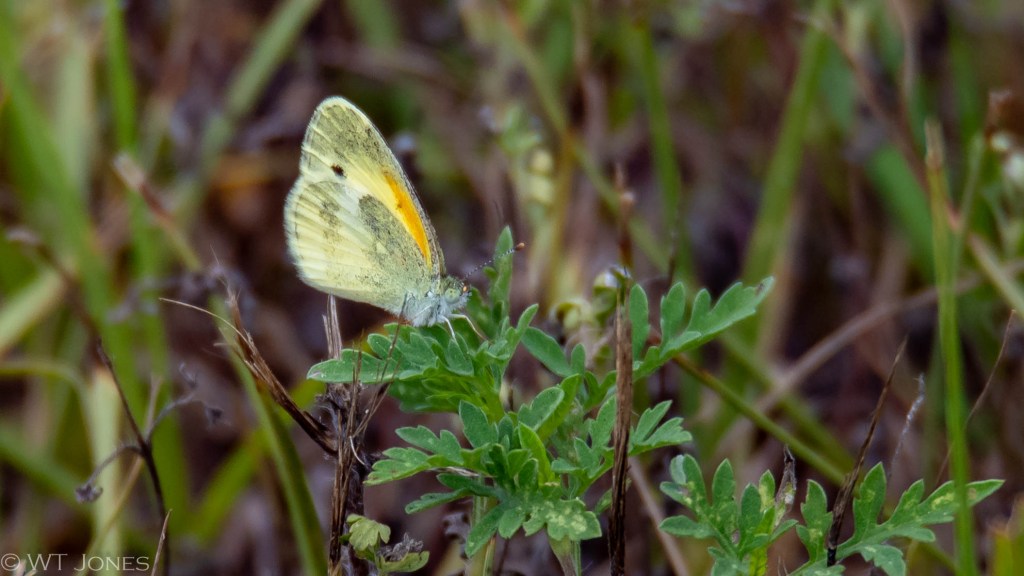
A group of butterflies known as Pierids (family Pieridae) include many white and yellow individuals. The small yellows and sulphurs rarely open their wings when perched and it’s a challenge to be able to observe their upper wings. Some believe the rich yellows of this group is what led to them being called “butter” flies. This very small individual is a Dainty Sulphur (Nathalis iole).
Whether you are a birder, an entomologist, a wildlife biologist, a botanist or, like us, someone who simply loves nature – embrace your inner tourist and savor the view!
Enjoy your search for a natural place and come back for a visit!
Header Image: Golden-winged Skimmer (Libellula auripennis)
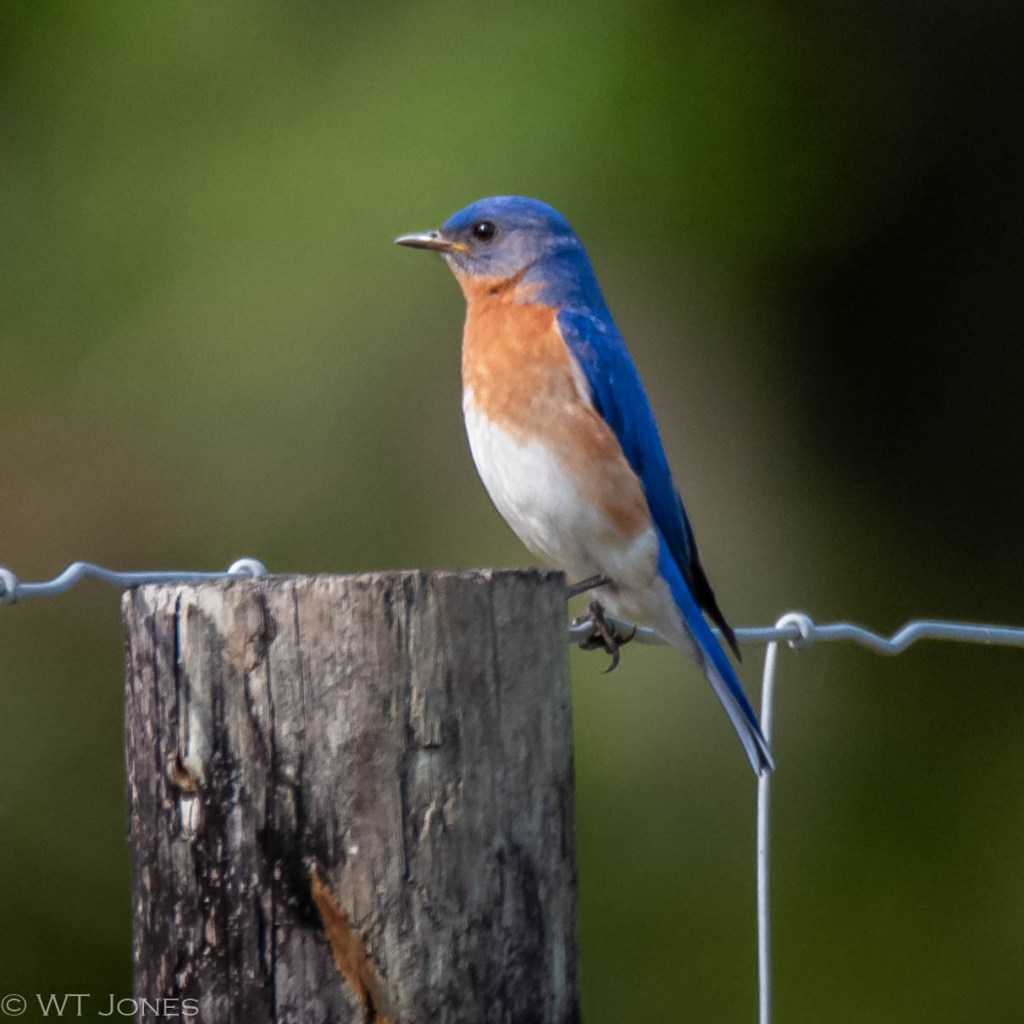
“There is no blue like that of the Bluebird.” Gini The Profound. She is right, of course. At various angles and different light, the Eastern Bluebird’s plumage can be bright, subtle, both at the same time, but always amazing to see! We watched as the blue bundle dropped from the fence post to the grass and returned with a grasshopper which immediately disappeared. I once again was guilty of overindulgence as I clicked the shutter release of the camera one too many times. Our Bluebird of Happiness flew toward the tree line and remained out of sight.
We were happily investigating the roadways, paths, fields, forests, lakes and swampy areas of one of our local patches, Colt Creek State Park. The cloudless morning in late spring presented us with quite a different experience than just a few weeks ago. Then, the air was filled with bird songs and groups of hungry warblers marauded weeds and tree limbs for protein-rich insects. Now, the woods are relatively quiet except for the clear song of Northern Cardinals and the ascending trill of the Northern Parula. A Blue Jay in the distance reminds us Florida’s year-round residents should not be ignored.
In addition to several bird species (most of which were camera-shy), there were flowers offering a colorful show, a plethora of insects (especially dragonflies) and even a few mammals and reptiles skulking about. We drank it all in. Happily.
The scent of pine trees enveloped us as we sat in the shade, talking about family, munching freshly peeled tangerines. A Red-bellied Woodpecker above us “churred” loudly. The aroma of our citrus attracted a pair of bright Gulf Fritillaries. At treetop level, a black and white Swallow-tailed Kite displayed her aerobatic proficiency. Each step through the grass startled American Grasshoppers. Large and slim, as they flew a short distance ahead it was easy to see why they are also called Bird Grasshoppers.
The twenty-minute ride home was completed mostly in silence. Although I detected a few heavy sighs, I couldn’t tell which one of us produced them. As usual, both, I suspect.
It was such a relaxing time, I almost forgot to take any photographs today.
Almost …
Gini spotted a pair of Eastern Bluebirds on a fence and one of them hung around a bit for a few photographs. I missed the capture of a juicy grasshopper, but the bird swallowed faster than I could click!
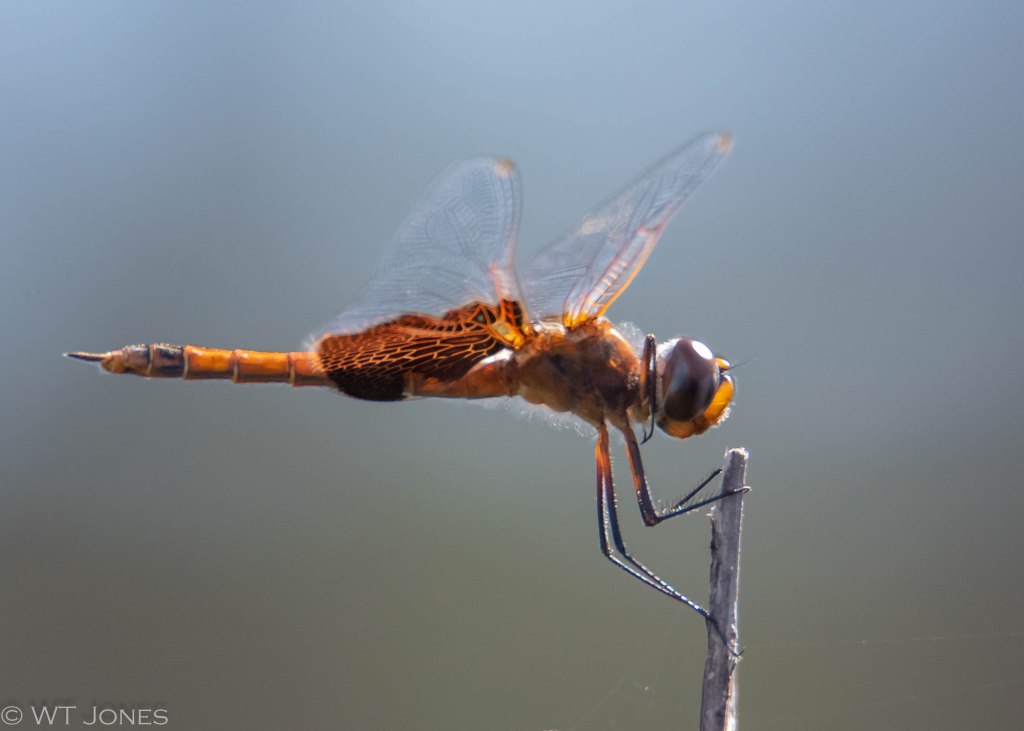
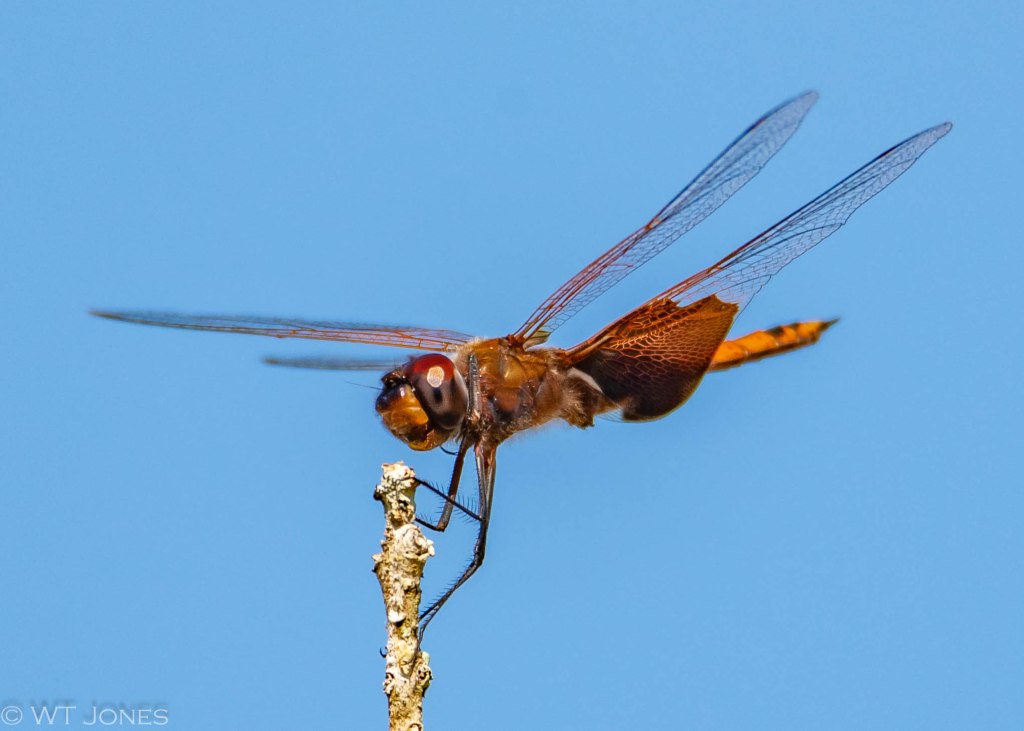
The Carolina Saddlebags (Tramea carolina) can vary from dull brown to bright reddish-orange. It is one of our more common dragonflies.
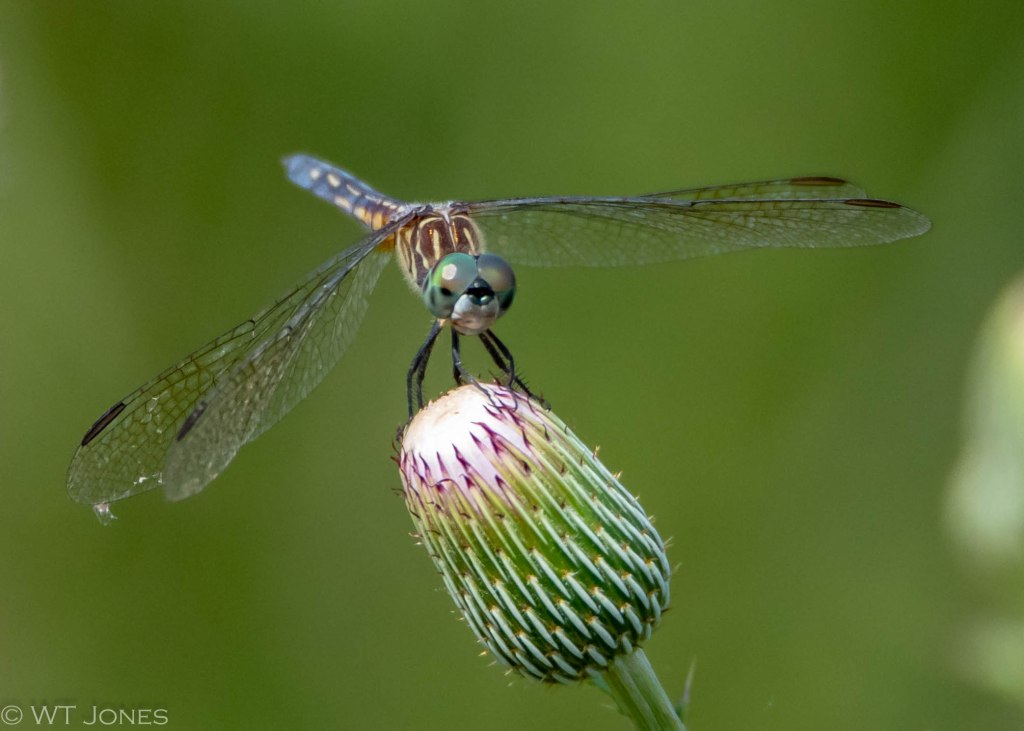
Smaller than the saddlebags, but at least as common, is the Blue Dasher (Pachydiplax longipennis).
Leavenworth’s Tickseed (Coreopsis leavenworthii) has small blooms but they are usually found in masses that give the appearance of a vast golden carpet covering the forest understory. This species is endemic to Florida and 12 other Coreopsis species are nearly endemic to the Sunshine State. Florida loves these plants so much the “state flower” has been designated as the entire Coreopsis genus!

Having the appearance of a small, rich tapestry the Phaon Crescent (Phyciodes phaon) is a member of the diverse Brushfoot family of butterflies. If you have a chance to see the underside of their wings, it might remind you of stained glass art.

Gini’s acute hearing counted almost a dozen Northern Paula’s during our morning foray. My not-so-acute eyesight spotted exactly one. And he wasn’t interested in posing. At all.

For me, the Zebra Swallowtail (Eurytides marcellus) is one of the most attractive butterflies in Nature.

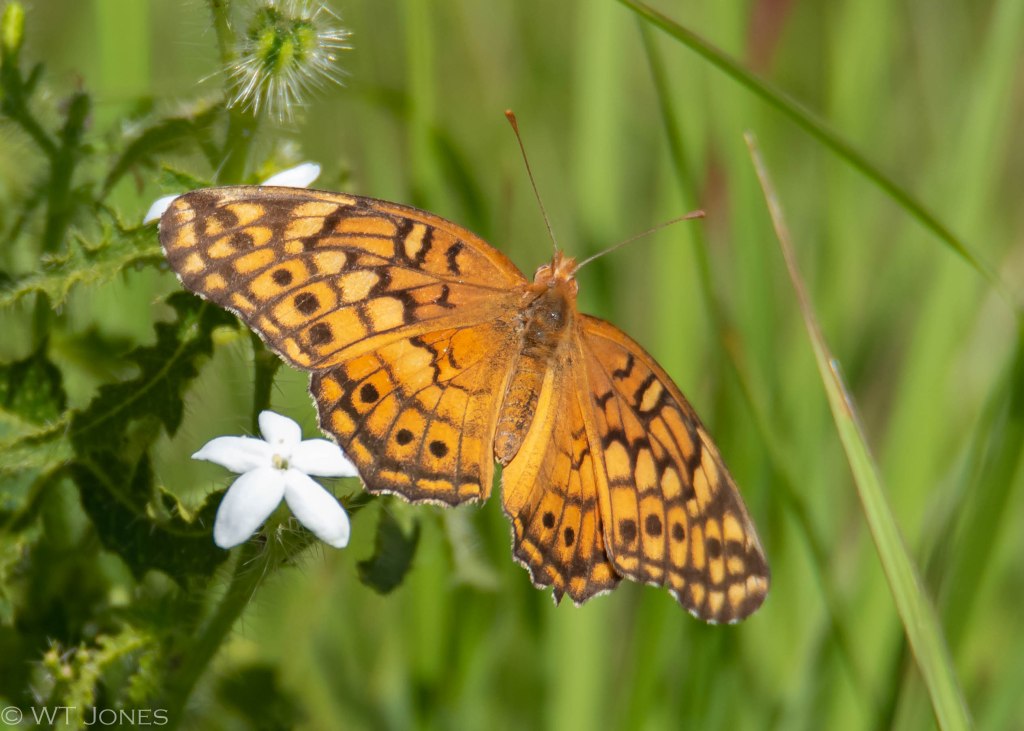
Subtle coloration with an intricate wing pattern, the Variegated Fritillary (Euptoieta claudia) may not be as vibrant as her cousin the Gulf Fritillary (Agraulis vanillae), but she is equally beautiful.
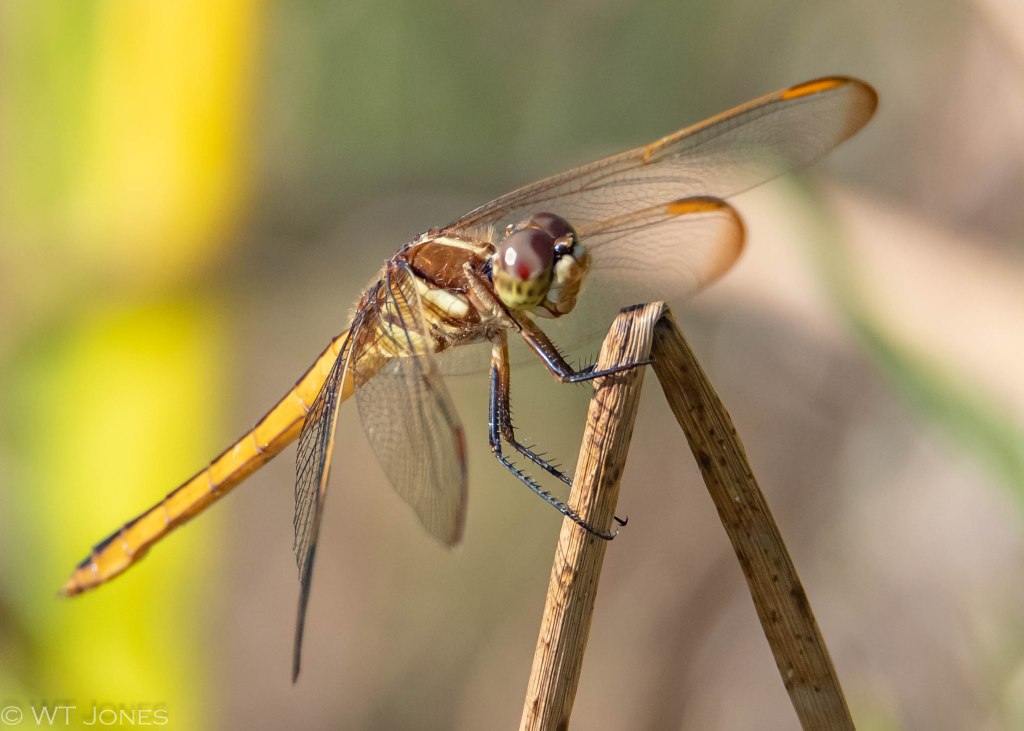
A fairly large skimmer, the Golden-winged Skimmer (Libellula auripennis) is typically found in taller weeds near ponds and lakes. In the right light, one discovers how they received their name.
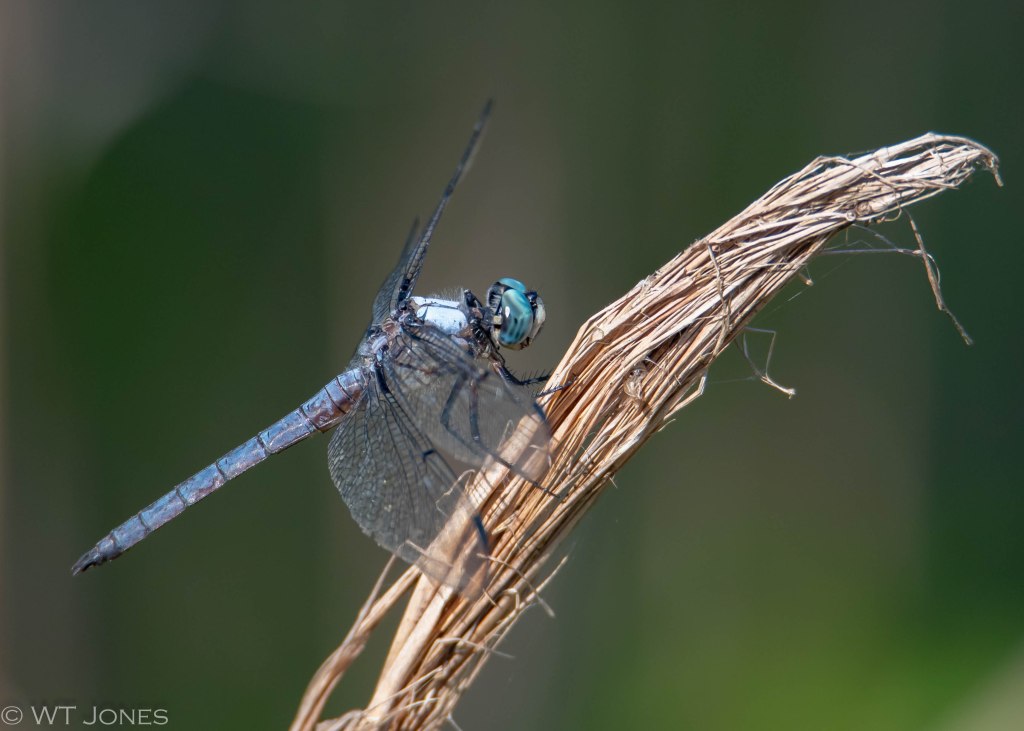
One of our local three dark-bodied skimmers, the Great Blue Skimmer (Libellula vibrans) can be distinguished by its bright blue eyes and white face. (The other two are Slaty and Bar-winged Skimmer.)
Someday, I shall be apprehended for skulking around outdoor bathrooms with a camera. Until then, I hope to keep finding cool stuff like this. Research and friendly entomologists indicate it is a Red-headed Inchworm Moth (Macaria bisignata). Alternative opinions appreciated!

Extremely similar to the Carolina Saddlebags (Tramea carolina) above, a Red Saddlebags (Tramea onusta) has a different face color, a characteristic open space in the hindwing “saddle” and slightly different black markings near the end of the abdomen.
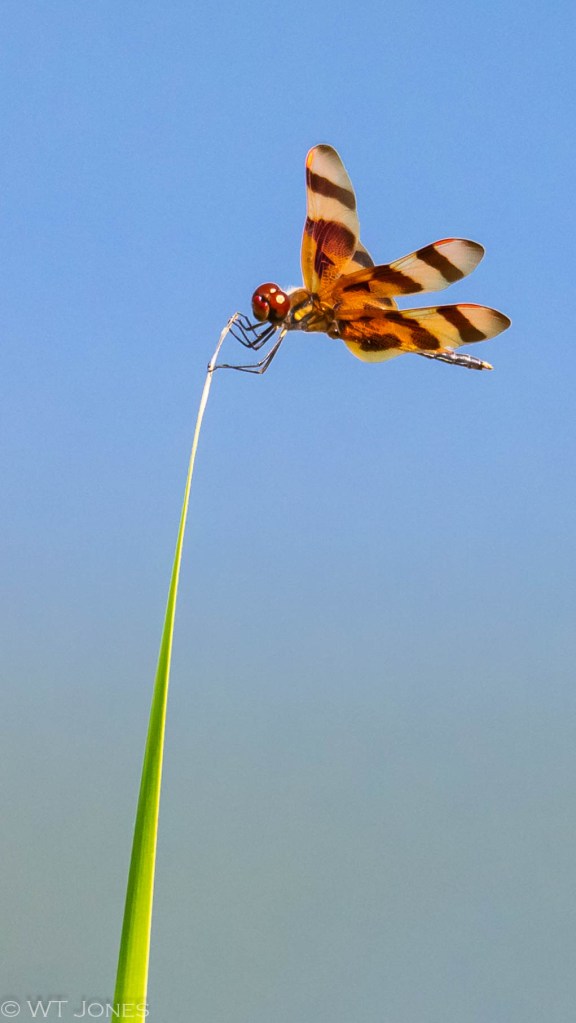
If he weren’t so attractive, the Halloween Pennant (Celithemis eponina) could almost be called flamboyant!
A new trail has been created around a small pond. The sign on the bank says “Visitor’s Spa”, but it was written in Native Alligator so I skipped the invitation.
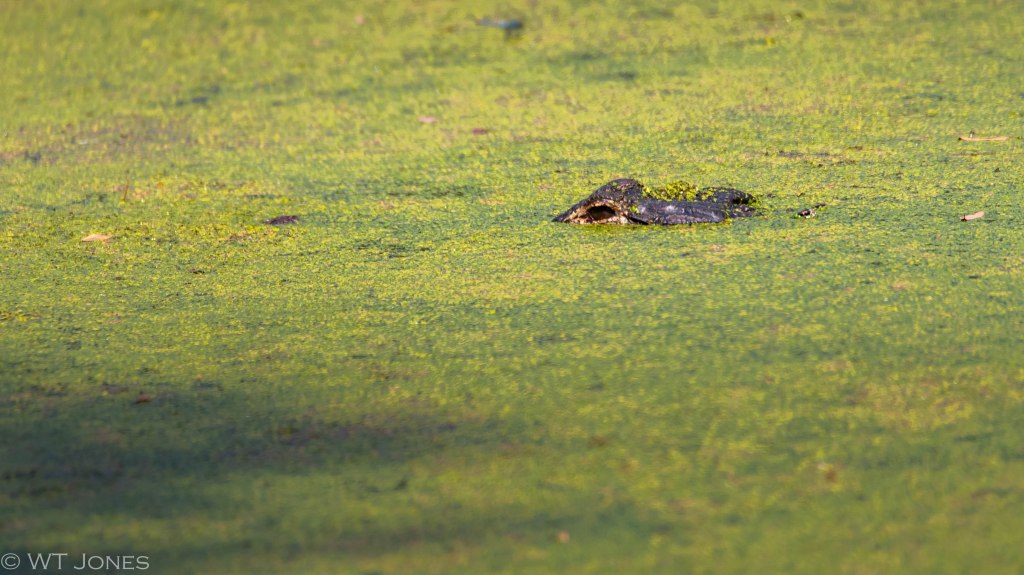
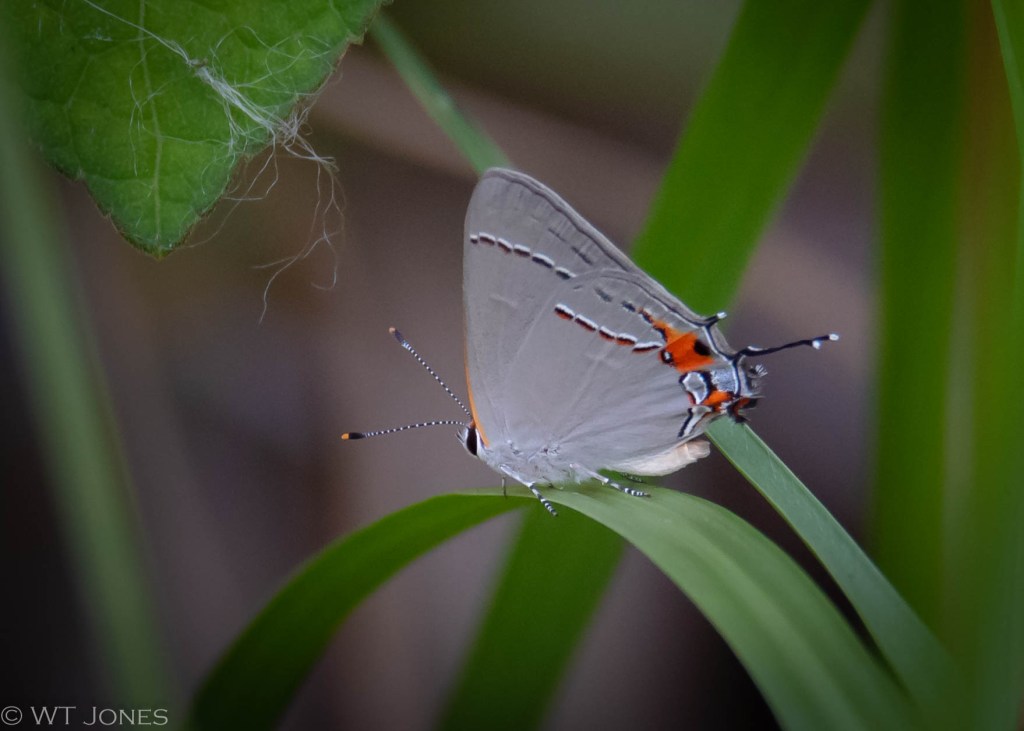
The Gray Hairstreak (Strymon melinus) is the most widely distributed hairstreak in North America. That said, I only encounter them infrequently. And have a chance to photograph them even less frequently.
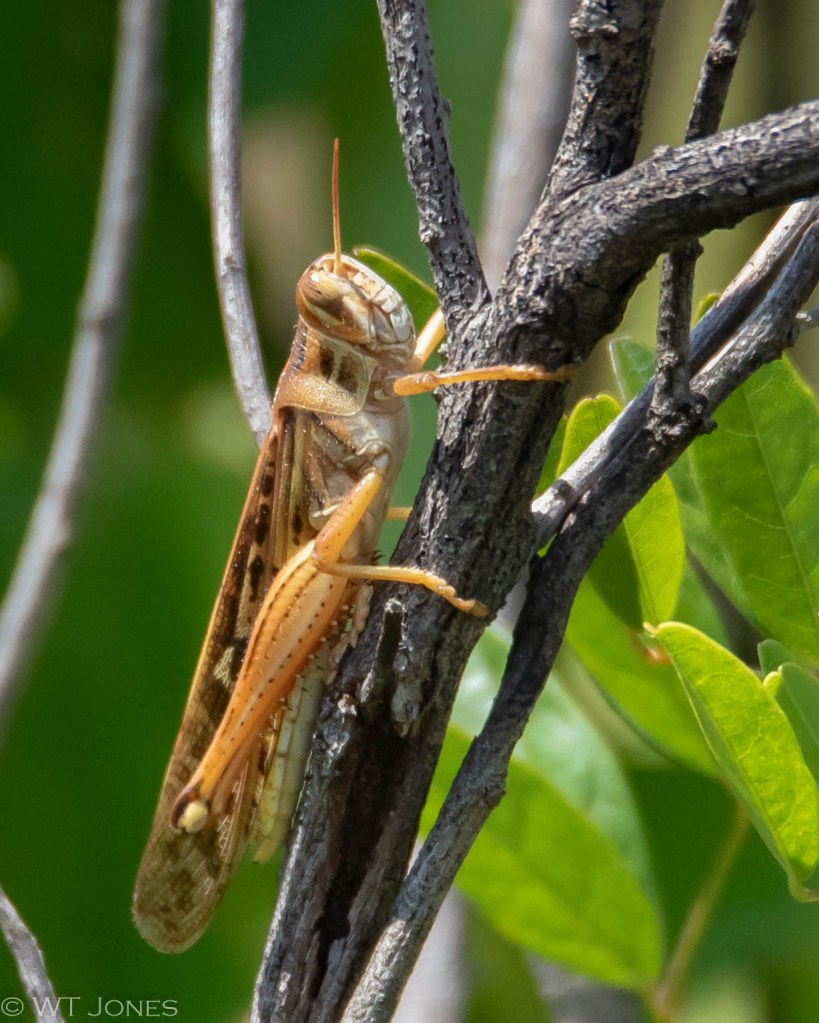
American Grasshoppers (Schistocerca americana) are one of our most common grasshoppers. Their ability to fly short distances has provided them with the alternate name of American Bird Grasshopper.
A lake is nothing but a really big bird bath. This Common Ground Dove appreciates the water no matter the source.

Our morning adventure was refreshing, relaxing and exciting. We strongly recommend you try it for yourself. Nature has plenty of resources and she is happy to share!
Enjoy your search for a natural place and come back for a visit!
(Header Image: Purple Gallinule)
“Work hard to be successful.”
It’s what we tell our kids. We hear it at school. Managers drill it into the heads of the work force. Politicians pretend it can be done by ordinary citizens. Life experience demonstrates that, for the most part, the axiom is accurate. There is considerable evidence to prove the converse is true. Don’t learn the value of labor and one will be reduced to whining and bemoaning the fact that no one will give them anything. Those politicians mentioned above are quick to provide rewards to the lazy in exchange for votes. Once elected, however, promised rewards disappear and massive whining resumes.
Once in awhile, fortune favors the unsuspecting observer. I am a firm believer in another old saying: “The harder one works, the luckier one becomes.” Ever notice rare or unusual bird sightings are often reported by familiar birders? These are the folks who are out in nature often and most readily notice something different in areas with which they are familiar.
So, there I was, shortly after dawn the other day, pausing along the shore of our local patch, Lake Parker Park, being thankful for the ability to breathe deeply the fresh air and bask in the orange glow of sunrise reflecting on the water’s surface. Movement to my right. A female Snail Kite landed in the top of a small cypress tree, her flashing red eyes darting here and there searching for an apple snail on a reed below. Splashing to my left was a Purple Gallinule, oversized yellow feet scrambling across lily pads in search of breakfast.
I only managed a few steps and a small cloud of dragonflies lifted from the brushy border where they spent the night. Ten yards down the path, a Great Egret ignored my approach as she concentrated on a watery buffet table. Young Ospreys screeched overhead as they soared on newly fledged wings and tried to get the hang of crashing into the lake and coming up with a fish.
Less than an hour had passed and I paused to consider how fortunate we are. Sights and sounds we take for granted would be considered incredible by many around the world who do not have such a venue available. Here’s hoping we never forget to accept our natural bounty with humble grace.
From her perch atop a cypress tree near the lake’s shore, this female Snail Kite is in a great position to scan the weeds for apple snails. Our local population of this endangered species has increased over the past few years and I feel certain they are breeding around this lake.

Our weather is warming and the rainy season is around the corner. This combination is producing a bumper crop of dragonflies. A female Blue Dasher (Pachydiplax longipennis) waits patiently for a meal to appear.

Small and colorful, how can I not adore something called a Coffee-loving Pyrausta Moth (Pyrausta tyralis)?

I watched this American Alligator cruise down the middle of the canal and crawl onto the bank. He’s probably about eight feet (2.4 meters) long and still young. As soon as I snapped his picture, he slid back into the water and headed straight for me. I won’t say I walked quickly away, but, I walked quickly away (glancing over my shoulder frequently).

Watching a large water bird such as this Great Egret hunt can be like watching a statue. Their patience is sometimes rewarded with a meal. My patience was rewarded with a terrific experience. (And a photograph.)

Some species of dragonflies seem to almost never perch. Trying to photograph them as they patrol their territory can be an exercise in frustration. One such species is the Prince Baskettail (Epitheca princeps). Imagine my surprise, and elation (!), to encounter a couple mating right alongside the path!

Gini says the Black-bellied Whistling-Duck always look like they just stepped out of the beauty parlor. Neat, handsome, large and over the past decade around here, very prolific.

Apparently, this Spotted Sandpiper missed her flight to Minnesota. Although we really enjoy seeing her in breeding plumage, as we typically only get to see them in bland gray and white, she best head north soon and hope she can find a nesting spot. Or, perhaps she likes our Florida weather so much, she’s decided to remain for the summer?

When I returned home to a pot of coffee and fresh cantaloupe, Gini asked if I had seen anything special. “The usual”, I answered. “And I didn’t even have to work hard.” Whether you depend on hard work or good fortune (which is often one and the same), we hope you are able to take advantage of your own natural bounty.
Enjoy your search for a natural place and come back for a visit!
 Our Natural Places