Header Image: Lake In Fog
“It’s so quiet.”
That from the pretty lady with the good hearing.
We were enjoying breakfast at one of our regular lakeside spots having spent the hour after “sunrise” searching for early birds pursuing worms. Gini was right (as usual). It was very quiet. Morning fog is somewhat an extension of night. The sun’s rays are blocked from illuminating the landscape as much as they would on a clear day. Accordingly, many creatures delay their activity until the light increases and dampness begins to evaporate.
Attempting to peer through the fog makes us realize how different the world seems with this thick gray blanket obscuring the scenes we are accustomed to seeing. We know what the opposite shore of the lake looks like, we just can’t see it today.
We don’t hear any Limpkins calling, Anhingas grunting or woodpeckers hammering. Morning flights of egrets, ibises and cormorants might be occurring, but we can’t see them. A splash in the water is muted and we don’t know if it is close by or more distant. Was it a fish, a frog or an alligator?
The familiar path into the woods is indistinct and the atmosphere is alien since we can’t see beyond several feet in any direction. Stepping onto a dry twig causes it to snap but the sound is muffled. We know the area does not offer much in the way of “danger” and instead of the fog causing us any apprehension, we are instead filled with anticipation. What will we find as the morning becomes clear?
It was a bit surprising to look up and see the vast gray covering was beginning to show some holes through which the bright blue sky of our new day could be seen. Gradually, almost imperceptibly, the mist dissipated. The curtain lifted to reveal a fresh clean stage upon which Nature’s cast proceeded with their daily performance.
Our anticipation evolved into pleasure. Familiar sounds and sights provided a comfortable feeling and we once again made note of how wondrous Nature is and how lucky we are to be included in the miracle.
Different lakes, same fog.

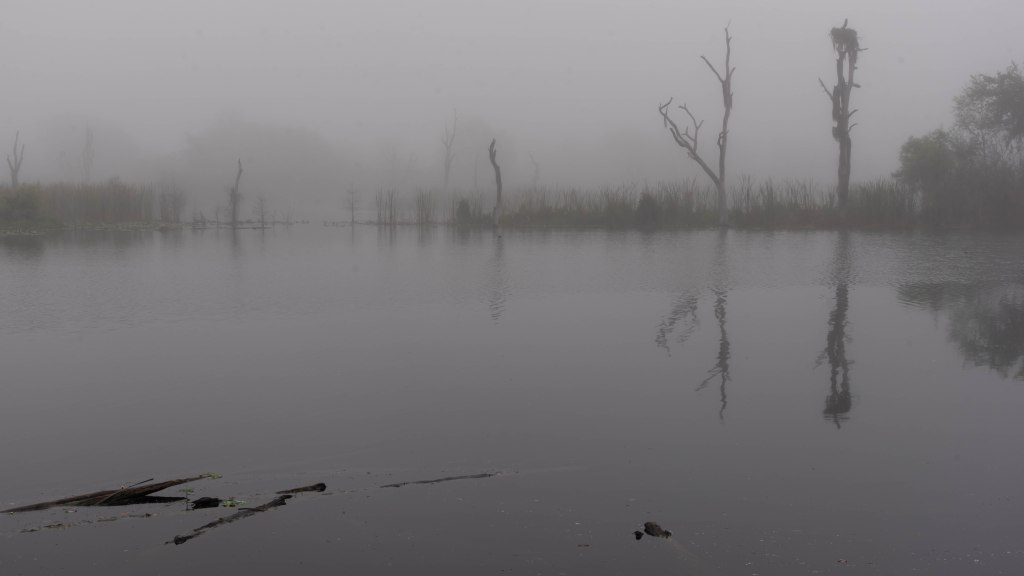

As the mist began to lift, our path became more clear.

Fog or no fog, the yellow blooms of a Showy Rattlebox (Crotalaria spectabilis) brightened our morning.

A Tricolored Heron scans for breakfast as the sky begins to lighten.

Always watching. American Alligator.

The dirty beak of a Cattle Egret tells us he has been probing the damp earth among the wildflowers and grasses for something delicious.

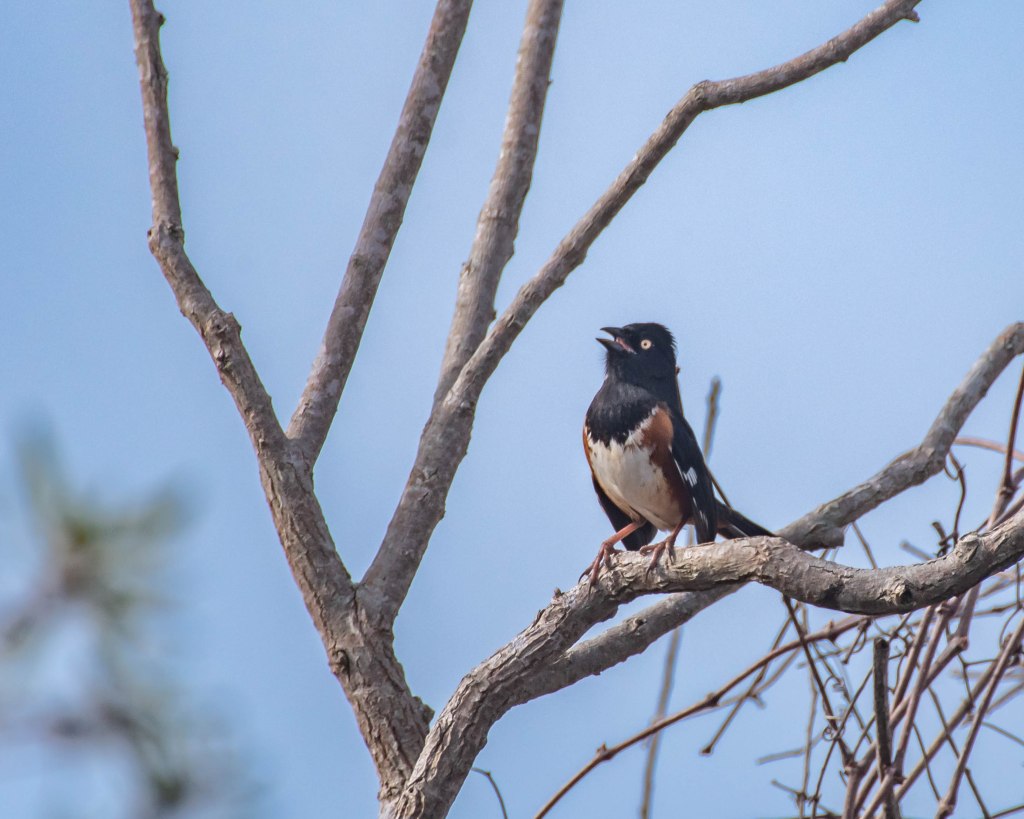
Finally! An Eastern Towhee shouts to the world that the wet blanket has been thrown aside and the day can now begin!
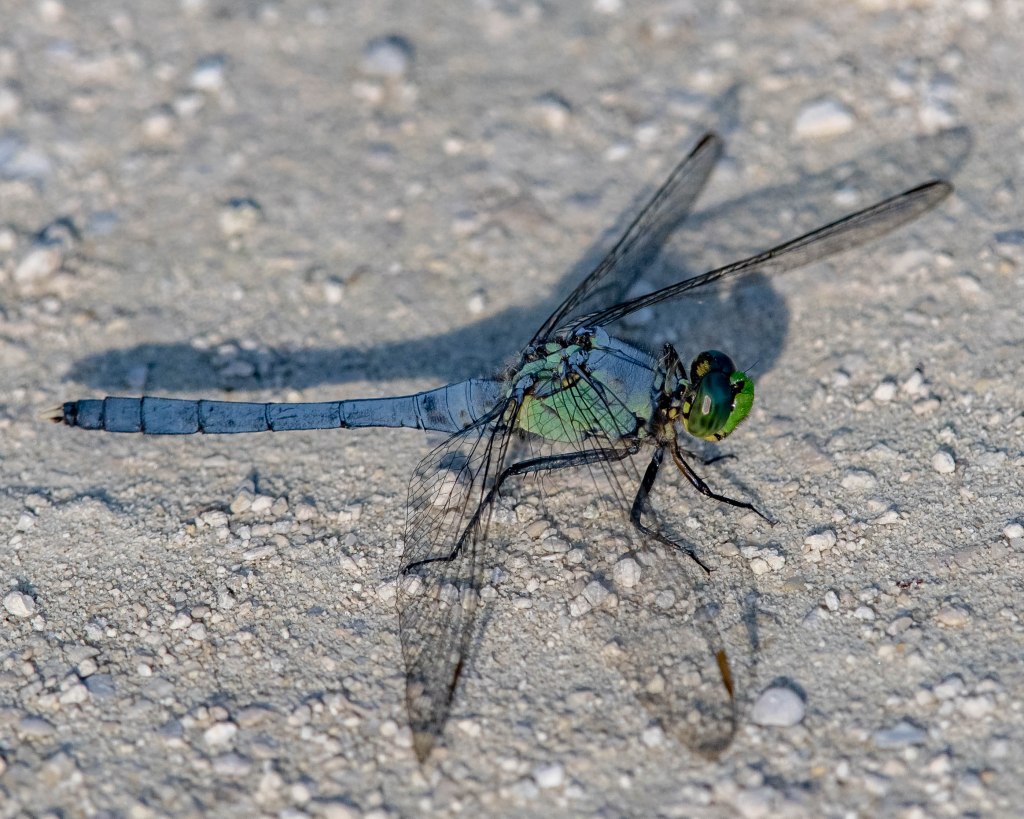
The air clears, dew begins to evaporate and the insect world emerges. This Eastern Pondhawk (Erythemis simplicicollis) is an immature male still showing signs of green as it assumes the adult powder blue hue of adulthood.

Insects are active and so are those who would consume them. A Black-and-White Warbler scurries along a branch in the hope of locating brunch.

Nature’s air controllers have given the all-clear for flight activity. A Double-crested Cormorant is cleared for take-off on runway #1, destination – the other side of the lake.

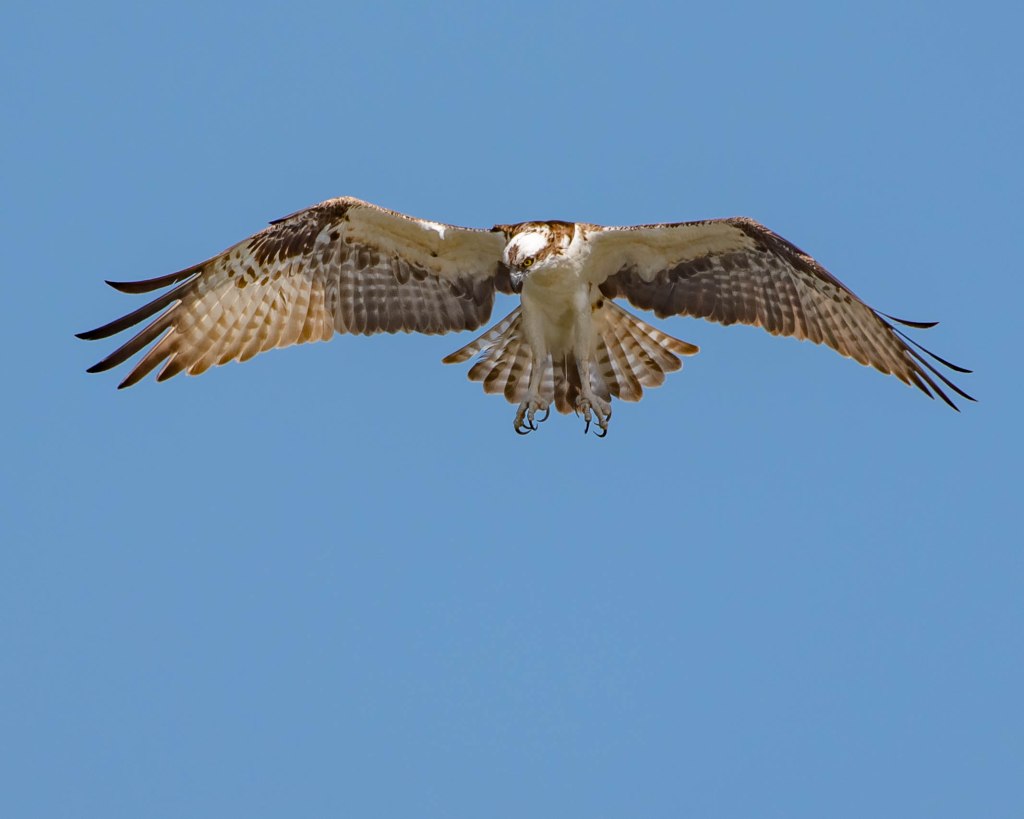
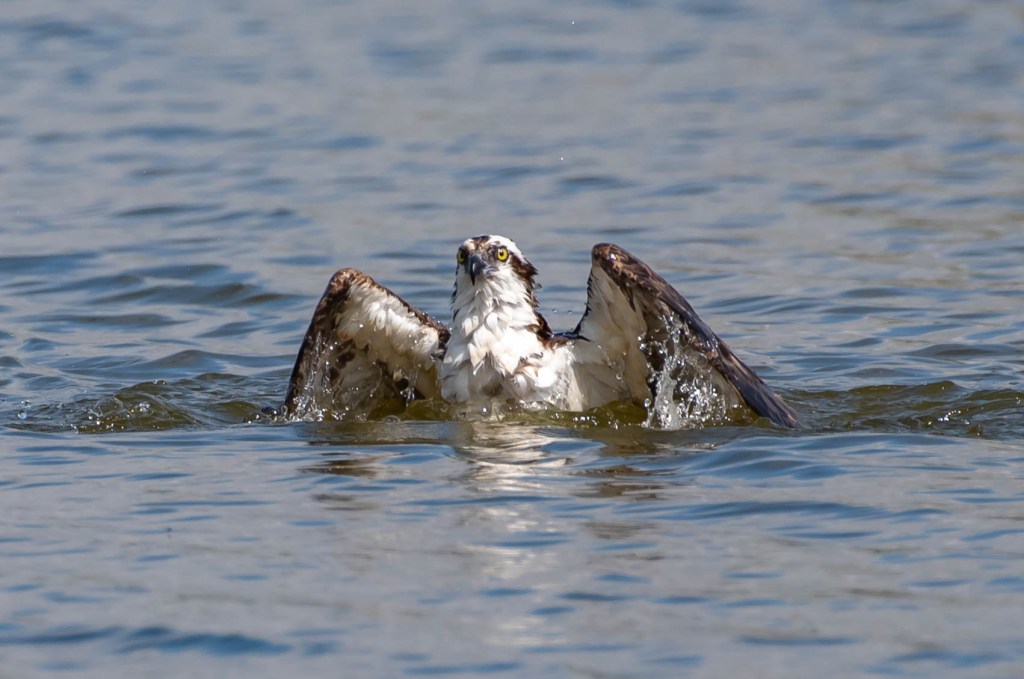
Osprey. We sat back and thoroughly loved watching as it circled, hovered and made a splash into the lake. No luck this time, but eventually he will bring a fresh fish to the new chick waiting with Mom at the nest.




Today’s hazy daze was amazing. Mesmerized early by the gray mist, the sun burned through the fog to provide clarity to our path. Whether our vision is obscured or infinite, we are convinced – life is good.
Enjoy your search for a natural place and come back for a visit!
Header Image: Mac Lake, Colt Creek State Park
We have a new plan of action. Have food in your hand at all times. Preferably, have the food almost to your mouth throughout the time period you are attempting to locate a subject to photograph when you’re in Nature’s yard. This plan will vastly increase your chances of finding such subjects. Be forewarned, they can sense when you are doing something which will delay you in raising the camera thus allowing them plenty of time to disappear. Bring plenty of food as you will be dropping a lot of it in the mud while adhering to our plan.
The white-tailed deer escaped before the shutter could be released. A pair of Wild Turkey hung around just long enough to stick their tongues out at us as they scooted behind a pine tree never to be seen again. Red-shouldered Hawk perched nicely on a limb? Forget about it. Gone as I was throwing a tangerine slice toward my face.
No matter the plan, success is still a matter of perseverance, timing and that best of all skills – luck.
Gini and I slipped into Colt Creek State Park after exchanging pleasantries with Sunny, the ranger who just happens to also be a photographer. She is always very helpful in directing us to a particular bird sighting, spring flower in bloom or advising of a trail condition we should know about.
It’s an interesting time of year. Spring migration is winding down but there are still stragglers who seem reluctant to leave Florida’s bountiful insect banquet. Resident birds are scurrying about gathering nest building material, singing non-stop to impress a potential mate and scooping up all manner of bugs, seeds and anything else resembling a food item.
Plants are preparing to blossom, insects are present in ever-increasing numbers and animals are preparing to raise a new family in this comfortable environment. Winter is a memory.
A few images of a season in transition.
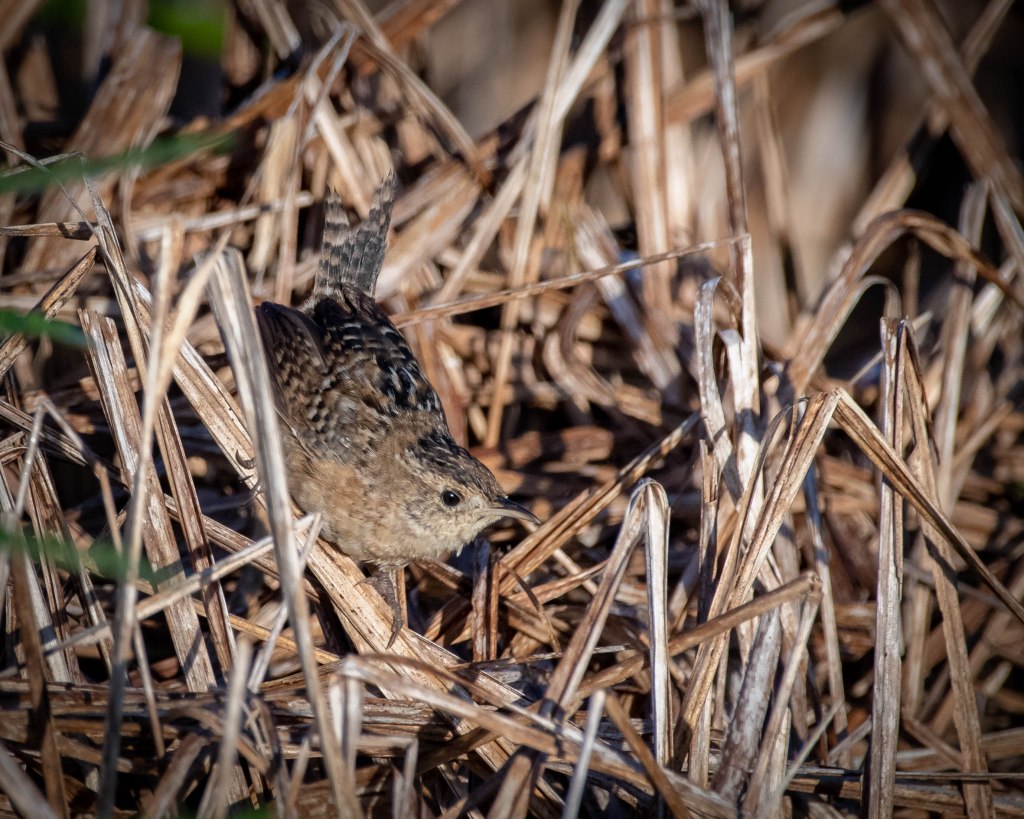
We were a little surprised to find this Sedge Wren hanging about. Most of its group took a jet (stream) north last week.
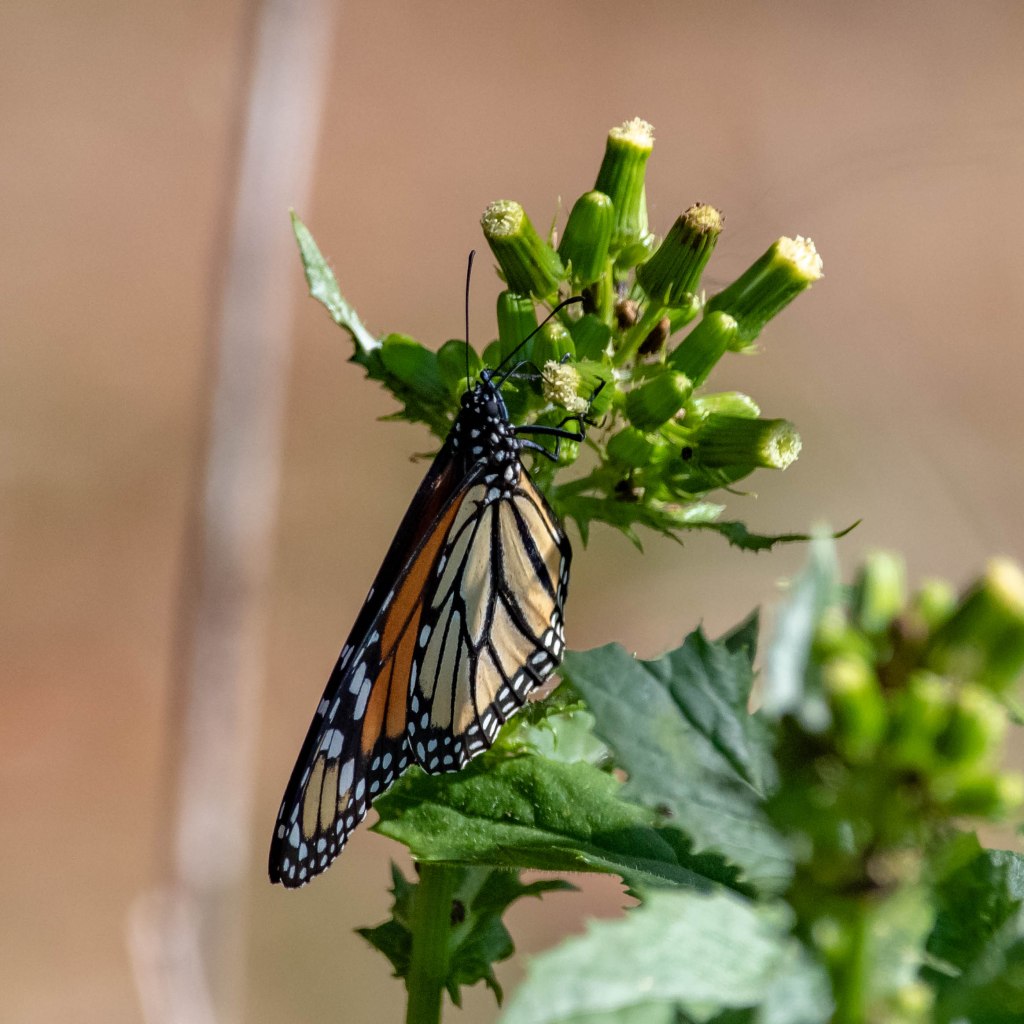
A sure sign of Spring, a Monarch (Danaus plexippus) butterfly was one of several we spotted during the morning.
Most of the Greater Sandhill Cranes (Grus canadensis tabida) who migrated south for the winter have returned to their breeding range in Canada. It is estimated 20-30,000 migrating cranes spend the winter in Florida. We also have a resident sub-species population of the big cranes (Grus canadensis pratensis) numbering around 5,000 which breed within the peninsula. We found a pair, likely resident birds, enjoying the park this morning.

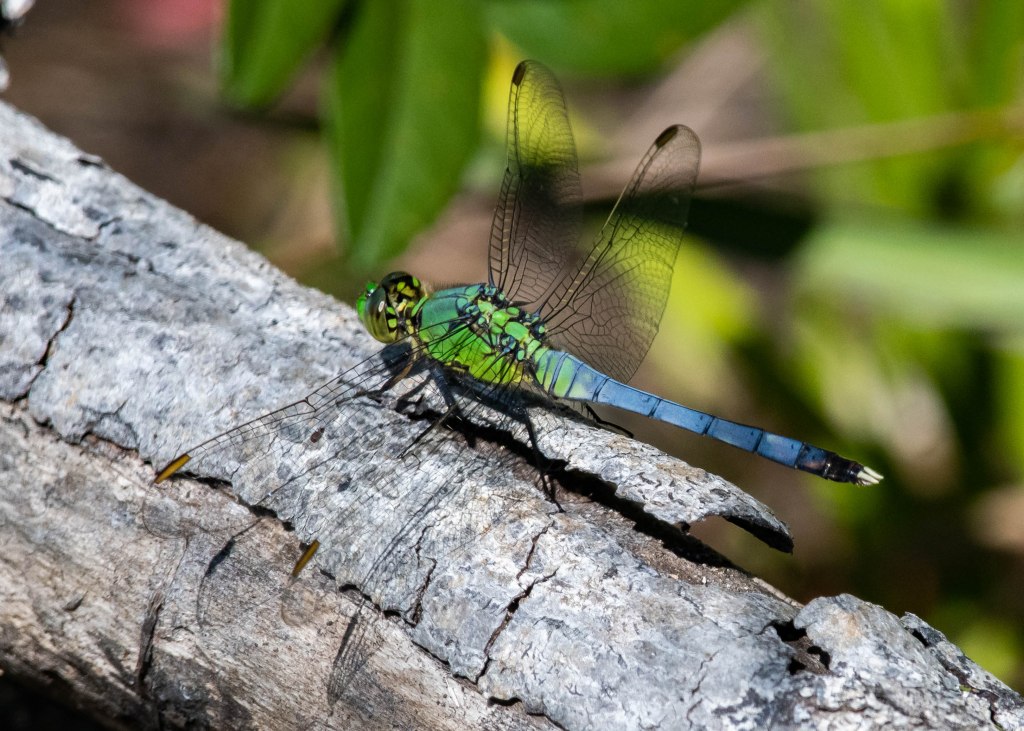
Just as the season is in transition, so is this immature male Eastern Pondhawk (Erythemis simplicicollis). Beginning as a copy of the all-green female, he gradually changes to the powder-blue of an adult male.
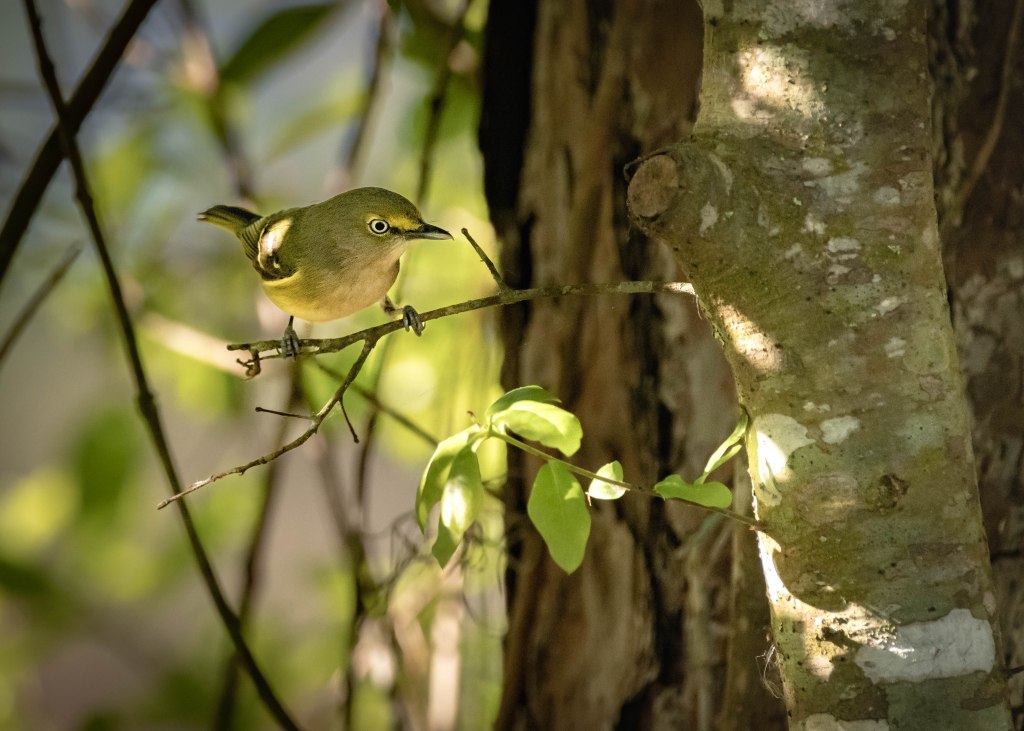
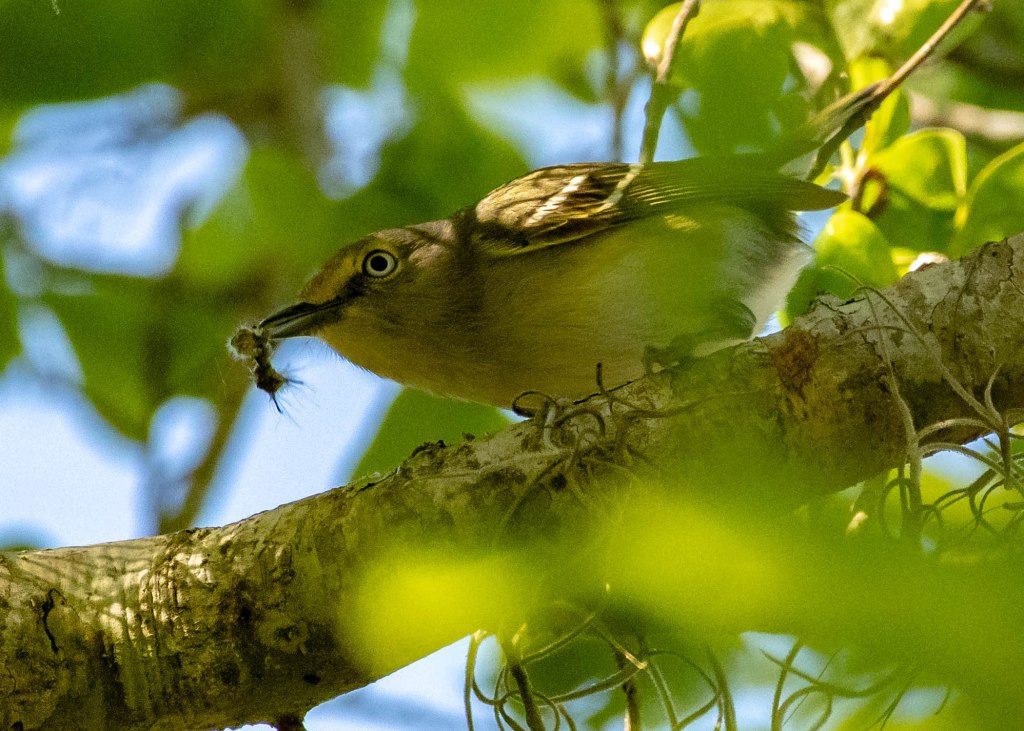
One of our year-round residents is the White-eyed Vireo. In the Spring, time is divided between constantly singing from the underbrush to impress females and searching for food, such as a delicious Tussock Moth (Orgyia spp.) larva.
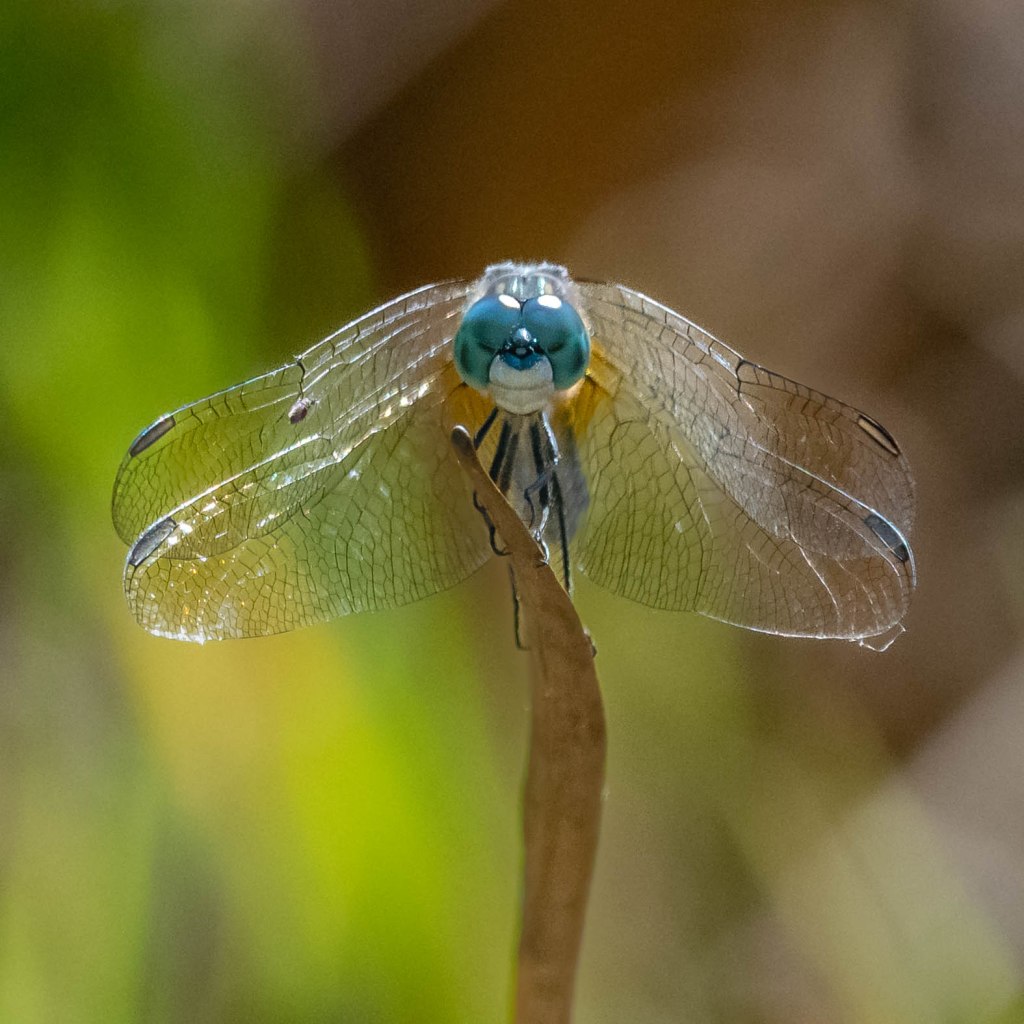
Happy Dragon! I think this male Blue Dasher (Pachydiplax longipennis) is smiling at the spectacle of me trying to hold a sandwich and take his picture at the same time. Perhaps we need to re-think our new plan of action.
Springtime serenade. A Carolina Chickadee is certain to catch the attention of a suitable mate with his enthusiastic singing style.

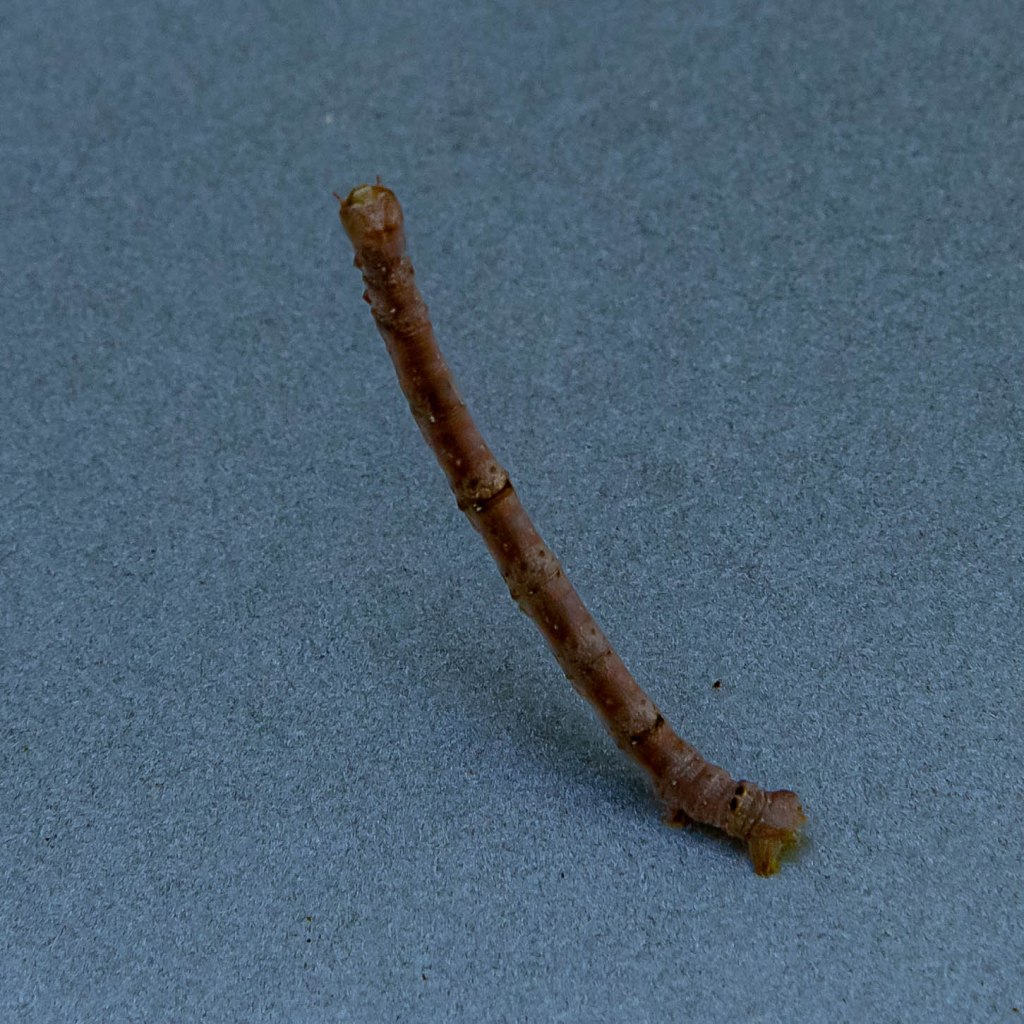
Reaching for the car door handle, a visitor was waiting for me. This larva of one of the Geometridae moths is often called an “inchworm”.
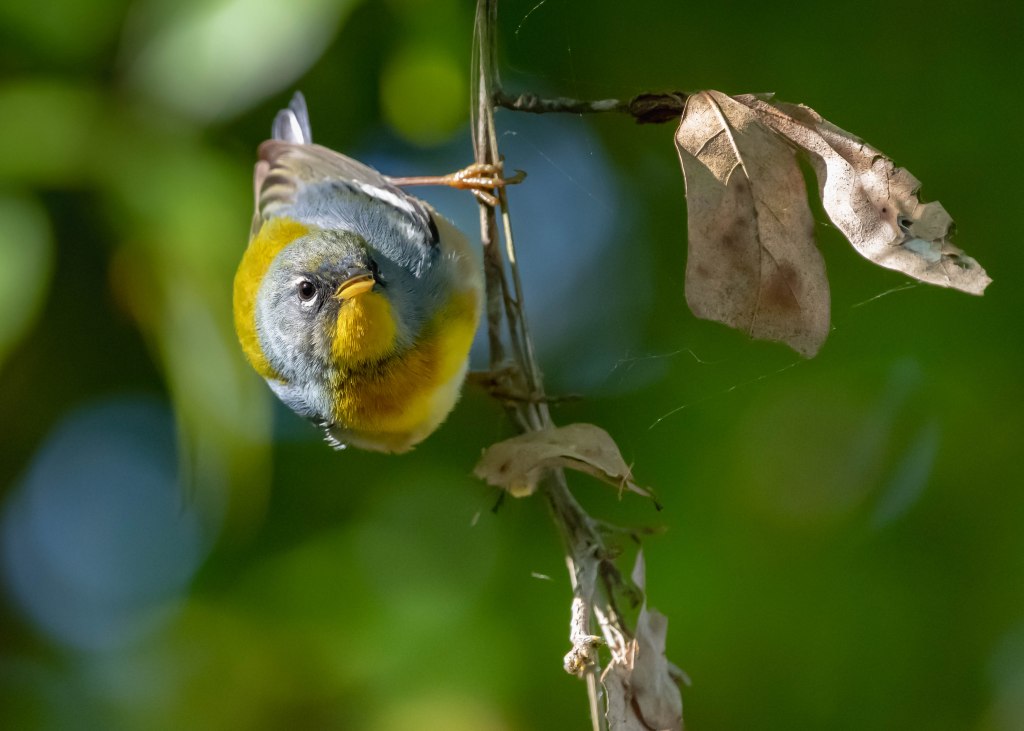
We can really be certain Spring is in full swing when the woods resound with the trills of the Northern Parula warbler. Those trills seemed to echo from every part of the park this morning!
We are in the process of re-thinking our plan of action as it didn’t seem to work as well as we hoped. Not to mention we can’t afford that much food! Hopefully, your neck of the woods is filled with the coming of nesting birds in the budding trees and the goings of winter visitors who will return to see you again in the autumn.
Enjoy your search for a natural place and come back for a visit!
Header Image: Northern Flicker (Female)
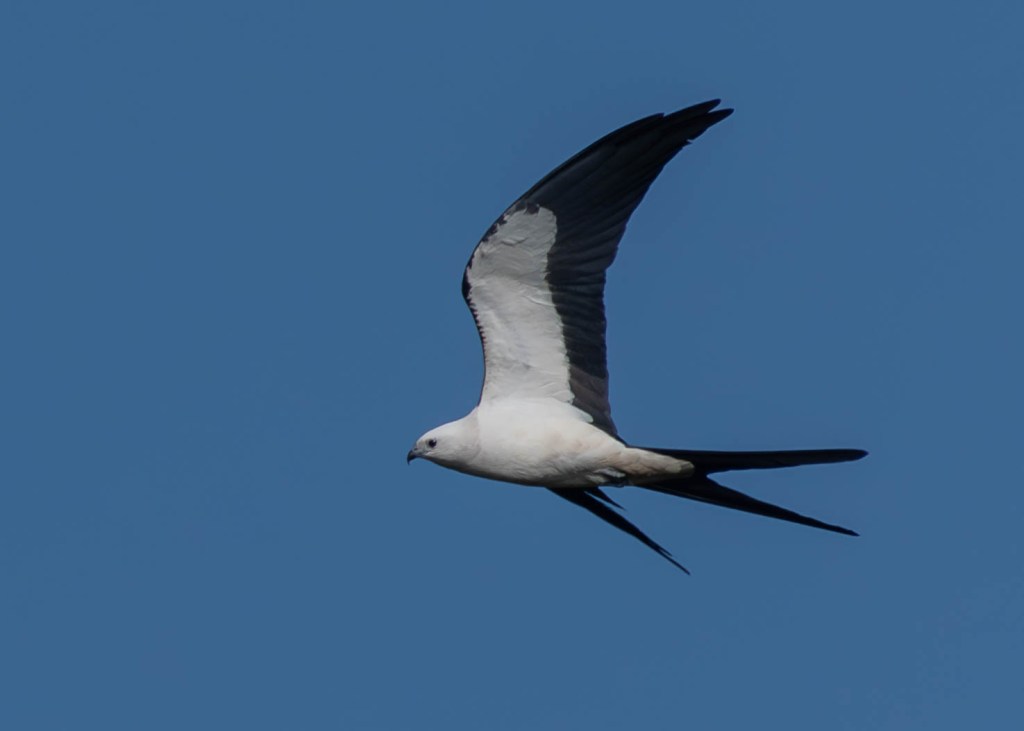
A trio of sleek Swallow-tailed Kites appeared above the cypress trees on the bank of the lake. Gini and I were enjoying a mid-morning brunch of fresh tangerines and granola bars and were content to sit back and enjoy the show. Long tails acted as rudders and the pointed wings hardly moved as they glided effortlessly just above the tree tops. Having spent the winter in South America, these raptors will soon select a tall tree near water and construct a nest. Lizards, snakes and flying insects provide the protein necessary for them to breed.
Our morning began about sunrise as we checked in at the Tenoroc Public Use Area headquarters. Light ground fog dissipated almost before our eyes as the strong rays of the sun spread across the landscape. The first stop found a Glossy Ibis preening its mother-of-pearl plumage atop a small cypress tree. It seemed odd on that perch as we are accustomed to watching it probe the shallow water among cattails. Osprey were busy fishing, woodpeckers could be heard hammering throughout the morning, Northern Mockingbirds demonstrated their incredible musical repertoire, Limpkins called to each other with that unmistakable scratchy screech and the ascending trills of the Northern Parula warbler had returned to our patch after its winter absence.
It is Spring! The mosquitoes are here. Not yet in force, but they are here. Butterflies are becoming abundant as are dragonflies. Trees are turning green. Flower buds are forming. Our dry season is lingering but will soon yield to the rains which will replenish the aquifer and provide the life force for the natural world to flourish.
I’m sure you get tired of hearing how blessed we are to live in such a natural paradise, but I fear if it isn’t repeated often we may come to take it for granted. It is just so amazing that we can travel ten minutes and see such diverse flora and fauna. We relish the thought of visiting a large wildlife refuge or special venue, but our nearby natural places will do just fine in the meantime.
The morning was all too short. Aren’t they all?
See what we saw.
In the dawn’s early light, it is no mystery how the Glossy Ibis received its name.

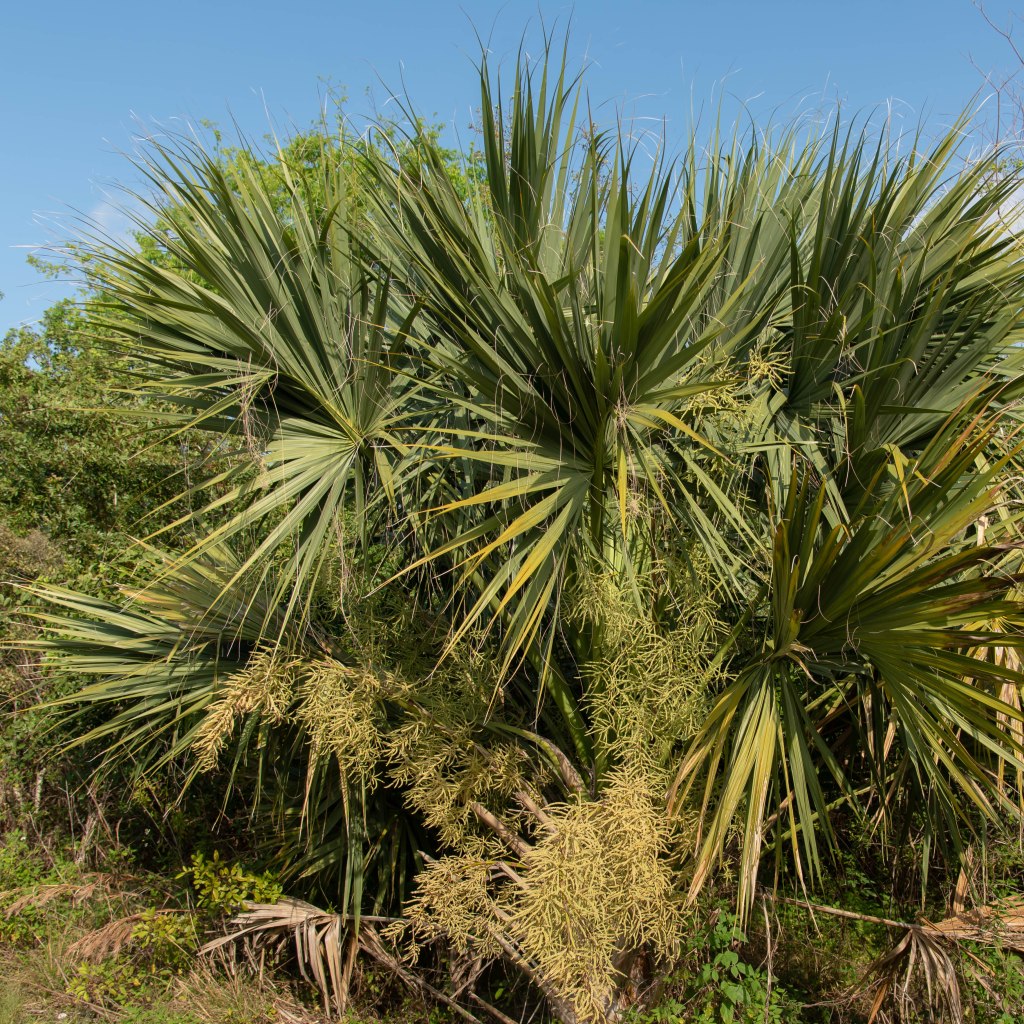
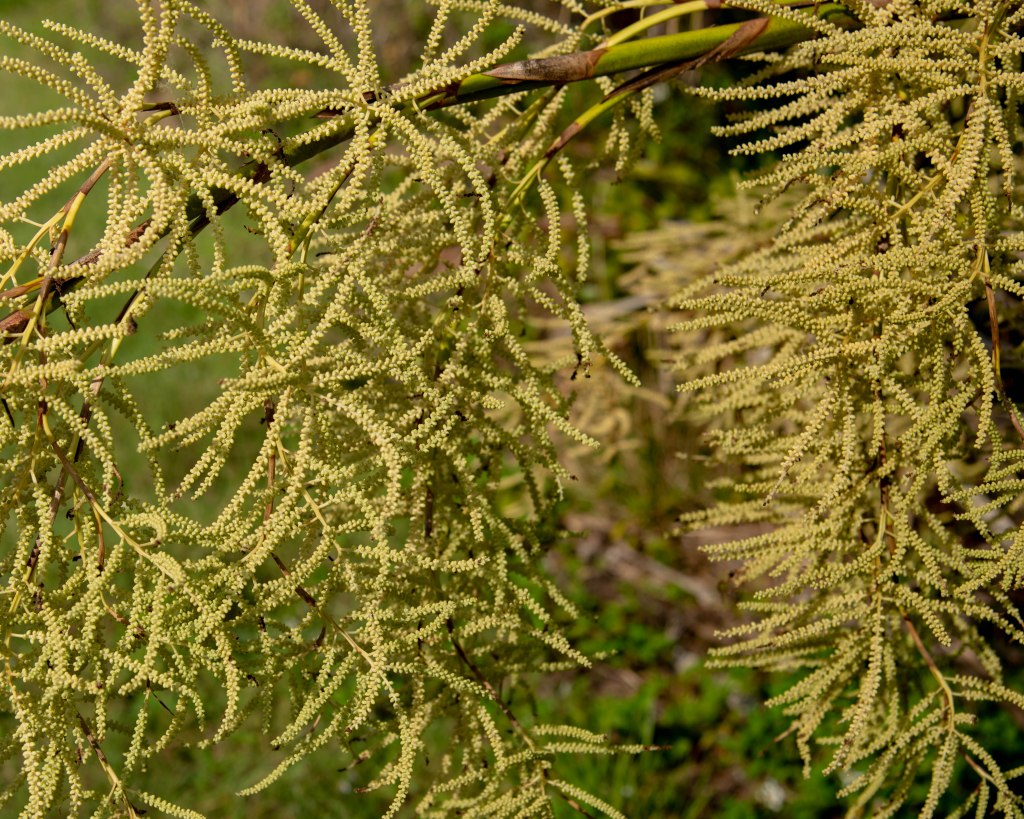
Both Gini and I grew up in central Florida and assumed the entire world was covered in Saw Palmetto (Serenoa repens) just like our forests were. As kids, we couldn’t have survived without the plant’s stems whittled to a point for roasting hot dogs and marshmallows. If there were no palmetto plants, where would rattlesnakes hide? The profuse buds will soon turn to small white flowers and the aroma during this time is overwhelming.
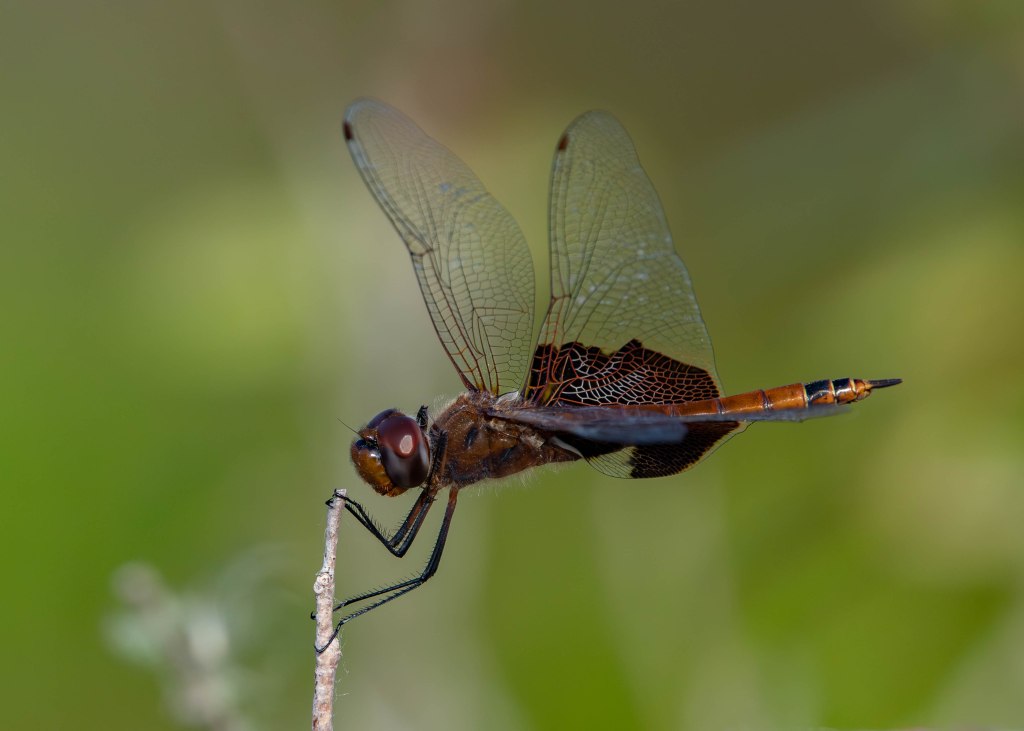
One of the more common dragonfly species around here is the Red Saddlebags (Tramea onusta). To understand why we like dragons so much, you need to know our childhood nickname for them was “skeeter hawks”.
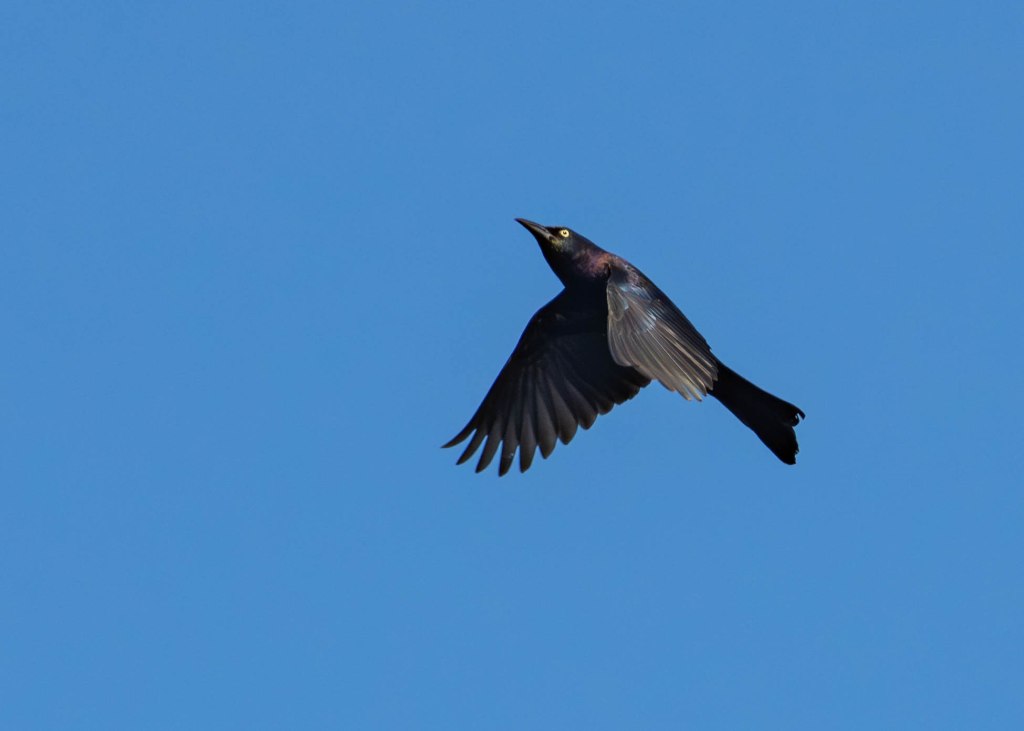
Just as we parked under the shade of a large oak tree for our brunch, a group of Common Grackles flew up from the nearby reeds. In this area, they are vastly outnumbered by their cousin, the Boat-tailed Grackle. A bright golden eye is diagnostic.
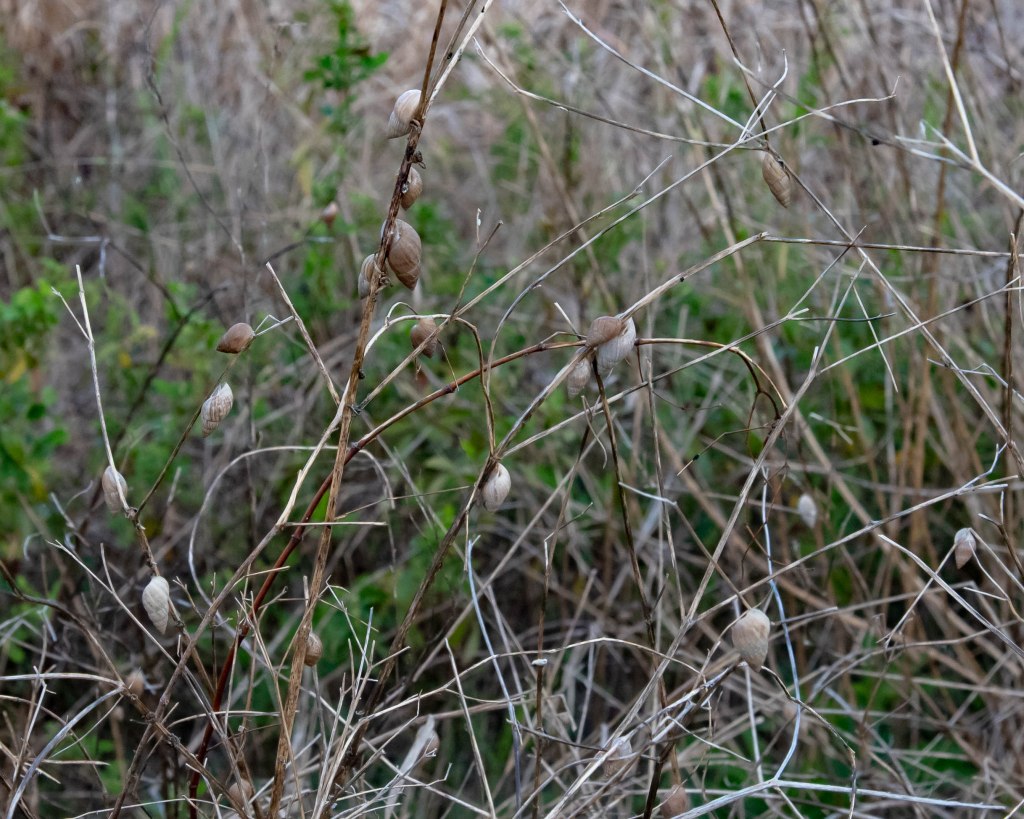
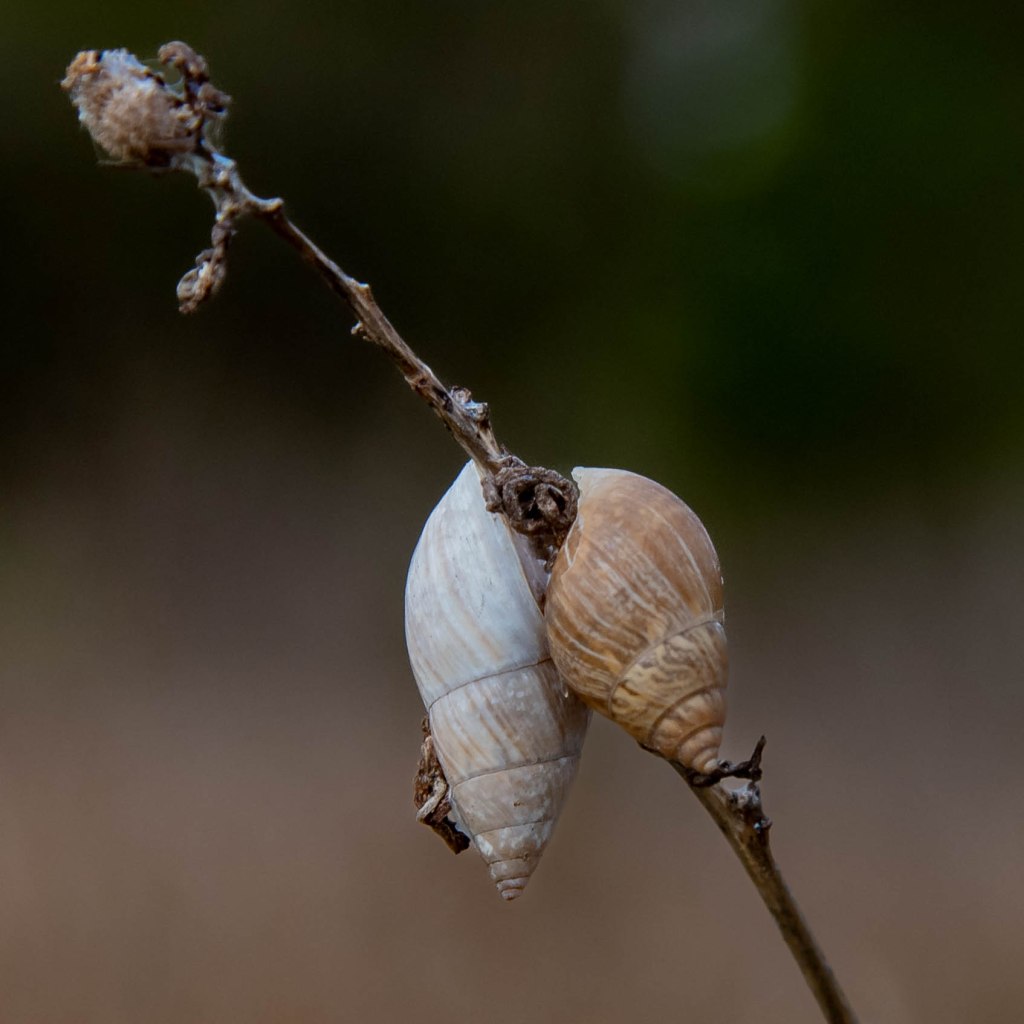
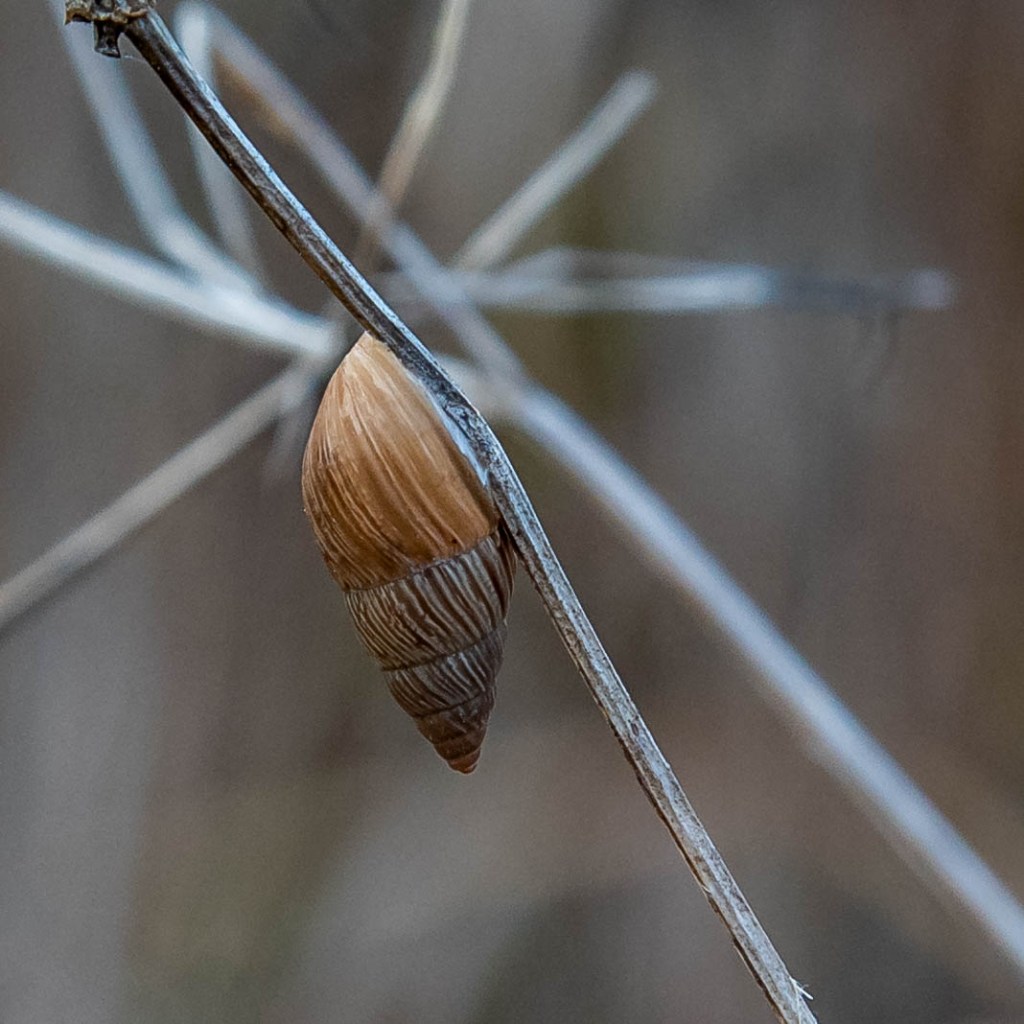
We think these are Rosy Wolfsnails (Euglandina rosea) but would appreciate confirmation or correction. They were present on many dried weed stems as well as metal fence posts. My understanding is once they hatch from just below the soil, they climb the first available thing to look for food, which can be lichens, moss, slugs or other snails.
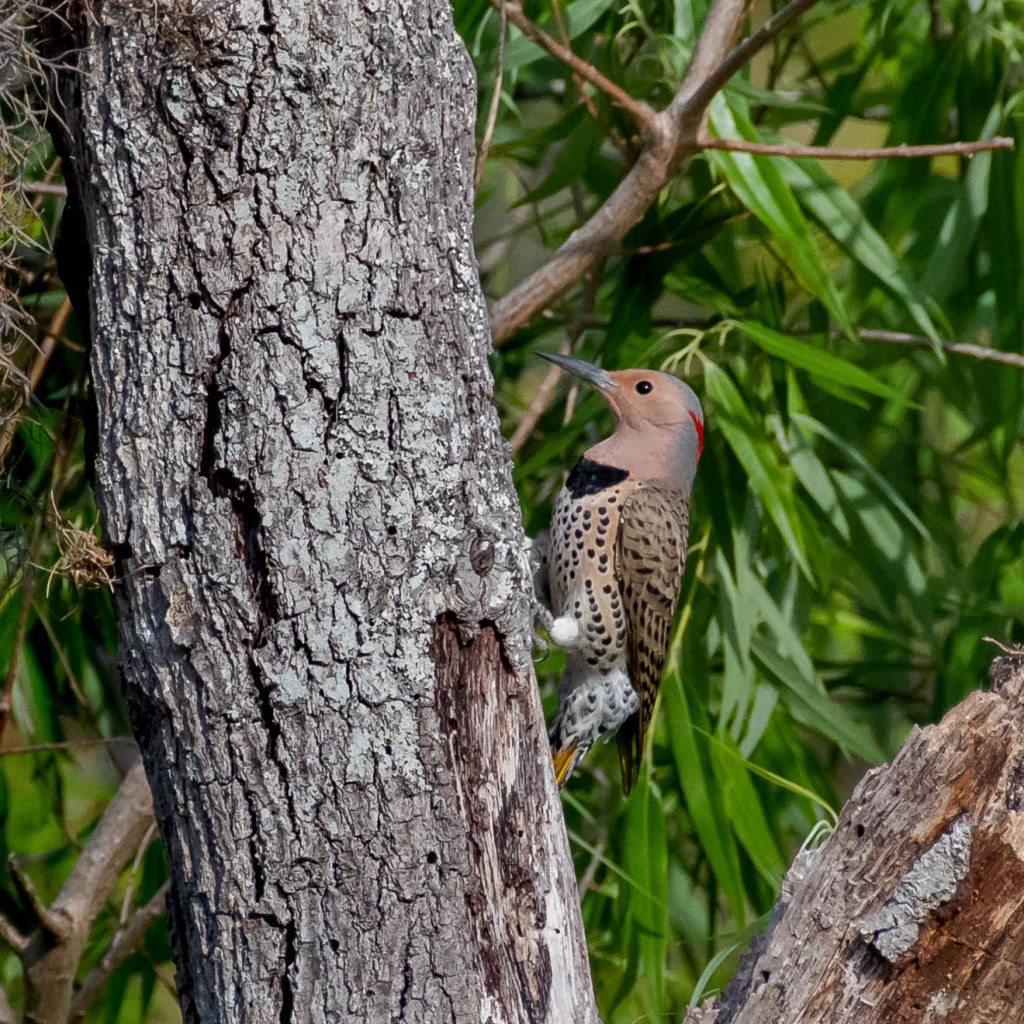
A pair of Northern Flickers were busy for awhile on this dead tree but we aren’t sure if they were scouting for a nesting spot or if it was an all-you-can-eat buffet spot. The male sports a moustache while the female does not.

A male Eastern Pondhawk (Erythemis simplicicollis) begins life looking like Mom, all green. Within a few weeks, it begins to take on the powdery blue (pruinose) hue of an adult male. This one is in transition.
The White Ibis is very common in central Florida. Large and all white except for black wing tips and reddish legs and bill, it probes the ground and shallow water with its long decurved beak. When not posing for photos, that is.

The Gopher Tortoise (Gopherus polyphemus) is on the federally threatened species list and is known as a “keystone” species due to the fact its deep burrow is shared by over 350 other species once the burrow is vacated. For a moment, I thought I was looking in a mirror.

Swallow-tailed Kite. Magnificent.
Our morning was short, filled with delights and totally relaxing. To enjoy it all, we simply had to leave the house. See you – Out There.
Enjoy your search for a natural place and come back for a visit!
Header Image: Least Sandpiper
Our trip took place on March 10 and we were a bit late in the season to see as many migratory waterfowl as we might have seen three or four weeks earlier. Continuing my personal goal of “always late”, the first part of this post was late and this final chapter is much later than anticipated.
Life interferes with plans. (All is good, just busy.)
After a leisurely lunch under the shady oaks, Gini and I meandered around Merritt Island National Wildlife Reserve for a few more wonderful hours. This is the kind of place where you wonder what might be around the next bend and there actually IS something there! Perhaps a Reddish Egret dancing for lunch. It could be an alligator contemplating whether he wants Gallinule again for dinner. A flight of American White Pelicans can almost blot out the sun as they pass overhead. Dowitchers in a line appear to be busy sewing in a quiet lagoon, their long bills moving straight up and down in unison.
A lazy drive along Bio Lab Road was filled with wondrous sights. The road runs along Mosquito Lagoon which is sandwiched between the Indian River and the Atlantic Ocean. West of the lagoon is mostly salt marsh and it was busy with all manner of wading birds as well as several hundred Blue-winged Teal. Dragonflies and butterflies were abundant as Spring began its warming of the earth and water. A few wildflowers added a bit of color to the afternoon.
Time was proceeding faster than we liked, as usual. A short visit down a couple of side roads revealed more birds actively feeding and bathing and preening. We needed to head home but decided to make one more circuit around Black Point Wildlife Drive. It’s amazing how much difference a few hours can make in what can be observed at the same spot. Many birds had moved some distance into the wetlands and a spotting scope was needed to identify most of the species. Others, such as a few dozen American Avocets, were busy enjoying a shallow-water dinner before the sun disappeared.
Speaking of disappearing – we reluctantly headed west over the Indian River toward home.
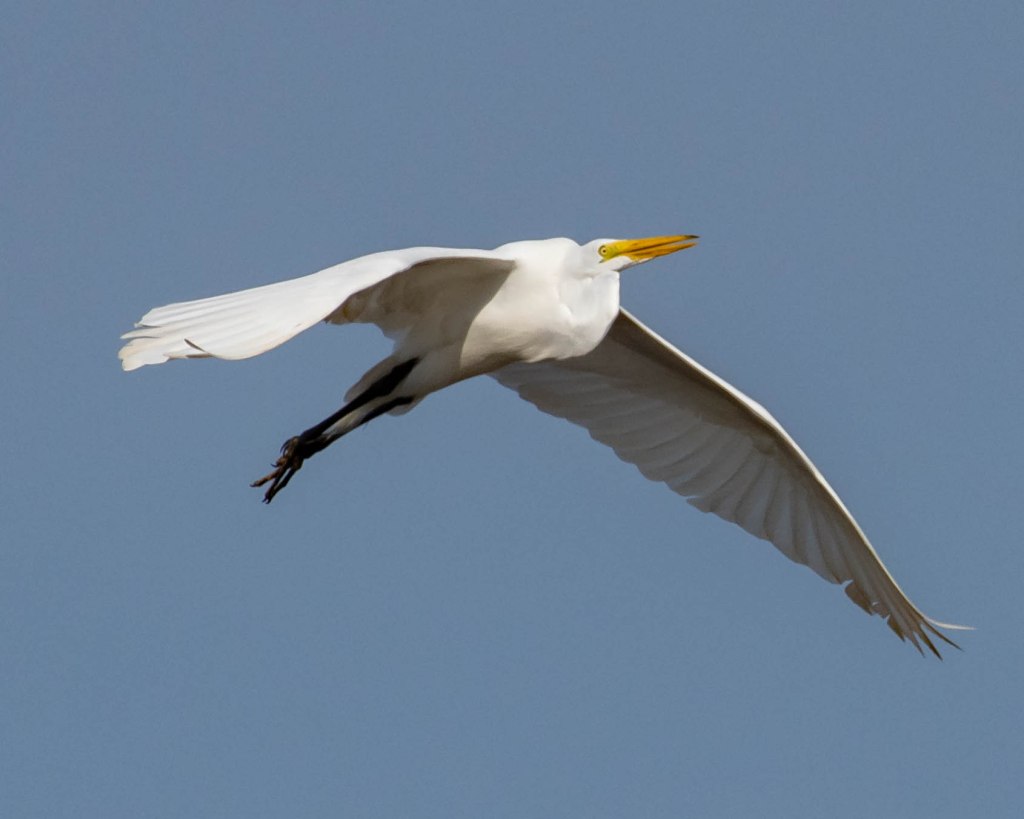
After lunch, a Great Egret flew over the entrance to a side road. We took that as a sign we should explore further.
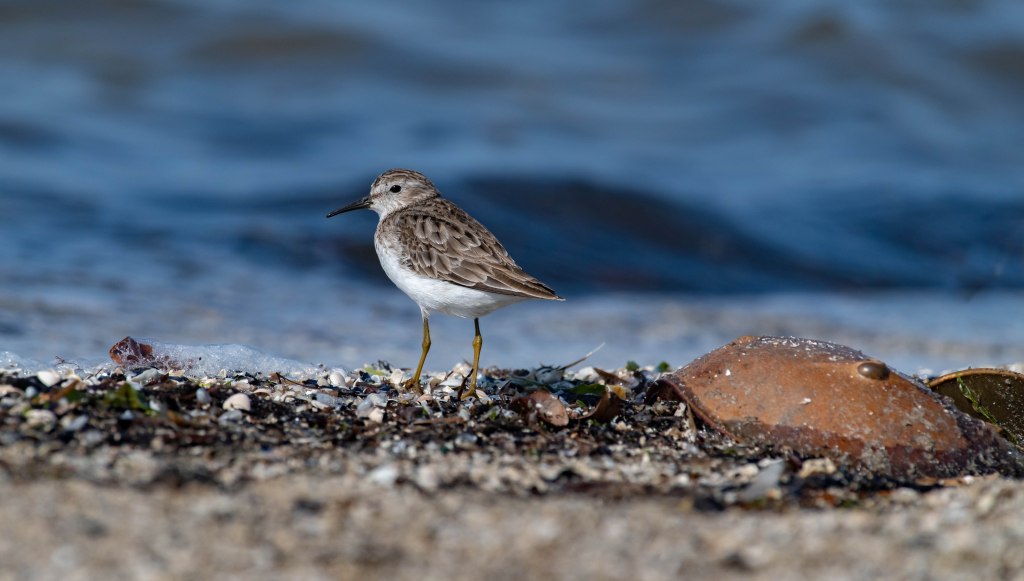
Each Spring, all along the U.S. east coast, horseshoe crabs crawl ashore and deposit eggs into the sand. Shorebirds depend on the energy-rich eggs to help them complete their migratory flights to breeding grounds. We found a small group of Least Sandpipers and Sanderlings feeding along a stretch of beach where horseshoe crabs were present. The Horseshoe Crab (Limulus polyphemus) is not really a crab but is more closely related to scorpions and spiders.


Wading birds love the reserve’s diverse habitat which consists of beach, lagoons, fresh and salt water streams and marshes. This Tricolored Heron was stalking a salt water lagoon for crabs, fish and shrimp.

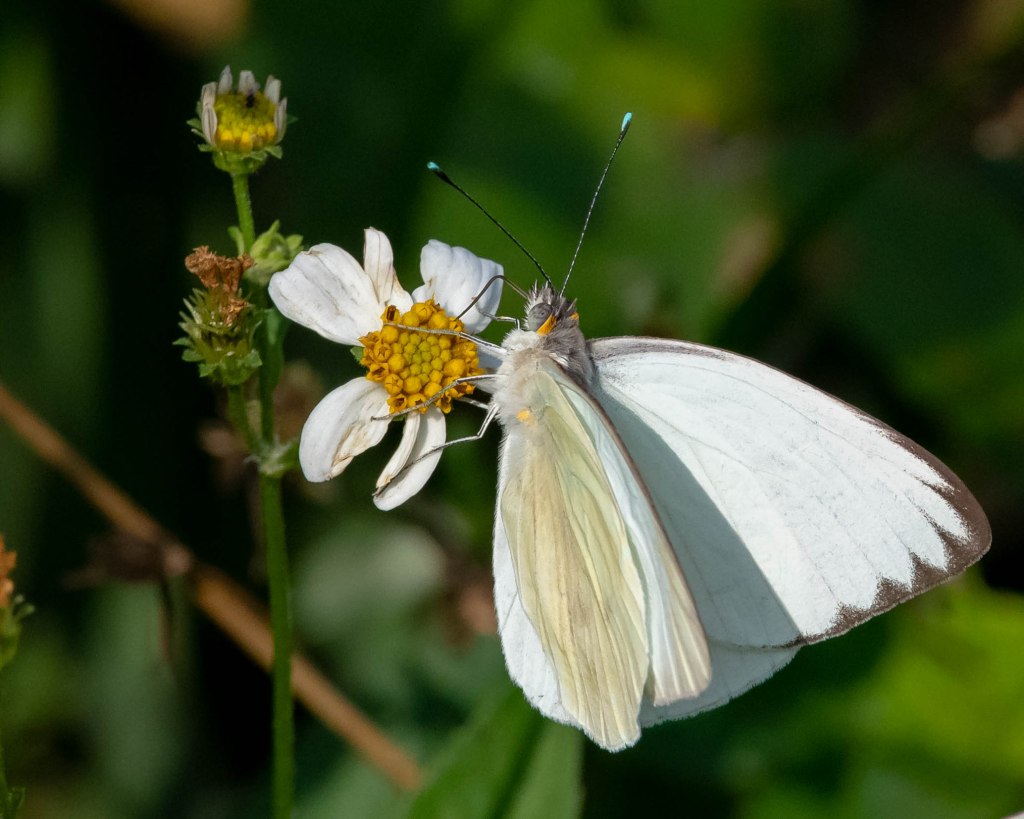
Almost everywhere we went, we found fluttering Great Southern White (Ascia monuste) butterflies.


American White Pelican flocks were abundant all throughout the reserve. During breeding season, adult birds develop a “horn” on their upper bill.


Walking along a canal, we found this Tricolored Heron perched in a mangrove tree. The bright blue at the base of the bill and white plume on its head indicate it’s a breeding adult.

On the railing of a boat dock, this bug looks almost metallic. It’s a member of the large Longhorn Beetle family and is most likely Mecas cana cana. (Thank you to my friend Roy Morris and also Robert Androw at https://bugguide.net/node/view/2227866 for help with the identification.)

Laughing Gulls are one of Florida’s most common gull species. In breeding plumage, the black head appears “silky”.

Typically, Short-billed Dowitchers are found mostly in salt water habitat whereas its Long-billed cousin prefers fresh water. During migration, all bets are off. The two species are very similar in appearance but have different calls to help tell them apart. Our trio gave us a few calls to let us know they are Long-billed Dowitchers.

A group of American Avocets looked like some sort of synchronized feeding team as they all dipped and raised their heads in unison. Further along, we came across a group who had finished dinner and settled in for the night, along with some sleeping Blue-winged Teal.


Our day on the East Coast was all we hoped it would be. Sure, we always want to see “more” birds or something “rare”. For us, beginning a day watching the sun rise up from the Atlantic Ocean and spread its light over the marsh while we hold hands – that’s pretty hard to beat. Seeing a bit of nature’s beauty along the way didn’t hurt.
Enjoy your search for a natural place and come back for a visit!
Header Image: American Coot Chaos
“Take a picture of THAT!”
Gini doesn’t often point out potential subjects for the camera since I’m usually already clicking away, but when she issues a command makes a request, I pay attention. (That applies to all things, not just photography.)
In this instance, a bit of dark clouds had just moved a bit to reveal the sun rising over the vast east coast salt marsh at Merritt Island National Wildlife Reserve. We had only been in the reserve five minutes and were already taking our first break. The rising sun, birds on the move in every direction, salt air – we just spent awhile taking it all in. This. This is why we got up extra early to be here.
Merritt Island NWR is about a two-hour drive from the house and is located at Titusville, Florida. Contained within a 35-mile long barrier island which includes the Kennedy Space Center launch complex, the refuge consists of 140,000 acres on the Atlantic Ocean. Over 1,500 species of wildlife and plants have been noted here, including over 330 species of birds. The vast tidal marshes attract large numbers of migrating waterfowl each year.
Timing is everything. Ours was a bit off as we were late in the year to find great numbers of ducks. The good news is that no matter what time of year one visits Merritt Island NWR, there will be plenty to enjoy!
After our sunrise reverie, we meandered along Black Point Wildlife Drive, a 7-mile one-way trip through fresh and saltwater marshes. We’re still in the dry season so the shallow water attracted a lot of wading birds. The main species of ducks we observed during the day were Blue-winged Teal but we also found Norther Shoveler, Ring-necked Duck, Lesser Scaup, Canvasback, Green-winged Teal and Mottled Duck. Migratory songbirds were feeding in the shrubs and trees in preparation for their return to breeding grounds in the north. Resident gulls, terns, egrets, herons and raptors were all very active. A few flowers were blooming and several insect species went about nectar sipping and pollinating.
After the wildlife drive, we spent some time exploring Biolab Road where we found more wading birds, including the dancing Reddish Egret (who refused to pose for the camera), gulls, terns, Ospreys and blue skies and salt air, which we inhaled in copious amounts.
We thoroughly enjoyed egg salad sandwiches and fresh strawberries for lunch under a canopy of oak trees. Songs of Northern Parula warblers and Carolina Wrens added to the ambience. It had been a good morning.
There are enough images for six separate posts! (Relax, there shall only be two.)
The sun arose from the Atlantic Ocean and once a few clouds moved, the mangrove island-filled marsh reflected the warm glow and Nature’s day began to get busy.
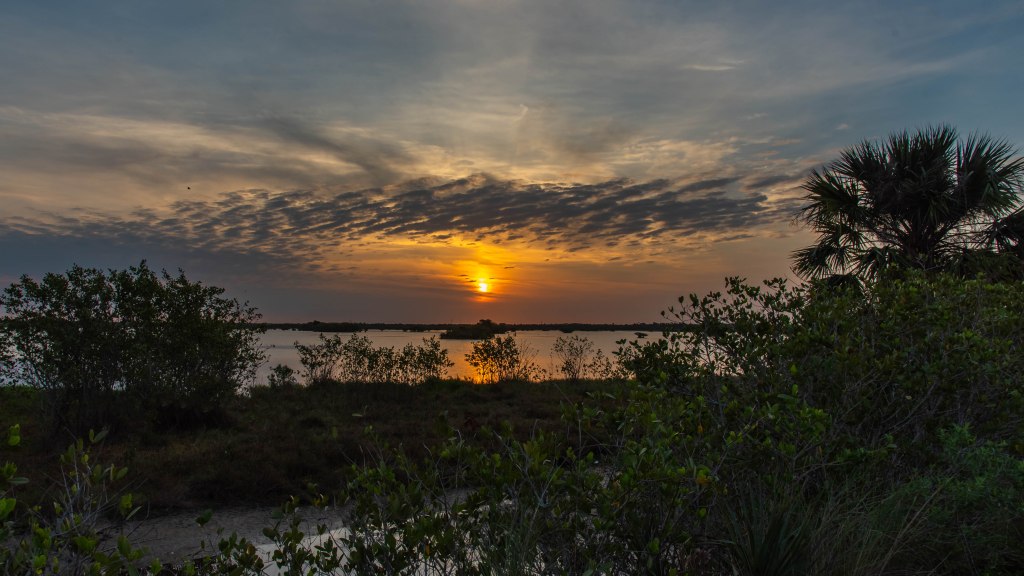
Strong light from that rising sun turned a shallow water area into a large golden pond where all sorts of wading birds enjoyed a breakfast buffet.

We startled a Great Blue Heron perched among the mangrove branches. I suspect she was concentrating on the water below and didn’t see us approaching.

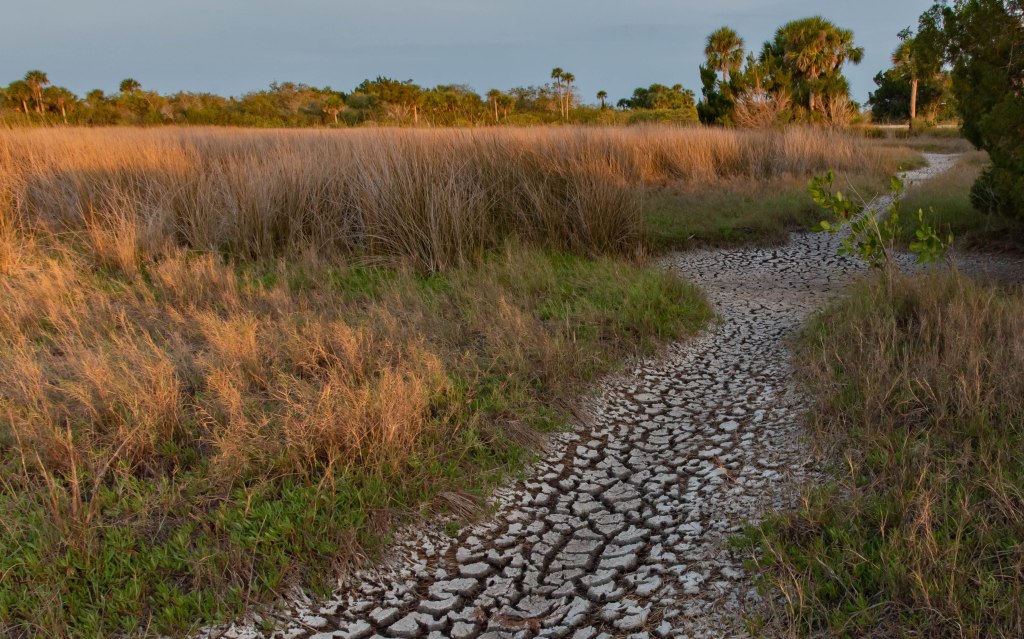
Our dry season will last a few more weeks. In the meantime, this normally filled canal resembles a mosaic of cracked clay.
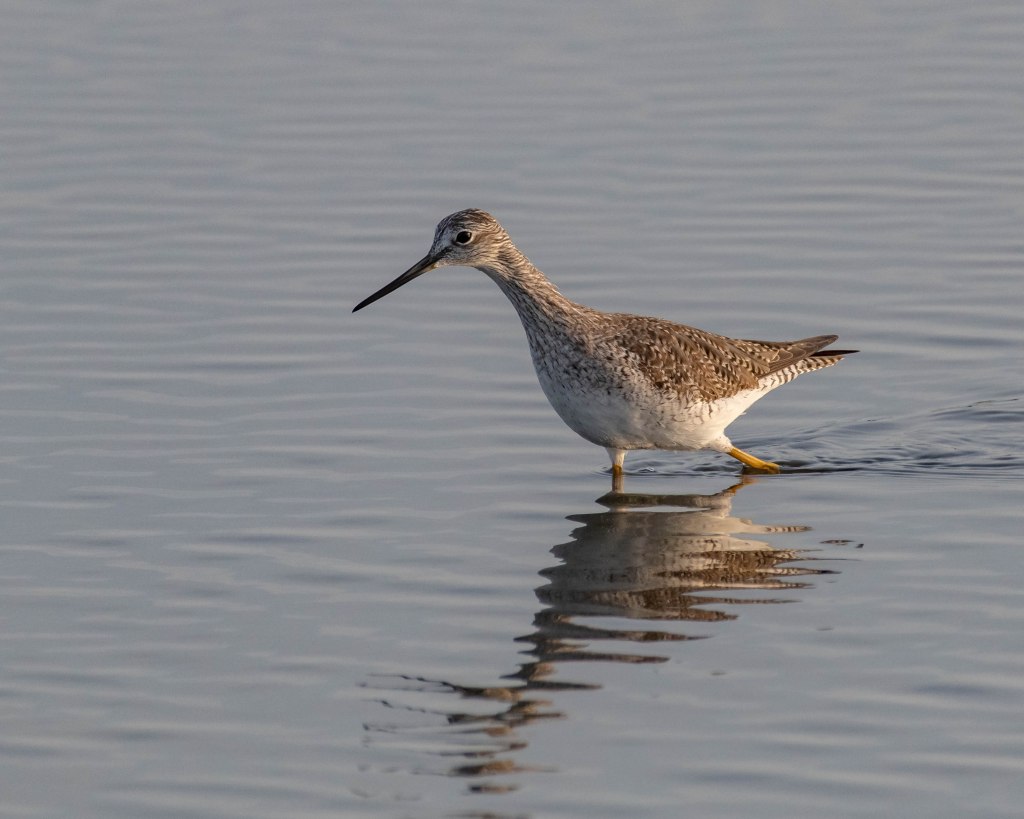
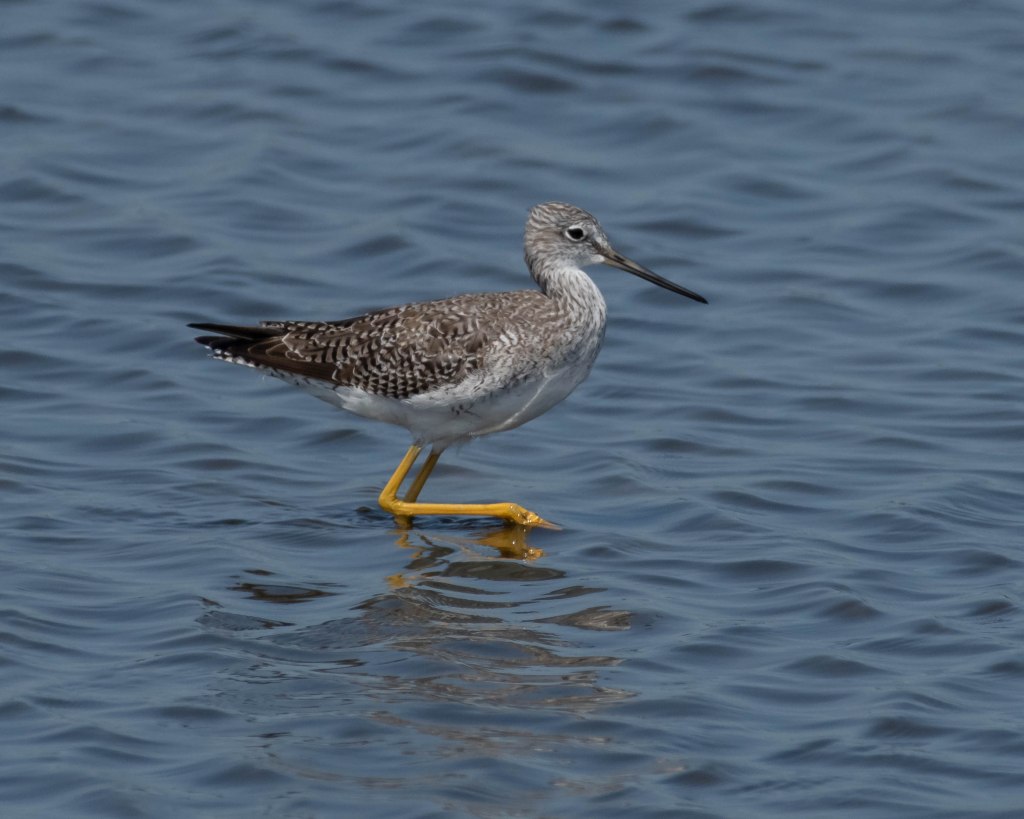
Wading birds were very abundant throughout the refuge. Lesser and Greater Yellowlegs can be difficult to tell apart if they are not seen together. One helpful hint is their calls are different.
Watching this Anhinga swim toward the shore with his breakfast had me wishing lunch time would hurry up!

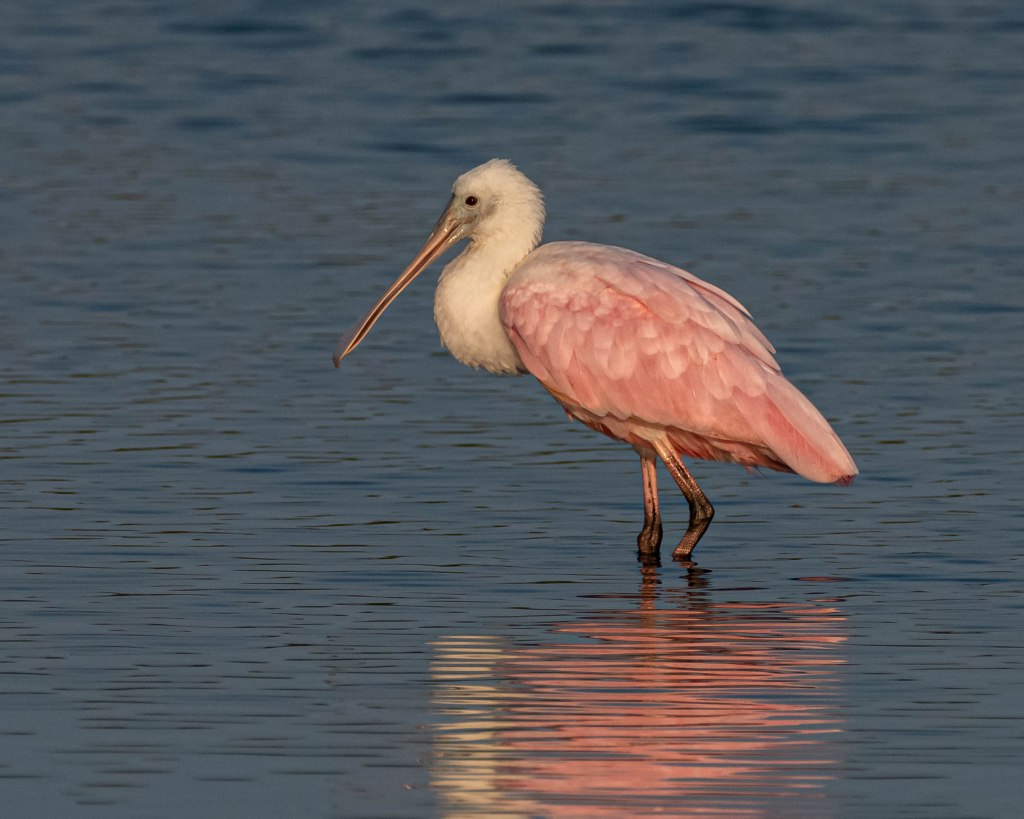
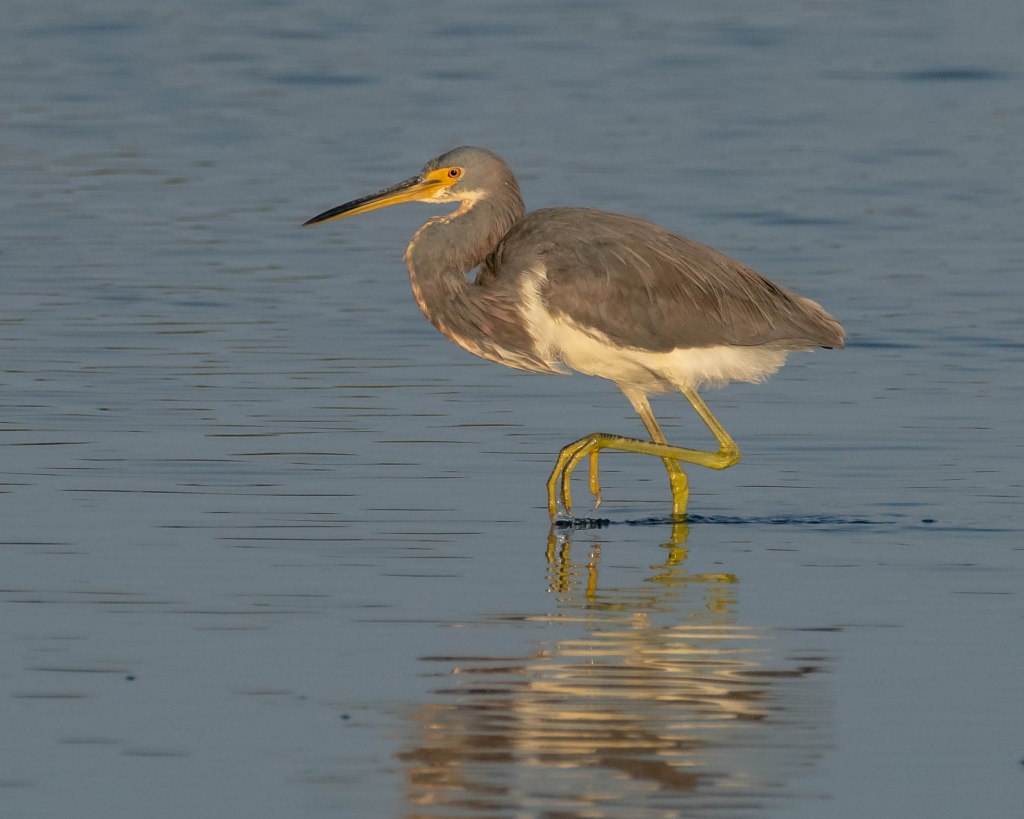
Shallow fresh and saltwater marshes dotted with small mangrove islands harbor myriad life forms attractive to wading birds and other predators. Here, a pair of immature Roseate Spoonbills and a Tricolored Heron find plenty to eat.

Immature Roseate Spoonbills are paler pink than adults and have completely feathered heads. The unique structure of their bills allows them to sweep from side-to-side in shallow water and filter small invertebrates.
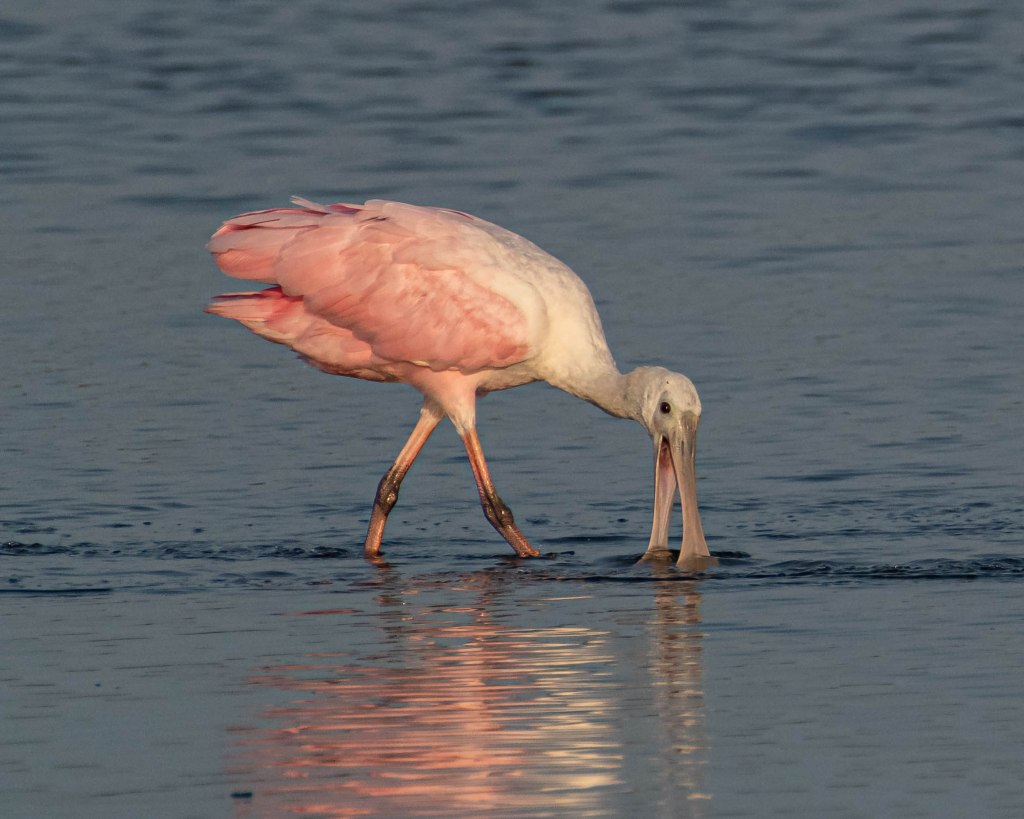

Wading birds such as the Tricolored Heron like to follow around behind the Spoonbills to scoop up larger prey such as big shrimp, crabs and fish which have been disturbed by the pink predators.
Flocks of Blue-winged Teal were common all day long as they moved around within the refuge.
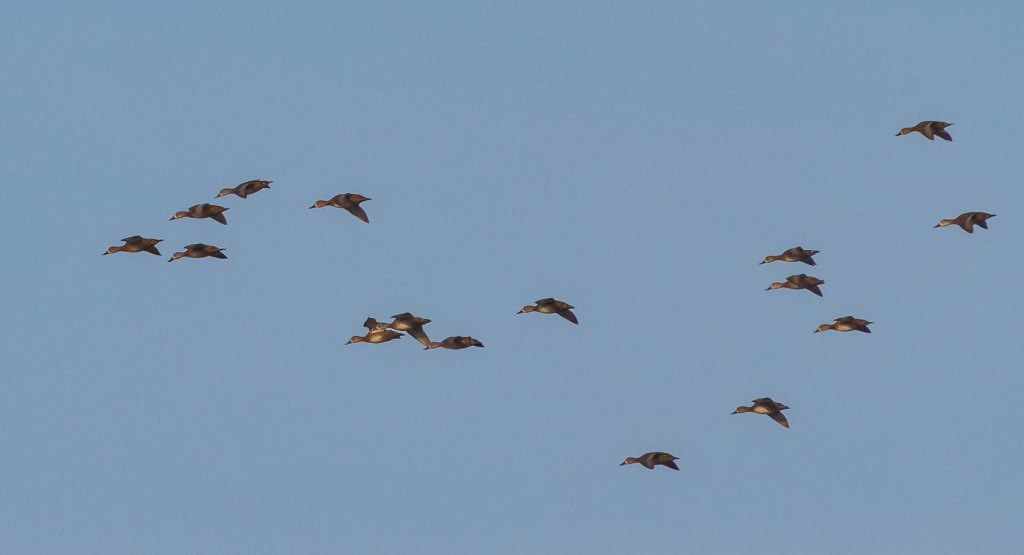
We happened upon a lagoon filled with American Coots. Several hundred busy noisy birds!

Pied-billed Grebes were abundant this morning, many hanging about in groups of 5-10 birds. This one apparently preferred to be alone.

It wasn’t all waterfowl. Migratory Swamp Sparrows made several appearances.

Small patches of Indian Blanket (Gaillardia pulchella) added bits of glorious color around the marsh.

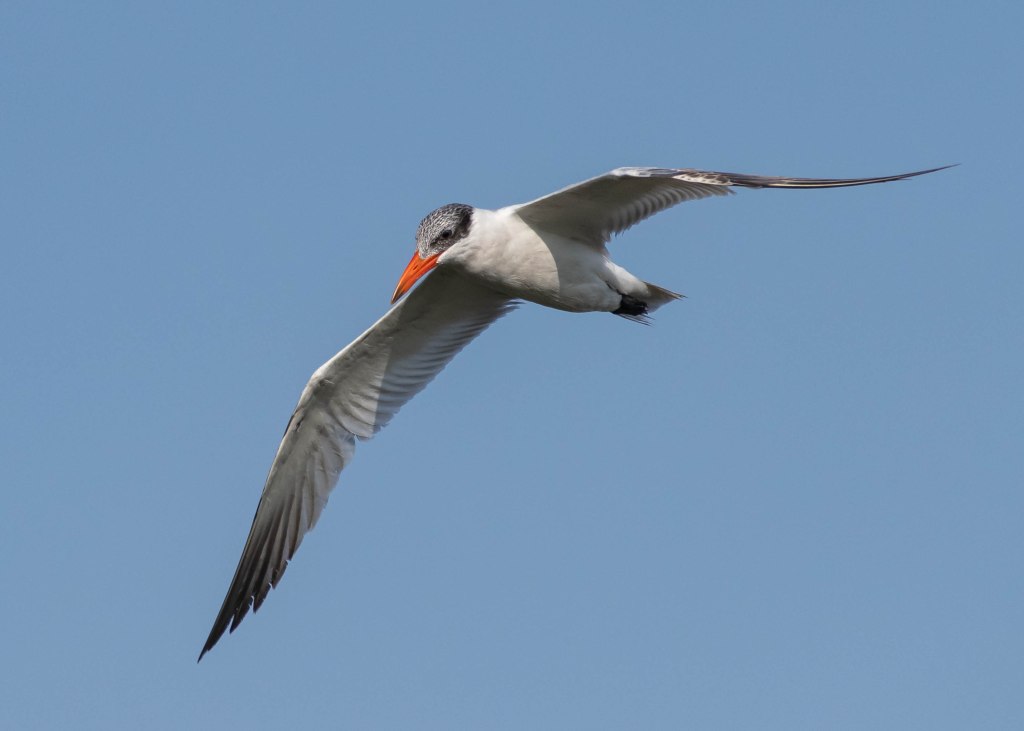
North America’s largest tern, the Caspian Tern, is a common winter visitor along Florida’s coasts. The first photograph shows a bird with grayish head feathers in transition to full breeding plumage of an all-black head as seen in the second image.

An immature White Ibis is mottled brown and white with pinker bills and legs than an adult.

Another early spring bloom, the Purple Thistle (Cirsium horridulum), was fairly abundant is some areas. Where thistles abound, so do pollinators, such as this Western Honey Bee (Apis mellifera).


Our morning was relaxed, filled with the sights and sounds of a busy coastal marsh and time passed all too quickly. After lunch, we’ll show you a bit more of why we like it here.
Enjoy your search for a natural place and come back for a visit!
Additional Information
 Our Natural Places