Header Image: Cloudless Sulphur (Phoebis sennae) on Prickly Pear (Opuntia spp.)
One of our birding “patches” which we often mention is the Tenoroc Fish Management Area. We mention it often because we visit it often. A few minutes drive from the house, the area consists of over 7,000 acres (2800+ hectares) and offers a fairly diverse habitat. There are 30 lakes, hardwood and pine forests, open grassy fields, wetlands and well-maintained trails. The management area has one large main tract and several smaller tracts which are separated geographically over a few square miles. Today’s visit was to the Lost Lake East tract.
From the main road, it’s just under than a mile to the canoe launch parking area at Lost Lake East. No motorized craft are allowed. The drive is bordered on each side by groves of oak and hickory trees and open pine woods with saw palmetto scattered around abundantly. Leaving the parking area, one can hike in different directions for several miles.
We meandered along a meandering creek. Small things seemed to catch our eyes every few steps. Small treasures became large rewards and before we knew it the clock struck noon. It was almost a shock to discover the walk back to the car only took a few minutes. Surely we had covered a few miles? Apparently not.
Spring is fading into summer. Florida’s “brown” season is in transition to the “green” season. Regular rains have begun and as the aquifer is replenished, lakes return to seasonally normal levels. The air is laden with humidity and temperatures are reaching 90+ degrees (32 C) by noon. We are once again reminded we live in a sub-tropical environment.
Flowers are now prevalent which means insect life is thriving. Resident birds pursue the insect life to nourish their offspring. Softshell turtles lay dozens of eggs in sand and mud. Raccoons locate many of the turtle nests and carry the eggs back to their young. The circle of life rotates 24 hours a day every day. Nature does not take a vacation. We are thankful for that.
We have many images to share. There will be a second part so hurry and only look at the ones you like.
Southern Beeblossom (Oenothera simulans) flowers are quite small but incredibly beautiful. Their sweet fragrance attracts a large variety of pollinators.


A footbridge crossing the creek is in need of some repair but is structurally sound. The path beyond is worth making the crossing.

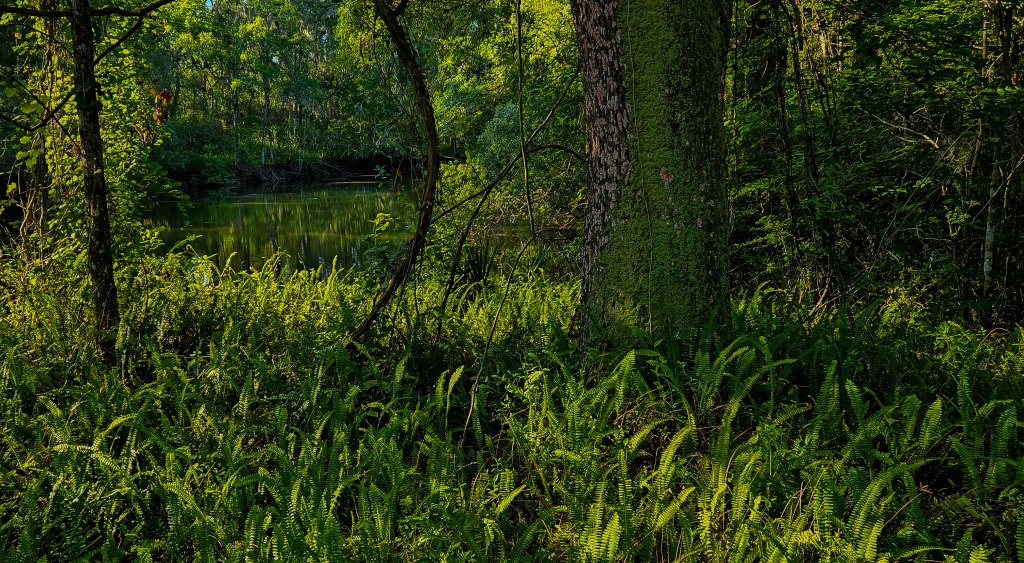
Ferns, trees and vines help frame a morning view of Lost Lake East.
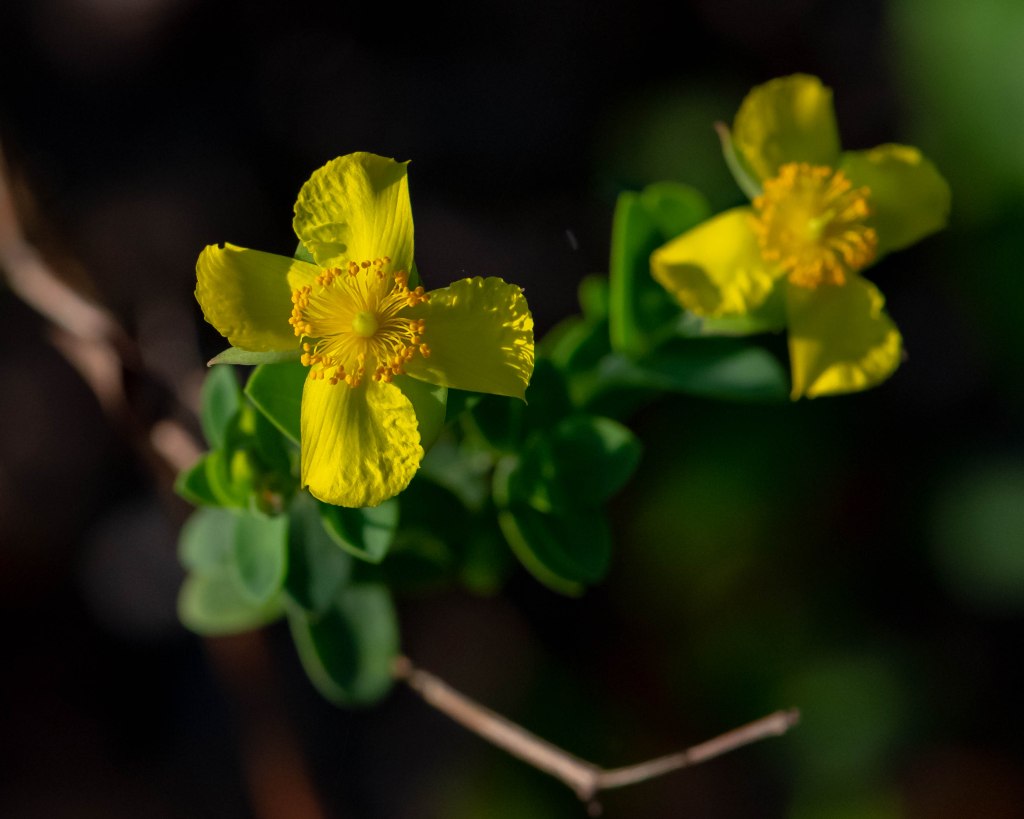
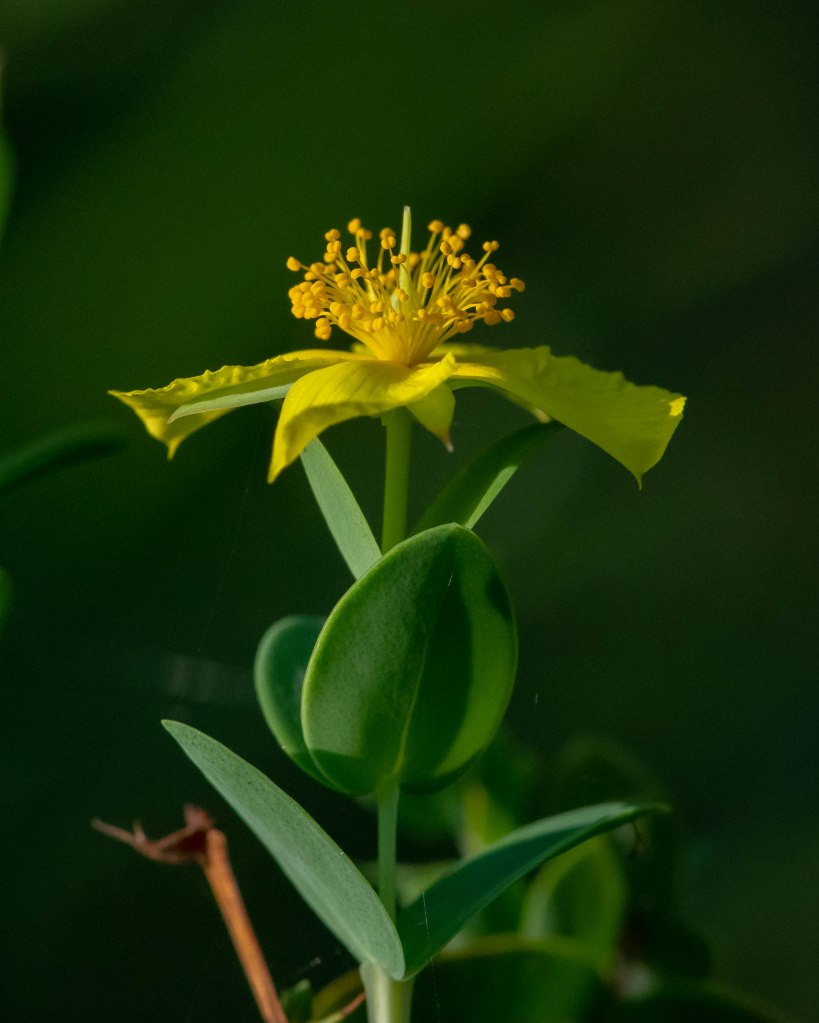
Several plants of Four-petal St. John’swort (Hypericum tetrapetalum) provided buttery yellow beacons within the woods.
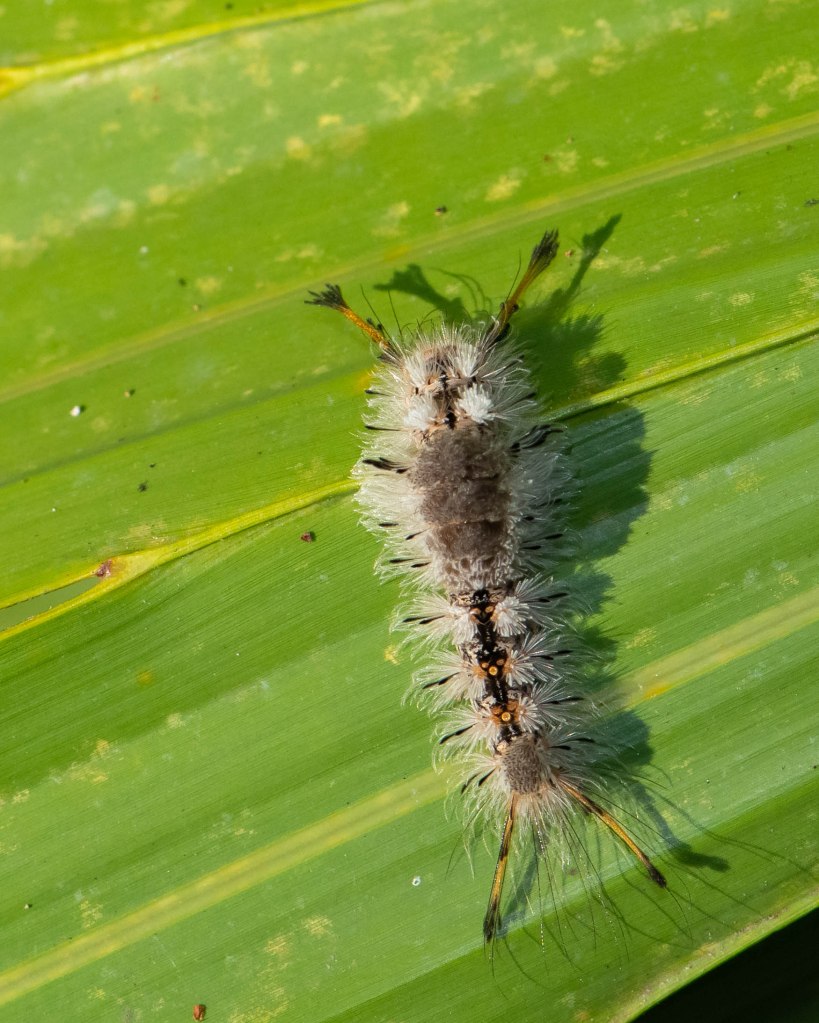
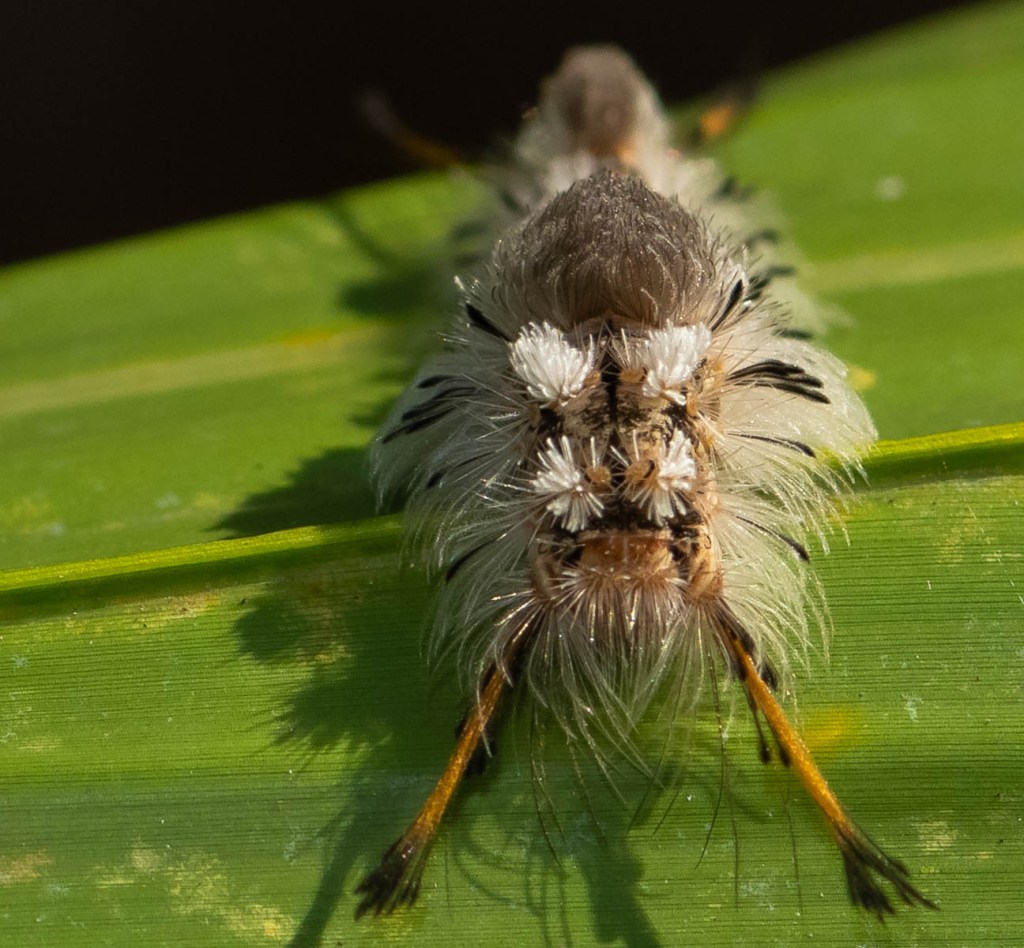
Resting on a Sawtooth Palmetto frond, a larva of the Southern Tussock Moth (Dasychira meridionalis) posed for a few candid portrait shots.
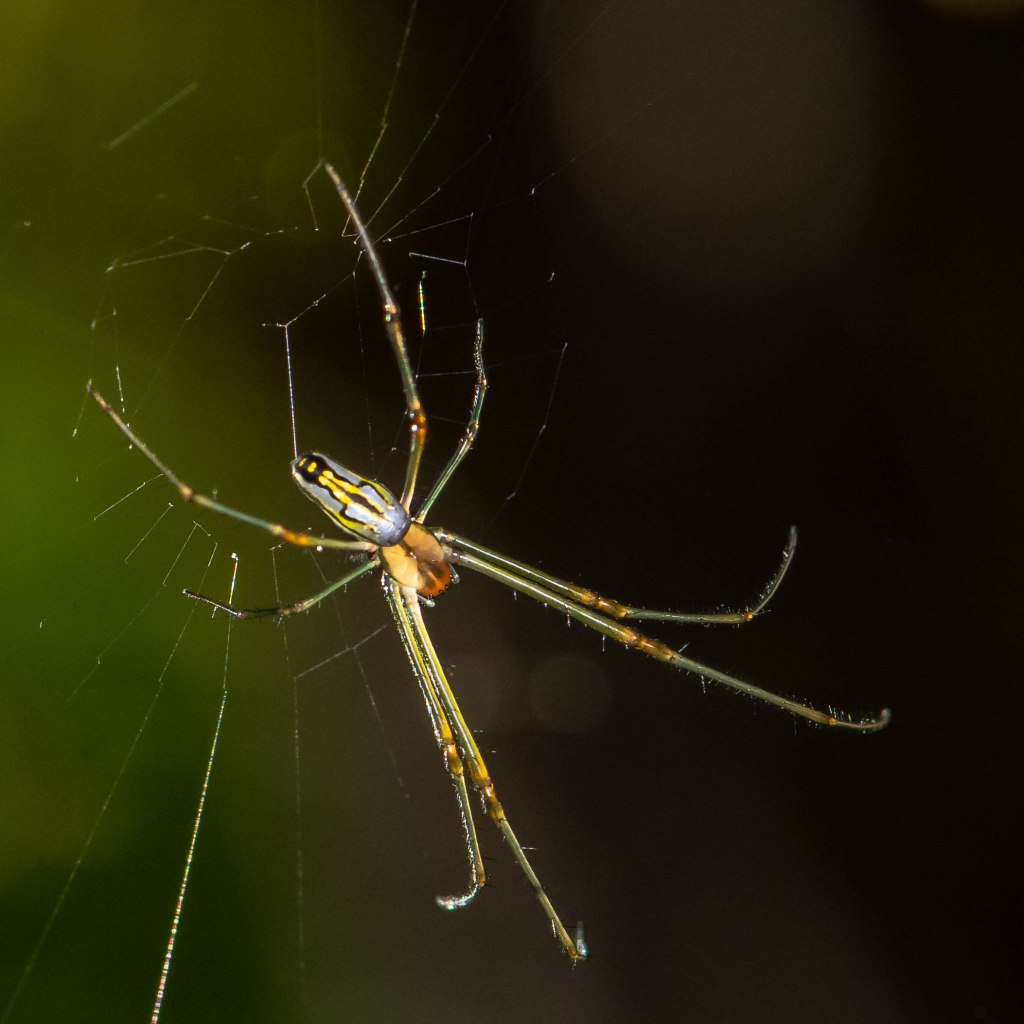
There are two species of Orchard Orbweaver spiders in Florida, Leucauge argyra and Leucauge argyrobapta (sometimes called Mabel Orchard Orbweaver). There are slight differences in appearance and this image is of the former which, in North America, is only found in central and south Florida. A common Orchard Orbweaver of the eastern U.S. is L. venusta, but it is generally not found in Florida. (Yes, there will be a test.)
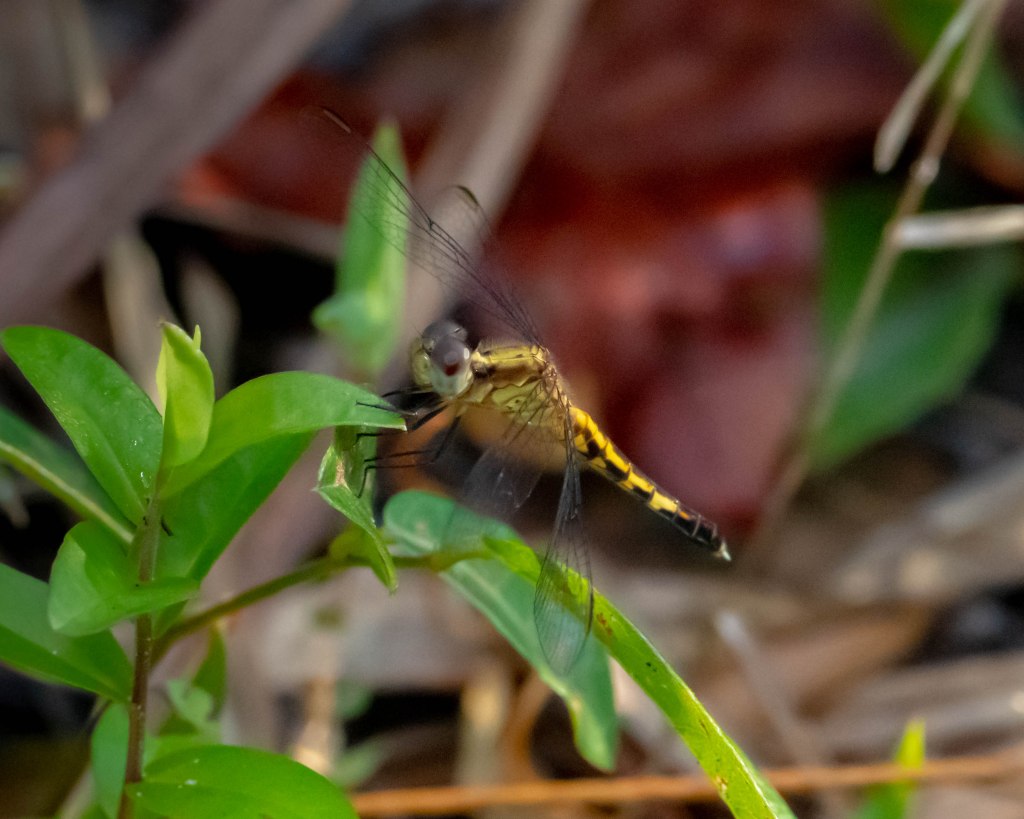
Good at staying under foot but not so good at posing for the camera, a small Little Blue Dragonlet (Erythrodiplax minuscula) kept pace with us for awhile.
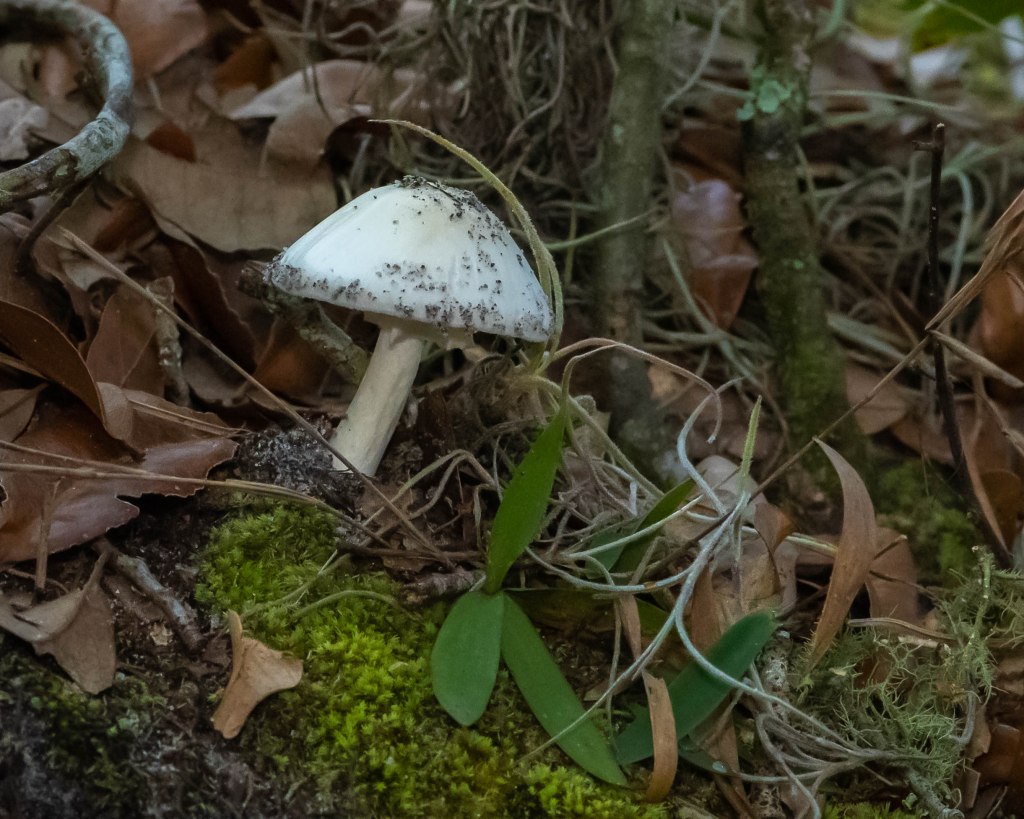
A mushroom as it appears at ground level. This fungi offered me no assistance in trying to stand up again.
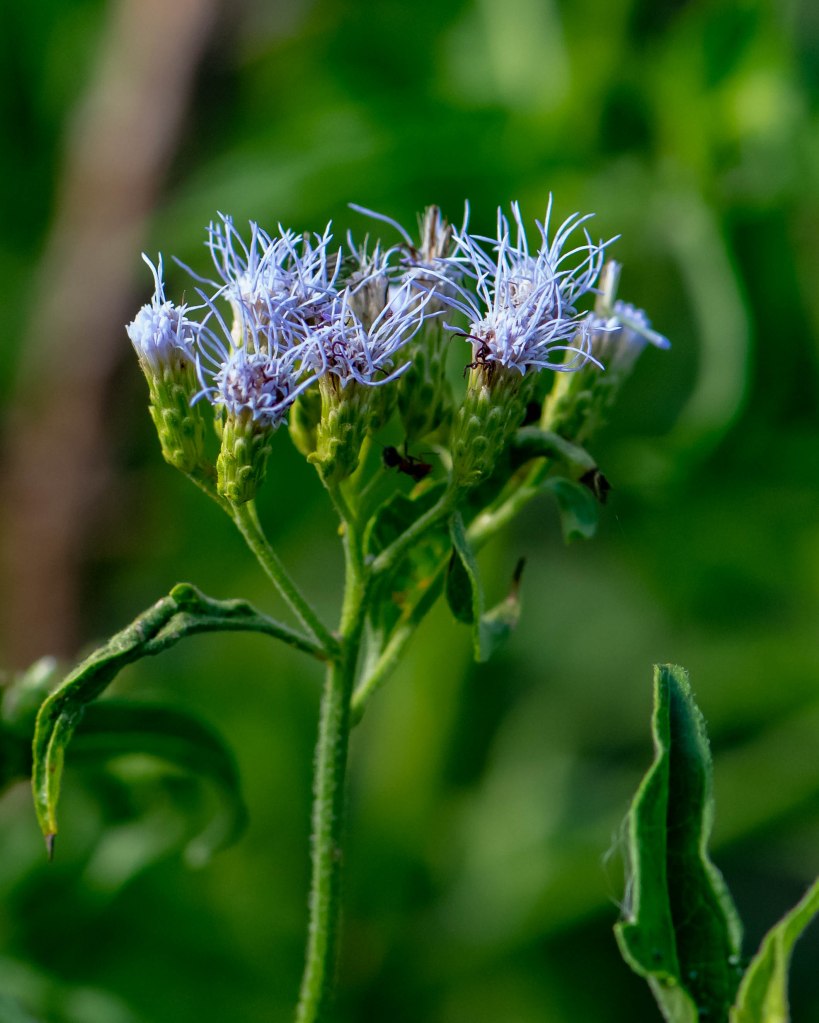
In open areas, especially near water, the area is filled with blue. I’m pretty sure this is Blue Mistflower (Conoclinium coelestinum) but there are a couple of similar plants. If you know its identity I’d appreciate a correction.
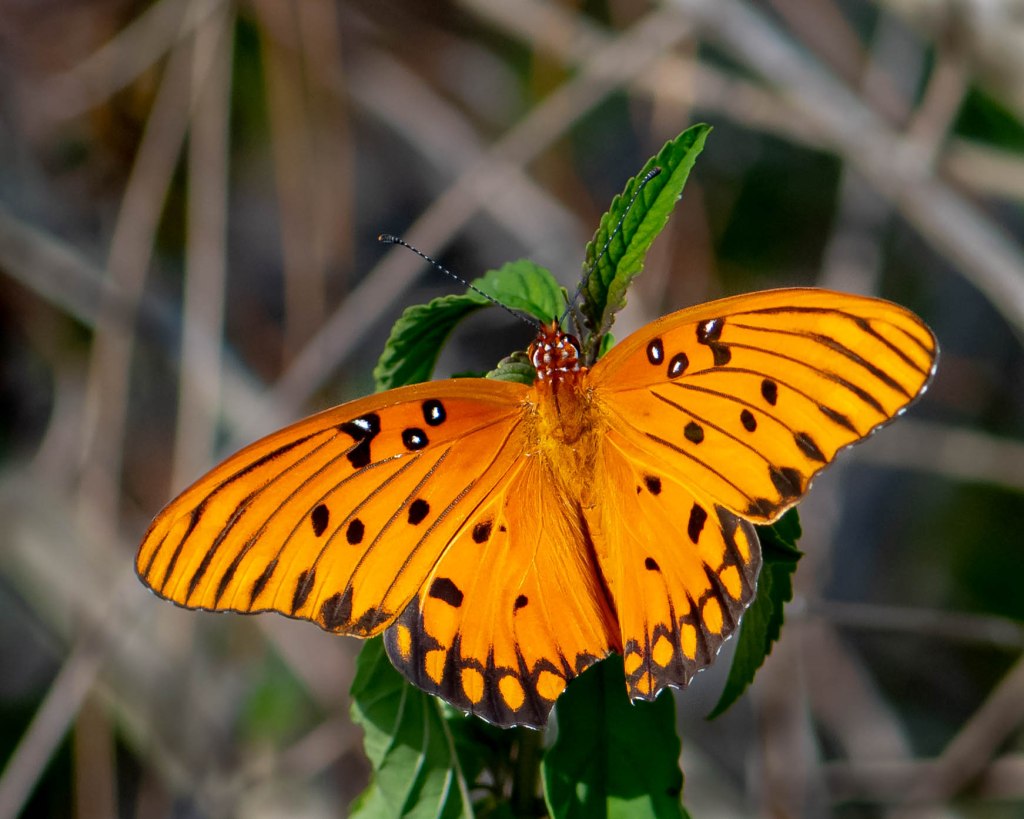
Wandering around in a mostly dark green habitat, a spot of bright orange gets one’s attention. This Gulf Fritillary (Agraulis vanillae) certainly brightened up the morning!
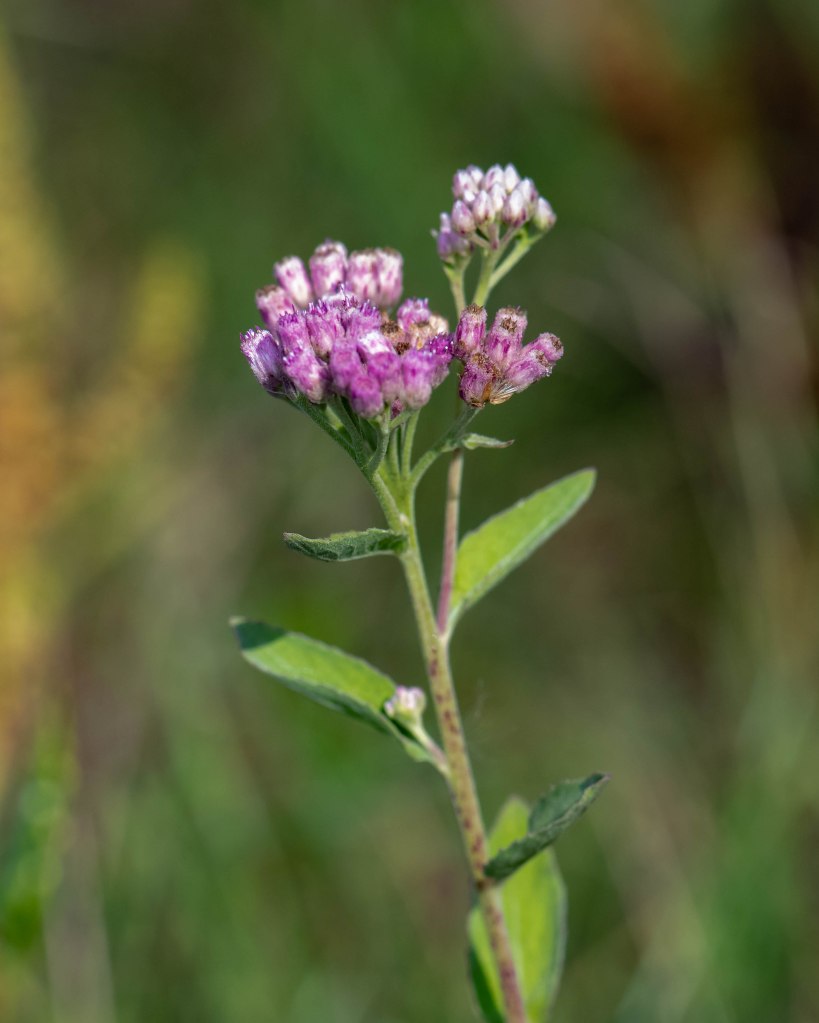
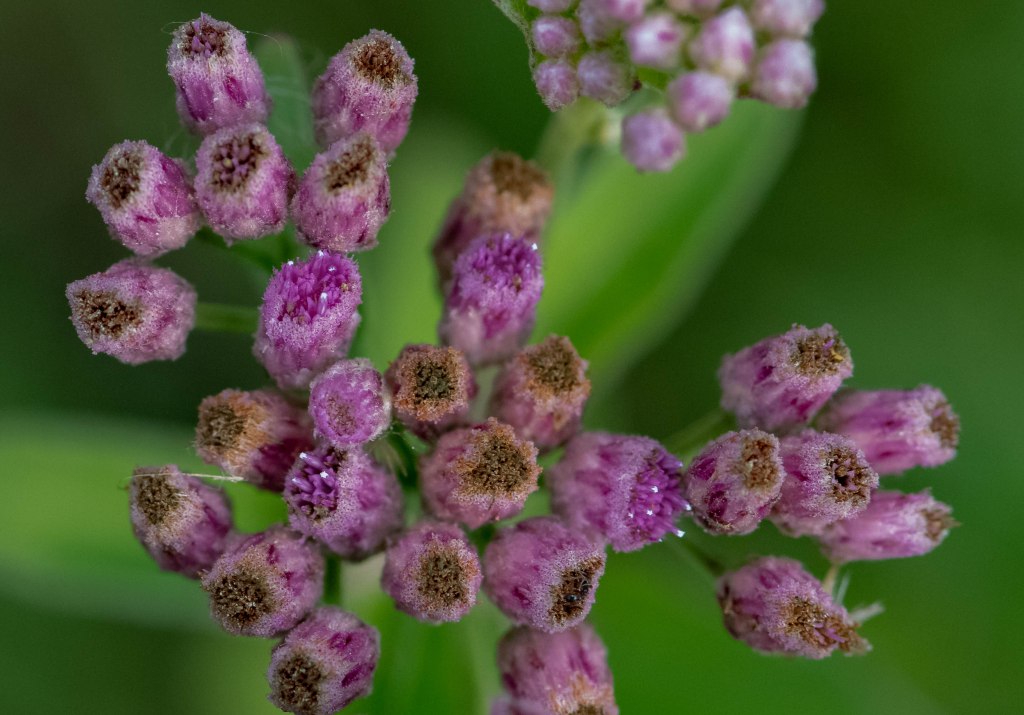
Pretty pink blossoms attract nature lovers, photographers and pollinators. The Rosy Camphorweed (Pluchea baccharis) was supposedly used at one time to repel fleas. When the leaves are crushed, I expected an unpleasant odor of camphor, but instead I had a sense of citrus.
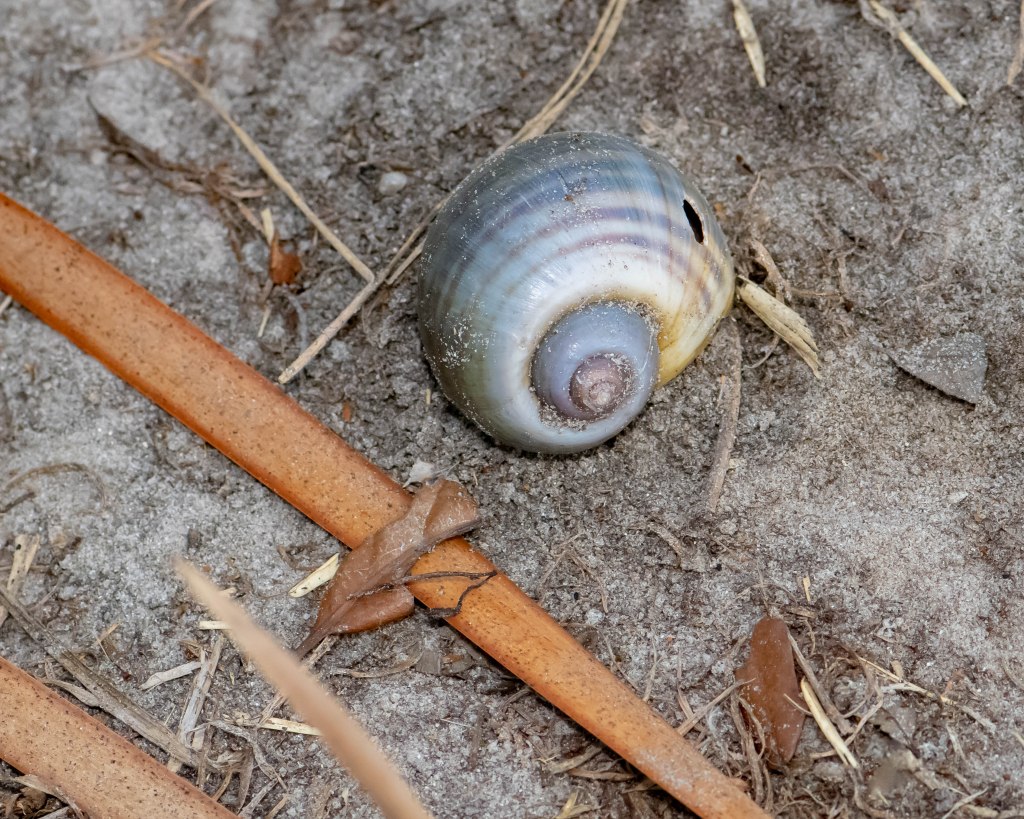
An Apple Snail (Pomacea spp.) shell. This is the shell which contains the favorite food of Limpkins and Snail Kites.
Any port in a storm. Or when there is no storm, a hole in a fence post will do for this Brown Anole (Anolis sagrei).

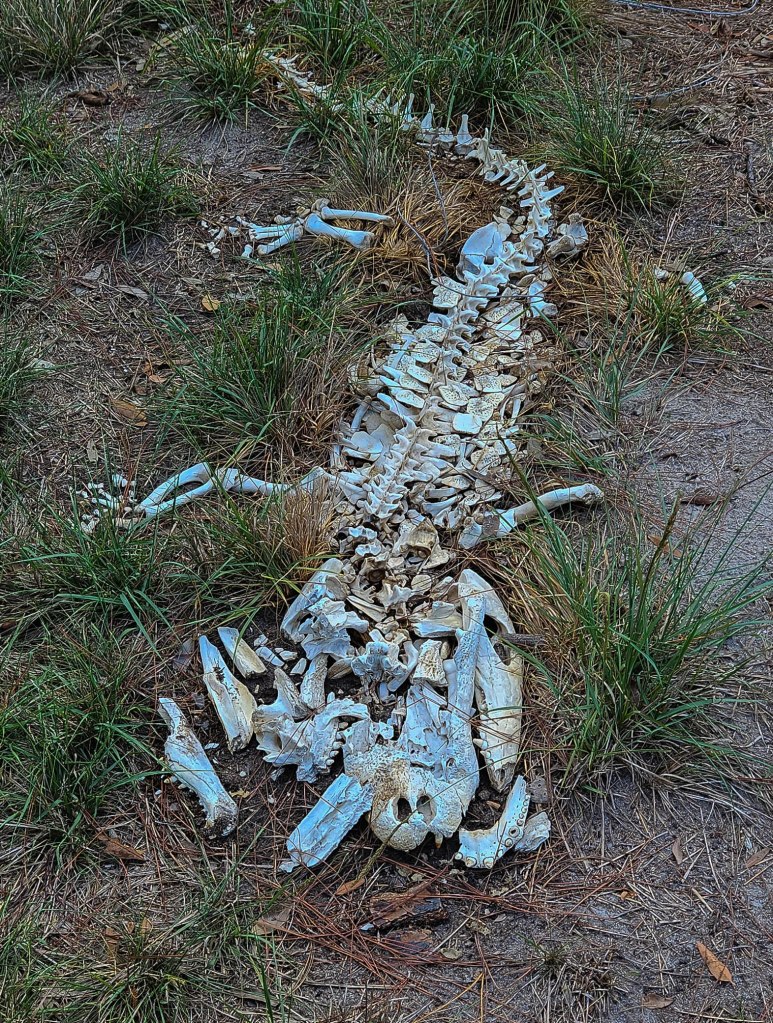
We came across an unusual sight. Likely the result of poachers as Alligator hunting season is August-September. My lovely bride is still mad ’cause I wouldn’t let her bag up the bones so she could spread ’em out on the living room floor and put him back together again. (That’s my Florida Woman!)

Not only did we find the Lost Lake, we thoroughly enjoyed exploring the area around it! The time flew by as we spent much of the morning lingering over flowers or crawling around chasing bugs. We have more to share from the outing and will do so in Episode Two. Stay tuned!
Enjoy your search for a natural place and come back for a visit!
Header Image: Halloween Pennant (Celithemis eponina)
We missed sunrise. It was necessary to be home before lunch time. The decision to go for only a short while was, as usual, the right one. I take full credit. (Don’t let her know. I wouldn’t want her to be embarrassed.)
Our local birding patch has now become our “sure hope we see some stuff today” patch since spring migration has ended. Fortunately, there are plenty of resident birds who find the diverse habitat a fine place for raising a new family. Most of them were singing quite loudly about it today.
There was a prescribed burn here a few weeks ago and we were curious about how quickly the understory of the pine woods might recover. Green shoots of weeds and plants were in abundance. Flowers were blooming and pollinators were pollinating. Gini ticked off the calls of birds I mostly could not hear: Blue Jay, Northern Cardinal, Tufted Titmouse, Common Yellowthroat, White-eyed Vireo and more common and louder than most, Carolina Wren.
Fresh dirt was mounded up in several locations indicating the Gopher Tortoise community is healthy. A few Cicadas were practicing warm-up buzzes for their upcoming summertime concerts. Overhead were Ospreys, a Bald Eagle, Boat-tailed Grackles, herons and egrets. Dragonflies, butterflies and myriad other insects were all busily darting through the air and moving among the vegetation.
Gini and I enjoyed our mid-morning tangerines by the side of a lake and were entertained by Brown Pelicans crashing into the water, Common Gallinules gabbling in the lily pads, Snowy Egrets preening their graceful feathers and Anhingas swimming through the scene with just their long necks above the water remind us of childhood days when we called them “snake birds”.
Believe us when we say: Life Is Good.
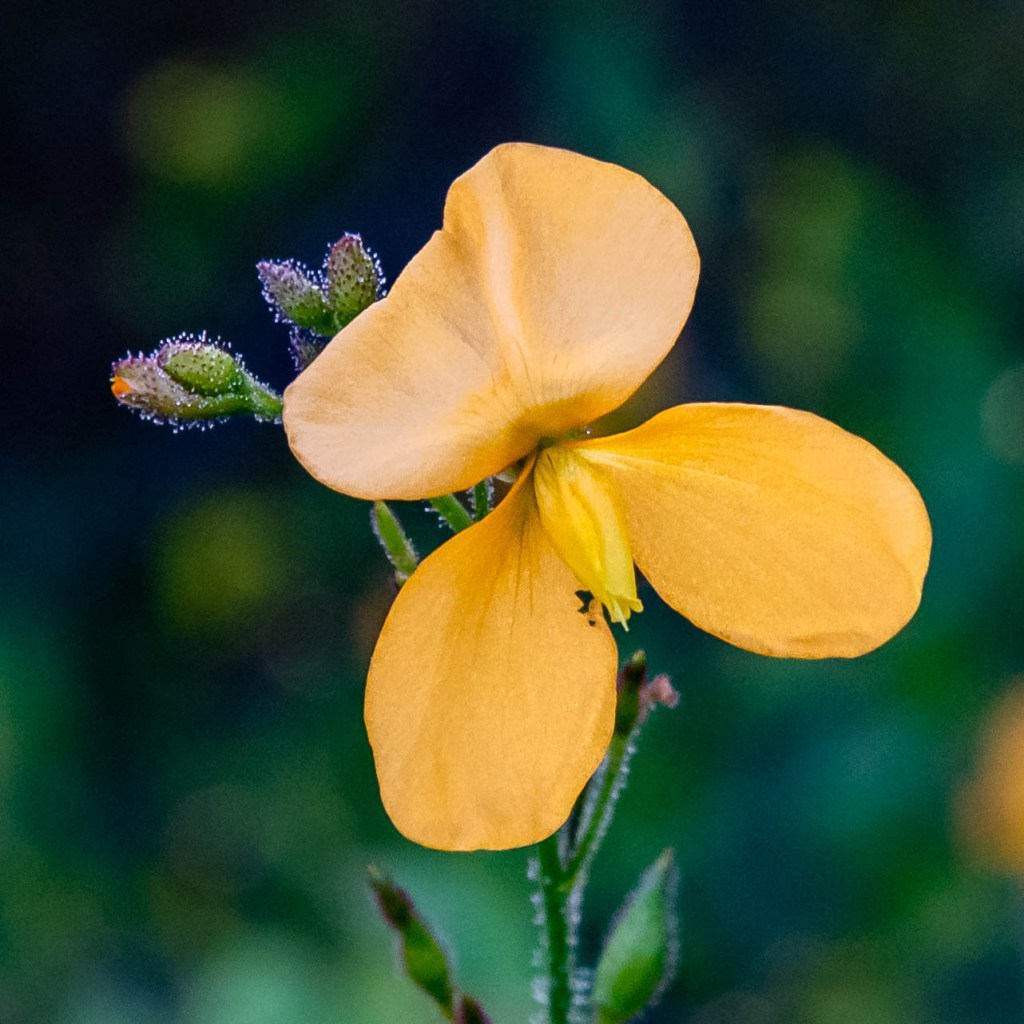
We were very happy to locate a section of blooming Florida Alicia (Chapmannia floridana). The plant’s genus was named in honor of Dr. Alvin Chapman who authored one of the first field guides for the southern U.S., Flora of the Southern United States, which was published in 1860. Learning from past experience, I took pictures of the canary colored blooms as soon as we saw them. The flowers begin to close shortly after the sun comes up. Alicia is the only North American member of this genus and is endemic to Florida.

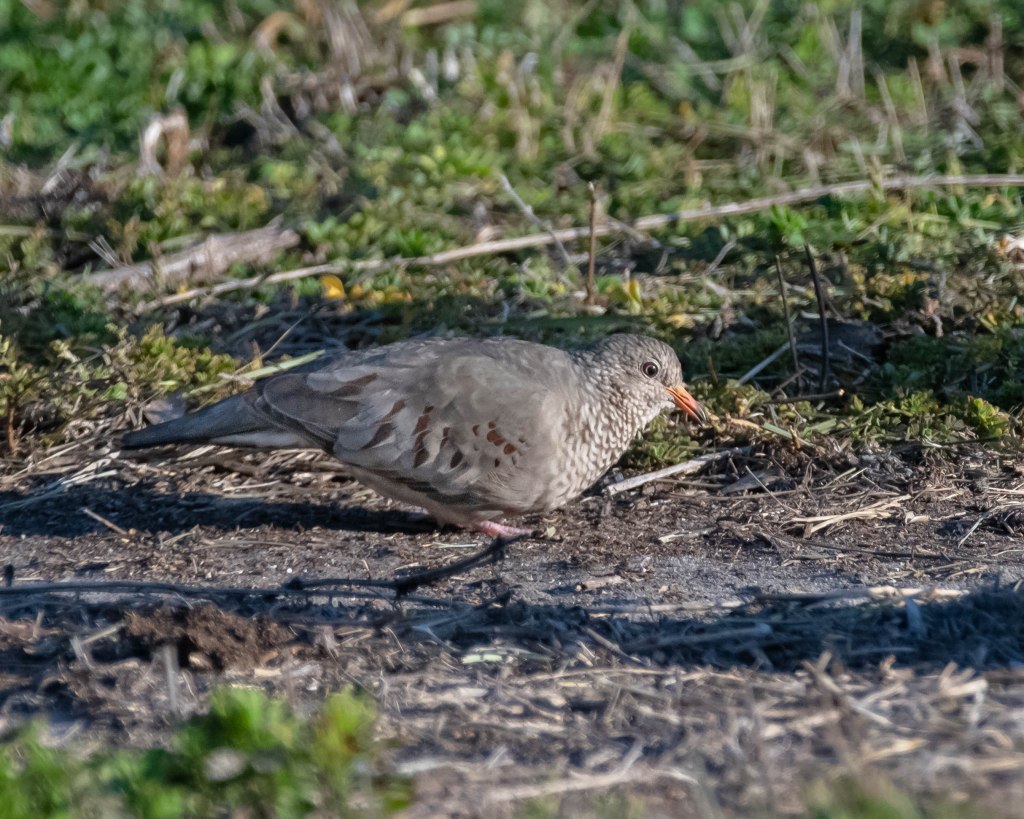
Watching Common Ground Dove feed gives one the impression they almost have no feet. Gini says they remind her of small wheeled toy birds we gave the kids. Smaller than their Mourning Dove cousins, the plumage is quite handsome.
Probably our most abundant dragonfly species is the Eastern Pondhawk (Erythemis simplicicollis). This male still shows a bit of green on its thorax. Immature males are all green like their emerald-hued Mothers. Soon he’ll be all powdery blue just like Dad.

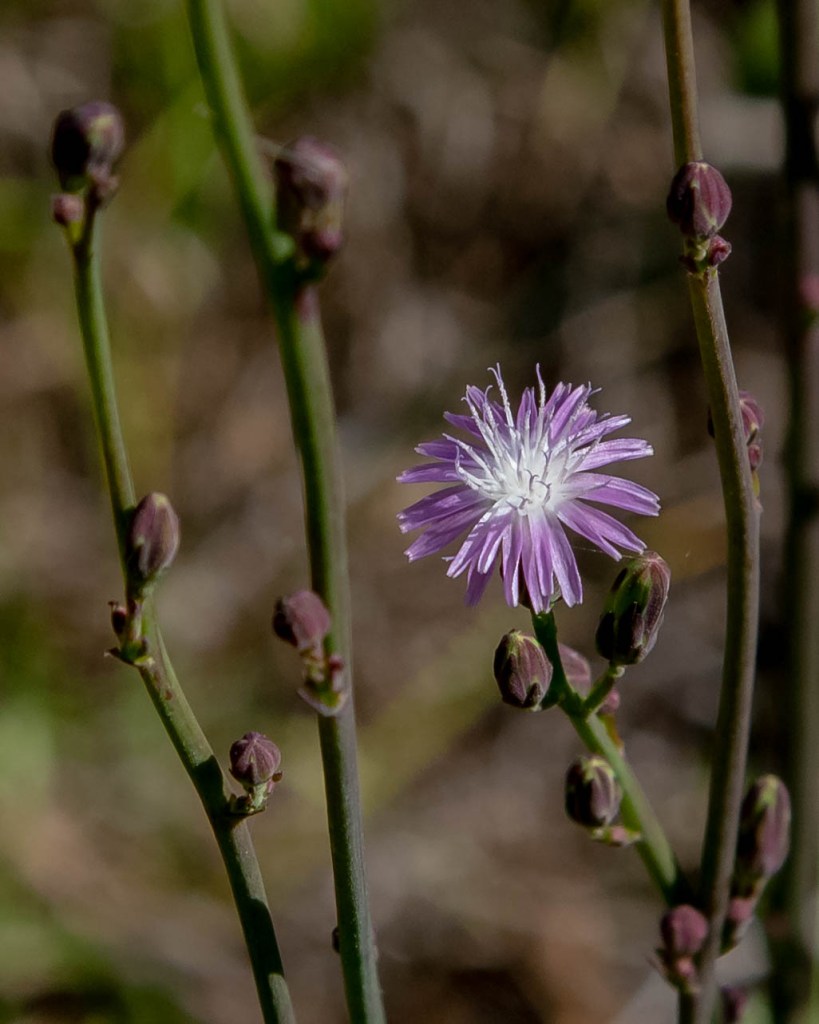
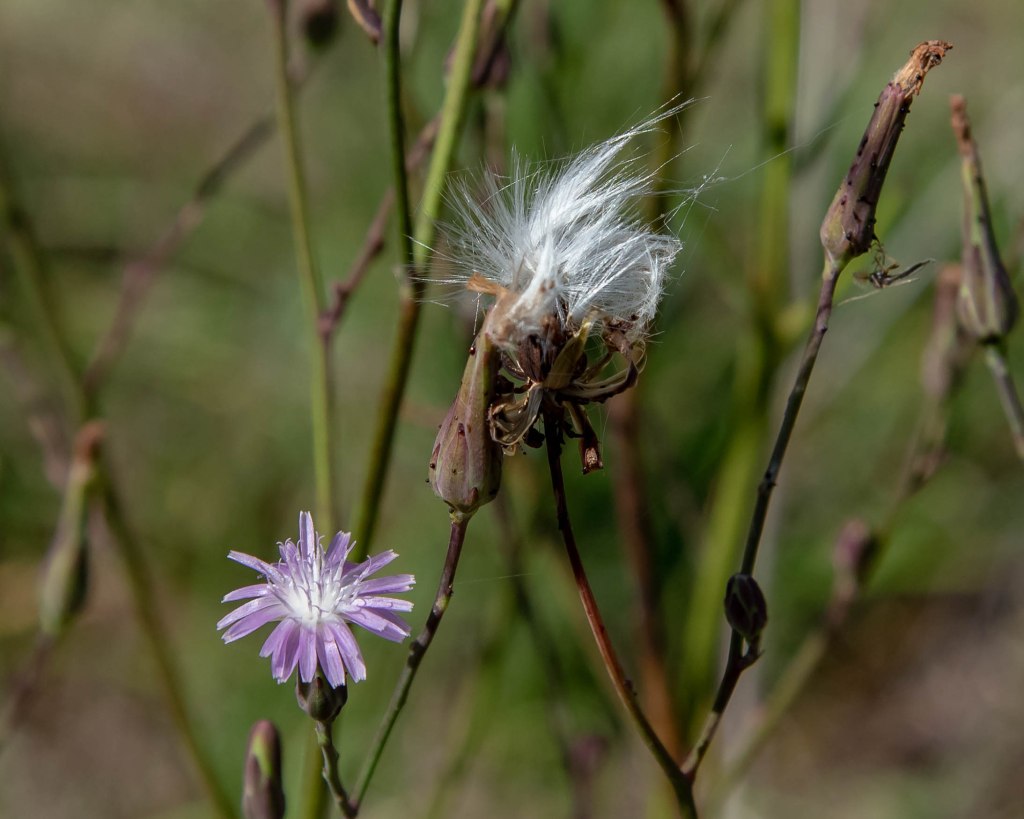
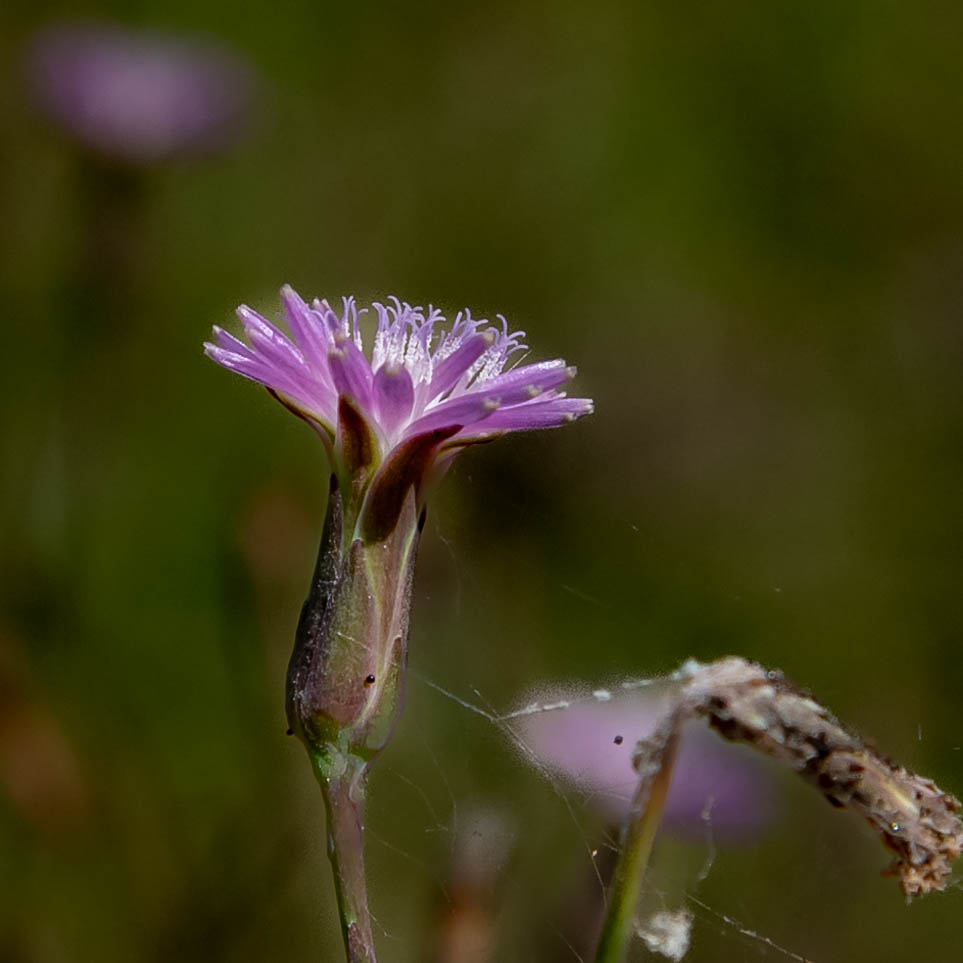
We found a new plant! (For us.) Grassleaf Lettuce (Lactuca graminifolia) is a member of the Aster family and can grow to three or four feet tall. The lovely lavender blossoms caught Gini’s attention immediately, as that’s her favorite color.
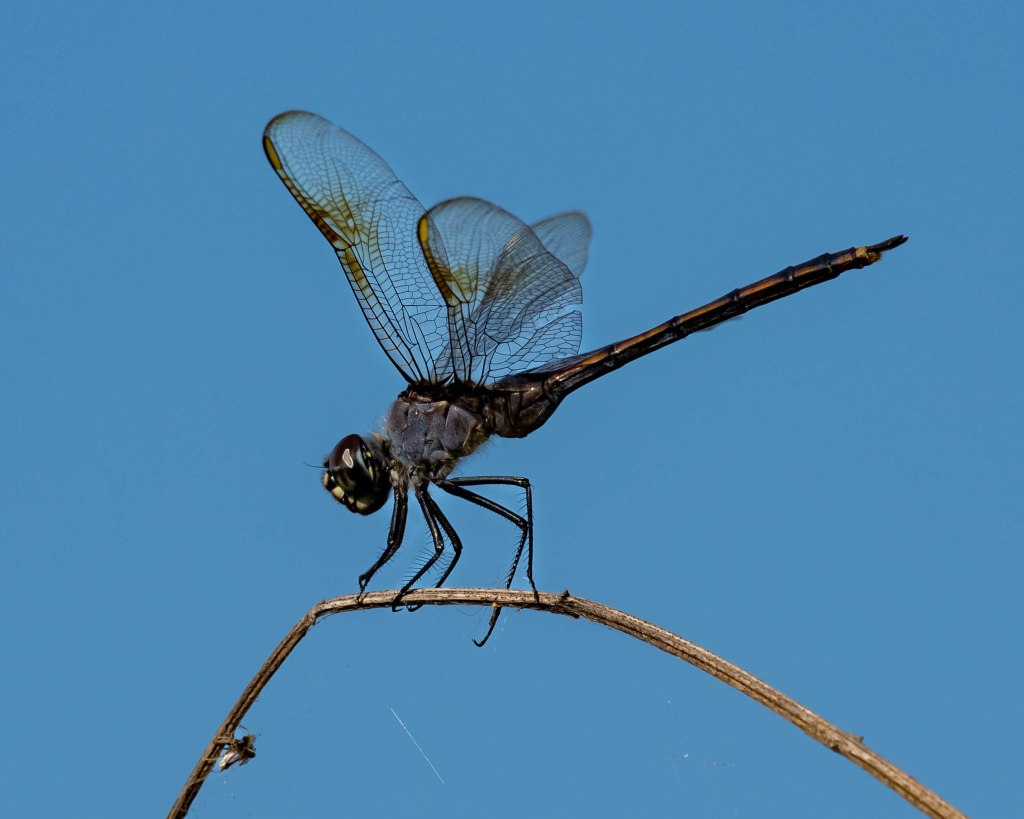
Another of our very common dragons is the Four-spotted Pennant (Brachymesia gravida), They tend to perch horizontally atop taller plants, especially on dried stems, and on fence wires.
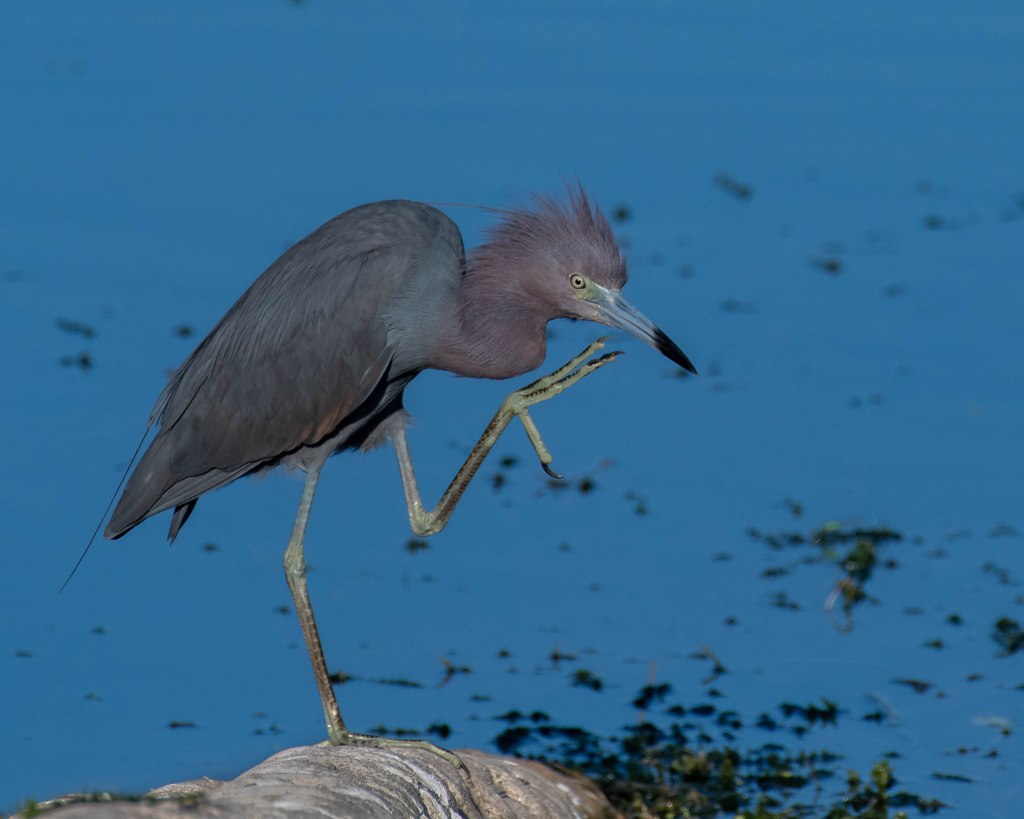
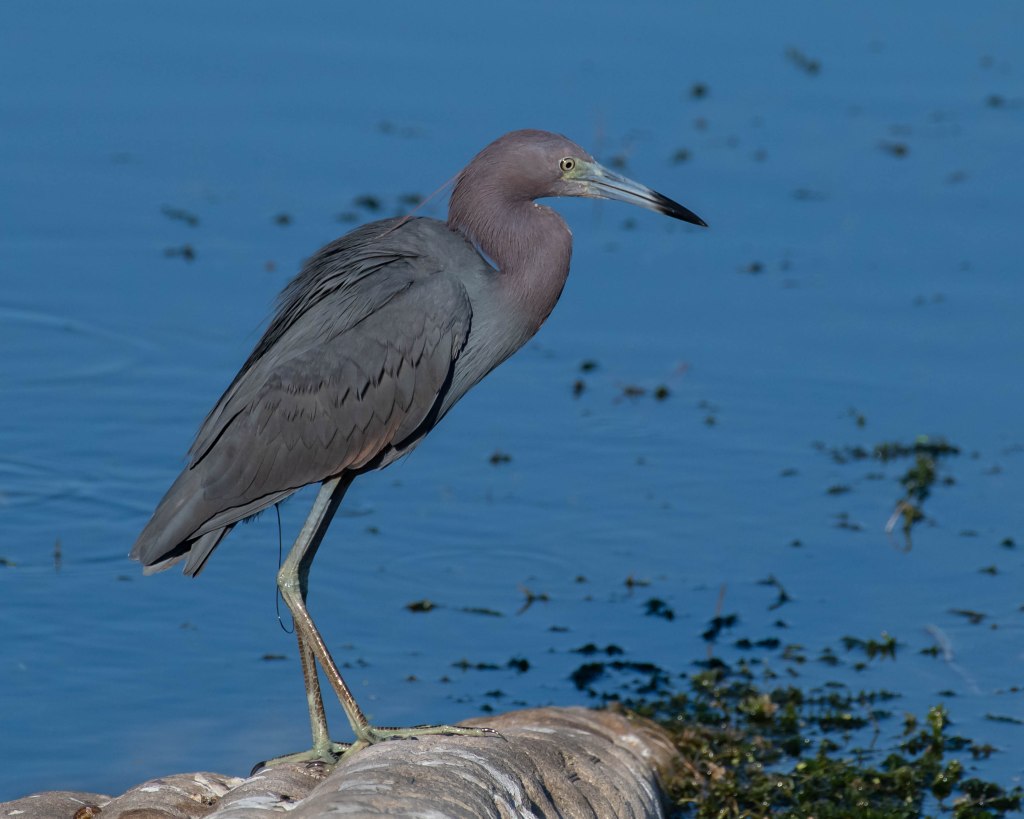
A boat ramp can be a good place to fish. Just ask this Little Blue Heron. As soon as he scratches that itch.
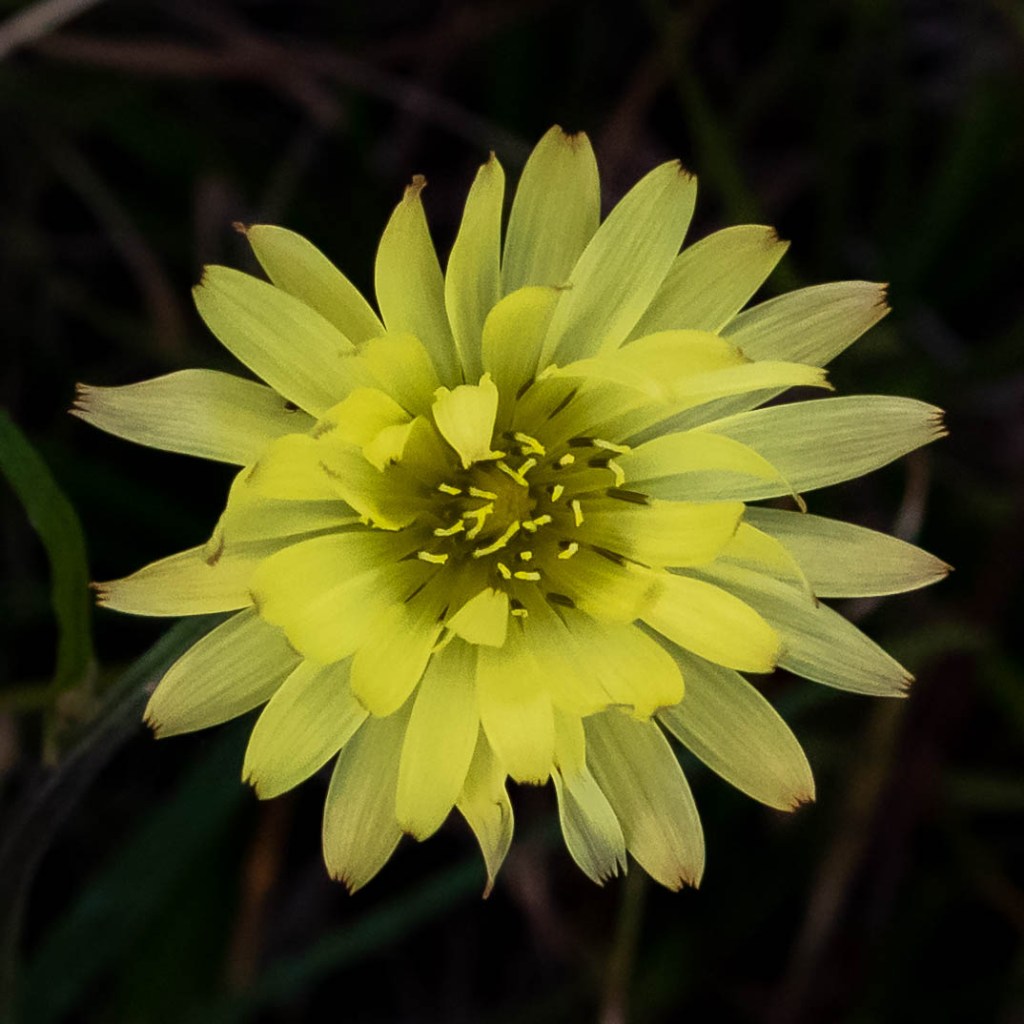
More yellow flowers. More favorite beauties! Carolina Desert-chicory (Pyrrhopappus carolinianus) is often mistaken for a dandelion and one of its other common names is False Dandelion. Call it what you will, I find the details within the flower mesmerizing.
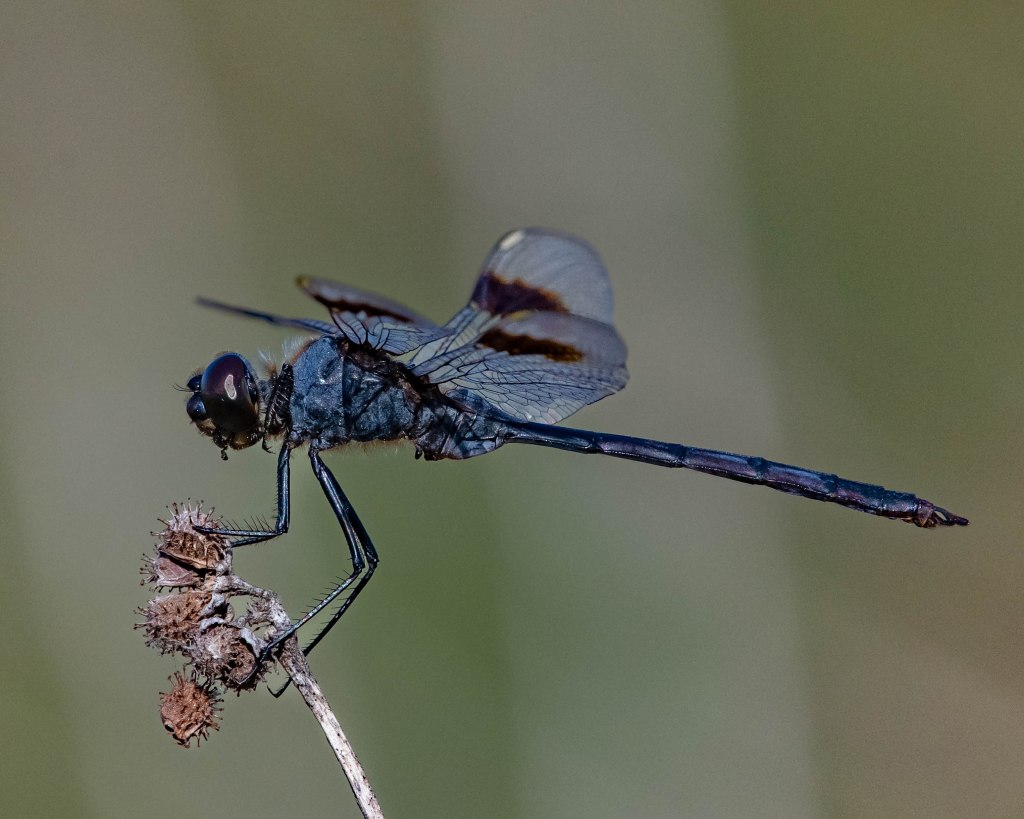
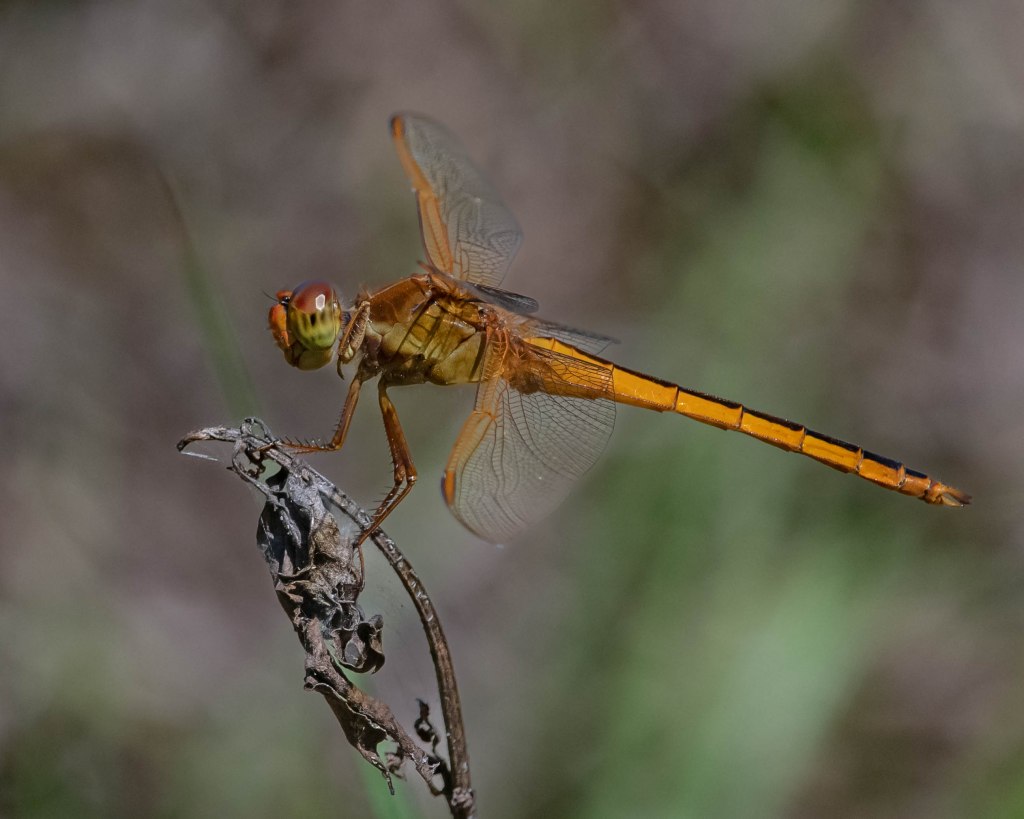
When Gini smacked me got my attention regarding the above Grassleaf Lettuce, she pointed out a bright gold dragon hanging around. A male Needham’s Skimmer (Libellula needhami) let us have a few nice poses.
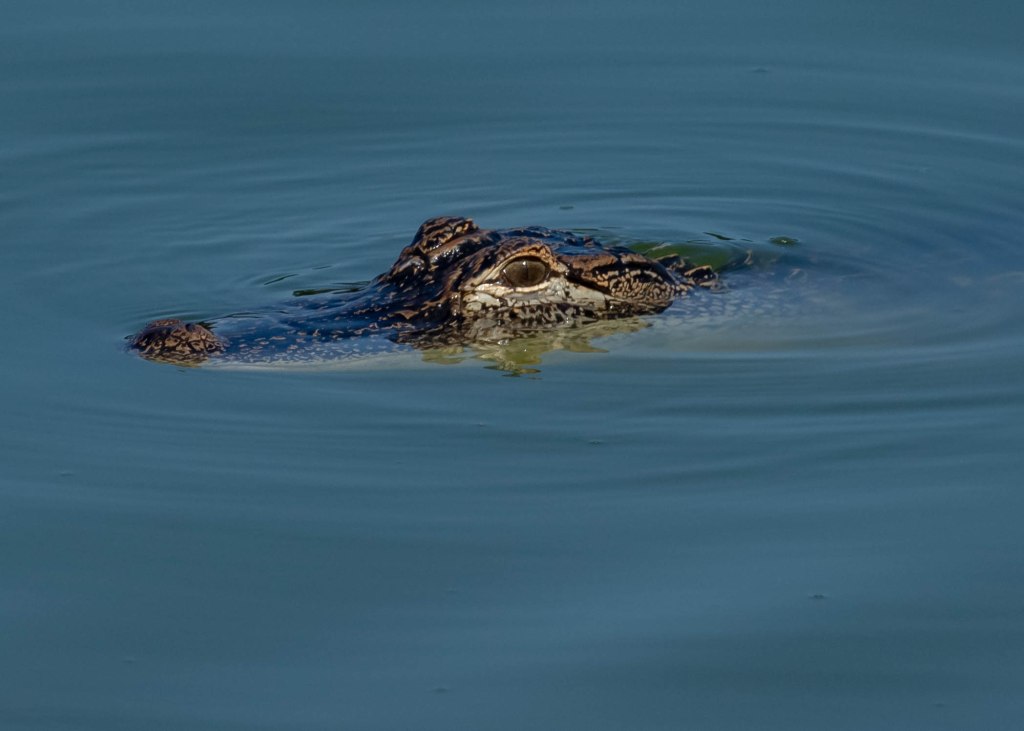
By Florida State Law, it is required of Florida bloggers to include at least one image of the State Reptile.
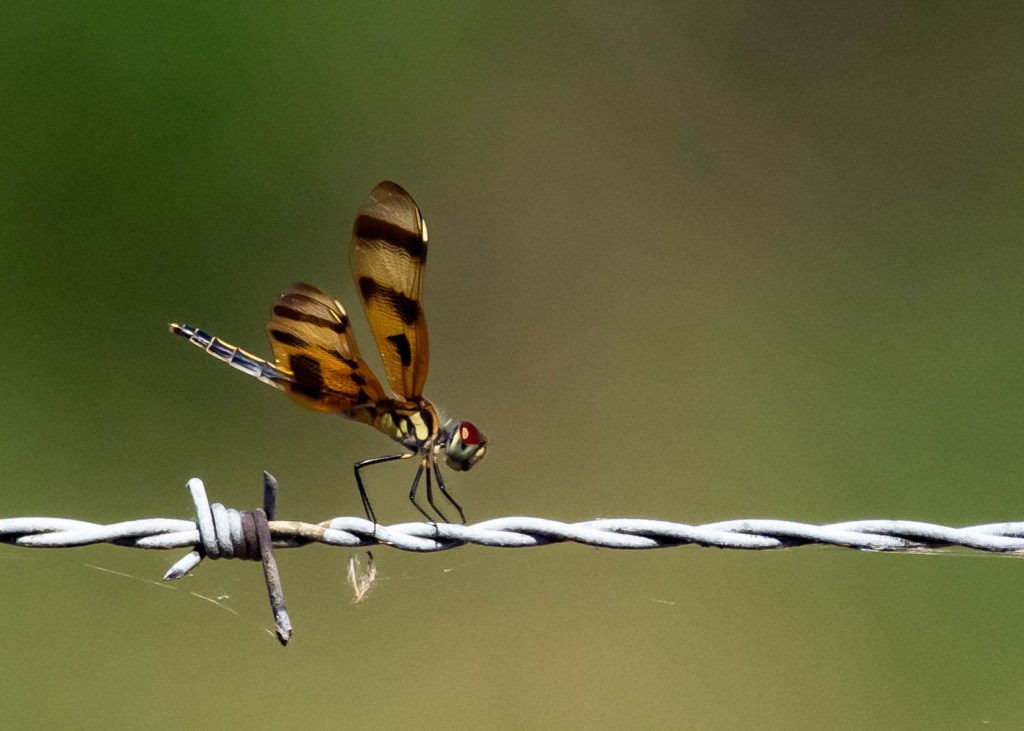
One more dragon. Ending with the species with which we began (header image). The Halloween Pennant (Celithemis eponina) is fairly well-named as it tends to perch on top of things performing its impression of a flag. The gaudy wing pattern and colorful thorax and abdomen help with visualizing a Halloween costume. In the header image, the salmon-colored stigmas identify the adult male while the pale stigmas of this individual indicate a female.
We arrived late, we departed early. In between we discovered so much at which we could marvel and be thankful that we are able to explore such a wonderful natural place.
Enjoy your search for a natural place and come back for a visit!
Header Image: Thunderstorm
“Feel like a ride?”
Florida’s wet season is somewhat predictable. Afternoon storms begin to arrive late in the day usually with a grand entrance involving a sound and light show. Sometimes, animal life becomes more active just before the rains begin. This can be a good time to spot raptors which are trying to spot the animals becoming more active.
We had a particular spot in mind where we have seen Burrowing Owls in past years. Nothing says “adorable” quite like a small owl with great big eyes.
Locating the fast-moving thunderstorm was no problem. Alas, no owls were located.
Many of our trips are like this. Driving, hiking, anticipation … little or no results.
Poor Gini. Our life together has spanned setting up and dismantling households in four different states and three different locations in Germany. As we explored each of those venues, she tried to become accustomed to my unique approach to discovery. Basically, it involves getting “lost” and then attempting to find our way home again. (What? Why, yes, of course I do that on purpose.)
Such trips often result in only a few photographs, if any at all. Over the past few weeks, we have seen a few things we like from a relatively large area and diverse habitats. We thought we would share these miscellaneous tidbits of Nature with you.
Don’t worry. If we become lost, we know how to get home again.
A small local nature preserve is even more intriguing when the way forward is shrouded in early morning fog.

Pine woods with a dense understory of ferns can be especially pleasing with a mix of bright green, reddish brown and fallen limbs.

A pond lined with cattails is a perfect spot for Red-winged Blackbirds to hide a nest.

Even when we may not find a bird or animal to photograph, some paths offer a beautiful consolation prize. This one was in the form of a Four-petal St. Johnswort (Hypericum tetrapetalum).

Rain or no rain, dragons must eat. Once in a while, they will pause for a candid portrait. A female Blue Dasher (Pachydiplax longipennis) was kind enough to wait for me to fumble with the focusing.

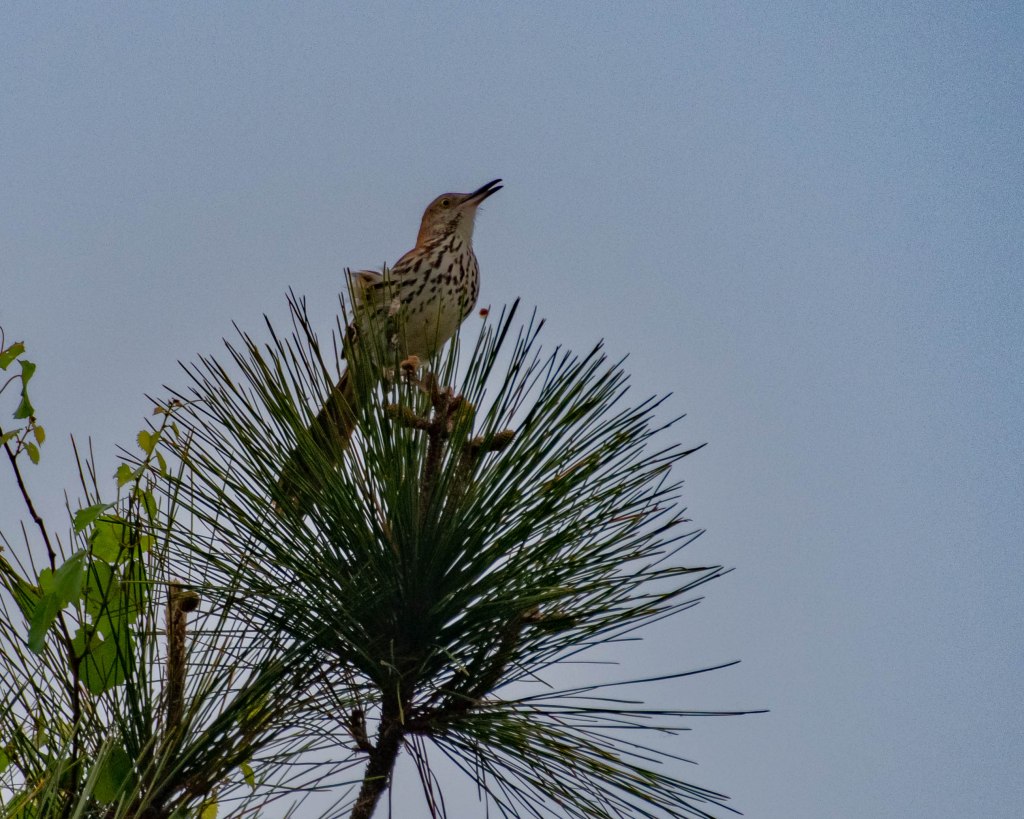
It is still spring and most of our resident song birds are, well, singing. A Brown Thrasher has a surprisingly large repertoire and many mistake the varied tunes for those of a Northern Mockingbird.
One may be forgiven for not associating “jackets” and “Ohio” with Florida. One may be appreciative at finding the Bluejacket or Ohio Spiderwort (Tradescantia ohiensis) during a morning hike.

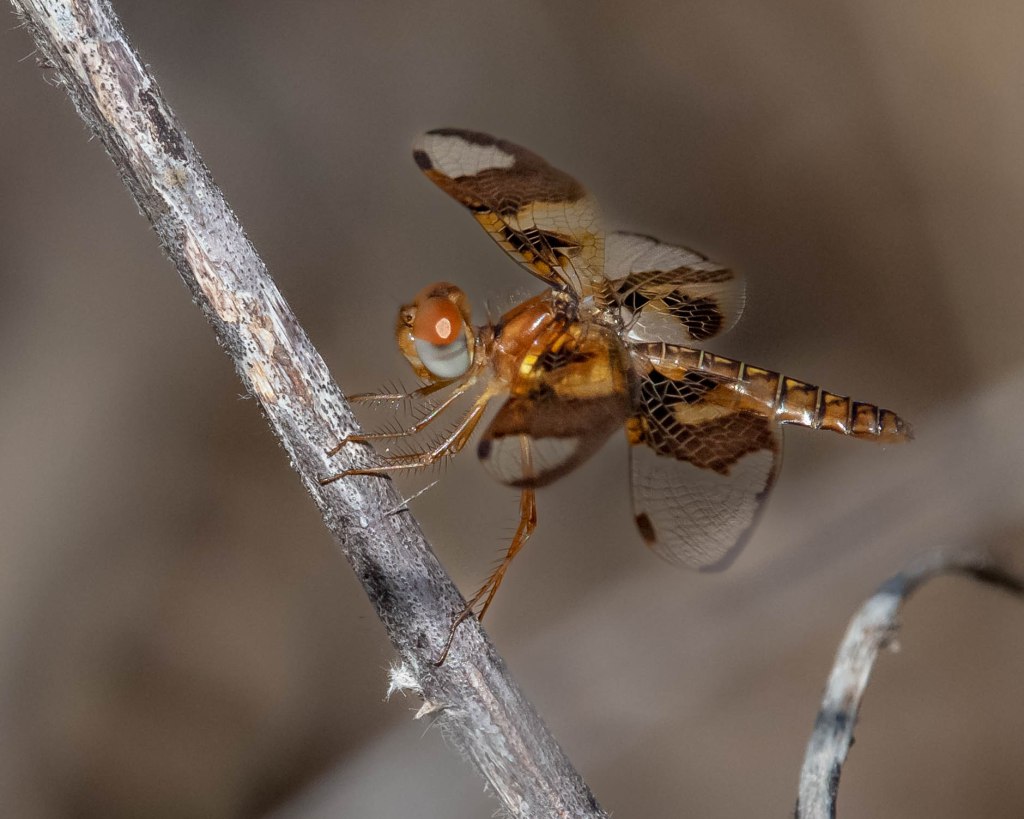
Beauty can often be found in small packages. One of the smallest dragonflies in North America, the Eastern Amberwing (Perithemis tenera), is a prime example. They fly with their legs dangling beneath in the hope a hungry predator will mistake them for a wasp and decide to leave them alone.
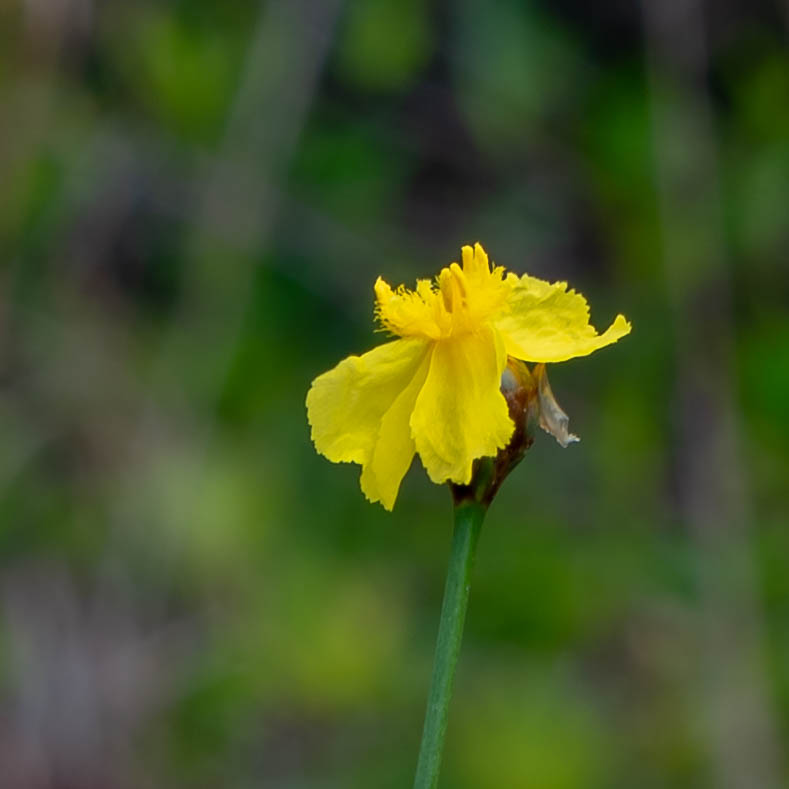
Yet another consolation prize on a walk which yielded no bird sightings, a small but gorgeous bloom of Yelloweyed Grass (Xyris spp.) brightened our day.
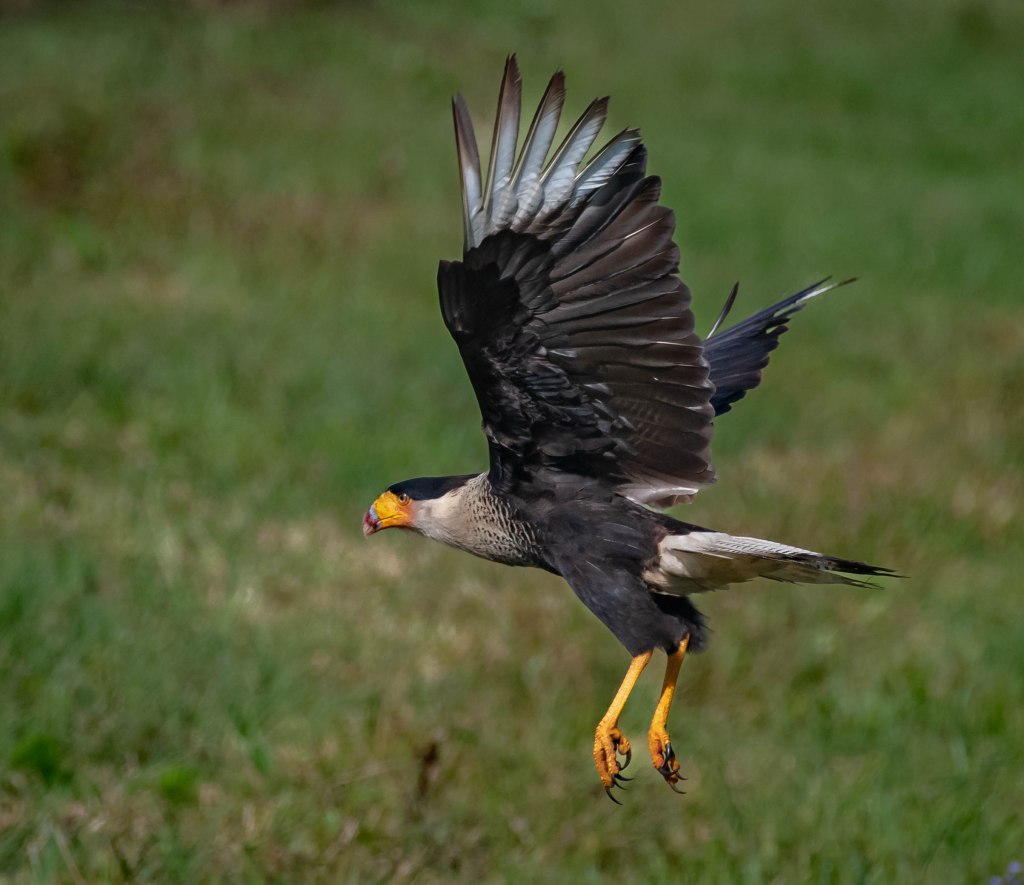
The Crested Caracara is a member of the falcon family. They are skilled at hunting live prey but will seldom pass up an offering of carrion. Turkey Vultures do not take live prey but are carrion specialists. Very often these two species will share a breakfast buffet of recently expired wild pig. Sometimes, a hungry Caracara will decide that sharing is over-rated.



Meanwhile, along a seldom trod path we found a blooming Netted Pawpaw (Asimina reticulata). The large waxy flowers are magnets for all sorts of pollinators. The plant bears a fruit which looks a bit like a pear that has been designed by Salvador Dali. The fruit is edible but good luck finding a ripe one before the animals do!

Spring is a time of renewal. Florida’s resident population of Sandhill Cranes are busy with new families. We spotted this group foraging in the tall grass adjacent to a small scrub oak grove. The young are called “colts” and since nests are usually on or near water, they can swim and walk within hours of hatching.

Grand trips are fun. For us, small journeys are just as much fun. We may not see much on some outings and there is a chance we will be rained on. We might even become lost. Finding our way back from being out and about is always rewarding.
Enjoy your search for a natural place and come back for a visit!
Header Image: Skin Pattern, Water Moccasin
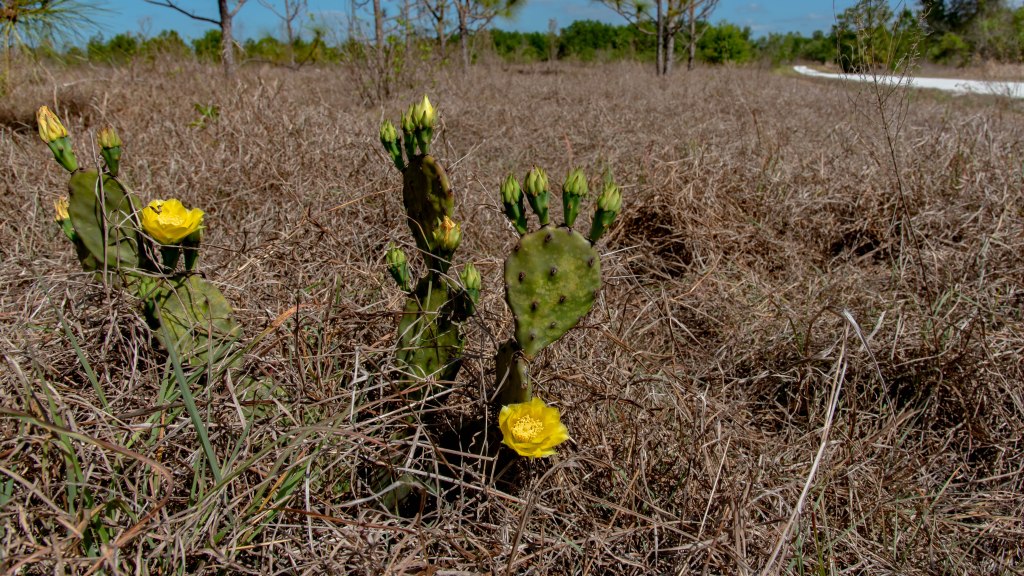
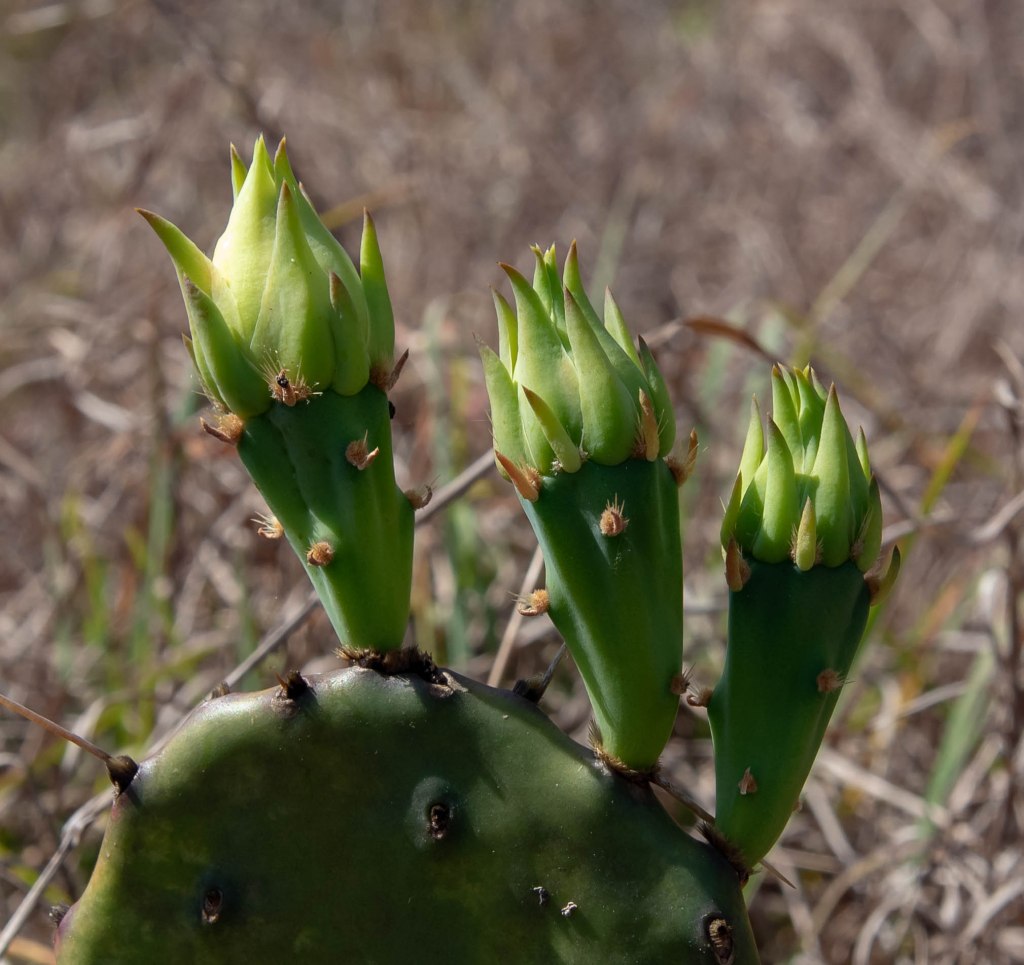
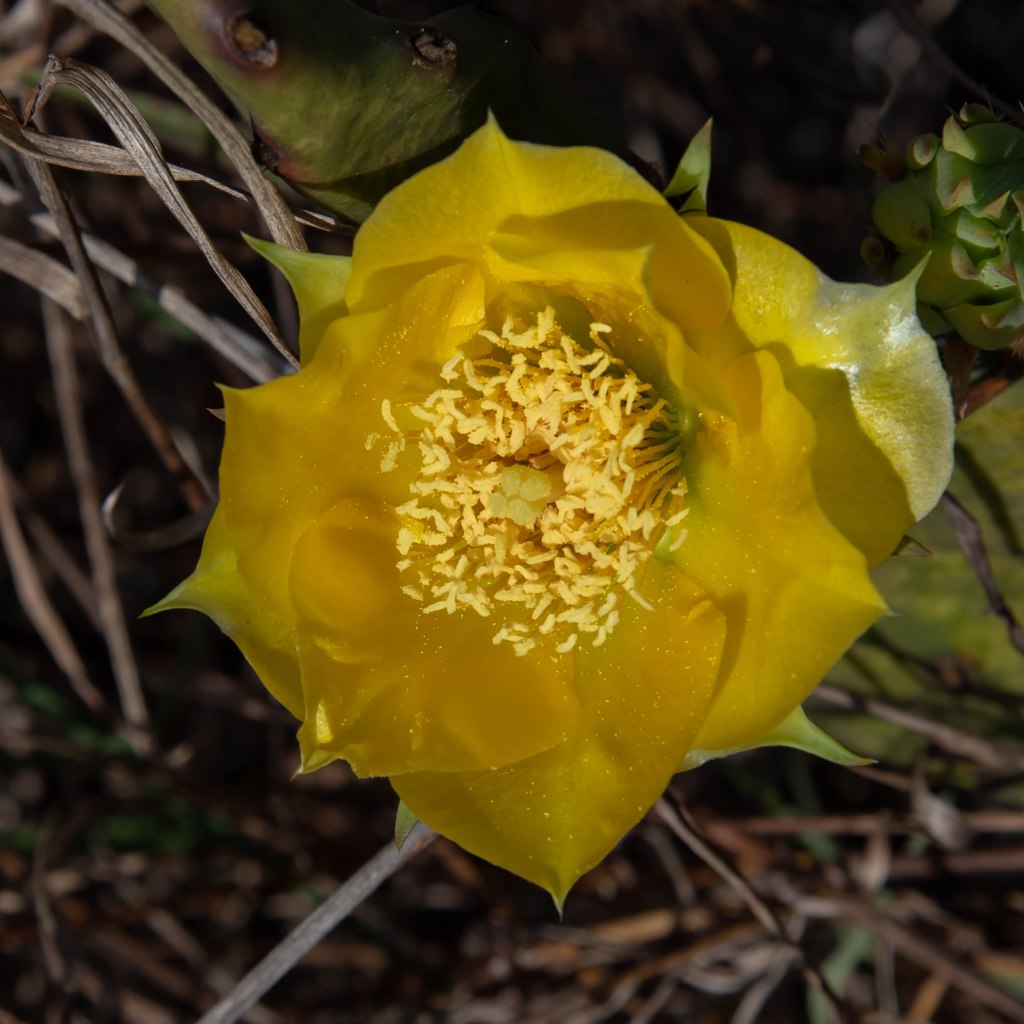
There is nothing quite like a large yellow flower in a field of brown grass to grab one’s attention. Prickly Pear blooms dotted the landscape this morning. We appreciated it.
Mornings still have a hint of coolness and have not yet evolved into the sub-tropical heavy air filled with humidity that we will soon enjoy. Gini and I reflected today on how reassuring the visits to our natural places have become. It would be easy to succumb to pessimism and callous indifference with the onslaught of negative news and behavior to which we are exposed on a daily basis.
Nature is predictable. The sun rises each day. It may be obscured by clouds or fog, but we KNOW it is there. Flocks of White Ibises, Cattle Egrets and Double-crested Cormorants move from their night-time roosts to feeding areas and retrace their flights just before sundown. Flowers bloom. Insects pollinate the flowers. Birds eat the insects and sing about it. Alligators maintain watch in their watery neighborhood. All of this happens whether or not we are present to observe.
Nature is sort of like our reset button.
We enjoyed another breakfast together at the side of the lake lined with tall Cypress trees all draped with Spanish Moss. A pair of Black-bellied Whistling Ducks flew low in front of us. Three Swallow-tailed Kites cruised the shoreline just above the trees. As we checked a few favorite spots, we felt as if we were dropping in on old friends to make sure they were doing well today. Actually, I suppose that is exactly what we were doing.
Nothing we saw this morning was exceptionally unusual.
Everything we saw this morning was exceptionally satisfying.
Prickly Pear, Devil’s-Tongue, Cactus. (Opuntia spp.) From a dull green flat pad guarded by long, sharp thorns emerges a glorious bright yellow flower.

Red-bellied Woodpeckers are by far the most common woodpecker species in our area. At this time of year, adults are searching non-stop for insect morsels for hungry chicks.

A bright green female Eastern Pondhawk (Erythemis simplicicollis) was busy devouring what may have been an Eastern Amberwing (Perithemis tenera), but I’m not sure about the victim’s identification.

Edgy raptor. Red-shouldered Hawks tend to hang around the boundaries of changing habitat. A wood line adjacent to a field, the shore of a lake – any spot where they can observe and react quickly.

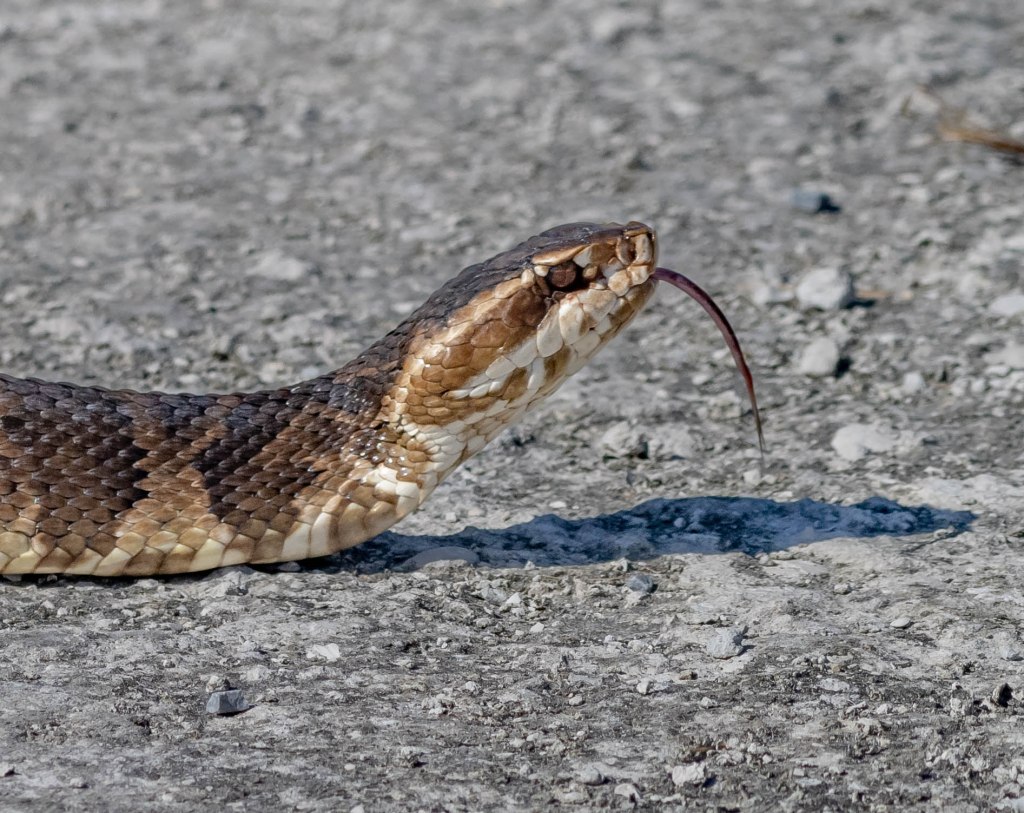
It’s natural for us to see a Water Moccasin (Agkistrodon piscivorus), also called a Cottonmouth Moccasin, since we spend a lot of time exploring within its preferred habitat – wet. Fortunately, as with most wild things, they usually slither off the road or path as we approach. Usually.

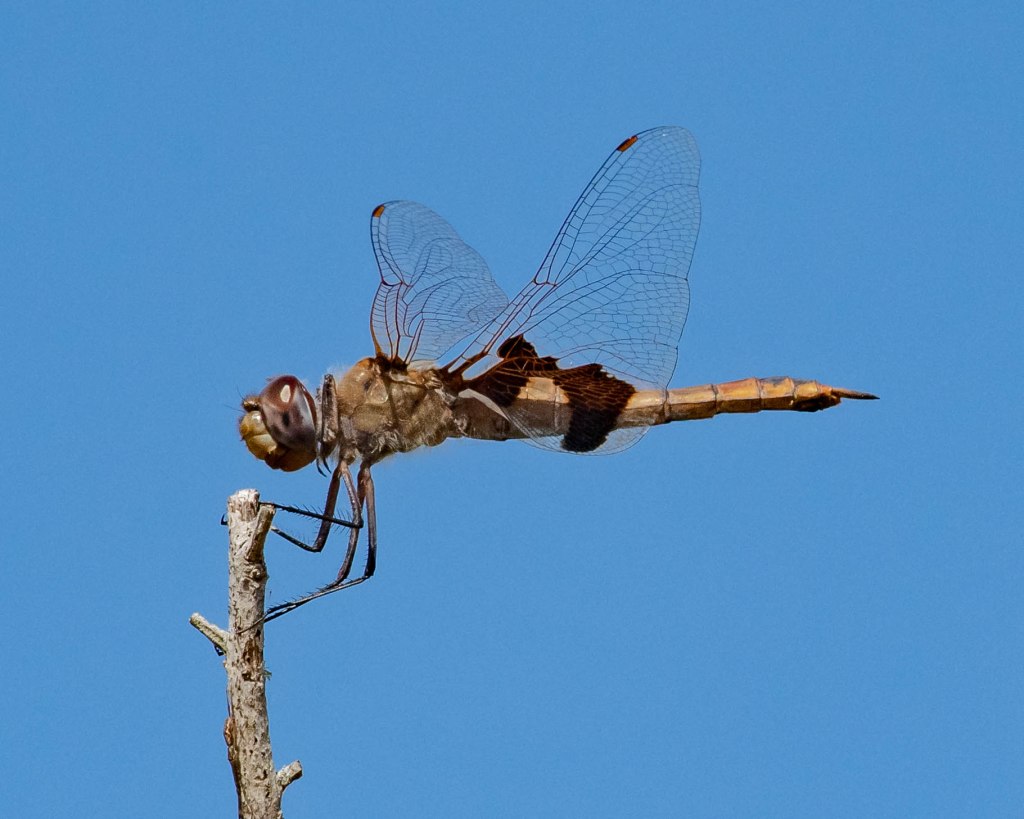
As the sun dries the dew from the landscape, insect activity increases. This, in turn, brings out insect predators such as the dragonflies. A Red Saddlebags (Tramea onusta) likes to perch atop a bare stem which provides an unobstructed view of any potential prey flying nearby.
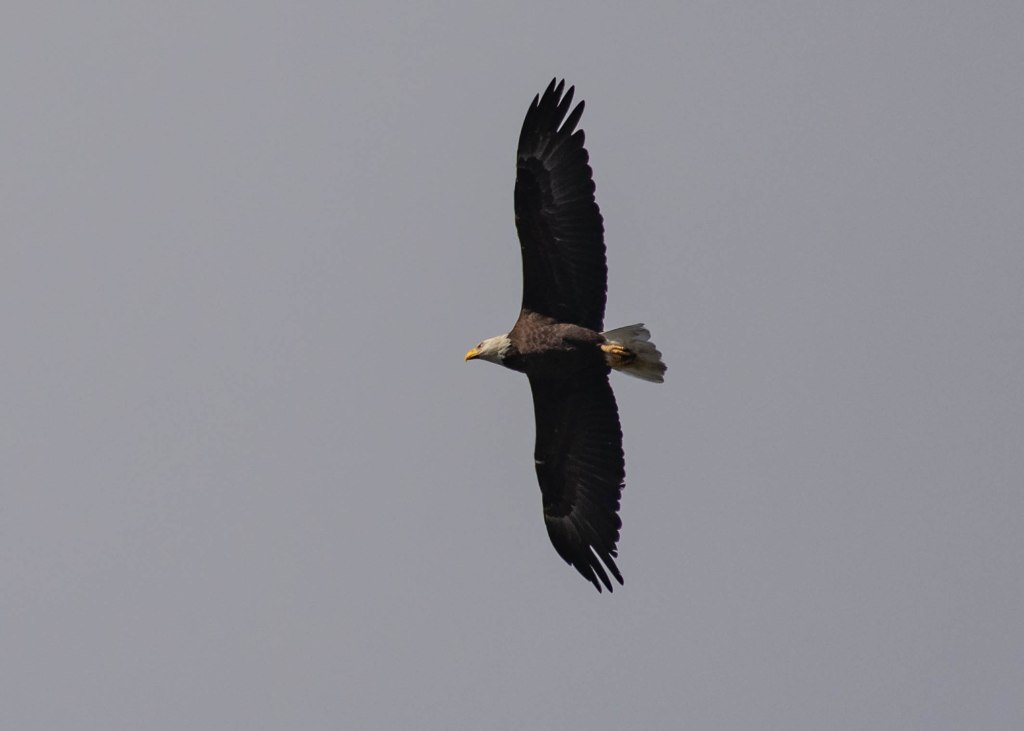
There are many lakes in our natural places around central Florida. All of them support healthy populations of fish. Bald Eagles like fish. A lot. It’s common to see them heading from one fishing hotspot to another.
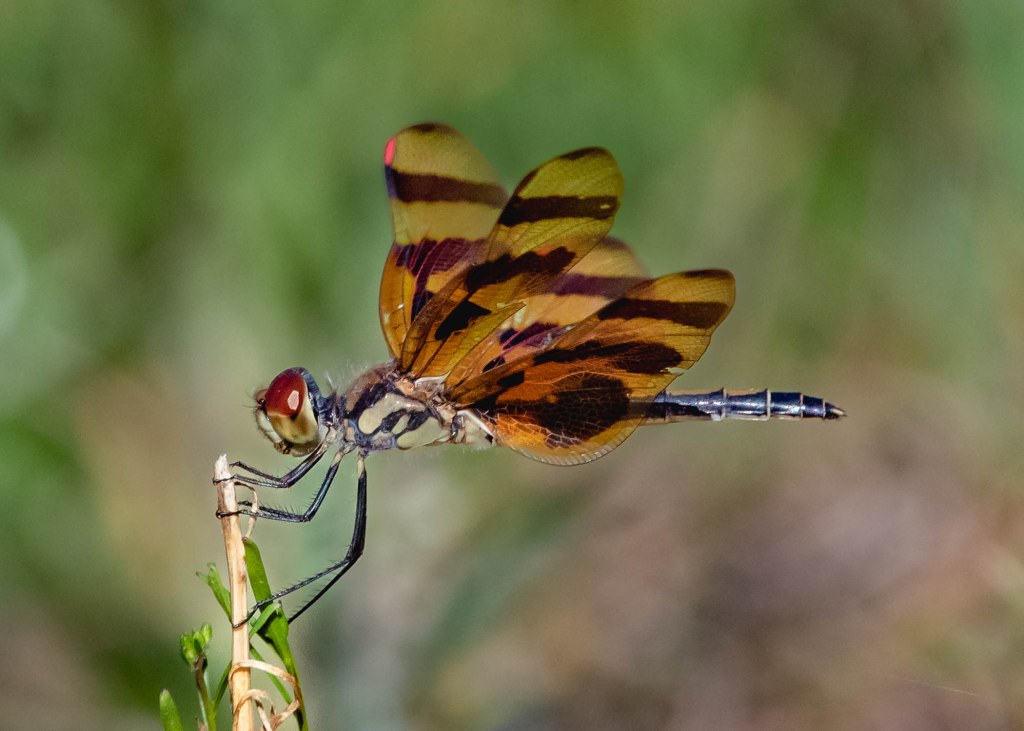
Golden wings with bold stripes identify the Halloween Pennant (Celithemis eponina).
A Red-tailed Hawk is a treat to see any day. Recently, a pair appears to be tending a nest in the area. We haven’t located it yet, but seeing these magnificent raptors soaring in our blue skies is encouraging.

Just as we decided it was time to head home, the clear sweet song of an Eastern Meadowlark caused us to linger a bit longer.
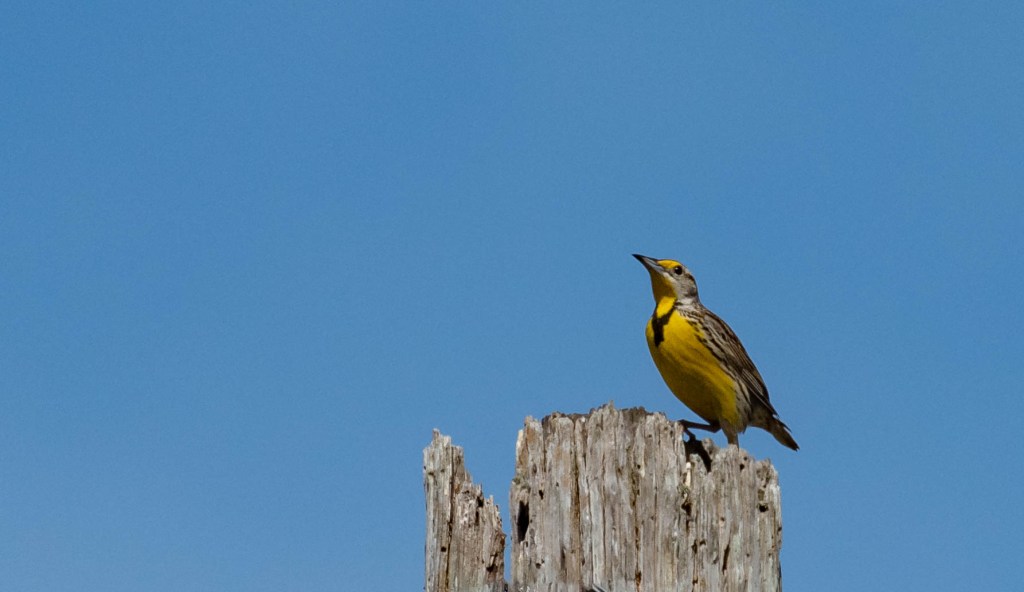
Our peaceful easy morning soothed our souls. No rare bird to report nor did we see any Panthers or endangered plants. What we DID see, however, was nature going about the business of survival. How could we not marvel at such a spectacle?
Enjoy your search for a natural place and come back for a visit!
Header Image: White Ibis
Honest. She literally pushed me out the front door.
“Go! Shoot some birds. Take your time!”
I went. Reluctantly. The shooting was good. Time is a precious commodity of which there is never enough.
Our local city park is located on a medium-size lake and has plenty of picnic tables, a boat ramp and several paved walking paths. It can be very crowded with people on weekends. Weekdays are somewhat busy early with joggers and dog walkers. In addition to the lake shore habitat, there are several oases of hardwood trees, a couple of wetland areas, a few Mulberry trees and a canal lined with Cypress trees.
Fall and Spring migration brings a very good selection of birds to the park. The remainder of the year is filled with plenty of local songbirds, wading birds and raptors using the relatively protected area for breeding. Butterflies, damselflies and dragonflies abound.
Arriving at the park when they opened at sunrise, I covered just under two miles and every few steps was rewarded with a new sight or sound. Nest building was in progress all over the park. Birds were beginning the daily task of finding food, a job which seems to never end. Osprey parents on nests screamed at anything which encroached on their space. Spring migrants have departed and resident birds are dedicated to raising a new generation.
The morning air was cool and fresh. Blue skies were reflected on the lake’s surface.
I miss Gini.
Time to go home.
“Back already? Breakfast is almost ready.” Home fried potatoes with roasted poblano peppers and red onions, smoked sausage and a fried egg. I truly do not deserve this woman. Don’t tell her.
Oh. I took some pictures.
Limpkins like to make sure everyone is awake about an hour before sunrise and fill the air with their somewhat eerie cries as the sky begins to brighten. Long, sharp claws certainly make scratching an itch a challenge!

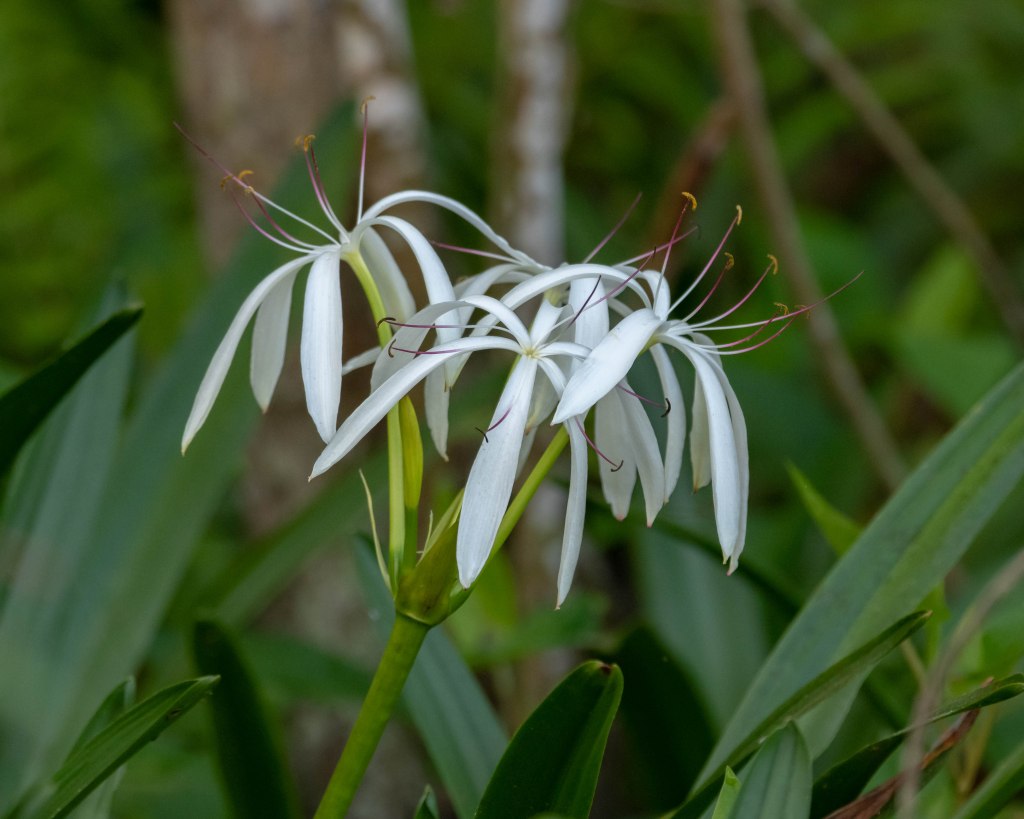
Within a small wetland area, a beautiful lily known as Seven Sisters (Crinum americanum) offered a lovely bloom.
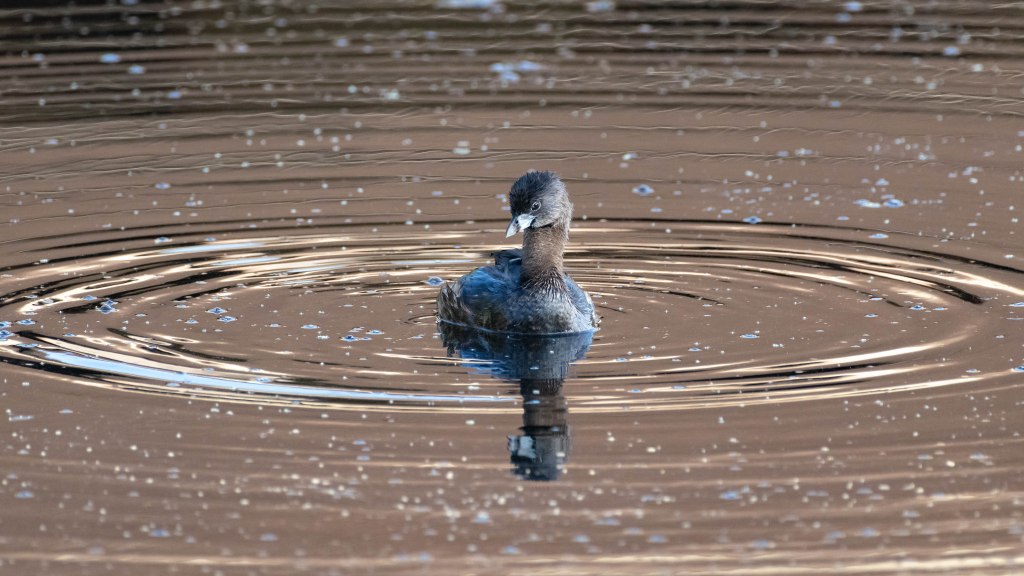
A Pied-billed Grebe bobbed up from a dive and created a nice circle of ripples in the warm glow of the morning sun.
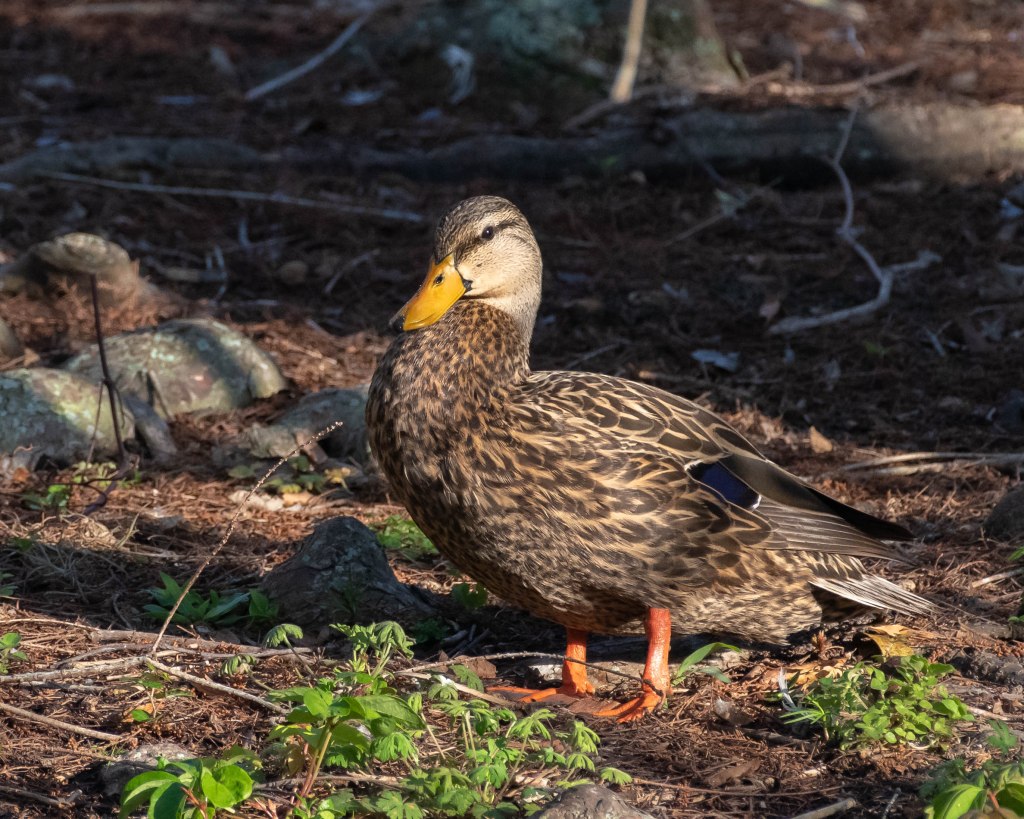
Mallards do not discriminate when it comes to breeding. Scientists are concerned some duck species are nearing a point where there will be no genes without those of Mallards mixed in. These two ducks are a hybrid of Mottled Duck (Anas fulvigula) and Mallard (Anas platyrhynchos).

Few of us can wear all black with just a hint of white and make it look good. The American Coot shows us how it’s done.

Crayfish is on the breakfast menu for a Little Blue Heron. I know this because right after I lowered the camera he caught one and swallowed it before I could snap a record of it.

Happiness is sharing a spot of sunlight with your best friend. And hoping she doesn’t eat you. Young American Alligators.

It was a good morning outing at the city park. It was a fabulous return to the house where a superb meal waited for hugs and kisses to be completed. (Yes, it all did have to be reheated. It was HER fault.) If you have a city park near you, explore it to see what surprises you might find.
Enjoy your search for a natural place and come back for a visit!
 Our Natural Places