Header Image: Manyflowered Grasspink (Calopogon multiflorus)
Fortune smiled upon us a few weeks ago. Hiking in an upland pine forest was a bit surreal. One side of the path had recently undergone a prescribed burn, crucial to efficient forest management. The opposite side of the path was in its normal early summer lush green state.
Among the charred remains of the pine woods understory, a small bit of color grabbed our attention. Bits of green were beginning to show everywhere but the pale lavender here and there was unexpected.
In North America, there are five species of Grasspink (Calopogon), a terrestrial orchid. One of those, Calopogon multiflorus, seldom grows above 12 inches tall, may have from 5 to 15 blooms per plant, has a very noticeable aroma (apparently unusual for the Grasspink family) and it requires fire to create the ideal habitat for flourishing. We found a color range from fairly pale pink to magenta.
For the next couple of hours, we found a couple of dozen individual plants. Laying down in charcoal and maneuvering with my arms for a good angle resulted in very dirty arms and clothes and a bit of blood as the little burned stubble of former bushes stabbed at every opportunity.
A few images may help understand why we had a happy day.


Our day was truly special. On advice from a state botanical expert, we won’t share the exact location of our find as this species is threatened in Florida. Hopefully, one of the Grasspink varieties grows in your area and you can find your very own orchid to treasure!
Enjoy your search for a natural place and come back for a visit!
Header Image: Brown Pelicans
Our morning at Fort DeSoto Park had been wonderful so far. Birds in the mud. Birds in the water. Now that I was clean and dry less muddy and no longer dripping, Gini and I headed for the Gulf fishing pier.
The park consists of a little over 1300 acres. Although not a huge area, it is ecologically diverse and attracts a multitude of wildlife. Over seven miles of waterfront offers many opportunities for recreation and provides food and shelter for many different birds. Nearly 330 species of birds have been logged here. The park is actually five interconnected islands, or keys. Two long piers offer those without a boat a chance to enjoy fishing. One pier juts several hundred feet into the Gulf of Mexico while the second extends into the Tampa Bay shipping channel. The latter is currently under construction as the original, built in the 1940’s, needed replacement.
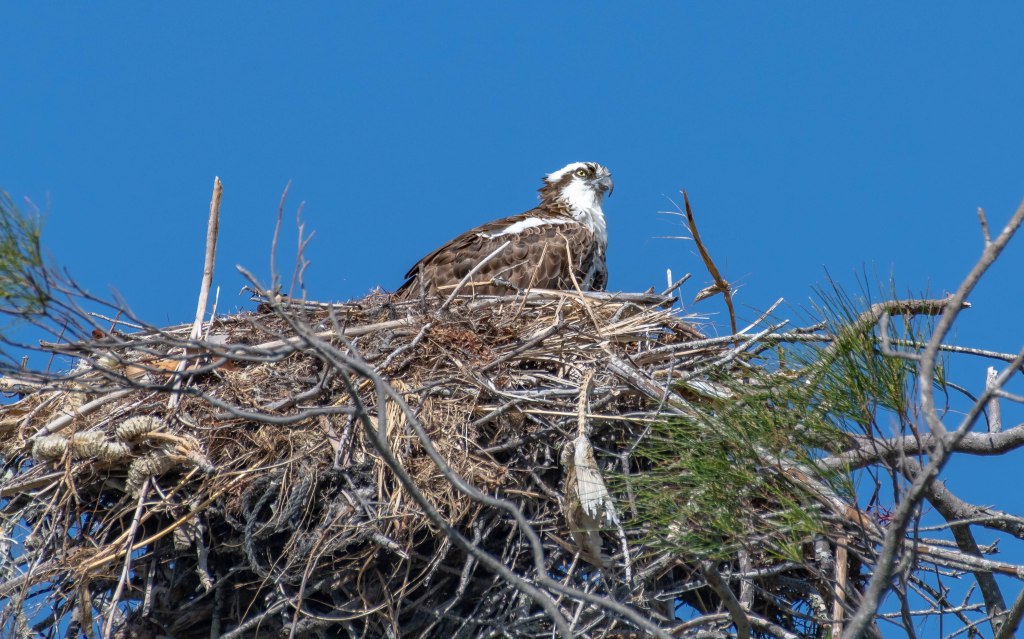
Remains of the actual fort are adjacent to the Gulf pier and there are plenty of parking spots, picnic tables, rest rooms, a snack bar and beach front. In the many trees around the area one can find a nice variety of birds at any time of year. We spotted an Osprey nest with an adult probably incubating eggs and another adult nearby keeping an eye on us. Woodpeckers, European Starlings, Great Crested Flycatchers, Mourning and Common Ground Dove, Northern Mockingbirds – all enjoying the breeze blowing in from the Gulf of Mexico.
Walking along the pier is essentially like “wading” into the Gulf without getting wet. Not to mention that actual wading would turn into “swimming” a few feet from shore whereas now we could stroll several hundred feet “into” the water. The structure of the pier is a magnet for small fish and crustaceans which, in turn, attract larger fish looking for a meal. Birds target the perimeter of the pier as they splash into schools of small fish.
Today we mainly saw Brown Pelicans, Caspian Terns, Laughing Gulls, Double-crested Cormorants, Great and Snowy Egrets and Great Blue Herons. Birds have learned that hanging around human fishermen offers plenty of feeding opportunities, from being tossed an unwanted catch to part of a ham sandwich to stealing bait from an untended bucket.
The cries of gulls and terns in the bright Florida sun made us feel right at home. By far, however, the best sound of the day was the squealing and laughter of children as they pulled in a silvery fish over the railing of the pier. No pressure. Just pure pier fun!
An occupied Osprey nest atop a pine tree was decorated with a variety of branches, seaweed and even a bit of anchor rope. Nearby, a second adult gave us the evil eye.

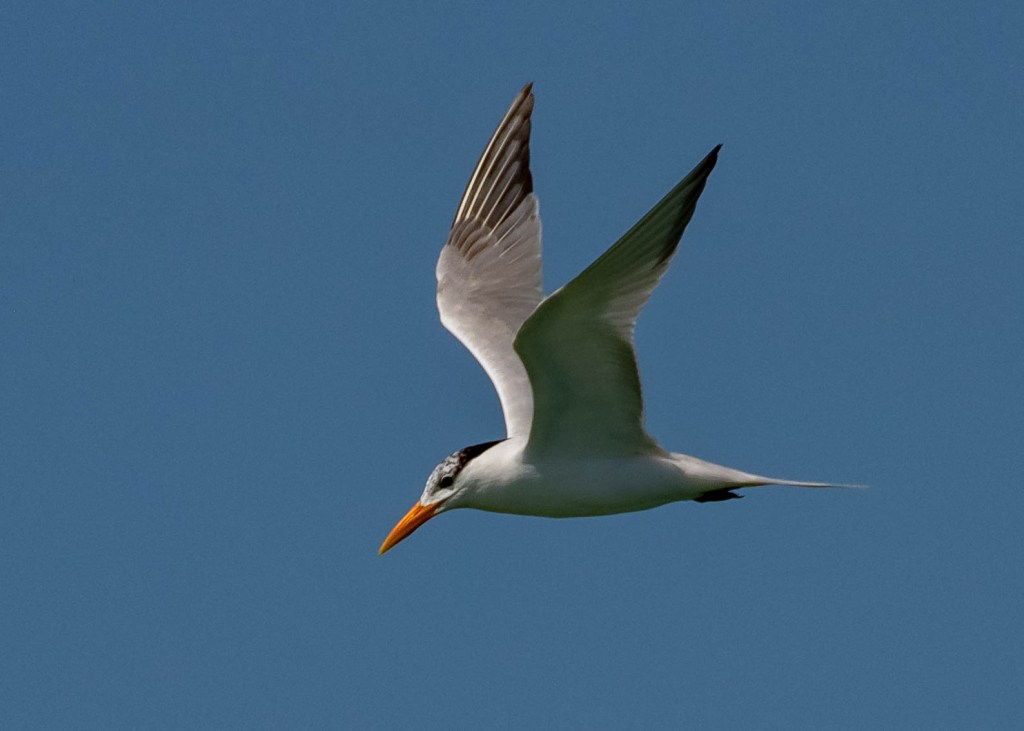
Royal Terns fly around the pier all day diving into the waters every several minutes for small minnow-sized fish.
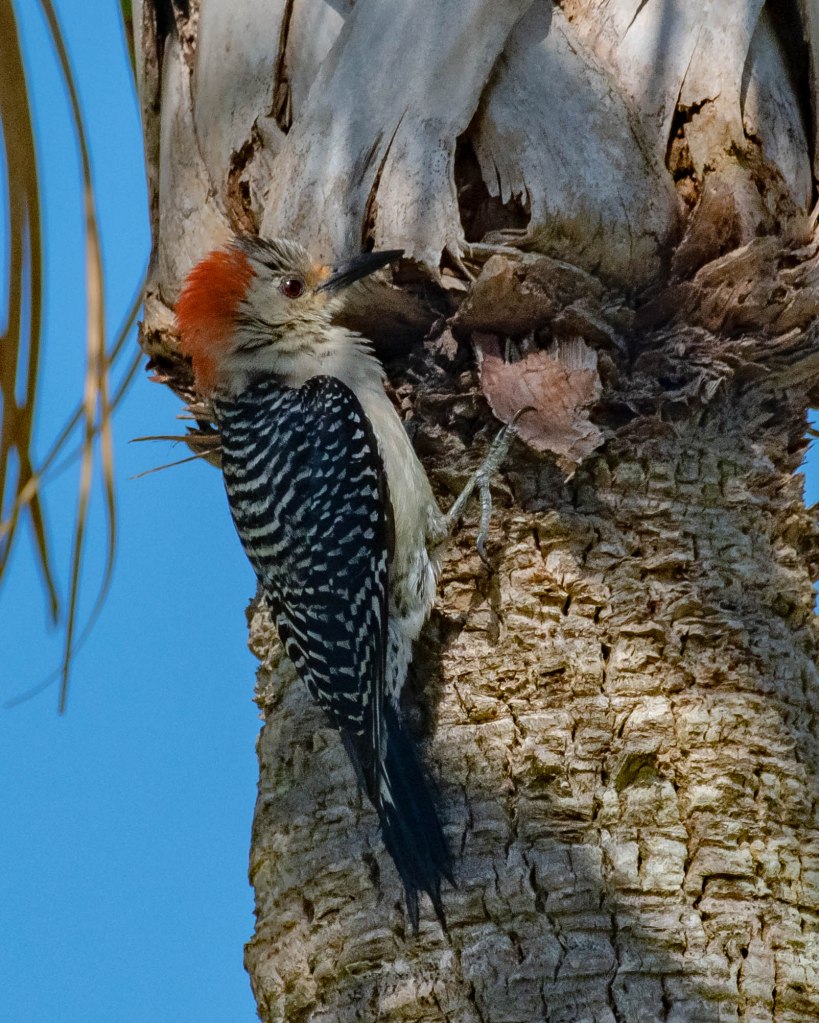
Near the pier entrance, a female Red-bellied Woodpecker flew in, crest raised and squawking about something. She calmed down, fixed her hair and consented to a portrait.

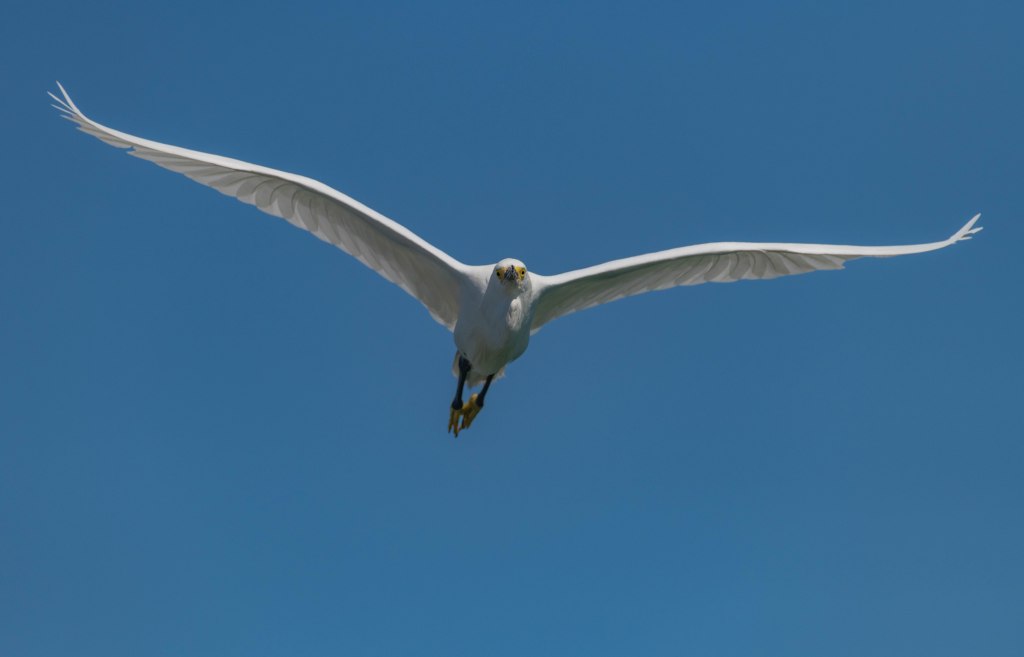
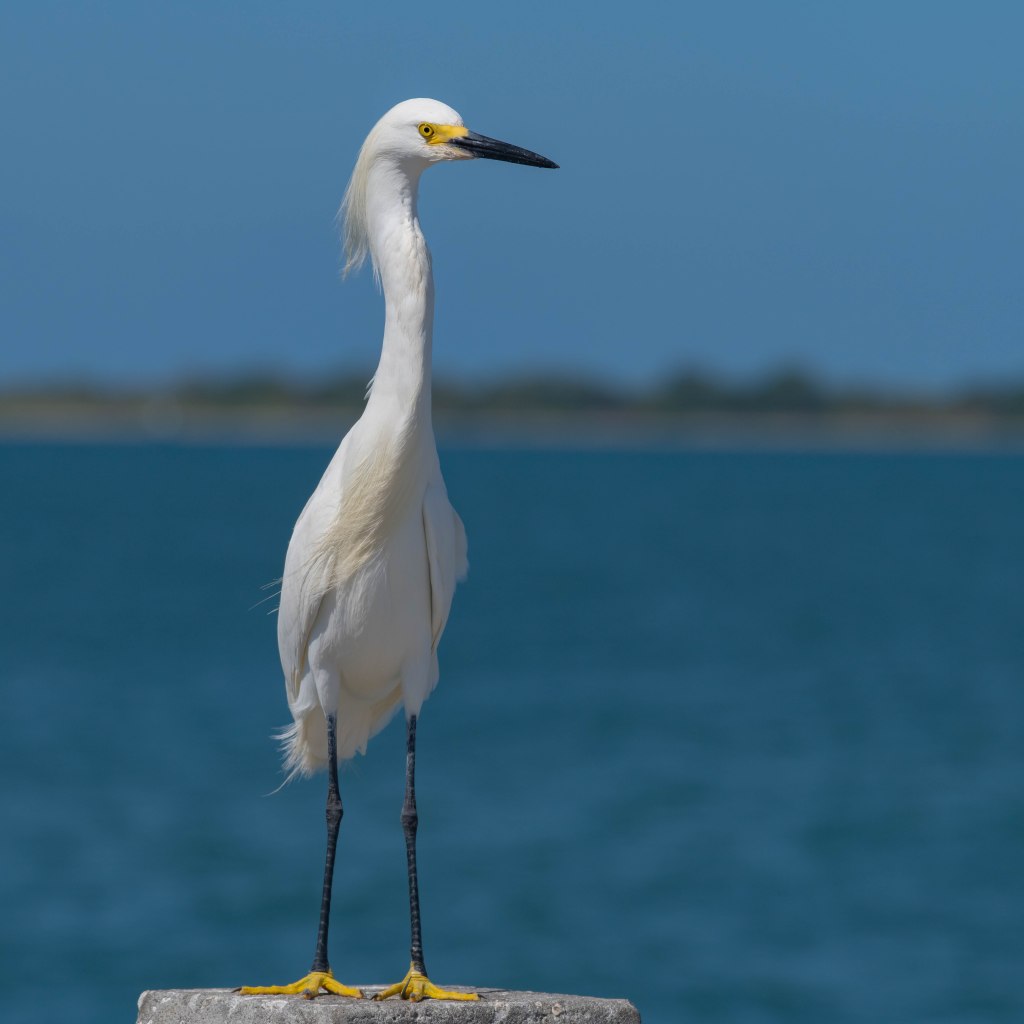
A Snowy Egret must have thought I had a snack hiding in my camera as he flew in and perched on the pier rail a few feet away. He didn’t stay long as there was more opportunity for a handout a short distance away.
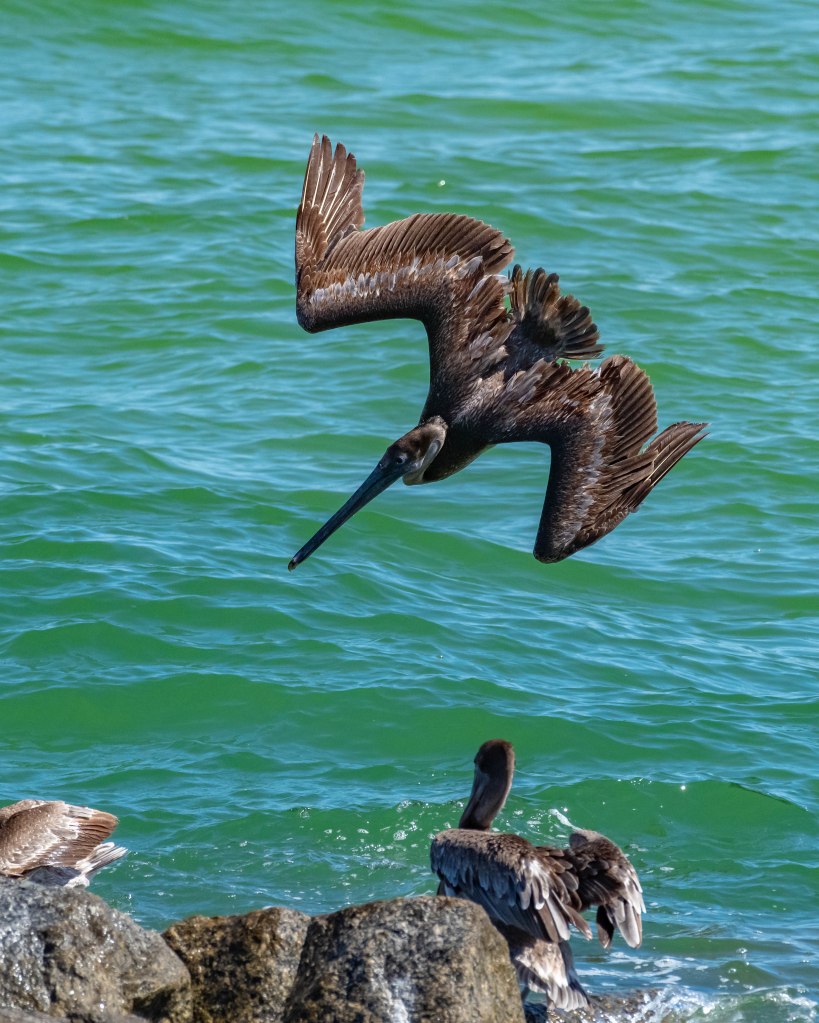
Brown Pelicans enjoy the shelter of the pier and a group of adjacent rocks. Plenty of spots to rest, preen and feed. Immature birds are brown all over and it will be up to three years before they attain the white head of an adult.


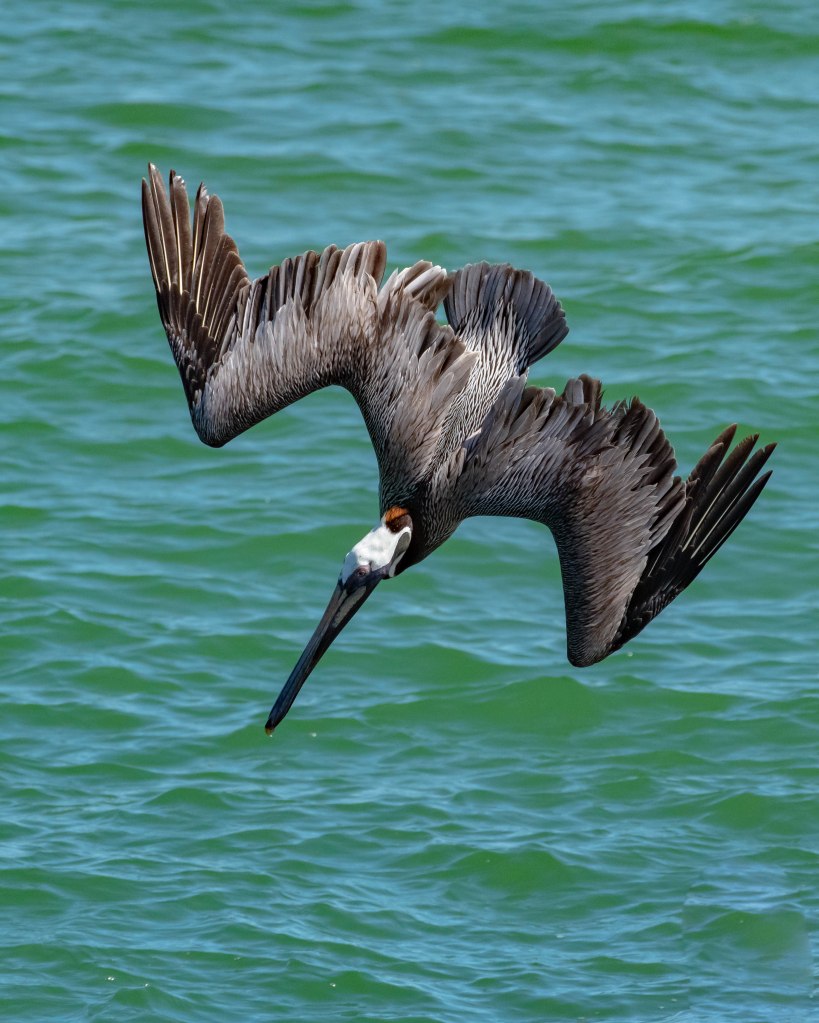

A day at Fort DeSoto is always a special treat for us. Just enjoying the sun and salt air is invigorating. Throw in some outstanding birding and photography opportunities and we have a hard time leaving. However, the lure of a fresh seafood lunch not too far from here convinced us it was time to go. We shall return.
Enjoy your search for a natural place and come back for a visit!
Header Image: Reddish Egret
A small mound of sand just under the surface of the water turned out to be a good spot to sit. My knees supported the camera lens and I had a good field of view toward the shore where moments ago I had been prone in the mud. The sun was now rising behind me and as long as I made no sudden moves, birds went about their daily routine of hunting and eating.
Fort DeSoto Park is such a jewel along Florida’s gulf coast. There is a good mix of sand beach, mud flats, tidal lagoons and groves of hardwood trees. The combination is a magnet for birds migrating in spring and fall. Many species remain here all year and several shorebirds nest among the sand dunes.
The park has a campground, two large fishing piers and a very nice boat launch facility. It’s a great place to launch a boat and head out into the Gulf of Mexico or to motor into the shallower waters of Tampa Bay. A ferry takes visitors across the shipping channel to Egmont Key for a day of exploring the dunes and a lighthouse. Several picnic areas and an award-winning beach combine with all of the above to make this spot one of the most heavily visited coastal attractions in our area. Which is why we arrive as early as possible!
I was beginning to get whiplash trying to keep up with Willets, Dowitchers, Godwits, Herons, Egrets, Plovers, Sandpipers, Pelicans, Gulls, Terns and Frigatebirds. Oh, my. An hour flew by as swiftly as the birds. Reluctantly, I waded up the shoreline and made my way along the beach back to the car. Gini didn’t have to ask how the morning was going. My grin said it all.
We sat and enjoyed the view of the blue waters of the Gulf of Mexico. A light snack of just fruit gave us a bit of energy but we wanted to be careful to not have anything filling. Our plan of operation included a lunch stop at The Fish House. Goodbye diet.
First, however, we had to see what might be happening at the gulf fishing pier. Soon, you will know what we found. In the meantime, be consoled, as I was, knowing that all things come to those who wade.
A Reddish Egret greets the first rays of the sun as it rises above the Sea Oat-covered sand dunes.
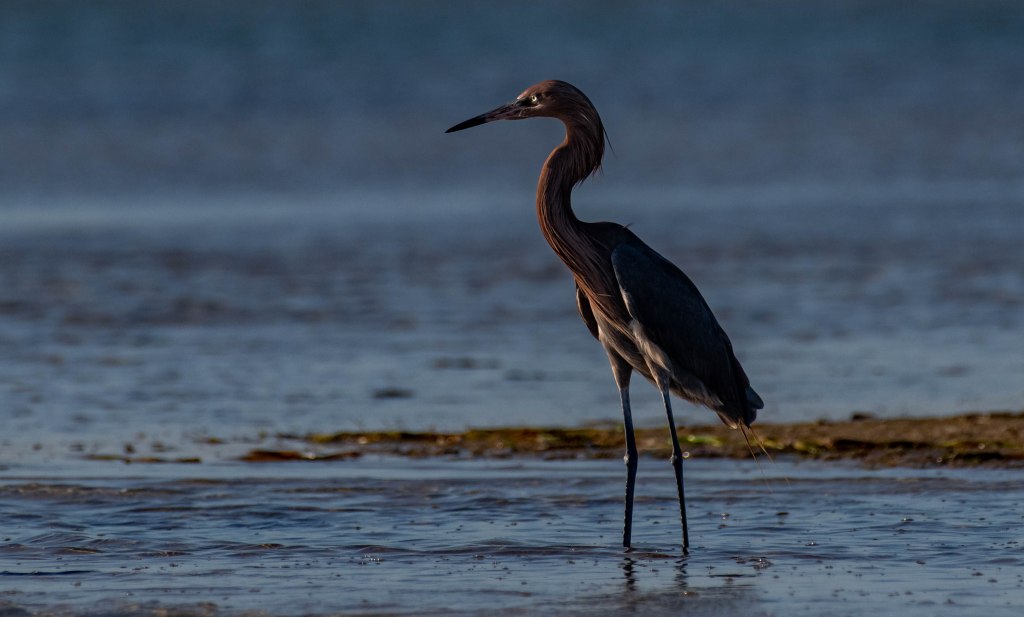
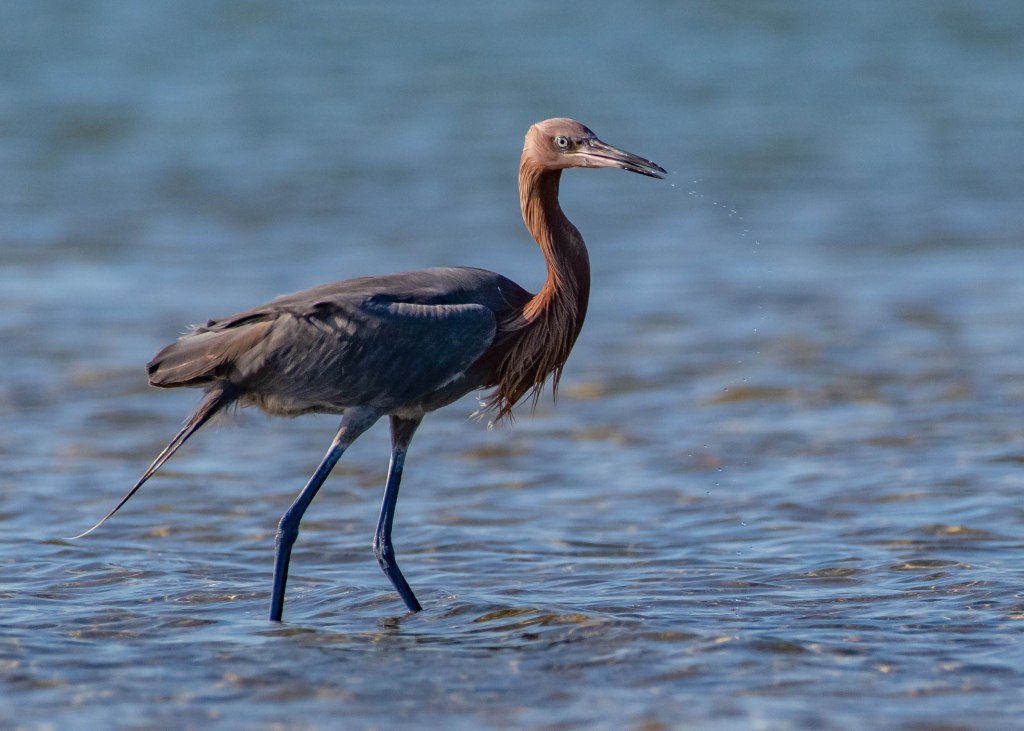
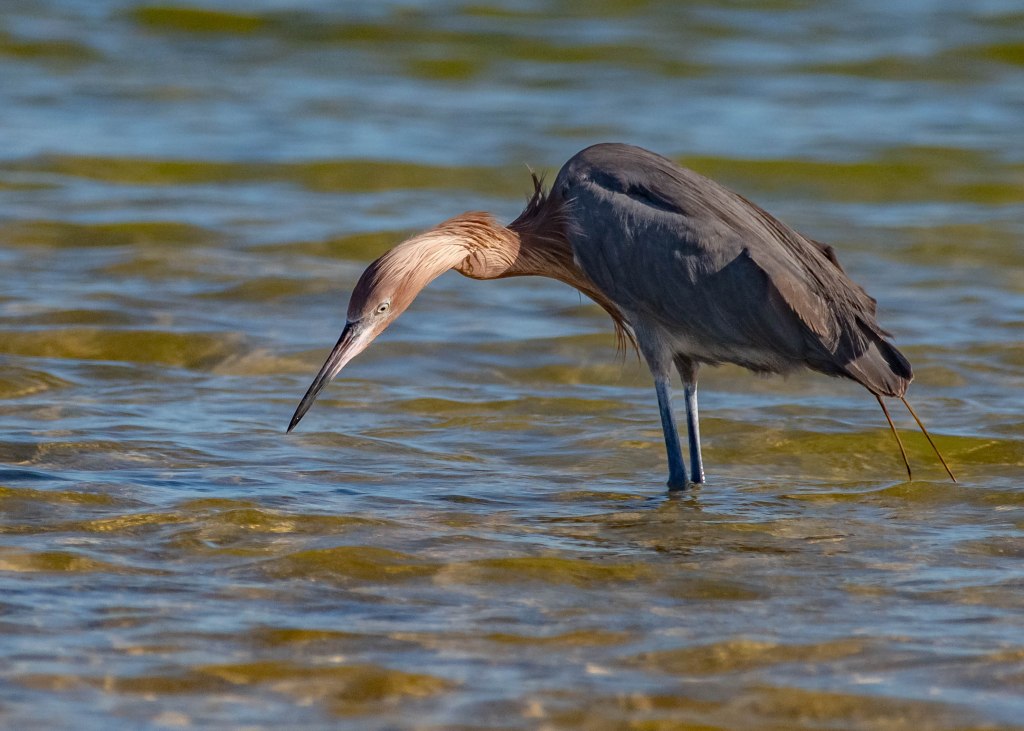
The Reddish Egret can be entertaining to watch as it chases small fish in shallow water, often using a “run-stop-run” technique which resembles some sort of energetic dance. There is a white version of this bird which is not as common as the dark morph.
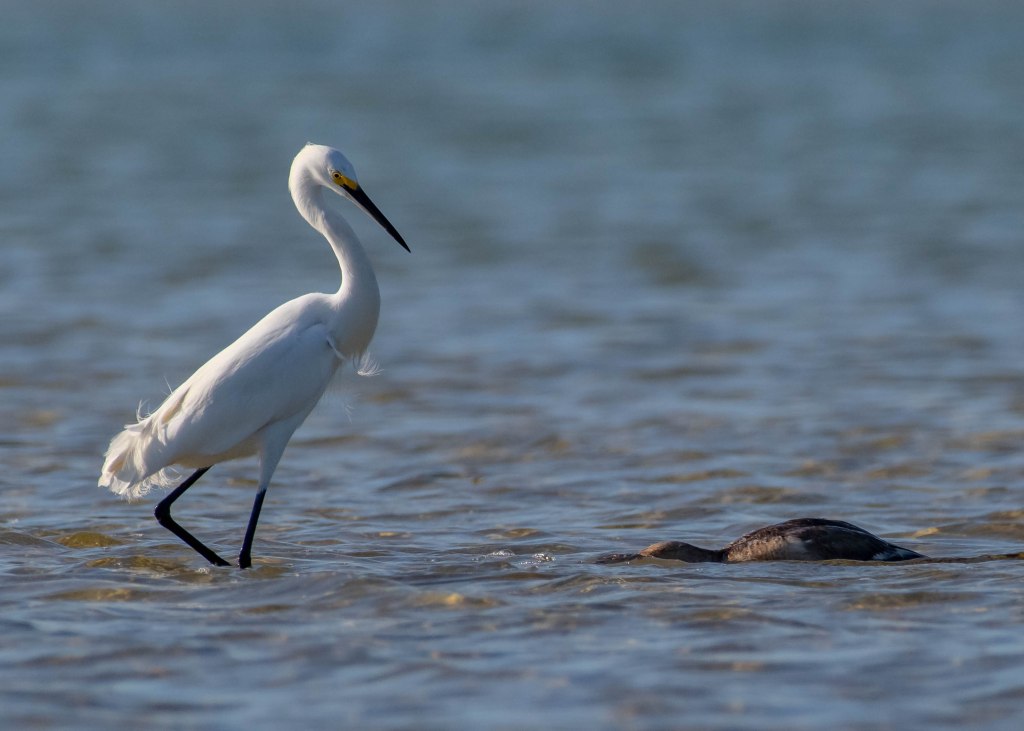
A Snowy Egret watches with interest as a Red-breasted Merganser plows through the shallows churning up small fish, shrimp and crabs.
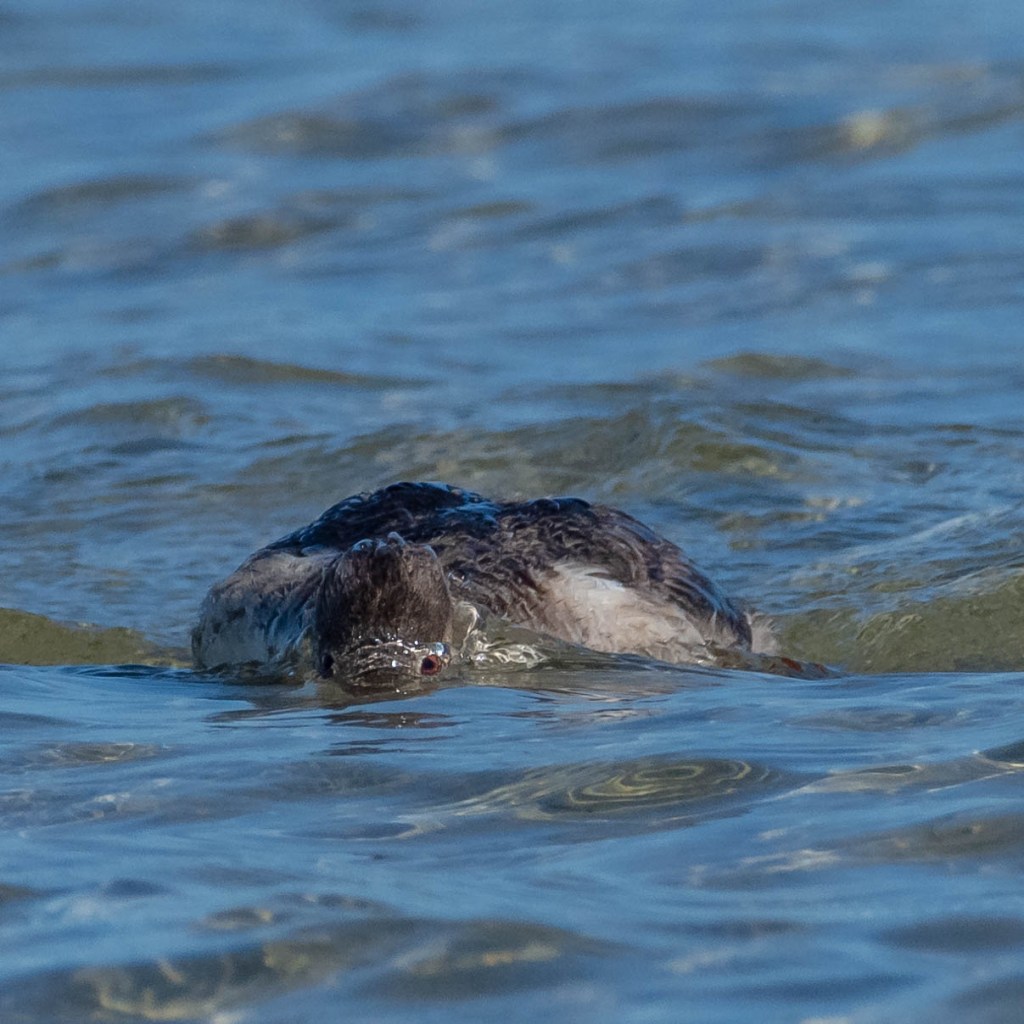
The merganser kept an eye on me but didn’t stop hunting. At last, she gave me a quick view of her glorious self before diving for more breakfast. (The female and immature male look similar.)

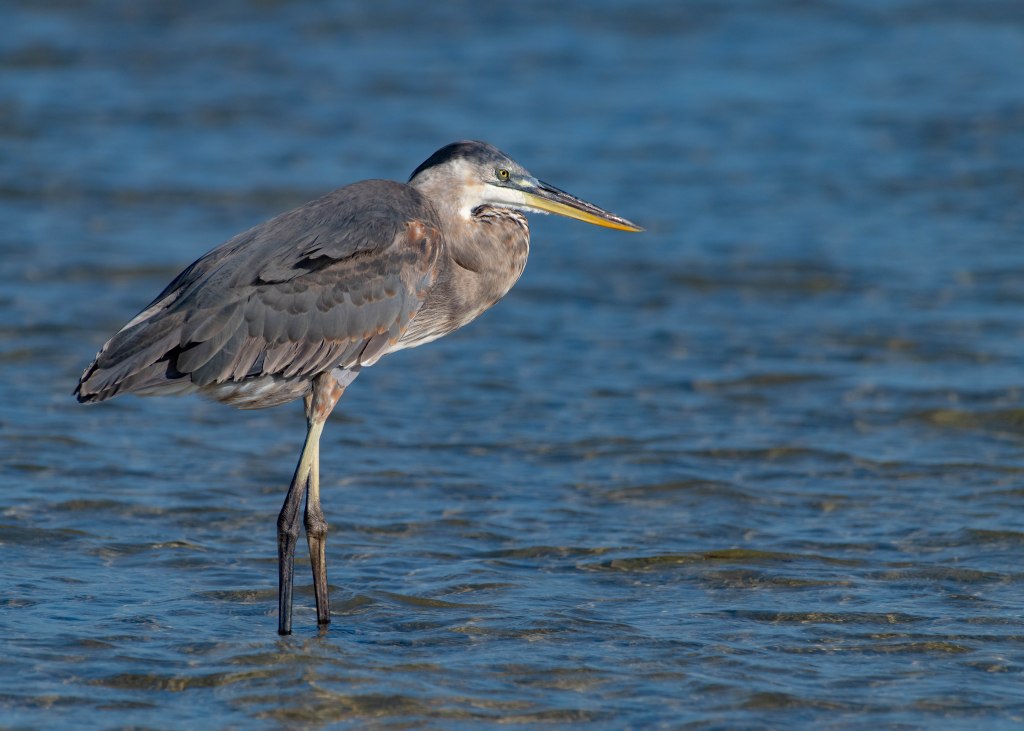
Even when half-asleep, a Great Blue Heron exudes magnificence.
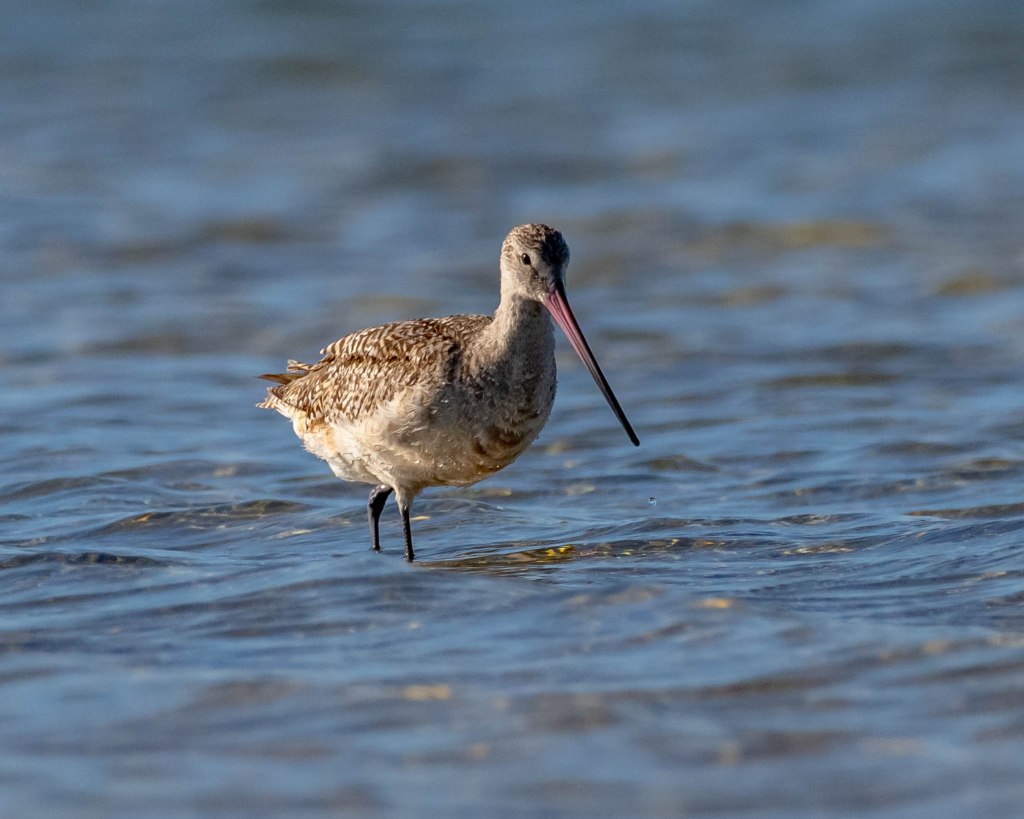
That nice long bill makes the Marbled Godwit a mud specialist. They breed mainly in the northern Great Plains of the United States.
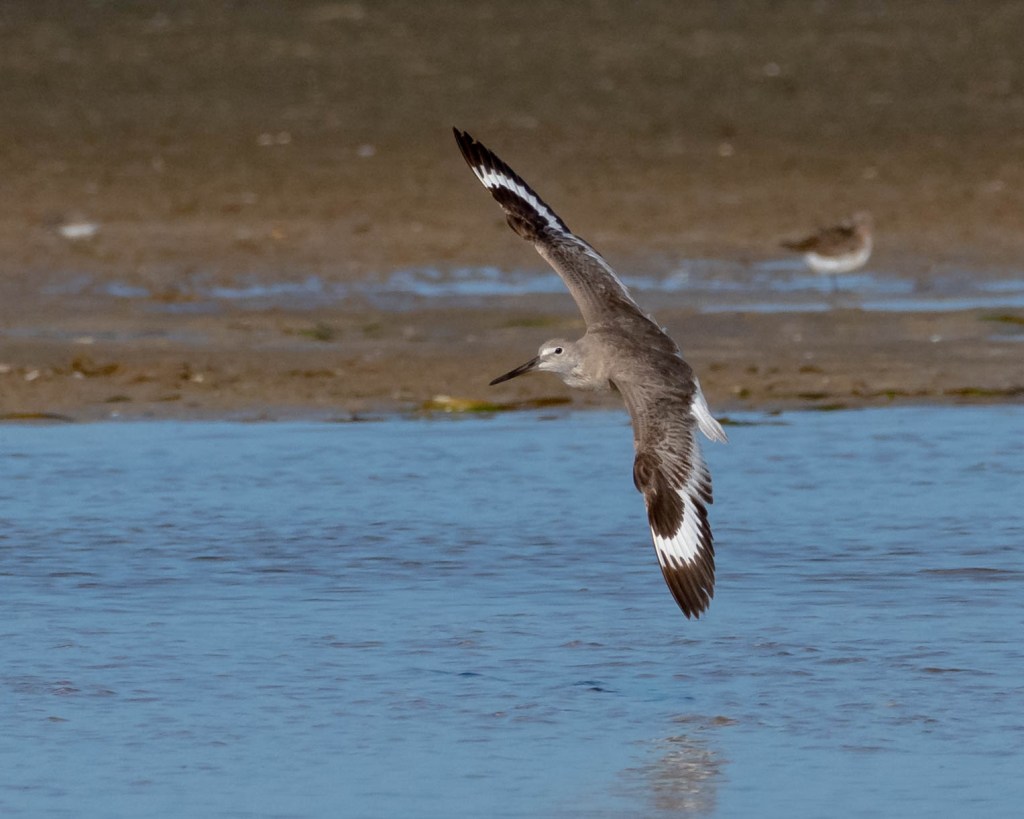
Like the Marbled Godwit above, Willets are among the largest members of the sandpiper family. Plumage is overall gray and nondescript all year around and Willets have shorter bills than the godwit. When a Willet spreads its wings, however, dramatic replaces nondescript!
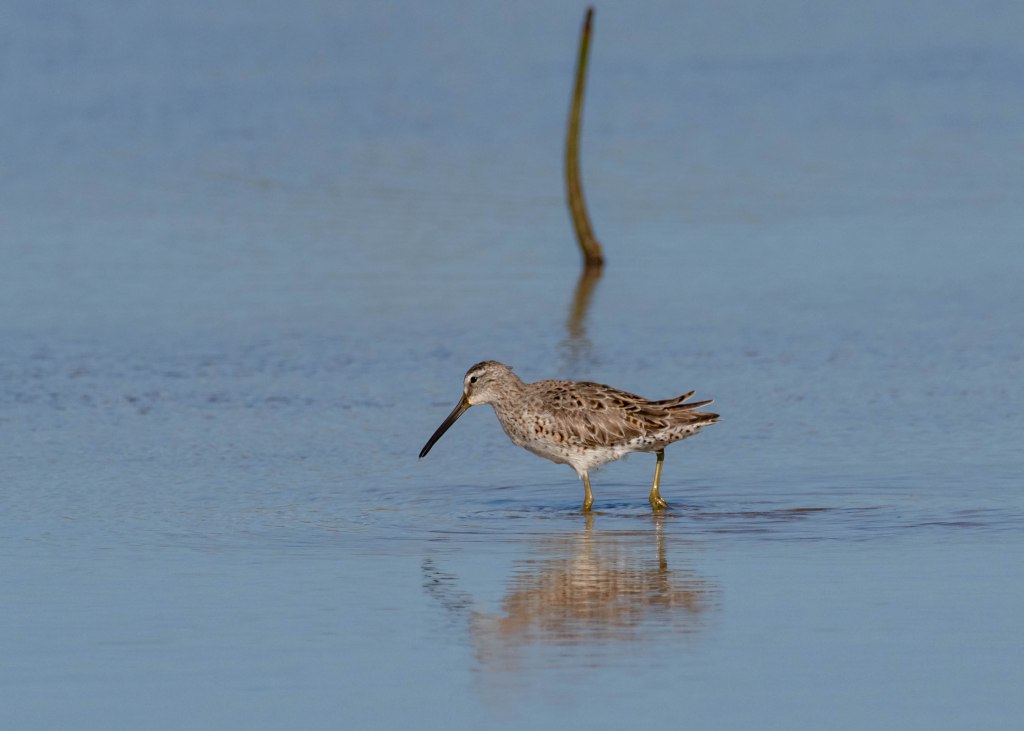
Breeding in Canada and Alaska, Short-billed Dowitchers probe shallow water in a straight up-and-down motion, like a sewing machine. “Short-billed” seems a misnomer, but there is also a “Long-billed” Dowitcher. Despite the name difference, it can be very challenging to tell the two species apart as bill length can be similar. The calls of the two birds are different as is their “normal” habitat.
Playing in the mud was fun. I embraced my inner child and probed the ooze with my fingers while waiting on birds to hop closer. Waiting on waders while wading was also great entertainment. I can’t wait for you to peer at what we found at the pier.
Stay tuned for the exciting conclusion of our coastal adventure: “Pier Pressure”!
Enjoy your search for a natural place and come back for a visit!
Header Image: Snowy Plover
The inlet between beach and sandbar was less than knee-deep. Although it was barely past sunrise, the water of the Gulf of Mexico was not shockingly cold like that of the Atlantic Ocean on the other side of the state. Sand as far as the eye could see in either direction was the color and consistency of white sugar. Laughing Gulls and Sandwich Terns splashed a few feet from the shore and flew off with silvery scaly slivers of wriggling fish for breakfast.
I headed north along the sandbar, pausing to gaze at the open gulf. It was difficult to believe Gini and I once plied these waters beyond sight of any land in a small boat under the blazing sun, catching a fish now and then and thoroughly enjoying the incredible sights and sounds of the sea. It all seems like a dream now. A very pleasant one.
A lagoon between the sandbar and main shore was quite shallow in places which made it perfect for wading birds. Retreating tides revealed soft mud for hungry shorebirds. The rising sun was breaking over the sand dunes and I lay in the freshly exposed mud hoping a few feeding birds would come within camera range. It was a good morning.
We were at one of the area’s premier birding spots, Fort DeSoto Park in St. Petersburg, Florida. It’s beach season so we knew to be there early as the sand would quickly be littered with oiled humans hoping to become sufficiently browned without becoming painfully red. Fortunately, the mud flats don’t seem to attract the attention of two-legged sun worshipers like that white sand does. Go figure.
I felt a bit like the shorebirds I was chasing as I lay in one spot, got up, scurried to another spot, lay down and repeated the process three or four times. Covered in mud, I waded into the lagoon to rinse off a bit. The perspective from being in the water and looking toward the shoreline was an interesting change. But that’s a story for next time.
Dunlin remain here throughout the winter but are dressed in their dull gray plumage. It was nice to find one still hanging around and in its breeding suit. As with many shorebirds, Dunlin breed in the Arctic tundra. This individual could be a little late in migrating north. Some first-year birds of several shorebird species often remain in their wintering grounds all year.

Black-bellied Plovers may not breed here but several remain either through late spring or even all summer. This one has not yet transitioned from its winter plumage. This seems like it may be a first year bird based on the look of the individual feathers, but it doesn’t have the “checkered” appearance of a new juvenile.

The diminutive Semipalmated Plover also breeds in the Arctic and Alaska. Again, some first-year birds remain with us all year long. Here you can see the webbing between toes which gives the bird its name.
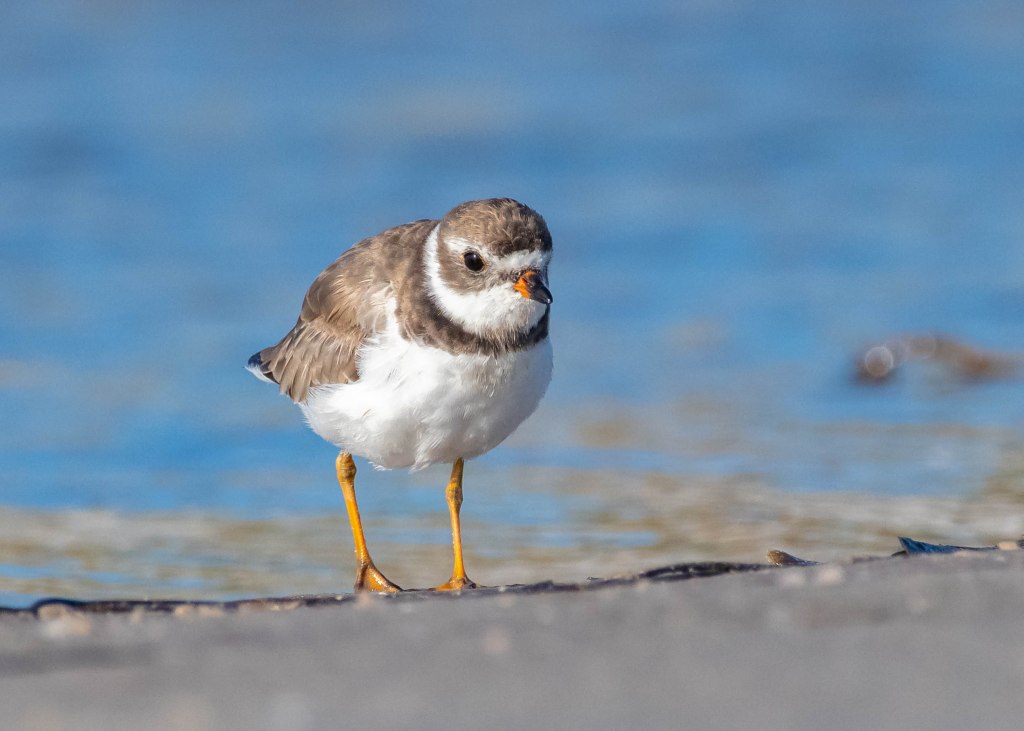
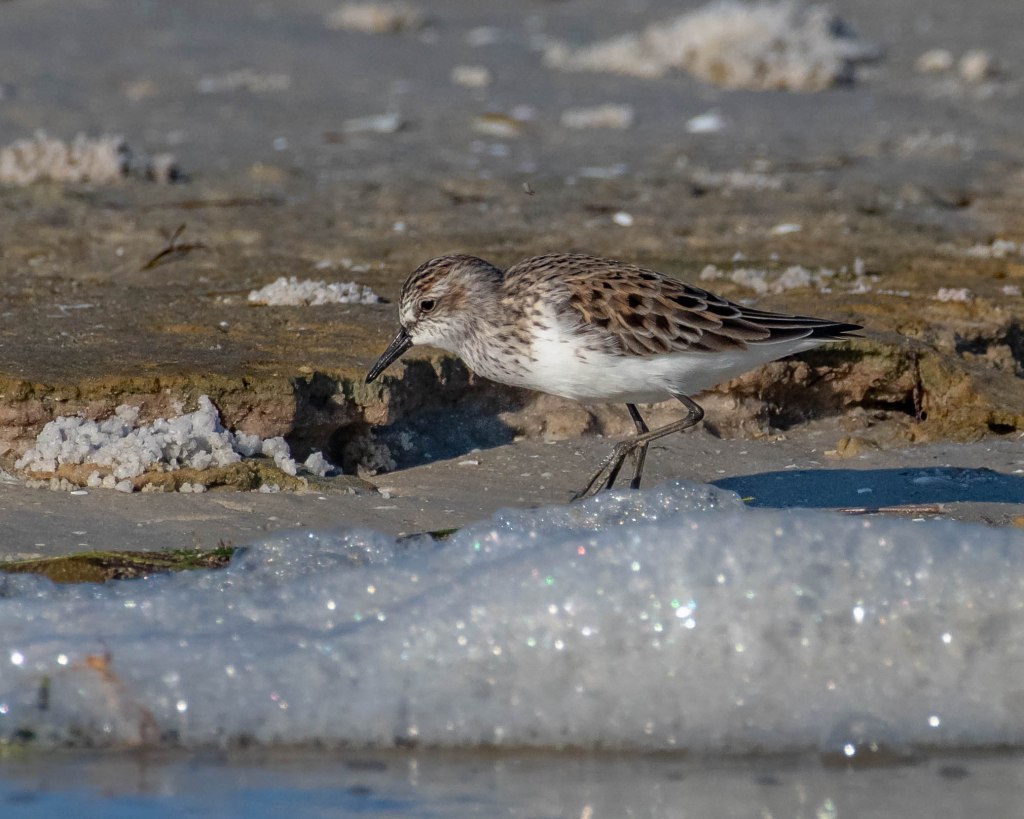
Although not visible in this photo, a Semipalmated Sandpiper also has partial webbing between its toes. This small “peep” sandpiper has a little different profile and shorter bill than its similar cousin, the Western Sandpiper.
It is always a treat for us to spot an American Oystercatcher. I know there are nests around here but couldn’t locate one today. This bird wasn’t telling, either.

Larger than the “peep” sandpipers and smaller than a godwit, this Short-billed Dowitcher should also be flying north very soon. Very similar to the Long-billed Dowitcher in appearance, they can be separated by distinctive calls. Plumage will soon change from non-breeding grayish to an overall cinnamon.

A pair of Ruddy Turnstones preen and rest between searches for food.

As noted above, the Western Sandpiper has a bit different profile and usually a longer bill than the Semipalmated Sandpiper. That long bill has just pulled up a juicy mud worm thingy.

Another migrant late to the party. This Red Knot should be in the Arctic tundra scraping out a nesting spot. Typically, we see most of these in their gray winter plumage so it was nice to see the red in the Red Knot! I saw six Red Knots this morning and this one sported a leg flag. (Again, some of these birds may stay here all summer.) I discovered the flag was attached on February 1, 2022 at Big Pine Key, Florida, part of the Florida Keys, at which time the U.S. Wildlife Service bander noted the bird had hatched in 2021.

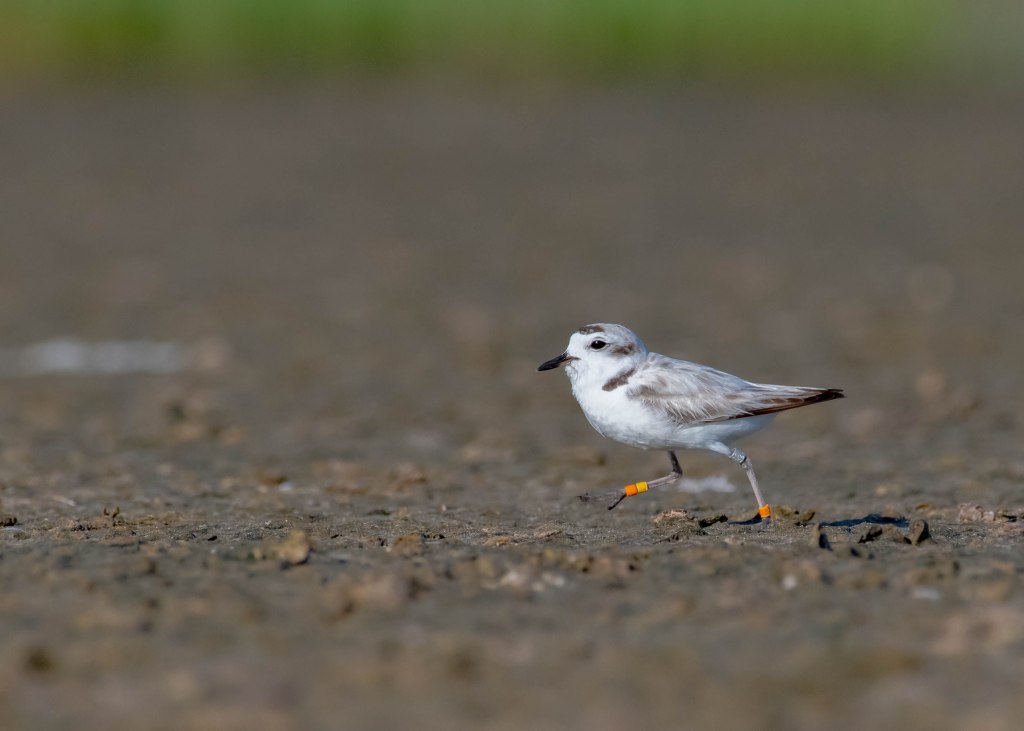
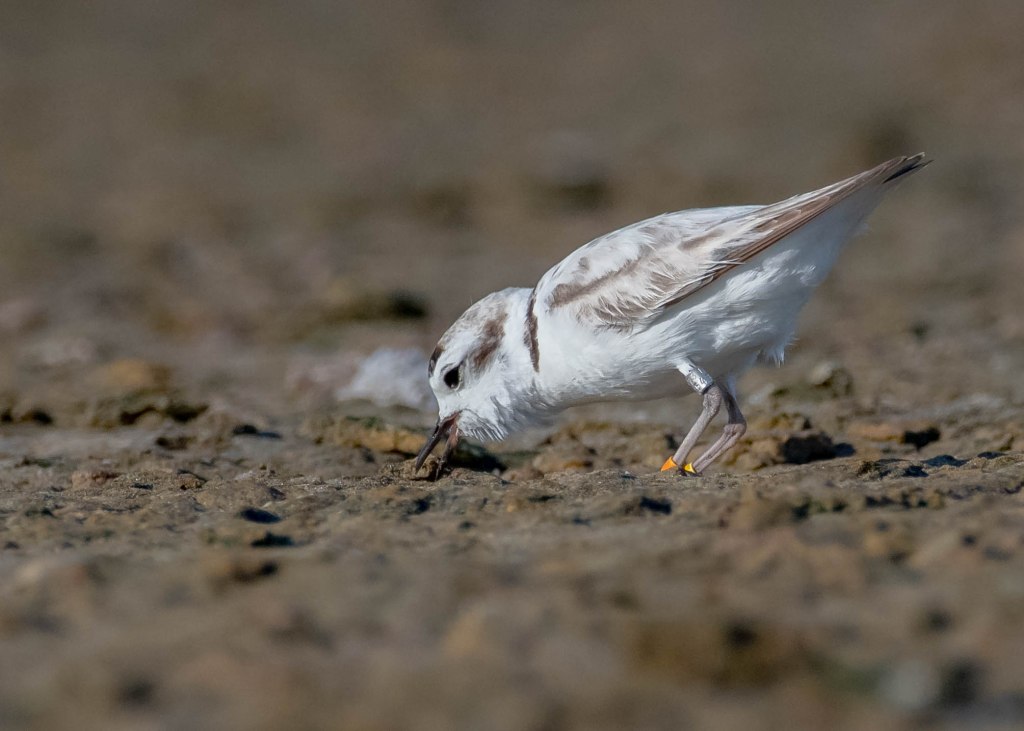
The highlight of the morning was an energetic Snowy Plover. Although he was wary of my presence, it didn’t stop him from his “run-pluck-run” routine all the while keeping an eye on me. These little birds are a threatened species due to development and recreational use of beach habitat. All of the leg jewelry allowed me to determine this male was initially banded less than two miles north of here on May 3, 2021. The bander estimated the bird’s age at the time of banding to be about one year.


Gini and I joke about having salt water in our veins. There does seem to be an irresistible urge for us to be around salt, sun and sand. The fact that there are so many birds hanging around is a nice bonus.
Next up: It’s a Wading Game.
Enjoy your search for a natural place and come back for a visit!
The Final Chapter
Just as we thought all was lost at Lost Lake when we stumbled upon the remains of that alligator carcass which was likely a result of the poor beast becoming hopelessly lost at Lost Lake, we spotted the car. Whew! We thought for sure it was curtains. Or at least cheap drapery. Turns out it was just Spanish Moss hanging over the trail obscuring our view of the parking lot.
Now that the serious-minded have left the room ……
We departed Lost Lake and stopped briefly at two more lakes withing the Tenoroc Fish Management Area system. These lakes are geographically separated from the main management complex and were probably lovingly named by some senior bureaucrat after his wonderful children. Lake A and Lake B.
The two lakes don’t have any developed trails or facilities, just boat ramps. We were able to hike around the edges of the water for a bit and made some nice discoveries. Flowers are blooming in celebration of late spring rains. Insects are pollinating in celebration of blooming flowers. Birds are feasting in celebration of insects buzzing all over the place. We are celebrating because it’s all a wonderful experience!
The management area requires visitors to sign in and out so they can lock the gates at the end of the day without leaving too many civilians having to cozy up to the creatures of the night. A small fee is normally required but we are allowed in for free. Being old has some benefits.
We headed from the alphabet lakes to the main complex in order to sign out for the day. Gini begged politely requested that we visit one of our favorite areas before returning home. Of course I couldn’t say no. Especially since it did not involve the collection of dinosaur bones. Butterflies, dragons, birds, flowers and even a low-flying Air Force cargo plane! Nice finish to a splendid day. (That lady sure is smart.)
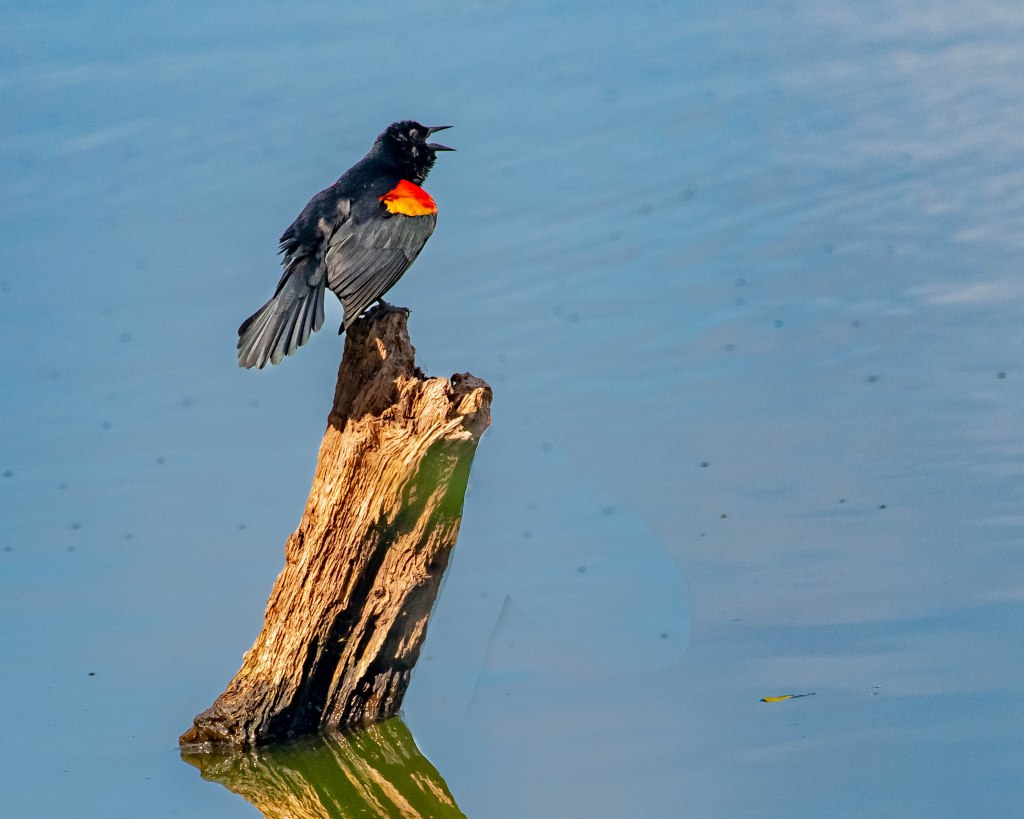
Red-winged Blackbird males are singing all over the place as breeding season is still in full swing.
Caesarweed (Urena lobata) is an invasive plant from Africa introduced into the United States for livestock feed and for its nitrogen-fixing properties which help improve soils. As with many introduced species, it has not played well with native flora and tends to crowd them out – with a vengeance. Pretty bloom, though.

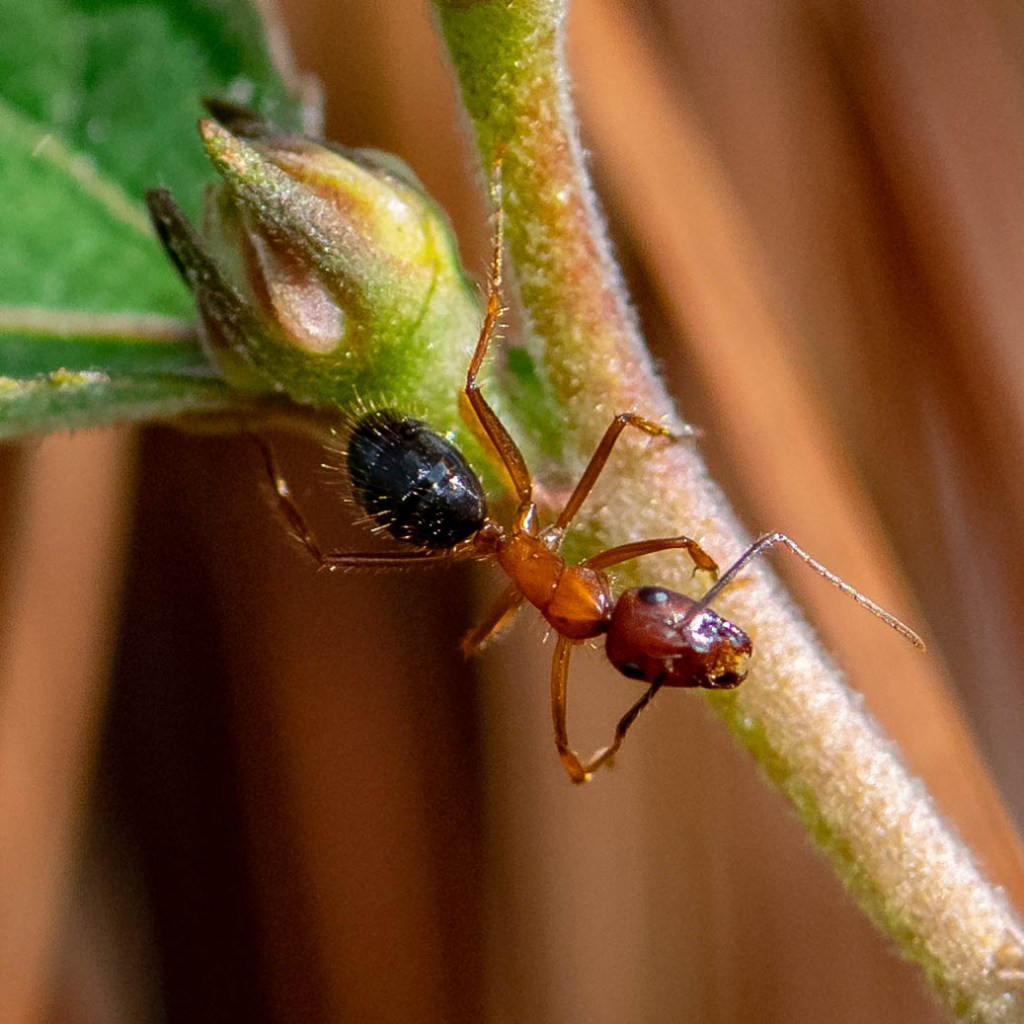
A Florida Carpenter Ant (Camponotus floridanus) doesn’t care where the Ceasarweed came from as long as it provides food and shelter.
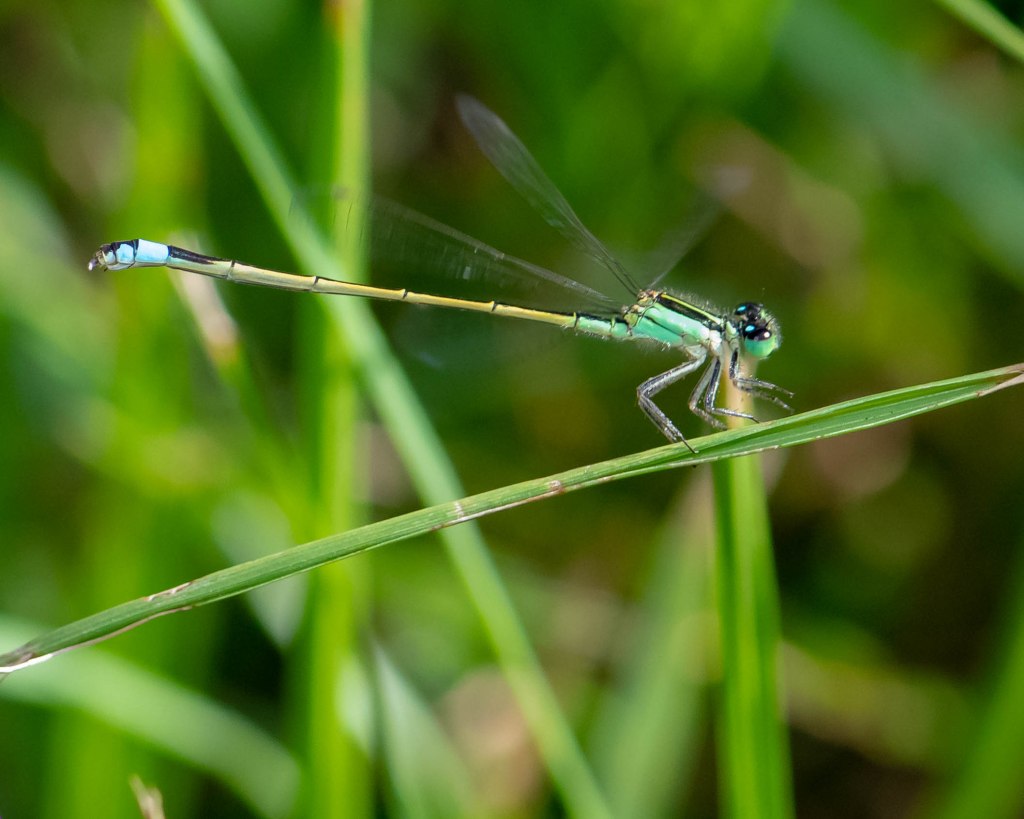
Just about any weeds adjacent to water (which is about 90% of Florida) will harbor small damselflies such as this Rambur’s Forktail (Ischnura ramburii).
Very common throughout the state, American Beautyberry (Callicarpa americana) has small but lovely flowers, luscious-looking berries, rich green foliage, pretty stems and, according to some, has many useful properties. Parts of the plant have been reported to be good to eat, may have medicinal qualities, berries have been used to dye cloth as well as used in preserves. (Don’t consume anything unless you are 100% certain it is safe!)
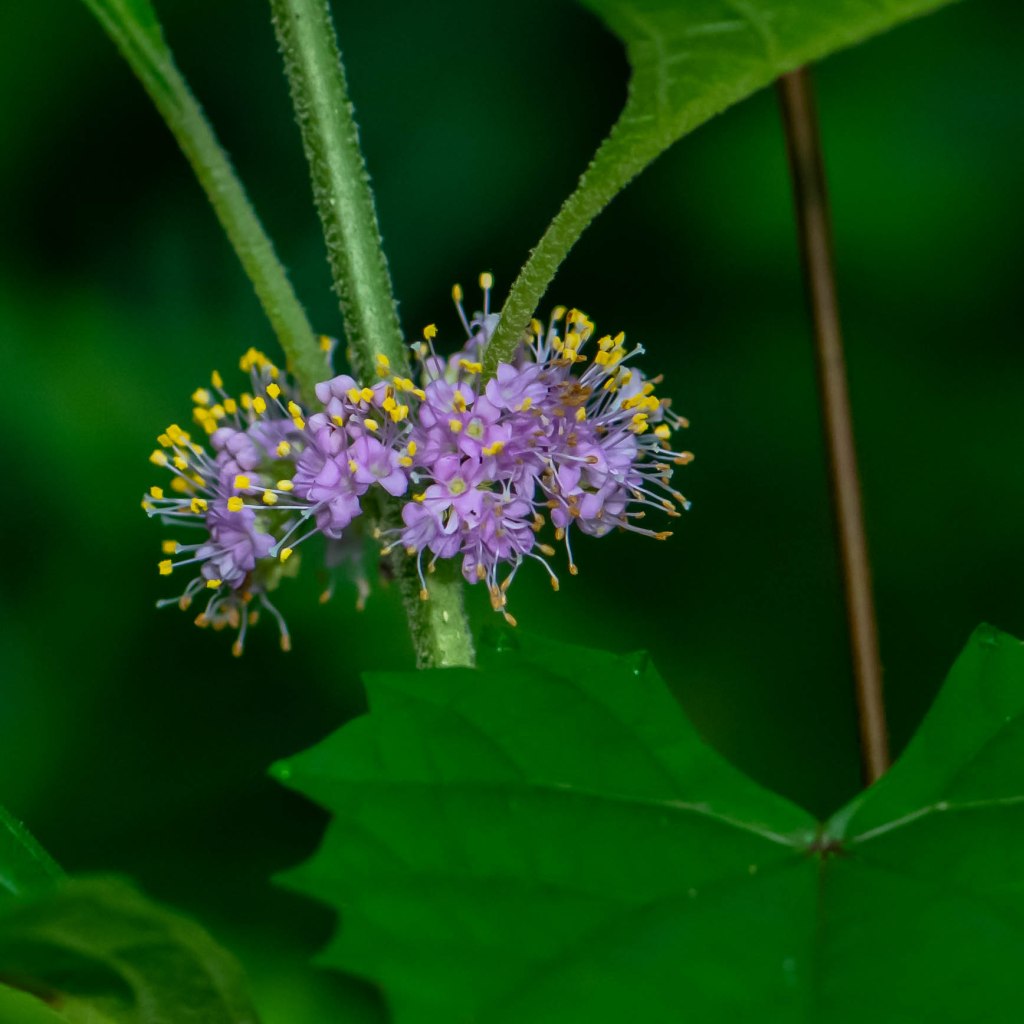
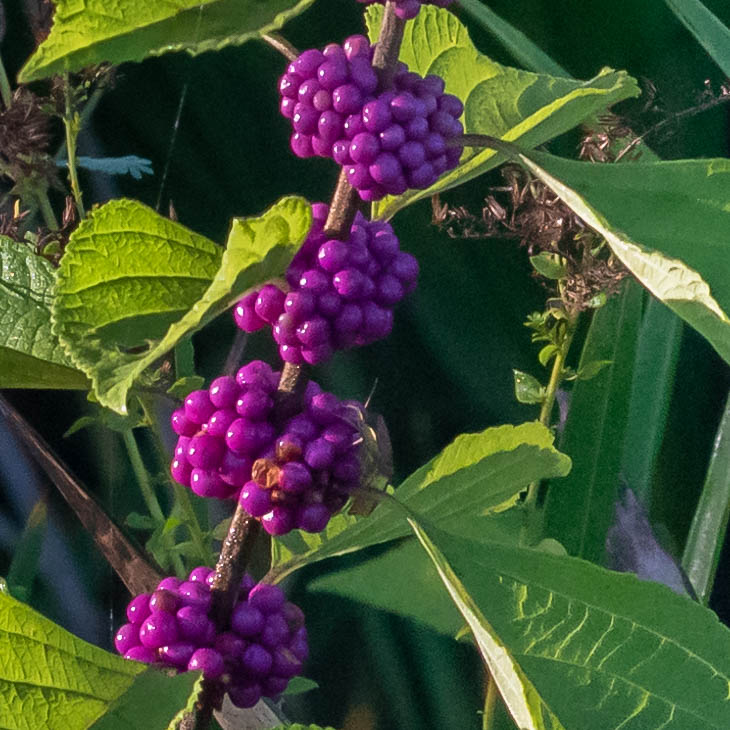
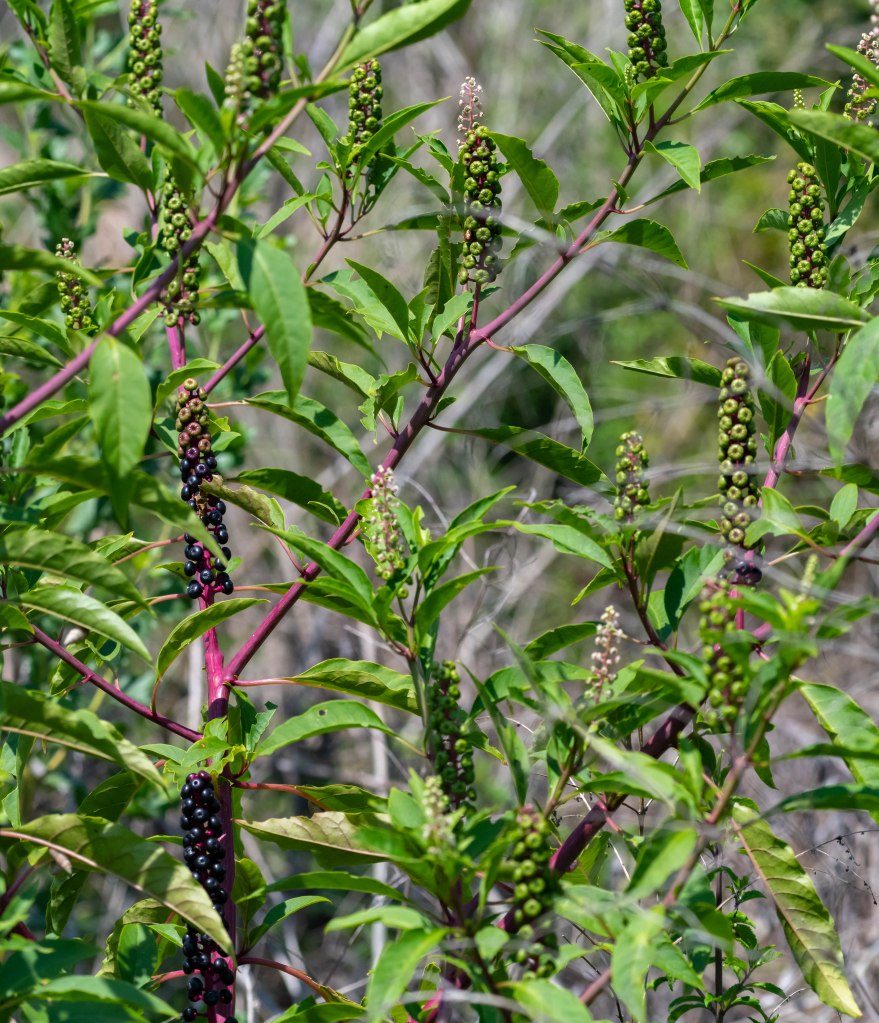
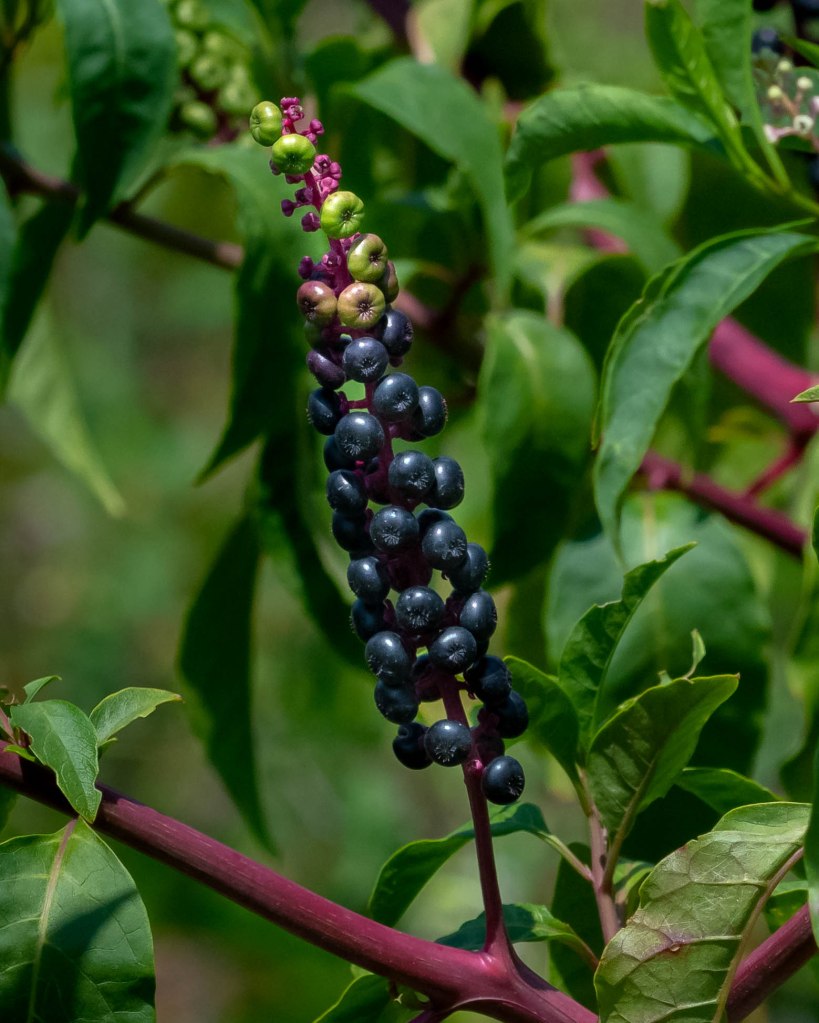
(Thanks to Jimbey and shoreacres for pointing out an important error!) The images below are of the American Pokeweed (Phytolacca americana). The berries of this plant are definitely toxic! Once again, when exploring the great outdoors, DO NOT TOUCH OR EAT ANYTHING YOU ARE NOT 100% POSITIVE IS NOT DANGEROUS!
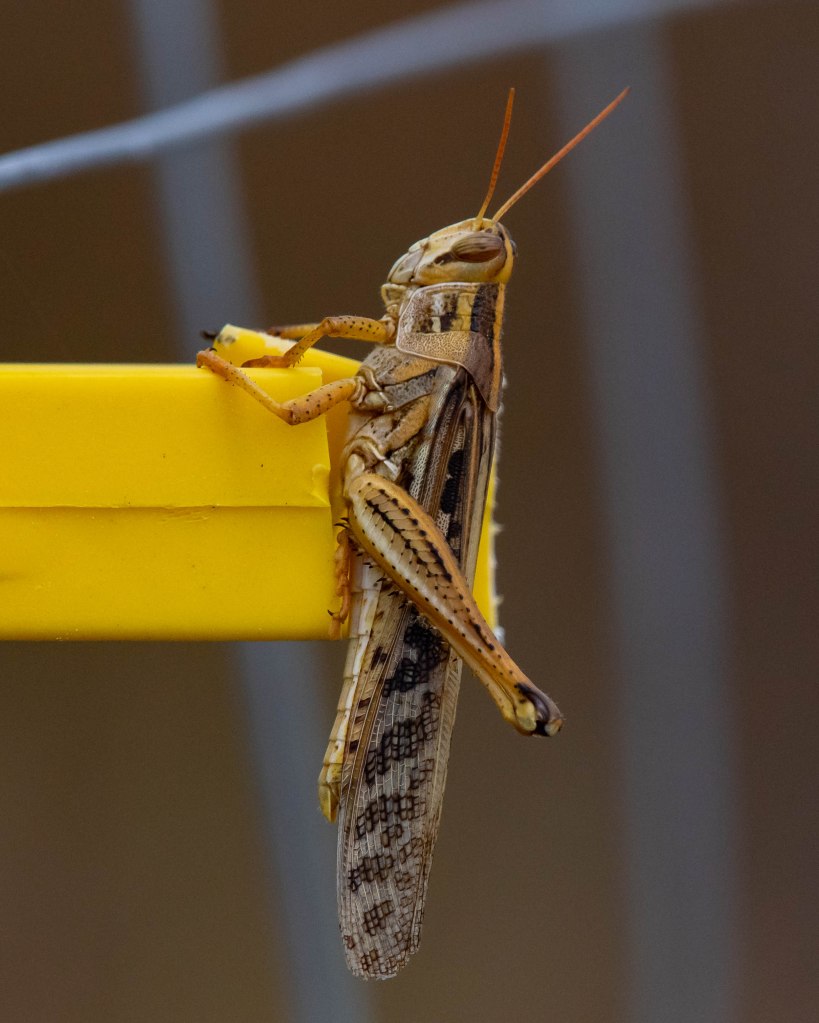
Walking near any grassy area at this time of year will flush good numbers of yellow-winged birds from under foot. Bird grasshoppers, that is. The American Bird Grasshopper (Schistocerca americana) is abundant as well as pretty attractive.
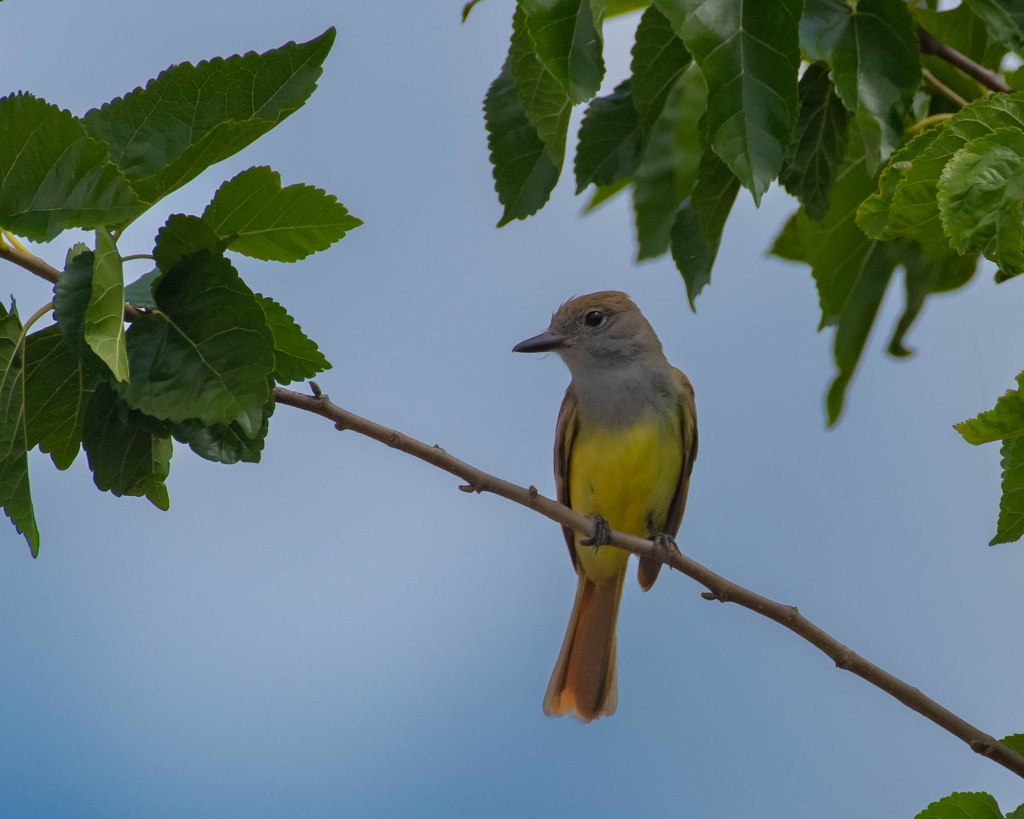
We encountered calling Great Crested Flycatchers throughout the day. This area is filled with breeding males singing to attract a mate.
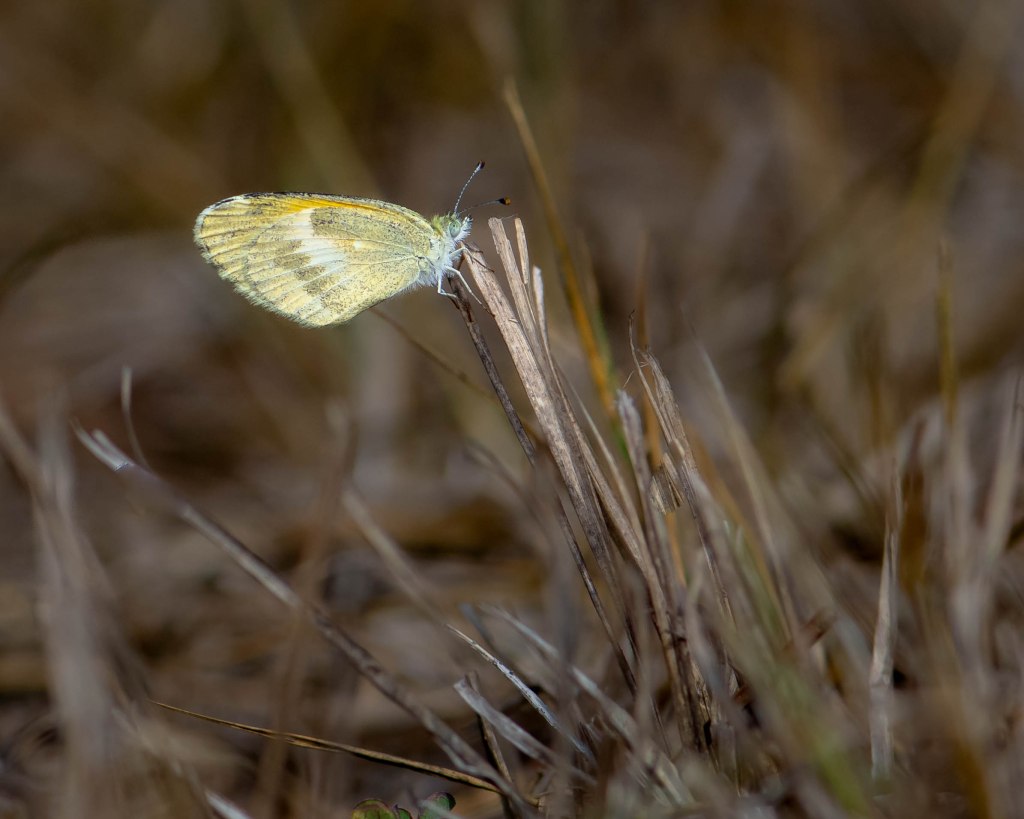
Hands-and-knees time in an effort to sneak up on a small Dainty Sulphur (Nathalis iole). True to their name, these are the smallest sulphur butterflies in North America.
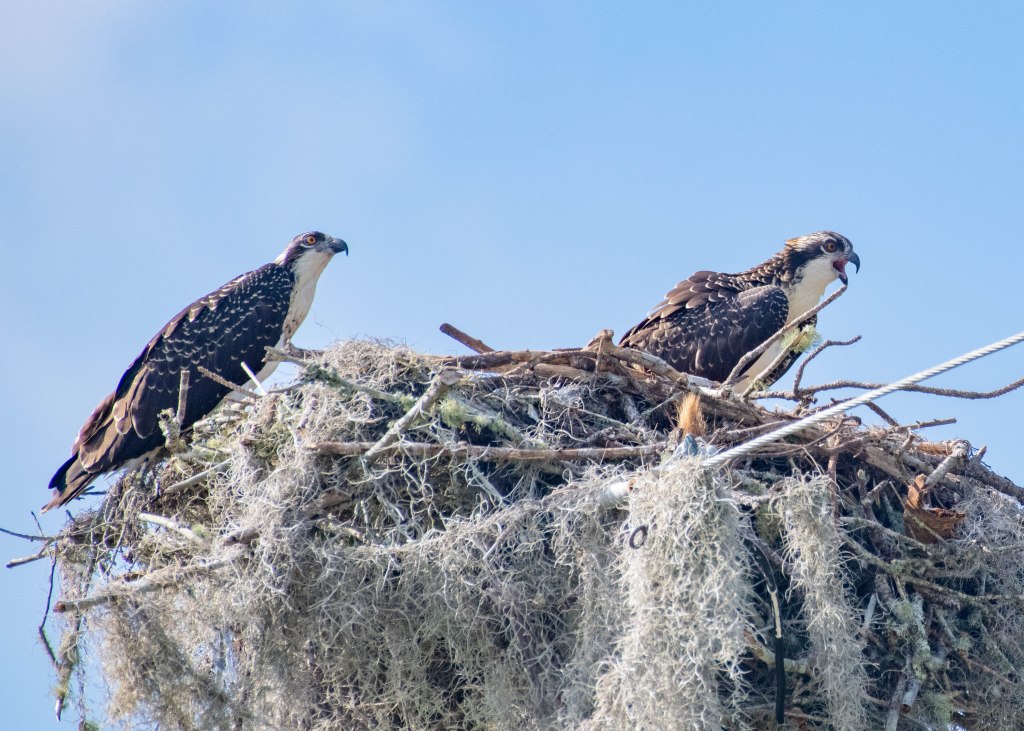
Junior admires Mom’s tenacity as the adult Osprey screeches at a potential intruder. Soon, the youngster will be screeching on his own.
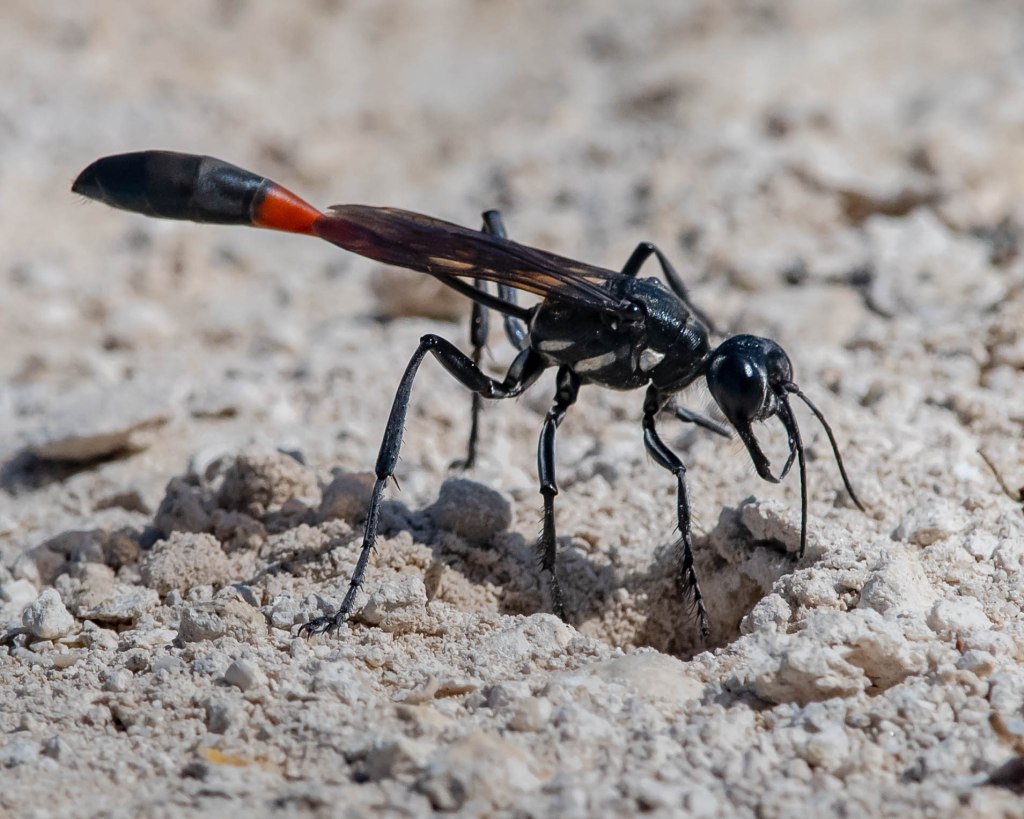
Common Thread-waisted Wasps (Ammophila procera) dig a hole in the ground in which they will deposit a food source, such as a caterpillar, lay eggs, cover the hole – lather, rinse, repeat.
Trumpet Honeysuckle (Lonicera sempervirens) is also known as Coral Honeysuckle. Vines can reach up to 15 feet in length. That’s okay with us for something this beautiful!

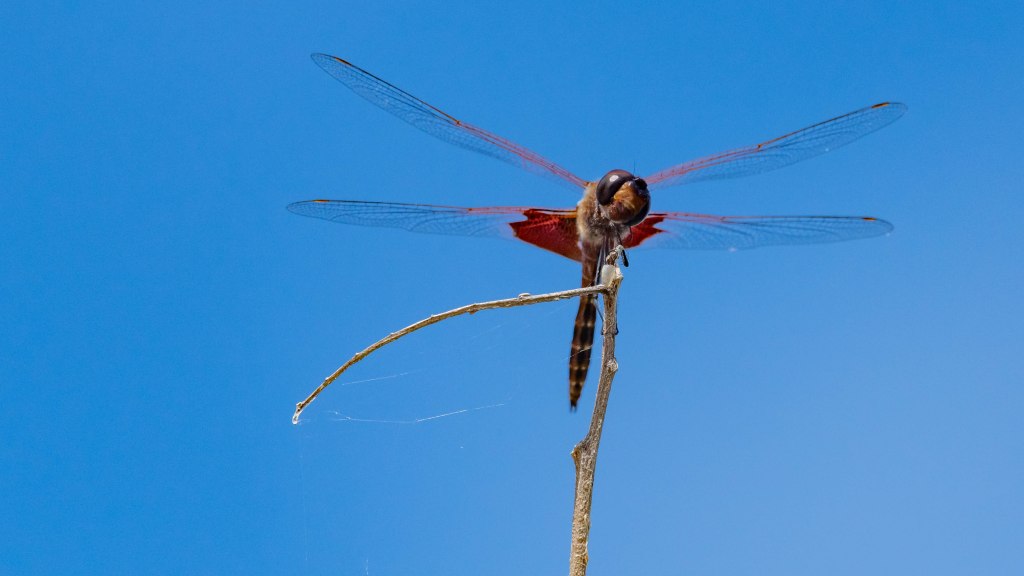
Today’s sentinel duty is performed by the ever-alert Red Saddlebags (Tramea onusta). With all those eyes, this attentive dragon doesn’t miss much.
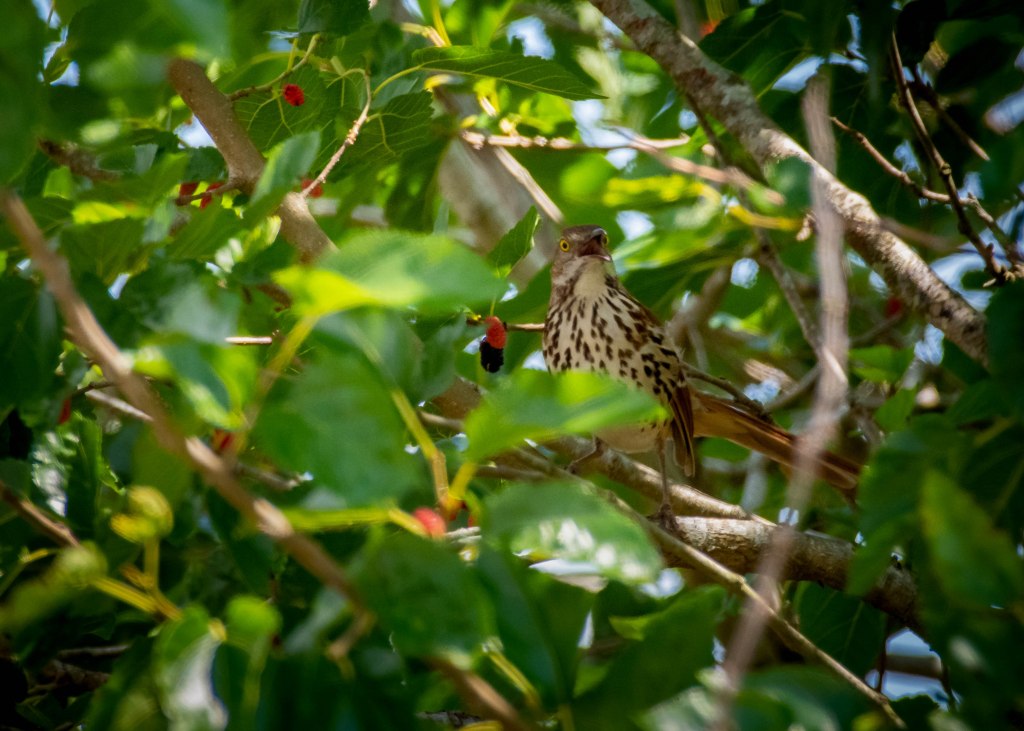
Sitting on a shady branch surrounded by juicy mulberries doesn’t sound like a bad way to spend a warm day. This Brown Thrasher, however, does not appear to be in a sharing mood!
I guess if you are brave enough to order a drink of nectar at the cactus bar, at least you won’t have to worry about much of a crowd disturbing you. This Cloudless Sulphur (Phoebis sennae) has no problems tip-toeing among the spines of a Pricklypear to find the blossoms.

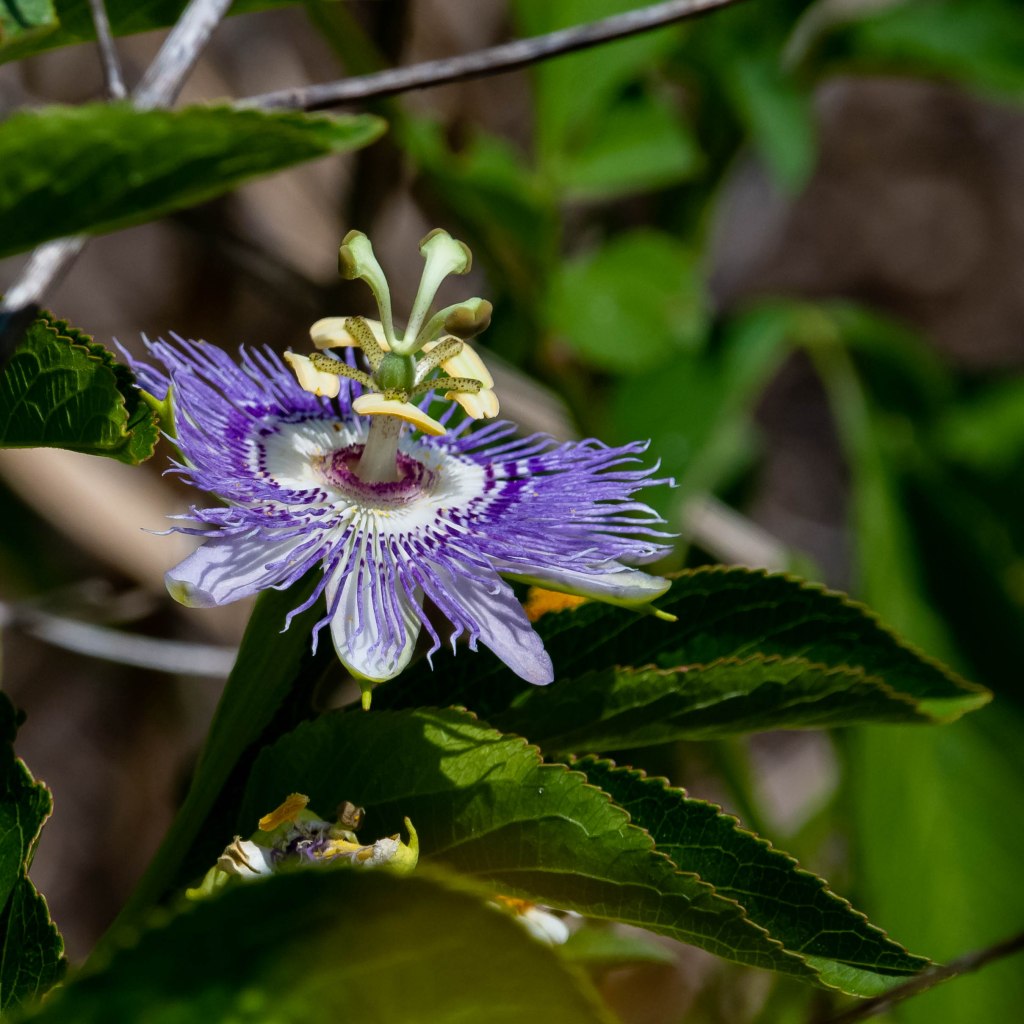
Lush foliage, pale green fruit and an alien-looking but fabulous flower describes the Purple Passionflower (Passiflora incarnata). They seem to be blooming all around us at present.
While scanning the sky for raptors, we found something completely unexpected. A U.S. Air Force C-130/Hercules flew low over our heads and even banked toward us as I snapped a few pictures. This particular aircraft is stationed at the 302nd Airlift Wing (Air Force Reserve) located at Peterson Space Force Base in Colorado. This cargo aircraft has been a workhorse for several decades. Recently, this plane helped fight a huge forest fire in Colorado by spraying tons of water over the burning trees. Aircraft from this unit provide “Hurricane Hunter” duties during the summer storm season.

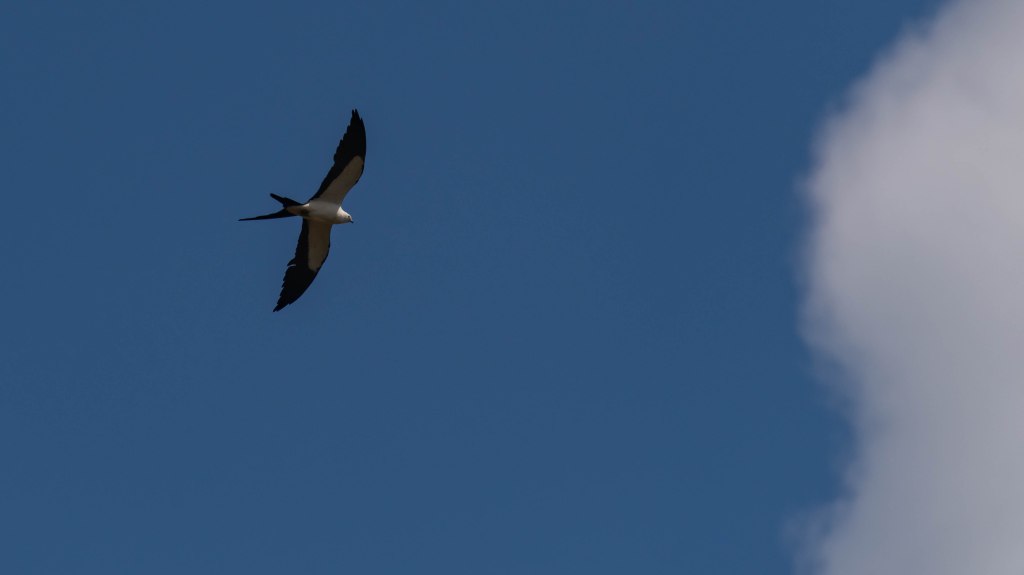
Moments after the C-130 had passed, a Swallow-tailed Kite put on an aerial show of her own for us.
What a day! We got lost at Lost Lake, escaped to the alphabet lakes and could have been rescued by a big metal Air Force Bird if we had needed it. All this enjoyment made Gini feel a little better about not being able to bring home her very own do-it-yourself alligator skeleton. She has almost stopped whimpering. Next time.
Enjoy your search for a natural place and come back for a visit!
 Our Natural Places