Header Image: Leavenworth’s Tickseed (Coreopsis leavenworthii)
It is hot.
It is humid.
It is summer.
It is Florida, a sub-tropical location.
We tend to arise early in order to be at our destination near sunrise. After a couple of hours, we return home.
It is hot.
Our pace during the summer is slower than in cooler months. This has advantages. Take our walk last week, for example. We spent about an hour-and-a-half along the trail but only traveled about a half-mile. Every few steps seemed to reveal something interesting. A bit of color in the distance required investigating beyond the marked trail. The rainy season has provided a wonderful diversity of life in the forest!
My resident math expert advises that if I would quit talking we could all realize a savings of over 30,000 words. Who am I to argue with arithmetic (not to mention SWMBO)?
(Yes, there are a lot of pictures. Not sorry.)


Along the path, we met a Fun-gi who introduced us to a few of his friends.


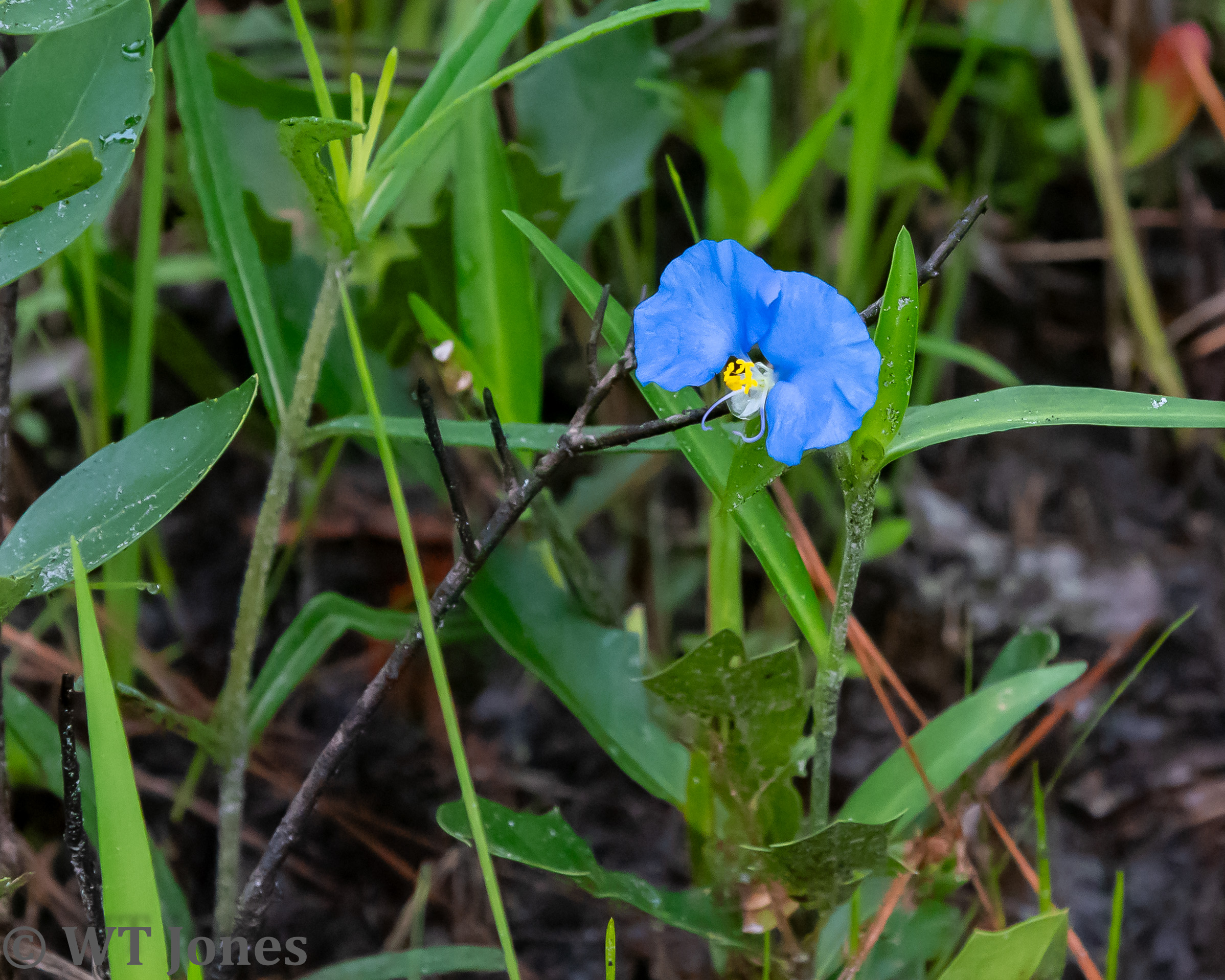


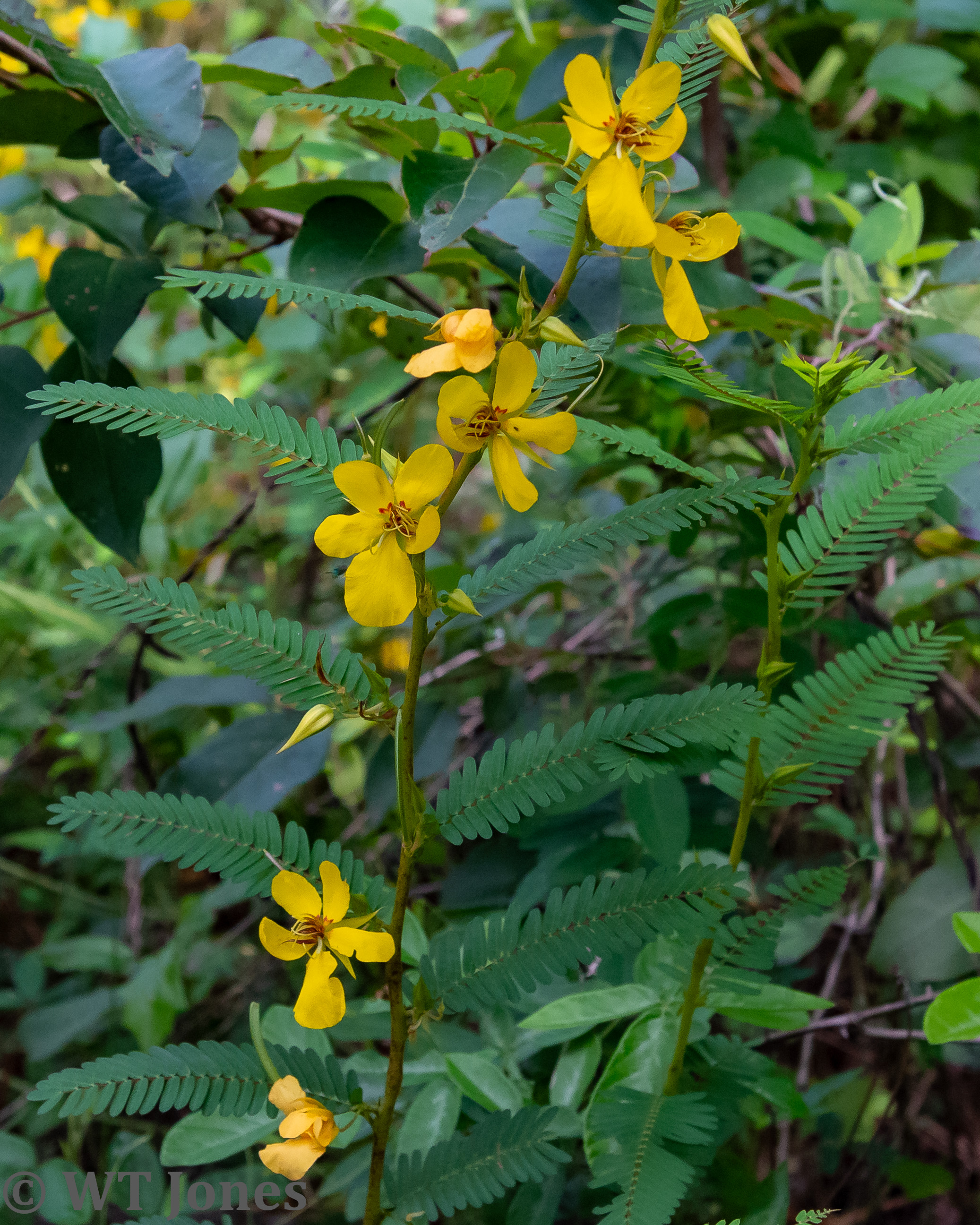


It is hot. Find a place that’s comfortable to walk and go early. Whether you stroll, saunter or (do as we do in the Deep South) sashay – slow down. You might be amazed at what you find!
Enjoy your search for a natural place and come back for a visit!
(UPDATED Site Note: By popular demand — images have reverted to a large size. Clicking on the images will still provide a detailed view from which one can zoom in. Other small site changes have been made and others are in the works. Please let us know if you have any issues or suggestions which will make your experience a better one.)
In the early mornings of our summer we celebrate the drops of dew as they shine like so many jewels scattered among the leaves of grass, clinging to flower petals and resting atop floating lily pads. Insects take awhile to become sufficiently dry before they can scurry or fly around to attend to their daily chore of survival. Humidity is like a blanket made of woolen steam and we wish for a whisper of a breeze to provide relief.
The good news is that all of our rainy season moisture infuses Nature with the properties necessary to generate and sustain life. Birds are now busy raising new families. The insect population is at its peak, which coincides with those new young birds learning how to feed themselves. Flower production is in overdrive in order to support the burgeoning bug crowd. The circle of life is in full swing.
We love it!
My alarm clock is named Gini. She gently nudges me in bed and lovingly whispers “want to go for a ride?”. Granola bars and fruit are tossed into a bag. Water tumblers are jammed with ice. We race the sun to our patch. Another glorious day has begun.
Bird activity is nothing like it will be when fall migration begins. Many birds remain quiet and inconspicuous as they may have young ones close at hand or may have begun their annual molt, during which time they are not as agile as normal and may be vulnerable to predators. We understand and don’t mind turning our attention to other natural subjects.
The morning was a bit shortened by an early thunderstorm. Our enjoyment had no limit.
An Anhinga found a handy perch from which to wait patiently for breakfast to swim along.

We enjoyed a bumper crop of American Lotus (Nelumbo lutea).


A well-camouflaged nest has done its job for this year as it provided a comfortable home for a new family of White-eyed Vireos.

Hiding among the lotus blooms was a deep purple Pickerelweed (Pontederia cordata). A favorite of pollinators everywhere.

Bright daisy-like flowers adjacent to the pine woods turned out to be Prairie Fleabane (Erigeron strigosus). Many of the plants were over three feet tall.

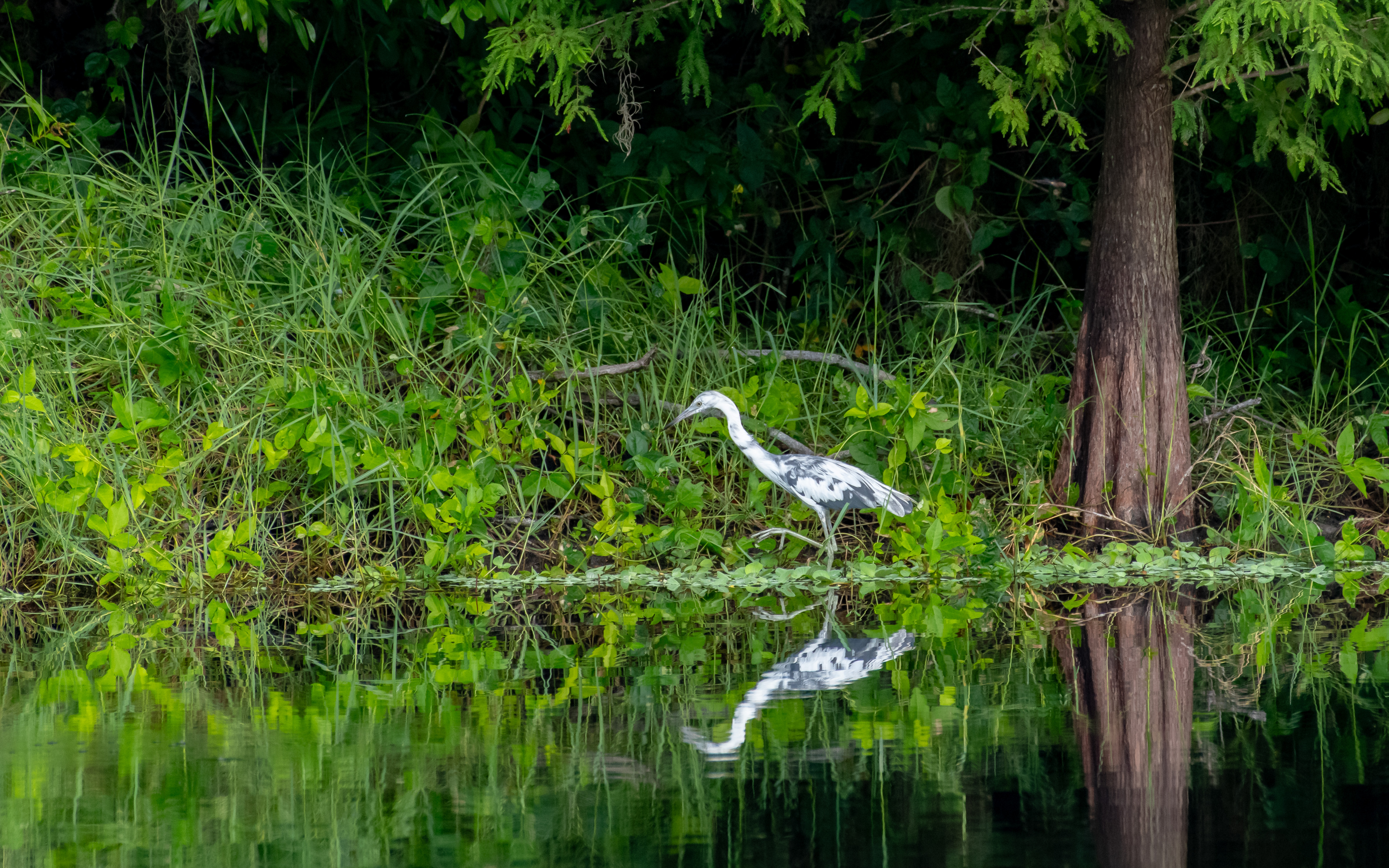
During their first year, Little Blue Herons are white, turning into a combination of blue/gray/white as the year progresses and eventually into the slate blue of an adult as they begin their second year.
Florida lists 29 species of plants in the genus Ipomoea, which includes the Morning Glory. This one is known as Man-of-the-Earth (Ipomoea pandurata) and is also called Wild Potato, Wild Sweet Potato and Manroot. By any name, a beautiful flower!

Our early morning summer explorations continue to be absolutely fabulous! There is just so much to see and experience that our senses are easily overwhelmed. Yes, it’s hot. As long as we’re able, though, we shall continue to linger “in the golden gleam”*.
Enjoy your search for a natural place and come back for a visit!
*The title of today’s post is from a poem by Lewis Carroll. A Boat Beneath a Sunny Sky. https://www.poetryfoundation.org/poems/43907/a-boat-beneath-a-sunny-sky
Header Image: Coreopsis
I think Gini should have become a television meteorologist in Florida. She looks good, knows how to use her pointer finger (as a weapon, at times) and can enunciate “mostly cloudy” better than most. The ability to be correct 50% of the time is way below her lifetime average of 100%. Instead of all that fame, glory and untold wealth, she chose a life with – me.
I continue to be the luckiest man in the universe.
Summer in Florida can be like living within a steam room from which there is no escape. The rains come according to nature’s long-established schedule. Some years there is more rain than others. On average, the Sunshine State receives over 50 inches of rain each year. With all that watering of the landscape, our forests, fields and swamps become a lush paradise for living organisms of all sorts. As usual, some human organisms are not all that thrilled.
We really do appreciate the efforts of the New York born engineer who has been credited with inventing modern air-conditioning, Willis Carrier, even though a Floridian, Dr. John Gorrie, beat him to it by 50 years. (https://fcit.usf.edu/florida/lessons/gorrie/gorrie.htm)
At this time of year, we celebrate the fact we can escape nature’s steam room for the cool comfort of the living room, no matter who invented it!
Lush and diverse has been an understatement in our recent explorations. Each day I’m conflicted as to which equipment to carry down the trail. Long lens (a bird! a deer!); wide-angle lens (flowers! landscapes!); macro lens (small flowers! bugs!). Alas, I have learned the hard way that I can no longer carry it all. One lens and hope I guess right.
Today we visited nearby Colt Creek State Park. It sits on the edge of the vast Green Swamp and is filled with pine woods, cypress domes, open fields, creeks, lakes and, most of all – Nature!
Come on along! The air-conditioning will wait patiently for your return.
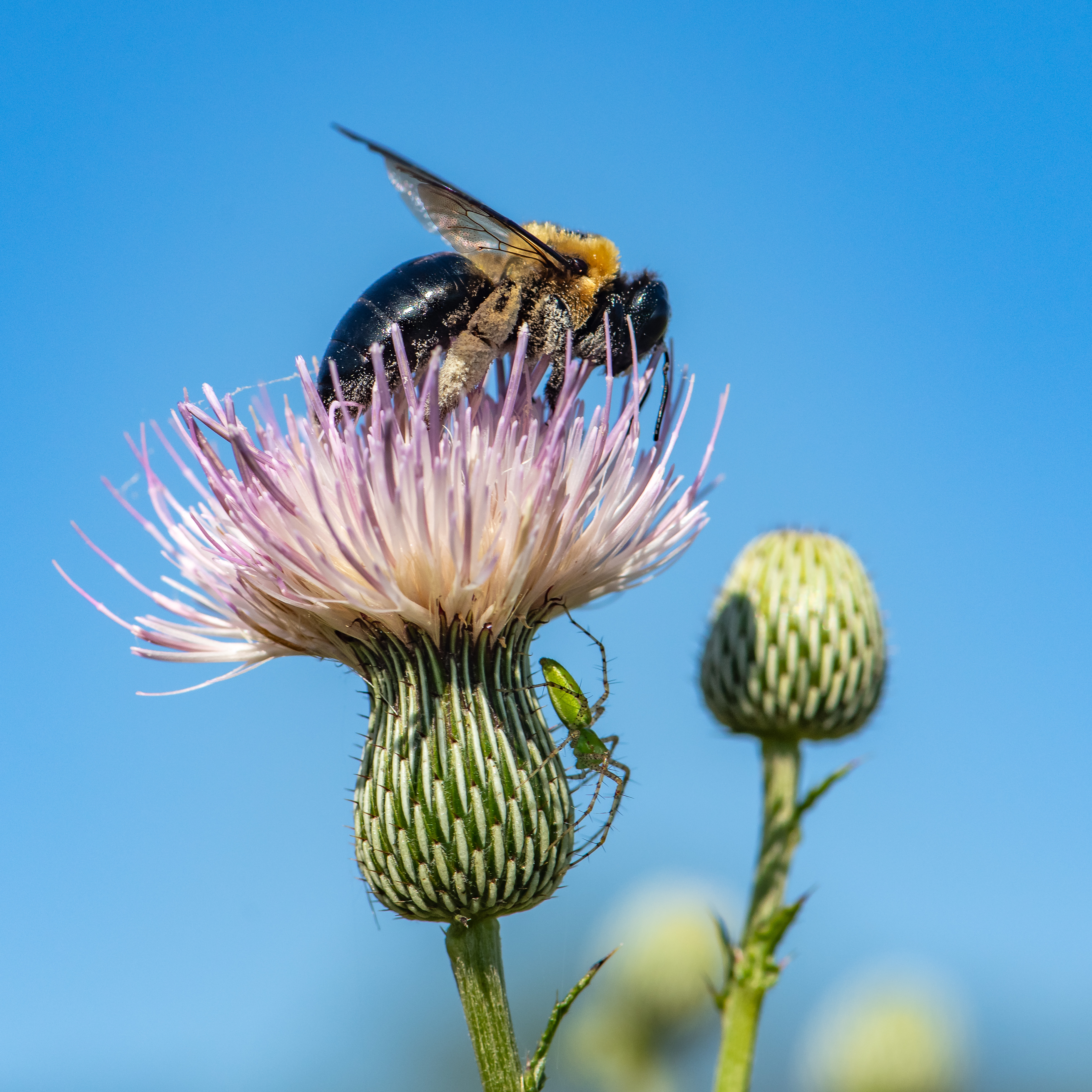
Three-fer! Eastern Carpenter Bee (Xylocopa virginica) and Green Lynx Spider (Peucetia viridans) on Nuttall’s Thistle (Cirsium nuttallii). Pretty sure the lovely Ms. Lynx was about to pounce but Mr. Carpenter had somewhere else to Bee and buzzed away unharmed. This time.
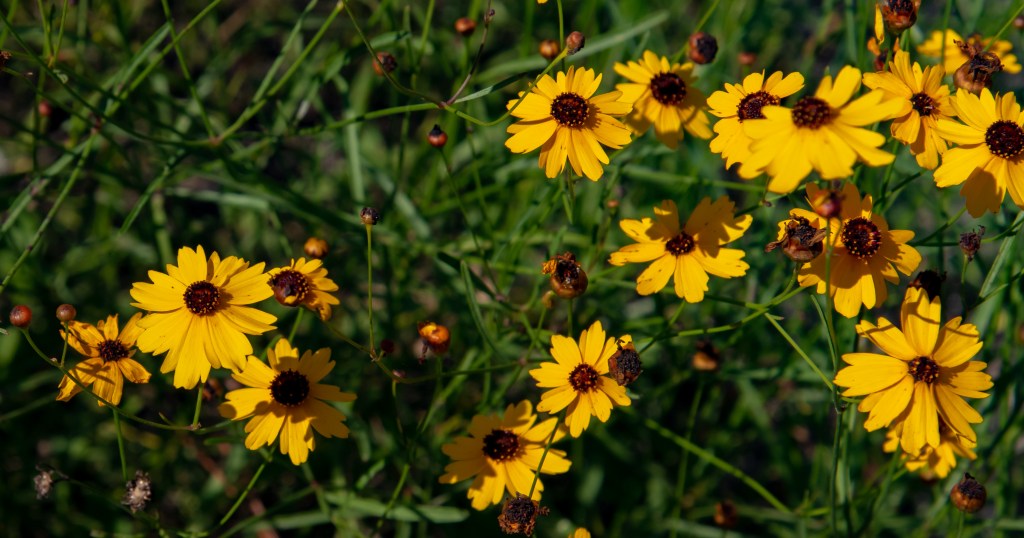
Forest edges are overflowing with flowers. One of the most abundant here is Leavenworth’s Tickseed (Coreopsis leavenworthii). There are 15 species of Coreopsis listed for Florida and the group is so attractive the powers-that-be decided to make the whole genus our Sate Wildflower.
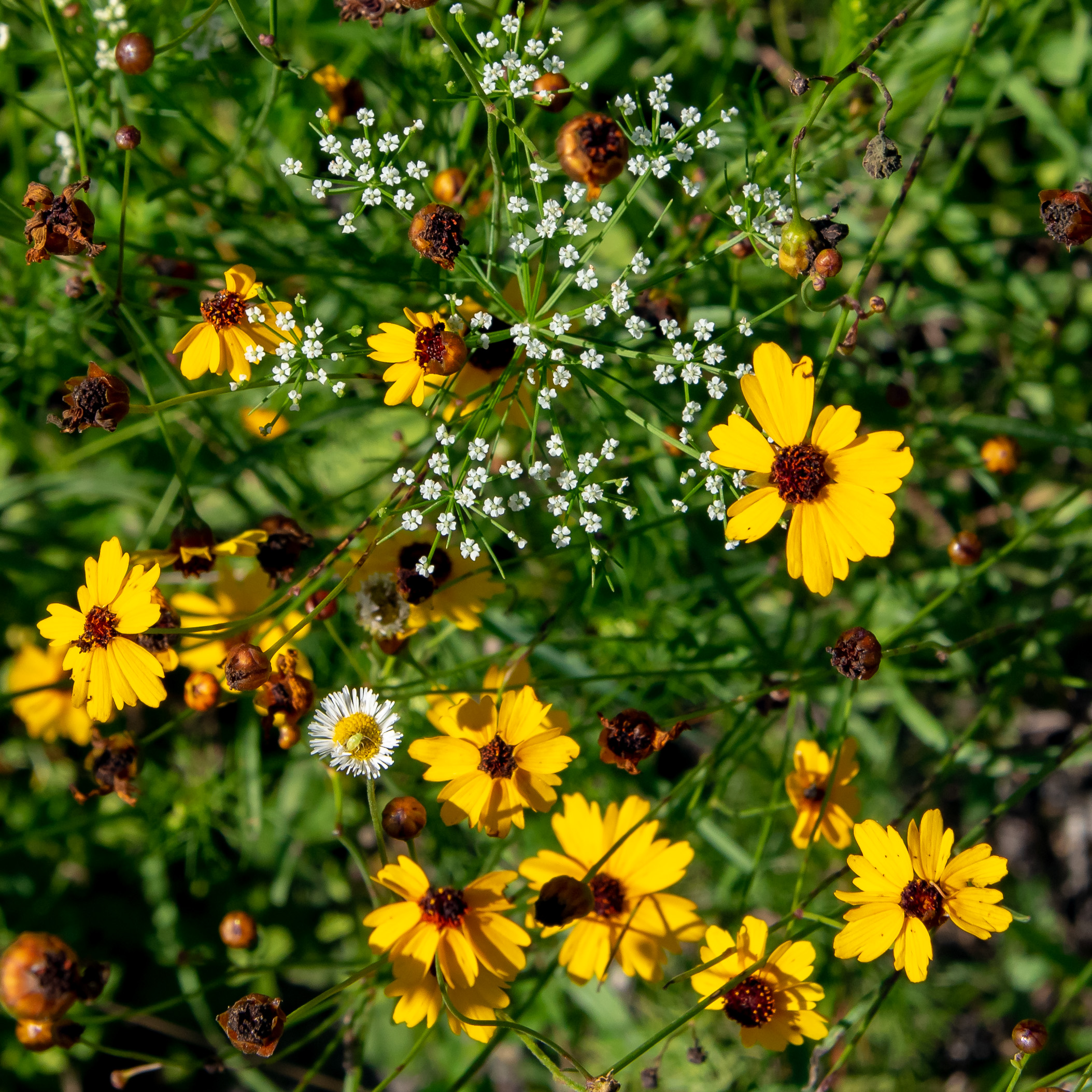
This group includes: Leavenworth’s Tickseed (Coreopsis leavenworthii), Mock Bishop’s Weed (Ptilimnium capillaceum) and Oakleaf Fleabane (Erigeron quercifolius).
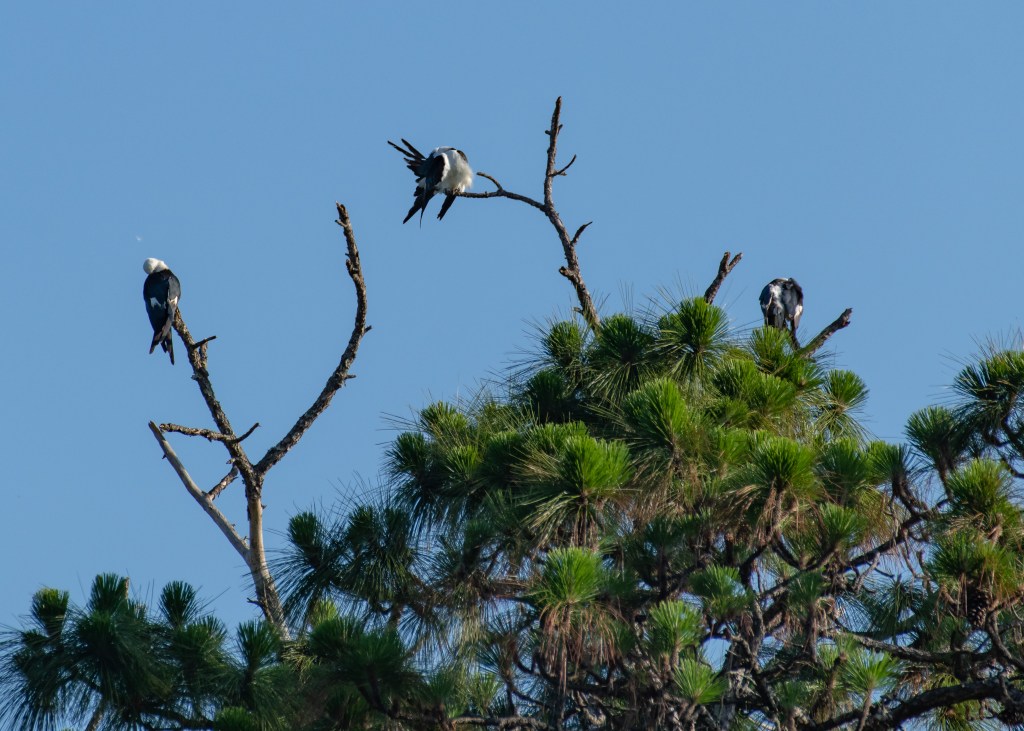
Sleepy Swallow-tailed Kites were just waking up and preening. They typically wait for the morning air to warm and create rising thermals which the sleek raptors use for soaring as they hunt for flying insects, frogs, lizards and snakes.
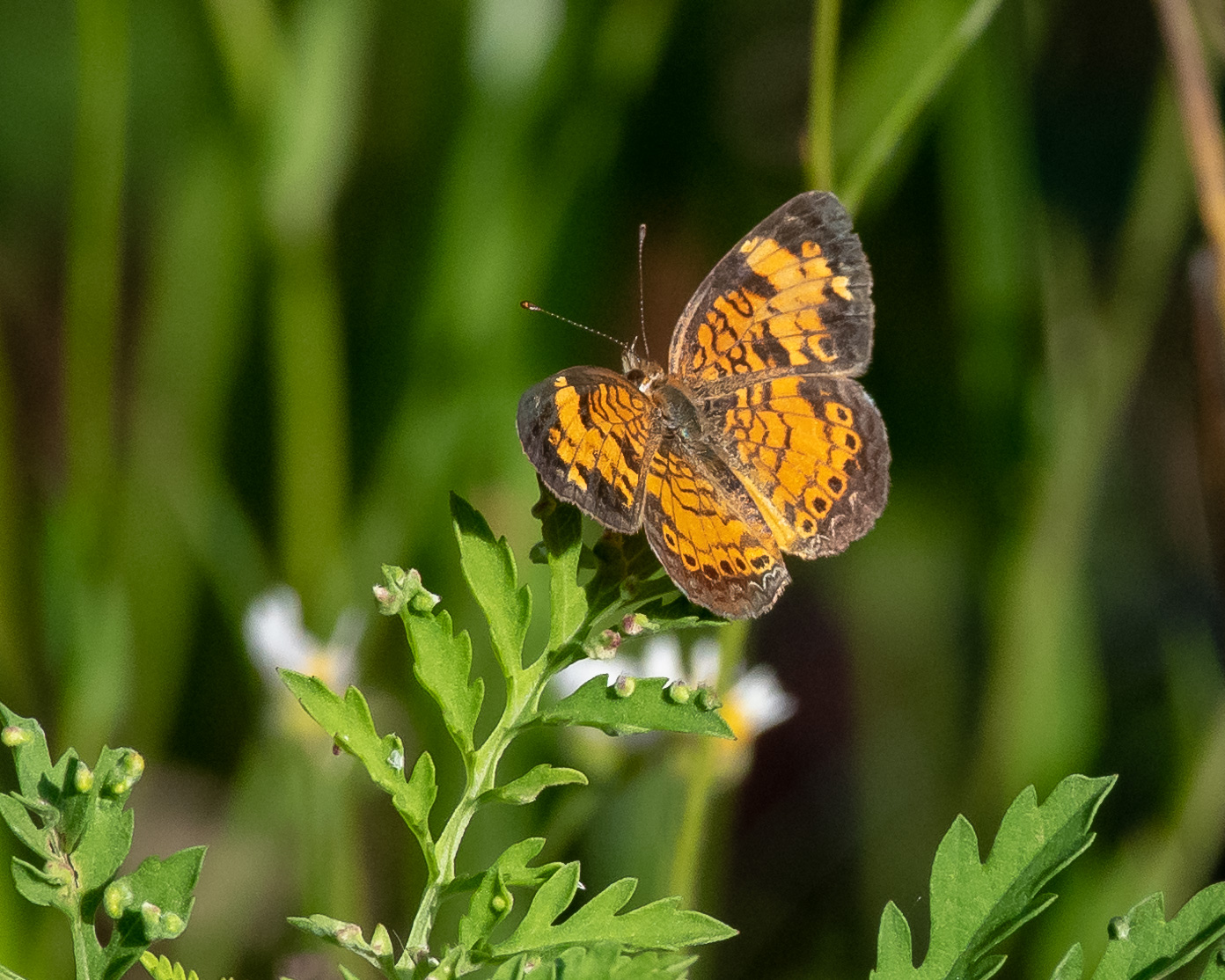
Two similar-looking butterflies of the Brushfoot family are equally attractive.
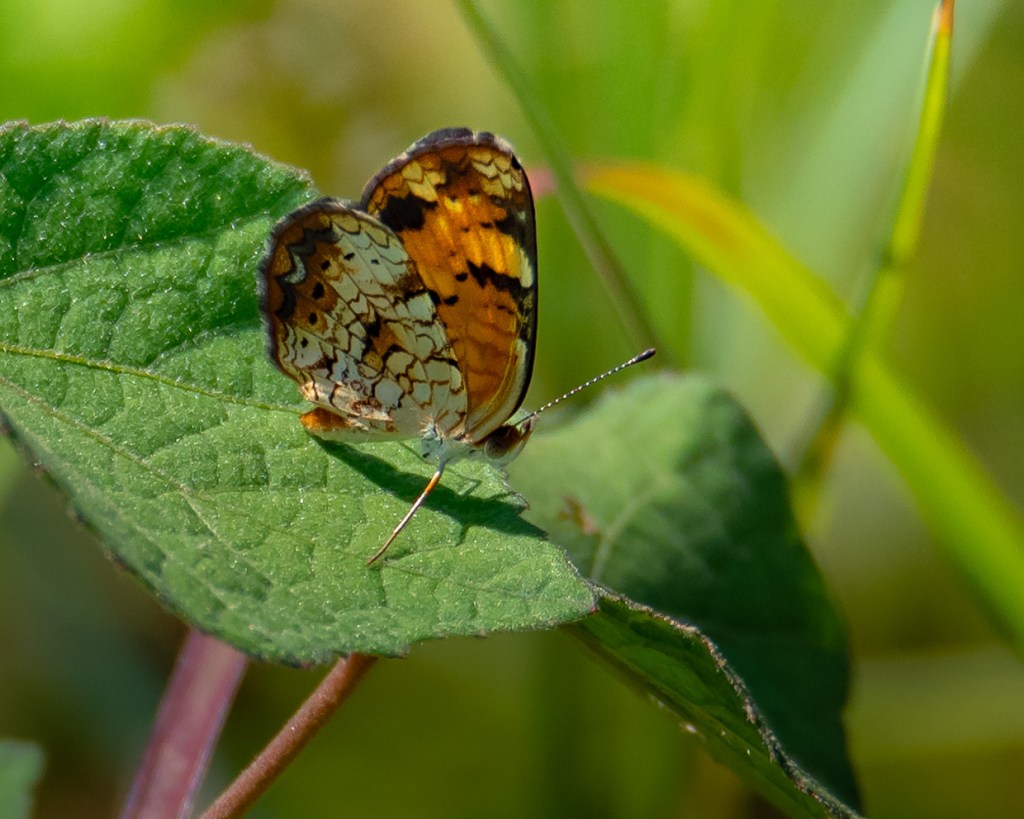
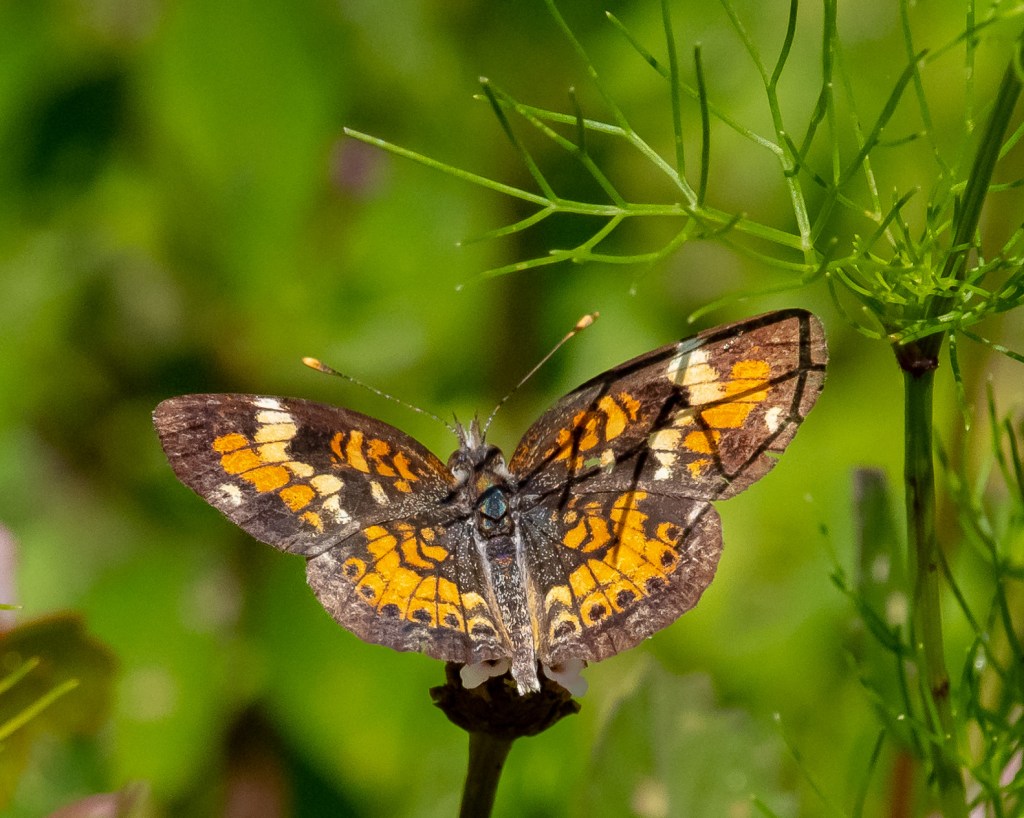
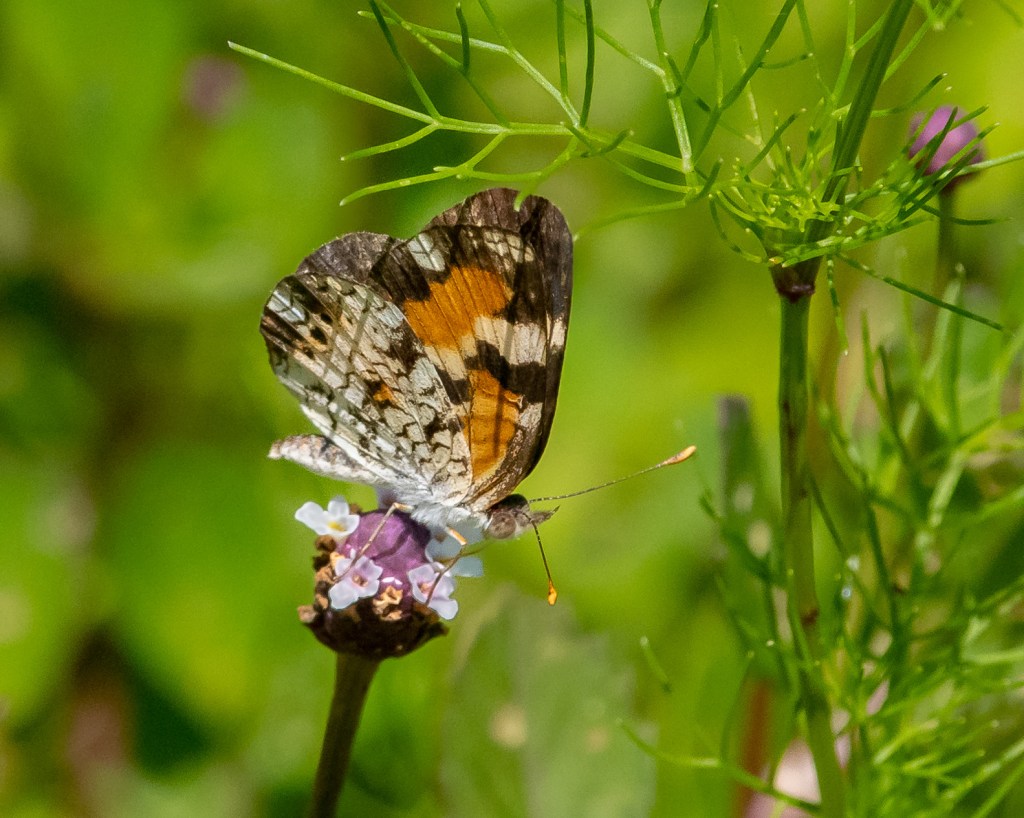
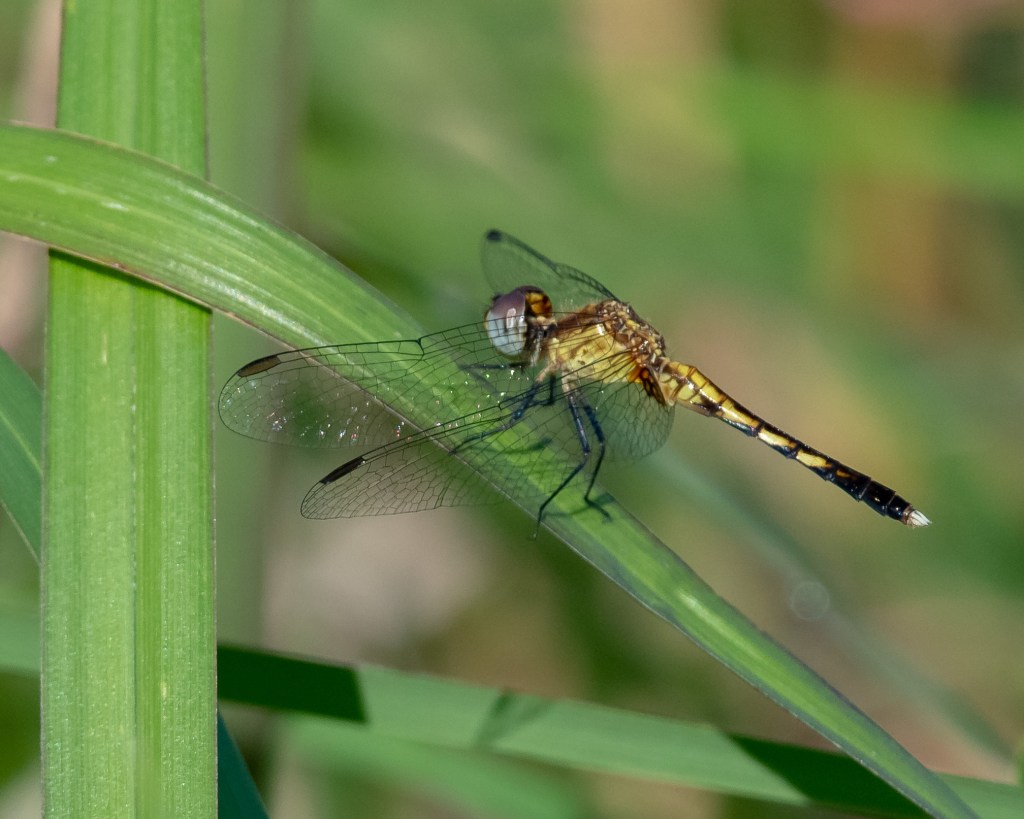
Almost as small as some damselflies, a Little Blue Dragonlet (Erythrodiplax minuscula) flew up in front of me or else I might have walked right past. This immature male has the same appearance as a female but will soon develop the overall powdery blue of an adult.
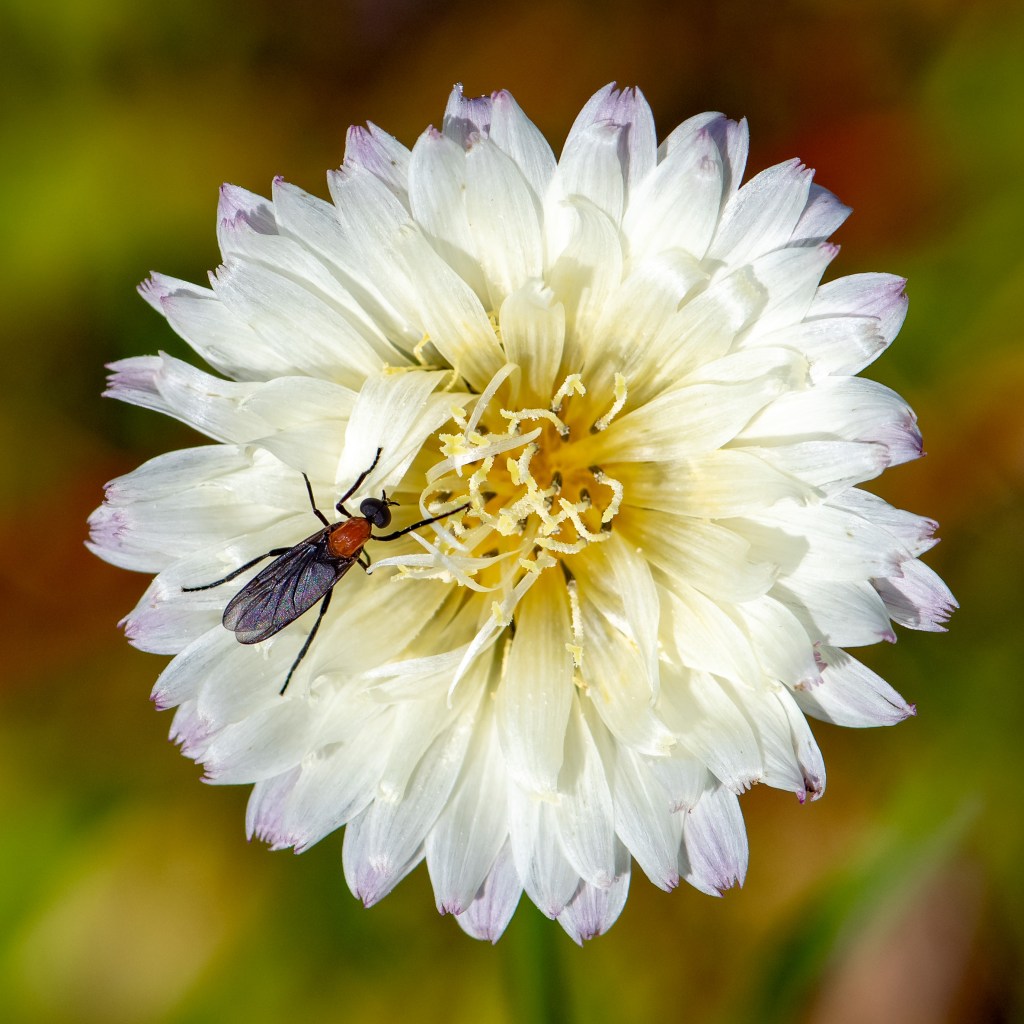
Two of my favorites in one photograph! Lovebug (Plecia nearctica) on Carolina Desert-chicory (Pyrrhopappus carolinianus). Okay, maybe one of these (hint, it’s the fly) is probably our least favorite summer resident. Scraping millions of them from the car, along with the paint, is not pleasant.
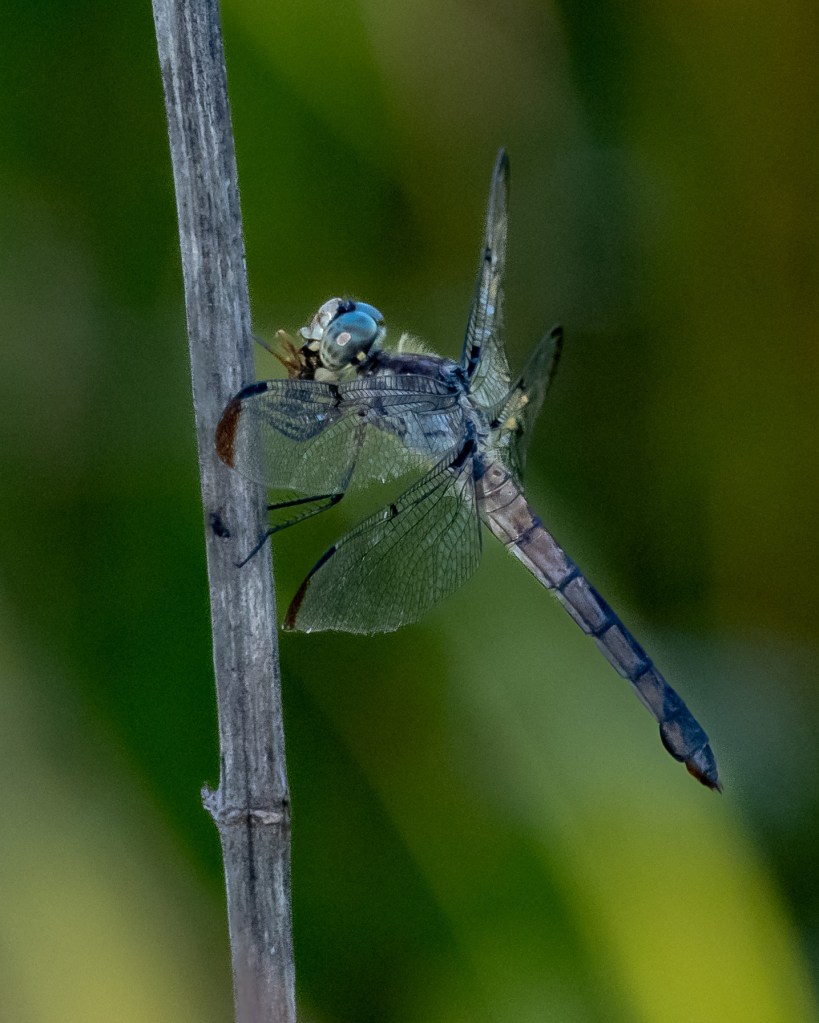
A female Great Blue Skimmer (Libellula vibrans) enjoys a morning snack.
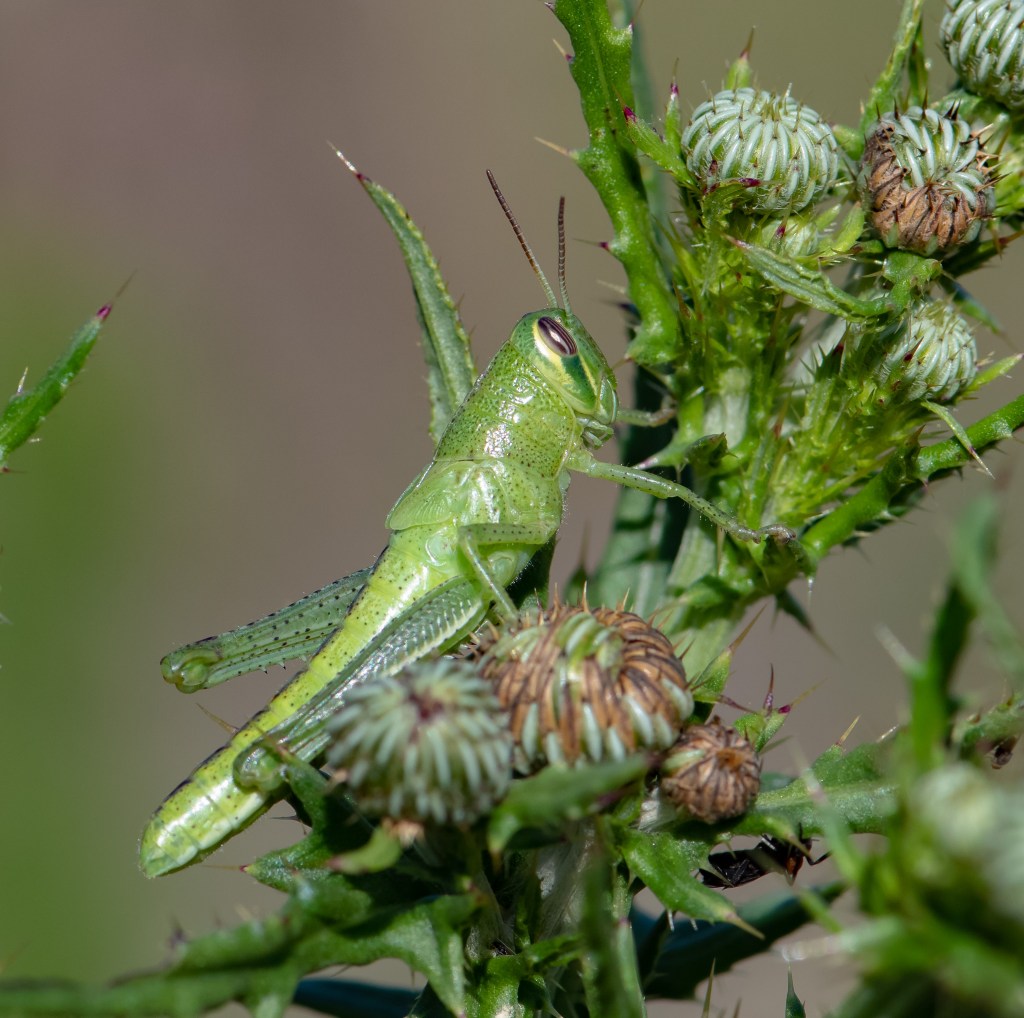
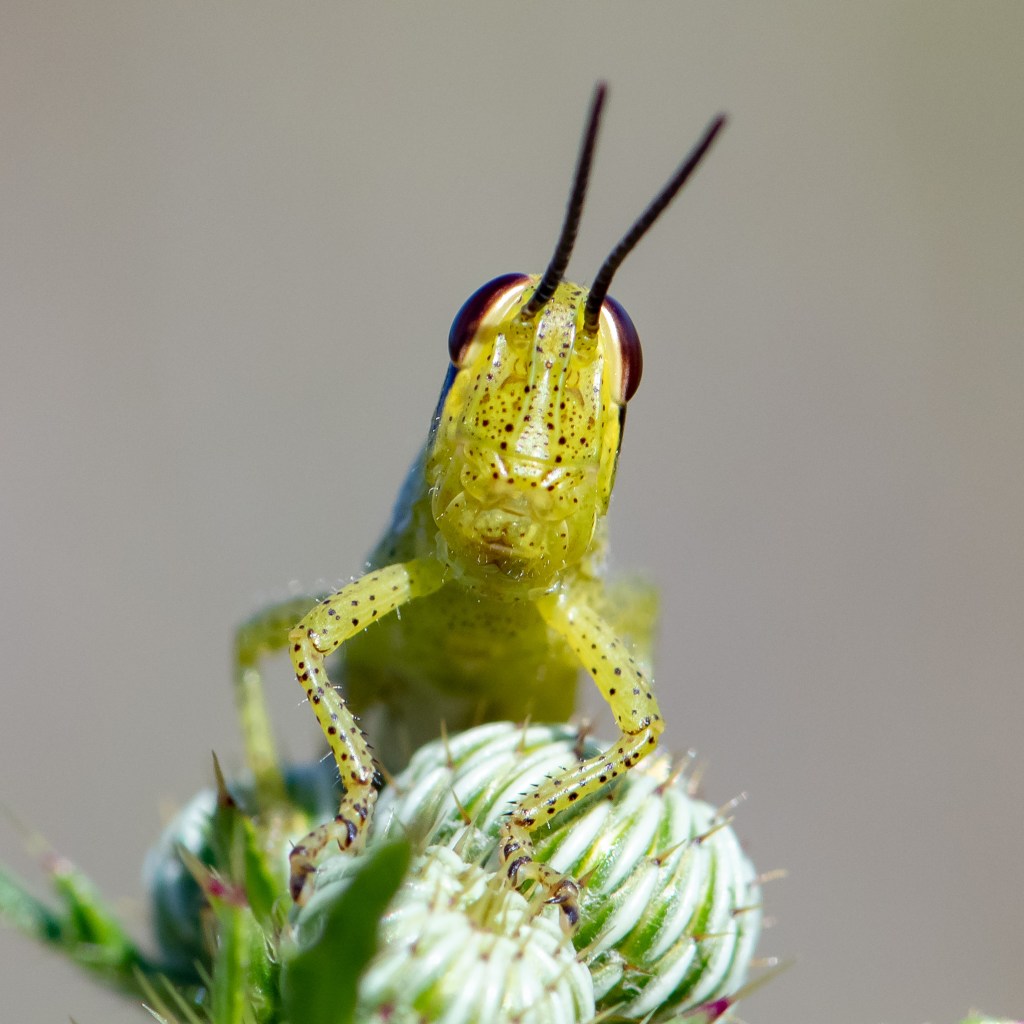
All-green helps young nymphs of the American Bird Grasshopper (Schistocerca americana) blend in with green leaves so they have a chance of surviving the many would-be predators looking for them.
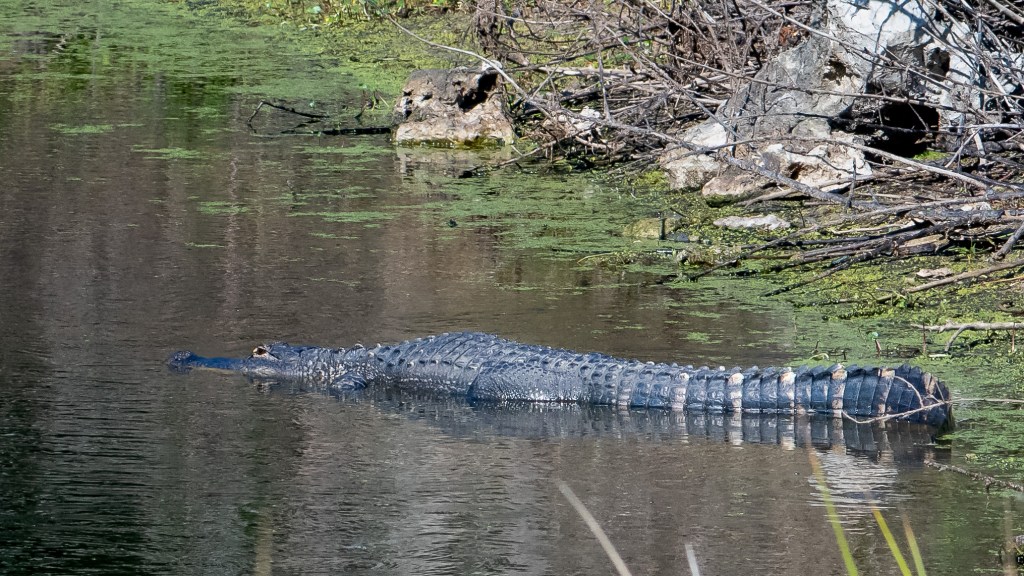
A post without an alligator is like a summer day without humidity.
Mid-morning and the thermals support the Swallow-tailed Kites as they begin their day of hunting. This one found a frog for brunch.

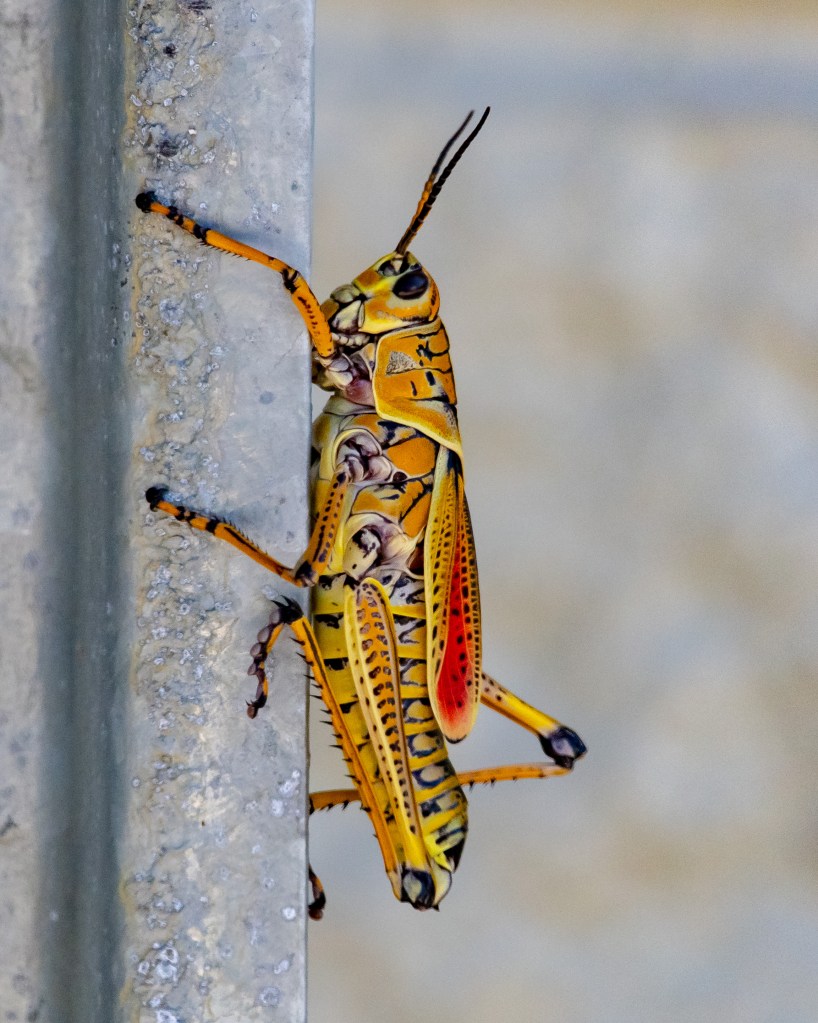
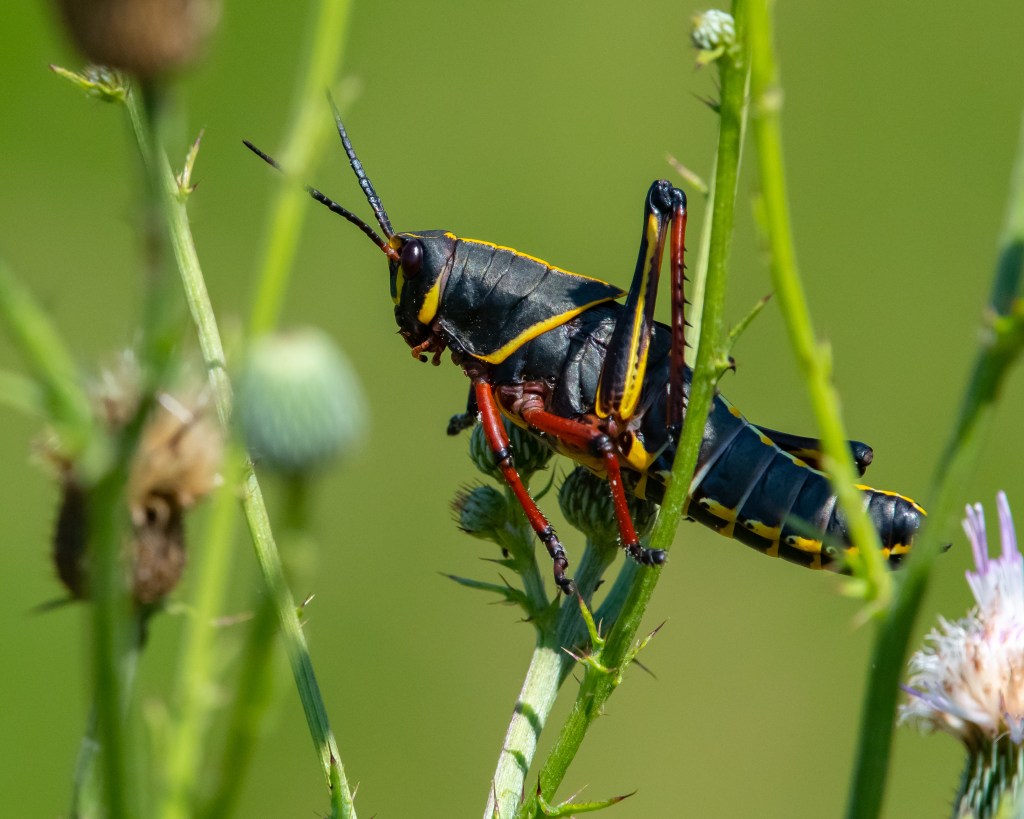
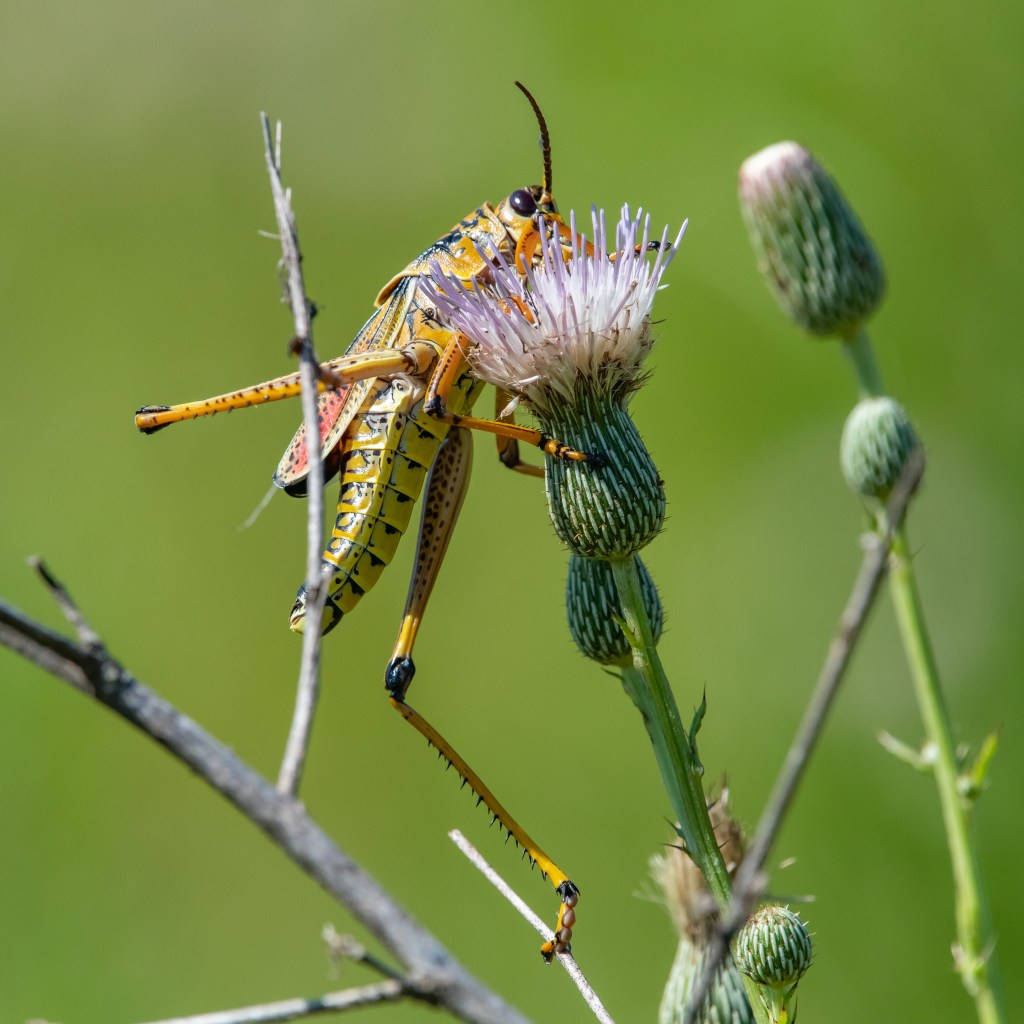
Big. Colorful. That sums up our Eastern Lubber Grasshopper, (Romalea microptera). On the way to becoming an adult, they are mostly black.
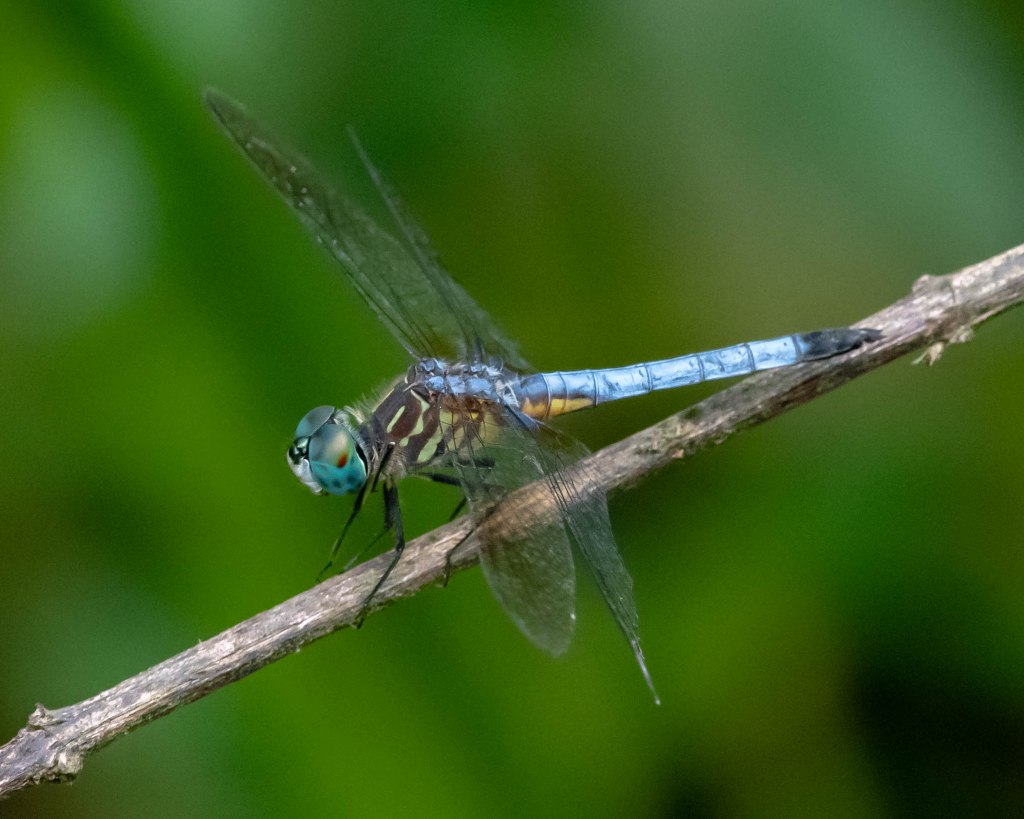
Even though they are fairly abundant, we love spotting the small and colorful Blue Dasher (Pachydiplax longipennis). As with many dragonflies, male and female are different in appearance.
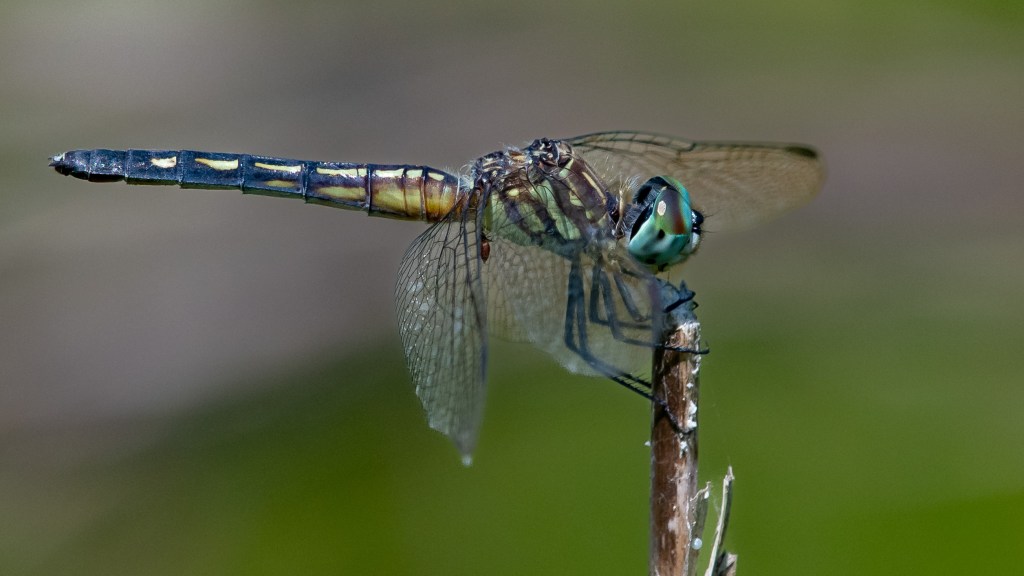
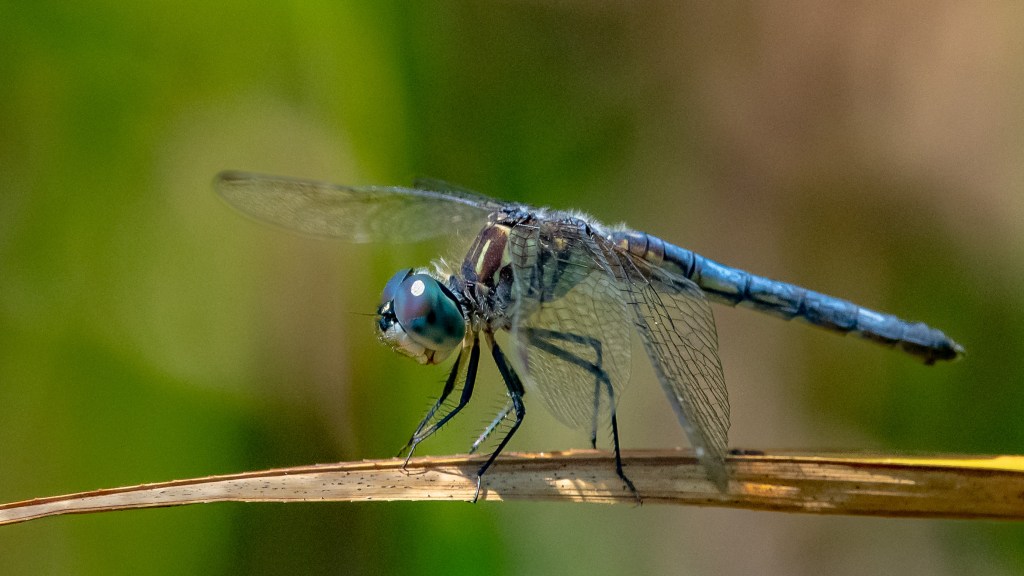
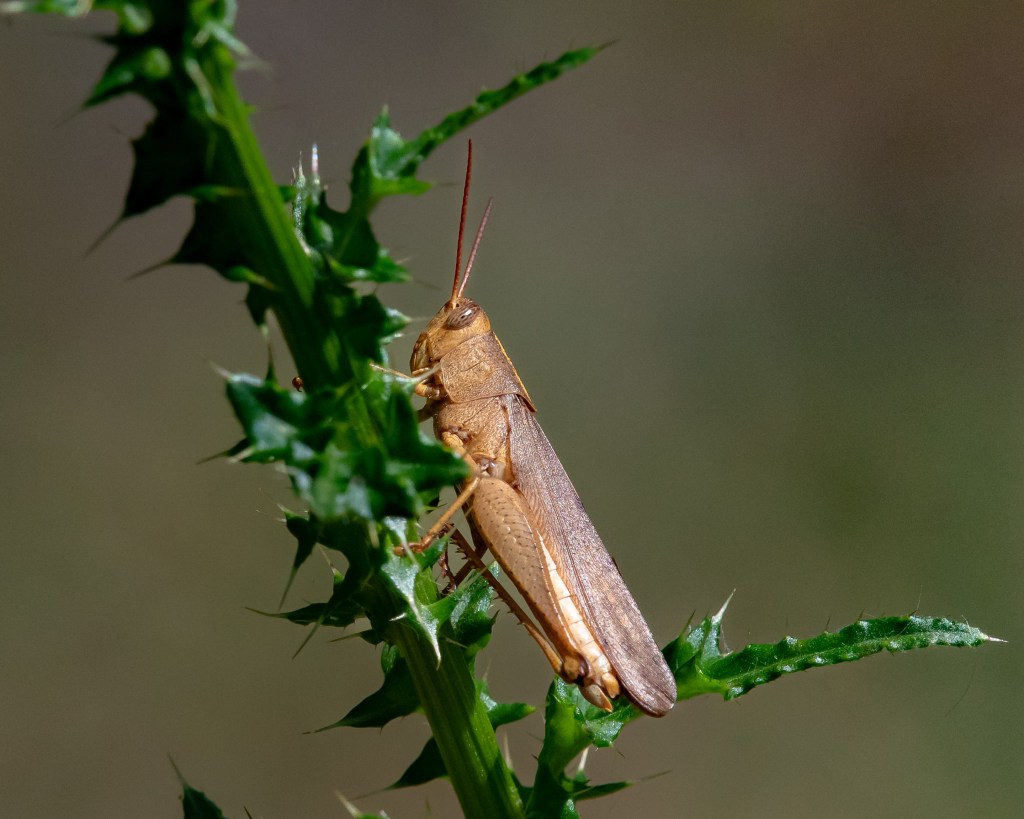
All brown can be beautiful. And those eyes! Mischievous Bird Grasshopper (Schistocerca damnifica).
‘Tis the rainy season in Florida. Big drops of water become torrents, rumbling dark clouds move across the peninsula right on Nature’s schedule, lightning illuminates even the mid-day skies – and we love it! Yes, we get hot and sticky and can’t wait to return to the comfort offered by modern air conditioning. But the diverse offerings of our natural world keep us coming back for more.
Enjoy your search for a natural place and come back for a visit!
Header Image: Green Anole (Anolis carolinensis)
Why does a plain boiled egg taste better when consumed under the branches of a huge oak tree in the middle of a forest where no sound of man can be heard?
Following our wading bird extravaganza as we paused at one end of the old bridge over the Little Withlacoochee River, we found a nice clearing for brunch just beyond the other end. Lush Resurrection Fern (Pleopeltis polypodioides) adorned almost every tree branch in sight. From the depths of the woods around us came the songs of Northern Parula, Carolina Chickadee, Tufted Titmouse, Common Ground Dove, Downy and Red-bellied Woodpecker and a White-eyed Vireo who didn’t stop calling the whole time.
We drove along old logging roads about a dozen miles, stopping often to walk a bit down trails, examine small creeks and to admire flowers as well as the pollinators visiting them. A lazy morning which ended all too quickly. If I was a better naturalist, I could talk about how there was a visible difference as we passed through changing habitat. Standing water, damp ground above water, sand, mounds which may have been man-made, diverse plant communities signifying the various ecosystems.
Instead, I just enjoyed being with Gini for an outing. Science shall have to wait. There are birds to hear, flowers to smell and bugs to chase. We are content.
Just as we reached the opposite end of the bridge, a lone Climbing Aster (Symphyotrichum carolinianum) bloom poked above the bridge railing. Investigation revealed a few more blooms hiding in the shadows under the bridge. This plant has vine-like tendencies but has no tendrils. Instead, it relies on other structures such as trees or a bridge for support. Although it blooms all year, peak season is autumn.

Even one-legged grasshoppers enjoy the beautiful Trumpet Creeper (Campsis radicans) blooms. I think this may be an Atlantic Grasshopper (Paroxya atlantica), but would love any correction to my guess.

Crinkly lavender petals dotted several areas of the open forest. Wild Petunia (Ruellia caroliniensis) is actually a member of the nightshade family. Along with a thirsty hoverfly, we don’t care what it’s called. It’s absolutely lovely.

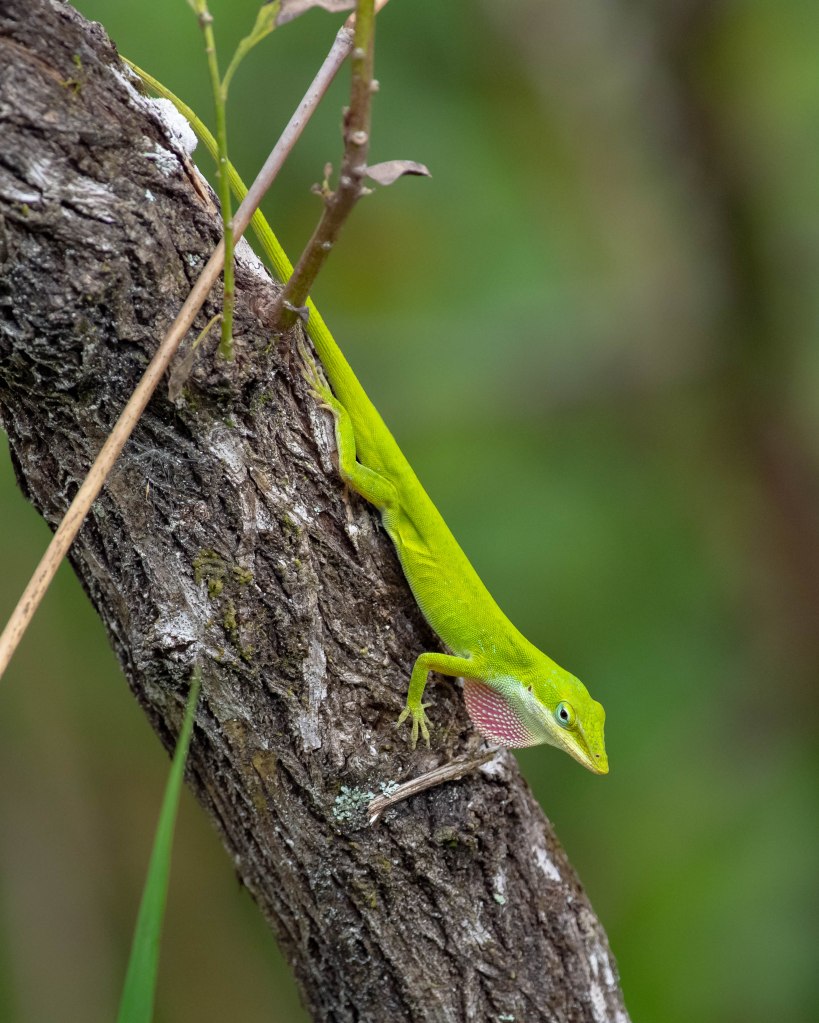
For several years, scientists were concerned the population of native Green Anoles (Anolis carolinensis) was being impacted by the invasive Brown Anole (Anolis sagrei). Further research is needed, but it appears the smart native lizards change their habits when the invaders show up. It’s believed they simply move higher in the tree canopies where the visitors don’t frequent. Time will tell. (Please – don’t release any non-native species into the wild. Plant or animal.)
A tall plant with little yellow “bells” grabbed Gini’s attention. We found four specimens of Yellow Colicroot (Aletris lutea). Although a common species, we don’t recall ever seeing one. Most of the plants were nearly three feet tall.


We saw quite a few dragonflies during the morning. Most, as usual, were camera shy. This Blue Dasher (Pachydiplax longipennis) took pity on us and allowed a portrait.
The Northern Parula is an abundant woodland warbler which breeds in Florida. Males, such as this one, have a distinct dark blue/black and orange band across their breast.

An attractive plant with a not-so-attractive common name, the Tarflower (Bejaria racemosa) is an abundant sight in our summer pine forests. These plants can grow in excess of eight feet tall and nearly as wide. That common name is a result of much of the plant, especially the flowers, having a very sticky substance which is as strong as commercial flypaper. Insects can be trapped in the sticky stuff but the plant is not insectivorous. Botanists believe the Tarflower uses a defense system to keep hungry bugs from damaging or destroying it. Tricky business for pollinators to navigate in and out of the pretty and aromatic blooms!


One of our largest dark butterflies is the Palamedes Swallowtail (Pterourus palamedes). Several butterfly species can be observed appearing to “drink” from sand or mud. They apparently are extracting mineral nutrients in this manner.

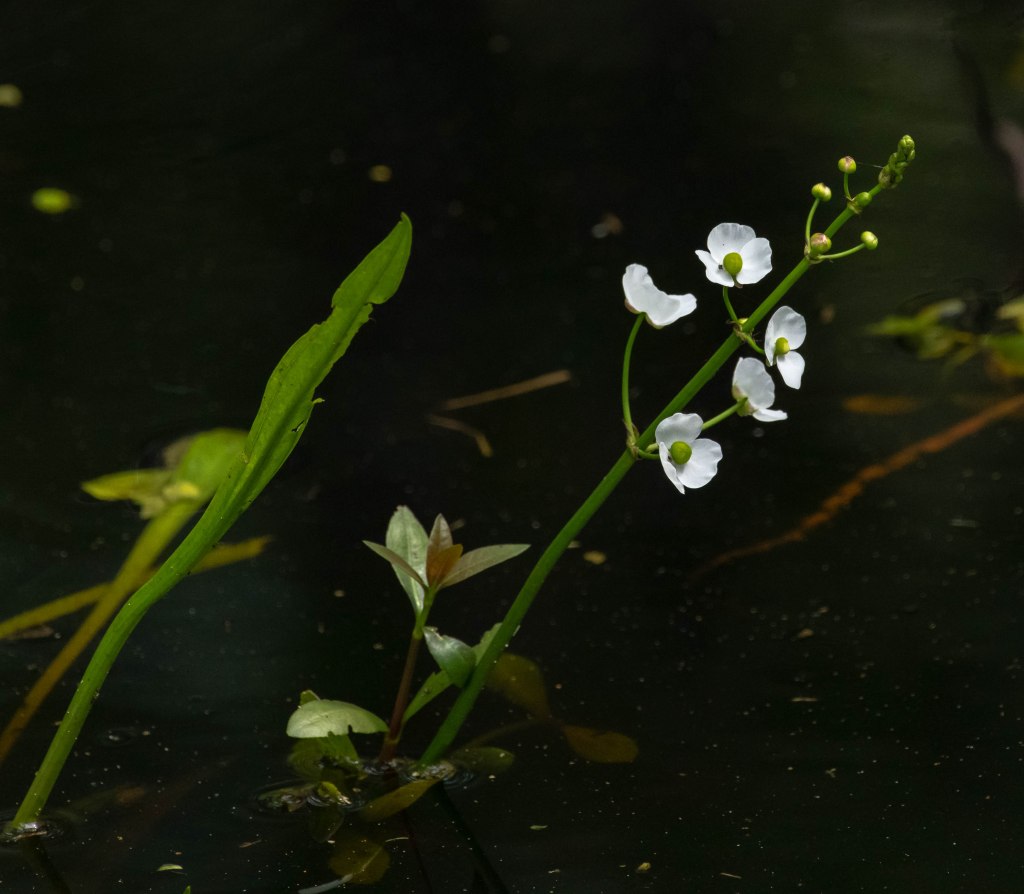
Abundant in our many lakes, we were a bit surprised to see Bulltongue Arrowhead (Sagittaria lancifolia) rising from a very small woodland pool which was in a spot that would seem to receive little sunshine.
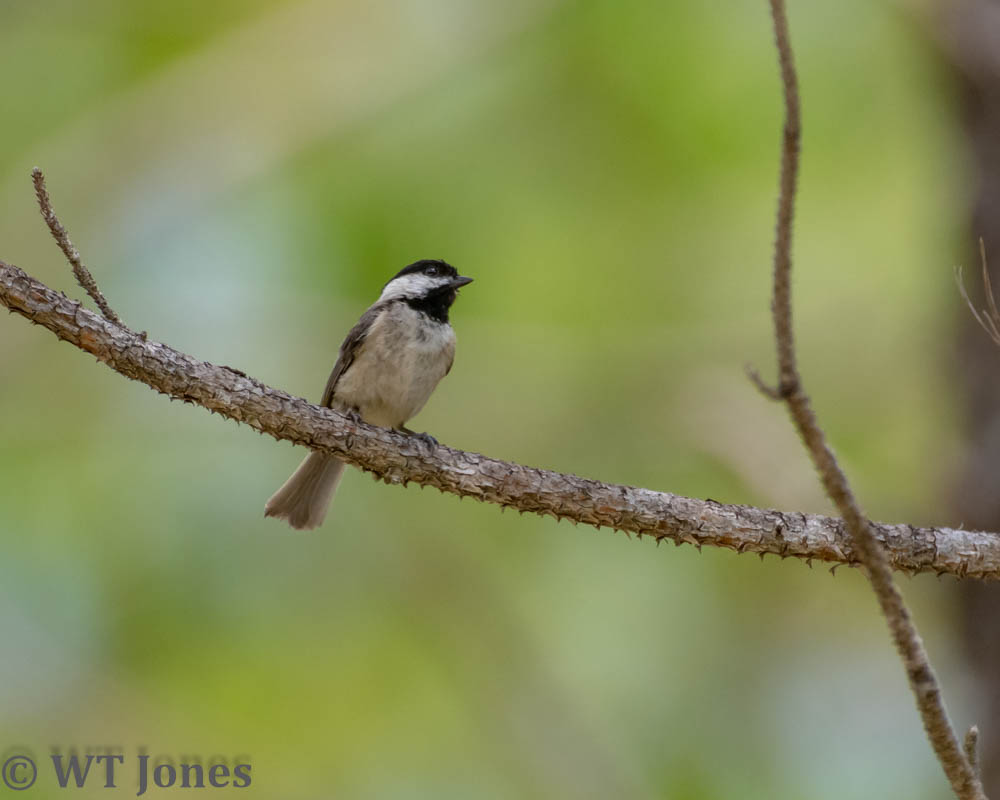
Small with a feisty attitude, the little Carolina Chickadee is usually curious, loudly so, about any visitors to their neighborhood. These small beauties breed throughout our area.
Several patches of bright Blackeyed Susan (Rudbeckia hirta) looked like spots of golden sunshine throughout the forest and along the road.

On the way out of the forest, a stop at a primitive campground facility gave us a chance to see a Green Treefrog (Hyla cinerea). He may need to re-think his choice of resting spots as he didn’t exactly blend in with the gray metal.

Florida’s swamp and forest locales offer so many opportunities to observe our natural world. Today’s excursion began with a gaggle of wading birds, continued across a bridge into a shady hardwood hammock and concluded with myriad flowers displayed in the understory. Not to mention a froggy farewell!
Enjoy your search for a natural place and come back for a visit!
Header Image: Wood Stork
When it comes to exploring natural places, we are easily pleased. Throughout our incredible life together, Gini has always been one to find exuberance in being outdoors. “Let’s just get out of the house for awhile.” It has been a common refrain. Actually discovering some new bird or bloom or bug puts our joy over the top. Our mutual love of nature is, I think, an extension of our mutual love for each other. (Don’t tell her I got all mushy here.)
Summer in Florida is hot and humid. Much of my memory is fading but I vividly recall dancing in the yard in July as the sprinklers tried to keep the grass from becoming crispy. That was over six decades ago. Summer then was hot. Summer now is hot. My Dad was addicted to fishing, a trait I inherited. During the summer months, he would say “We’ll go early, catch a mess for dinner and get off the water before it starts to boil.”. (For the benefit of anyone who may need a translation, “mess” in this sense would be enough for supper.)
Gini and I use the same strategy in our search for natural places in the summer. We head out into the dark hours of pre-dawn and (much of the time) call it quits by mid-morning. As luck would have it, much of nature’s activity coincides with our schedule.
Today’s ramble took place within the Withlacoochee State Forest, so named because the Withlacoochee and Little Withlacoochee Rivers traverse the area. This part of the state forest is located within the vast Green Swamp. In addition to pine woods, there are many hammocks, slightly drier areas in the swamp where hardwood trees (mostly oaks) thrive. The big trees produce fairly dense canopies and the understory flora and fauna can be different than that found in the relatively open pine woods. Of course, with two rivers and many small creeks there are plenty of wet places to remind us we’re in a swamp.
An old wooden bridge over the Little Withlacoochee River provided quite a bit of entertainment this morning. Large wading birds were feasting on fish and frogs plucked from shallow weed-covered water. Several varieties of flowers were in bloom which attracted myriad nectar-loving insects. Barred Owls called in the distance.
Later, we’ll see what’s beyond the bridge. For now – – –
An Anhinga sings its lovely morning song welcoming us to the forest. Okay, the very last thing one could say about the Anhinga’s voice is that it’s “lovely”. A loud, scratchy “awwwkk” is more like it.

Epiphytes love all the trees here since they can’t exist without a suitable host plant. Although not parasitic, they need the structure of the trees for support. I think this is Bartram’s Airplant (Tillandsia bartramii) who finds a fallen tree just as suitable as one standing.

A Great Blue Heron rests near the river between hunting trips.

Damsels in the grass. It’s easy to overlook these small jewels and that would be a shame. The Familiar Bluet (Enallagma civile) may be tiny but she sure is bright!

There are about 30 species of Ludwigia in Florida. In that group are a couple of non-native species, such as this Peruvian Primrose-willow (Ludwigia peruviana). While I was snapping a picture of the flower, a Bumblebee (Bombus species) needed a drink. “Photo-Bombus”.


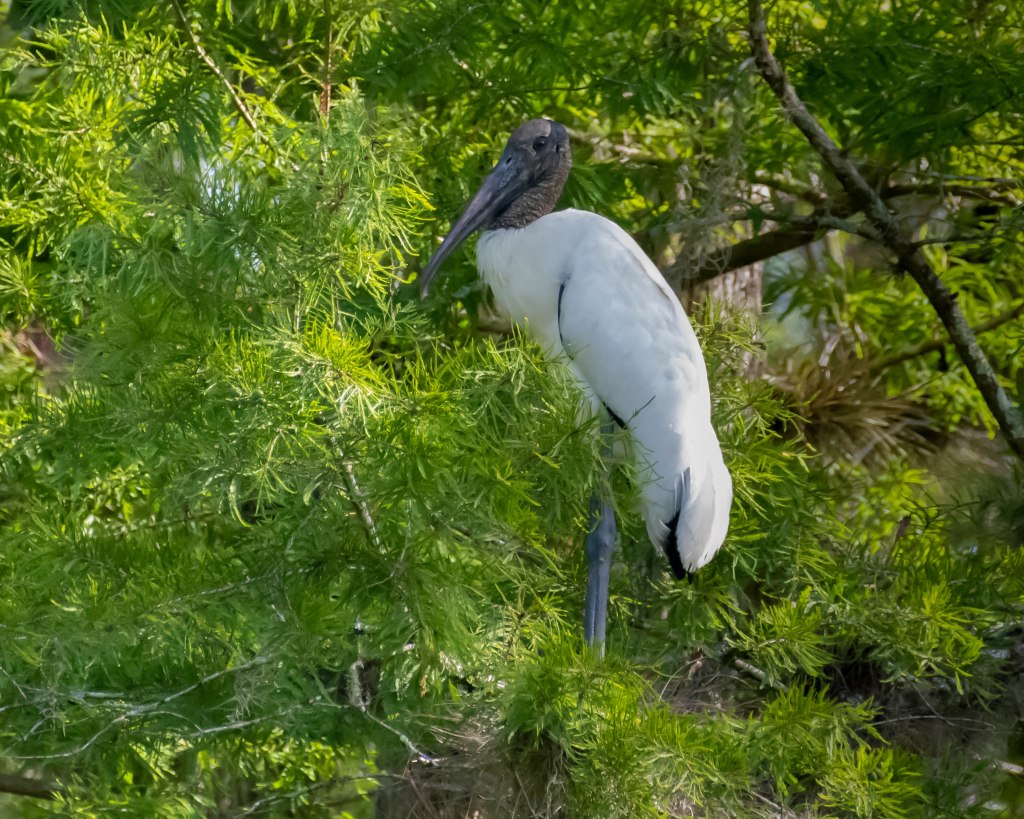
Wood Storks, along with other large wading birds, breed in this area. There are plenty of big trees for their sizeable nests and a bountiful food source is nearby.
Whether open or closed, flowers of the Trumpet Creeper (Campsis radicans) vine are really beautiful!
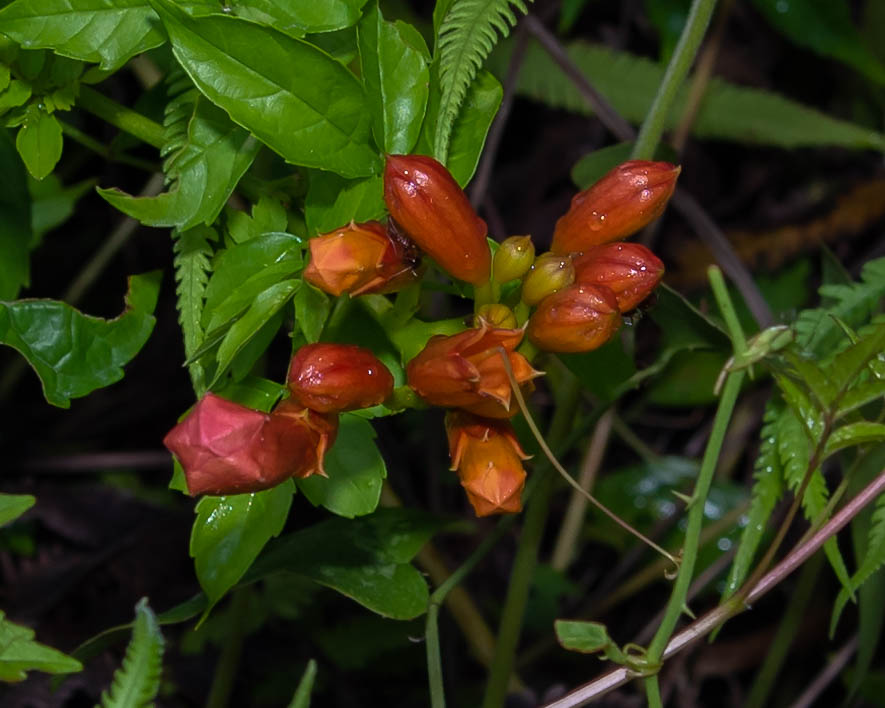

One of the most common flowers blooming at this time of year in the forest is the lovely Pale Meadowbeauty (Rhexia mariana).

Several Great Egrets, including what appeared to be some immature birds, were very actively feeding this morning. The bridge railing was their favorite spot for enjoying a freshly caught breakfast. Relaxing in the Cypress trees was also popular.


Blooming flowers mean nectar-loving pollinators galore. Another Bumblebee (Bombus species) dove deep into a thistle for its juice fix.

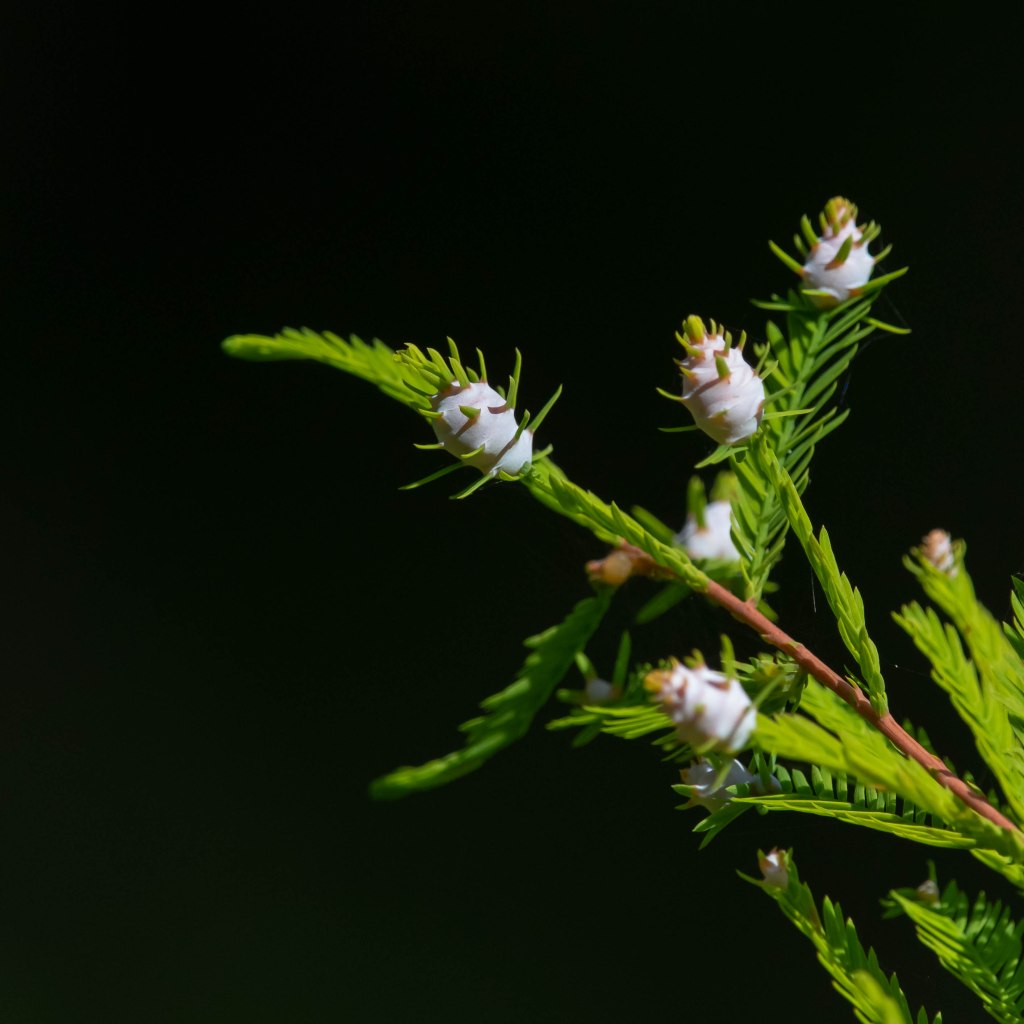
At first glance, it appears some Cypress trees are developing a bloom at the end of their branches. This is actually a gall caused by a very tiny midge. Eggs are contained within the gall and once adults emerge the galls turn brown and drop from the tree. The galls do not harm the tree but can become unsightly if the trees are being used ornamentally. The name of the midge is much larger than the actual fly: Taxodiomyia cupressiananassa.
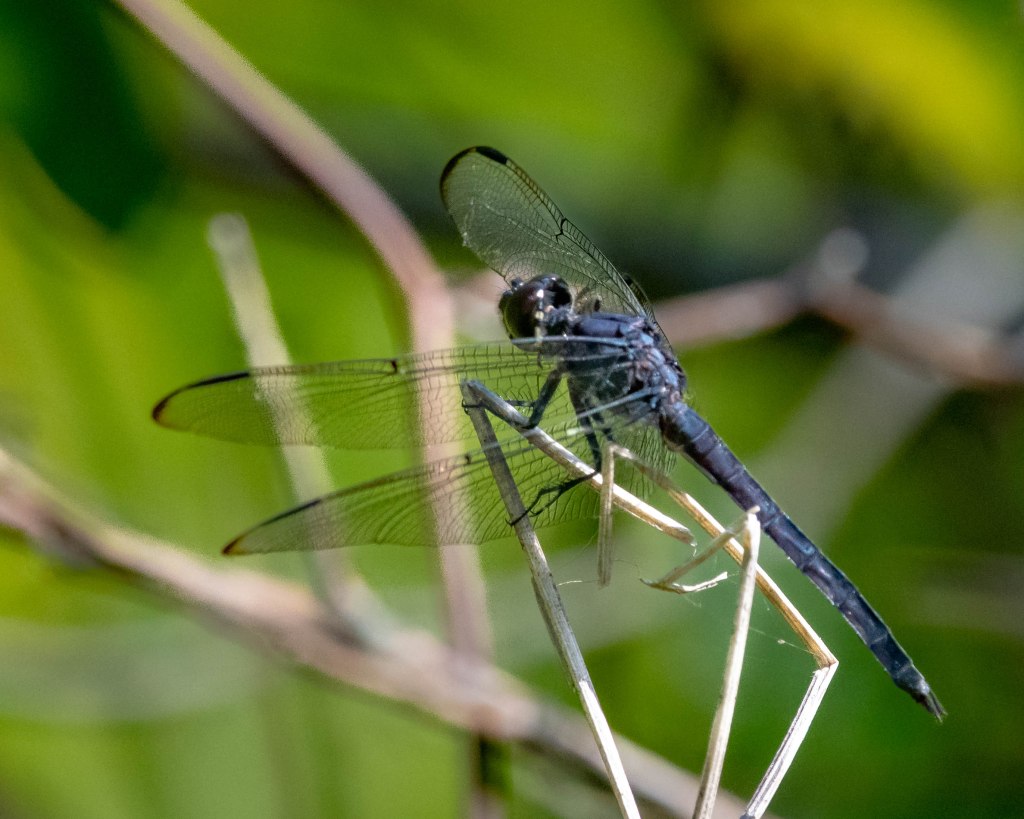
One of the “King Skimmers”, a male Slaty Skimmer (Libellula incesta) is very dark overall and has a unique wing pattern to help in identification.

A little extra padding is needed at the nest so a Black-crowned Night Heron hopes the missus will be pleased with his selection of moss with a Spanish accent.

Yes, you already know it doesn’t take much for us to be pleased with our nature outings. When we find so many things at which to marvel, however, ordinary pleasure turns into downright delight! We hope you find some of nature’s simmering summertime surprises of your very own.
Enjoy your search for a natural place and come back for a visit!
 Our Natural Places