(Click images to enlarge, click again to zoom.)
In the near-dark, Common Gallinules were gabbling and the calls of distant gulls confirmed we were near the coast. Weather reporters, excuse me, nowadays they prefer to be known as “Climate Experts”, advised it would be chilly and nearly calm this morning. “Chilly” to a native Floridian is below 70 F/21 C. The prediction of 42 F/5.5 C was accurate. The wind was ripping at 15-20 MPH. Not “calm”. Result = Cold Couple.
Gini and I made the cross-state drive to visit Merritt Island National Wildlife Refuge (MINWR)* in the hopes of seeing a few migratory birds and to enjoy the diverse habitat found within this very special place. Thanks to Gini’s prowess in smashing alarm clocks, we were able to sneak by the Land of the Mouse and the neighboring neon lights of Orlando’s associated venues designed to attract tourists as so many moths to the flames of eternal entertainment. (Why are all those lights burning at 0500?) There was plenty of traffic, but it was headed into Orlando as we were exiting the metropolitan morass.
Our trip occurred on January 30, 2024. It’s hard to believe we’re finished with the first month of our brand new year.
MINWR was established in the early 1960’s from land which had been acquired to support the mission of the National Aeronautics and Space Administration (NASA). As development of the Cape Canaveral launch complex proceeded, the southern portion of the area was set aside for a wildlife refuge. Today, more than 140,000 acres is managed for the protection of a myriad of natural resources. It’s a great place to visit any time of year but the vast amount of marsh, fresh and salt water as well as beach front is especially attractive to migrating waterfowl.
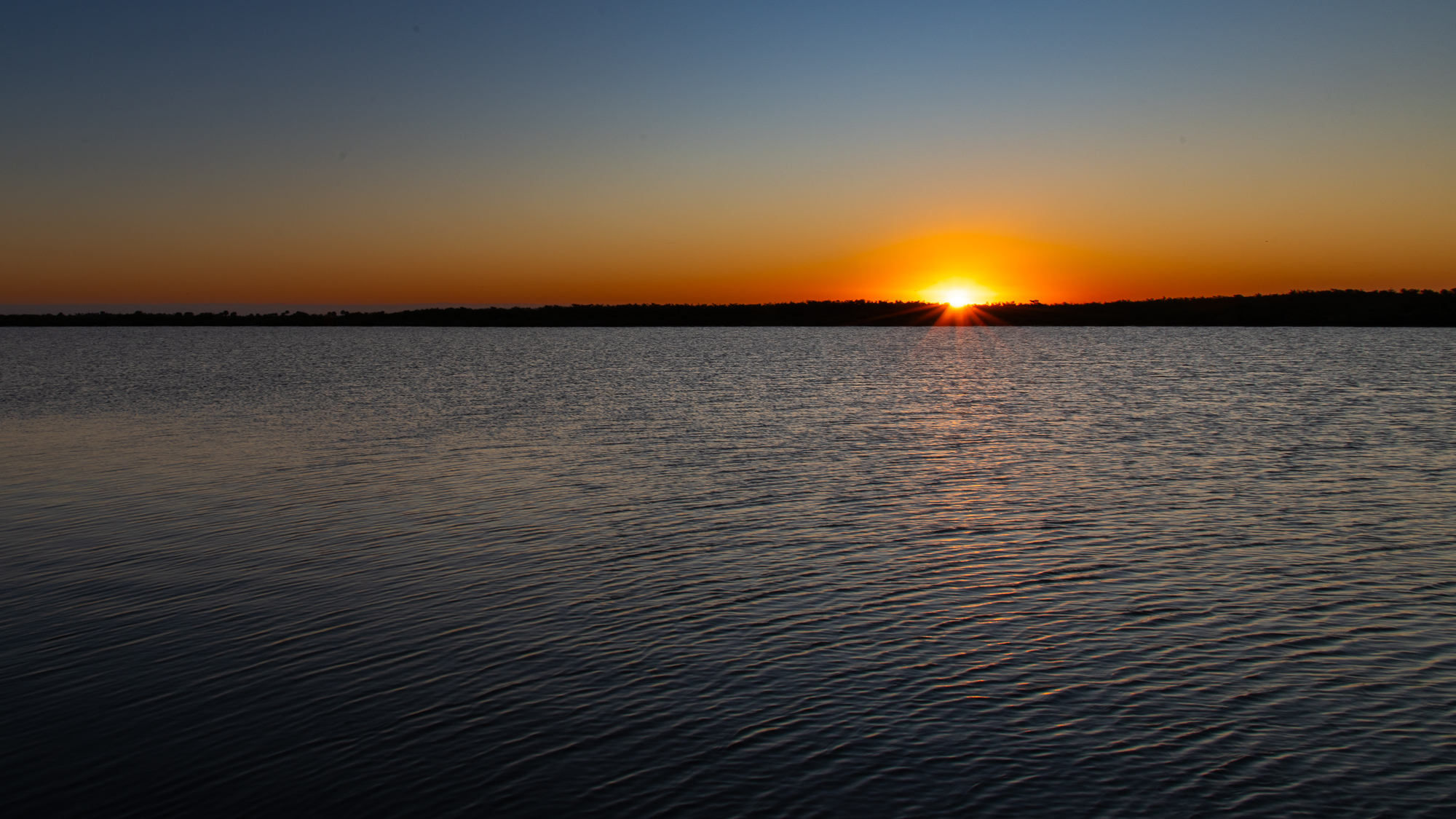
Sunrise. Just prior to dawn, the eastern sky displays an amazing variety of subtle hues. As the sun breaks above the horizon, its amazing brilliance takes your breath away. Golden light paints a picture of a perfect day waiting to be explored.
After enjoying a cold, but rewarding visit to Gator Creek to watch the dawn spectacle, Gini and I headed to Black Point Wildlife Drive. This is a seven-mile one-way trip through shallow water marsh impoundments and pine flatwoods.
There will be three posts describing our visit. Hope you enjoy it a fraction as much as we did.
We enjoyed watching the sky being painted with pastel layers just prior to sunrise. The building near the center of the image is NASA’s Vehicle Assembly Building.

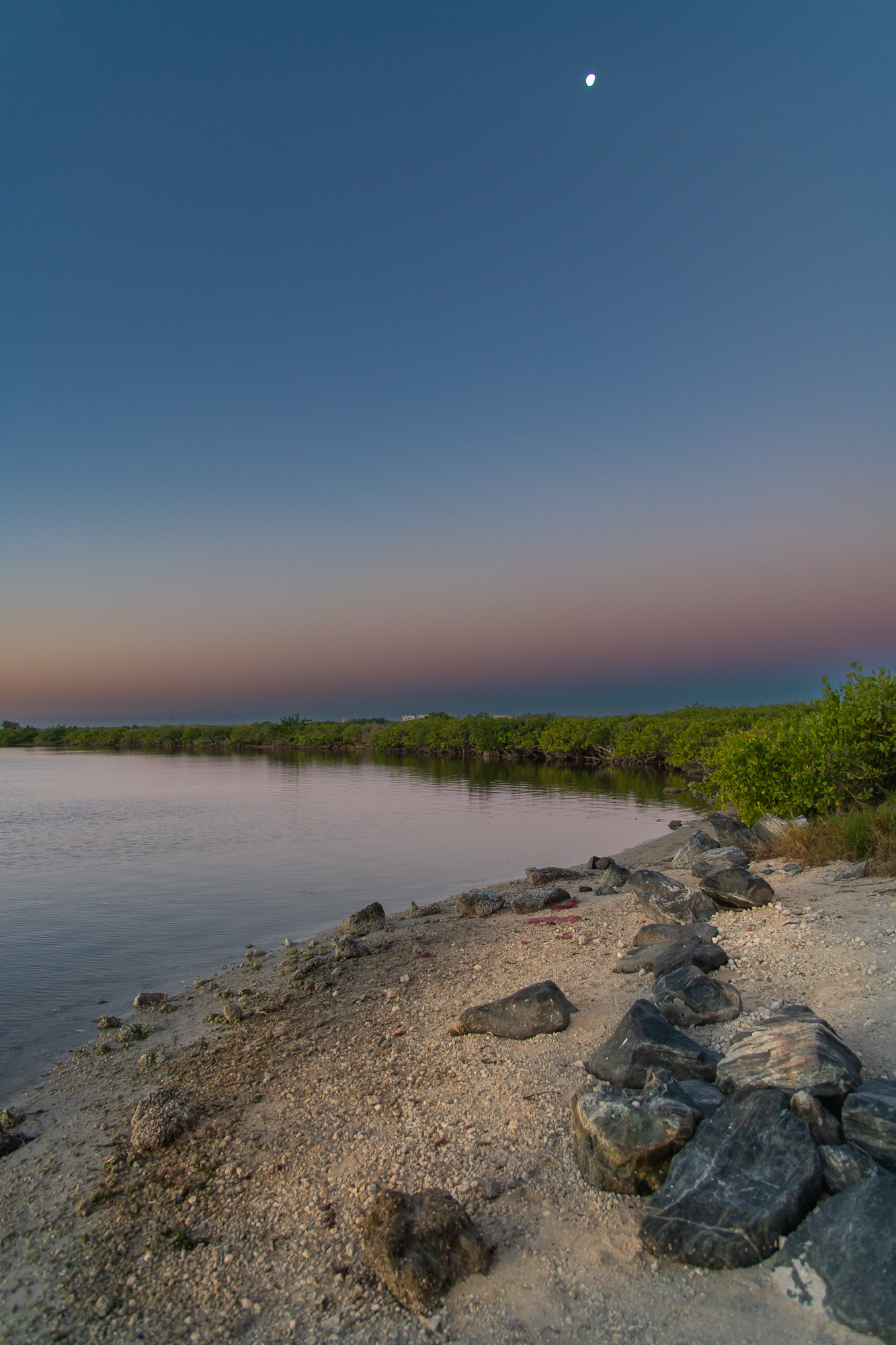
Don’t forget to turn around when enjoying a sunrise. This is the edge of Gator Creek where we were standing to watch the dawn. The creek is an inlet of the Indian River. The moon was a bonus.
A pod of three Bottlenose Dolphins hunted in the creek as the Sun pointed out where to find the fish.


The dawn’s early light gives a Tricolored Heron a special glow. I’m not sure he’s ready to be up just yet as the stiff breeze ruffles his head feathers.

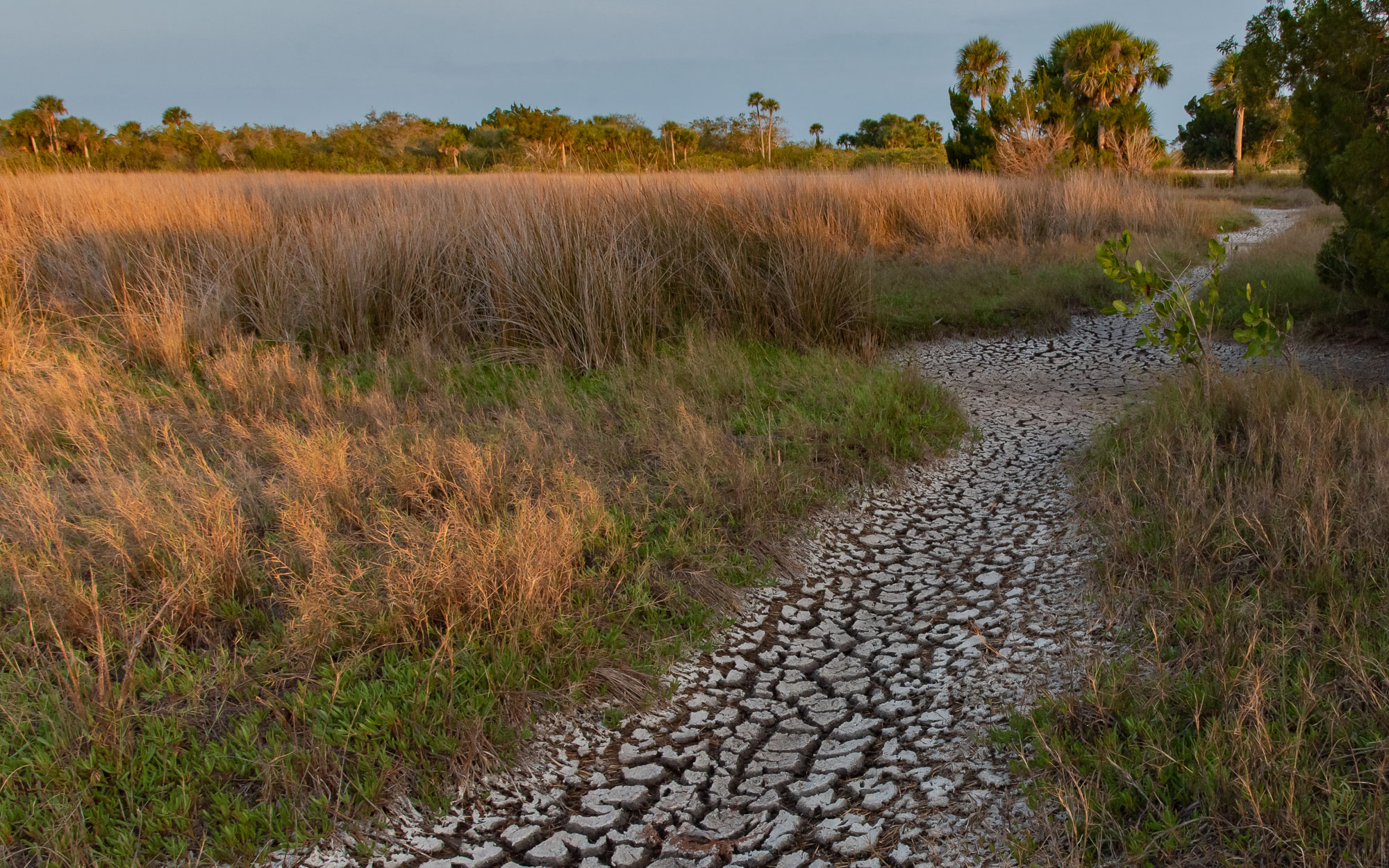
As we entered Black Point Wildlife Drive, it looked quite different than when we visited about a year ago. (First image now, second then.)

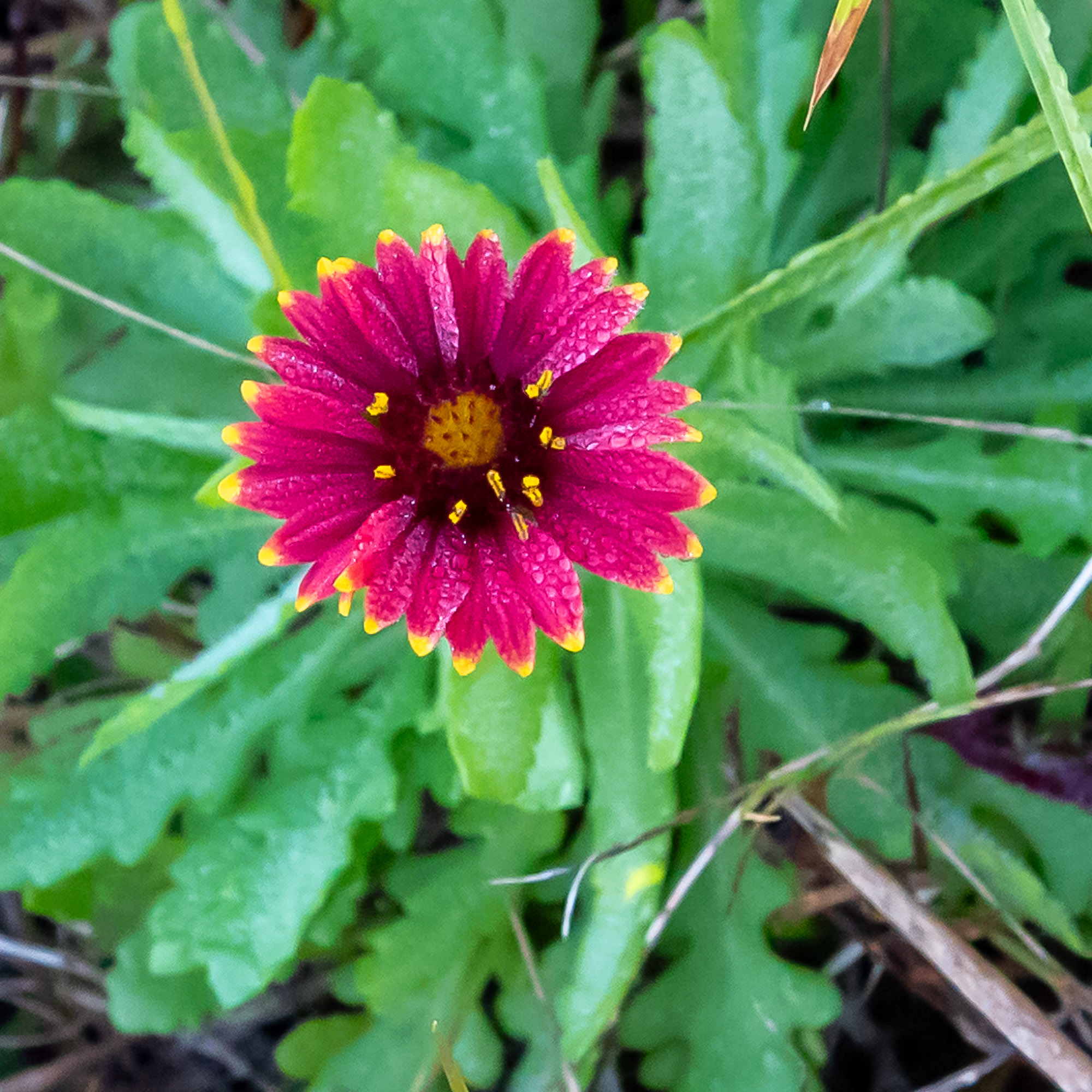
January. Wildflowers. Pleasantly surprised. Indian Blanket (Gaillardia pulchella).
Typical marsh habitat. Among all that grass are pockets of water where all sorts of water-loving birds can hide.
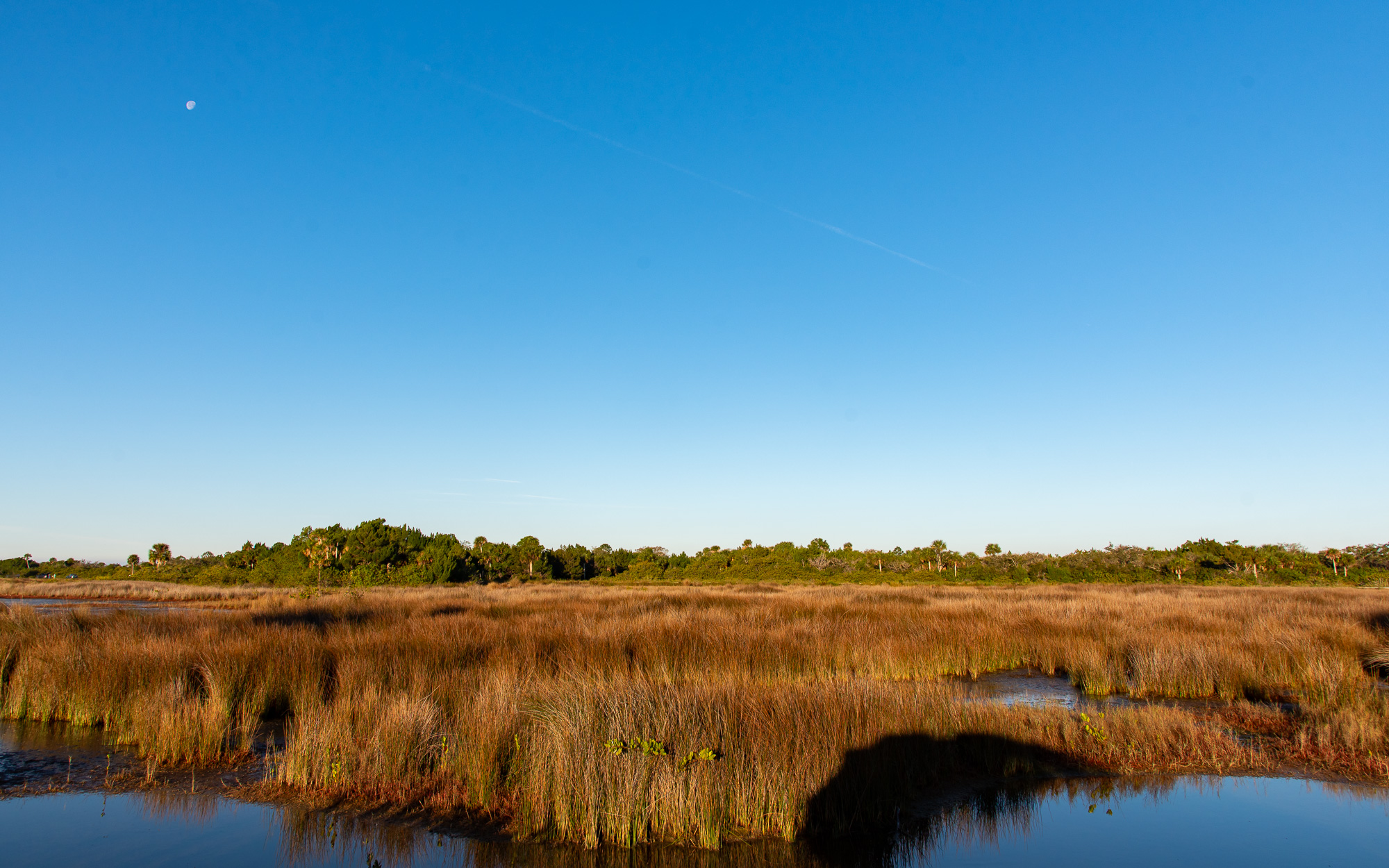
A Great Egret reflecting on what to have for breakfast.

This adult Little Blue Heron found a snack. Seems like it would take a lot of snacks that size to satisfy an appetite.

The Glossy Ibis uses its uniquely shaped bill to probe soft mud for delicious delicacies. Yum!

Try to get a portrait of a Snowy Egret and you get photo bombed by a Little Blue Heron.

Second try for the Snowy Egret was successful and even managed a bit of a display of its namesake “aigrettes“. Spring is near.

Ol’ Blue Eyes. White Ibises numbered in the hundreds throughout the day.

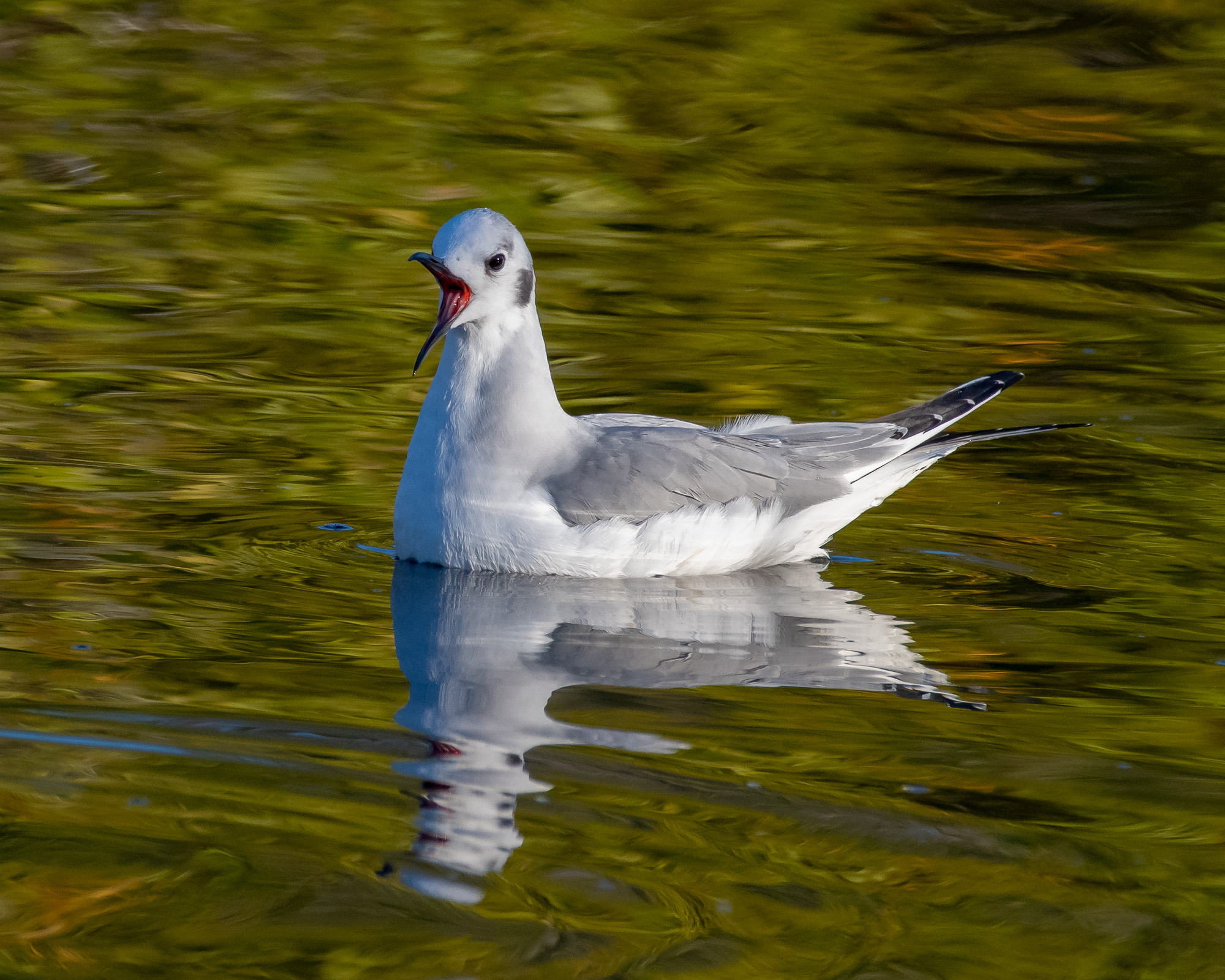
Winter migration offers a chance to see the Bonaparte’s Gull. They are small and almost resemble terns more than gulls. Unlike most gulls, they nest in trees. They are named for a fellow who contributed quite a bit to North American bird studies, Charles Lucien Bonaparte, a cousin of some sort of general with the same last name.

Immature Little Blue Herons remain mostly white during their first year, develop patches of slate-gray and by their second year achieve the solid color of an adult. Fish – it’s what’s for breakfast.

Dozens of Osprey dropped from the sky to snag fish wherever there was water.
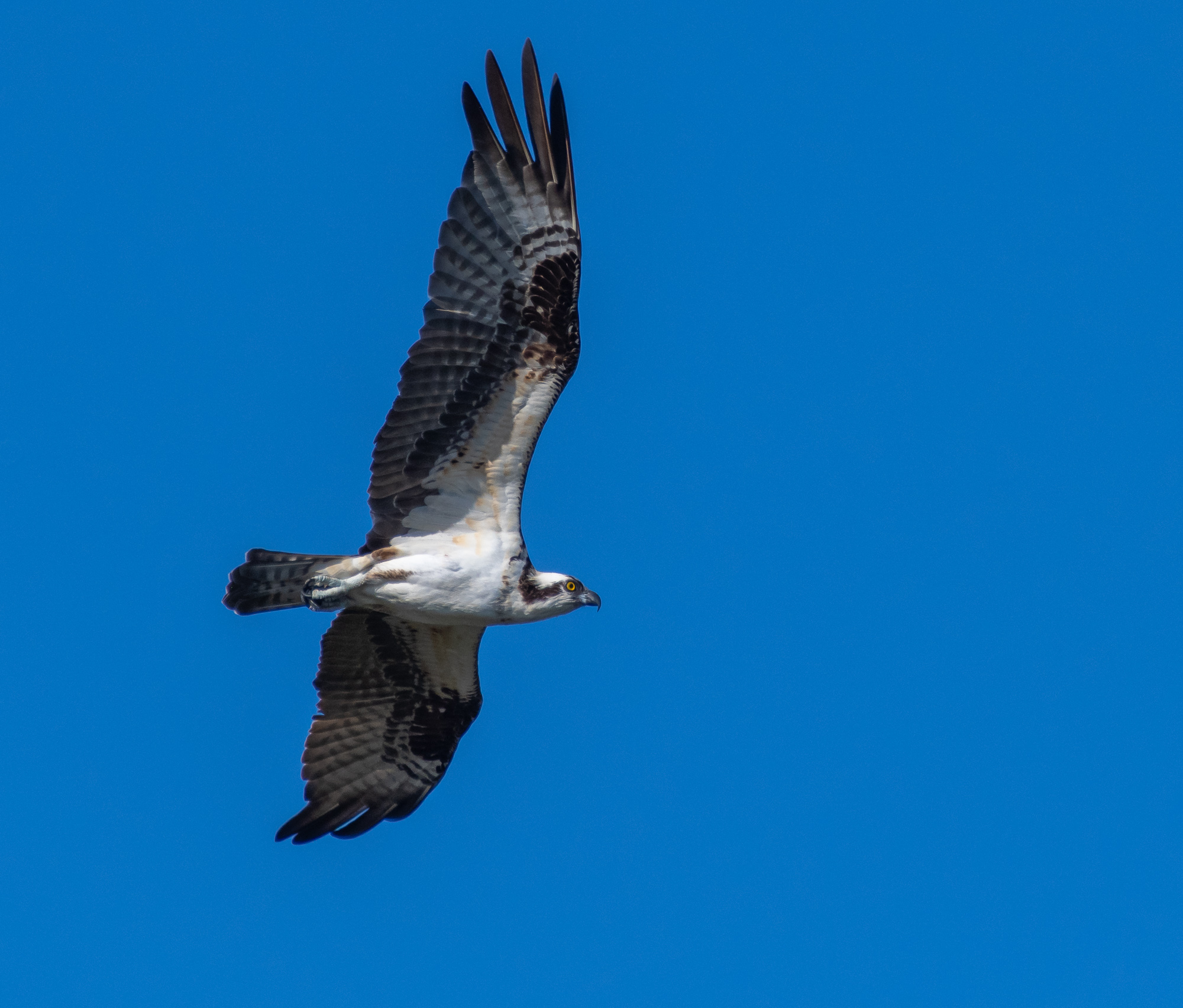
We have made it to the half-way point of the wildlife drive. The sheer number of birds has been amazing. Up next: Marsh Madness.
Enjoy your search for a natural place and come back for a visit!
*https://www.fws.gov/refuge/merritt-island

(Click images to enlarge, click again to zoom.)
Standing still, eyes closed, head tilted one way then another. I hear the distant call of a Red-shouldered Hawk, the guttural “caw-caw-cawwww” of American Crows, trumpeting Sandhill Cranes, a raucous Blue Jay, the hammering of a woodpecker on a dry limb. Gini’s superior hearing adds a calling White-eyed Vireo, the clear whistle of a Tufted Titmouse, a Carolina Wren, an upset squirrel and the distinct bass notes of a Barred Owl.
What we did not hear was significant. Try as we might, we could not detect any sound of the presence of humans. No traffic noise, no music, no sirens, no voices.
All of the above summarizes why we come here. Colt Creek State Park. We have mentioned it often on this blog because it is a place we frequently visit to explore and relax. The fact that it is less than 30 minutes from the house doesn’t hurt.
The park consists of over 5,000 acres adjacent to Florida’s vast Green Swamp. Nearly 15 miles of trails offer something for hikers of every skill level. Efficient management keeps the park in excellent condition and rangers, like our favorite, Sunny, are knowledgeable, friendly and quick to offer suggestions on where to find what we came to see. (It helps that Ranger Clark is an outstanding nature photographer and knows where the good stuff is hiding – and shares!)
Longleaf pine forest, stands of mixed hardwood trees, swamp, cypress domes, open fields, lakes, creeks – did I mention is was quiet here? Mix in our top three favorite subjects: birds, blooms and bugs, and is it any wonder we love this place? Each season offers something special.
A typical winter day a couple of weeks ago had us marveling at the fact there were flowers blooming as well as insects buzzing around said flowers. Resident birds were trying to play nice with dozens of cousins visiting from more northern climes. It was apparently “get in free day” for Red-shouldered Hawks. Gopher Tortoises raced across the roads, White-tailed Deer frolicked at the edge of the woods, River Otters splashed in the creek.
Yeah. We really like it here.
Just beyond the park entrance, we almost always see a Red-shouldered Hawk perched on a pine tree limb. Must be the official greeter.

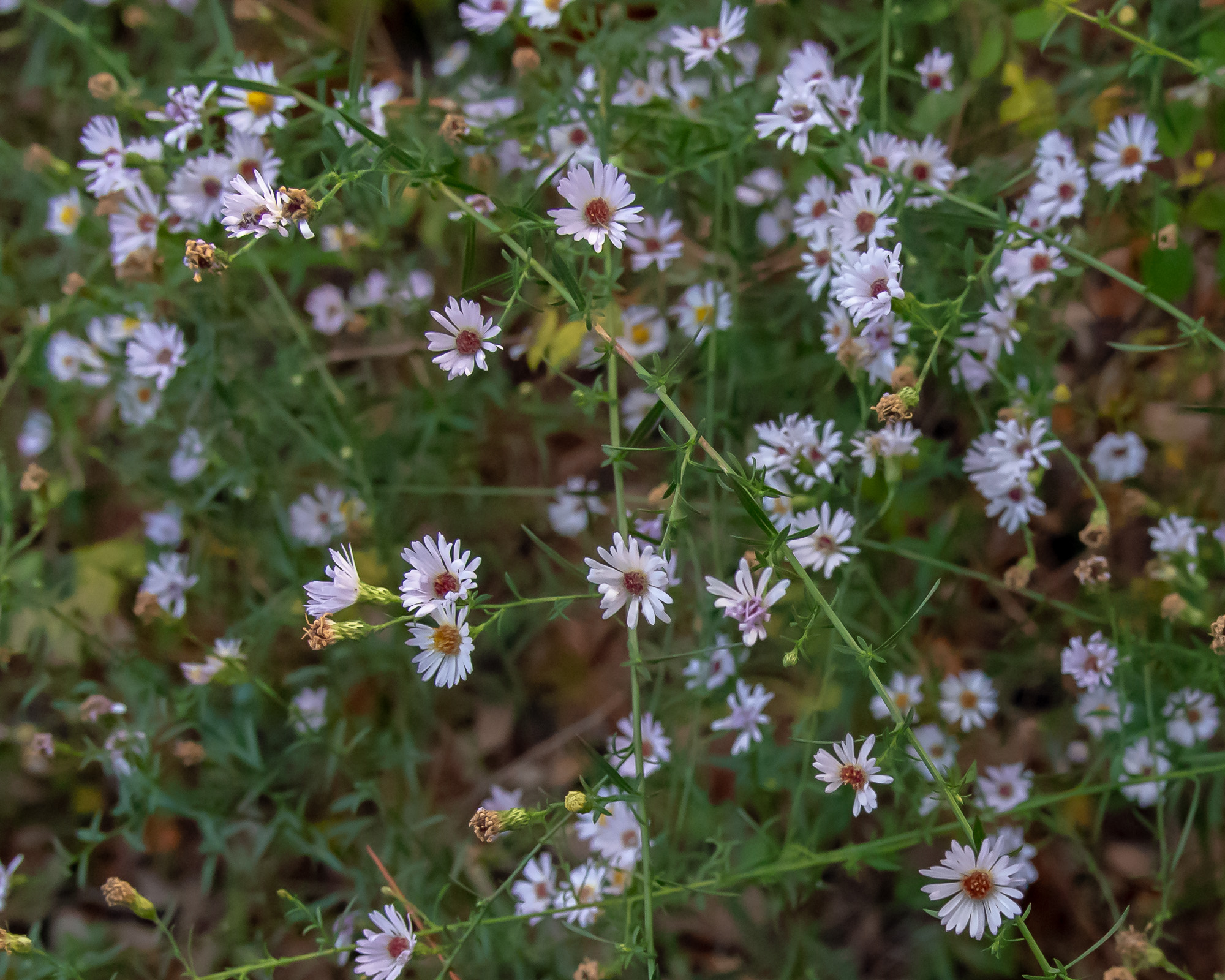
Several spots still had blooming Rice Button Aster (Symphyotrichum dumosum), although some had already gone to seed.

The park has wet places all year around so it was not difficult to find fungus among us.

Migratory Savannah Sparrows find the seed variety at Colt Creek to be spectacular.

A pair of Red-shouldered Hawks appreciate the park staff planting long-leaf pines not too long ago which have now reached the perfect height for a perfect perch.


Look closely in the brushy understory and you might discover the pretty fruit of Shortleaf Wild Coffee (Psychotria tenuifolia). Don’t get too excited about trying a cuppa, though. It isn’t related to the incredibly aromatic delicious and addictive stuff which I am sipping as I type.

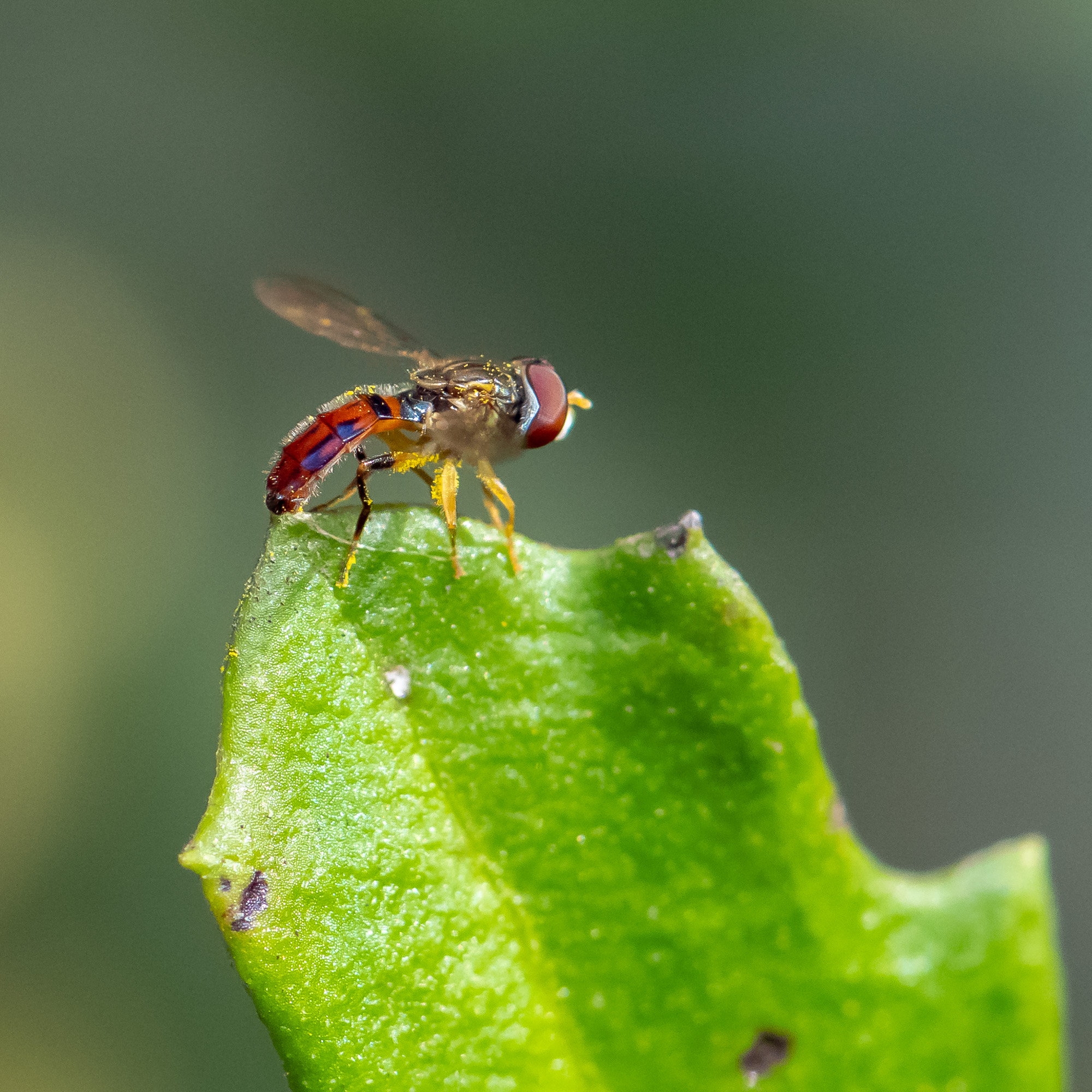
Hover flies. Flower flies. Syrphid flies. There are over 6,000 species in the Syrphidae family worldwide and over 800 in North America. There are some really interesting-looking specimens but, for me, identifying specific species is futile. So, I just look at them. You can, too.
(The second one is about half the size of the first. Both are on a Groundsel Tree (Baccharis halimifolia).)

Threatened and on the run! Okay, the first part is true. Florida lists the Gopher Tortoise (Gopherus polyphemus) as a threatened species. It is the only tortoise in North America found east of the Mississippi River. That second part – although the tortoise is deceptively quick at times, “running” is not really part of their vocabulary. Nor mine.

Fairly common in this area, a Red-banded Hairstreak (Calycopis cecrops) seeks a bit of nectar from a late-blooming Groundsel Tree (Baccharis halimifolia).

We like saying the name as much as we like looking at the flower. Sunshine Mimosa (Mimosa strigillosa). Also called Powderpuff, this beauty is much better behaved than its relative, Sensitive Briar (Mimosa quadrivalvis), which has stems covered in nasty thorns.

One more Red-shouldered Hawk. This one enjoying the recently baled hay.

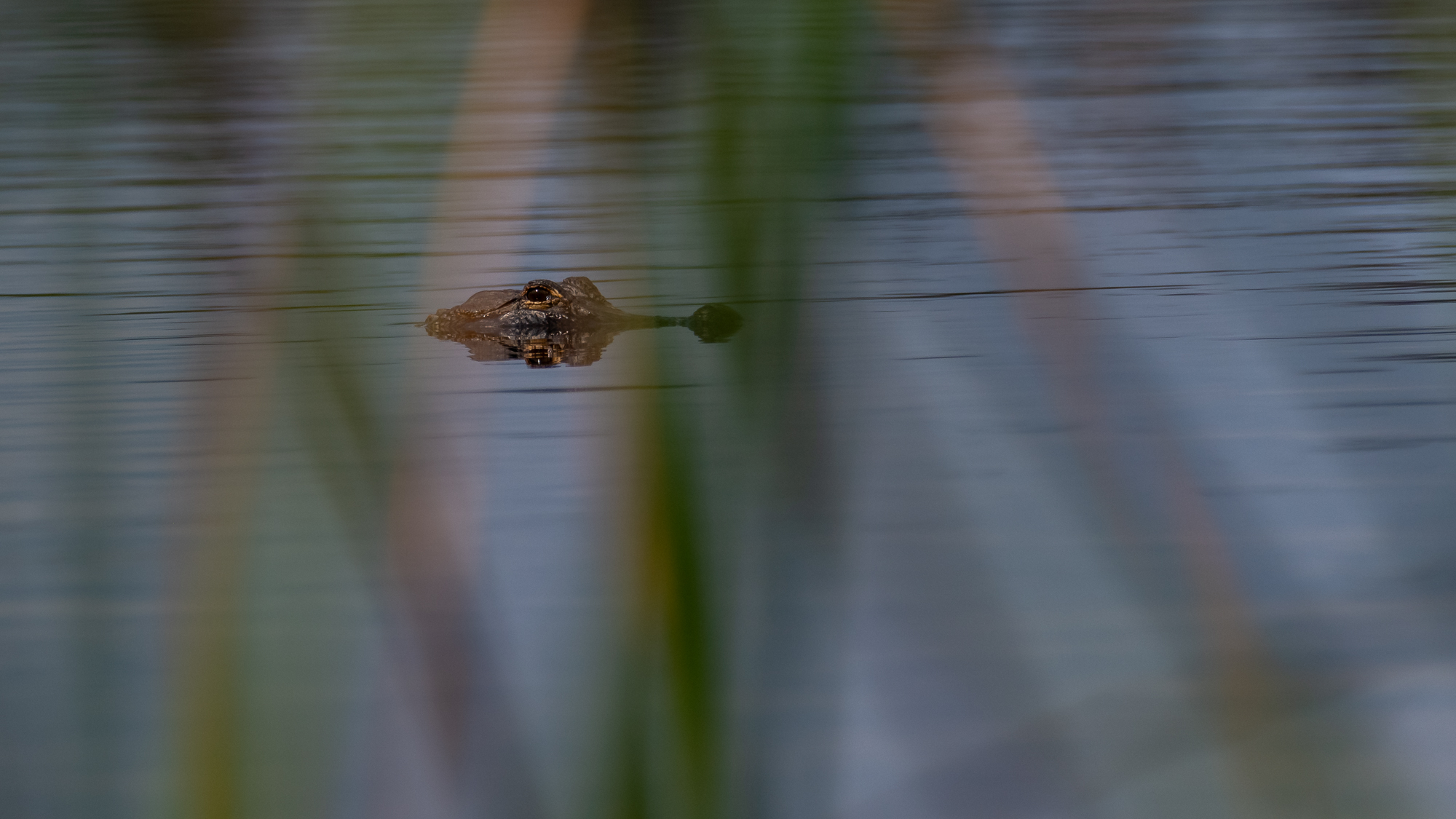
Obligatory image of an American Alligator. (All blogs in Florida are require by State Law to include at least one ‘gator photo.)
Not content to provide a bright Gulf Fritillary (Agraulis vanillae) for you to enjoy, we included one resting on an Indian Blanket (Gaillardia pulchella). You’re welcome.

Speaking of bright. The incredible red flowers of the Coralbean (Erythrina herbaria) may be gone, but the shiny seeds resting within their dark pods are like little beacons of light on a December day.

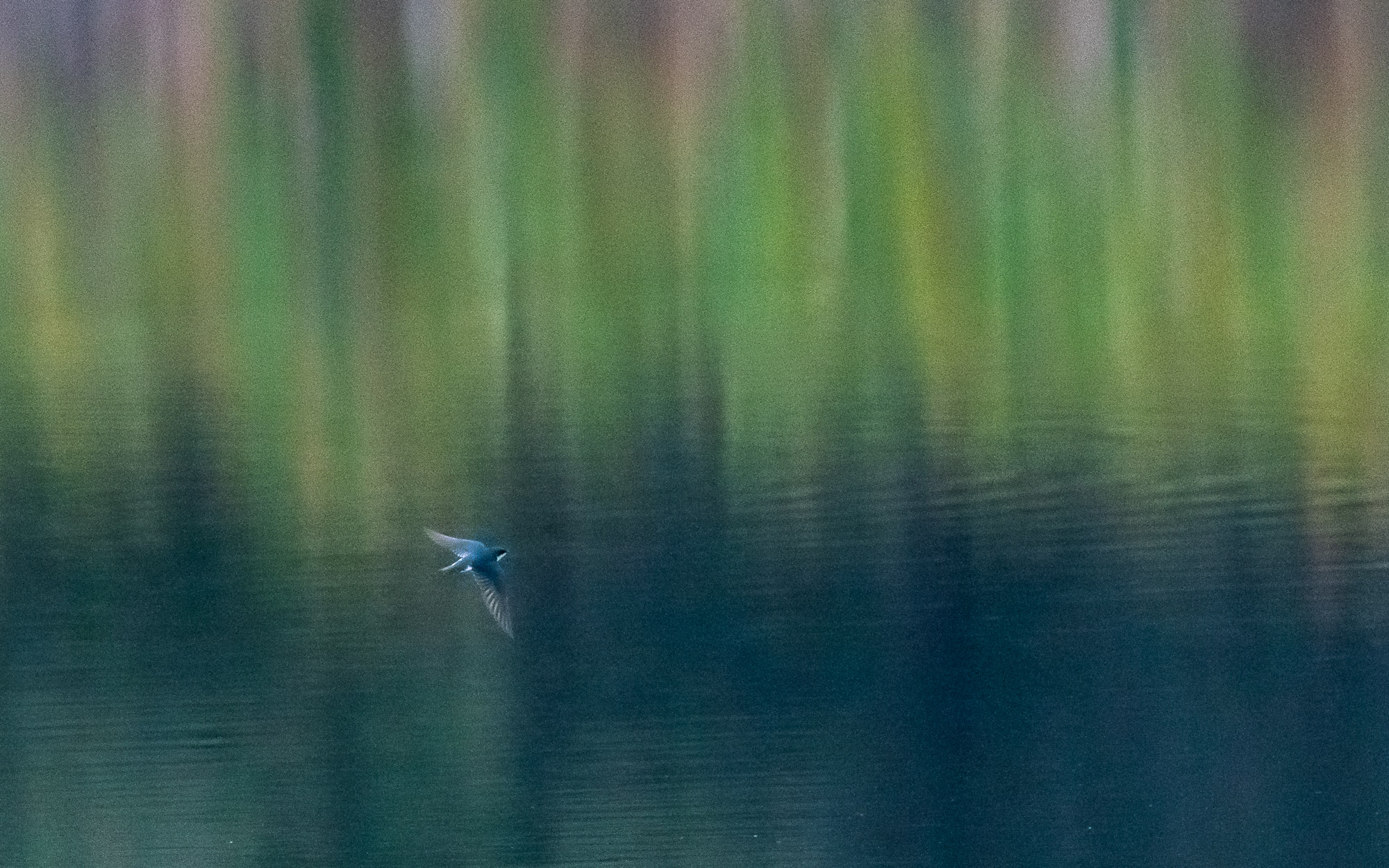
A Tree Swallow cruises Mac Lake among the warm colors of the reflected shoreline.
We’ve been fortunate lately to catch a few of the small butterflies known as “Blues” (Family: Lycaeninae) displaying their upper wing coloration. Here is a Ceraunus Blue (Hemiargus ceraunus) showing its under wing (which we most often see) and its beautiful blue upper wing.


The highlight of today’s visit was the enounter of three River Otters (Lontra canadensis). My understanding is winter is typically mating season for Florida otters. Also, new otters may remain with their mother for over a year. So, I don’t know what these three were: Mom and two kids, Mom and Dad and kid, three males, three females, rogue gang. Whatever their common bond was, we really enjoyed watching them hunt, swim, sun and gawk at us gawking at them.


We hope you have a spot similar to Colt Creek State Park near you. A place where you can find solace from our modern lifestyles and accompanying noise. Somewhere to relax and become part of your natural surroundings. If you can’t find such an oasis, you can visit ours any time.
Enjoy your search for a natural place and come back for a visit!
Additional Information
https://www.floridastateparks.org/parks-and-trails/colt-creek-state-park
(Click on images to enlarge, click again to zoom.)
There is something to be said for sleeping in. It feels good. Especially when the days are cold. Lounging about sipping hot coffee thinking about how your lazy self should have been up and out the door while it was still dark because how else are you ever going to encounter Nature in all its glory when it’s common knowledge there is nothing worth photographing once the Golden Hour has passed!
Okay. I’m up.
Gini remained in this morning, but not in bed. Holiday crafting material is now on sale and there is shopping to be done! The internet is a wonderful thing. Spend right from the comfort of your own living room. She promised grits and eggs upon my return.
The air was actually balmy, in complete synchronization with my personality. I managed to reach the shore of the lake just as the sun was escaping a low-hanging cloud formation. Warmish temperature was welcome as I knew a cold front was scheduled for tonight.
“The Regulars”. One can pretty well list the birds which will be encountered at familiar spots during any given season before even leaving the house. Sure enough, there they were. Anhingas draping the cypress trees where they spent the night. The Great Blue Heron atop a lookout where any tell-tale ripple in the lake’s surface at dawn’s early light would mean an easy breakfast. Common Gallinules gabbling among the reeds in the murky light. A pair of Limpkins wailing eerily at each other from opposite ends of the park. Morning flights of White and Glossy Ibises, Double-crested Cormorants and Cattle Egrets flowed across the sky in waves.
As the sky began to brighten with the rising sun, the volume of bird noised became increasingly incessant. An Eastern Phoebe yelled out her name, Boat-tailed Grackles screeched collectively, Red-winged Blackbirds sounded like a yard full of rusty gates and overhead an Osprey yelled at a Forster’s Tern to get out of the way.
Less than two hours later I tucked in to hot buttered grits, a link of smoked sausage and perfectly scrambled eggs. Hot coffee and orange juice almost completed an excellent breakfast. Perfection was achieved with just one more kiss. She is just so very special.
So. I could have enjoyed a warm bed for a couple of extra hours. Or, I could experience a sunrise and a short walk along a lake shore filled with birds followed by a hearty breakfast accompanied by hugs and kisses.
Easy decision.
The lake just after sunrise offers the promise of a wonderful morning.

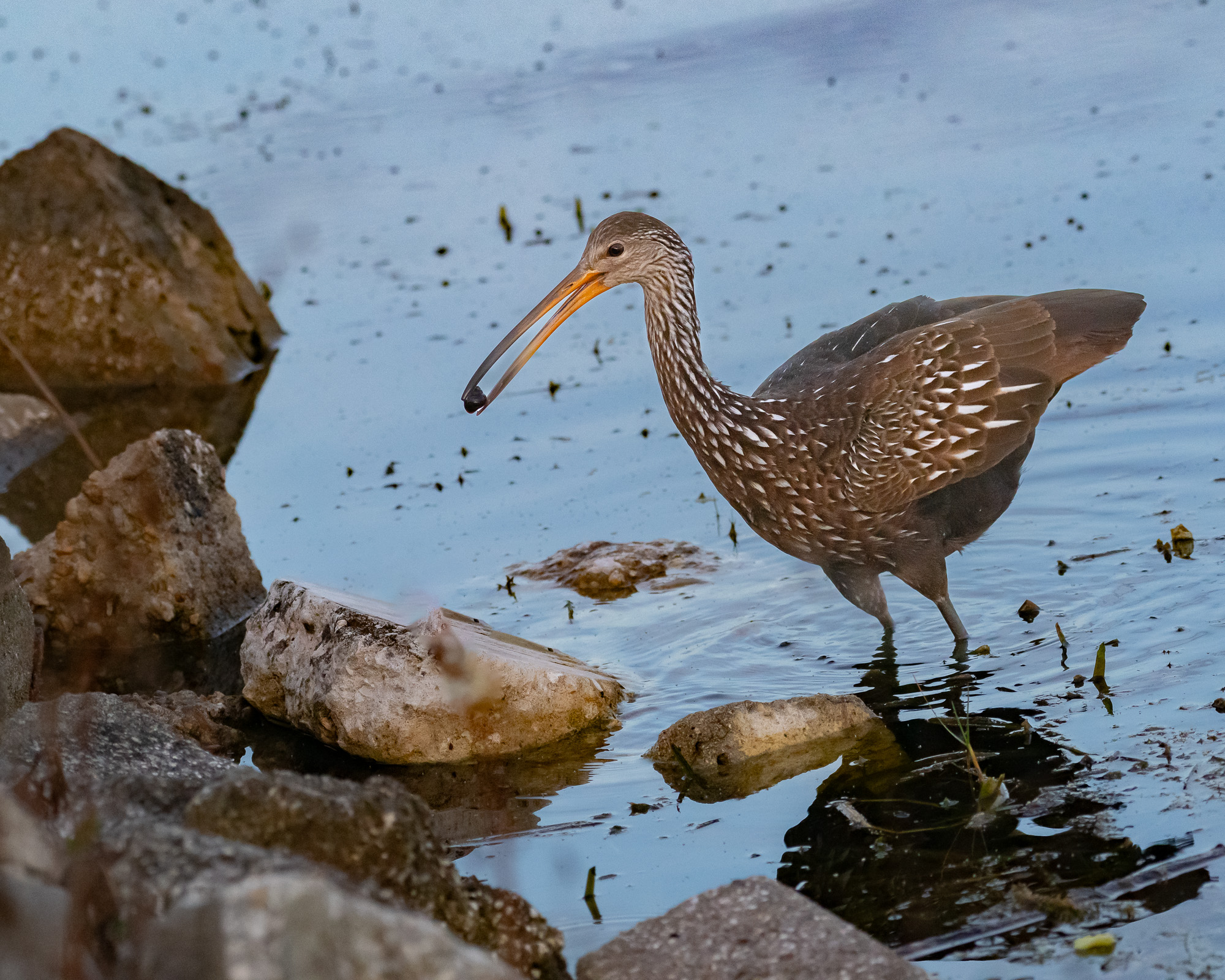
Escargot. It’s what’s for breakfast. If you are a Limpkin.
Not worms, but fish are on the menu of this early morning Osprey.

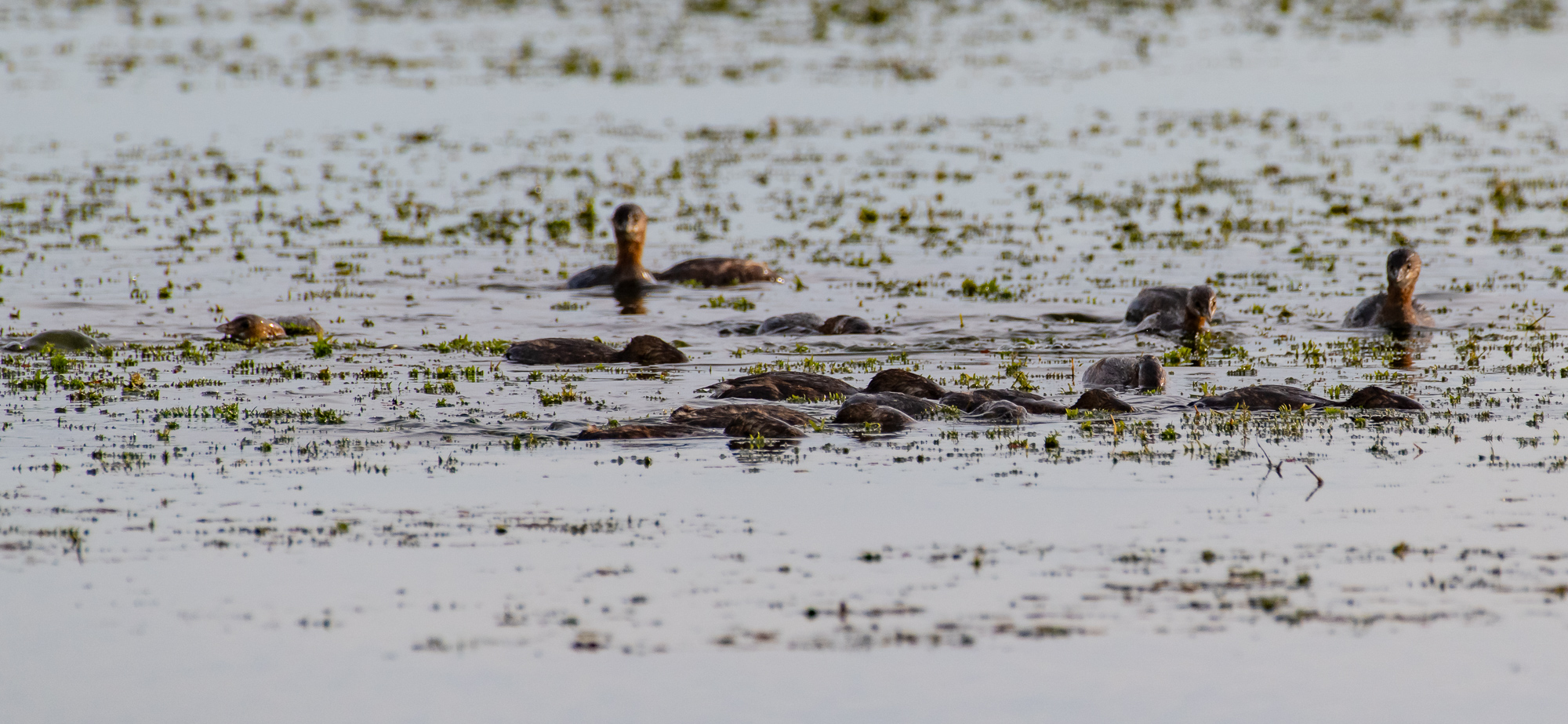
The visiting Pied-billed Grebe Synchronized Swim Team was out this morning practicing for their next competition.

She migrated south to stay warm and eat bugs. We offer opportunities of both for the Eastern Phoebe.

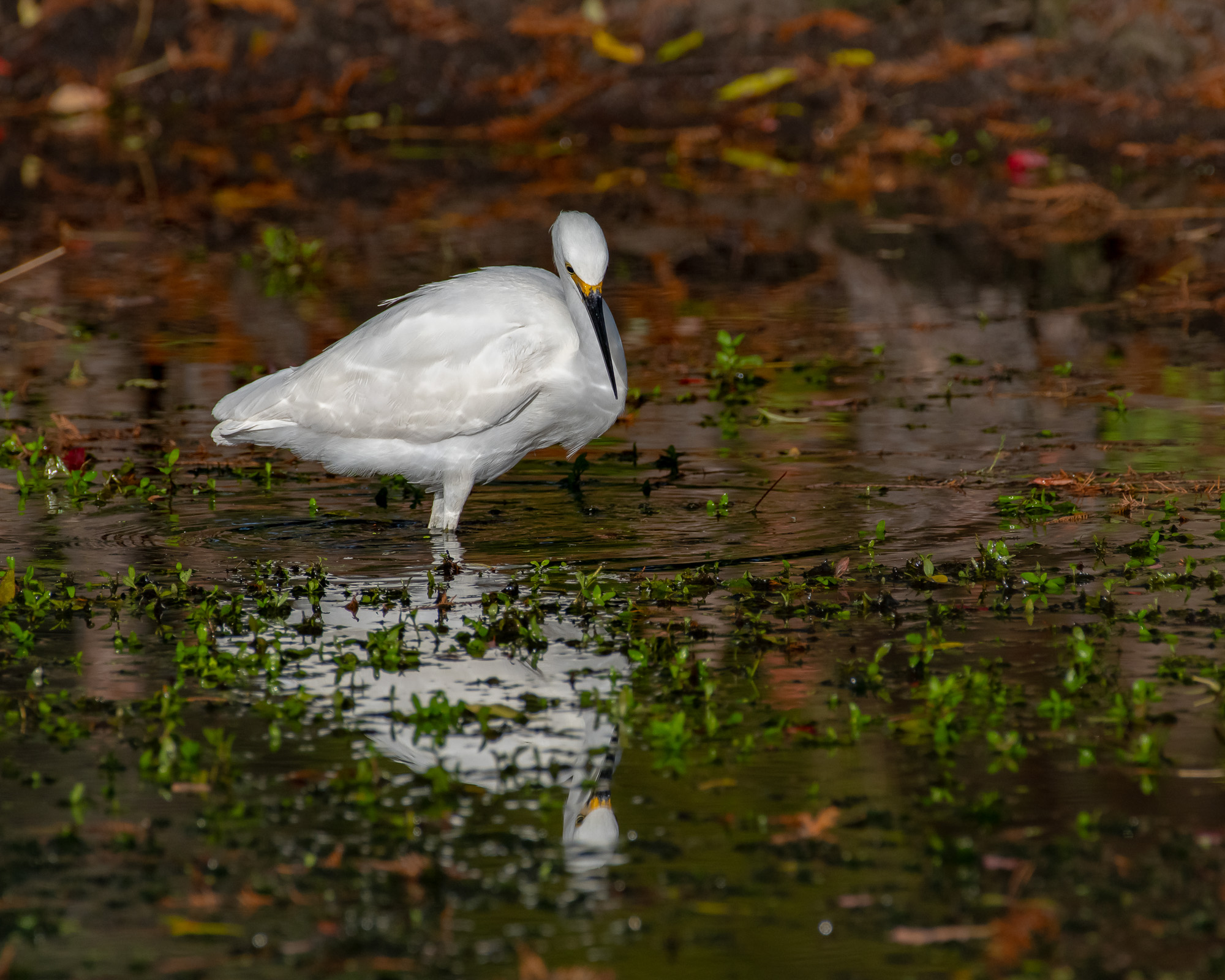
I couldn’t figure out if this Snowy Egret was admiring his reflection or zeroing in on a minnow.
A Little Blue Heron offers two different views. Resting after preening and putting that long neck to good use in searching for the first meal of the day.


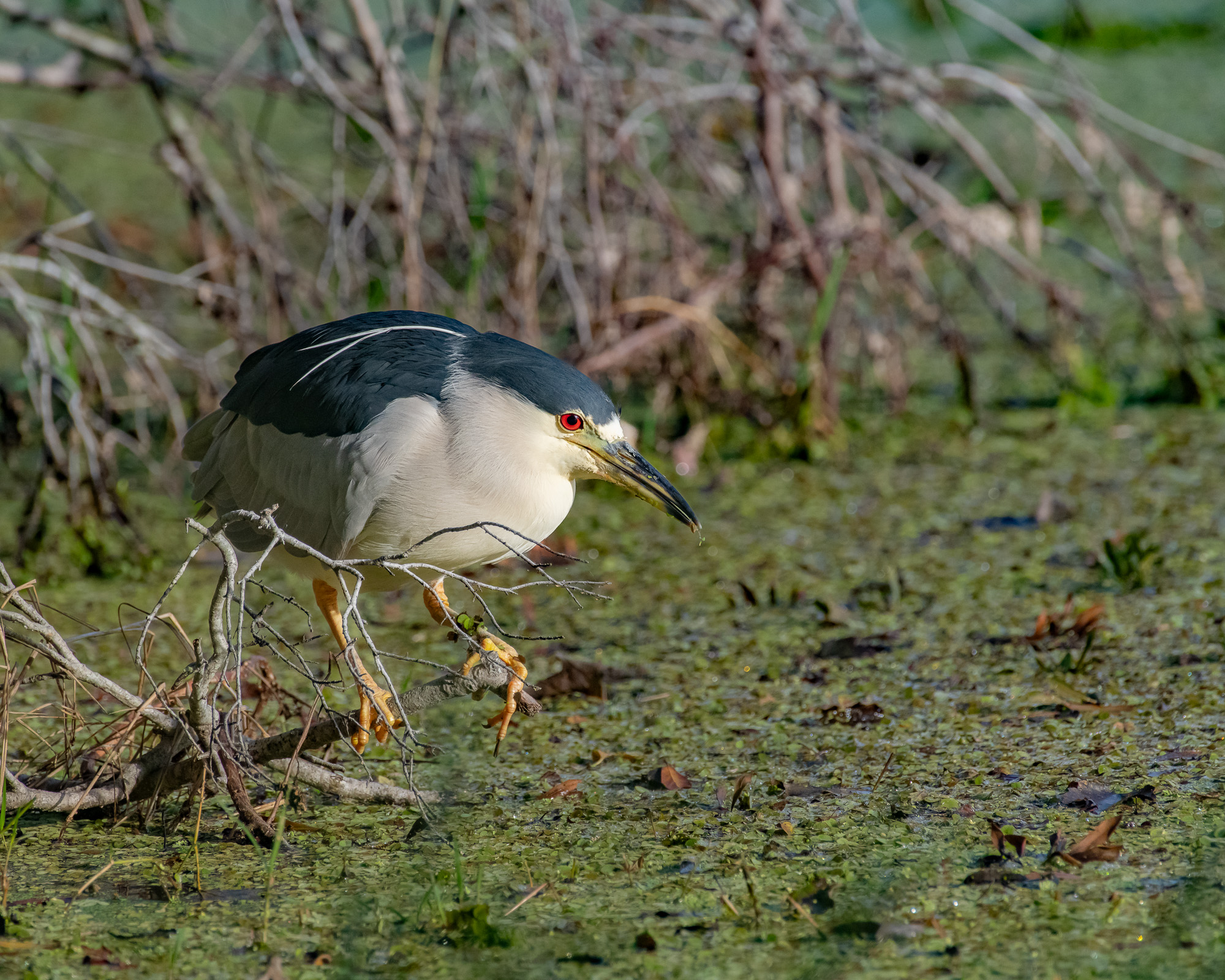
I was surprised this Black-crowned Night Heron didn’t take flight as I happily snapped a few photographs. Must have been waiting on his breakfast order to be delivered.
Sometimes, sleeping late is a nice luxury. Today, it would have been difficult to imagine anything more luxurious than spending an early morning at the lake.
Enjoy your search for a natural place and come back for a visit!

(Click on images to enlarge, click again to zoom.)
Yesterday we were sweeping up the place after our extravagant holiday reveling. There, among the bits of discarded shrimp, crumpled paper hats, Frank Sinatra album cover, underw— (oops, how’d that get there?) – we discovered some bits and bobs that escaped from the darkroom. We thought we would share.
The pictures, not that other stuff.
It was all the way back near the middle of November 2023. What a year! Fall had fell and we were happy as heck. Happy because we were enjoying blue skies, sunshine, warm temperatures and a three-day period with no medical appointments on the calendar.
We packed up for the big trip before bed, set the alarm for earlier than would be humane for anyone except a farmer and tossed and turned all night in excited anticipation of the delights we were certain to encounter!
At last! The clock screeched and Gini bashed it against the wall in a frustrated attempt to make it shut up. I rolled over. Our years of experience in planning safaris and expeditions paid off handsomely as we loaded the adventure vehicle. A place for everyting and everything in its … “Did you pack breakfast?“
Not wishing to be subjected to the same fate as our former alarm clock, I shouted back “Don’t be silly!“. (See how that works? Plausible deniability is the cornerstone of any successful relationship.) I dashed to the kitchen and threw granola bars and bananas in a sack.
Now we were ready!
It took eight minutes to reach our patch just as the sun peeked over the cypress trees. We saw some really neat things. We ate a banana. More neat things. We ate a granola bar. Neat things were everywhere!
We went home.
Oh, yeah. Sharing as promised.
One of our late-blooming wetland flowers is the lovely lavender Climbing Aster (Symphyotrichum carolinianum). At first glance, it appears to be a vine. However, it’s a shrub which can grow up to 20 feet or more from its base as long as it has some sort of support, such as a tree.


Arriving a bit later than some migrants, Yellow-rumped Warblers are now appearing in large numbers throughout the area. It’s pretty easy to see how they were named and why some refer to it as “Butterbutt“.

A tree by any other name could be the same. The Groundsel Tree (Baccharis halimifolia) is also known as Sea-myrtle, Consumptionweed, Eastern Baccharis, Groundsel, Groundsel Bush, Salt Marsh-elder, Salt Bush and Florida Groundsel Bush. In late fall extensive growth of this plant can make a field look like its covered in snow.


Patience denied. I waited in vain for this little Cassius Blue (Leptotes cassius) to display is lovely blue upperwing. Sigh.

It is not unusual for some dragonflies and damselflies to breed throughout the year in central and southern Florida as long as the weather does not turn too cold. Encountering this pair of mating Rambur’s Forktail (Ischnura ramburii) was a nice surprise.

Small and very active, a Downy Woodpecker seemed to be in some sort of race as it quickly scoured tree trunks, limbs and leaves for insects. No red showing on the back of its head indicates this is a female.

The Roseate Skimmer (Orthemis ferruginea) is one of our favorite Odonata due to its very lovely color.

Gini says I like this butterfly because my behavior echoes its name much of the time. The Sleepy Orange (Abaeis nicippe) we found has transformed from its “wet season” yellow to the “dry season” brown coloration.

Migrating raptors are exciting to spot. This smallish and very fast immature Sharp-shinned Hawk closely resembles the somewhat larger Cooper’s Hawk.

A medium-sized butterfly, the Great Southern White (Ascia monuste) often is observed in large numbers in the fall. This one seemed to be all alone.

A young Red-shouldered Hawk was not about to let a couple of two-legged intruders interrupt its grasshopper meal.


Patience rewarded. Unlike that “other” blue, above, this very cooperative Ceraunus Blue (Hemiargus ceraunus) readily showed off its upperwing beauty.


A new Odonata! This Carolina Spreadwing (Lestes vidua) is not only a first for us, it is the first record for this species in our county. The sighting was verified by the citizen science folks at Odonata Central. https://www.odonatacentral.org/#/

I seem to have a difficult time finding a female Band-winged Dragonlet (Erythrodiplax umbrata). We came close with an immature male. In the first image below, you can see the olive/tan thorax which will soon turn as blue as the abdomen. The second picture is of an adult male.


Those long twin tails make the Long-tailed Skipper (Urbanus proteus) seem larger than it really is. The iridescent blue-green body helps separate this species from others.

A new Odonata! This Variegated Meadowhawk (Sympetrum corruptum) is not only a first for us, it is the first record for this species in our county. The sighting was verified by the citizen science folks at Odonata Central. https://www.odonatacentral.org/#/ (As the baseball great, Yogi Berra, noted: “It’s deja vu all over again.”)

As we departed the area, another young Red-shouldered Hawk flew up to a fence post as if to say “Farewell Fond Friends”. (Okay, more like “don’t let the gate hit ya on the way out!”.)

Our holiday after-party cleanup was a success. Finding a few images to share from long ago was a nice bonus. Hope they weren’t too dusty for you to see.
Enjoy your search for a natural place and come back for a visit!
*– To those thrilling days of yesteryear!
“All men would be tyrants if they could.” – Daniel Defoe

One of the special treats we enjoyed when living in Texas was the year around presence of Scissor-tailed Flycatchers. Their graceful flight, efficient hunting technique, subtle plumage and courtship displays were highlights of many field trips. We miss them.
Winter migration brings us gifts of a diverse selection of birds we would not otherwise be able to observe here in sub-tropical Florida. Among the visitors are a few of our old friends, Scissor-tailed Flycatchers. For at least the past ten years, a small group of these sleek beauties have joined with a handful of their cousins, the Western Kingbird, to spend winters roosting in a nearby citrus grove. About 30 minutes before sunset, the birds gather on utility lines adjacent to the groves, snag a late snack and dive into the dark green foliage just as dark descends.
These two species are part of a large family of flycatchers known as Tyrannidae, or Tyrant Flycatchers. One speculation about their name derives from their aggressive nature in driving potential threats away from nesting sites.
We begin looking for the arrival of our visitors from the west in early November and can look forward to seeing them until late February. It’s nice to have a taste of our memorable Texas treats every winter.
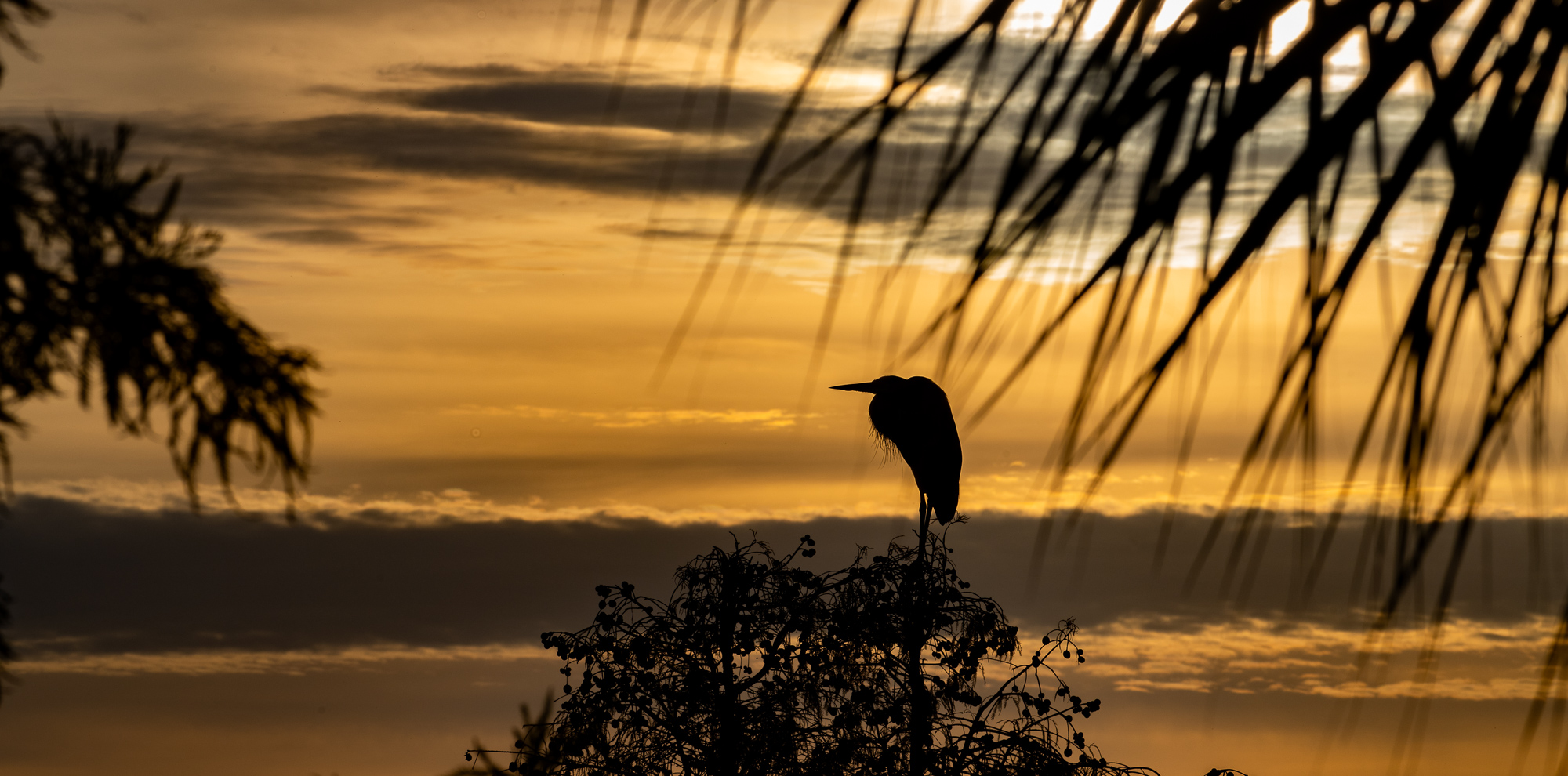
As if the chance to see migrating flycatchers is not enough, this particular area offers many other opportunites as well. The citrus groves are surrounded by a couple of lakes, pastures and weedy fields. Nothing like a huge helping of sunshine, water and orange juice to attract winter tourists! Since our target birds arrive just at sunset, we also get to enjoy a setting sun from this slightly elevated location, such as the one at the top of the page.
Hurry now. It will be dark soon.
We’re fortunate to not only have a resident population of Sandhill Cranes to enjoy all year, but we are also host to several thousand migrating cranes each winter. The visting birds typically hang out in large groups of from ten to several hundred. Resident birds remain in pairs or the year’s small family group. One of the family members we saw asked politely for us to move on. We did.


The Peninsula Cooter (Pseudemys peninsularis) is a fairly common freshwater turtle in our area. Descriptions say they may reach up to 20 inches in length. This one was every bit of that.

Winter populations of our resident Blue-gray Gnatcatcher greatly increase as northern migrants join in the frenetic hunt for protein-laden insects.

There she goes again. “Wait. What is that?” A spot of pink among the green leaves caught Gini’s eye so we investigated. Not just a moth, but an Ornate Bella Moth (Utetheisa ornatrix) depositing eggs on a leaf of Smooth Rattlebox (Crotalaria pallida var. obovata).

One of our most numerous winter warblers. We don’t mind if it’s common. The Palm Warbler is always a pleasure to see.

Success! Right on schedule, a half-dozen Western Kingbirds and a single Scissor-tailed Flycatcher appeared. They hawked a few bugs for about 20 minutes and melted into the lush green citrus tree branches for the night.


For some, finding tyrants is all-too-easy. For us, finding OUR type of tyrant is an exercise in annual patience. The reward is oh-so-satisfying.
Enjoy your search for a natural place and come back for a visit!
 Our Natural Places