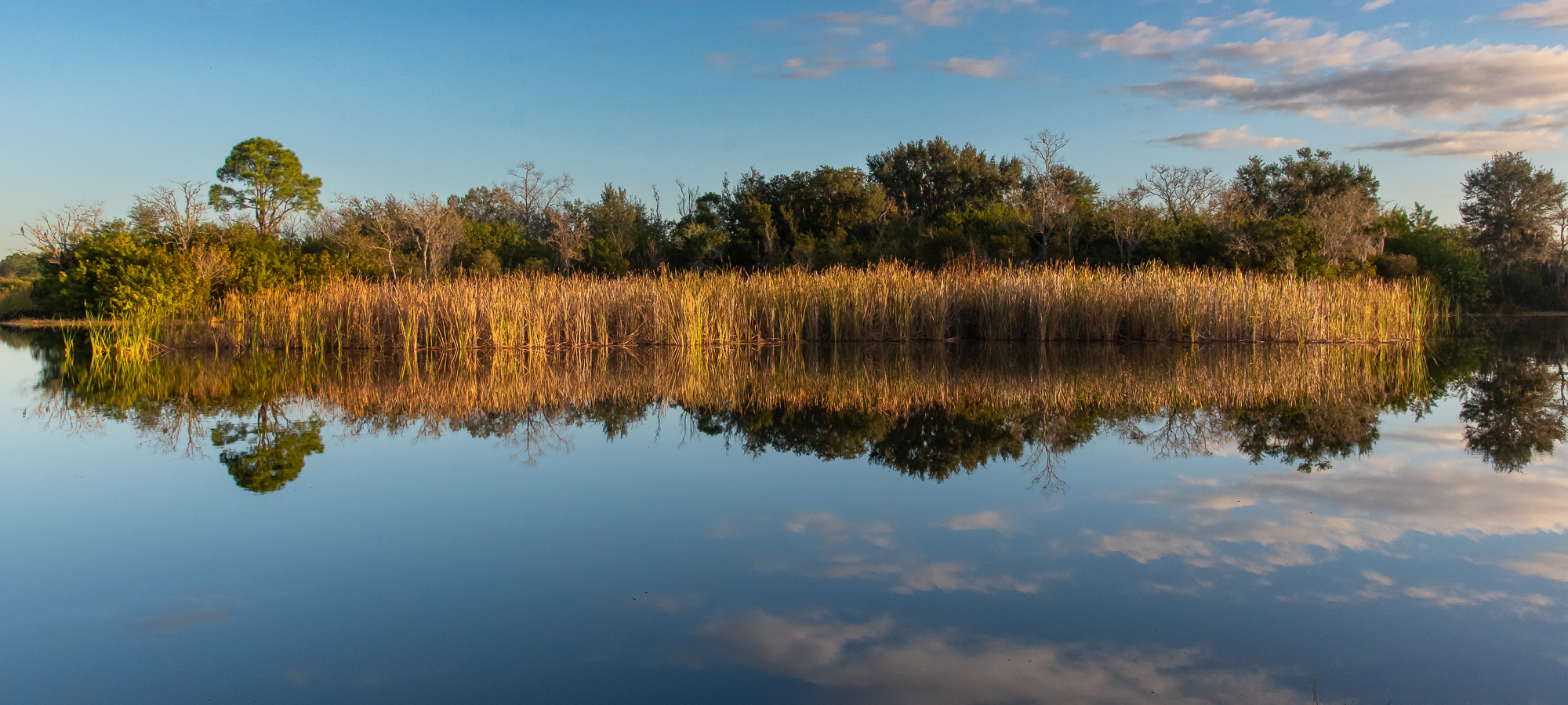
(Click images to enlarge, click again to zoom.)
Good news and bad news.
The good news: Our central Florida winter has not had any days below freezing. That means we have been pretty comfortable as we explore.
The bad news: Our central Florida winter has not had any days below freezing. That means mosquito larvae have not suffered much degradation and there will soon be many hungry adults looking for a feast. Additionally, our local strawberry crops produce sweeter fruit when we have a couple of cold weather events, as the berries remain on the plants longer allowing more sugar to develop.
Our goal is clear. Enjoy being outside more since it’s so warm and cozy. Stock up on skeeter spray and sugar.
Check.
One of our recent warm-ish (Gini needed a sweatshirt) and cozy outings took us through some local territory where it became increasingly obvious that Nature abhors a calendar. Or at least ignores them. Spring is “officially” (so, there!) not arriving until the third week of March. Imagine our surprise <(this is known as “sarcasm”) when we encountered birds engaging in “Spring” migration, flowers blooming and – gasp – actual nest building taking place! Our minds were boggled.
Well, perhaps not completely boggled. We are, after all, spoiled native Floridians and if the winter had produced two days in a row below 40 you would have been able to hear us whining about it all the way to Timbuktu, which, I think, is a very long way from here. We bravely take these abhorrent non-freezing, snow- and ice-free days in our flip-flop stride. (Except for Gini. Below 50 and out comes that sweatshirt. I try not to roll my eyes.)
Turn up your heater, pretend you’re with us in the sub-tropics and enjoy the day!
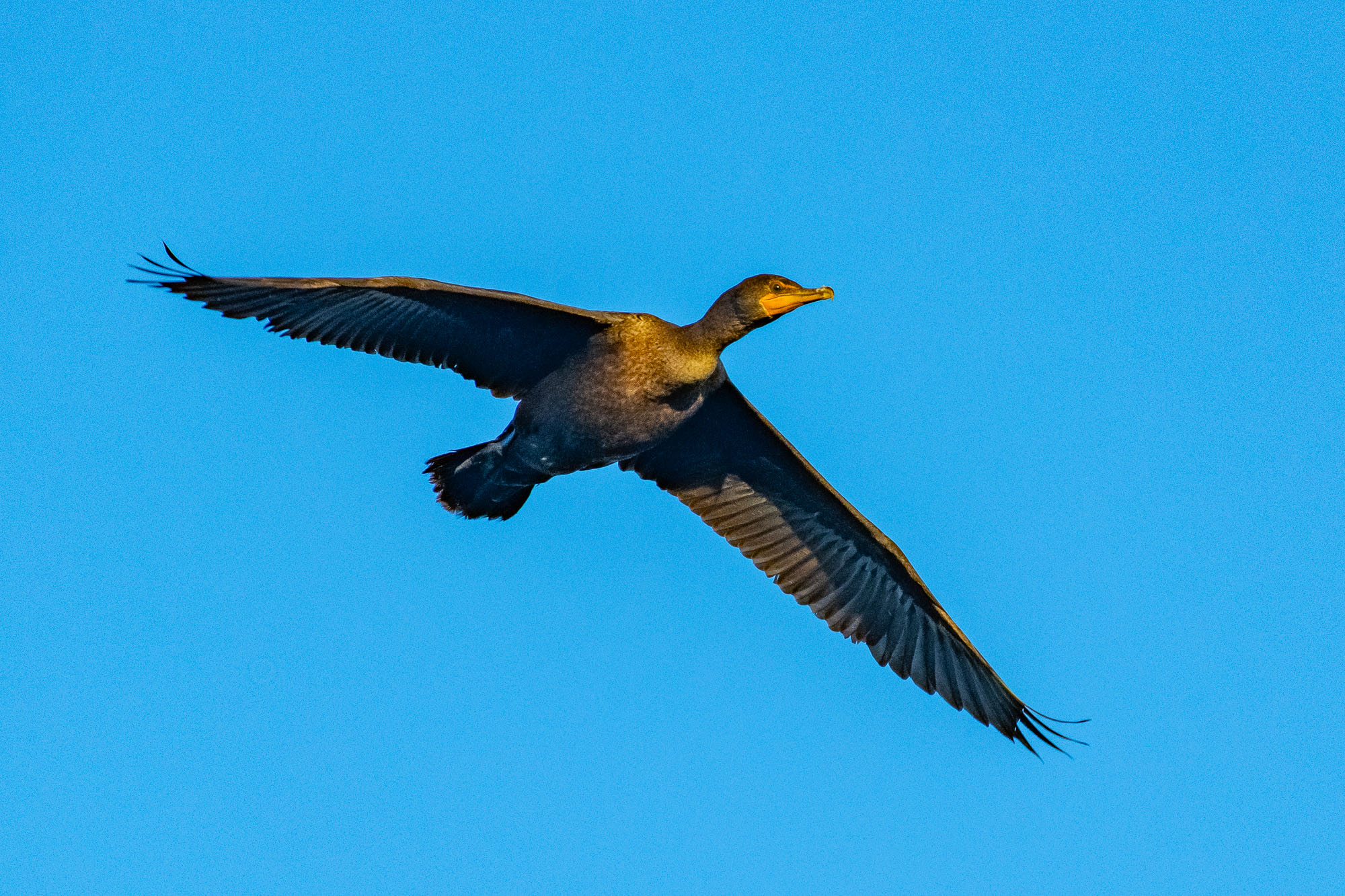
Double-crested Cormorants roost in nearby wetlands and at dawn begin spreading out across the lake-studded landscape to find a good fishing area.
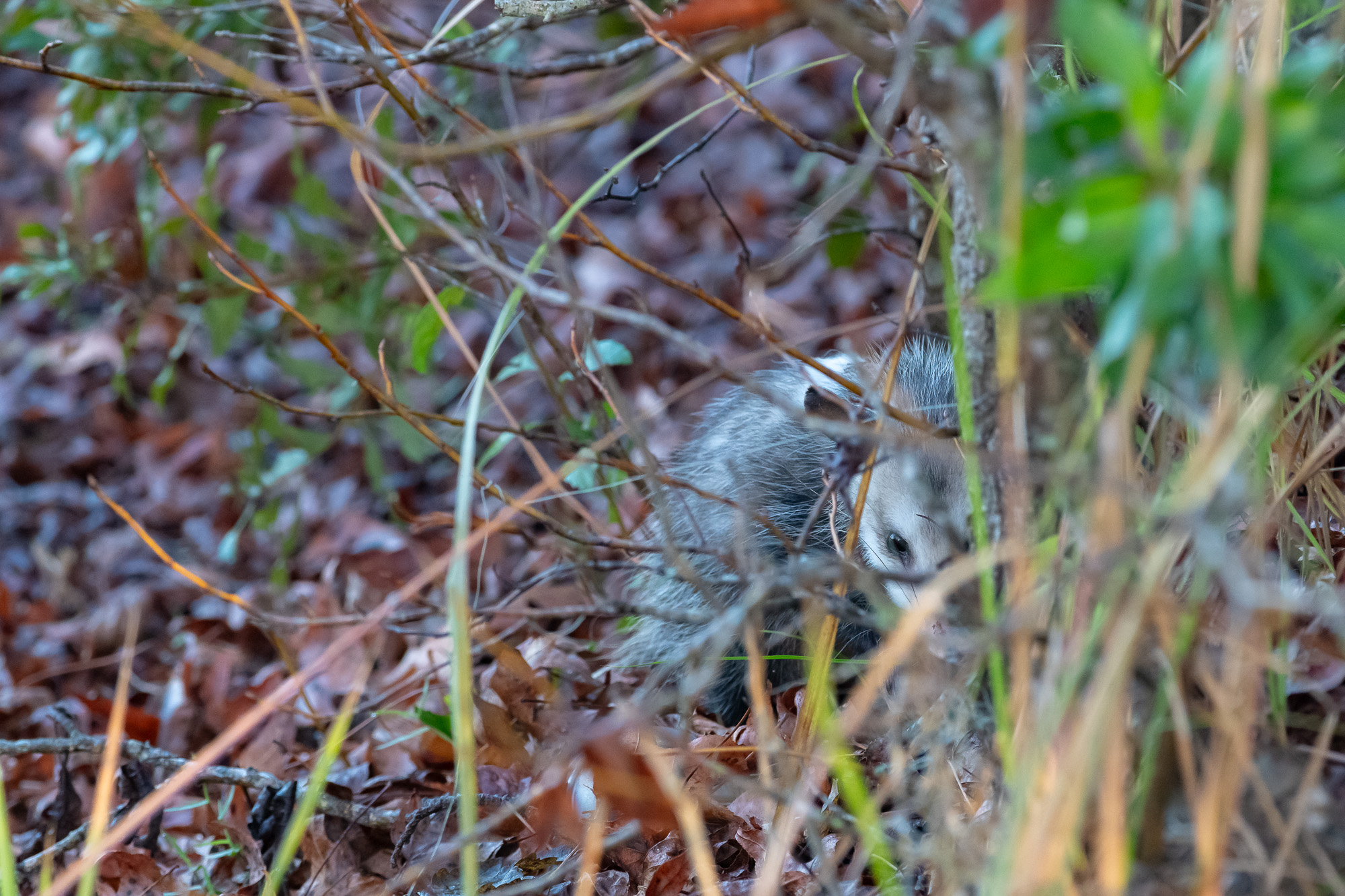
You know the feeling. Someone is looking at you. You turn this way and that and, there – a pair of dark eyes examining you to see if they should run or hold still. I slowly backed away and took a quick pic of the young Opossum.
Escargot for breakfast. Beats me how Limpkins can enjoy the things with no lemon and garlic butter.

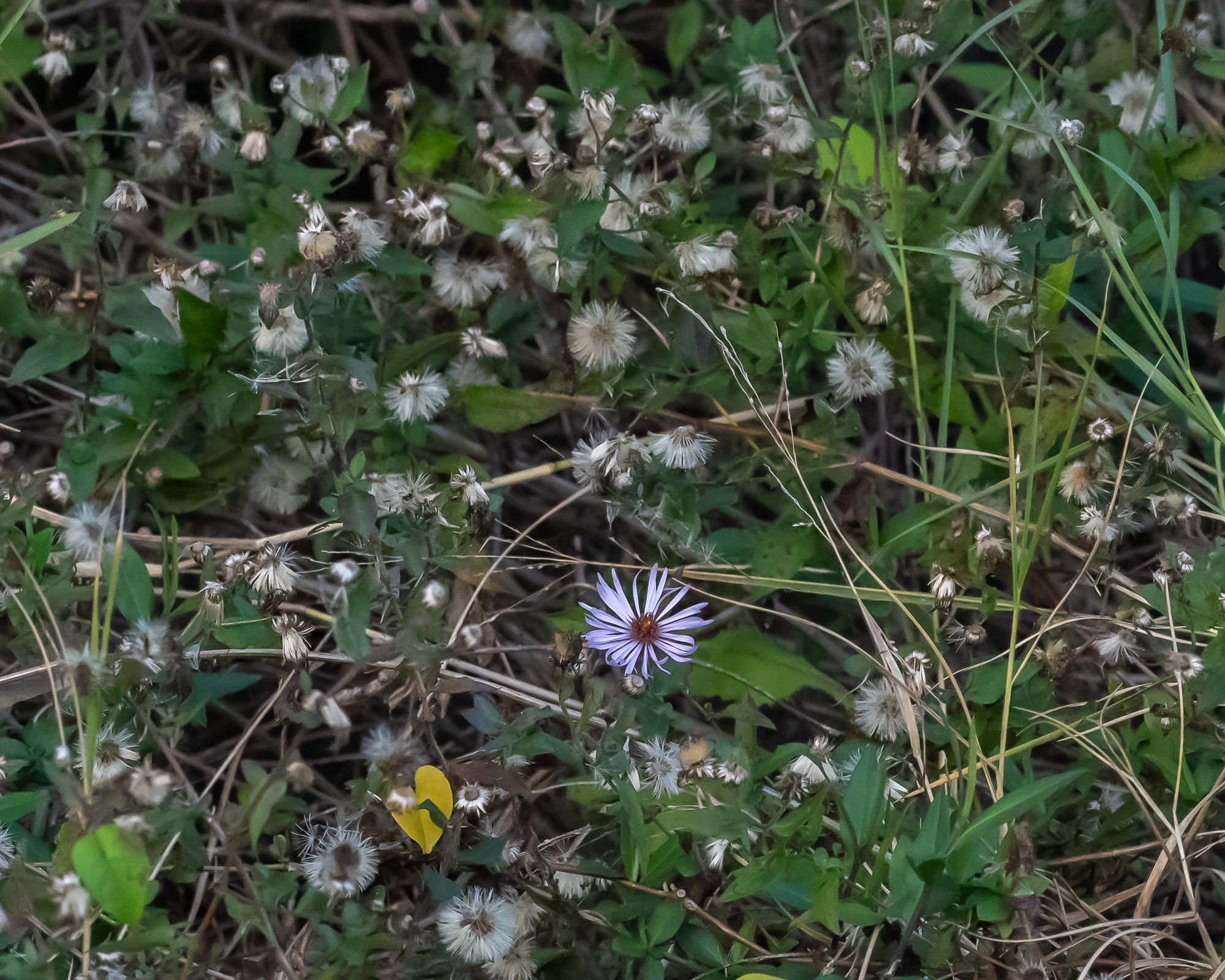
Most of the Climbing Aster (Symphyotrichum carolinianum) has bloomed and gone to seed. Except one lovely lavender holdout who remained for us to enjoy this morning.
Osprey nests throughout our area are being built, re-built and spiffed up. Soon, there will be new mouths waiting for fresh fish to be delivered.


Is it a new bloom or has it been here all winter? We are just thankful this Indian Blanket (Gaillardia pulchella) is here at all.

One of our winter visitors, an Eastern Phoebe, is happy for the warm weather since it means more insects will be out and about. She would like to invite a few for breakfast.

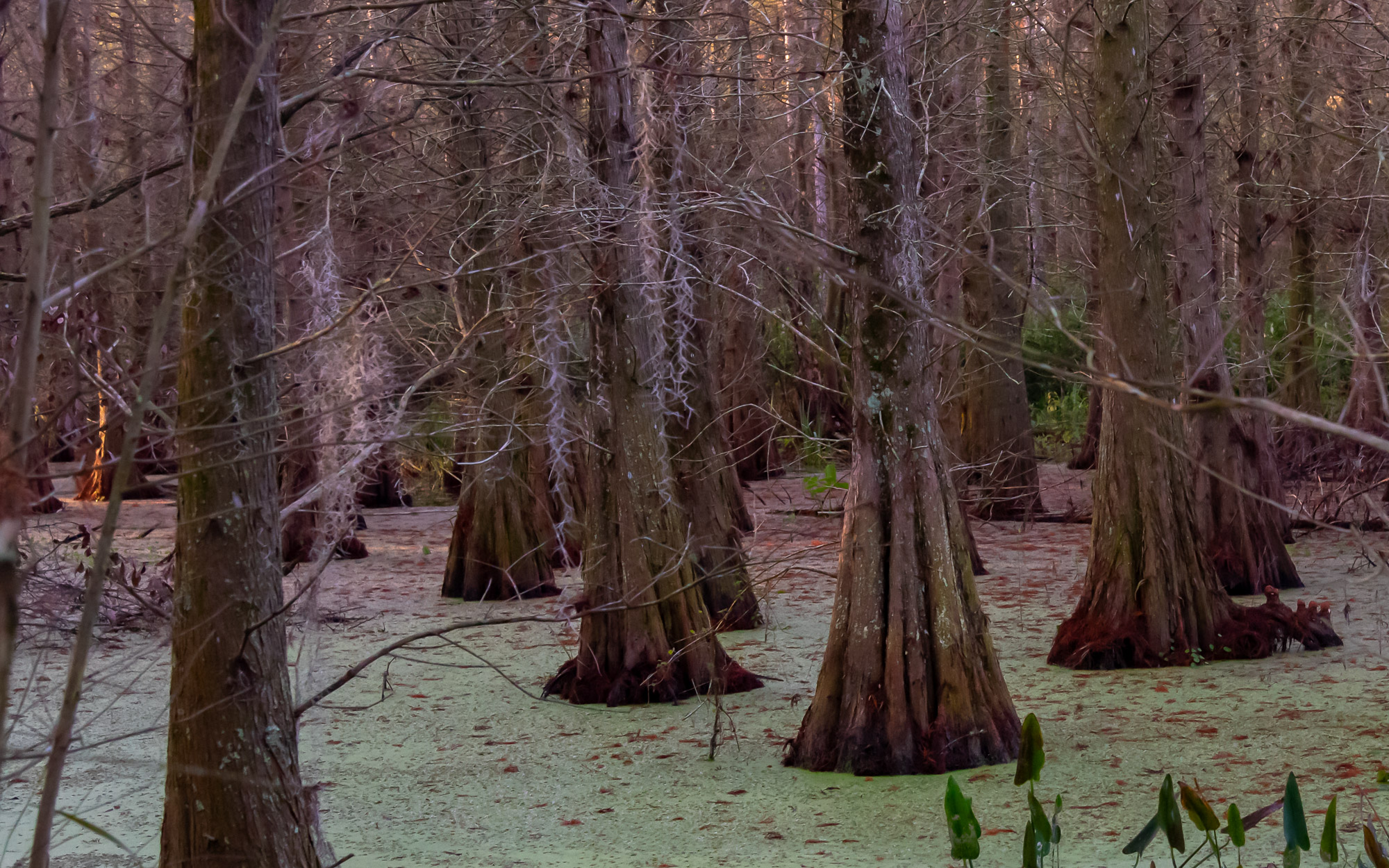
It takes awhile after sunrise for the cypress swamp to allow some light to penetrate.
During fall and through much of the winter, Burrmarigold (Bidens laevis) blooms in masses along the edges of wetlands, creeks and lakes.

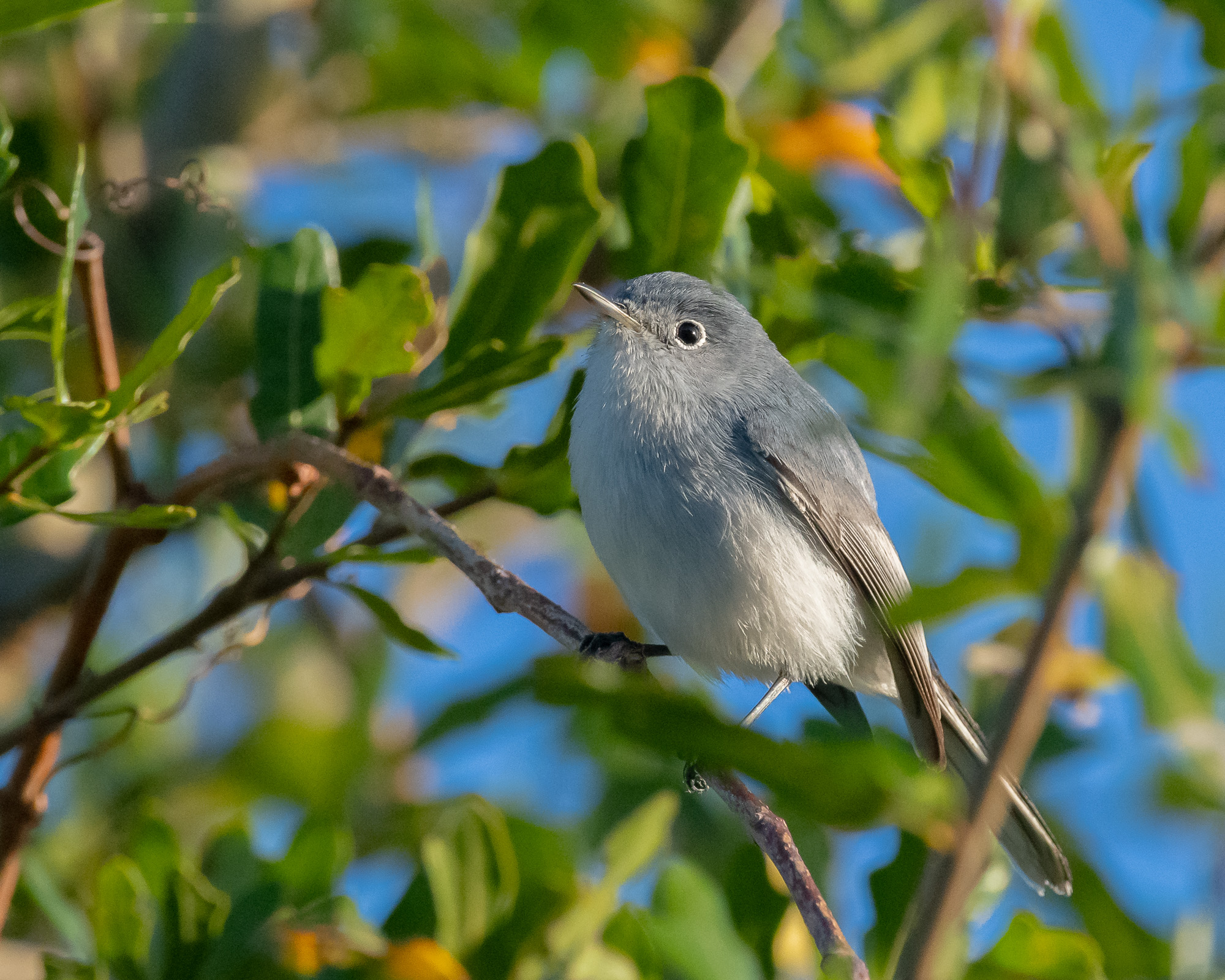
Blue-gray Gnatcatchers are beginning to form groups as they hope there will be safety in numbers during their upcoming long migration flight northward. Many of these small, quick-moving bug catchers will remain with us all year. Hopefully, they will feast on mosquitoes. Lots of them.
It has pretty, feather-like leaves along its twining branches. It has pretty pale pink flowers. It has pretty bright red seeds encased in its rough brown pod. It is an invasive plant from Asia which can choke the life out of native plants. Rosary Pea (Abrus precatorius).
Oh. And it’s poisonous. Don’t eat the pretty seeds. Wash up if you handle it.

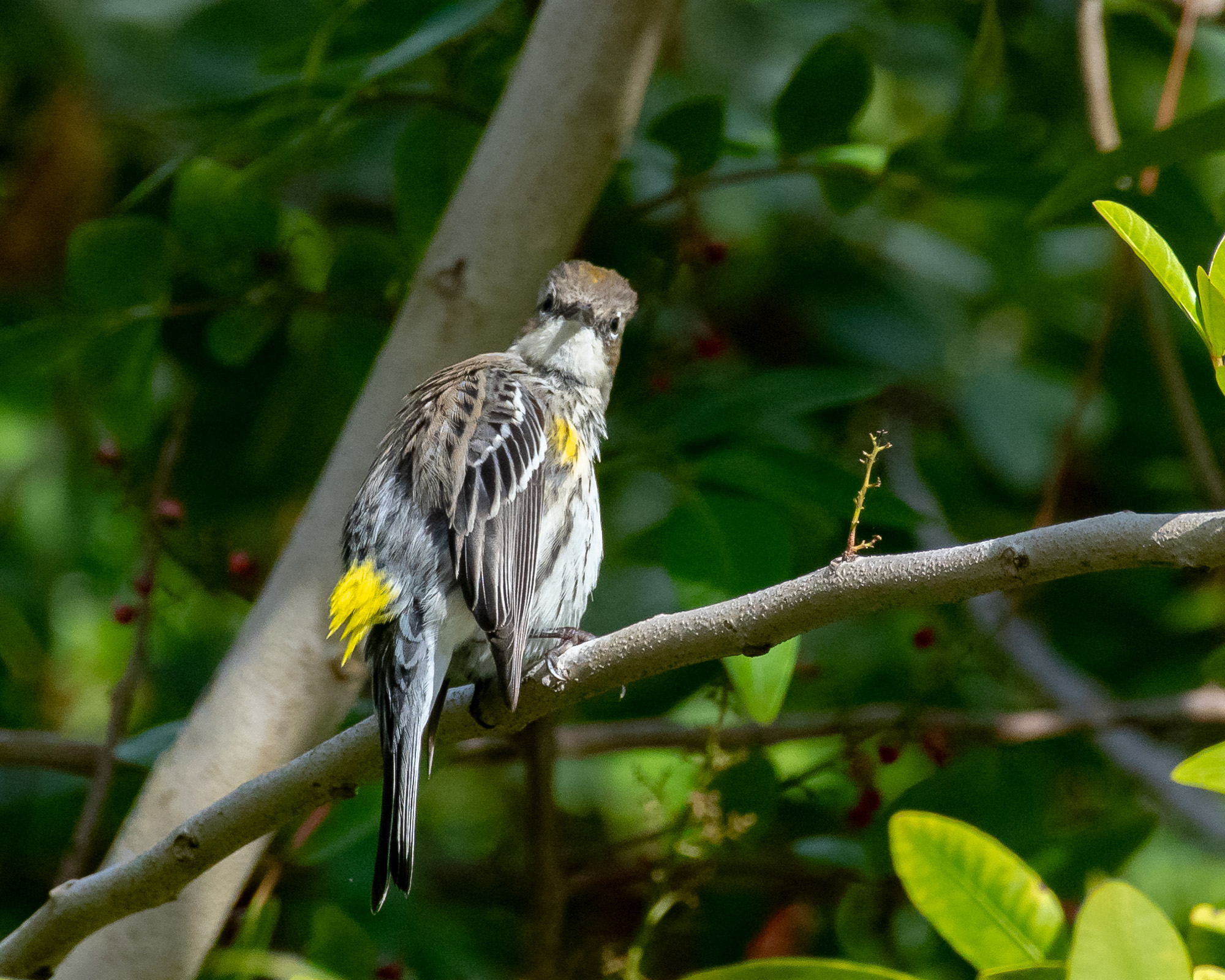
Another one of our handsome seasonal visitors. The Yellow-rumped Warbler arrives a bit later in the Fall than some other songbirds and hangs around a bit longer in the Spring. This one is preening which is important for good health and — What? — Me? — Taking a picture of you bathing? — Well, yes, I guess I was. — Sorry about that.

A small cypress tree bayou leads from a lake into an adjacent wetlands.

An immature Bald Eagle flew low overhead. Time for us to fly toward home.

We hope Spring arrives ahead of schedule wherever you may be. For those south of the equator, we hope Autumn will be kind and deliver just enough rain without overdoing it. Whatever your season may bring, embrace Nature and live your best life.
Enjoy your search for a natural place and come back for a visit!
(Click on images to enlarge, click again to zoom.)
“Who would think there could be so much diversity out here?” Once again, Gini was absolutely correct.
We humans are quick to assign stereotypes to our thoughts and ideas. When we first moved to west Texas, it looked so desolate. That impression was exacerbated by our military peers, who had also recently moved there, as they bemoaned the flat, brown landscape that, presumably, could not possibly harbor any life form other than scorpions and tarantulas.
Our desire to explore nature was strong. We found plenty of arachnids among the mesquite, scrub oak and prickly pear, but we also found an amazing variety of birds, animals, insects and flowers. Thank goodness we continue to possess the desire to “see for ourselves”.
Today we are a couple of hours south of where we live and the environment is a bit different than our usual venues. No forests or dense swamps, but pasture and grassy fields dotted here and there with trees, ponds and streams. This is Florida cattle country.
Not many, including those living in the state, know how much we depend upon the cattle industry. Spanish explorers brought cattle with them for food over 400 years ago and released many of those animals as they explored further inland. Florida has the longest history of ranching of any state in the United States. Over four million acres are involved in cattle production.
We began the day under very heavy cloud formations and played tag with rainstorms that criss-crossed the open land all morning. Consider our efforts in such inclement conditions as being in solidarity with our European neighbors and others who have had a very damp winter. No gratuitous blue skies or bright sunny images this time.
The open pastureland is bordered in places by wooded areas consisting primarily of oak, bay, hickory and pine trees. Plenty of water attracts all sorts of wildlife, including migratory and resident birds. Gini was right. One might never suspect the variety of life which calls this place home.
Join us for an illustrated tour of Sunshine State ranch land.
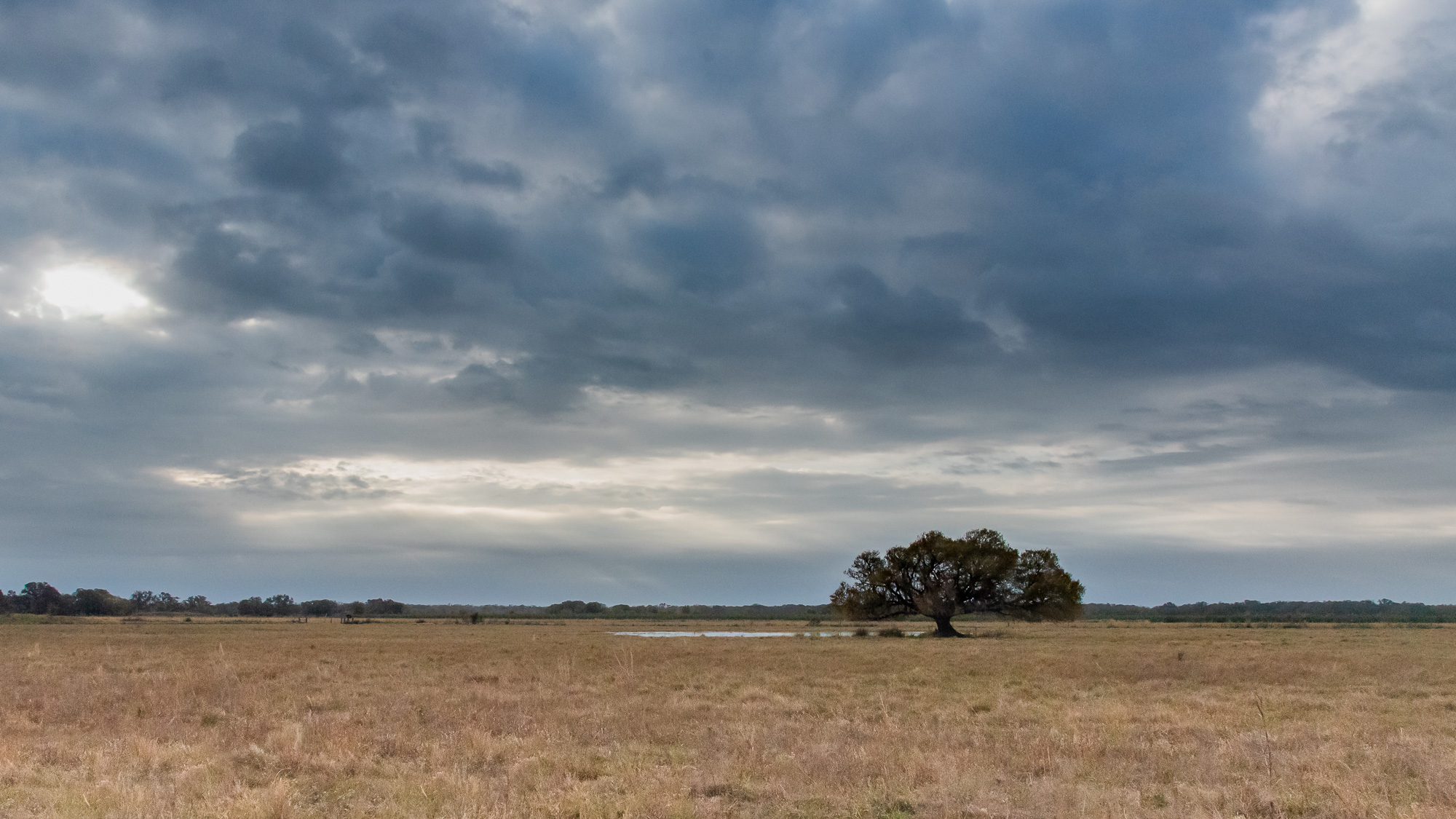
A lone oak tree beside a pond has been sculpted by years of wind.
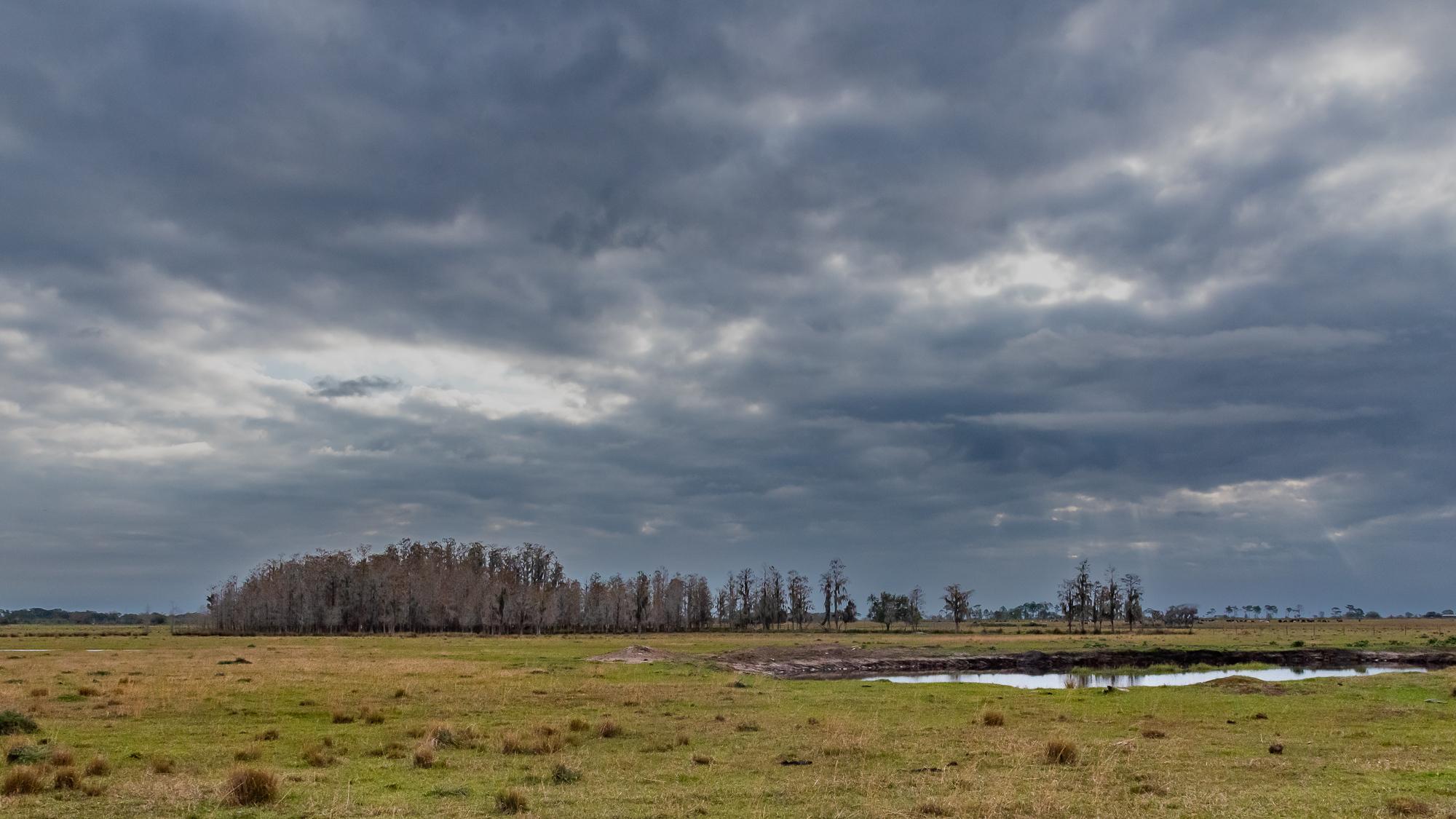
Although there are no vast swamps here, cypress domes are still present to a small degree. Cypress trees grow tallest at the center of a dome where the water is deepest.
Even in a pasture, the Great Blue Heron finds plenty of opportunity to make a home. Where there is water, there is life.

At quite a distance, we found a flock of over 100 Dowitchers roosting at the edge of a pond. Detail was not sufficient to determine if they were Long- or Short-billed and none were calling to help us out. That number is certainly a migratory group.

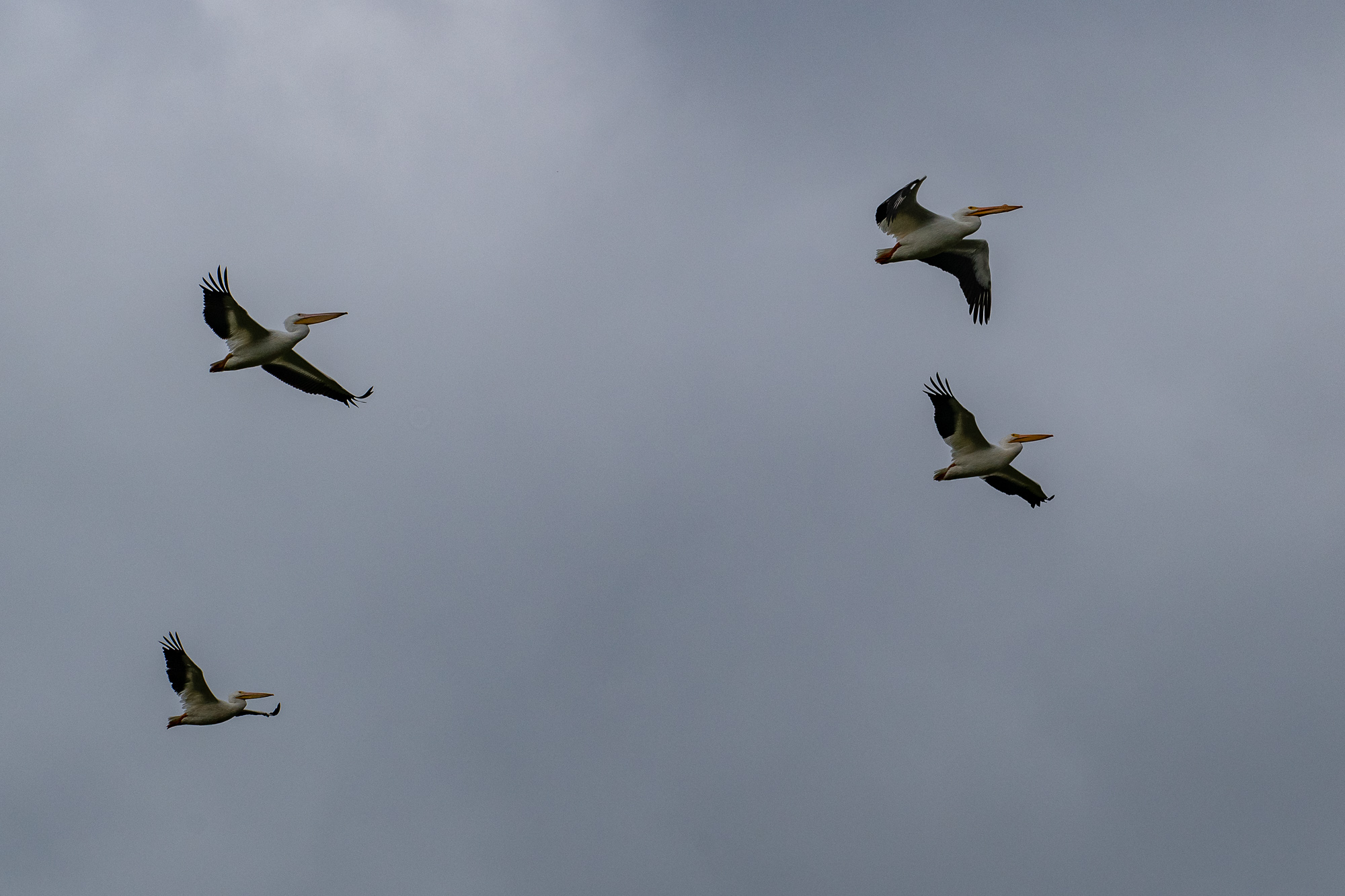
Throughout the morning, we spotted small groups of American White Pelicans. Some were just rousing from the night’s roost and others were headed to locate a breakfast area. In the winter, it is not unusual to see flocks of these big birds from a few up to several hundred.


It was apparently still a bit too early for the pink brigade to pose. Roseate Spoonbills ignored the alarm clock. And us.

When circling high overhead, Turkey Vultures appear almost all black. Up close, it’s surprising how much brown plumage they have. I think this is a young adult, based on the diffused red on its head and dark bill tip.

Creeks connect some of the ponds in the area and rains can have them flowing at a fair rate. Again, water attracts a great variety of life forms.

Unlike their Dowitcher cousins, this pair of Greater Yellowlegs politely called (incessantly) to allow us a proper identification.

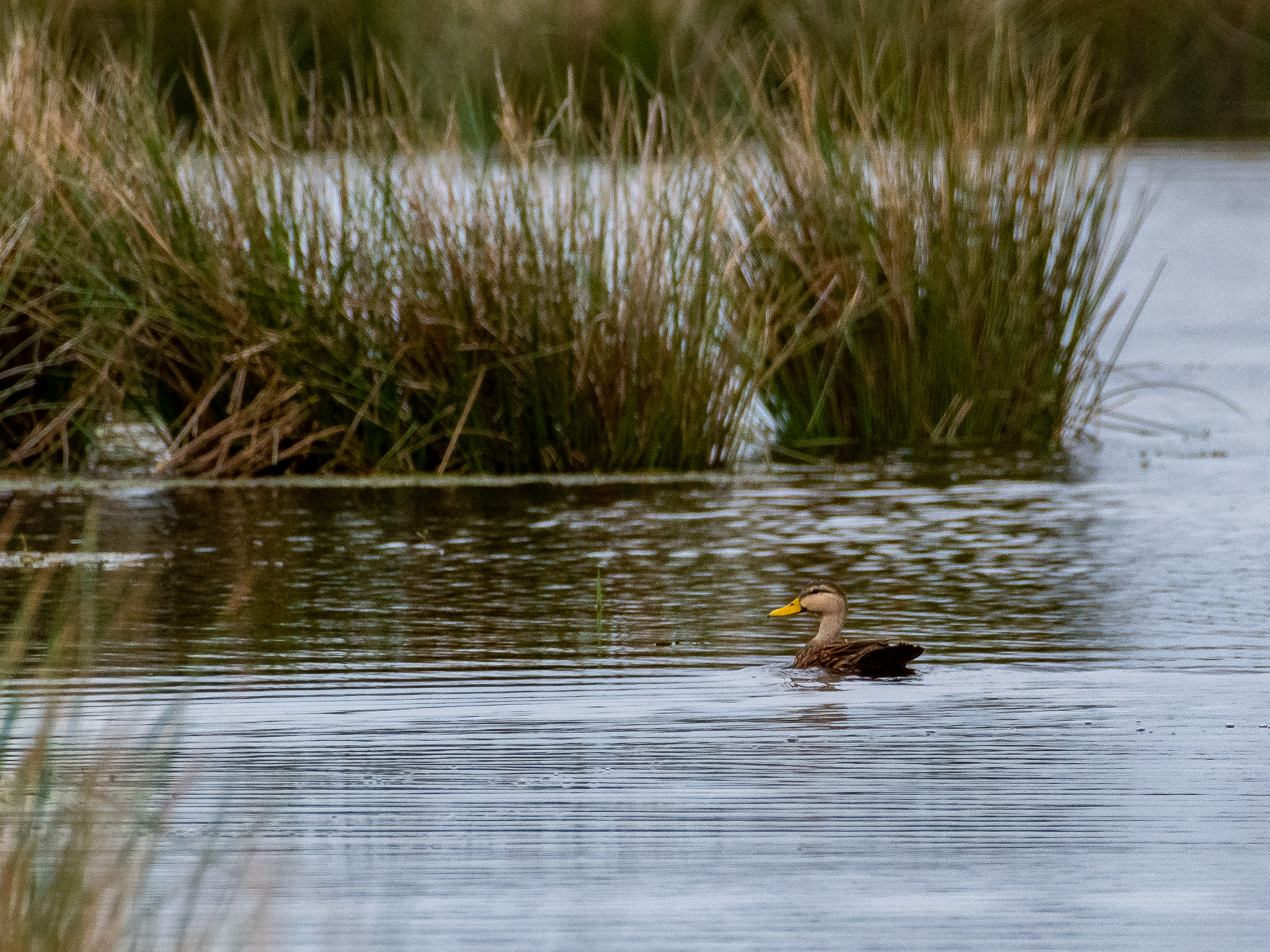
Ponds. Ducks. In this case, a Mottled Duck.
The screams of a Red-shouldered Hawk turned our attention to a group of trees and we quickly discovered what the fuss was all about. An immature Bald Eagle was harassing a hawk perched atop a big oak tree. The eagle flew one way, the hawk headed in the opposite direction.


With all that grass there were bound to be grass-loving birds around. There were. Lots. Oh, here’s one now. A migratory Savannah Sparrow.

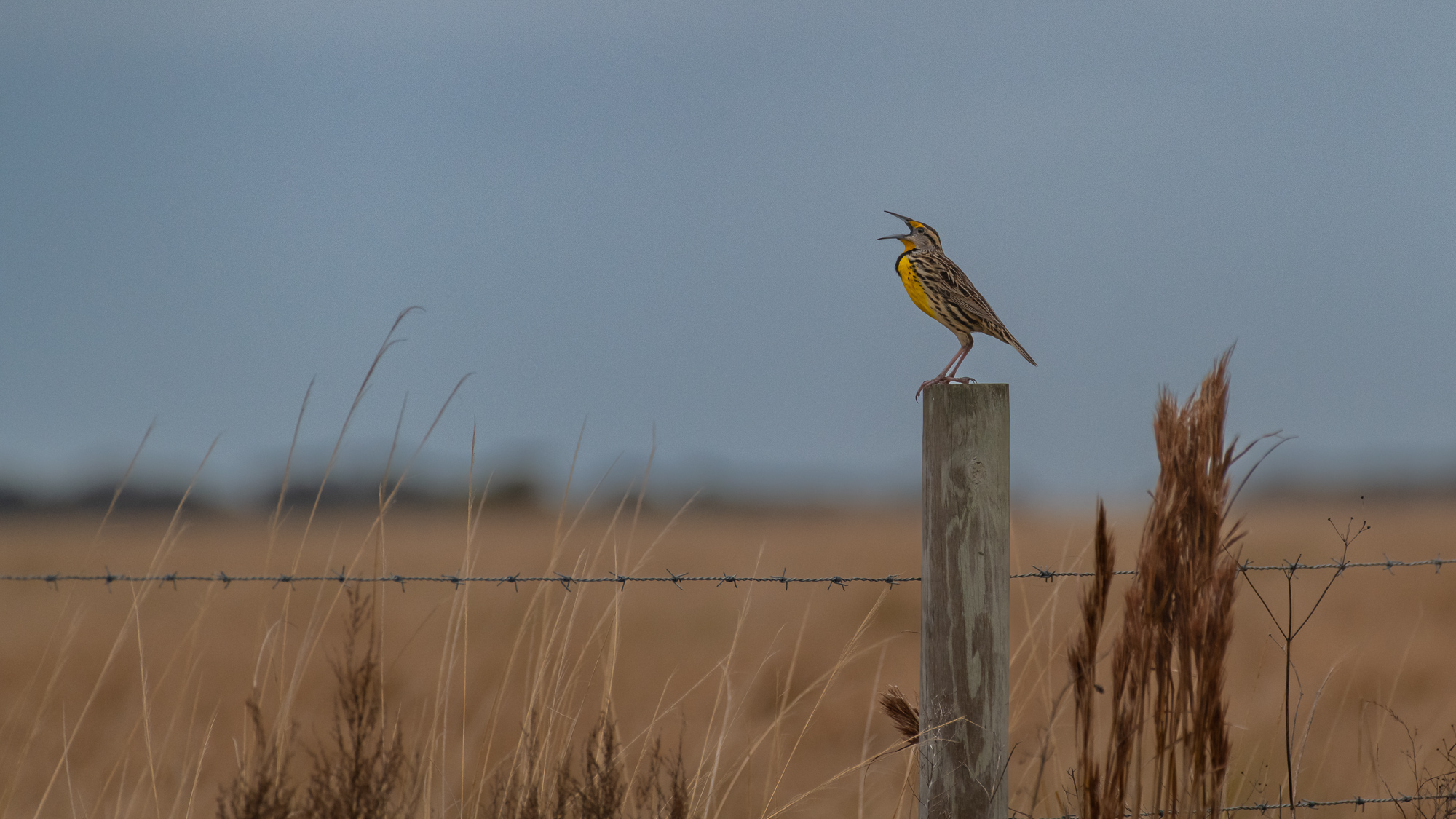
From the time we arrived in the area until we left, the sweet, clear songs of Eastern Meadowlarks filled the air. We appreciated it.
The hay had been made while the sun shone and now the bales were ready for picking up. As soon as the storms are finished. We took this one as our cue to head home. Reluctantly.

Florida has a few surprises for those unfamiliar with its history. Cow hunters (most have adopted the western epithet “cowboys”) are still on the job throughout the state. Vast pastureland provides incredible opportunities to observe Nature. Stereotypes of swamps, ‘gators, beaches and Mickey Mouse can be dispelled quickly.
Enjoy your search for a natural place and come back for a visit!

“Look at those red eyes!”
No, Gini was not referring to me. A handsome (that immediately disqualifies yours truly) brown and white bird ran, stopped, cocked its head, ran a few more steps, stopped, grabbed a grasshopper, gulped it down and – wash, rinse, repeat.
The behavior, plumage and beautiful dark red eyes belonged to the Killdeer, a member of the Plover family. Although a “shorebird”, it is more often encountered inland, running about on recently cut lawns and fields with short grass.
We are both native Floridians and had similar childhood experiences. She went fishing often and mostly in the salt waters of the Gulf of Mexico. I went fishing often and mostly in the fresh water lakes of the peninsula’s interior. Both our families loved and respected nature and we have nurtured that love throughout our relationship. Hopefully, we have passed the gene to our children.
During our early married life, we were drawn to explore nature (surprise!). One way we accomplished that was camping. A tent, sleeping bag, camp stove – heaven. It was inevitable that we would find another couple who had similar ambitions. Our first camping trip together in the pine woods of east Texas sparked a hobby which grew into an inferno and has now settled into a warm glow of infinite satisfaction.
As I crawled from the tent and prepared to get a campfire going, I spotted Butch in the distance. He was looking straight up with a pair of binoculars. I wandered over and asked what he was doing. “Pine Warbler”.
The rest is history.
From the pine woods of east Texas, to the arid landscape of the western Lone Star state, to northeastern Germany, to the eastern shore of Maryland, the hills of West Virginia, the Danube River valley, the Texas Hill Country and, at last, back to our Florida home – our explorations of nature have included a love of birds.
For many years, we were “bird watchers”. We were always excited about seeing a new species and trying to identify it. The hobby was incorporated into our camping trips and regular drives in the countryside. When we returned to Florida following a 20+ year military career, I encountered a couple of guys who asked if I wanted to go birding in a newly developing wetlands. “Sure.”
They introduced me to something called “eBird”. That moment began my transition from “bird watcher” to “birder”. No longer content to wander around in the great outdoors and be happy to see a bird, now I meticulously planned trips for the sole purpose of locating specific bird species. Sightings were digitally listed and whisked instantly to vast data banks at Cornell University. This information is used by scientists to study all aspects of ornithology and how best to manage natural resources in order to improve the lives of our planet’s birds.
For a small insight into what constitutes a modern “birder”, I highly recommend the comedy movie “The Big Year”. As a fellow-birder described his motivation for our mutual obsession: “I found out that not only could I strive to be the best birder around, but with eBird – I could keep score!“. That statement stuck with me for quite awhile.
Within the last couple of years, I have had an epiphany of sorts. Was I happy “keeping score”? Not. So. Much.
Gini and I began bird-watching as a result of our enjoyment in experiencing nature. My focus changed as I became more and more immersed in the “keeping score” culture of birding. As I began to concentrate on achieving better quality photographs of birds, I started to include images of the birds’ habitat, instead of just a “mug shot”.
“Birding” trips now began to evolve into “nature” trips. Exploring different habitats, discovering insect life, plants and flowers – our new mantra became “Birds, Blooms, Bugs”. We still make an eBird entry occasionally if we encounter something different. But the emphasis has changed from “keeping score” to “loving nature”.
It is winter in Florida. Now that I have preached at length on why we no longer focus on just birds, today’s images are: just birds. All of these are from a couple of hours on a recent morning and provide a small window through which, perhaps, you can understand why we became addicted to “bird watching”.
(Click on images to enlarge, click again to zoom.)

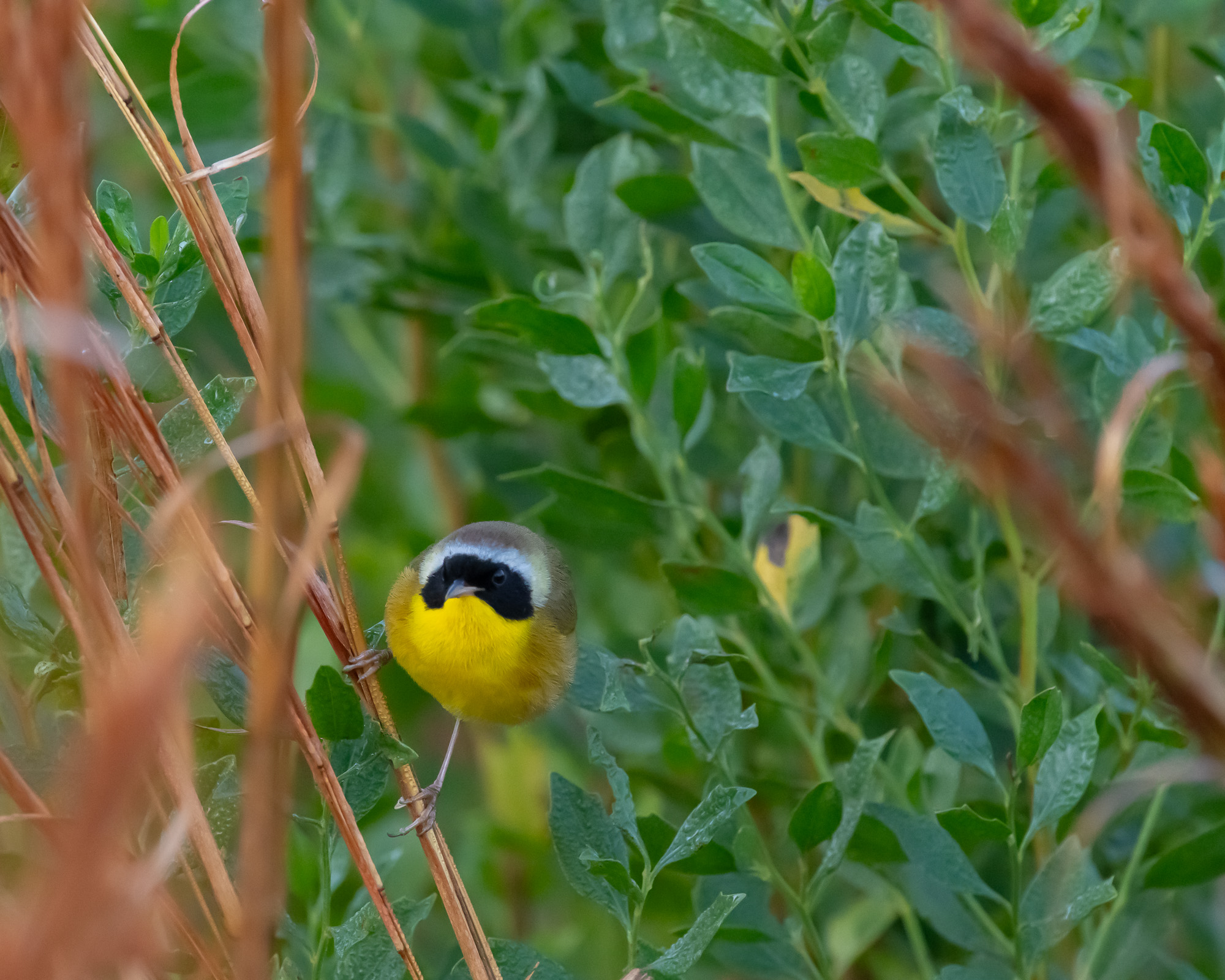

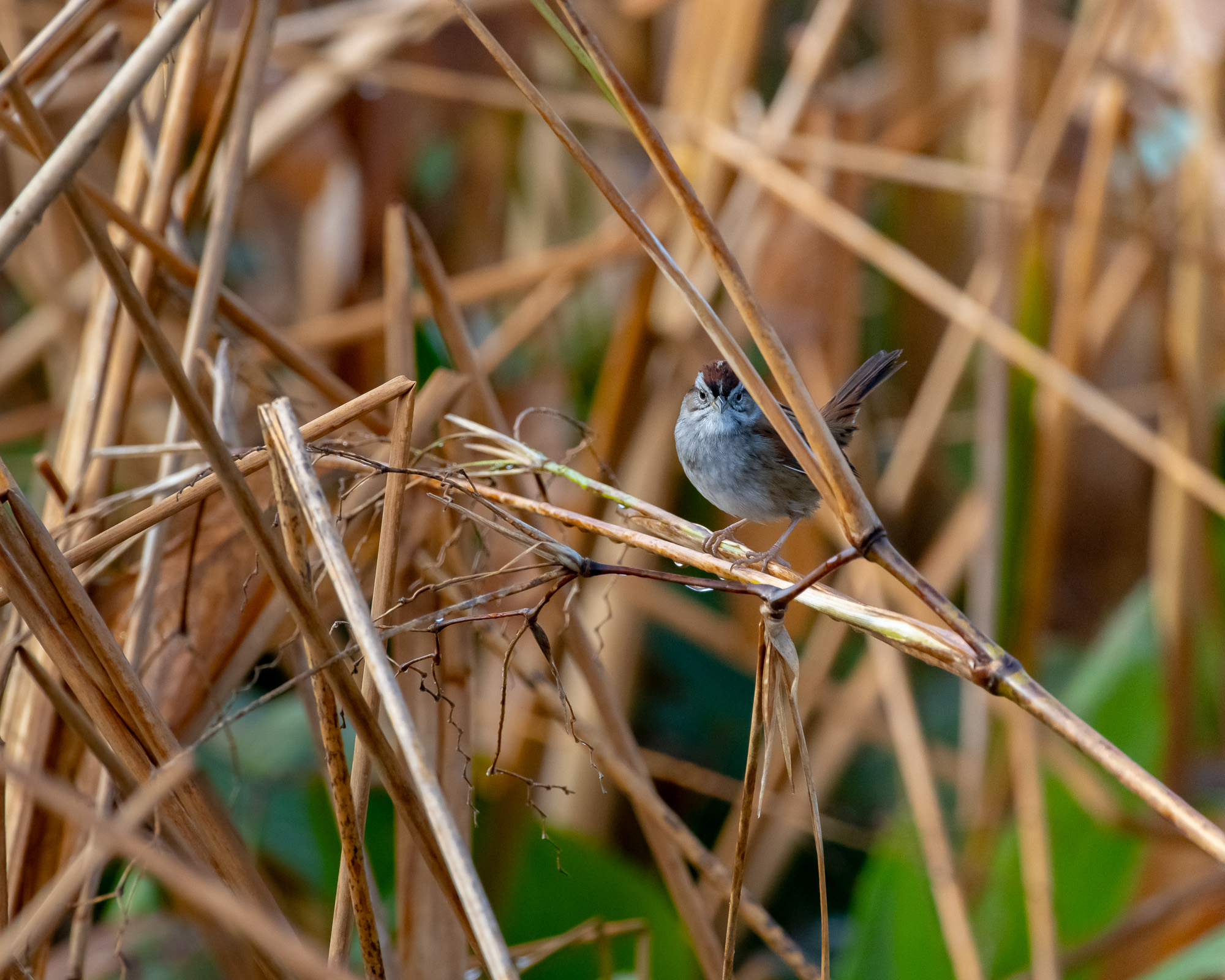


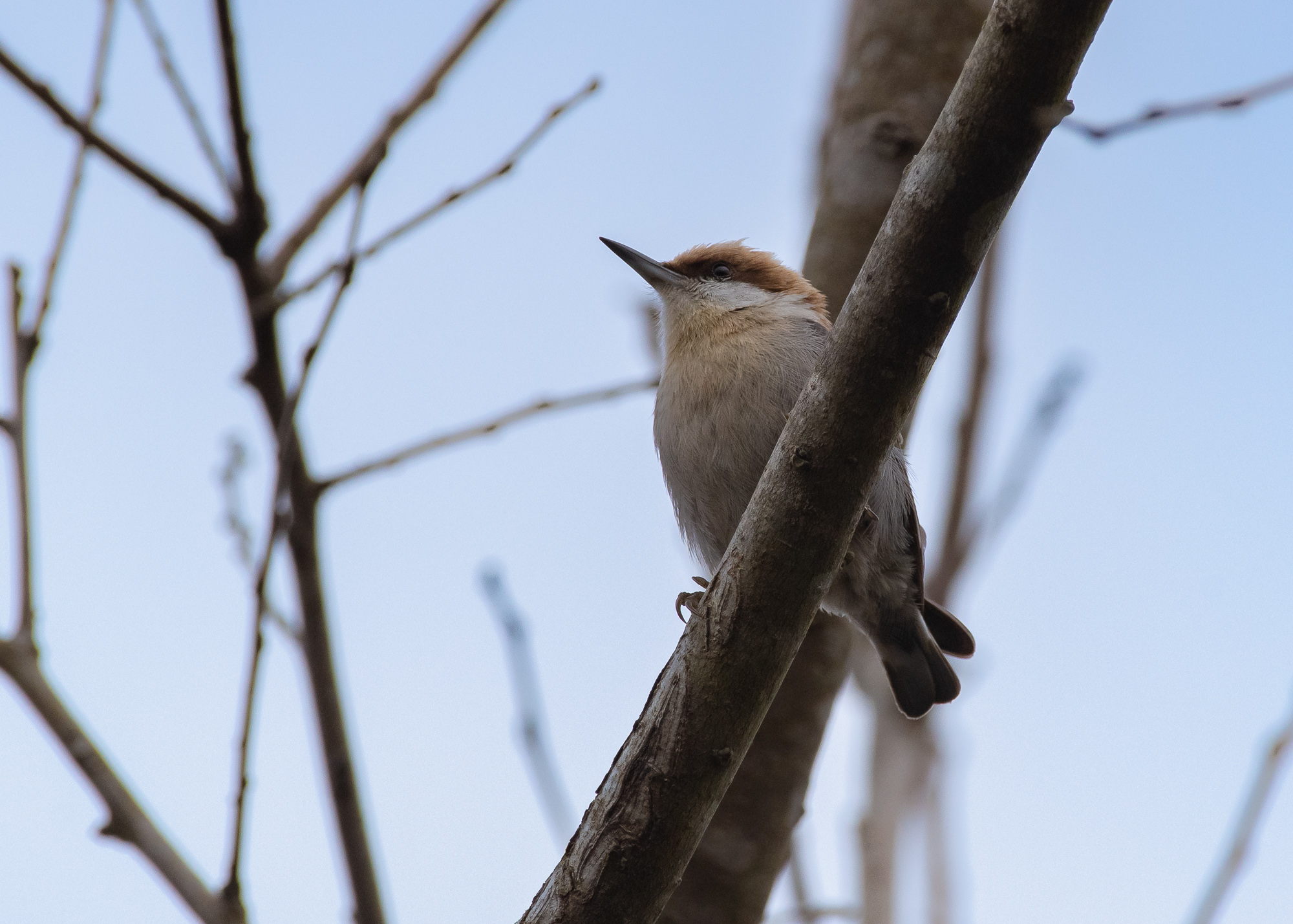

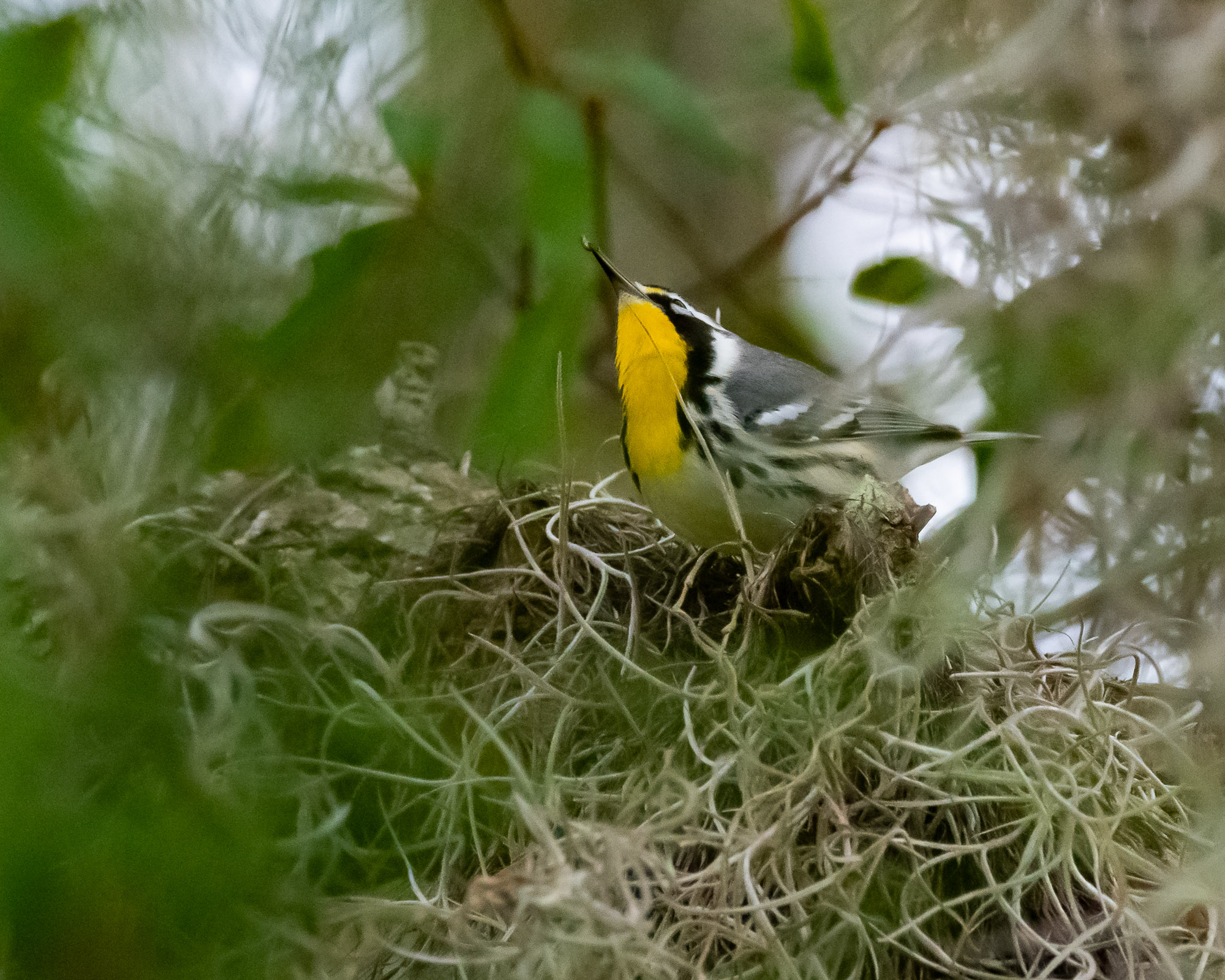
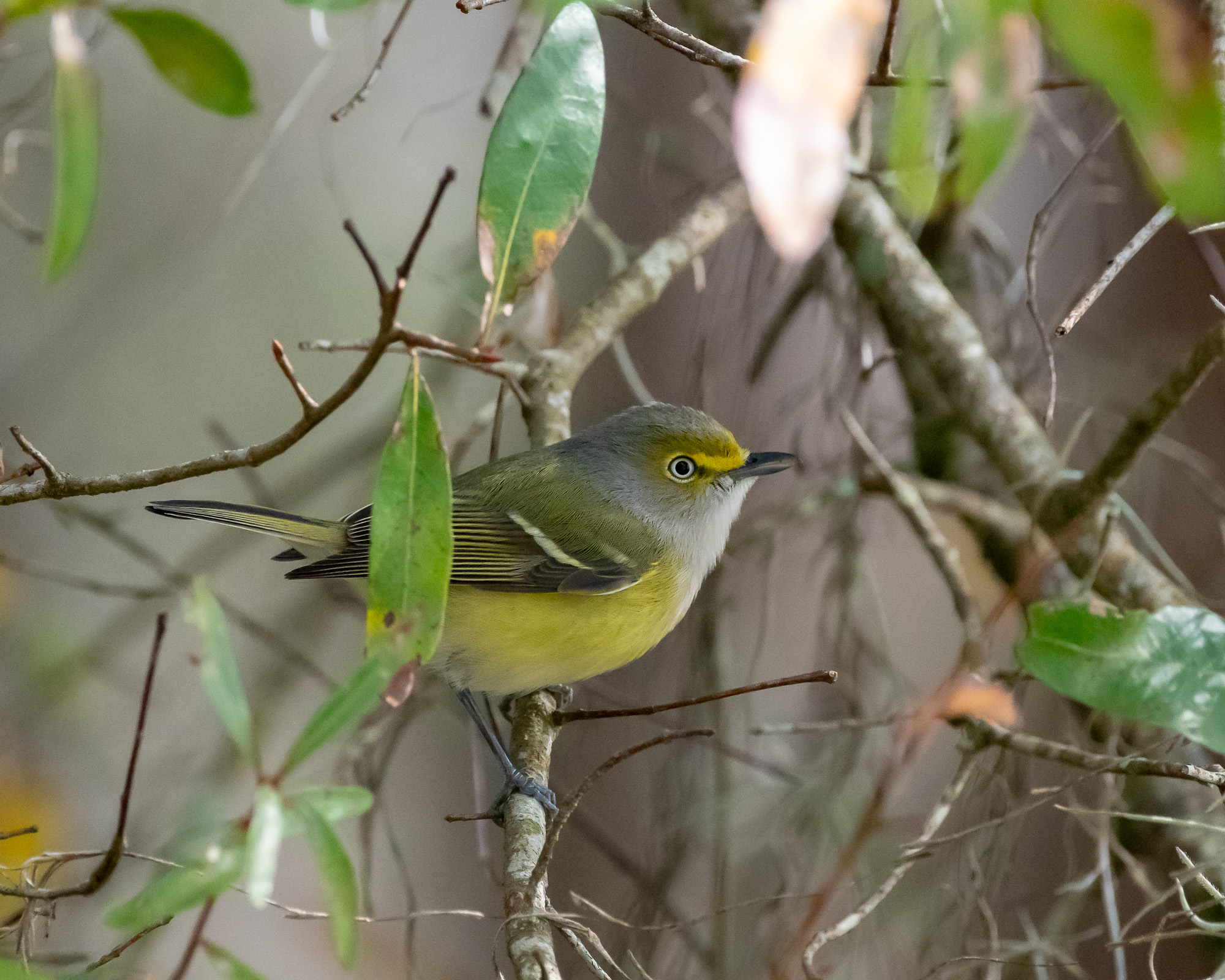
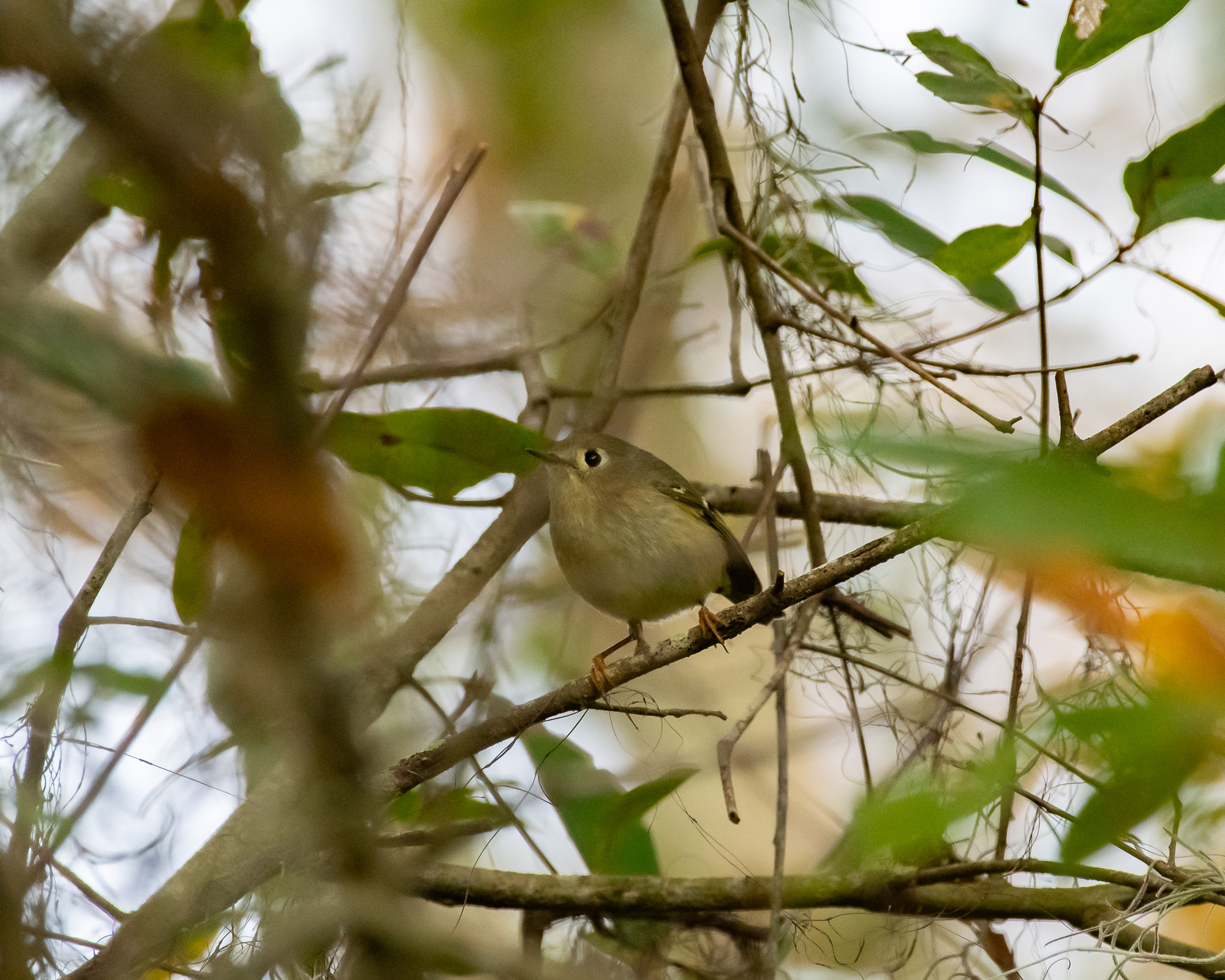


Gini and I began watching birds early in our marriage as a natural part of our mutual love of exploring nature. We (okay – it was ME) became absorbed in seeking new and larger numbers of birds and keeping score of those efforts via eBird. Our excursions to natural places have returned to encompassing everything we encounter. Full circle? Time will tell.
Enjoy your search for a natural place and come back for a visit!
(Click on image to enlarge, click again to zoom.)
A splash to our right caused us to reflexively look in that direction, although we knew the source. An Osprey rose from the lake’s surface with a small catfish, shook off excess water and flew to a nearby pine tree limb to enjoy her finny snack. She and her mate have been busy with their annual home-improvement project. Soon, the branches will have been arranged in a manner which she approves, a few leaves and soft Spanish moss will add just the right texture and muted decor suitable for the nursery. For now, though, plenty of protein is needed to ensure Mom remains healthy.
It was about 30 minutes past sunrise and it was “cold” this morning. “Chilly” if you are a southerner but not a native Floridian. “Pleasant” if you live in the nation’s mid-section. Downright “balmy” if you reside in the Dakota’s. Florida’s average winter temperature is around 61 F/16 C. This day dawned at 45 F/7 C. The good news? No wind.
In her inimitable common-sense philosopher fashion, Gini pondered why our world’s incredible technological advances have not yet figured out a way to make a copy of this morning’s weather so we can duplicate it on demand during the second week of August. In my inimitable no-sense ignoramus fashion, I had no answer.
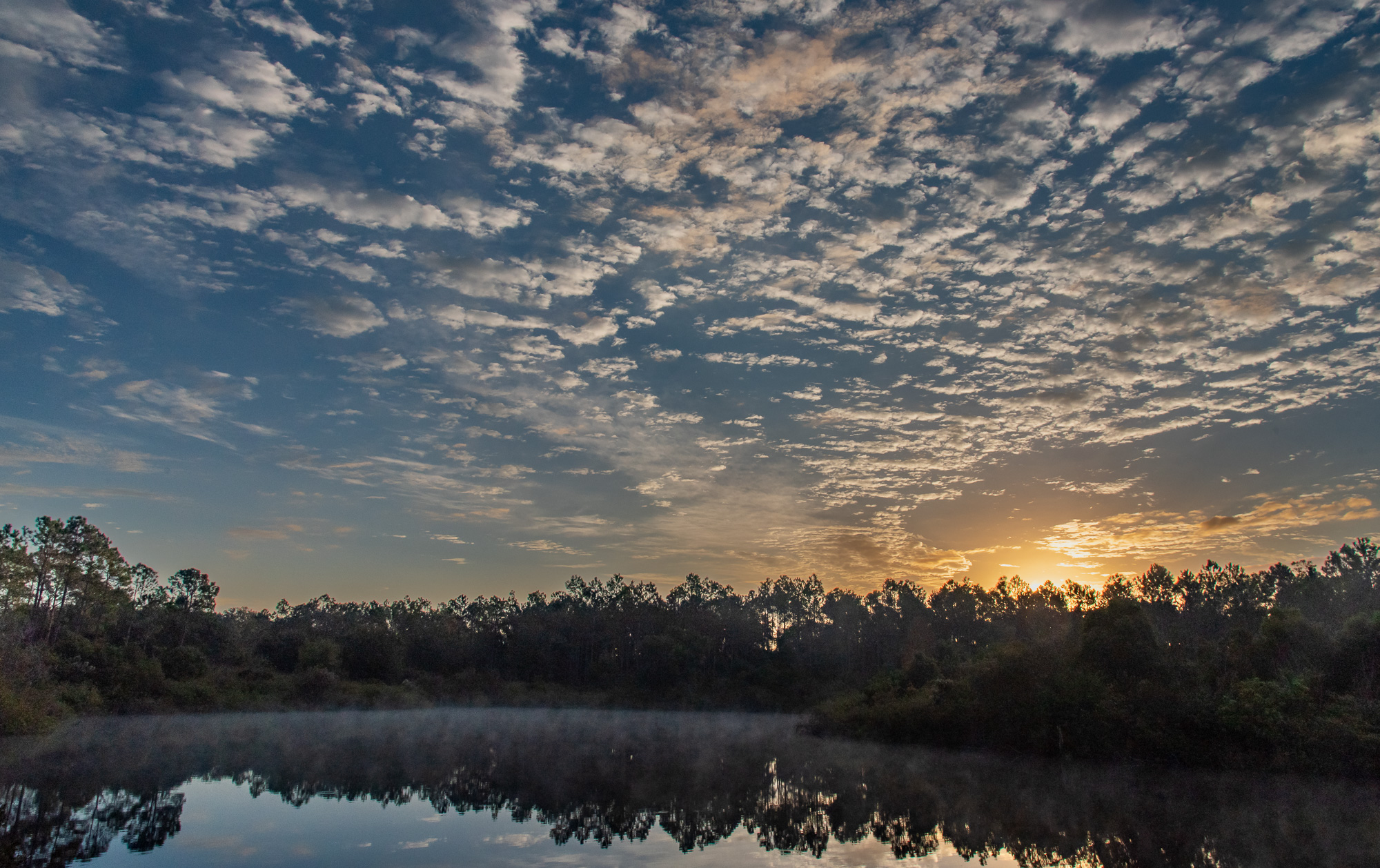
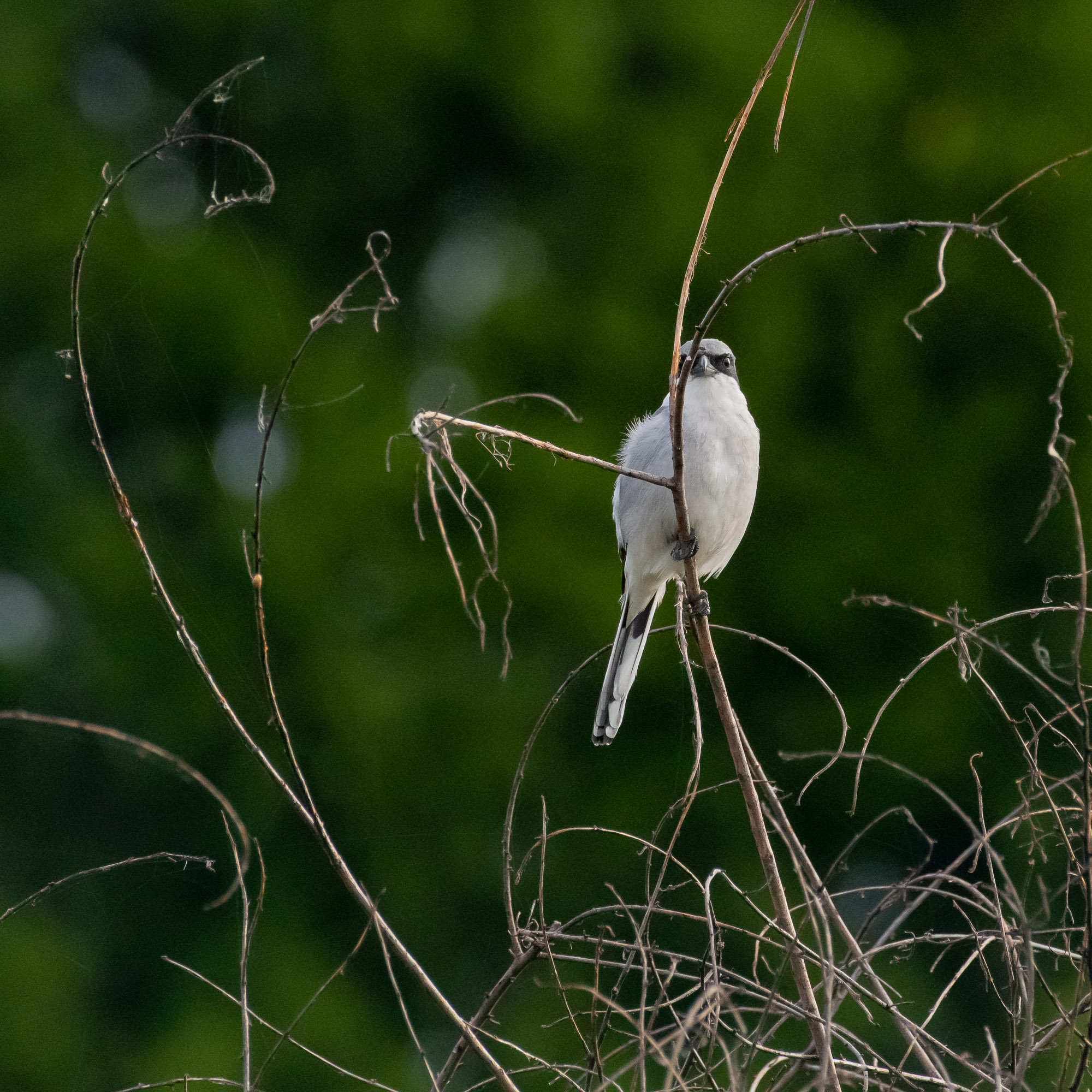
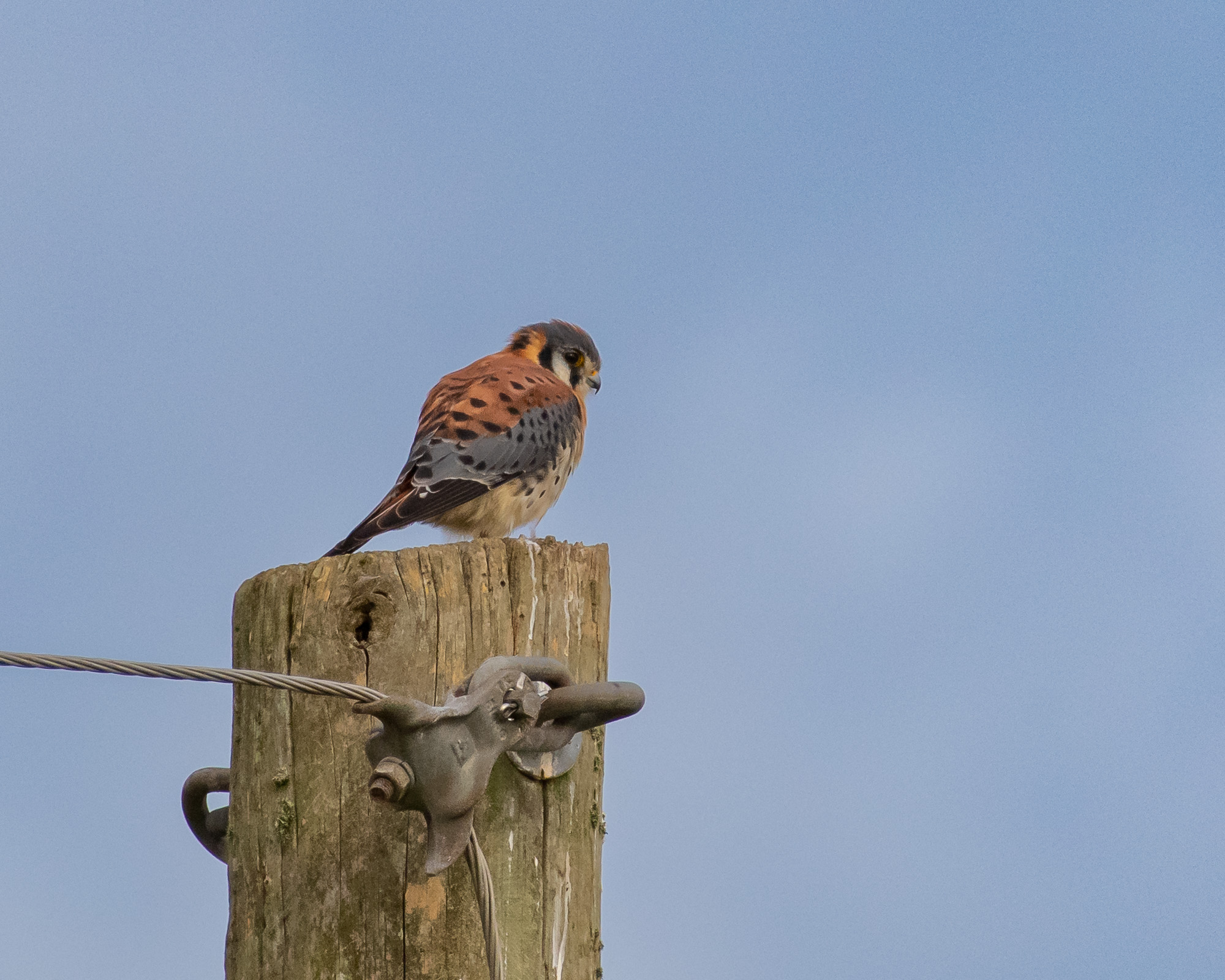
Realizing, once again, that we could not solve the weighty problems besetting the universe, we kept calm and carried on. The sunrise over Pine Lakes was delicious as a few clouds and light mist above the water’s surface added a bit of drama to the scene. Although we are in the middle of winter migration, most of the birds we encountered on our short visit today seemed like old friends. A Great Blue Heron in the buffet line at Picnic Lake, the Loggerhead Shrike at the dove field (annoyed at our intrusion, as usual), the male American Kestrel which was too busy hunting to notice us, Cattle Egrets, Red-shouldered Hawks – all common birds. All uncommonly attractive.
It was, for us, a fairly short morning. After about an hour, we realized it was still cold. We had been enjoying ourselves so much, it just didn’t matter.
Gini agreed that every morning should start like this. How could I argue? Sunrise over Pine Lakes.
When the water is too deep for wading, the Great Blue Heron doesn’t mind standing on a fence rail until breakfast appears.

Yes, he was exasperated that we interrupted the hunt to take his picture. The Loggerhead Shrike was just SURE we would never spot him behind that huge tree trunk.
Florida’s version of autumn color includes the feathery leaves of Cypress trees becoming rusty.

North America’s smallest falcon is the American Kestrel. This colorful male simply doesn’t care that the utility pole does not make a photogenic perch. He only cares that from up there he can spot a grasshopper hiccup at a hundred yards.
(Western) Cattle Egret, all beak and no cattle. It’s okay. He’ll find plenty of breakfast items from which to select as he marches through the weedy pasture. This individual is beginning to show a bit of breeding plumage as portions of head, breast and back feathers will soon turn more golden. These are such abundant birds in our area that it’s difficult to believe there were none in North America prior to 1952.

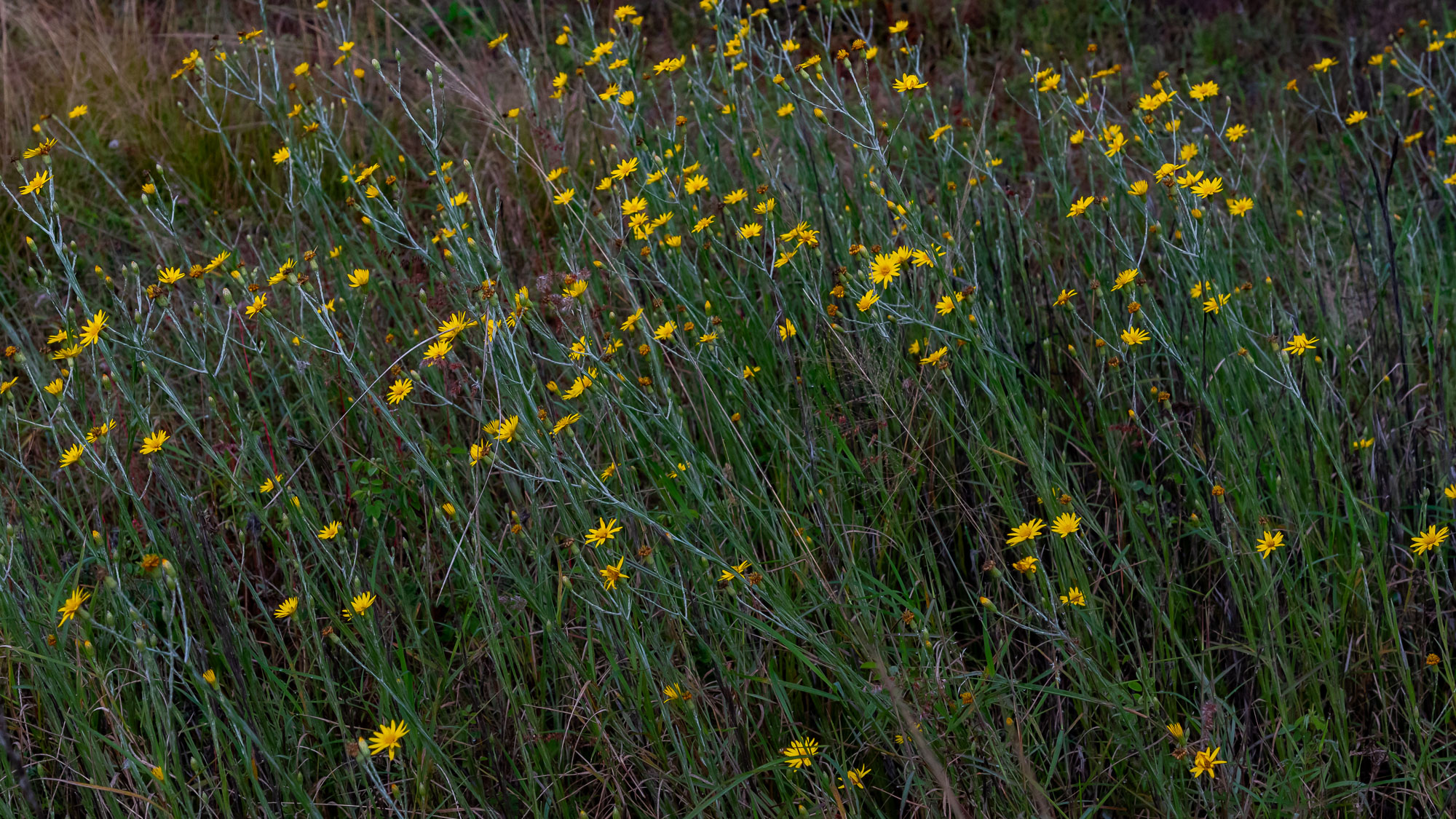
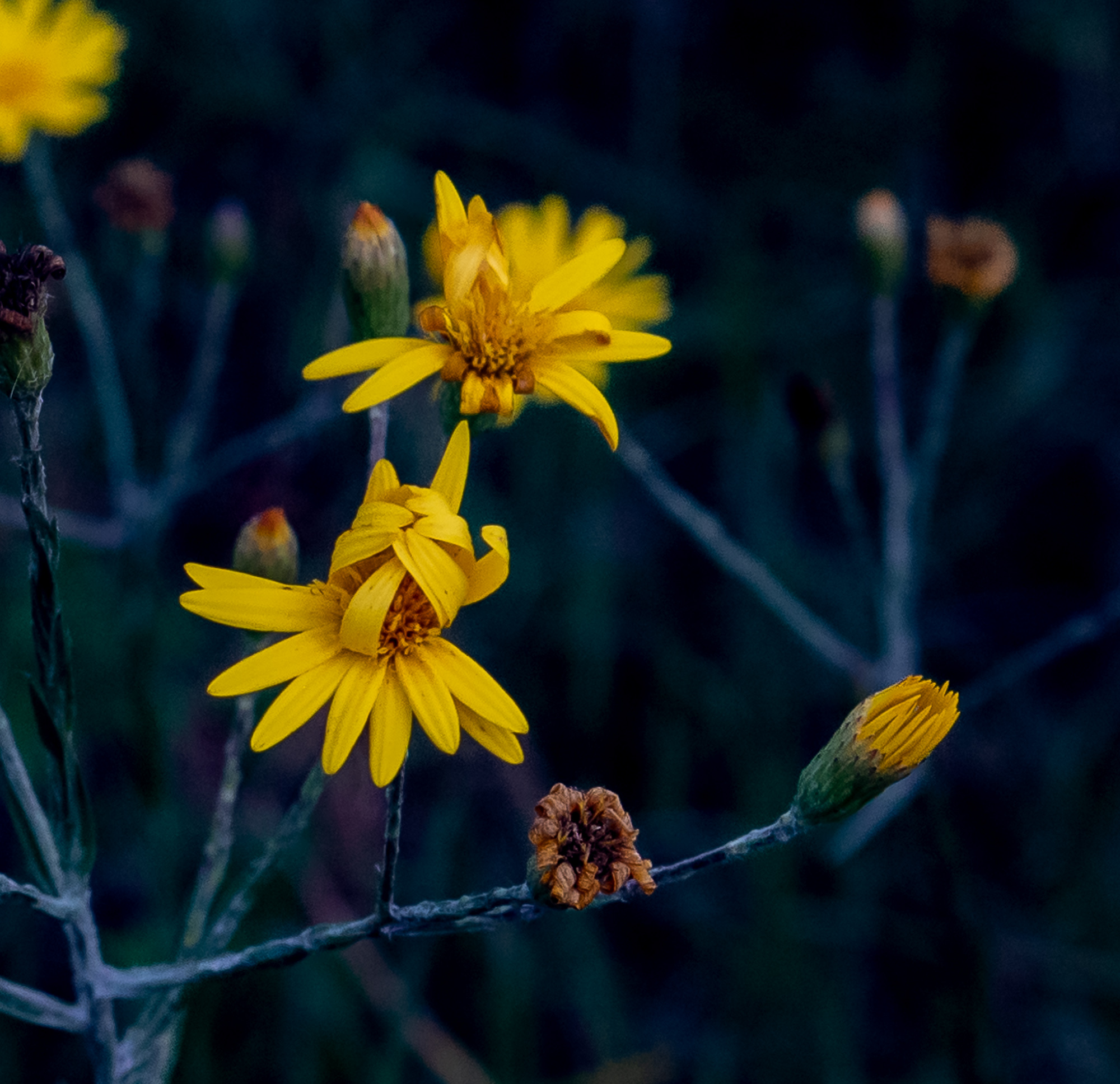
A patch of golden jewels swaying in the slight late morning breeze beckoned us closer. Narrowleaf Silkgrass (Pityopsis graminifolia), a member of the Aster family, often dies back during late winter months. We have had no days of below freezing temperature, so this group is happy to keep shining on ’til Spring. We are happy they decided to do so.

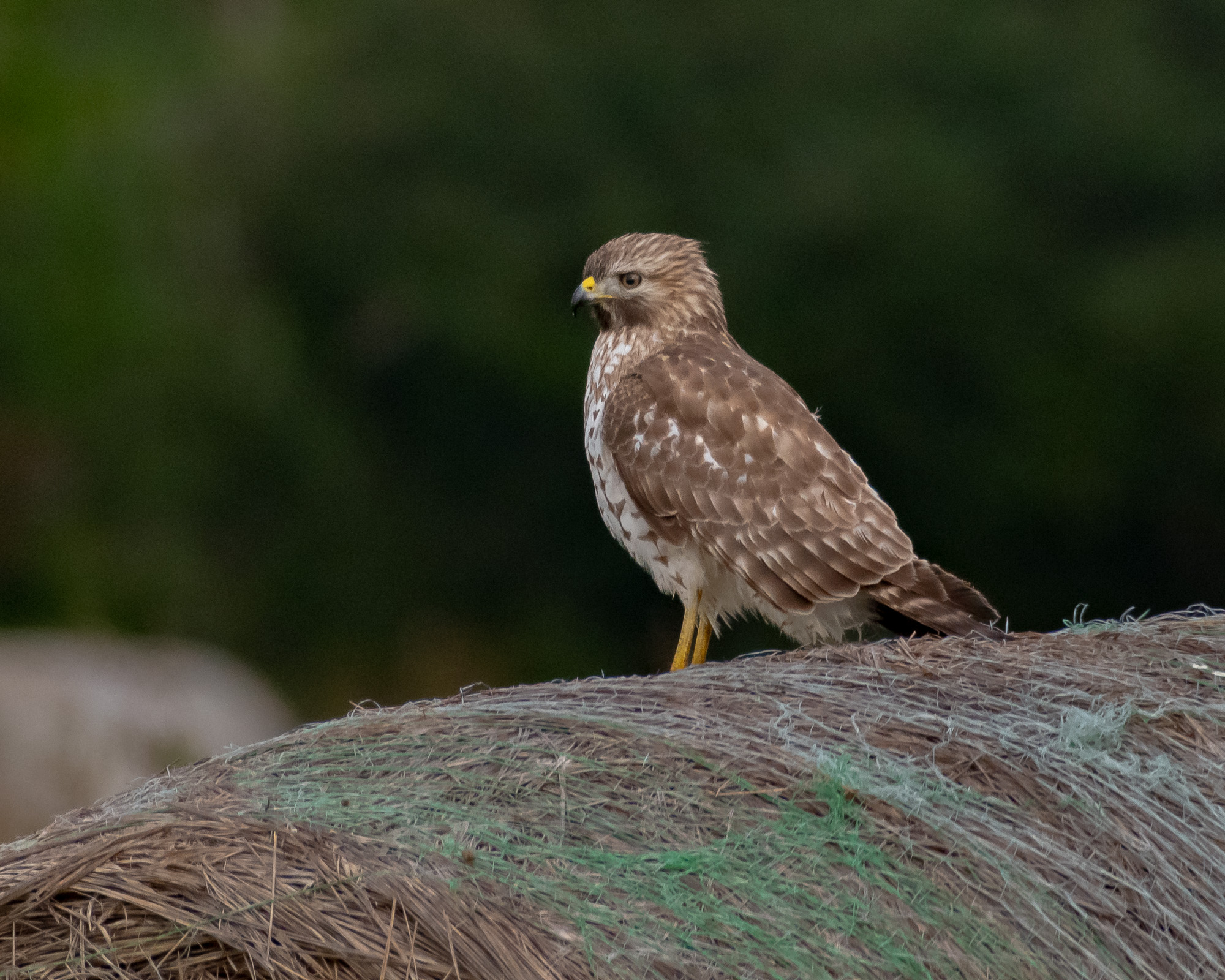
Perches for birds can be anything handy. A bale of hay, for example. An immature Red-shouldered Hawk appeared to spot some movement, but she eventually began to scan the area again as we left her in peace.
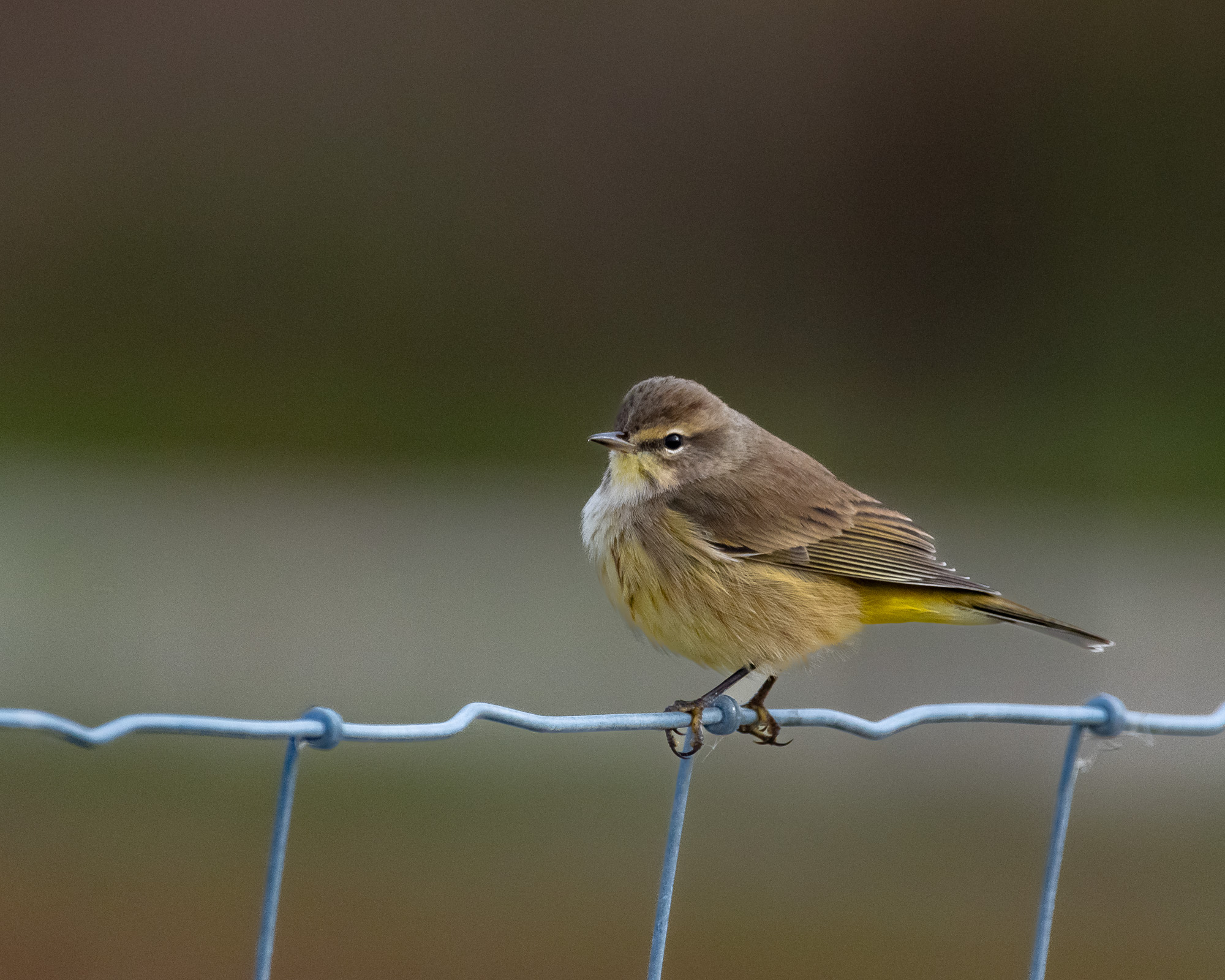
We found a few tourists out and about this morning as well as our regulars. This Palm Warbler was in a group of about two-dozen. They will remain until mid-March when they will begin their return to northern breeding areas. We’ll miss those wagging tails.
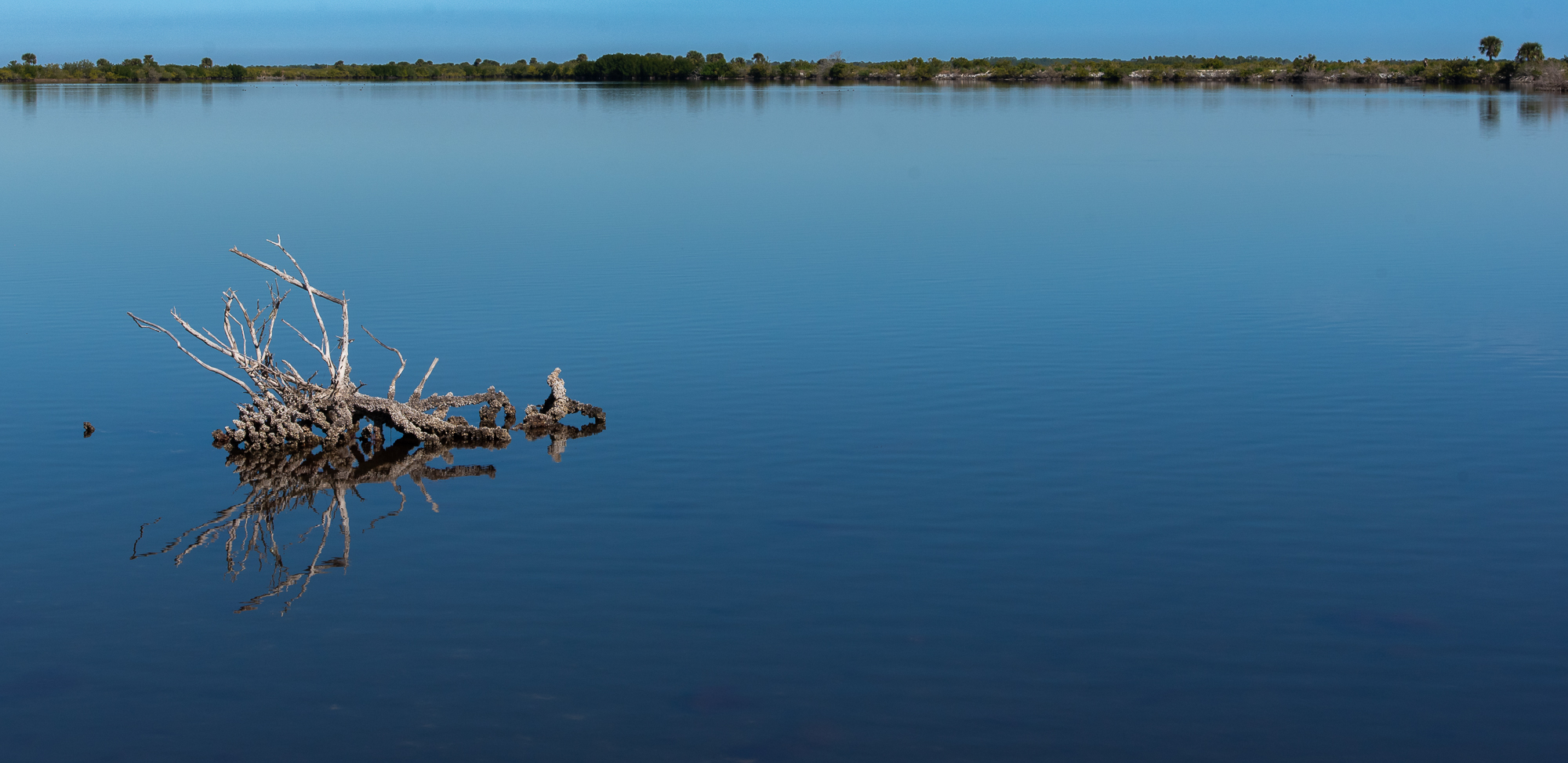
Years living in upstate New York and north-eastern Germany provided these two native Floridians a renewed sense of appreciation for Florida winters. We loved playing in the snow and teaching our kids to swordfight with icicles. However, the Sunshine State is our home. We are – content.
Enjoy your search for a natural place and come back for a visit!
(Click images to enlarge, click again to zoom.)
Although she didn’t ask any questions, I could tell Gini was curious about my frequent checks of the time. Very uncharacteristic of me, as I normally don’t adhere to a schedule. Today was different.
We had thoroughly enjoyed meandering along Black Point Wildlife Drive, lingering at spots where we could observe so many birds going about their daily business of survival. The wind was now barely a breeze, the thermometer reading was more in line with a Florida January day, we were able to “unlayer” jackets and sweatshirts and we looked forward to exploring other areas of the vast Merritt Island National Wildlife Reserve.
Another check of the time. Almost 1130. Okay. Heading in the right direction.
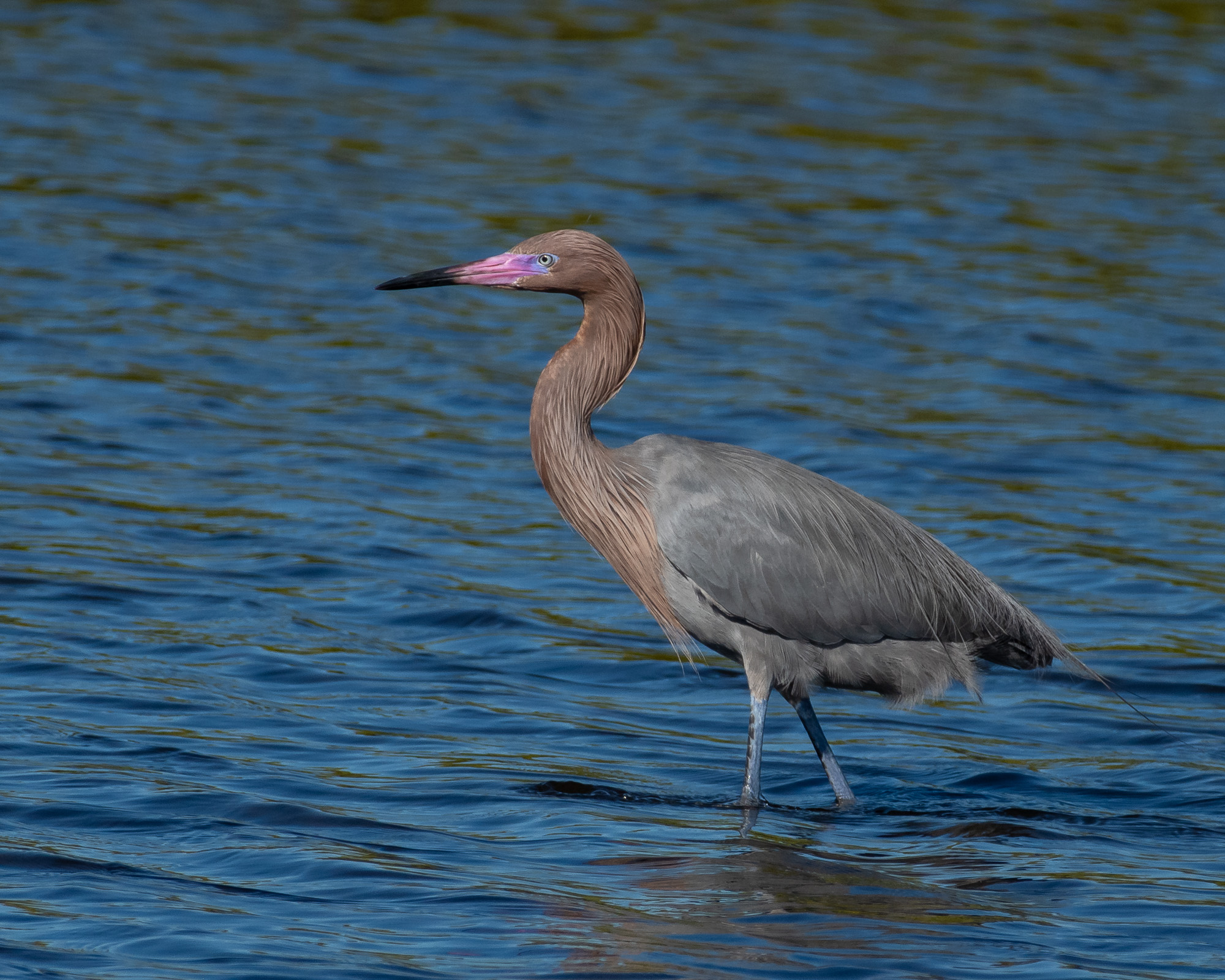
Portions of the refuge have spots similar to those we encountered along the wildlife drive. Mixed fresh and salt water marsh with areas of open shallow water ideal for wading birds and dabbling ducks. We had seen a half-dozen Reddish Egrets this morning and we came upon one more who insisted we observe her intricate and impressive dance routine. It almost made us late, for a very important date.
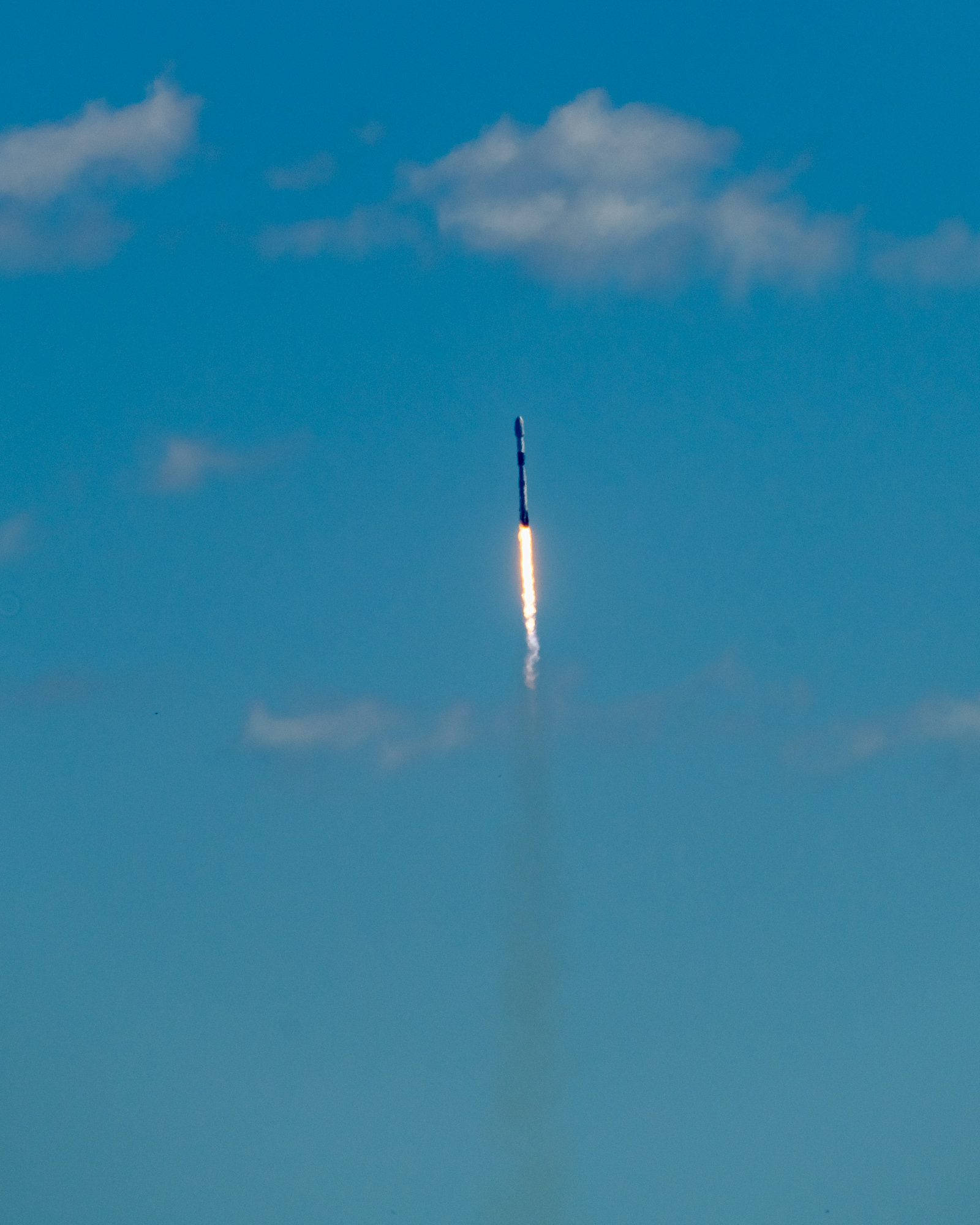
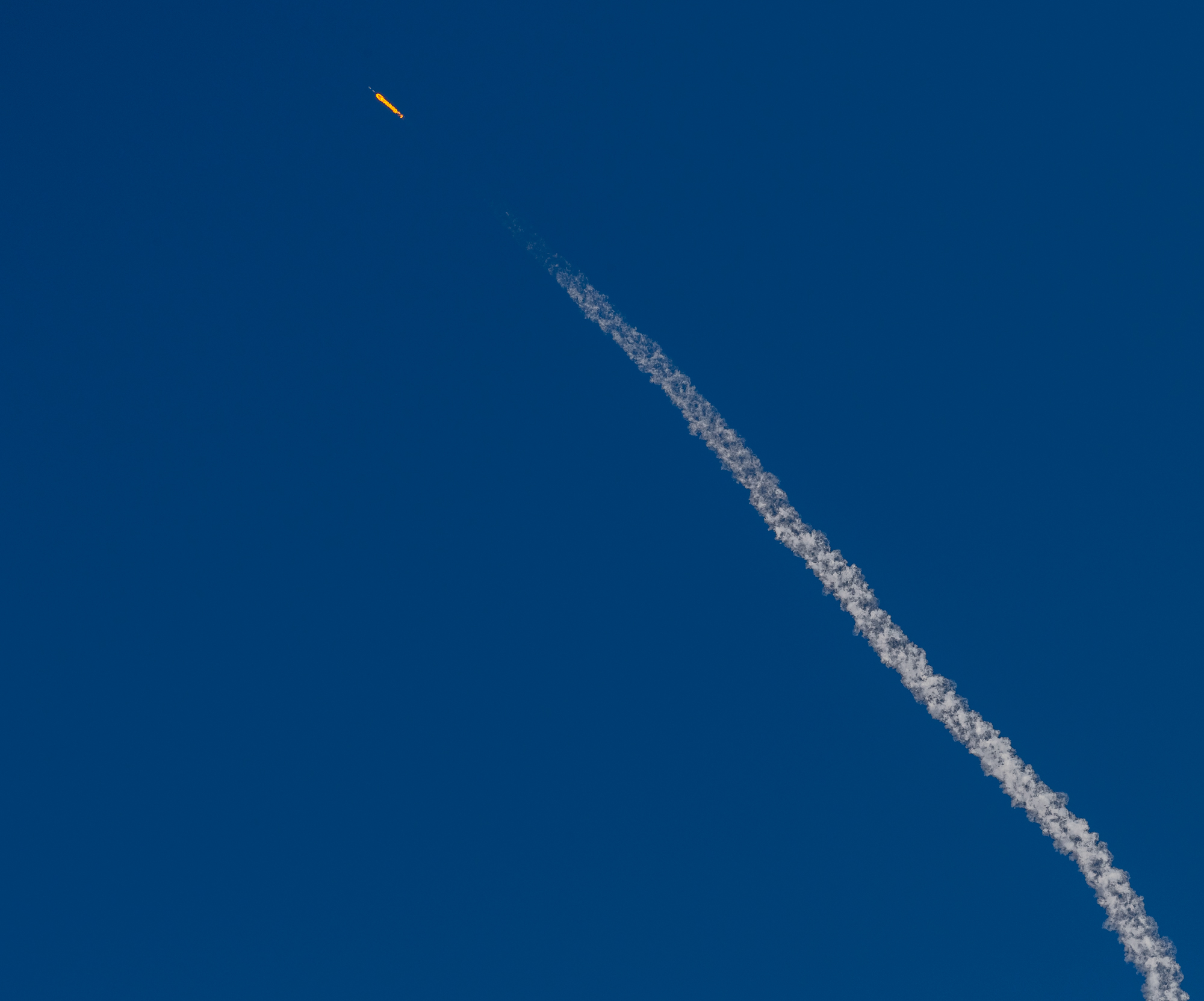
Unbeknownst to my bride, last night I checked the Cape Canaveral website and discovered there was a launch scheduled today for 1207! A SpaceX Falcon 9 rocket would carry Northrop Grumman’s 21st Cygnus cargo freighter on the 20th operational cargo delivery flight to the International Space Station. After the egret’s dance recital, we had to hustle a little bit to find a suitable viewing spot. Catfish Creek provided good line of sight from a point along the bank toward the launch pad about ten miles away. At 1208, I started to grumble about how a rocket couldn’t even be launched on time when the keen-eyed Gini pointed: ”There it goes.” So much for my science classes. I forgot about that thing that says it takes awhile for sound waves to travel, so while I was expecting to hear the roar of the engines, the space vehicle was well on its way to the heavens before we were engulfed in thunder. Fortunately, I managed to snap a few pics before the thing was out of sight.
Following our picnic launch, we enjoyed a picnic lunch in the shade of huge oak trees at a nearby trailhead. One more venture for the day had us rolling along Biolab Road which is adjacent to Mosquito Lagoon, an inlet of the Indian River. More birds, butterflies and the first damselflies of the year. (No suitable pictures. Sorry.) The day ended with a pair of magnificent Bald Eagles which very likely have a nest nearby.
Oh. And a very bad tree.
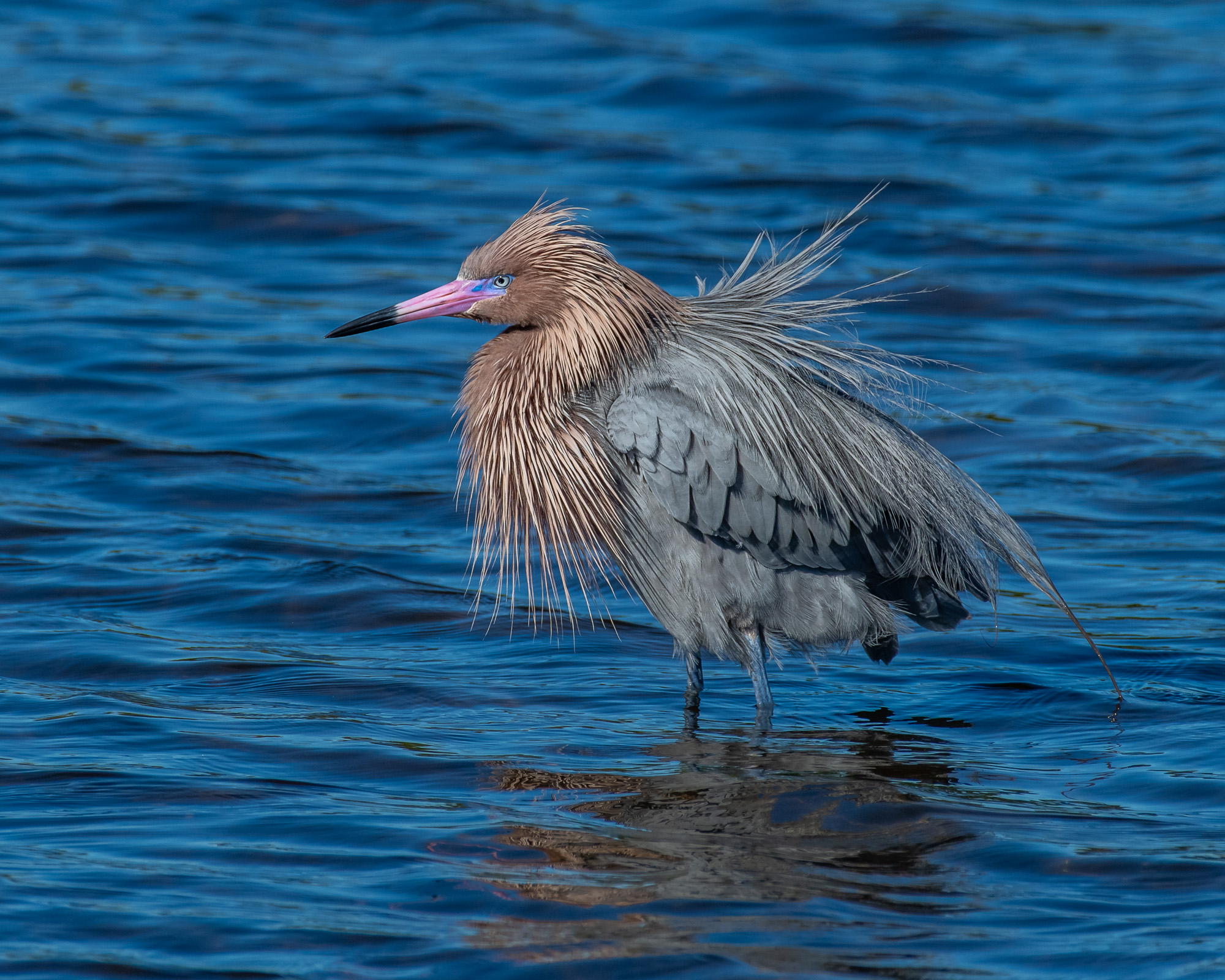
Reddish Egrets are nothing if not entertaining. Watching them feed really does give you the feeling there is a choreographer at work. They wade along gingerly, turn their head sideways to reduce glare, hold a wing out to provide shade for unsuspecting fish, flap furiously to scare fish into moving and run like a track star to chase and grab their prey. And end the whole thing looking ABSOLUTELY FABULOUS!
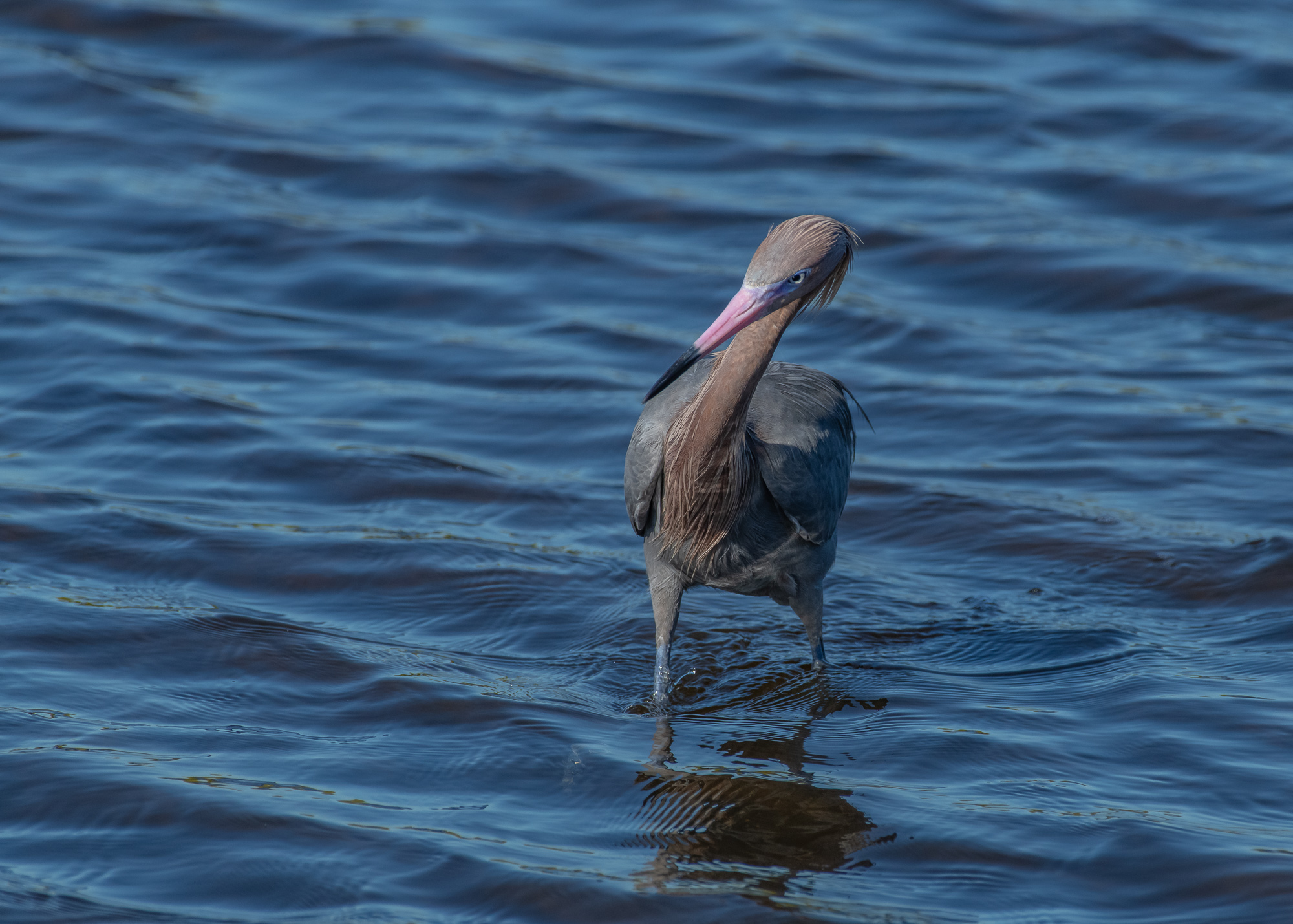
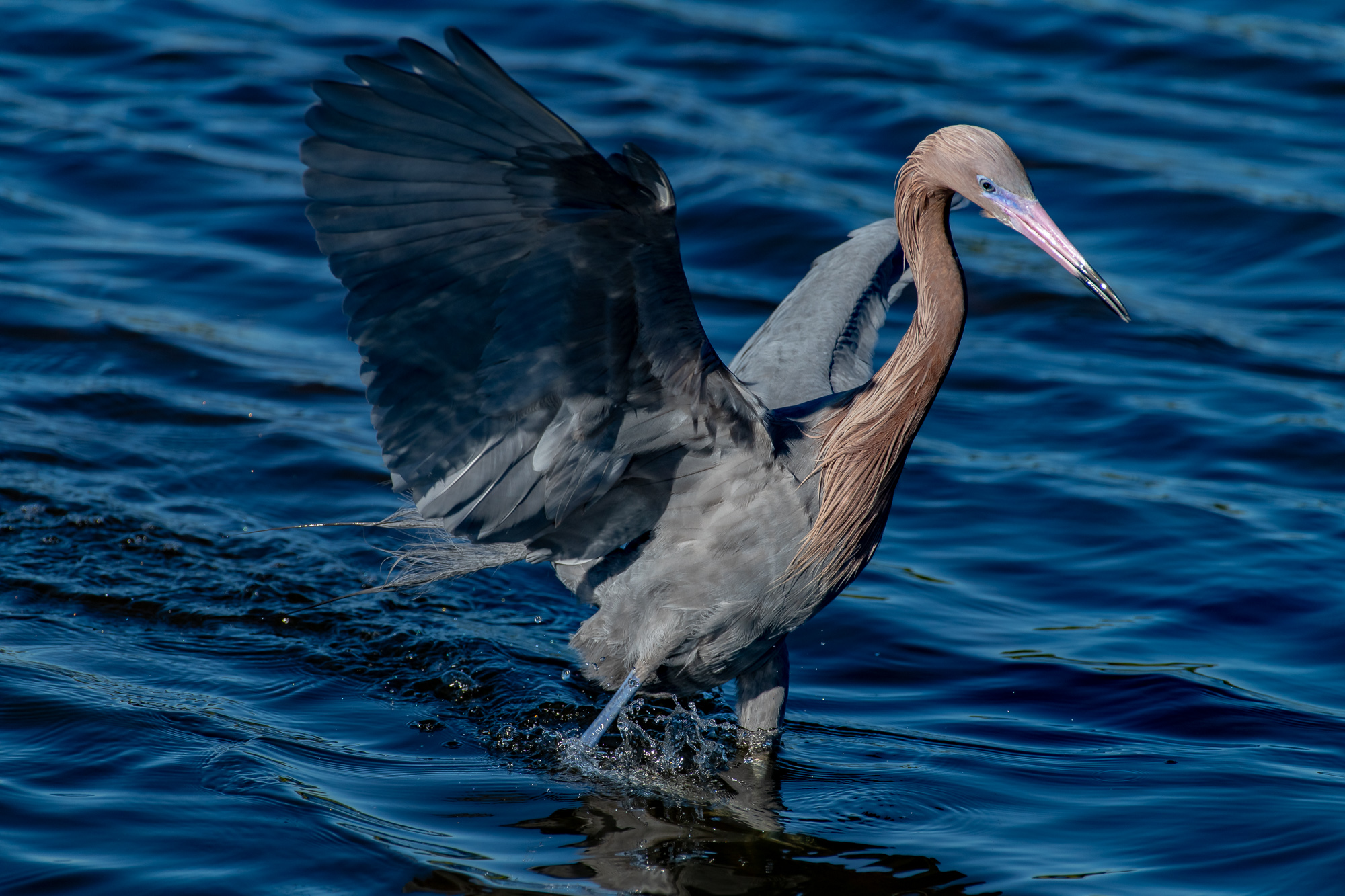
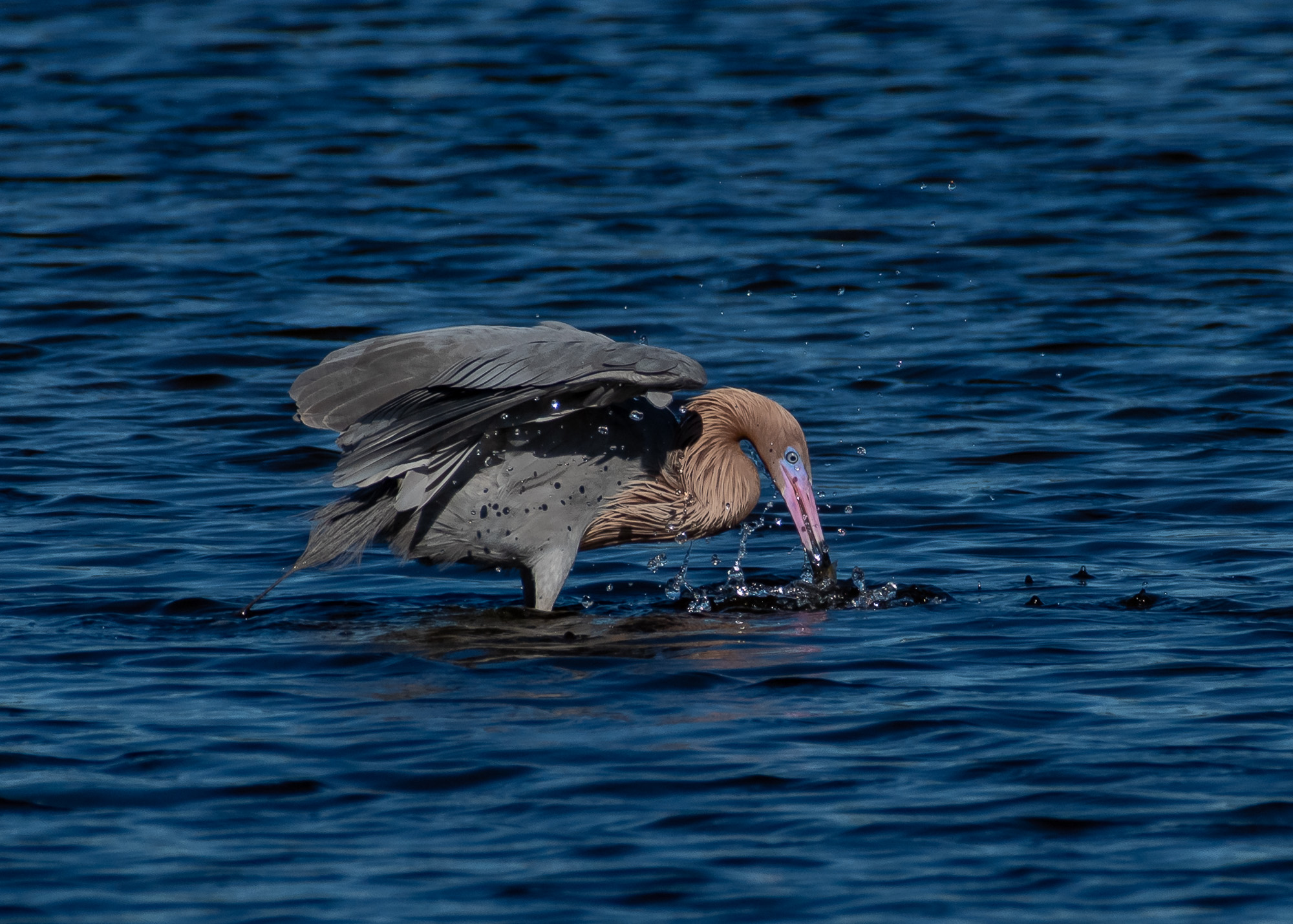
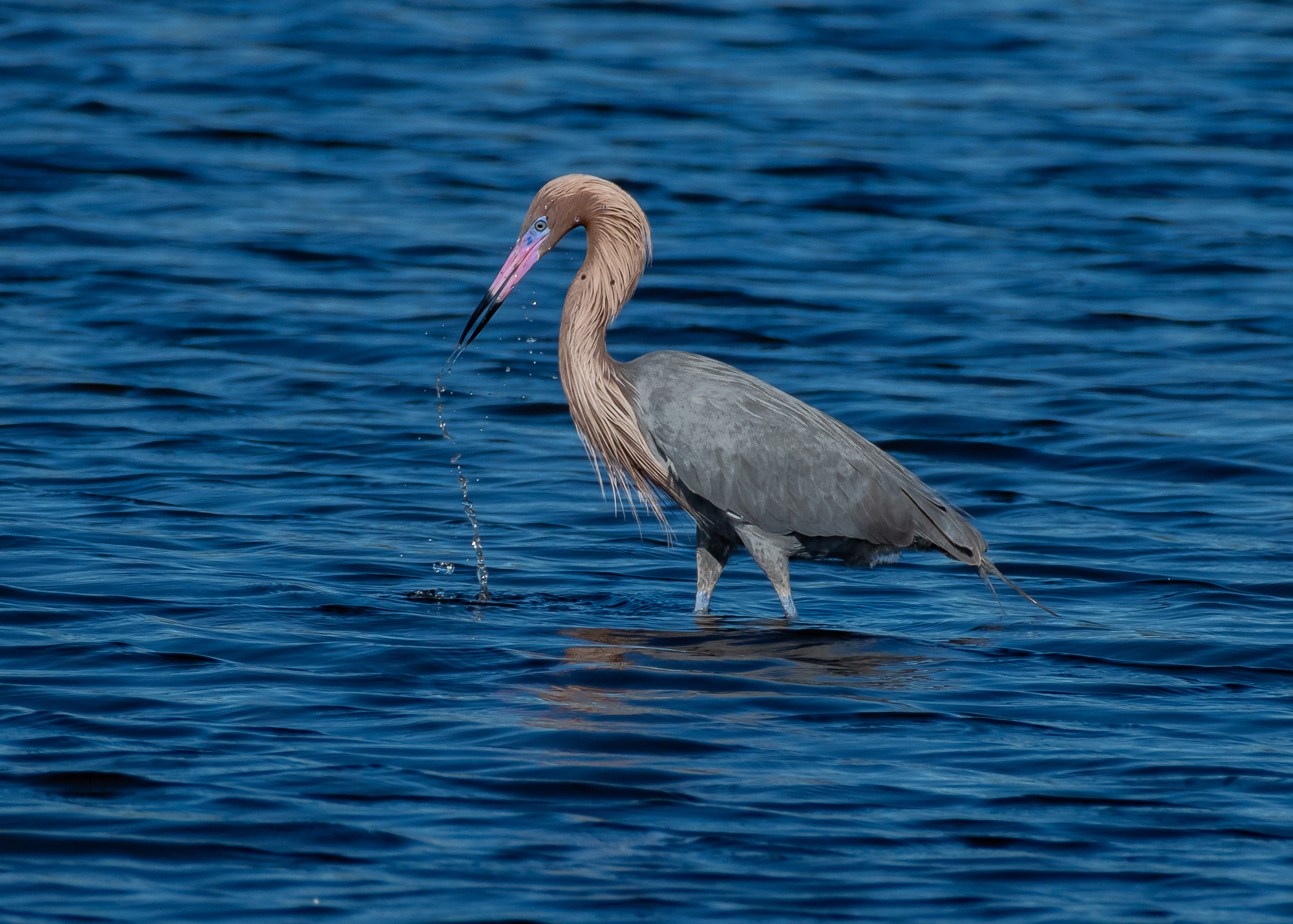

Out to launch.

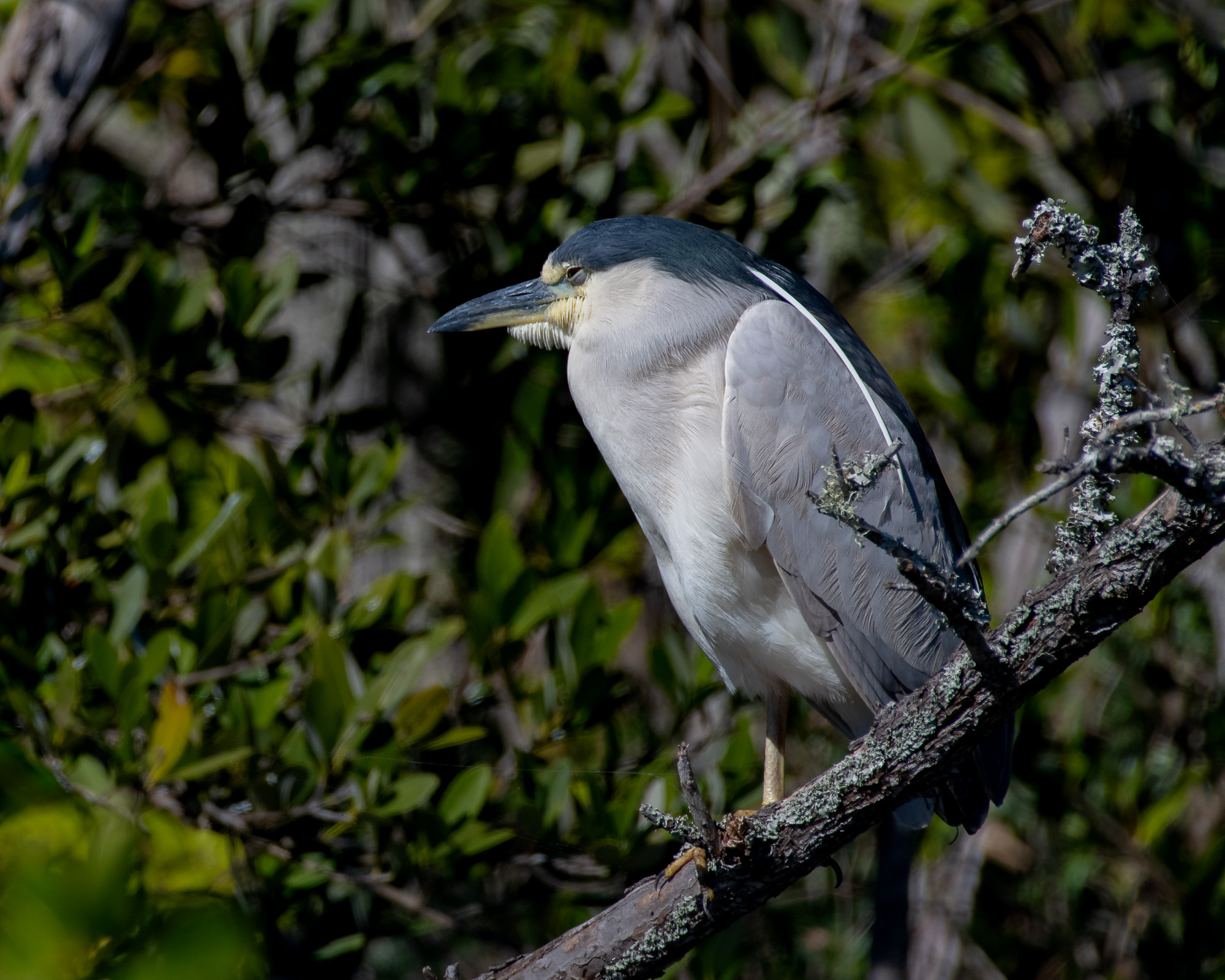
Shhh! Black-crowned Night Herons need plenty of rest in order to prepare for life after dark.
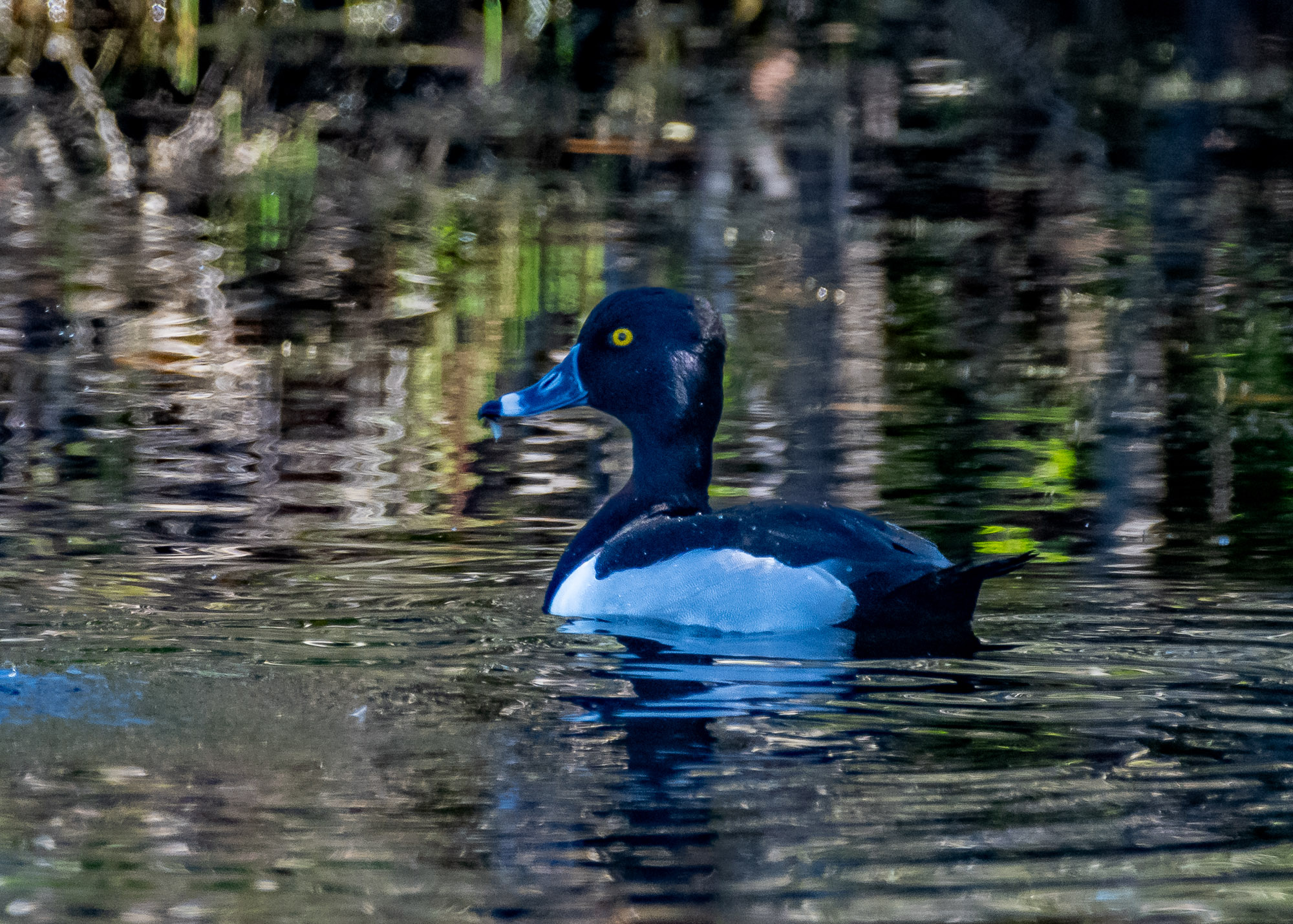
The American Ornithological Union keeps promising to rename this species “Ring-billed Duck”. The Ring-necked Duck would appreciate it if they got a move on.
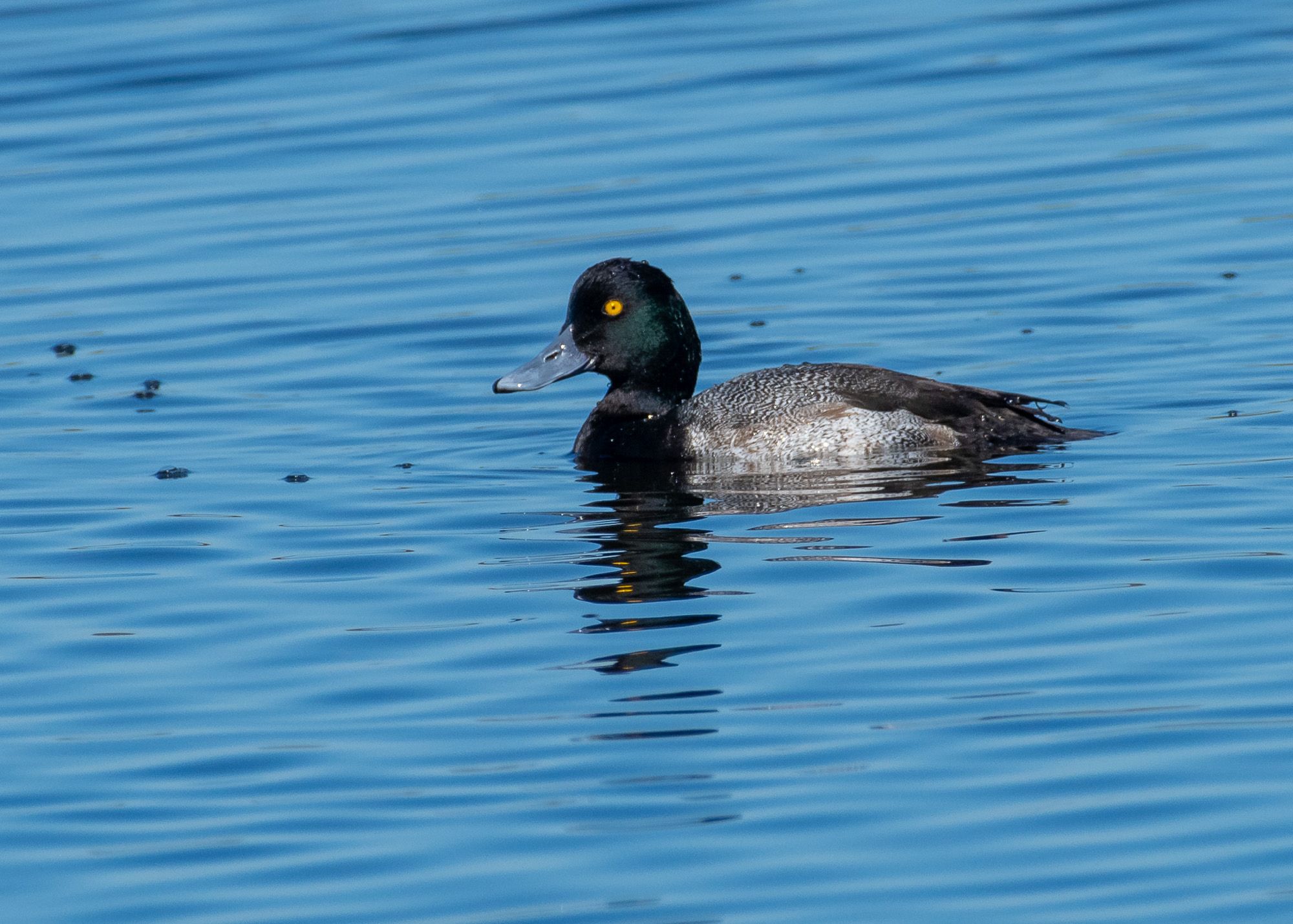
A Lesser Scaup visiting for the winter is similar in appearance to the Ring-necked Duck above but has a different body and bill design.
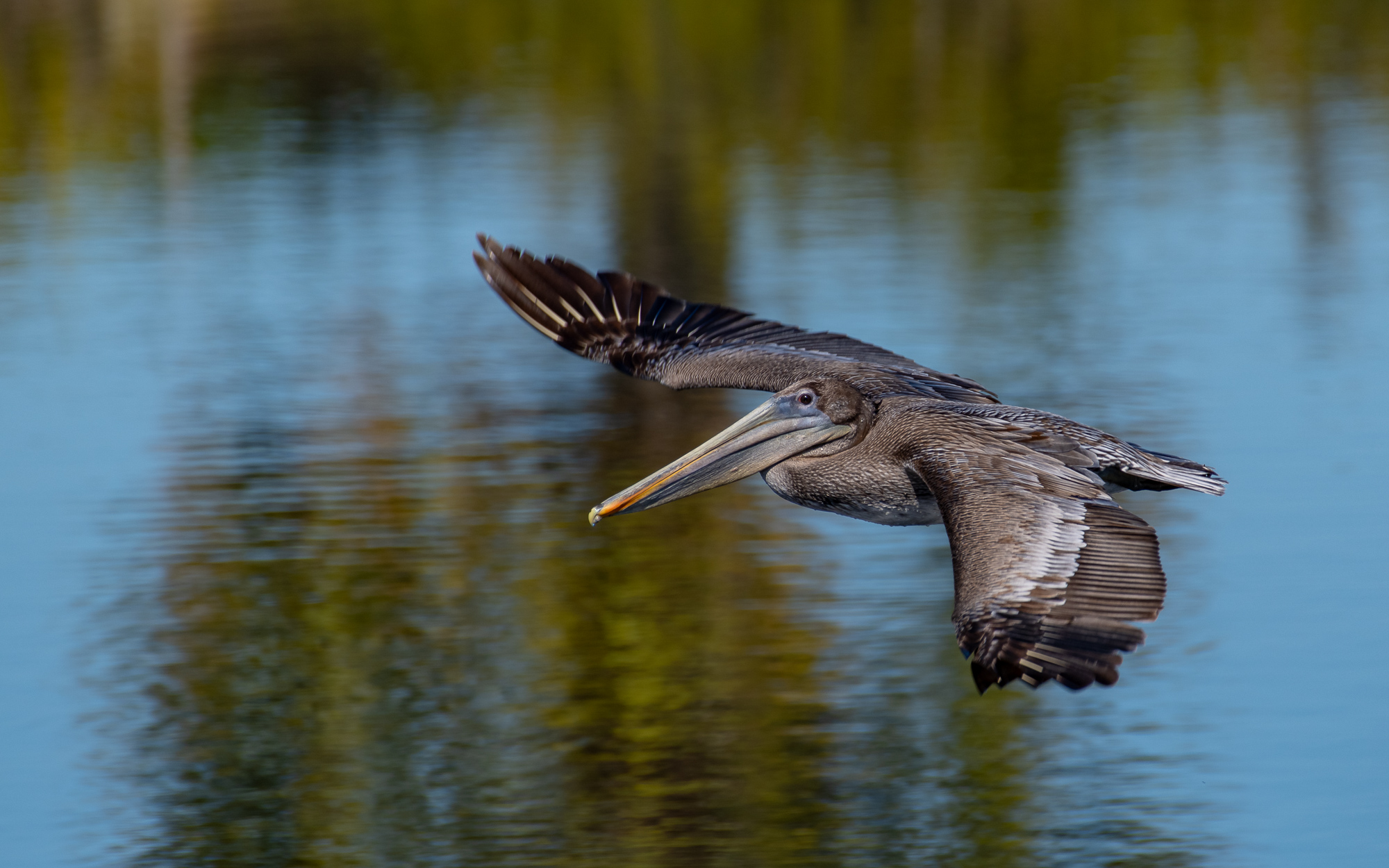
We are always reminded of large airplanes when we watch a Brown Pelican soaring just above the water.
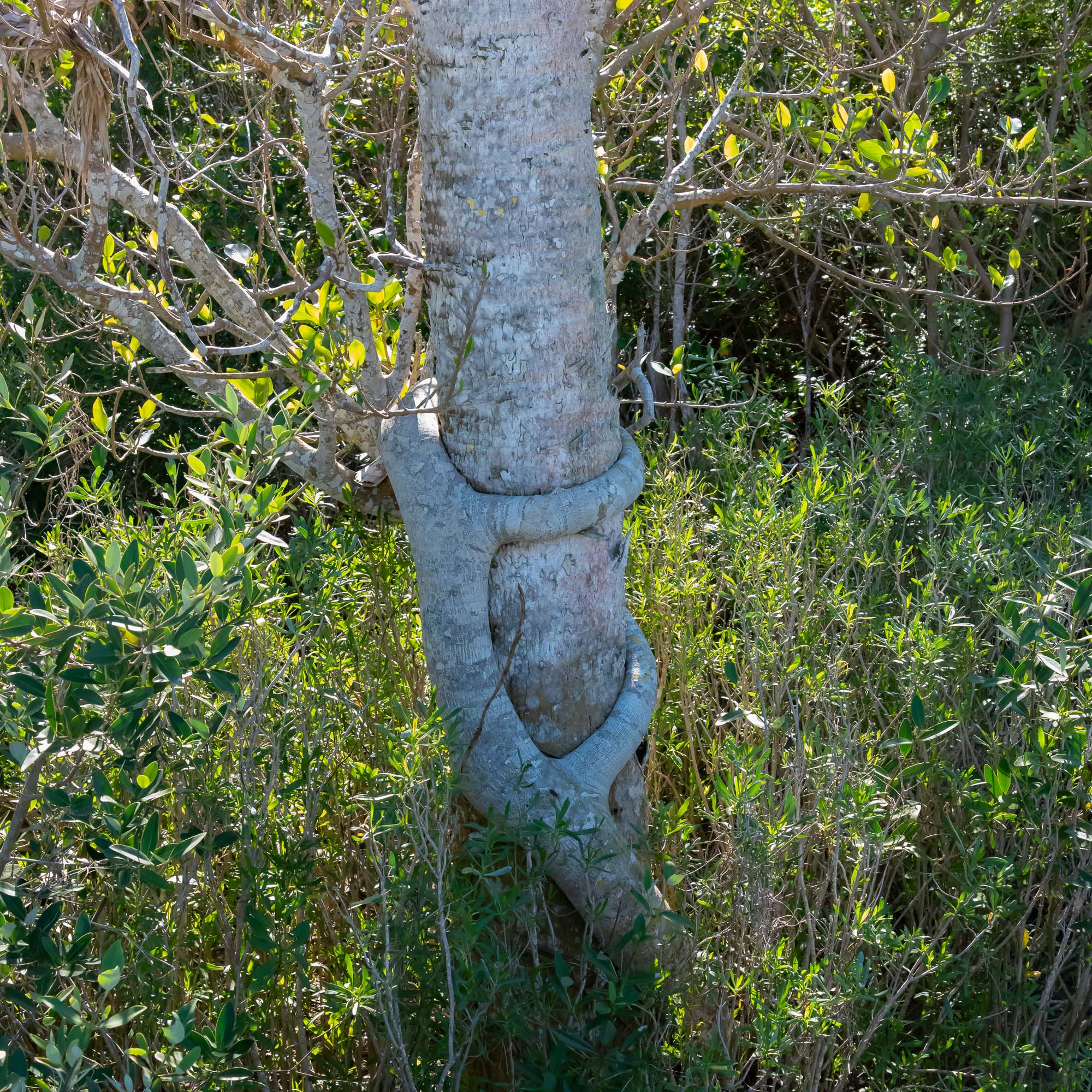
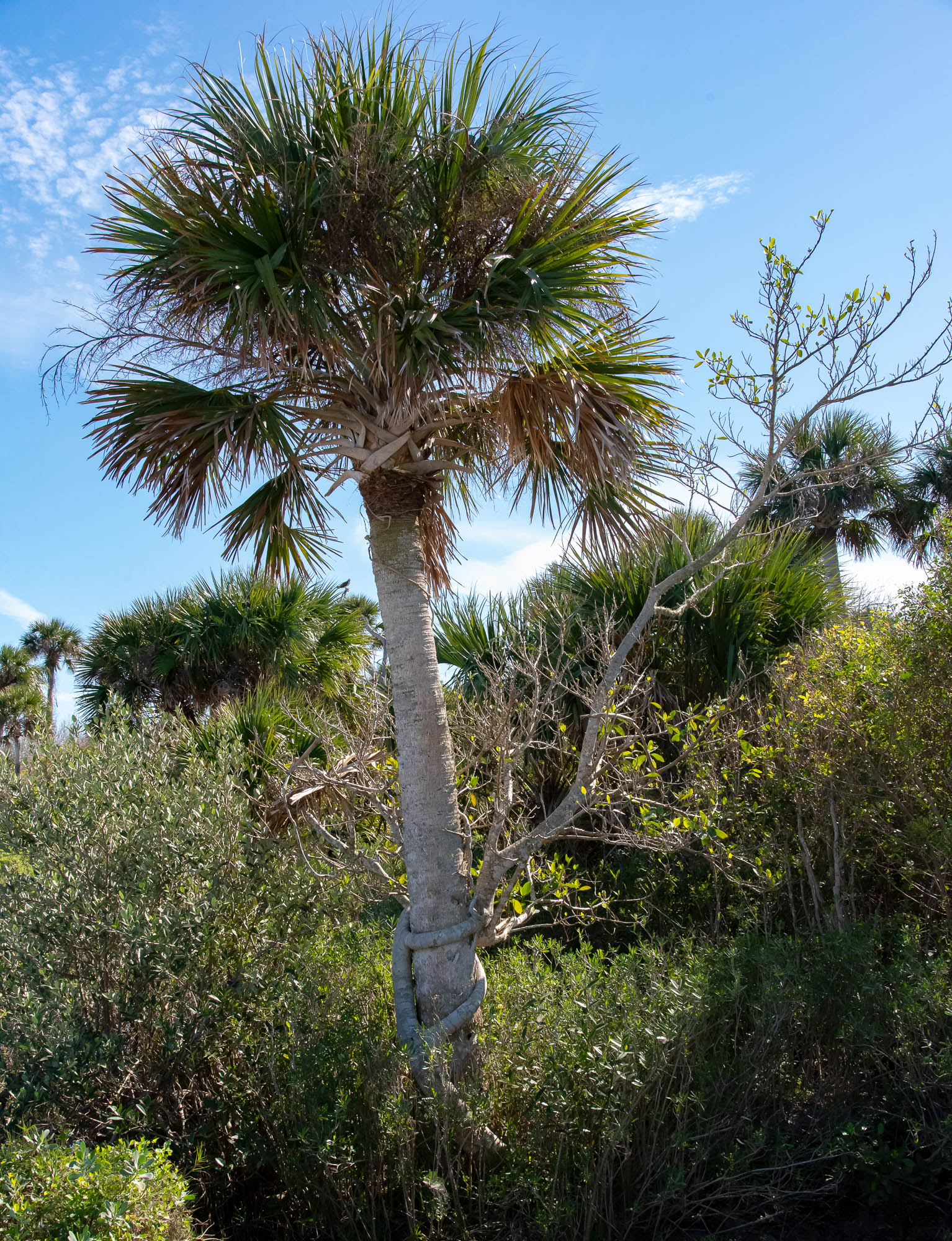
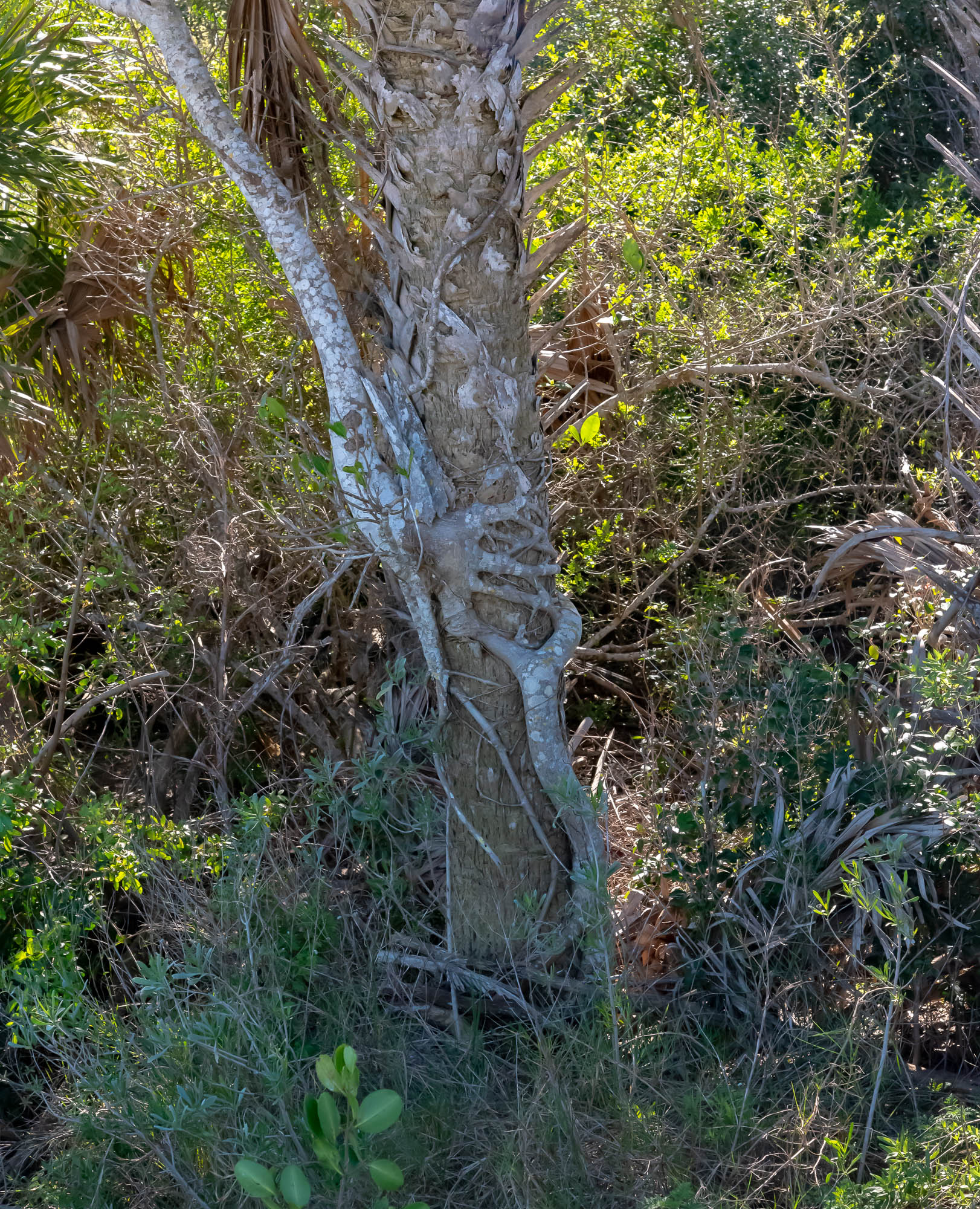
Now, we encountered one of nature’s mysteries: The Strange Strangling Case of the Felonious Fig! Florida is the only state which harbors that fugitive from botanical justice, Ficus aurea, the Strangler Fig! This wicked plant often begins life as an innocent epiphyte growing among the shady limbs of an unsuspecting tree. Eventually, the sinister strangler begins to wrap its unloving arms around its host eventually penetrating the trunk, stealing nutrients and growing into a healthy tree while the host tree withers away. Although the small figs produced may be edible, I can’t find much reference to their use, except by wildlife. Don’t be sad. There aren’t that many of these criminal trees around so your Cabbage Palm or Scrub Oak should be safe. For now!
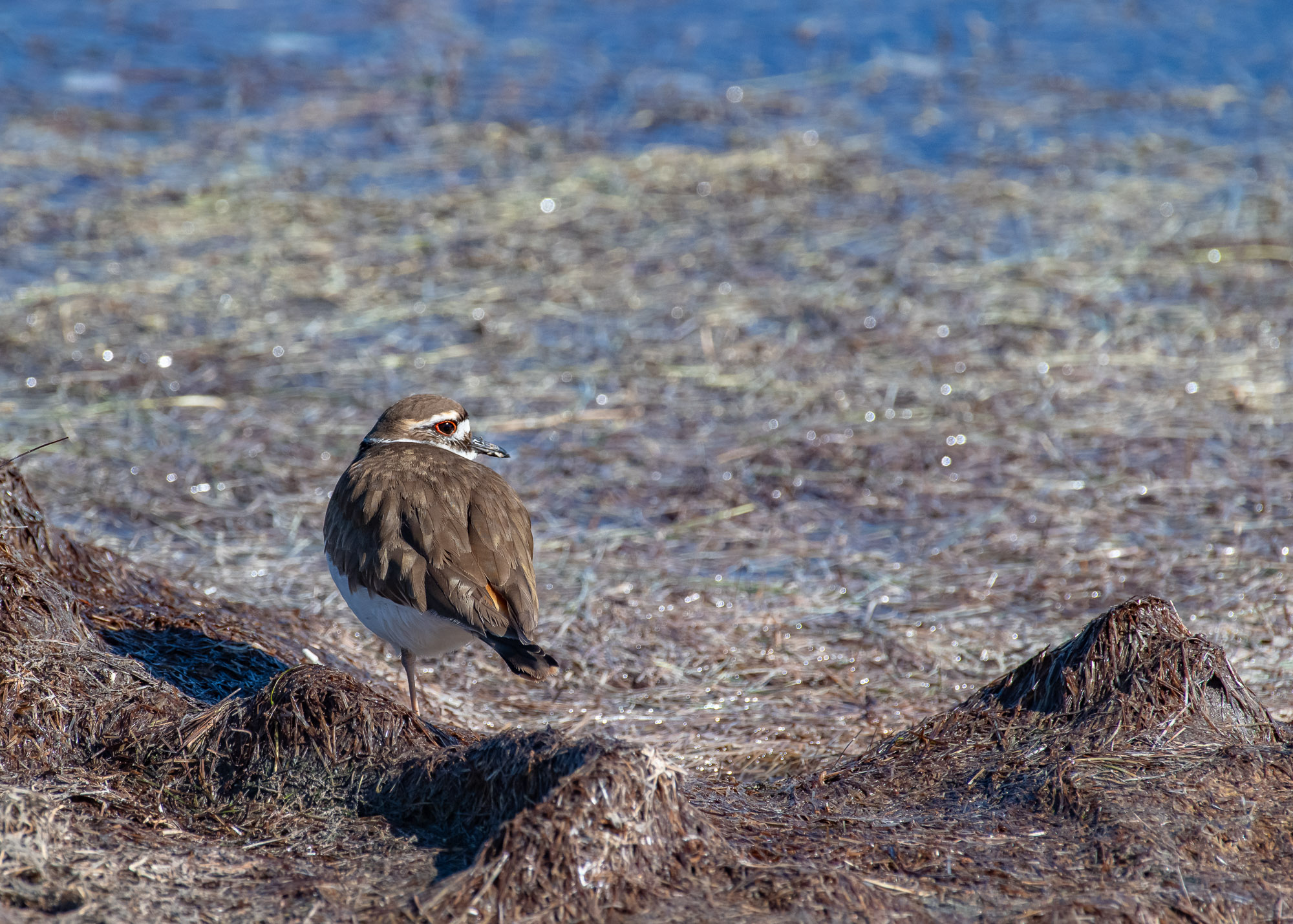
A Killdeer checks the beach to make sure it’s okay to dose off for a bit.
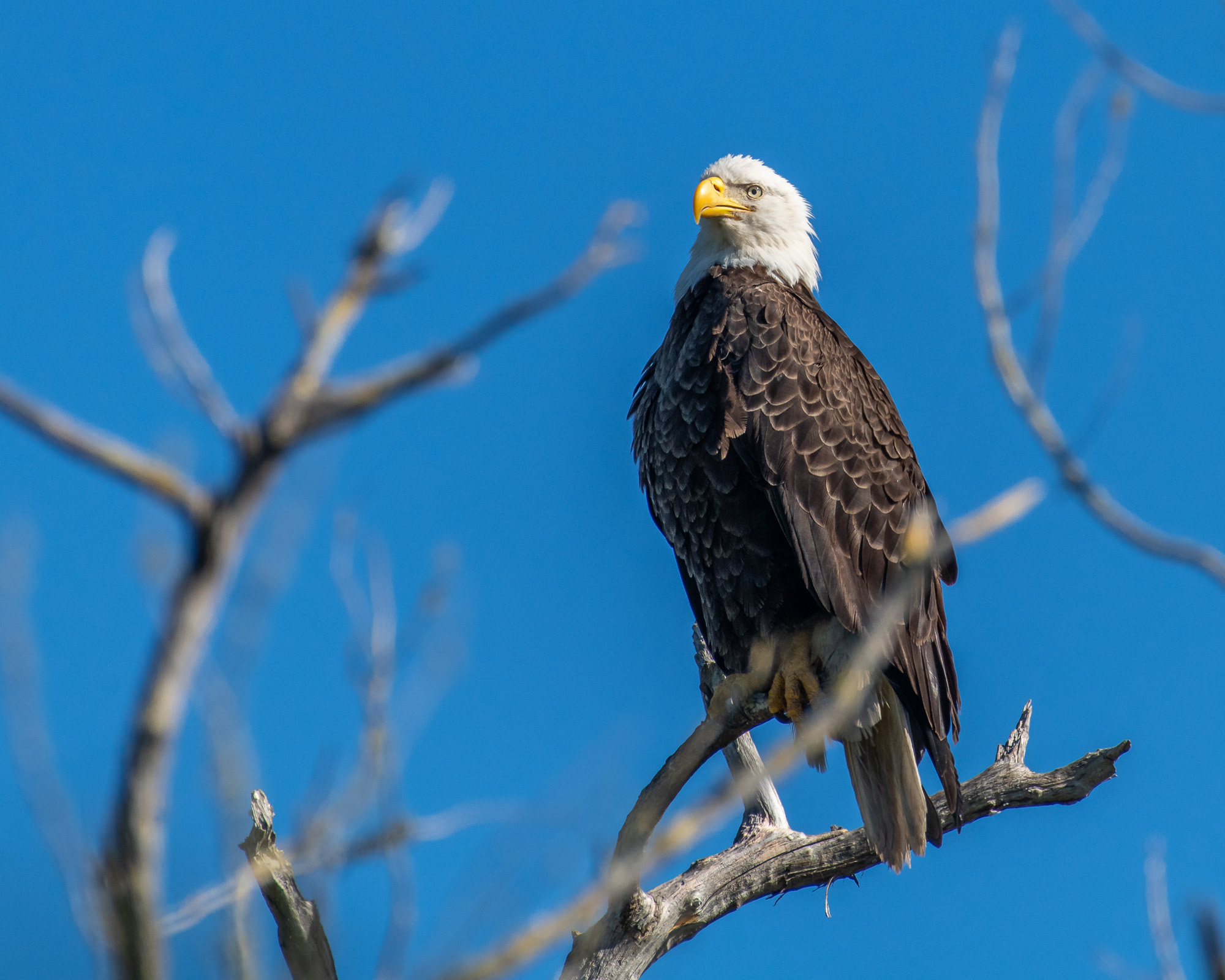
We found a pair of Bald Eagles along the lagoon. At this time of year, they probably have a nest either completed or nearly so. Handsome birds.

You may think we had a full day at Merritt Island. You would be absolutely correct. Can’t wait to do it again. Y’all should visit if you have a chance.
Enjoy your search for a natural place and come back for a visit!
 Our Natural Places