On Not Setting Goals
(Click on images to enlarge. Click again to zoom)
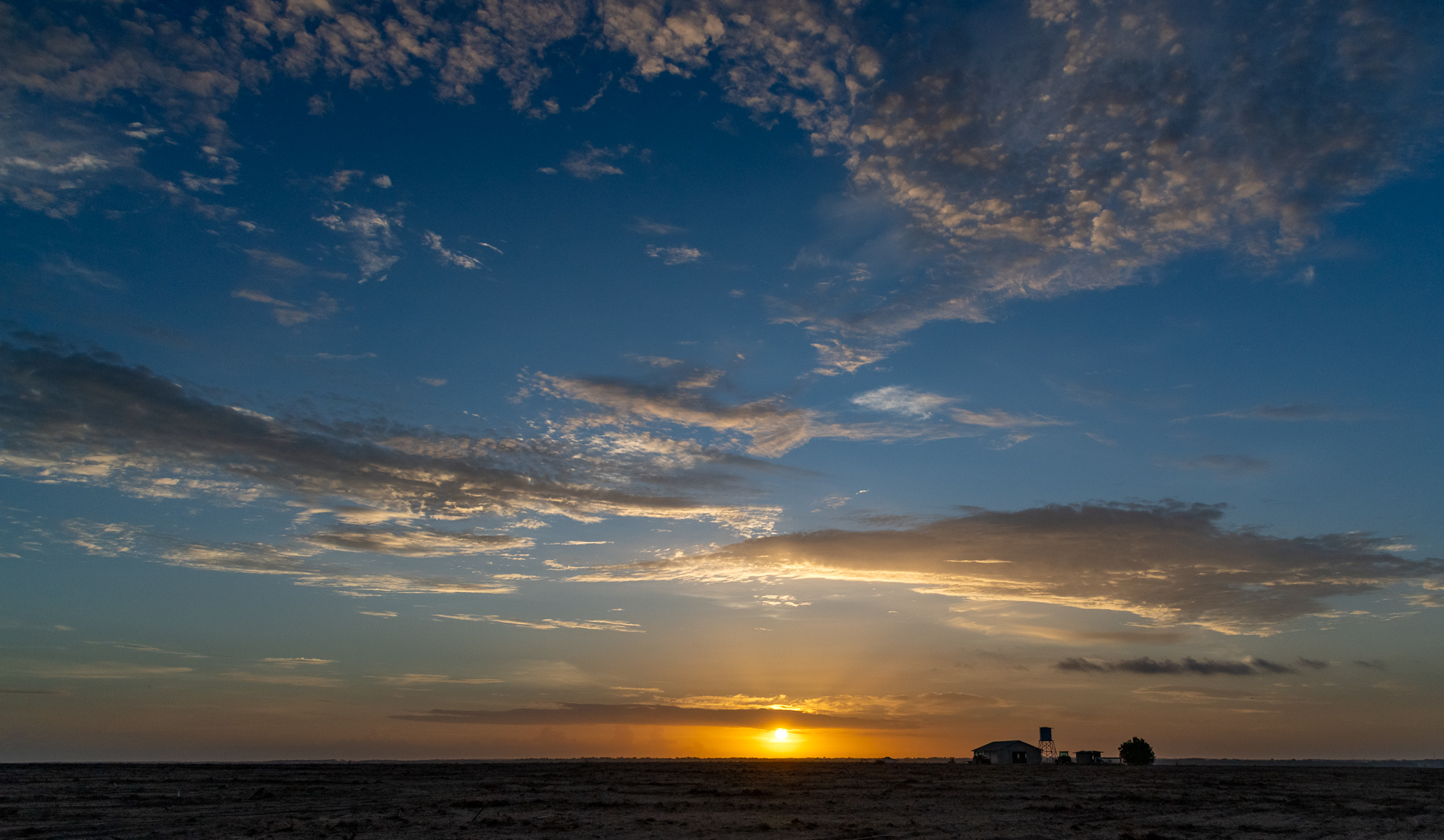
The recently plowed ground was unsettling in several ways. There had always been orange trees here. Across the road were ghosts of orange trees. Some dead and withering hulks of their former selves. Some were newly planted and wrapped in plastic giving them an ethereal appearance in the pre-dawn light. Two miles south, about 100 acres of former citrus grove is now filled with tents under which new trees are offered some protection from a devastating greening disease, likely insect borne. The tents are called CUPS (citrus under protective screening) and they are finding some success on a commercial scale.
Will this former citrus grove soon sprout groves under tents? Or new, exposed trees? Or some other crop? Or will we soon see the ominous (in my opinion) shadows of steel and plastic of the rapidly developing fields of solar arrays?
For the moment, we take heart in the fact our sun has decided to rise one more glorious day. Just for us.
As children, we were taught the importance of planning. Lay out our clothes for school tomorrow. Be sure our books and papers are next to the clothes. The complexity of our planning increased with each year. Eventually, we attended formal training on the significance of setting goals. Year-end seminars assessed how successful we were in fulfilling those goals.
Yup. Goal-setting is important. Teach your kids to do it.
However …
Teach them it is just as vital to do stuff that isn’t on their list of goals. Lead them gently outside the box of life as they know it and show them the wonders that might exist out there. Praise them for setting those goals, yes. Encourage them to follow that well-worn path through the forest. Be excited for the one who veers down the lesser beaten path. And should you have one who suddenly tries to claw her way through a bramble to get to a pretty flower – keep a very close eye on her. That rebellious streak is special and needs nurturing.
Gini and I wandered south one morning. We enjoyed that sunrise above, despite the misgivings about the plowed field. Bugs, blooms and birds littered the country roads. We didn’t make a list of anything. We held hands and made eye contact with a vulture.
It doesn’t get much better than that.
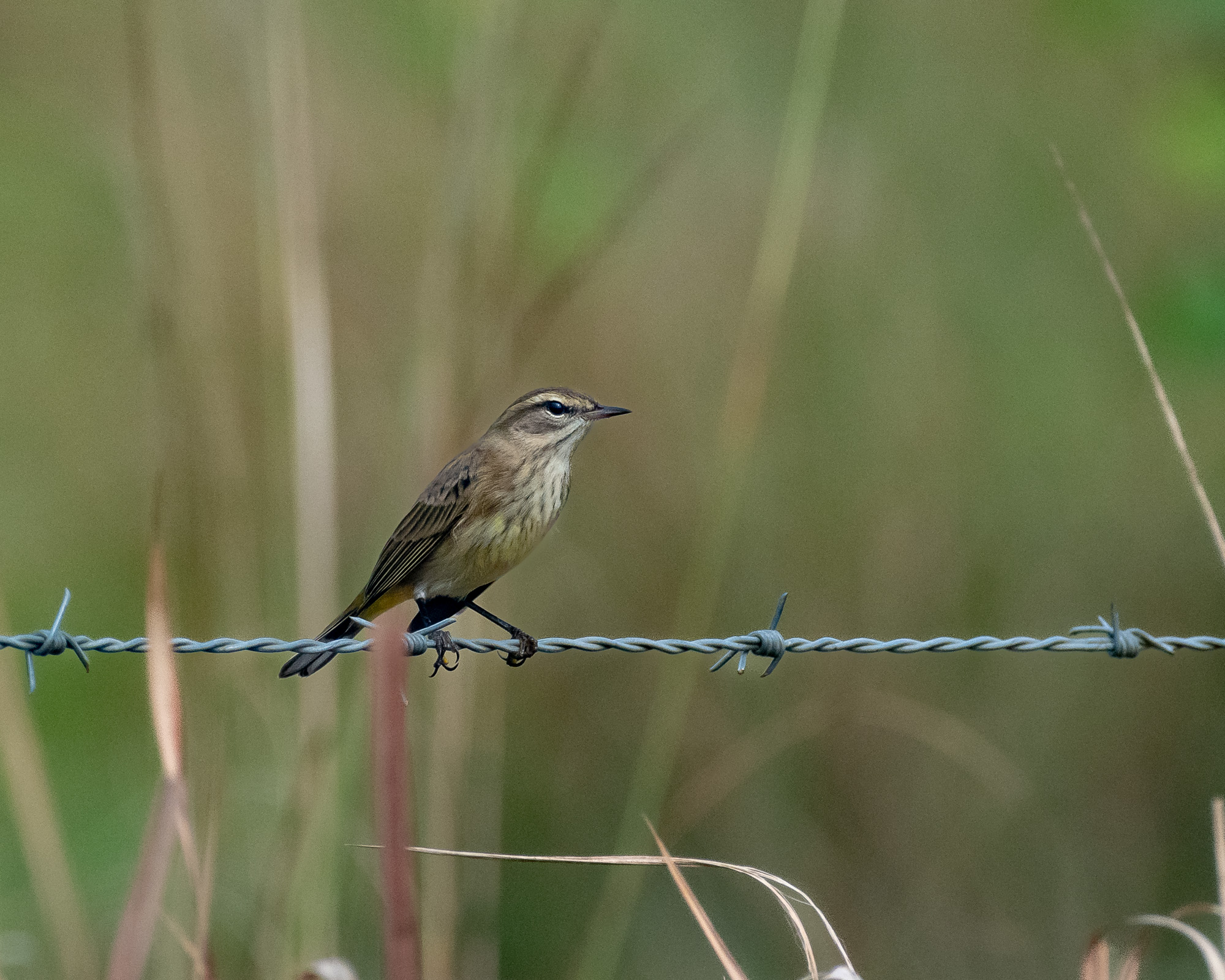
An abundance of fences in open spaces usually means an abundance of perchers. A winter visitor illustrates that premise. The Palm Warbler was part of a gang of a dozen feeding nearby.
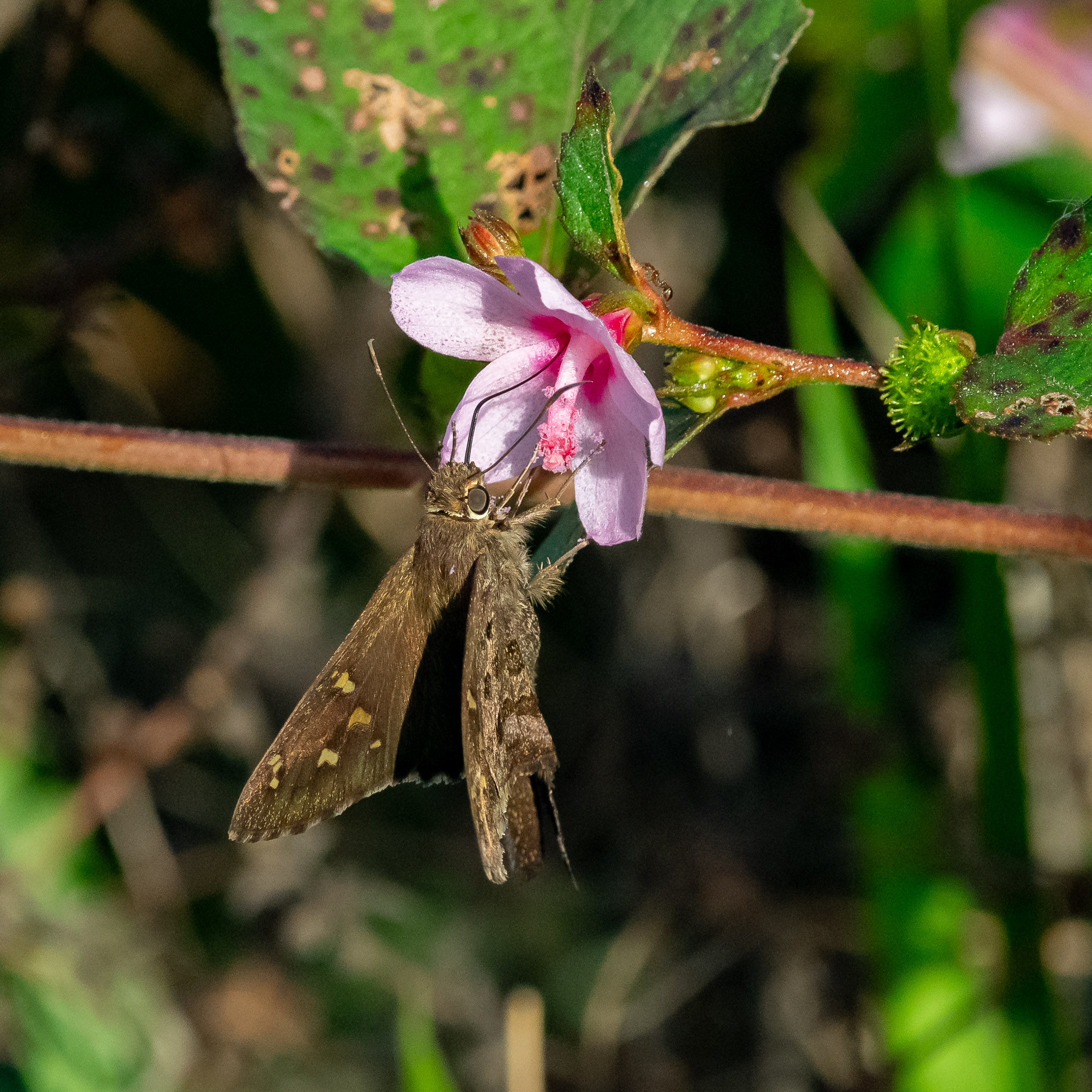
Blooming flowers attract butterflies like those fences attract warblers. Here, a Dorantes Longtail (Urbanus dorantes) sipped breakfast nectar from a Caesarweed (Urena lobata) bloom. The plant is an invasive which crowds out native flora.
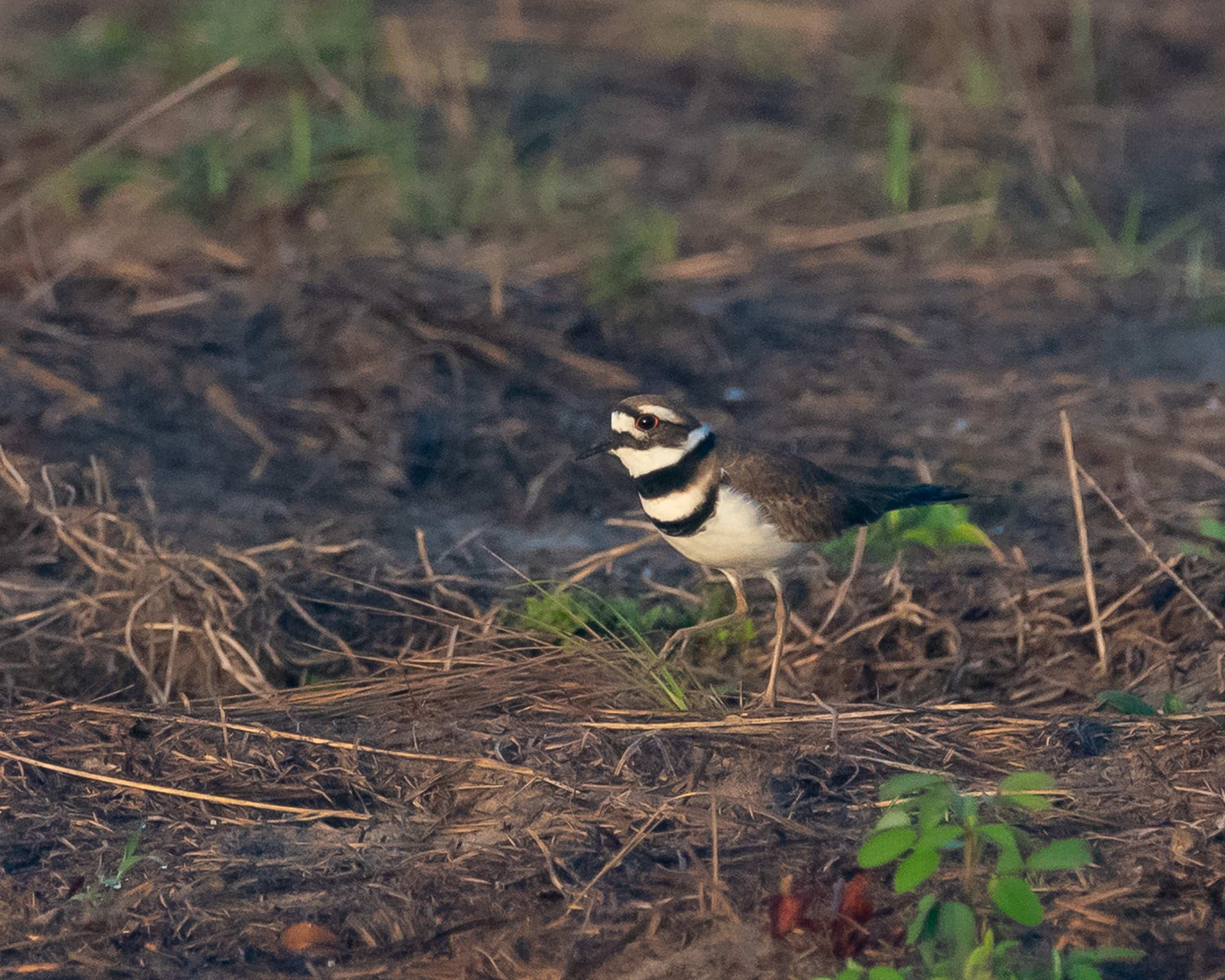
Gini heard the Killdeer calling and we eventually spotted one running across an open patch. If they don’t move, they can be tough to see.
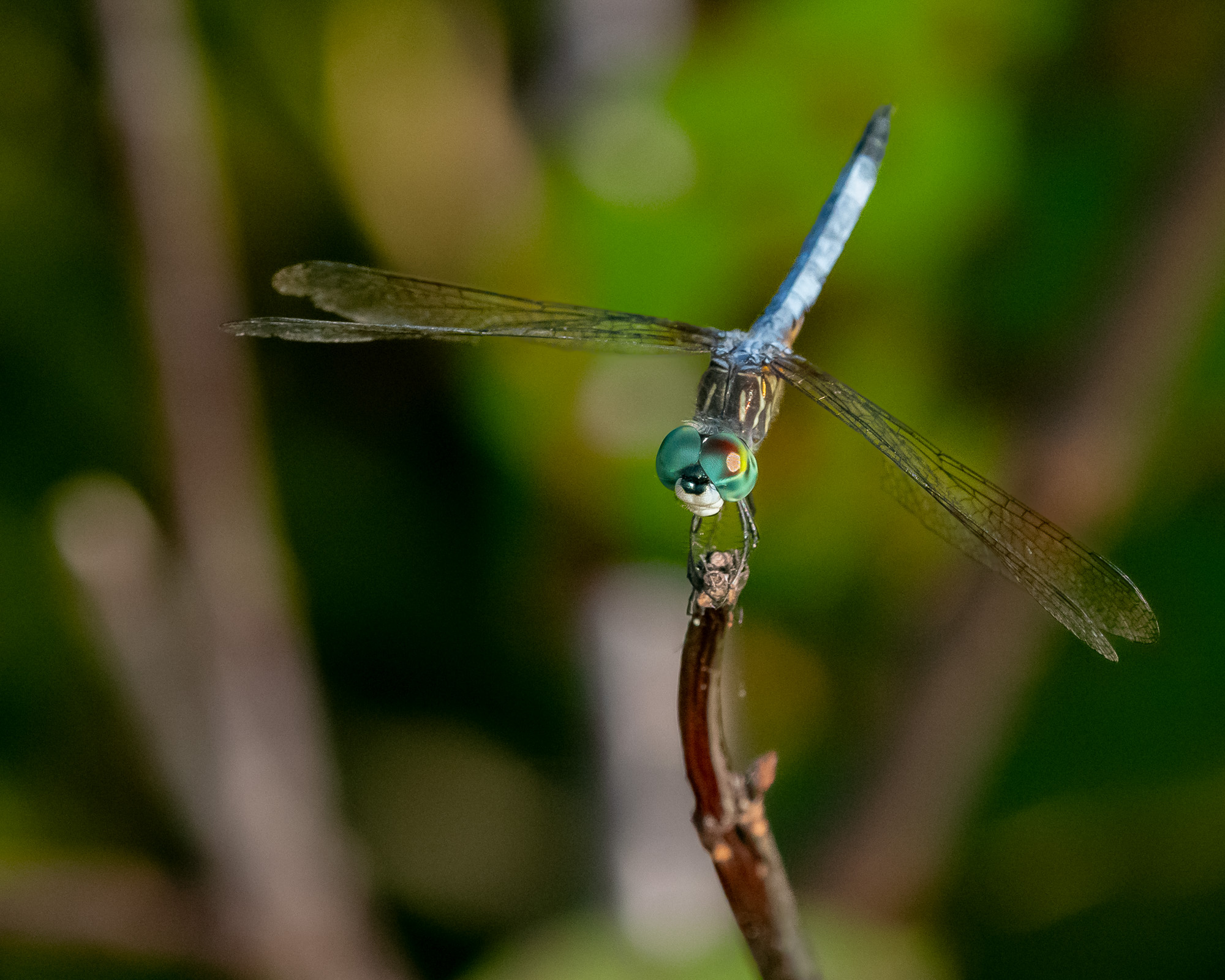
The small Blue Dasher (Pachydiplax longipennis) is one of our more common dragonflies. White face, blue abdomen, racing stripe thorax and those green eyes – identify the male.
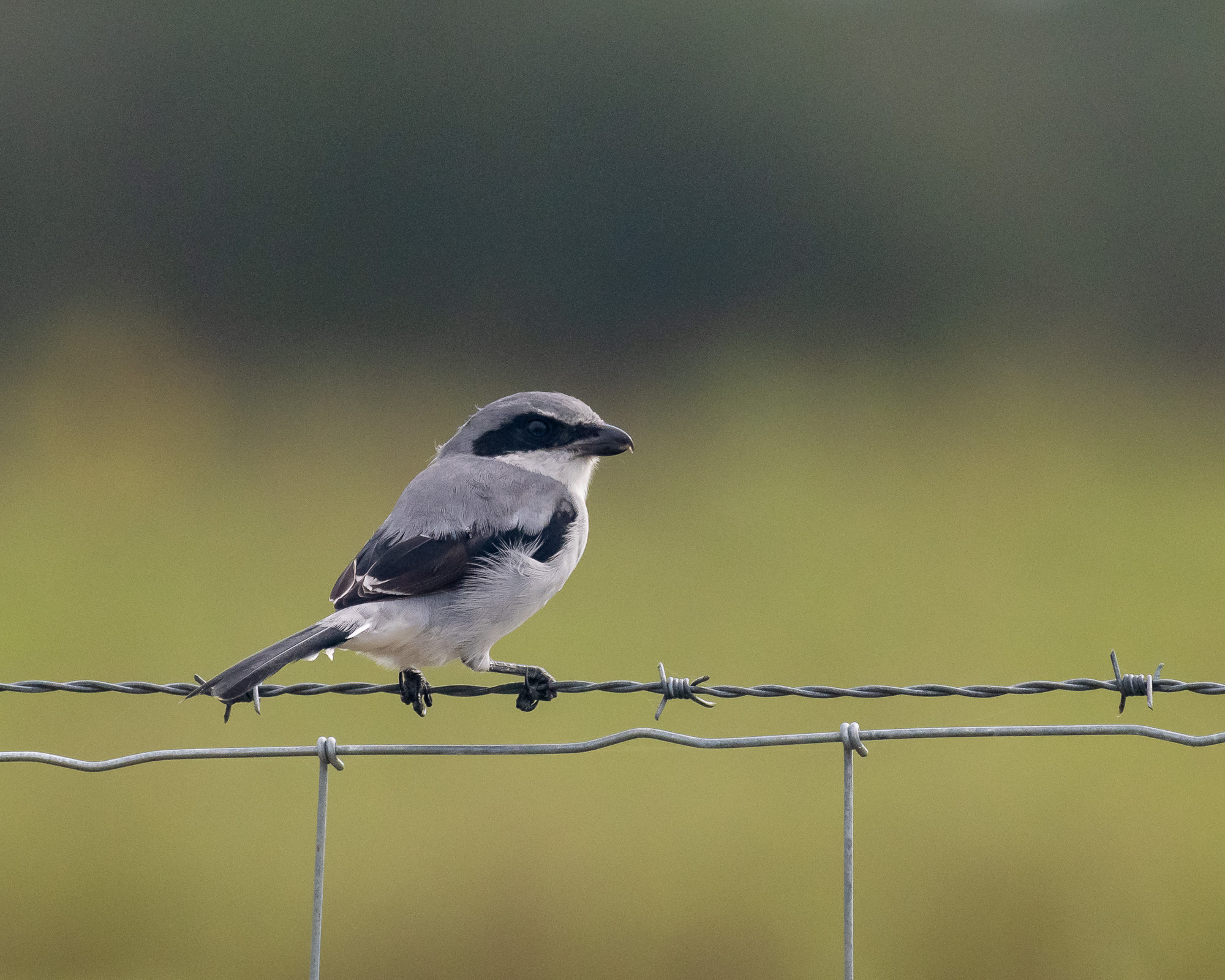
As kids, we called the Loggerhead Shrike “Butcher Bird”. They impale their prey on a sharp object like a thorn or barb of a fence wire where it ripens until perfect for a late lunch.
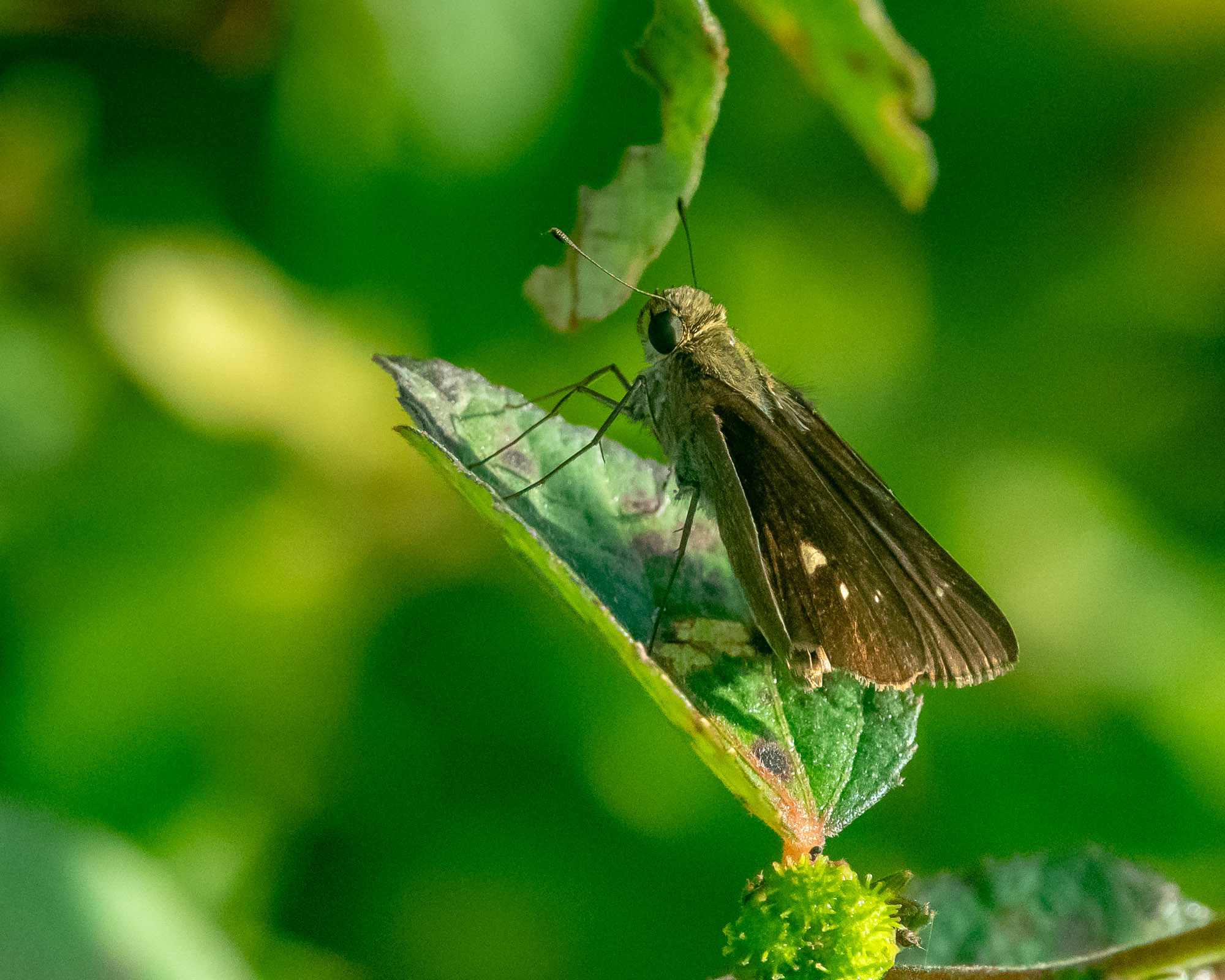
This was only our second sighting of an Ocola Skipper (Panoquina ocola). Don’t tell it that flower is a nasty invasive species. It would just give you that typical butterfly retort: “Hey! Nectar is nectar!“.
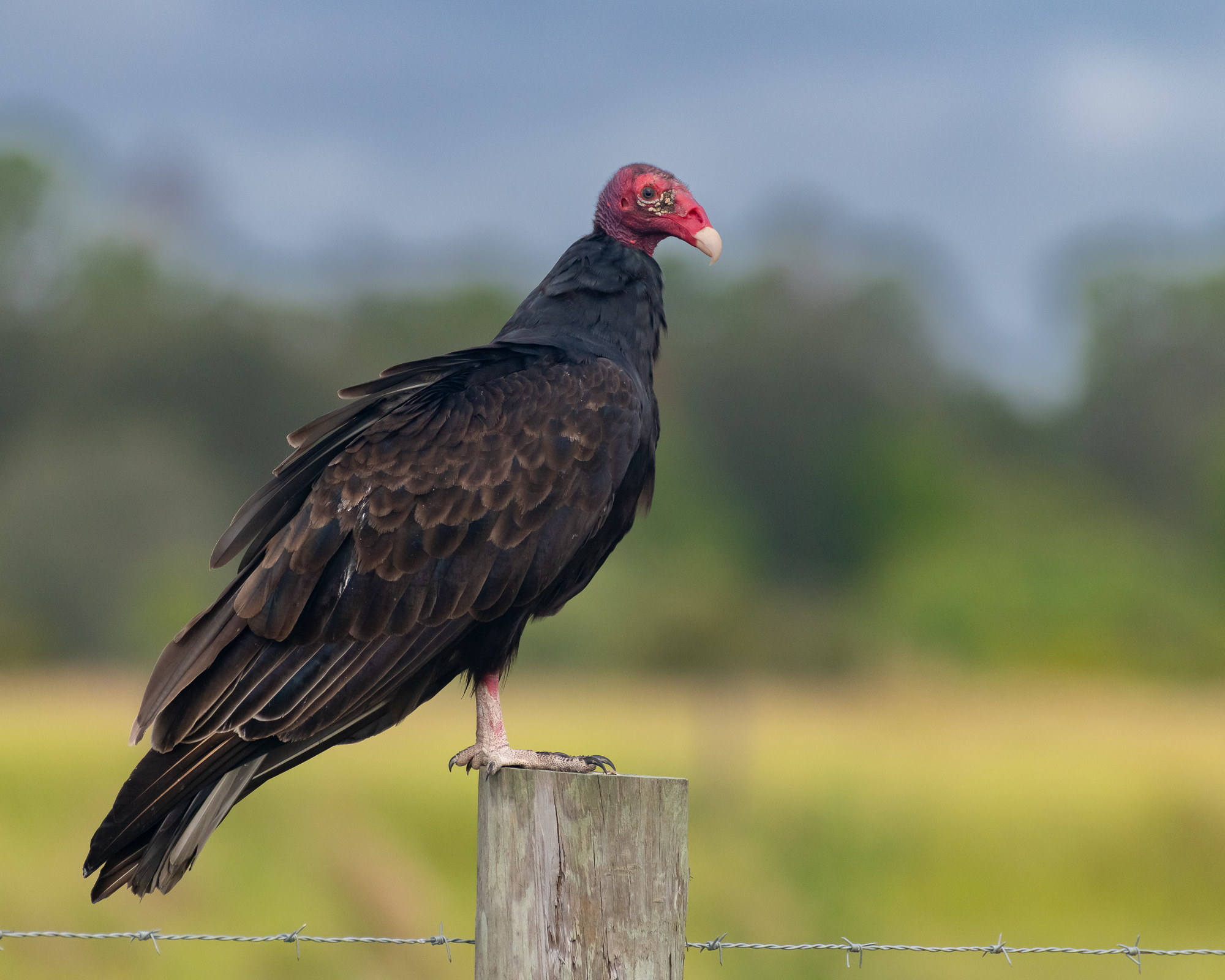
Who couldn’t love that face? Other than the Turkey Vulture’s mother.
Large and in charge. Walking through the web of the Yellow Garden Spider (Argiope aurantia) strung across the path in the morning seems obligatory for yours truly.
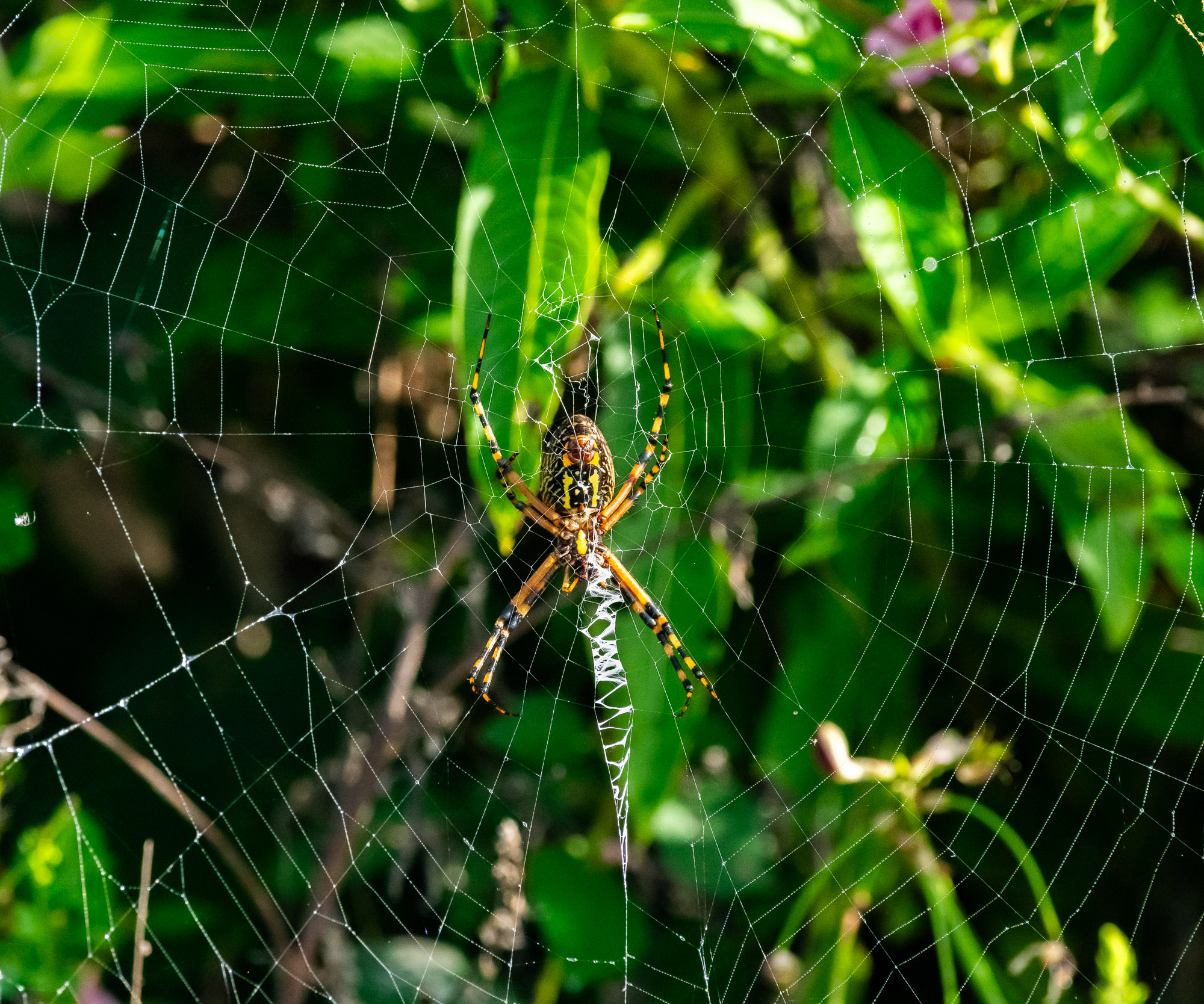
The unplanned morning drive was incredibly refreshing. No list of anything sighted. No disappointment of not fulfilling a goal. Just total relaxation and enjoyment. We may do it again next year.
Enjoy your search for a natural place and come back for a visit!
(Personal Note: Gini had a successful second total knee replacement recently and is recovering. She has scheduled dance lessons for us this spring. Fingers crossed.)
 Our Natural Places
Dearest Wally and Gini,
I’m just so thrilled to hear you both are back to the woods. And that Gini is recovering well and will return to her dance lessons. Amen to that and so be it! xoxo
I bet I’ve missed a whole lot of posts from you, while I was away establishing that deep connect and communication with animals and all of nature. Will go back and read them for sure.
The Pam Warbler here reminded me of the Hume’s warbler in our neck of woods. Recently chanced upon one on our walk to the wetlands and marshes. The shrike is indeed called the butcher bird still, for its incredible butchering skills. :-)) Pun intended. 😉
I love the Blue Dasher, the handsome Turkey Vulture and the Yellow-Garden spider has me awe-struck.
I so loved coming back here to read this lovely post and that nugget about not being so fixated on one’s goals. Have lived my life that way and have been passing on the same to both the children, who quite like wandering into the off-beaten path.
Have yourselves a wonderful weekend. ❤
LikeLike
Good Morning, Natasha!
Sorry for the late reply. Life keeps getting in the way of blogging.
Your thoughtful comments are really appreciated. Gini is now able to walk with no pain for the first time in over three decades. Her spirit continues to dance ecstatically and can’t wait for her new legs to catch up! Good timing, too, as Spring is just around the bend.
Kudos to your children’s wise Mother for encouraging them to follow their own paths.
All the best from the land of flowers.
LikeLiked by 1 person
Best wishes for continue recovery efforts for Gini – I know what a struggle it is to get back on your feet but one must continue pushing. As far as goals go, my entire life is built on them – my younger years, schooling years, career and still into retirement. I am probably overly committed to them and liked your comment about going outside those goalposts. My problem is without a north star I wander waaaay to much. Take care.
LikeLike
Gini thanks you for the well-wishes and she’s doing great with her rehab.
Twenty+ years in the military taught me a lot about goals. Growing old is teaching me a lot about wandering from the north star – there is SO much to explore!
LikeLiked by 1 person
Beautiful photos, Wally. Thank you so much for sharing, and warm greetings from Montreal, Canada ❤️ 😊 🇨🇦
LikeLiked by 1 person
Thank you very much, Linda. We’ll take all the warmth we can get!
LikeLike
I love the photo of the “large and in charge” Turkey Vulture. Nice one!
LikeLiked by 1 person
Thanks, Peter. He liked that post and wasn’t about to let me have it.
LikeLiked by 1 person
Nicely done Wally. You even captured one of my favorites, the killdeer.
LikeLiked by 1 person
Took awhile to spot the quick critter. Turns out he had a dozen friends in the weeds, also tough to see.
LikeLiked by 1 person
Sometimes we need spontaneous adventuring, your morning sounded wonderful together! Lovely photos, Wally!!
LikeLiked by 1 person
Thank you, Donna.
All outings seem to offer something different. I reckon that’s why we keep doing it.
LikeLiked by 2 people
Beautiful outing!
LikeLiked by 1 person
It was nice, Dina.
And much warmer than now!
LikeLiked by 1 person
Great news on Gini! Hopefully her recovery is going well. The cycle of life of an orange grove. Sad and exciting all at the same time. I never get tired of seeing your pictures.
LikeLiked by 1 person
Gini says Thank You and so do I!
I reckon the citrus industry is like any other, it has its ups and downs. I hope those tents don’t contain the scent of orange blossoms in the spring. I’ll report back…..
LikeLiked by 1 person
Nature is home to so much that a walk in it without any plan will still likely turn up at least some interesting things. That said, many things are time- or season-sensitive, and if we want to observe them we do have to plan accordingly. We hunt for icicles after an ice storm, not in the middle of summer. I mix the two approaches, sometimes going out in search of a specific subject, and other times just going out.
LikeLiked by 1 person
Of course, you’re correct about mixing approaches to exploring nature.
To be totally honest, on this day, I reckon we “planned” to go for a drive, even we discussed no details.
Gini would argue I pretty much go with the “as little as possible” approach when planning anything.
LikeLiked by 1 person
That approach of yours has still always let you come home with plenty of good pictures—unless you’ve not posted about any times you’ve come back with nothing. Once in a while I’ve found myself at places that haven’t inspired me to photograph anything, but in those cases I’ve usually managed to find somewhere else to go that did yield pictures.
LikeLiked by 1 person
To paraphrase one of the more well-known phrases from a film, “Plans? We don’t need no stinking plans!” Well, sometimes we do. It’s best that Gini’s surgeon had a plan, for example. But when it comes to nature, simply setting out to see what we can see leads to some of the best discoveries.
I was intrigued by the Caesarweed’s name. When I looked at a few sites, I laughed at the variety of explanations. None mentioned what seemed reasonable to me: that the invasive plant got the name because it overruns the land like Julius Caesar overran Gaul.
You spotted some of my favorite birds: particularly, the killdeer and the shrike. One of my own favorite discoveries was a large beetle impaled on barbed wire: no doubt waiting for a shrike to come back for a snack. The best thing about killdeers? Their babies! The first time I saw a pair running across a parking lot behind a parent, I thought they looked like golf balls on legs, and I’ve never changed my mind!
LikeLiked by 1 person
Some of our forest edges and wetland areas appear to be chanting: ” Veni, vidi, vici”!
The little hibiscus-looking flowers are pretty, but what natives did they root out?
Gini loves your description of new Killdeer. Perfect.
Stop sending us cold fronts, please.
LikeLiked by 2 people
Solar ‘farms’. Must be the scourge of the world over. Our government in it’s futile wisdom to hit zero carbon have lit the blue touch paper. In my County of Norfolk tens of thousands of prime agricultral land is earmarked by profit greedy developers to plant their pretty panels.
No thought in food security. We are a small island with a massive population. Let’s just import it. Carbon neutral? Don’t make me laugh (or cry).
LikeLiked by 1 person
We are singing the same song, Brian. Hope it doesn’t turn out to be a dirge.
If it just wasn’t for humans and greed this could be a pretty nice little planet.
Let’s keep enjoying the good bits whilst we still have ’em.
Cheers from the chilly Colonies.
LikeLiked by 1 person
After my rant I should have said….. Great set of images. Love the Shrike. Hope your fair lady is back on her paws soon.
And if you think you are chilly…..
LikeLiked by 1 person
Thanks for the nice comments, Brian.
Yep – I think I’m more than chilly this morning: 26F/-3C! In the “Sunshine State”, no less!
LikeLiked by 1 person
That sunrise! What a glorious beginning to the day. The rest of your morning was pretty fantastic, too. I wasn’t aware of the orange blight, I’ll have to read up on that.
Your thoughts on the steel and plastic wastelands of solar farms resonated with me. I’m always sad to see a lively, vital open space converted to this purpose.
Glad to hear Gini is recovering well, and looking forward to you both doing turns and dips down the trails!
LikeLiked by 1 person
Thank you very much, Sam. It was a good morning out.
Her spirit is ready to hit the trail. The new knees – we’ll wait a bit longer.
LikeLiked by 2 people