We Gathered Rosebuds While In May*

(Click on images to enlarge, click again to zoom.)
(Gini continues to take it easy and liked the hospital food so much she may schedule another visit soon. In the meantime, we shall force you to view never-before-seen images of past adventures. Thank you again from both our hearts for your well-wishes. It means a lot.)
In the merry merry month of May, Gini and I were frolicking in the Green Swamp gathering rosebuds. Okay, we were actually engaged in serious exploration of the biodiversity of the ecosystem located in central Florida’s Little Withlacoochee Wildlife Management Area and — (“What? Yes, dear, there was a lot of laughter, but YOU started it!”) Turns out, there MIGHT have been some frolicking.
Also, about that “gathering of rosebuds” thing. We obviously repsect Nature way too much to go around picking all the wildflowers so no one else could enjoy them. — (“What? – Well, yes, dear, I suppose since we took pictures of the rosebuds that could be considered “virtual” gathering.”) Turns out, there MIGHT have been some rosebud gathering.
We “gathered” other stuff, too.
Birds were busily tending nests and newly hatched chicks. Flowers seemed to be showing off around every bend. Insects found a lot to be happy about with all those fresh blooms. Trees displayed an incredible array of the color known as “green”. The swamp was becoming wet again.
As we rumble toward the wet season, water levels will make it challenging to navigate some of the trails. Alligators and otters will smile at our ineptitude.
For now, we will be content to pause and smell the roses.
A singing Carolina Chickadee expresses what we define as “joy”.

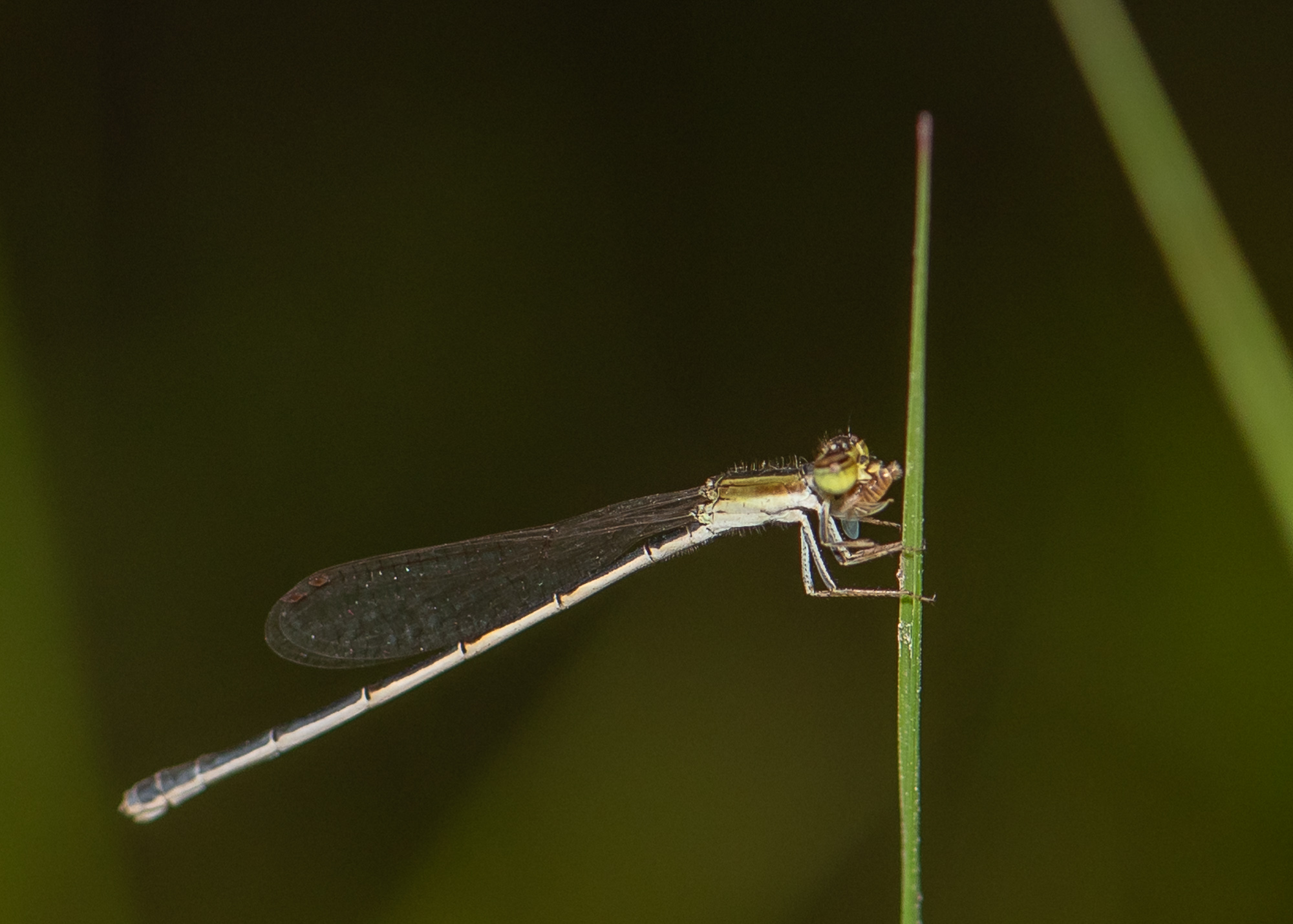
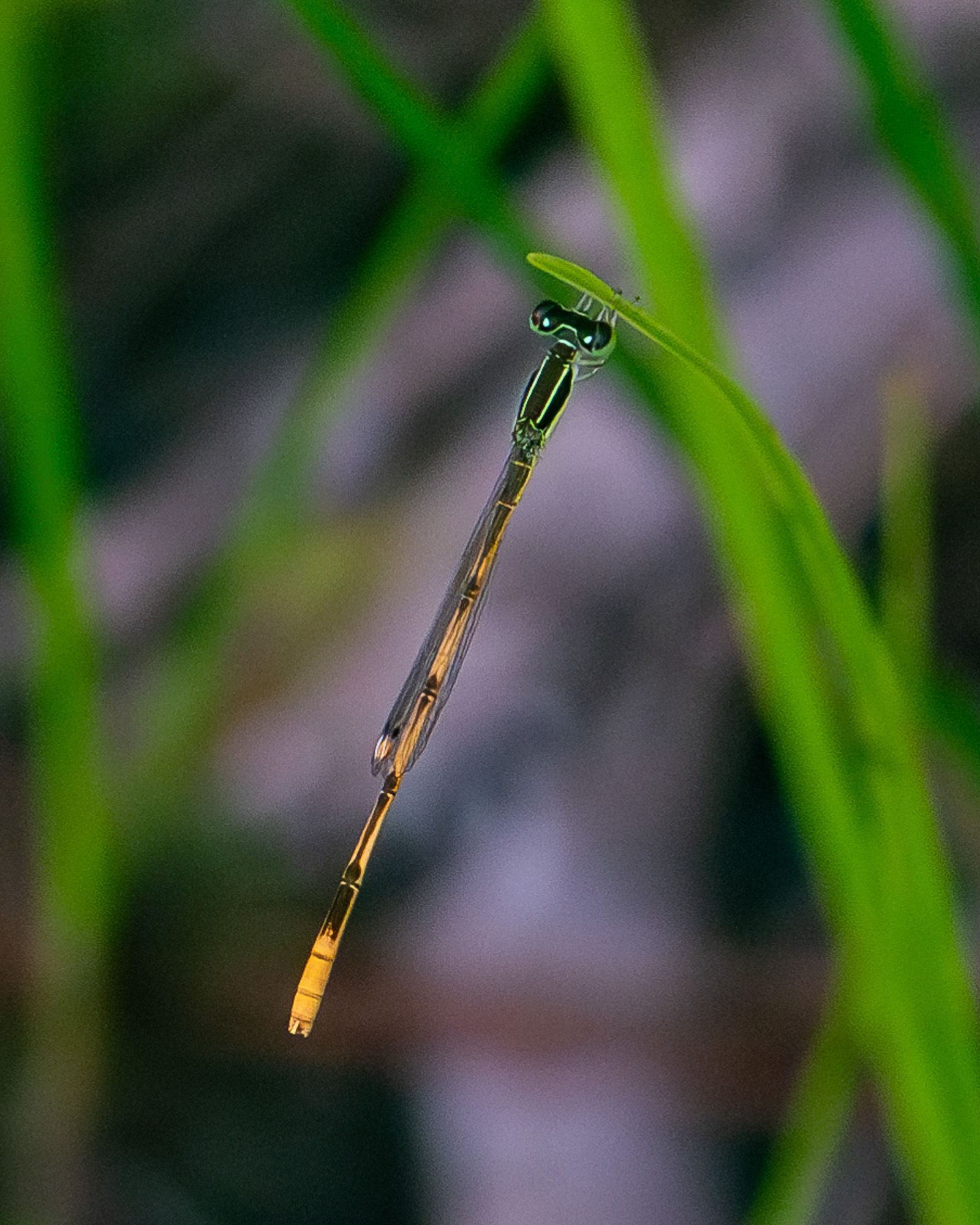
Not in distress, one of the continent’s smallest damsels allows us to compare male and female forms of the Citrine Forktail (Ischnura hastata).
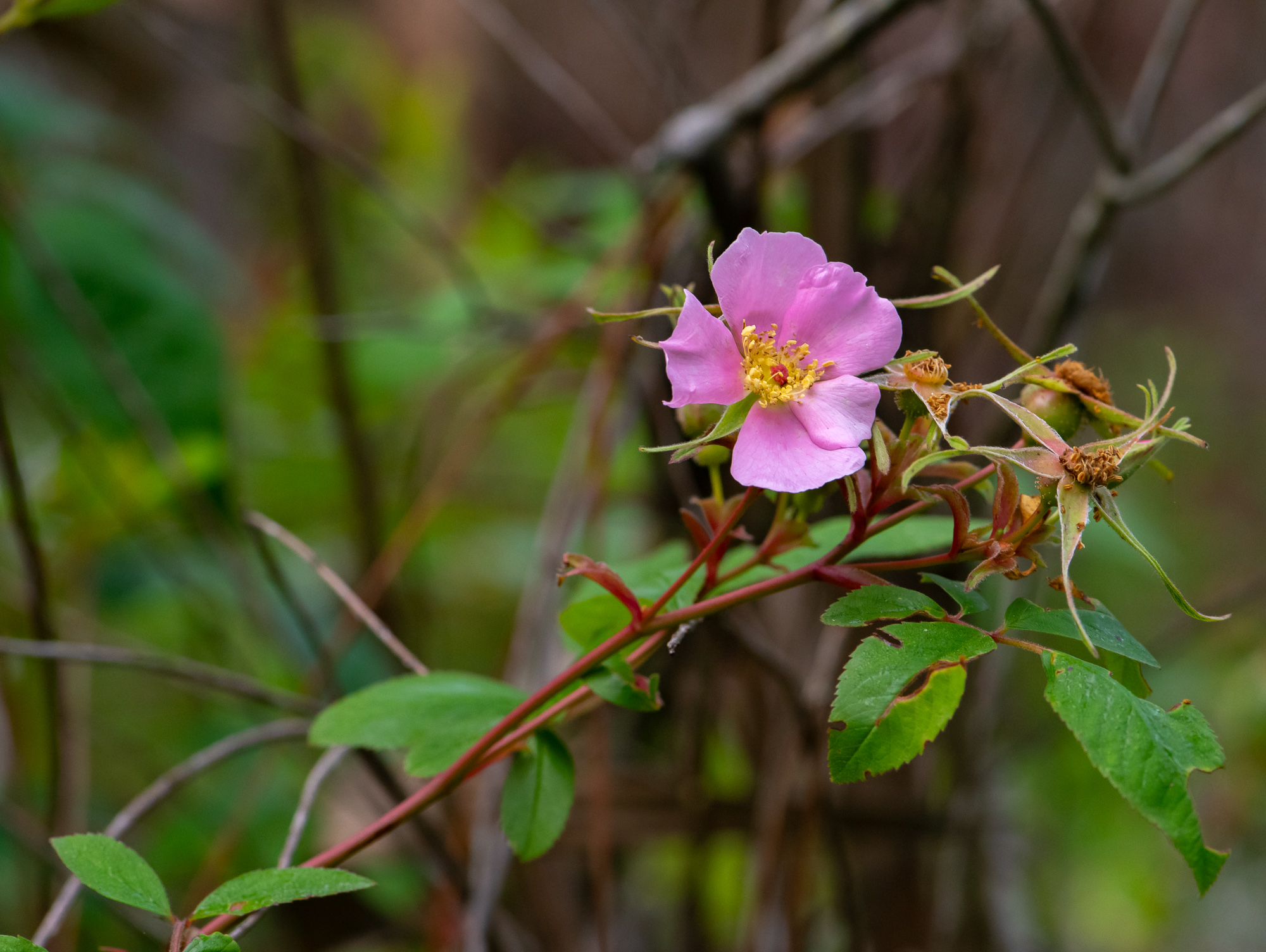
Swamp Rose (Rosa palustris). Most of the buds were blooming. Virtual gathering only.
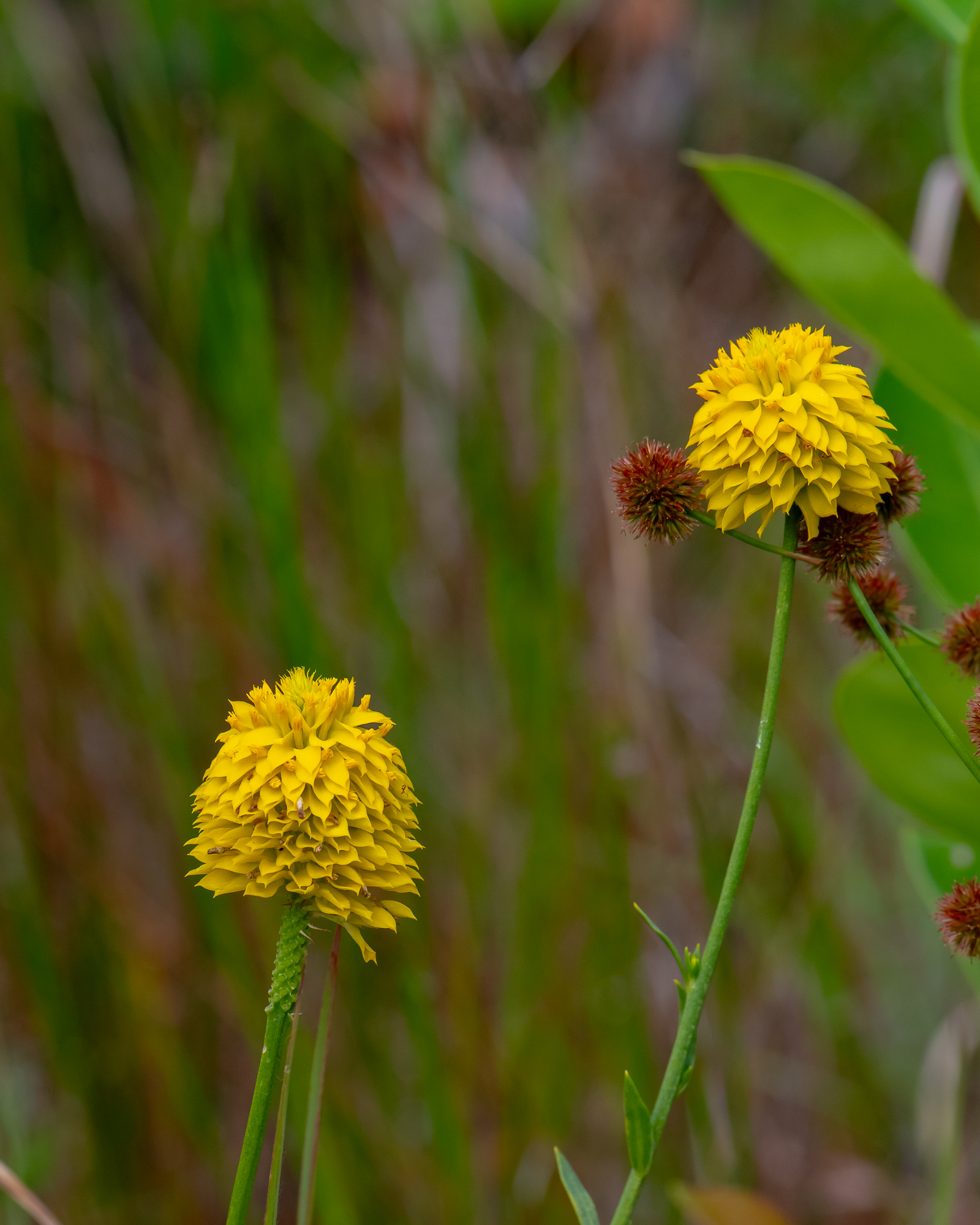
Yellow. Like the Sun. In the Sunshine State. Only found in the Sunshine State, actually. Yellow Milkwort (Polygala rugelii).
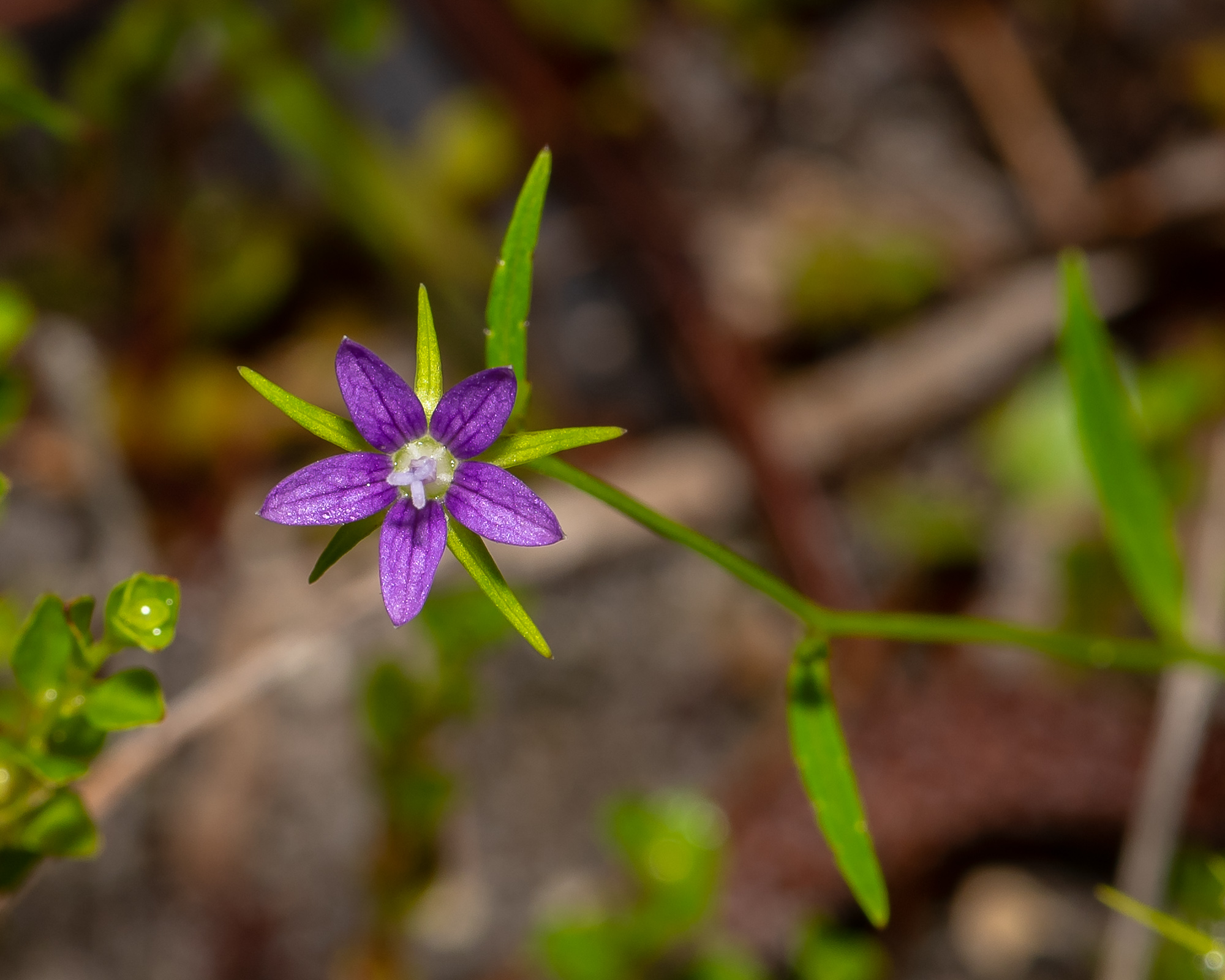
Also endemic to Florida, the small and lovely Florida Bellflower (Campanula floridana) is easy to overlook.
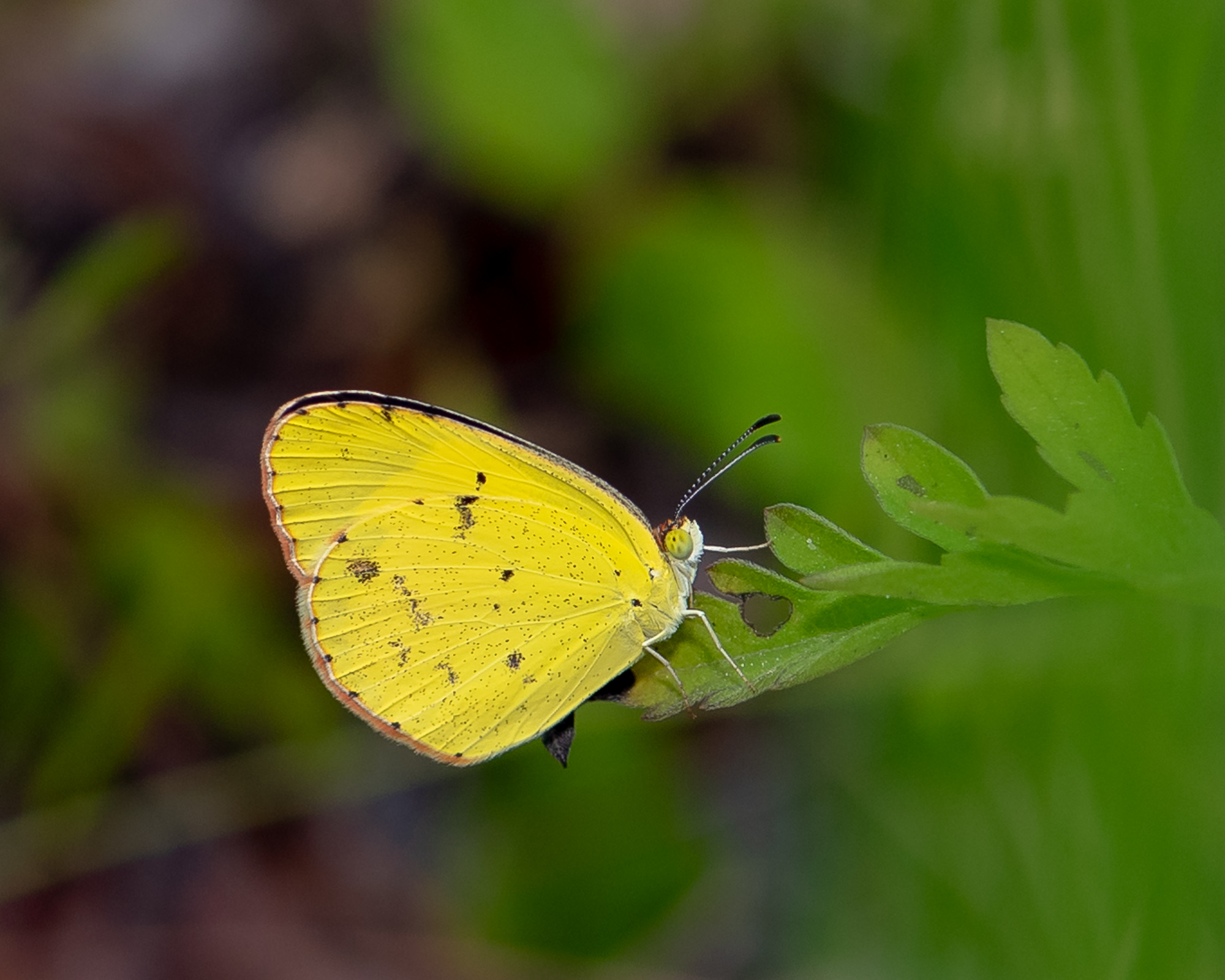
With so many flowers on display, it is only natural that a few nectar-seekers would be out and about. A Little Yellow (Pyrisitia lisa) is only too happy to transport a bit of pollen.
Even the trees have sweet offerings for those which may be interested. Buttonbush (Cephalanthus occidentalis) and Eastern Carpenter Bee (Xylocopa virginica).

Found only in Florida and a few counties in Georgia, Fourpetal St. Johnswort (Hypericum tetrapetalum) sports bright canary-yellow blossoms and unique blue-green leaves clasped tightly around the stem. Don’t mistake this species for some of its relatives which may have medicinal uses. This one might make you feel ill.

Twining vines with lovely lavender flowers are beginning to twist and turn their way throughout the forest. Spurred Butterfly Pea (Centrosema virginianum) is not only beautiful, but is a host for a couple species of butterfly (Skippers) as well.

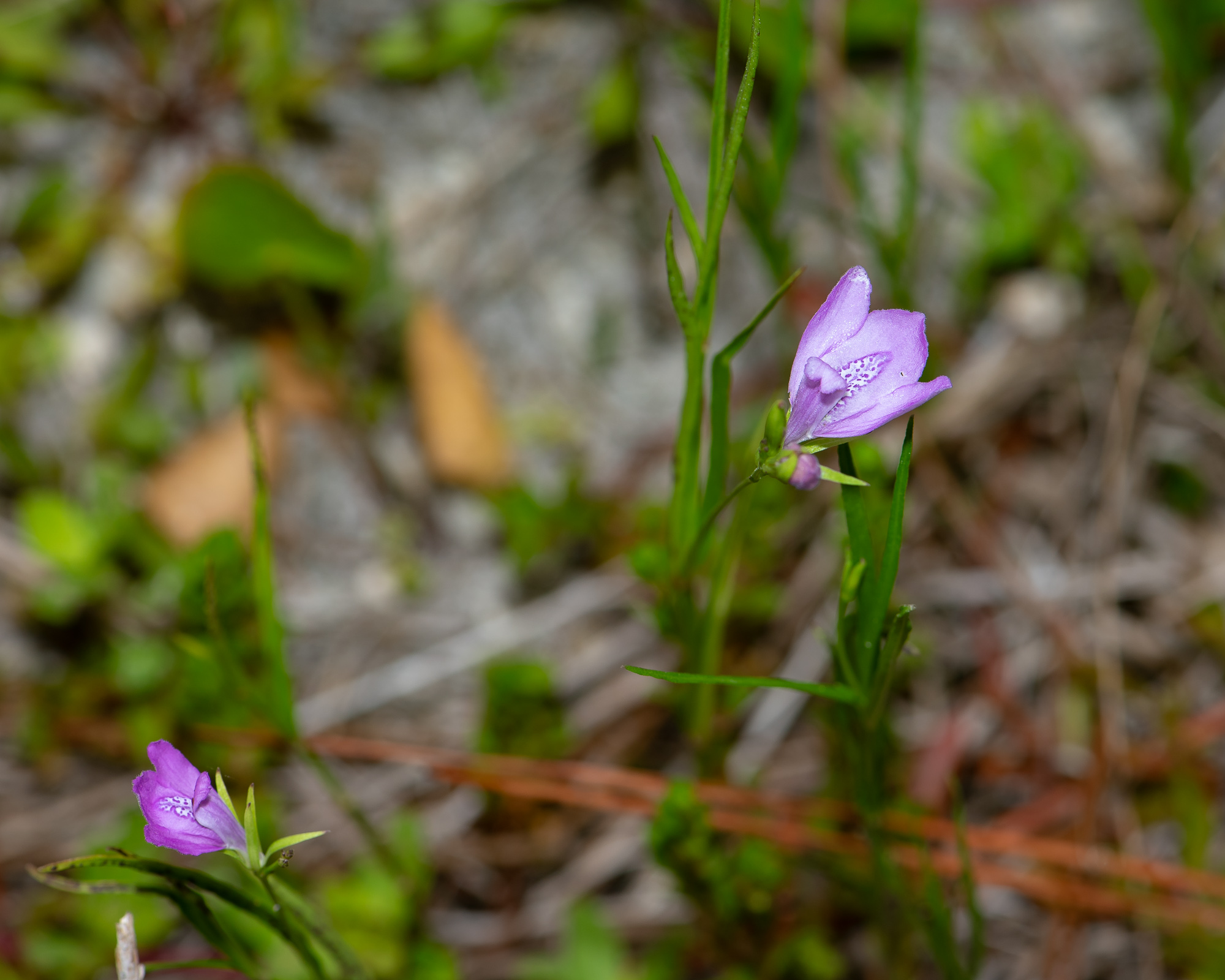
Another near-endemic wildflower for Florida is the Pineland Waterwillow (Justicia angusta). It likes a wet environment and when not in bloom would be a challenge to locate. (For me.)
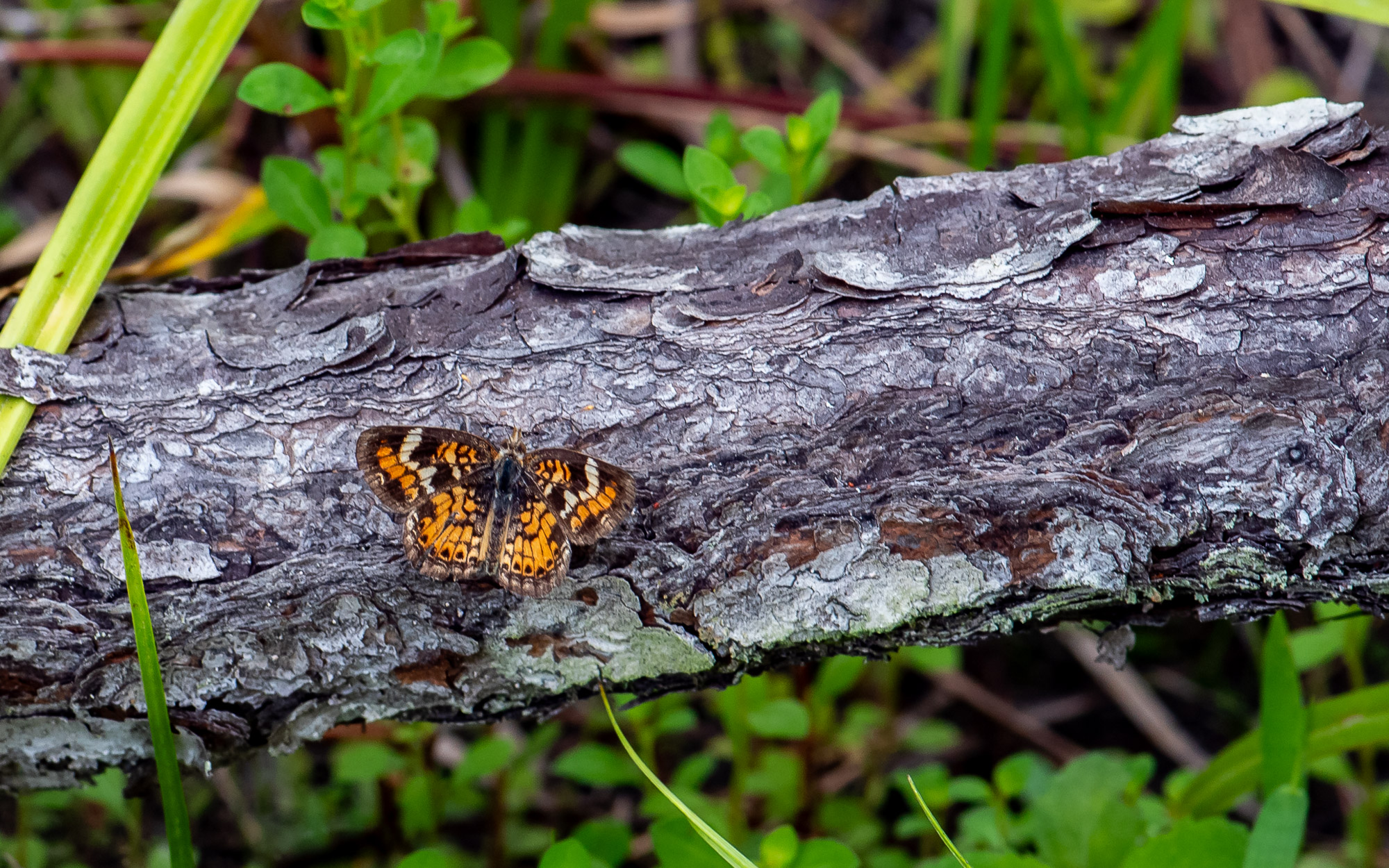
A Phaon Crescent (Phyciodes phaon) looks at home on a pine log.
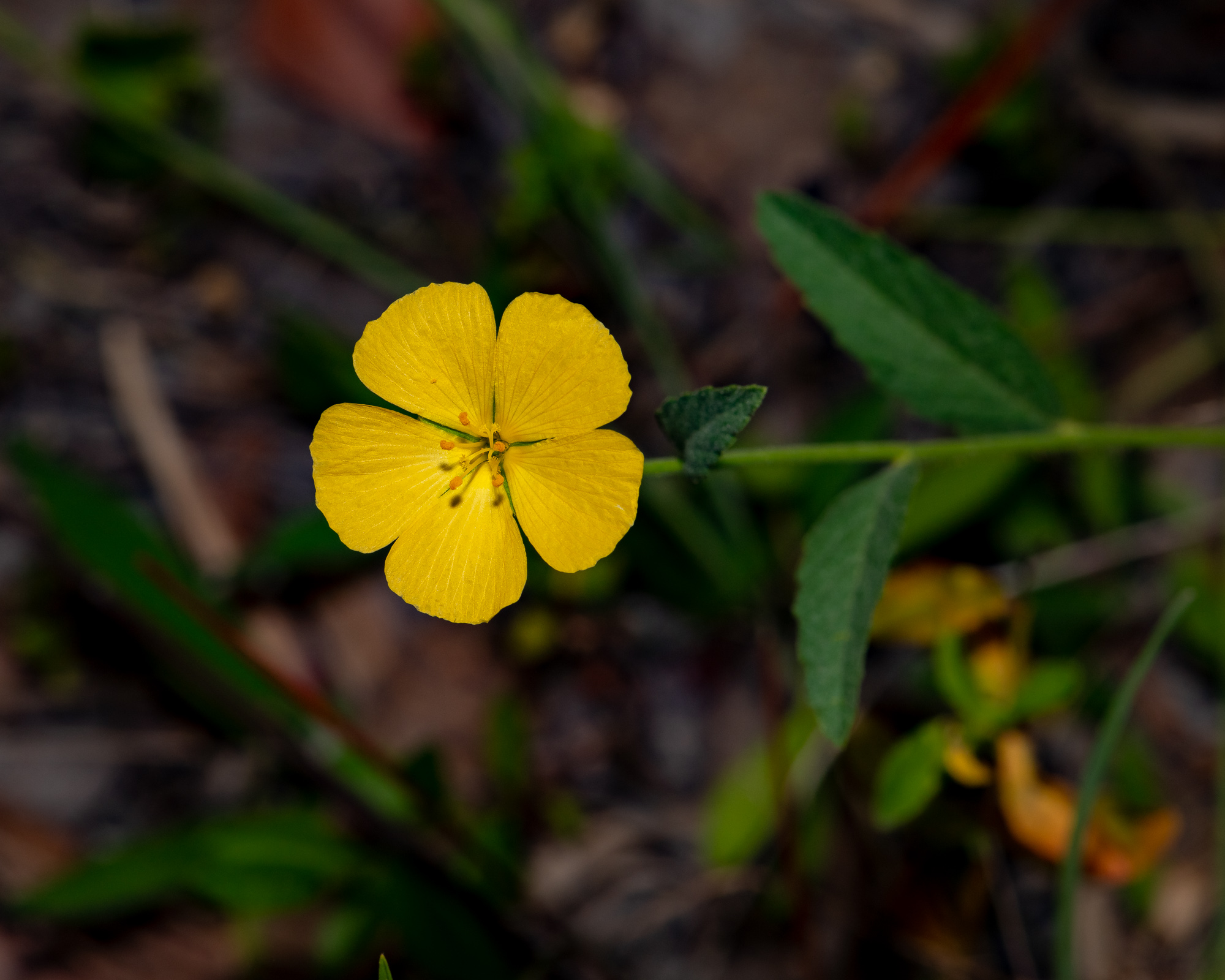
Growing to about a foot tall, the Pitted Stripeseed (Piriqueta cistoides subsp. caroliniana) has uniquely-textured flower petals. Once the flowers open, the weak stems tend to lean toward the ground. That’s okay. Makes the ground more attractive.
It is difficult to step into the forest without the Tufted Titmouse letting everyone know we’re here. Feisty and handsome. They are extra alert during the breeding season.

I don’t often have an opportunity to photograph both sides of a butterfly. This Eastern Black Swallowtail (Papilio polyxenes) posed nicely and then flitted to a plant behind me where an underside image was possible.


Growing to nearly three feet tall usually on a single stem, the Roundpod St. John’s-Wort (Hypericum cistifolium) has deep green linear leaves. It’s found along wetland edges and in moist pine savannas.

The darkly beautiful Horace’s Duskywing (Erynnis horatius) contrasts nicely with the lavender Showy Milkwort (Asemeia grandiflora). The small white flowers are Mock Bishop’s Weed (Ptilimnium capillaceum) or Laceflower, a member of the carrot family.

Heed the words of the poet. *Mr. Herrick was right when he said “Old Time is still a-flying”, so get out there and gather those buds while ye may!
Enjoy your search for a natural place and come back for a visit!
*Thank you to Robert Herrick. (https://poets.org/poem/virgins-make-much-time)
 Our Natural Places
Continued best wishes for Gini. That Buttonbush looks pretty cool, although it does look a bit like the Covid molecule ha. Love to hear the sound of Chickadees in the morning – we always look for them here as they tend to make friends with the migrating warblers. We also have plenty of Titmice – regular visitors to the feeders with the Nuthatches. Nice shots of the Eastern Black Swallowtail!
LikeLike
We appreciate those wishes.
Gini says the flowers of the buttonbush look like her sewing basket with those cushiony thingies sprouting pins and needles.
The swamp and woods would not be the same without those little birds yelling at us and eventually treating us to their songs.
LikeLike
May ye be able to continue to gather rosebuds and other beautiful treasures with wings or petals for a very long time.
LikeLike
That is definitely our plan!
We look forward to more of the three B’s.
Birds, Blooms, Bugs.
LikeLiked by 1 person
🦉🌸🐝
LikeLiked by 1 person
I love your butterfly pictures. They are such amazing creatures to me. How nature changed and adapted giving the different colors and designs is absolutely amazing to me.
LikeLike
We share your amazement!
I reckon that’s why we love all the wildflowers so much. They attract all those lovely fluttering bugs.
Have a wonderful week.
LikeLike
How are you both doing this week? The weather is a bit better here today so I’m happy about that. Just wanted to know I mentioned you both in my post today! It’s good….don’t worry! Hugs, Diane
LikeLike
Thank you very much, Diane!
We’re both pretty good. Having to restrain ourselves a bit on exploring as Gini keeps wanting to visit doctors instead of ‘gators.
Early mornings have had a more “comfortable” feeling lately. Maybe it’s just wishful thinking?
Hope your new week is going great!
LikeLike
Great shots as usual, love the swallowtail images!
LikeLike
Thank you, Maria.
LikeLike
My favorite fauna photo is the tufted titmouse; for flora, I’d chose the yellow milkwort. The only one of our several milkwort species I’ve found is the Maryland milkwort, which combines lavender, pink, yellow, and orange in its blooms. I call it a bouquet in a flower. I’d love to see that orange milkwort.
The rose is beautiful, too. I’ve seen Rosa carolina, the ‘pasture rose’ in Missouri, Kansas, and Oklahoma; it looks remarkably (and reasonably enough) like yours. In my area, we only have the beautiful but invasive and nasty R. bracteata — the Macartney rose. I’m just so taken with the color and detail in all these photos. It’s been far too long since I’ve been in any sort of a natural place; perhaps tomorrow I’ll give it a try, and see if I can remember how to make my camera work. There surely will be something to see.
There’s an old joke about hospital dieticians being taught to make sandwiches of saltine crackers and white bread, with a bit of mayo if you’d like. I hope Gini’s not suffered from that sort of madness; of course, I hope she’s back to home cooking now, and not any sort of hospital stuff.
Here’s a bit of unrelatedness for you. The first official Home Free video with their new member, Adam Bastien, has been released. I wasn’t sure what to expect, but I like it. The vibe’s a little different, but the energy and sense of fun is the same.
LikeLike
We’re lucky to have the Titmouse nest in our neighborhood and it’s clear calls make our days brighter.
There shall be an Orange Milkwort in a future post. They are found in the same area we were exploring on this trip.
This particular section of the Green Swamp is evidently favorable for the Swamp Rose. Each spring/summer it’s a treat to see the pink blossoms spreading all over the place.
Her hospital actually had passable food. Of course, she too often was told “No food this morning as you have to have this or that test.”
Your Home Free video was not at all unrelated. Gini says to send her profound thanks for the rehabilitative musical pick-me-up!!
LikeLiked by 1 person
Beautiful photos. I’ve never heard of swamp roses, but they look like they might be a rare find. Sending Gini my best wishes for good heath, and would advise her to avoid hospital food if at all possible.😉
LikeLike
Thanks, Peter.
Those swamp roses are quite common around here, in the swamps. Gini says she would gladly take the food if she could avoid all that other hospital stuff they wanta do. We both appreciate the good wishes.
LikeLike
I hope Gini will continue to take it easy and get stronger and feel better. This old summer heat will break soon…we all hope…and we’ll want to get back outside! I love the delicate Phaon Crescent, it’s one of my Florida favs! And it thrills me, literally to see the wildflower photos. Makes us all feel like reciting poetry…oh and frolicking! Take care and get better soon Gini! Hugs, Diane
LikeLike
Thank you very much, Diane.
Gini says thank for the hugs. Need all we can get.
Same for poetry and frolicking! More is better.
Hope Debby wasn’t too rough on you. No problems down here.
LikeLike
Wally, I feel as if I were on the walk with you, virtually gathering as we went.
LikeLike
Very happy to have you along, Brad!
More eyes and lenses are always welcome.
What did you bring to eat?
LikeLiked by 1 person
Wally, sorry I forgot the snacks in the hotel, as usual.
LikeLiked by 1 person
Hi Wally and Gini. Here’s wishing you both best regards from two of your loyal British followers. I’m doing the same today, taking Sue to the hospital for laser eye surgery “All the better to see what you are up to” she says. As if I might be frolicking somewhere without her. I think she will have to wear an eye patch for a day or two, hopefully both eyes then she won’t see my cooking methods.
I quite understand you delving into the archives as I resort to that sometimes when the weather is bad like every day at the moment.
You will be pleased to hear that Sue and I have not taken to the streets to riot and that our windows are still intact. However we are doing our best to make the politicians listen to us, a somewhat forlorn hope as they haven’t done so for at least 15/20 years.
PS. The Internet is down. Those pesky Ruskis for sure. Or someone else is trying to silence the normies.
Hugs to Gini
LikeLike
We shall trade wishes for recoveries across the Atlantic.
You may need to arrange a pirate party in honor of Sue’s anticipated costumery. Arrgghh, matey!
We were quite concerned as we scanned the telly for a twitcher waving a pair of bins menacingly toward figures of authority. It’s a relief to know you have remained steadfast in your resolve to keep calm and carry on. We’re attempting to emulate your civilized example.
Best of luck to us all.
Hah! We have thwarted the would-be silencers as we have not been normal for decades!
Gini appreciates the hugs. Any minute now I shall tell her they’re from you. No. Really. I will.
LikeLike
The wonderful Phaon Crescent is my favourite in this post.
Lots of good wishes to you both! Be well!
LikeLike
Isn’t that a lovely butterfly?
Thank you so much for the kind thoughts.
LikeLiked by 1 person
Trying again. Blooming beautiful. I hope that Gini can avoid hospital food but send oceans of caring thoughts to both of you.
LikeLike
Happy to provide beautiful blooms any time.
We both really appreciate those waves of care!
LikeLike
The allusion to Herrick was immediately familiar, unlike many of the species you depicted. Speaking of allusions, you missed one to “Both Sides Now” when you showed upper and lower views of that swallowtail. And you caught both sides of the chromosome divide with pictures showing the two sexes of that little damselfly.
The tufted titmouse looks to my un-avian mind kind of like a blue jay, but when I looked up both birds I found the former is in the family Paridae and the latter in Corvidae. These birds of a feather don’t flock together, classificationally speaking.
In central Texas we have white milkwort and purple milkwort but no yellow relative.
Happy recovery to the convalescent.
LikeLike
As I re-read Mr. Herrick’s poem, I wonder if he was popular with teenagers of the time and exactly the opposite with parents?
The diminutive Titmouse can act like a Blue Jay at times. The Blue Jay’s close relateion to Crows is evident as one observes their behavior.
There is also a bright orange version of the milkwort that resembles our yellow one. Alas, it only thrives to the Louisiana-Texas border.
Gini and I appreciate your happy thoughts.
LikeLike
Wonderful photos once again Wally – thanks for posting.
Let Gini know we’re thinking of her and wishing her (and you) well.
Ed
LikeLike
We appreciate the thoughts and kind words, Ed.
See you out there soon.
LikeLike
I was wondering how you fared during Debby’s visit, hope your home and environs weathered the wind and rain ok. Sorry to hear about extra hospital visits, those are no fun. Hope they yield good results for all the disruption they impose.
You’ve gathered a cornucopia of lovely colors and shapes and aromas. Enjoy them, and we will be following your example here!
LikeLike
Thank you, Sam.
Liltle Debby left us with a yard full of smallish limbs to clean up. Local watersheds are overflowing a bit but no local serious flooding of which I’m aware.
We’ll take it a day at a time and should fairly soon be back to crusing the back roads.
LikeLiked by 1 person