Just Another Ordinary Incredibly Amazing Morning

(Click on images to enlarge, click again to zoom.)
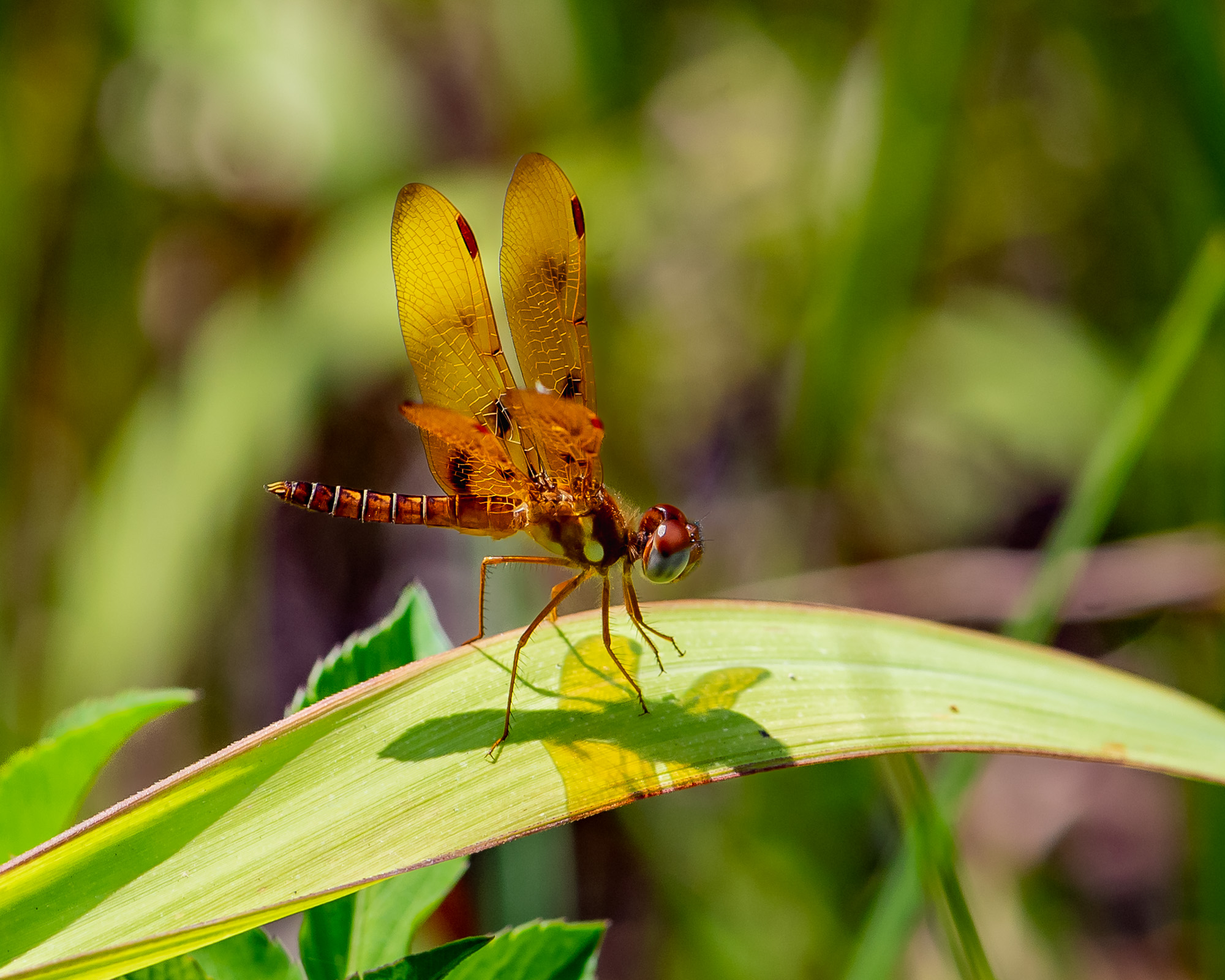
“They look like some sort of ripe golden jewels ready to be picked.”
Gini’s description of the Eastern Amberwing was pretty accurate. They flew out to grab a small flying tidbit and returned to the same perch. The morning was warm and they often assumed an “obelisk” postion to help keep cool.
Our morning was proceeding at a very leisurely pace and we had no particular goals to pursue except to relax and enjoy whatever Nature felt like offering. Although we were only a few minutes from the house, the Tenoroc Fish Management Area was just isolated enough that we could hear no human-originated noise. Just birds and bugs. Especially the summer Cicada chorus.
Summer birds are busy raising families and the woods are no longer filled with springtime mating songs. Once eggs arrive, many birds remain quiet to avoid revealing nest location. A few birds, however, seemed to be as vocal as ever. Cries of Limpkins echoed throughout the early morning, Boat-tailed Grackles fussed about everything, Red-shouldered Hawks screamed from above fulfilling their apparent duty as Nature’s neighborhood watch alarm.
Flowers are blooming and an incredible number of insects are doing their best to drain them of nectar. In the process, the blooms appreciate the assistance in transporting pollen to ensure survival of the species.
We seem to have fallen into a breakfast rut of banana, granola bar and a tangerine. Maybe PBJ sandwiches for the next trip, just to be different. Whatever we have to eat, it will be enhanced by the ambience of a calm lake, stately cypress trees, morning-glory blossoms beside us and Swallow-tailed Kites soaring in the morning sky.
Some might say we saw nothing very special today. We know differently.
Tiny Eastern Amberwing (Perithemis tenera) dragonflies are among the smallest in North America. They often fly with legs dangling to imitate a wasp to lessen the chance of becoming a meal.


Gini usually hears Black-bellied Whistling-Ducks before we ever see them. This pair must have been hungry as they let us watch them for a little while.

But, but it isn’t green, you might say. The Green Anole (Anolis carolinensis) is sometimes called the American chameleon because it can change color, but it is not a true chameleon. It changes color because of variations in temperature, humidity, health and mood, not to blend into its background. The strawberry-colored dewlap identifies this one as a male.

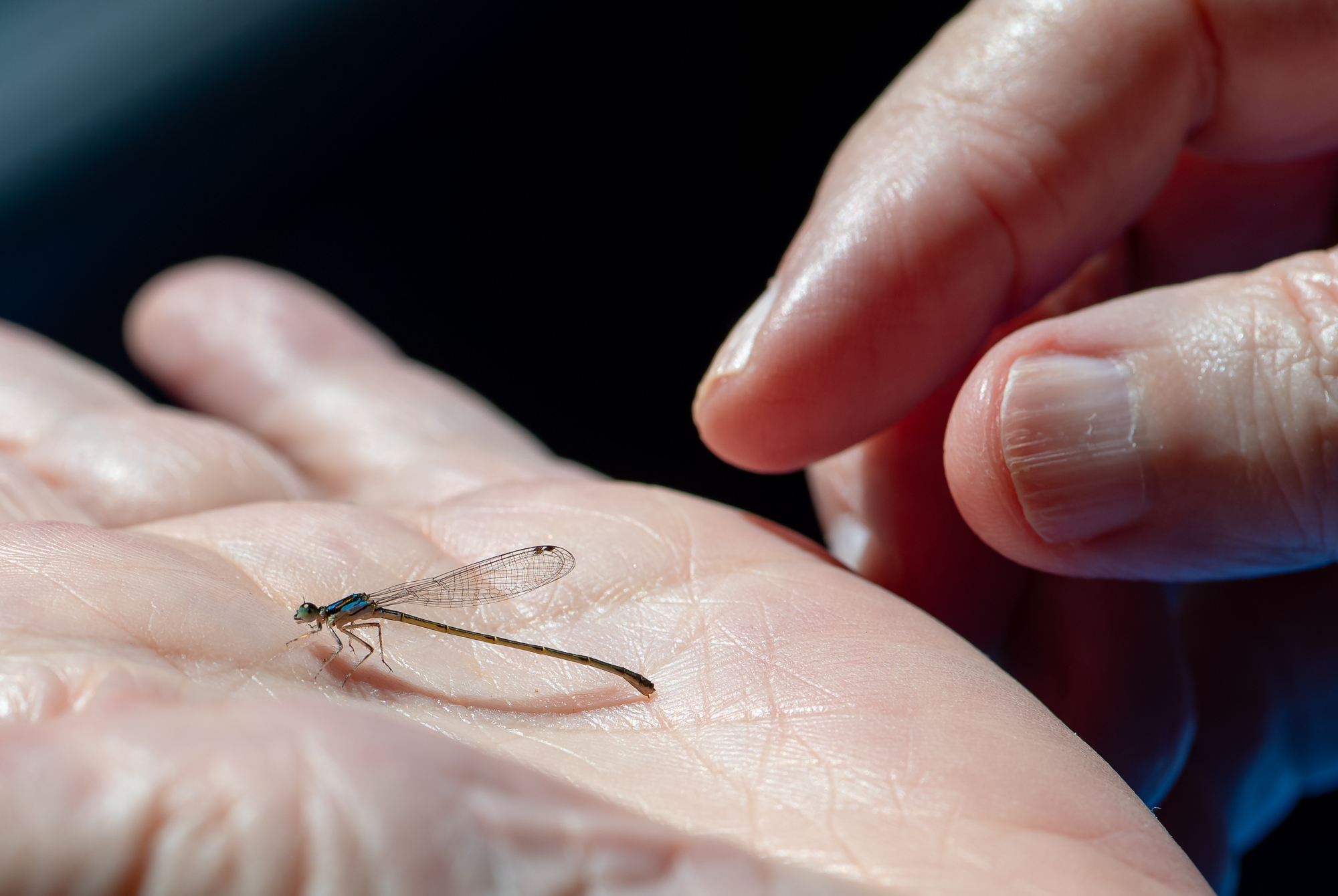
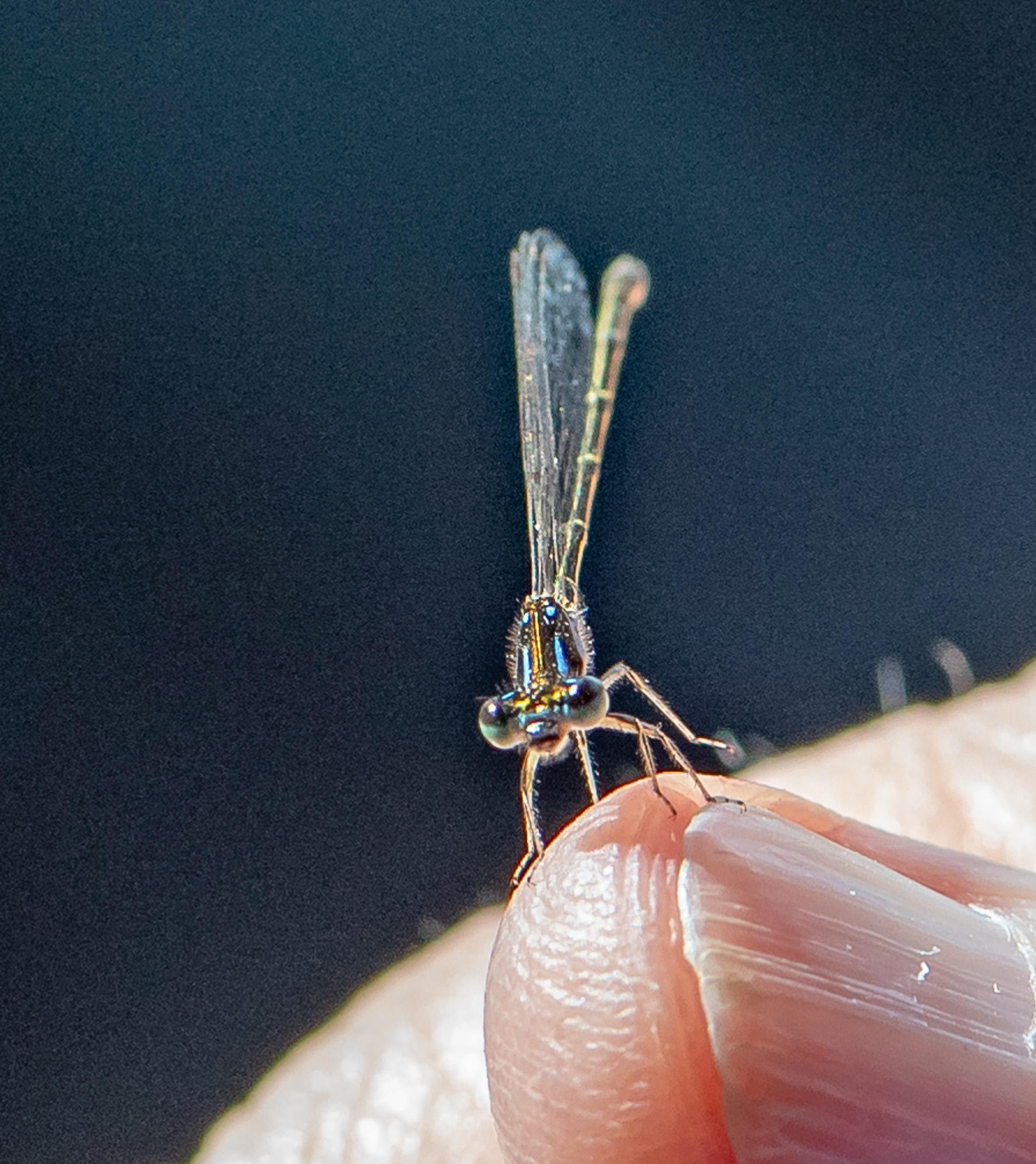
Typical. Walking the hedgerow hoping to encounter something different to photograph. Return to the car perspiring and reach for the water bottle. Gini, who remained in the cool shade to read says: “Don’t make any sudden moves or you’ll scare my friend.” Fragile Forktail (Ischnura posita). She Is — The Damsel Whisperer!
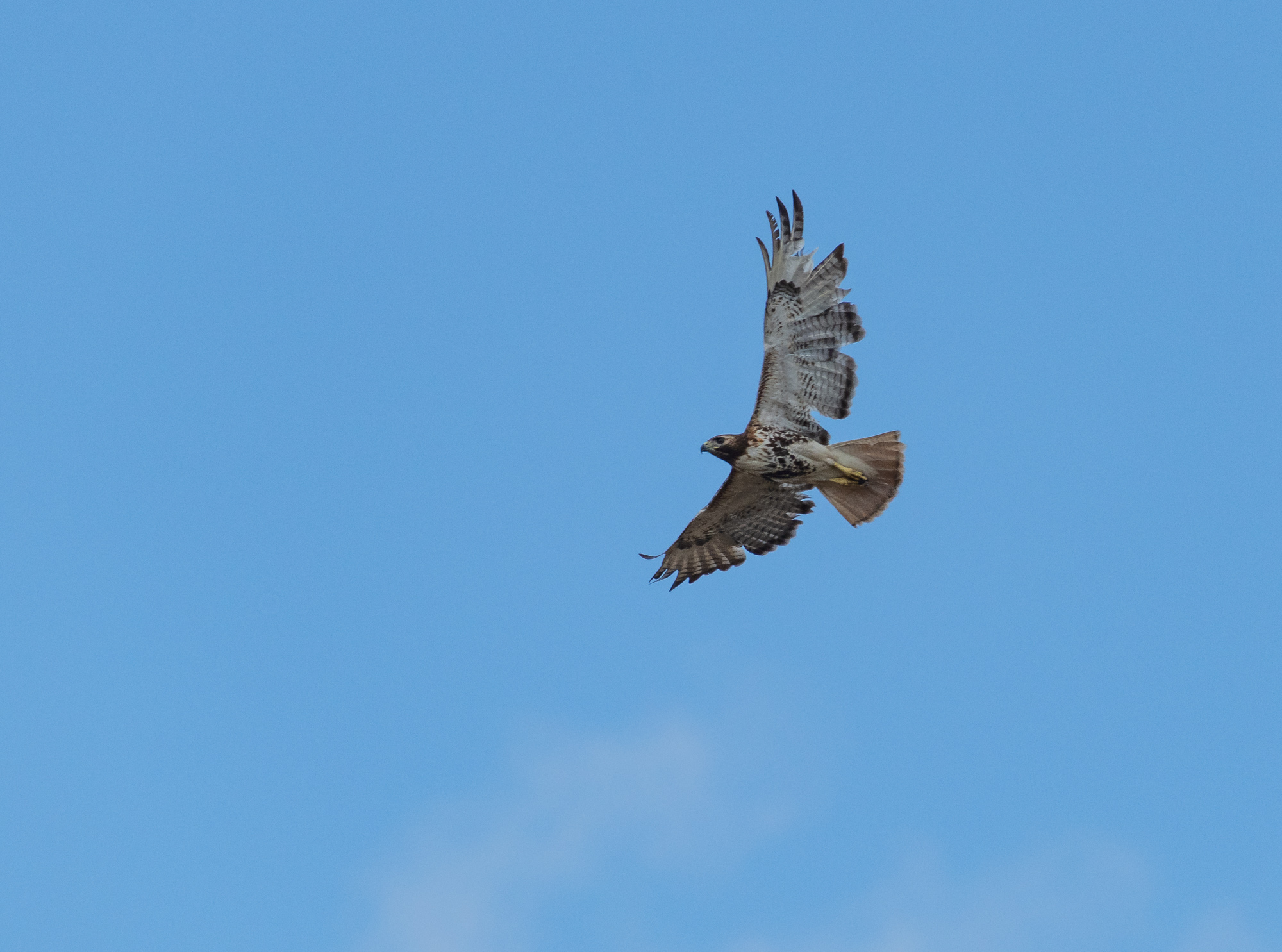
“The song of canaries Never varies, And when they’re moulting They’re pretty revolting.” — Ogden Nash. This Red-tailed Hawk may agree.
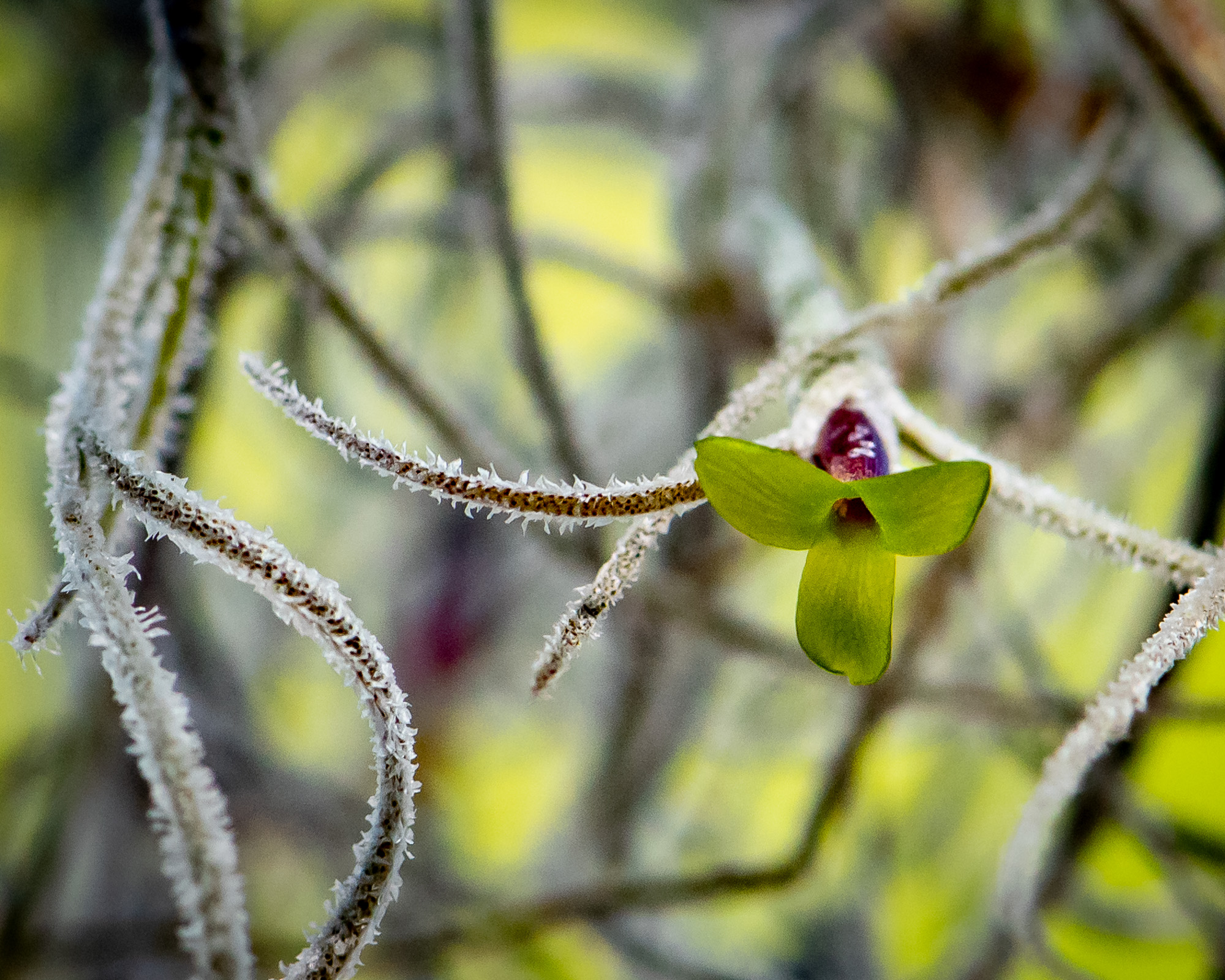
Both Gini and I are native Floridians. As such, we literally grew up with Spanish Moss (Tillandsia usneoides). We used it as a mattress, cleaned the stuff from oak trees, learned about the redbugs which inhabit the masses and caused us to itch miserably, enjoyed its scenic beauty hanging from a cypress tree along a lakeshore. But neither of us could recall ever knowing the ubiquitous gray curtain of our youth had flowers.
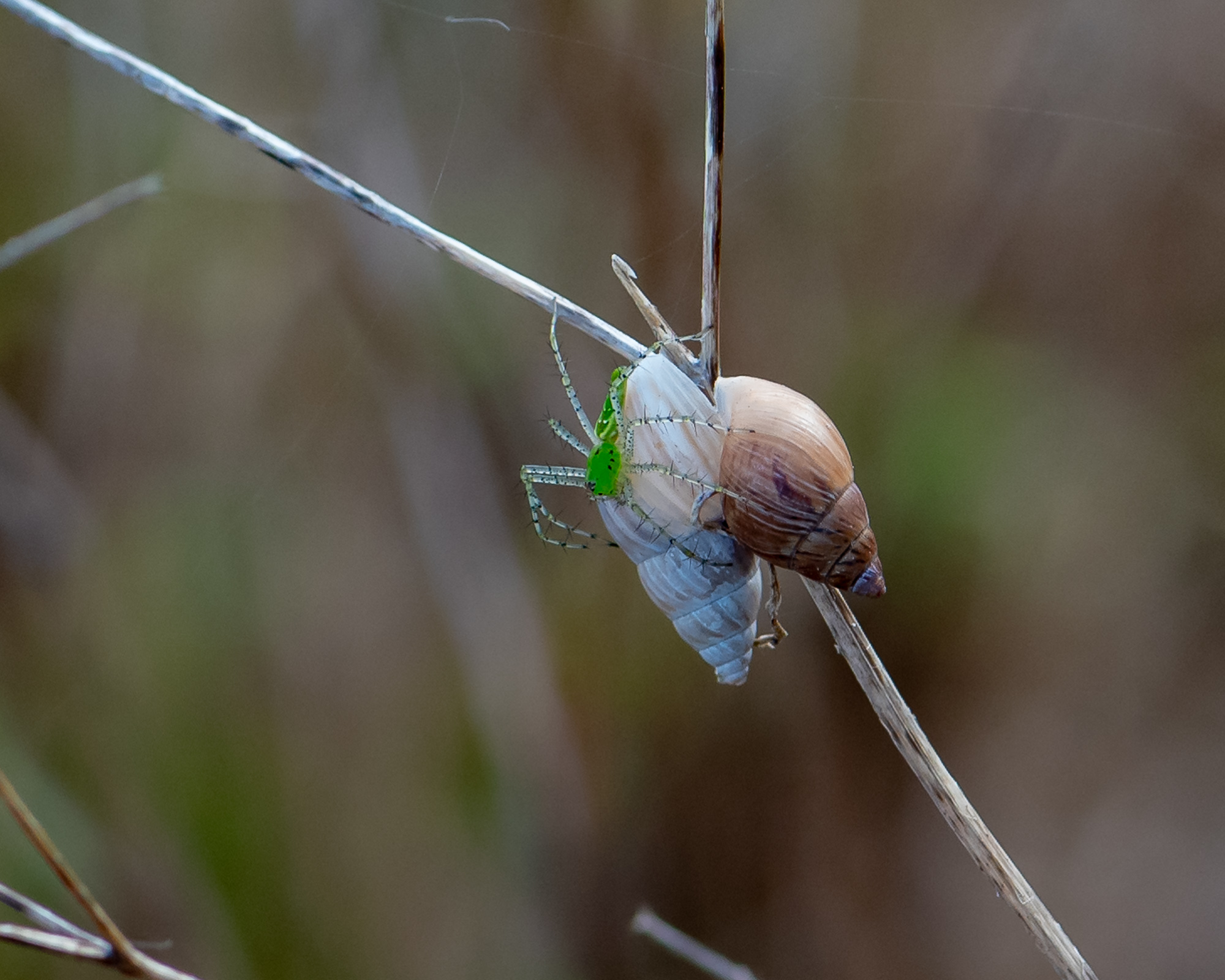
Pretty sure these are an invasive snail species known as Bulimulus. Much is unknown about them and they were apparently first noted in Florida about a decade ago. Although they may not directly consume agricultural crops, they tend to form masses around irrigation sources and clog them so crops don’t get water.

Man-of-the-Earth (Ipomoea pandurata), a morning-glory with wonderful, large flowers.

Eastern Lubber Grasshopper (Romalea microptera) on Nuttall’s Thistle (Cirsium nuttallii). This is likely a second or third “instar” and in a few weeks will turn bright yellow and orange as it becomes an adult.

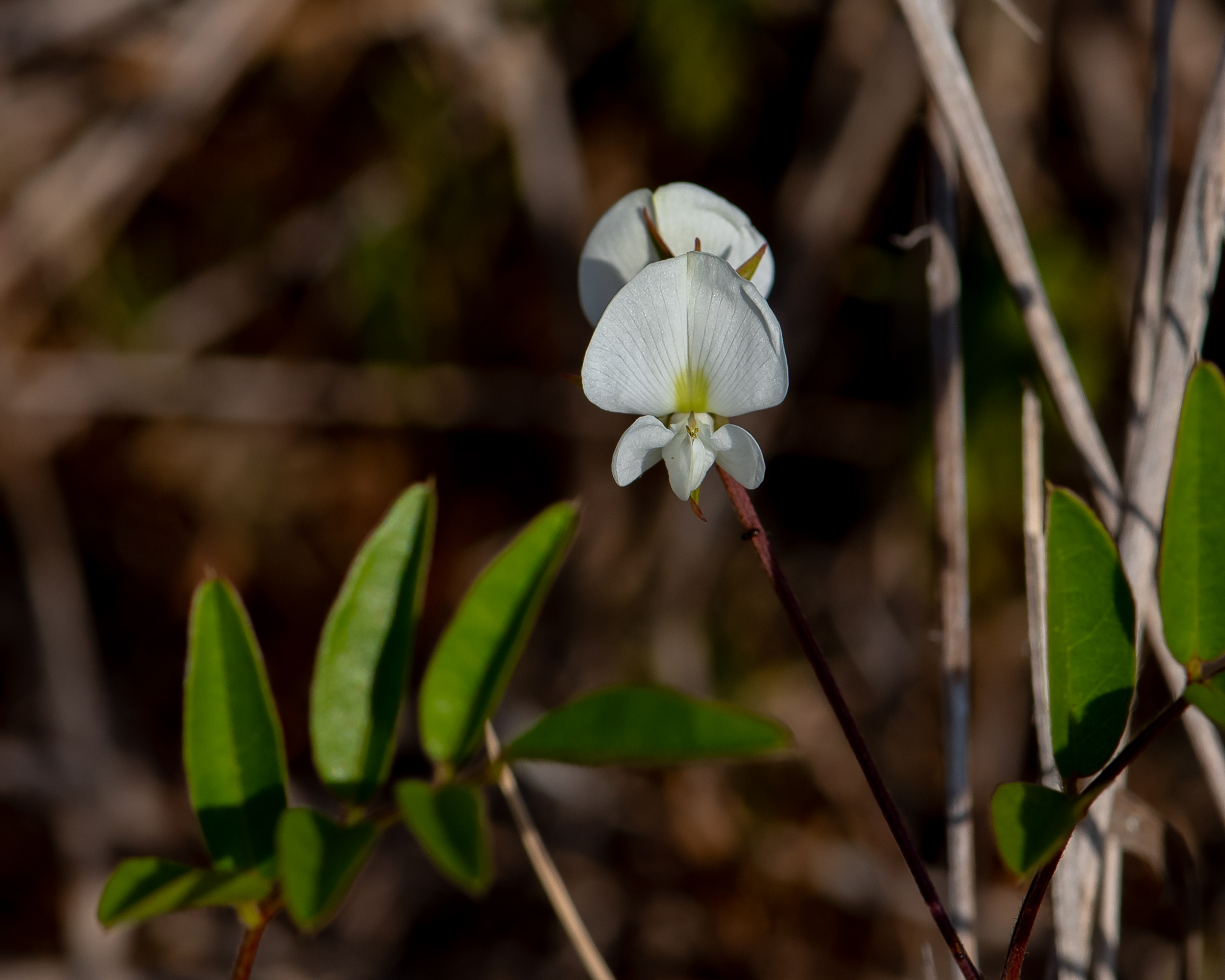
We first enountered Elliott’s Milkpea (Galactia elliottii) late last year in a different location. Now it seems we see them nearly everywhere. That’s okay with us.

Nope. We didn’t see anything rare or very unusual today. The things we DID see, however, we found to be totally amazing and wonderful! Life is like that, isn’t it?
Enjoy your search for a natural place and come back for a visit!
 Our Natural Places
You’ve outdone yourself once again, but I think my favorite one was the first one of that kite!
LikeLike
We appreciate your nice comments.
Those kites are definitely among our favorite birds. Fascinating to watch them as they hunt.
LikeLike
The damselfly on thumbtip is an amazing photo!!
LikeLike
Both models were as cooperative as they were beautiful.
LikeLike
Lovely images. I’m particularly fond of Black-bellied Whistling-Ducks, as I saw them regularly when I visited Eustis, and the Fragile Forktail is just fascinating. I also really enjoyed seeing the Spanish Moss bloom; that’s amazingly inconspicuous! I also remember seeing many Lubbers when I was in Florida.
LikeLike
Thank you, Maria.
We’re certainly blessed with an abundance of things to enjoy when we go tromping around Nature’s yard!
We hope your weekend is going well.
LikeLiked by 1 person
Now I’m wondering if the multitudes of dragonflies that recently have emerged might be eastern amberwings. The color is similar, and they’re as tiny as any I’ve seen. They’re fast, too. Occasionally one will stop by to ponder whether wet, shiny varnish might be water. So far, they’ve all made the right decision and headed elsewhere.
I’ve never seen Spanish moss blooming; I’ve only come across the seed pods. That’s when I realized there had been flowers. Have you seen the flowers of ball moss? They’re even smaller, and the prettiest blue ever. I learned Ipomoea pandurata as wild potato, or potato vine: a gentle reminder of the usefulness of scientific names. As for those whistling ducks? They’re my favorite: amusing, and as easy as any species to locate, thanks to their chatter and calls.
I’m glad Gini’s back on track, so you can start tracking even more beauties together. Me? The supply chain finally coughed up the compressor for my car’s air conditioner, so I’m once again living la dolce vita, travel-wise. No matter how hot and humid this weekend turns out (and it’s predicted to be the hottest of the summer), there’s going to be at least a short visit to some natural place!
LikeLike
I don’t know much about the swarming behavior of dragons. I’m aware that around this time of year, there are reports of large groups of Wandering Gliders which form up as they prepare to migrate. They are smallish and golden and fast. But the Amberwings may do the same thing?
I have not yet found blooming ball moss but will keep an eye out. We have had a pair of Whistling-Ducks show up in our back yard feeder lately. No room for any other birds when those two are present!
I know you must be relieved to have cool air for the car again! We humans get used to certain things and don’t respond well when we must do without them.
More rain headed our way via a tropical storm. Must be August.
LikeLiked by 1 person
Our National Weather Service folks are good about posting radar images of birds leaving the roost, bats at night, migrating raptors, and — migrating dragonflies! I never would have imagined such a thing possible. It’s really cool.
LikeLiked by 1 person
As your wonderful photos once again prove, one CAN find extraordinary beauty in ordinary places. We only need to put ourselves out there and keep eyes and ears open.
Your insect images are always astounding and your anole is very handsome. We don’t have Swallow-tailed Kites here but Mississippi Kites return each summer to raise their young. If I ever see one with a forked tail, I will be very excited.
LikeLike
Danke, Tanja.
The kites are now forming into pre-migration groups and it’s a lot of fun watching a dozen of them swooping over a melon field snagging dragonflies which they eat as they fly. Talk about “food to go”!
We hope your weekend will be wunderbar!
LikeLiked by 1 person
While it’s fun to watch our summer visitors start to flock, it’s also a little melancholy because it signifies their impending departure. But such is the circle of life and we have to accept it.
Auch ich wünsche Euch ein wunderbares Wochenende. 😊
LikeLiked by 1 person
I didn’t realize the Spanish Moss flowers had that striking purple or maroon base. I’ve only found the tan dried blossoms – especially when they dangled in front of the eyes of the Great Horned Owls I was trying to photograph. Thanks for this detail.
Another great shot of your Green Lynx spider – I have yet to see one… and I wonder if those snails might have gotten as far as the Texas Gulf Coast. I’ve seen something very similar climbing dried stems as you found them. So now maybe I know at least one place I can look for the Green Lynx.
Your Swallow-tailed Kite is amazing. Looks like they migrate straight across the Gulf waters, rather than coming down along the Texas Gulf Coast… so I’d have to go to the Rio Grande to see them.
It was, indeed, a extra-ordinary day!
LikeLike
Thank you, Sam.
We seem to find the extra in all our ordinary days. Such is the nature of – Nature.
LikeLiked by 1 person
Yes, what you saw is in many ways wonderful. 👍
LikeLike
We really enjoyed it all!
Hope your week is going well.
LikeLiked by 1 person
I was a little worried that there was no post from you two kids for a while. But then I guess it has been rather hot and humid for you – almost like here. Yes it is still lazy summer days and evenings but already the nights are drawing in. but we’ve had a good run of eating out in the sunshine.
A Swallow-tailed Kite I would love to see, may be even some of those little dragons that Gini can persuade to obey her finger movements. Can she do that to you too?
Just excuse me for now. I can hear Sue shouting me from down the garden. I’d best go..
LikeLike
Thanks for keeping up with us, Phil.
Gini had a little speed bump on the way to complete recovery but is now back on track to feeling better.
The answer to your finger question: Yes.
Enjoy the garden. Avoid the labor. Best of luck with both.
LikeLike
Swallow-Tailed Kites are in my top 5 birds! My first true rarity chase when one showed up at my Alma Mater many years back. Was just flying over a corn field plucking Dragons out of the air. I was definitely surprised the first time I learned those Anoles could change color. Haven’t really seen them in their brown coloring, what a nice contrast with the reddish dewlap hues. I heard about an invasive snail that was showing up down there – was photographing the Snail Kites and another birder was noting they were slowly adapting to this new snail – no clue if that is the same one you have a picture of – not as bulbous as those Apples.
LikeLike
The Swallow-tailed Kites are beginning to form up into pre-migration groups and in a couple of weeks will migrate to South America until mid-February. Watching them snag dragons from the air and snakes from the trees is truly exhilarating.
The Snail Kite has recovered from the brink of potential extinction due to an invasive apple snail species. Good news and bad news. The invasives have helped sustain the fragile Kite population, but the snails are very destructive to agriculture. A precarious balancing act which can only be fixed by cleaning our water resources enough to ensure the native Florida apple snails thrive.
LikeLike
A huge amount of information once again – thank you! I’ll have to look for Spanish Moss flowers.
LikeLike
Thanks for visiting with us, Ed.
Seems like the more we learn, the more we discover how much we don’t know. And I thought by this age, I would know it all. Oh, wait. Gini does call me that, so ….
LikeLike
Oh what a beautiful morning, oh what a beautiful day.
I hope that I am never too old to marvel at Mother Nature’s Magnificence.
LikeLike
Gini and I share your wish, EC!
Hope you’re keeping cool while you can.
LikeLike
Your title has overtones of a certain atypical sonnet.
The more your pictures closed in on the amberwings, the better.
That lubber grasshopper sure is dark.
A green lynx on not just one but two snails: what strangeness.
Despite the name, Spanish moss isn’t a moss but a vascular plant; therefore flowers are appropriate, even if inconspicuous.
LikeLike
Perhaps something deep within my subconscious whispered a few lines from one of my favorite poets.
I have learned, perhaps from birding, to take a “record photo” in case the subject flees the scene. Sometimes, I’m able to close in on an obelisking amberwing for a little more detail.
Young lubbers remain mostly all black for about 100 days. The adult lubbers can actually have one of four distinct colors: bright yellow/orange, pale yellow, all dark/dull yellow or almost completely black.
At least that spider didn’t have to run very fast to capture that particular prey.
Spanish moss. Not Spanish. Not moss. That explains those clean rocks which never rolled.
LikeLike