It Was A Dark and Stormy Day
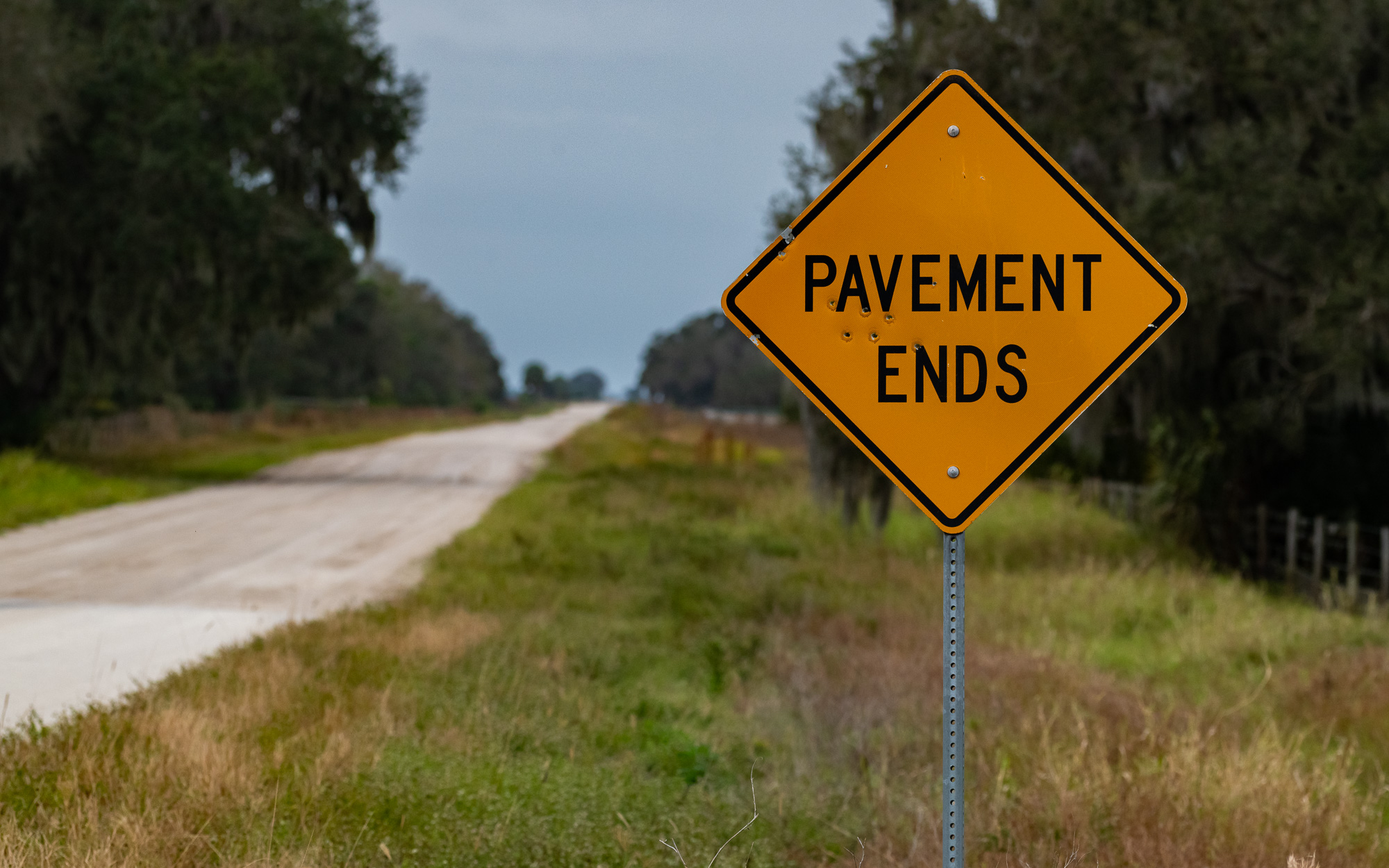
(Click on images to enlarge, click again to zoom.)
“Who would think there could be so much diversity out here?” Once again, Gini was absolutely correct.
We humans are quick to assign stereotypes to our thoughts and ideas. When we first moved to west Texas, it looked so desolate. That impression was exacerbated by our military peers, who had also recently moved there, as they bemoaned the flat, brown landscape that, presumably, could not possibly harbor any life form other than scorpions and tarantulas.
Our desire to explore nature was strong. We found plenty of arachnids among the mesquite, scrub oak and prickly pear, but we also found an amazing variety of birds, animals, insects and flowers. Thank goodness we continue to possess the desire to “see for ourselves”.
Today we are a couple of hours south of where we live and the environment is a bit different than our usual venues. No forests or dense swamps, but pasture and grassy fields dotted here and there with trees, ponds and streams. This is Florida cattle country.
Not many, including those living in the state, know how much we depend upon the cattle industry. Spanish explorers brought cattle with them for food over 400 years ago and released many of those animals as they explored further inland. Florida has the longest history of ranching of any state in the United States. Over four million acres are involved in cattle production.
We began the day under very heavy cloud formations and played tag with rainstorms that criss-crossed the open land all morning. Consider our efforts in such inclement conditions as being in solidarity with our European neighbors and others who have had a very damp winter. No gratuitous blue skies or bright sunny images this time.
The open pastureland is bordered in places by wooded areas consisting primarily of oak, bay, hickory and pine trees. Plenty of water attracts all sorts of wildlife, including migratory and resident birds. Gini was right. One might never suspect the variety of life which calls this place home.
Join us for an illustrated tour of Sunshine State ranch land.
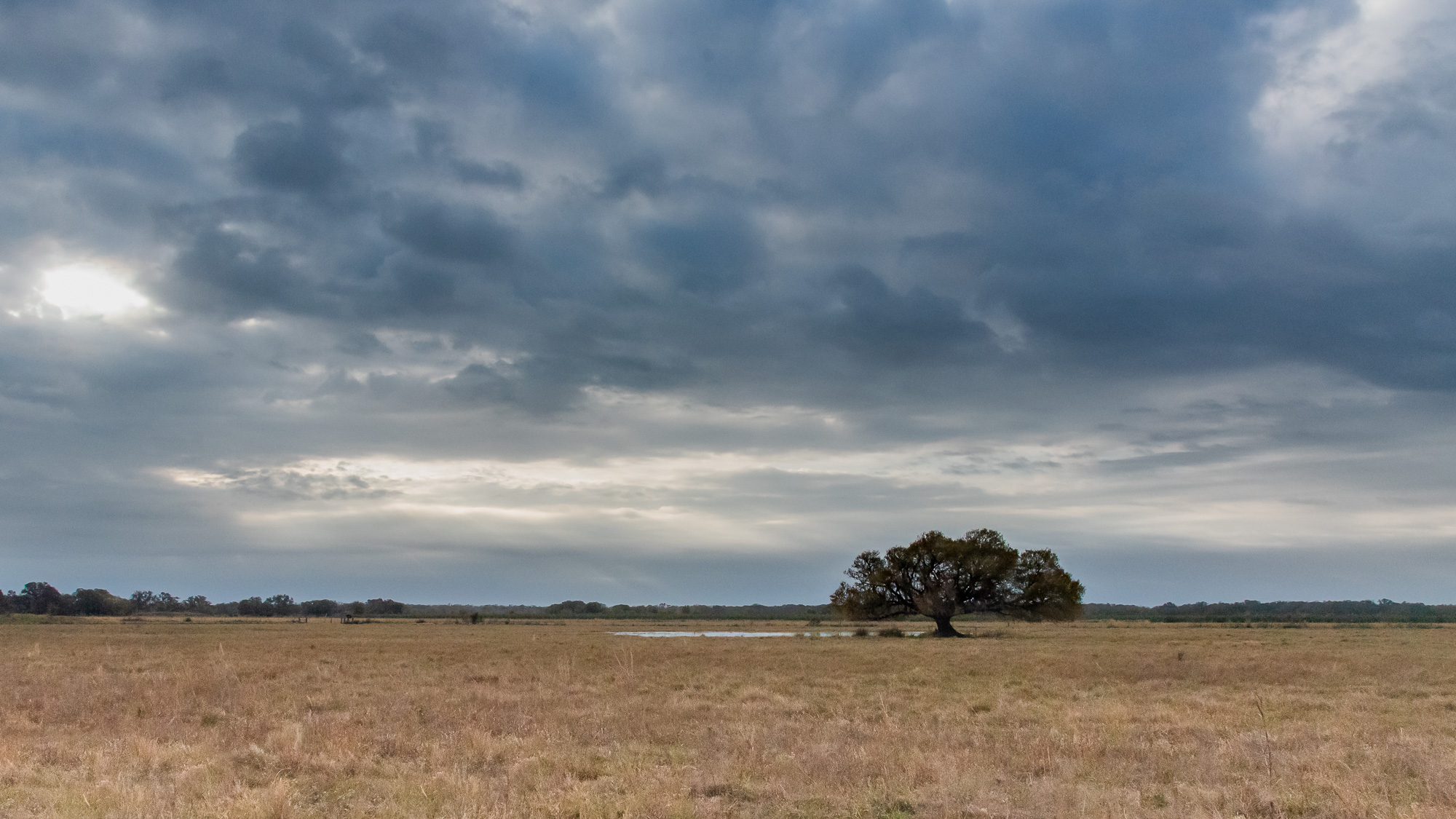
A lone oak tree beside a pond has been sculpted by years of wind.
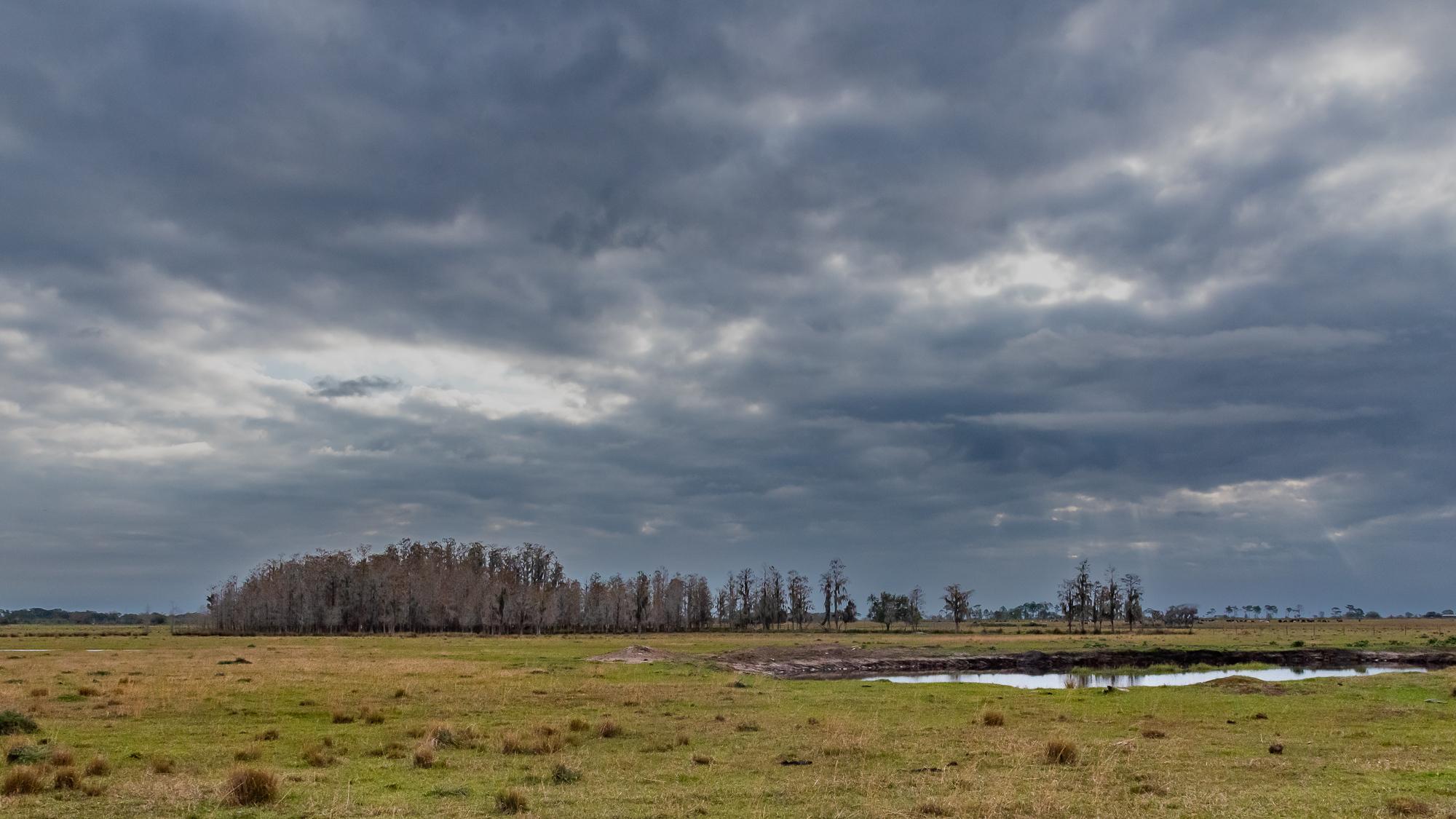
Although there are no vast swamps here, cypress domes are still present to a small degree. Cypress trees grow tallest at the center of a dome where the water is deepest.
Even in a pasture, the Great Blue Heron finds plenty of opportunity to make a home. Where there is water, there is life.

At quite a distance, we found a flock of over 100 Dowitchers roosting at the edge of a pond. Detail was not sufficient to determine if they were Long- or Short-billed and none were calling to help us out. That number is certainly a migratory group.

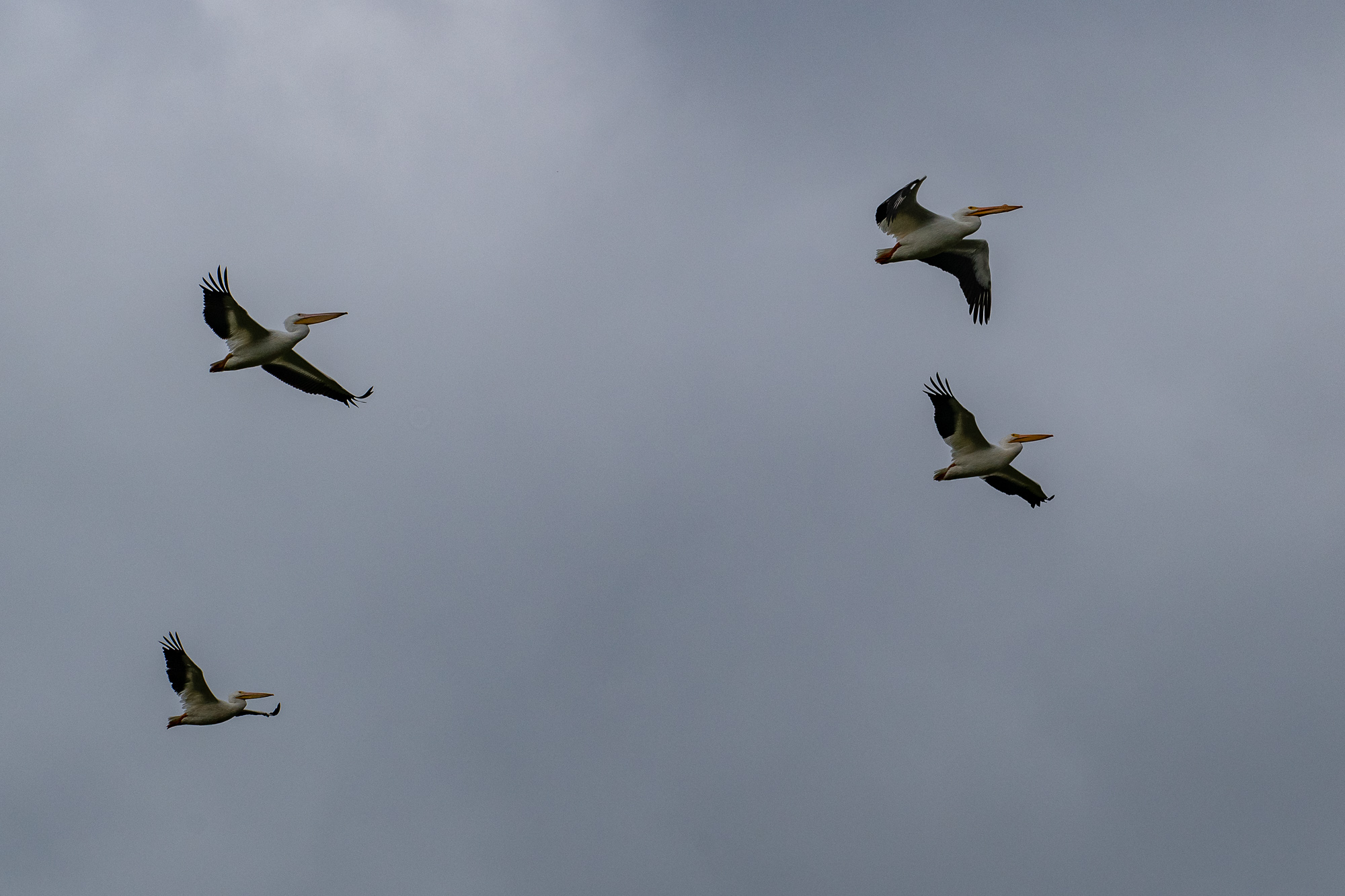
Throughout the morning, we spotted small groups of American White Pelicans. Some were just rousing from the night’s roost and others were headed to locate a breakfast area. In the winter, it is not unusual to see flocks of these big birds from a few up to several hundred.


It was apparently still a bit too early for the pink brigade to pose. Roseate Spoonbills ignored the alarm clock. And us.

When circling high overhead, Turkey Vultures appear almost all black. Up close, it’s surprising how much brown plumage they have. I think this is a young adult, based on the diffused red on its head and dark bill tip.

Creeks connect some of the ponds in the area and rains can have them flowing at a fair rate. Again, water attracts a great variety of life forms.

Unlike their Dowitcher cousins, this pair of Greater Yellowlegs politely called (incessantly) to allow us a proper identification.

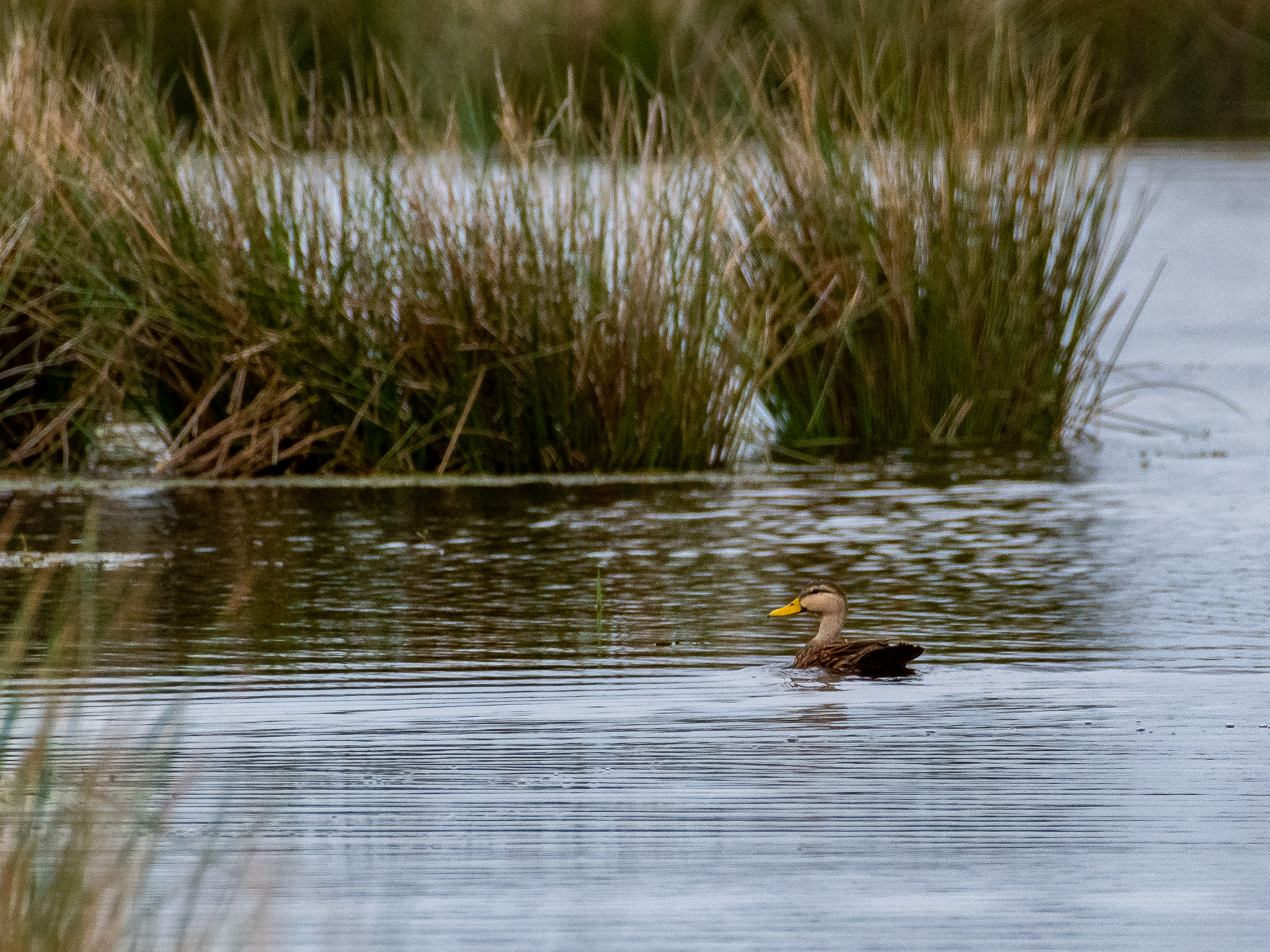
Ponds. Ducks. In this case, a Mottled Duck.
The screams of a Red-shouldered Hawk turned our attention to a group of trees and we quickly discovered what the fuss was all about. An immature Bald Eagle was harassing a hawk perched atop a big oak tree. The eagle flew one way, the hawk headed in the opposite direction.


With all that grass there were bound to be grass-loving birds around. There were. Lots. Oh, here’s one now. A migratory Savannah Sparrow.

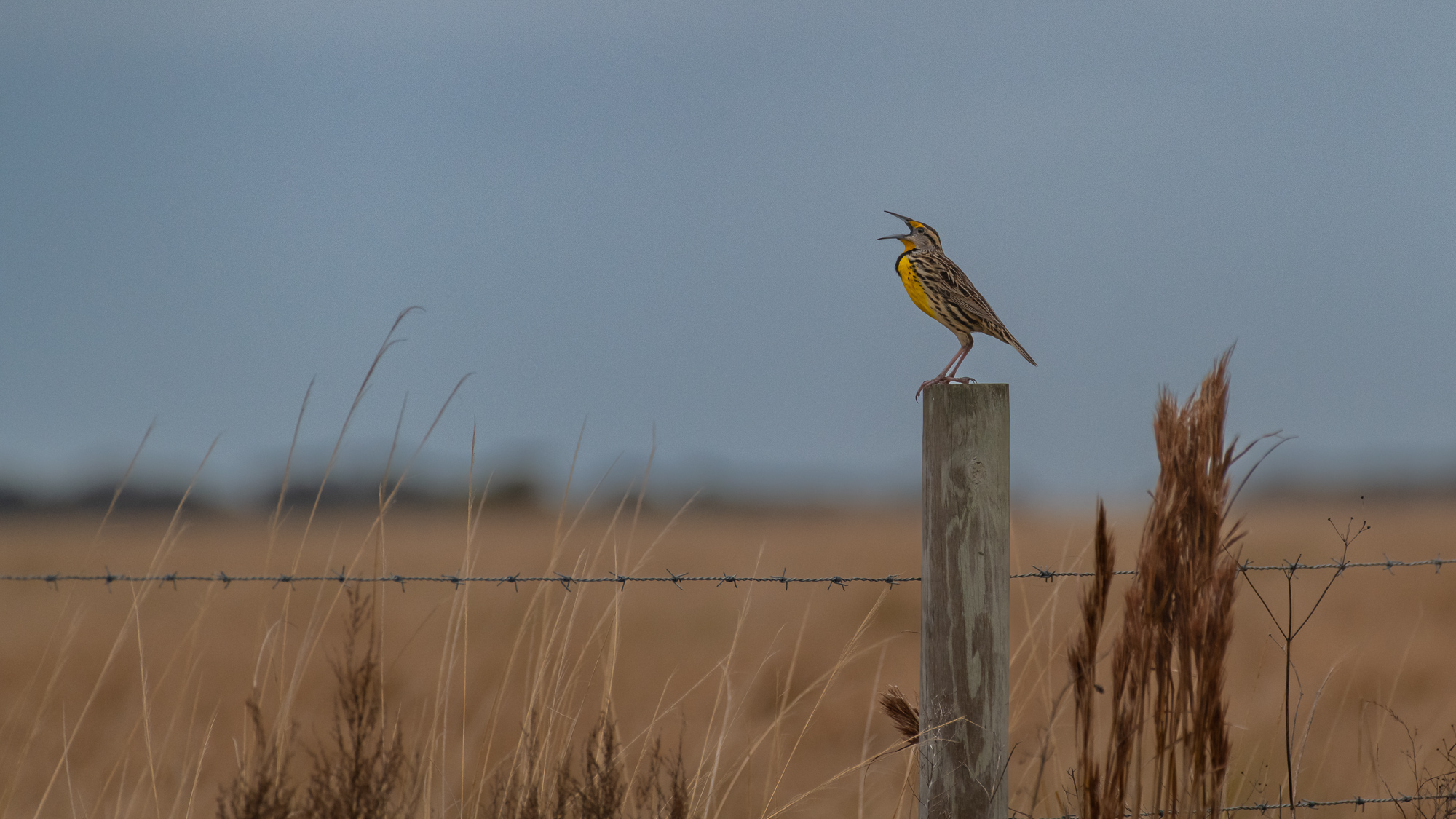
From the time we arrived in the area until we left, the sweet, clear songs of Eastern Meadowlarks filled the air. We appreciated it.
The hay had been made while the sun shone and now the bales were ready for picking up. As soon as the storms are finished. We took this one as our cue to head home. Reluctantly.

Florida has a few surprises for those unfamiliar with its history. Cow hunters (most have adopted the western epithet “cowboys”) are still on the job throughout the state. Vast pastureland provides incredible opportunities to observe Nature. Stereotypes of swamps, ‘gators, beaches and Mickey Mouse can be dispelled quickly.
Enjoy your search for a natural place and come back for a visit!
 Our Natural Places
Thank you for venturing beyond the end of the pavement and sharing your impressions of this intriguing landscape, its history, and its denizens. It must be nice to see some migratory birds already. We need to be patient yet.
LikeLike
You are very welcome, Tanja. We sort of like it beyond the pavement.
Lots of spring break birds partying in the berry bushes lately. Soon, they will wake up with hangovers and try to figure out which way is north. You should see some staggering through your mountains any day now.
LikeLiked by 1 person
The only migrants we have started to see are a few Greater Yellowlegs, but I hope others will show up soon, but only if it’s not too early for them!
LikeLike
So many incredible pictures! I think my favorites were the landscapes with the clouds and the meadowlark on the post. Great captures!
LikeLike
Thank you very much!
You picked a couple of my favorites, too.
Happy y’all made it home safely. Quite the trip.
LikeLike
Excellent article and pics. Always a pleasure reading and admiring pics of your blog. These parts of Florida are precious and in peril. They are the last vestiges of the old Florida ecosystem and hopefully these ranches will not sell out. Keeping it undeveloped is crucial to our Florida environment .
LikeLike
Hi, Dan. Thank you very much for the kind remarks.
You are so right about Florida’s continual balancing act of natural resources versus development. Our small effort to showcase our state’s natural beauty may reach a few who are unaware of the rich treasures at risk.
Hope you visit again.
LikeLike
Wonderful photos of the diversity of life in this area, Wally! Such a treat to see the Savannah sparrows, and the Eastern Meadowlark, especially ☺️! This wasn’t by chance at Dinner Ranch, was it?
LikeLike
Thank you. We enjoyed those treats, too.
The area is in far south Hardee County adjacent to DeSoto County.
LikeLiked by 1 person
The Eastern Meadowlark is the first I have seen. Thanks!
LikeLike
We hope it won’t be the last.
Thank you for visiting with us!
LikeLike
A beautiful post with many great photos, Wally. It looks a bit like the Joe Overstreet area – there are plenty of cattle there too. Although I’ve never seen Spoonbills or White Pelicans down there.
Speaking of cattle in Florida, I found Patrick Smith’s ‘A Land Remembered’ interesting enough to read more than once. Maybe I’ll get our copy out again.
Ed
LikeLiked by 1 person
Thank you, Ed.
That is one of my absolute favorite books. Should be required reading in all Florida schools. And beyond.
LikeLike
A wonderful sojourn, Wally, thanks for taking us along. We do tend to generalize locations based on our personal experiences – my hubby tells the story of his Army buddy, having seen only West Texas during his Army training decades (half a century, oh my) ago, was astonished to see The Big Thicket and our semi-tropical swamps and palm trees up Houston-way when he recently visited. You captured some wonderful skies in these photos, and I do love that meandering creek. I went and read the Secret History that Steve linked – Snoopy’s opus sounds like some of the chatbot results I’ve seen recently. You’ve given us so many reasons to smile… and a few to giggle!
LikeLike
Thank you, Sam.
I reckon we keep exploring precisely because we keep finding new stuff. Otherwise, we’d get bored and stay home. Then we’d have to clean out the garage or something equally horrible.
Giggling is good for the soul.
LikeLike
I would never have guessed that Florida was a major cattle production state, Wally. It is also good to see that wildlife still flourishes in those areas where cattle abound. I’m a bit wary of cattle these days as, on several occasions, I have been chased by herds of cattle, and I now feel that I’m at an age when I’m unable to out-run them. I’m sure that the chasing cattle meant me no harm, but there are too many stories of people being crushed by over-friendly cattle.
Your title got me thinking of “It was a dark and stormy night” and, until I read Steve’s comment above, I was only aware of the recursive version of that story – which gave me much amusement in my childhood days.
This has been a highly enjoyable post from you, and it’s got me thinking that it’s high time that I had a change from my customary local environment.
My very best wishes to you and Gini – – – Richard
LikeLike
Someone, probably famous, once said something ridiculous, but true, that “you don’t know what you don’t know”. That is one of the positive aspects about computer technology. It has enabled us to learn so much about our world that we might otherwise never have been able to accomplish. That, and shopping without going into an actual store – for me, technology’s crowning achievement.
See my response to Steve’s comment. Snoopy is my hero.
Thank you, Richard, for your consistently kind remarks. We do have a few places to visit that are not too distant and provide a nice change from our local routine.
Variety and Gini are the spices of my life.
Sending never-ending healing thoughts for Lindsay and her primary support technician.
LikeLike
“Florida has the longest history of ranching of any state in the United States. Over four million acres are involved in cattle production.” You’re sure right that few people from outside Florida, and even within, know about that. Someone could~should put together an article or even a book that reveals surprising and little-known facts about all 50 states. Most likely you’re eager to drop all other pastimes and get cracking on that project.
Some English expressions hark back to more-agricultural times, like the “make hay while the sun shines” that you used. I wonder what a present-day, more technological equivalent would be. I’ll bet you could come up with an avian counterpart, or even a slew of them. And speaking of avian words, dowitcher always makes me think of dowager. Whether any instances of the second exist among the first, you’ll have to tell us.
Your post’s title, a reference to the now-much-parodied opening line in a story by Bulwer-Lytton, sent me searching for more information. Check out this informative article to trace the words even further back.
LikeLike
Rest assured, I’ll begin your recommended project just as soon as I find some of that “spare” time about which I have heard. Until then, once I finish the dishes, I shall be so weary that there will be rest, assured.
“Watch birds while they are in front of you.” That’s it. Now my brain hurts.
Here is an interesting thought on the possible etymology of the brown birds known as “Dowitchers”, courtesy of Cornell University at: https://www.allaboutbirds.org/guide/Short-billed_Dowitcher/overview
— Early American ornithologist Elliott Coues believed that the word dowitcher derived from a hunters’ name for the bird, “German snipe”—as opposed to “English snipe,” which referred to the bird we now know as Wilson’s Snipe. In Pennsylvania Dutch, an American dialect of German, “Duitscher” is the word for “German.” —
That is an interesting article concerning the famous opening. I’m sure I had the article’s opening picture in mind when I paraphrased it as I am more likely to use Snoopy as a literary reference than I would lesser-known would-be authors.
LikeLike
The American Heritage Dictionary offers yet another hypothesis about dowitcher: “Perhaps from Mohawk tawístawis, snipe.”
LikeLike
Your alternative Florida looks remarkably similar to our our own flat and coastal Fylde region, even down to the dark moody skies and areas of standing water. And the Savannah Sparrow could equally be a Reed Bunting.
I may have mentioned this before but if there is one North American bird I would dearly love to see and to hear it is the Meadowlark singing from a gatepost. It might even rival a Skylark.
Today seems dry if windy however we are promised by the experts that Saturday and even Sunday may be warmer with sun allowing me to bventure out with camera.
We are both desperate to dig out the summer shorts and sit in the garden massaging the warmth into our tired old knees. Sue is having a lie in because she has my nasty cough of last week, our first cough or cold for three years by we tell ourselves, eating healthily and taking our nightly medicine.
Eight weeks to go until Greece. It’s a little like Florida, 24/7 sunshine and no grey skies. Love to Gini.
I think I should mention that “pavement” is something that we in the UK walk upon. We are not allowed to drive along the pavement but reserve that for the “road”.
LikeLike
From our time in Germany, we remember the incredible song of the Skylark and the exuberant flight display of the male in breeding season. The Meadowlark may prefer to sit and sing, but that song is somehow our assurance that all is right with the world at that moment.
Very sorry to hear you shared that cough with Sue and hope both of you achieve optimum health within the next two months. Sun, sand, ouzo, sun.
That’s an interesting bit of information about pavement. I’m not sure I have ever heard an alternative in “American English” to “sidewalk”. Next thing you’ll tell me is my nice boot is a car part or something.
All is as good as can be expected here in the colonies. Gini and I are quite nervous as we just sat down to review the calendar for March and have discovered to our consternation that there is not a single medical appointment schedule. A sense of impending doom has descended upon the swamp.
We wish you both all the best.
LikeLike
Yes very English looking skies there Mr W.
I guess if you have never been to Florida (or the US) it’s hard to imagine it being anything other than what we see on telly or in holiday brochures. But when you realise it’s half the size of the whole UK then you know there must be more than Disney or Alligators.
Apparently we have just had the wettest February on record, also the warmest though the definition of ‘warm’ can be subjective. This morning we awoke to sunshine (hooray) two hours later and the next drenching is rolling in, sigh.
LikeLike
It seems no matter where we visit on the planet, surprises await.
We certainly hope you get a break from the “liquid sunshine” soon. There shall be dragons wanting portraits.
LikeLike
I do like the flying pelican and the singing meadowlark. 👏Thanks for sharing.
LikeLike
You’re welcome!
And thank YOU for visiting.
LikeLiked by 1 person
That description of west Texas sounds a lot like how people think of our local deserts in my area: Brown and desolate with only scorpions and tarantulas! But you’re right, as you get out an explore, you find there is so much more!
LikeLike
Once we get out in it, Nature continually surprises us.
Loving your desert landscapes!
LikeLike
There’s a lot to enjoy here! Your ‘Pavement Ends’ sign reminds me of my favorite signs from Kansas and Oklahoma: the ones that said, “Caution – Open Range.” I still remember my astonishment when we drove through the Panhandle and down to Lakeland for the first time. I was one of those who thought of Florida solely in terms of beaches and orange groves. Seeing the dairy cattle and the expansive pastures was amazing. As handsome as these birds are, my favorite photo of this group is the one just after the Turkey Vulture, showing the creek flowing through the land.
That said, I was amused by the White Pelicans taking their ease with cattle in the background, and who doesn’t enjoy the song of a Meadowlark? As for those hay bales, it looks as though their wrapping displays a bit of a patriotic flair with the red and white stripes and the blue band.
LikeLike
You echoed our sentiment of the morning perfectly: There’s a lot to enjoy here!
I really liked that creek shot, too. The largest tree near the center of the image is where that hawk is perched just prior to the attack by the young eagle.
Doesn’t everyone bale their hay in Old Glory? Well, they should.
LikeLiked by 1 person