Our Patch Overfloweth
Streaks of light from the sun rising above the cypress trees lit up the opposite shore of the lake where a Great Blue Heron and Great Egret were wading in search of breakfast. Stepping onto the wooden fishing platform caused a splash from below my feet. A young alligator surfaced several feet into the lake and gave me “the look”. An Osprey splashed just to the right and flew away with a fat catfish.
Only a few minutes ago, we were inching through the morning commuter traffic. Someone ahead let a large truck pull into the road from a gas station. The car behind us honked his horn as I suspect the driver was dismayed at anything which might delay his excitement in being at work. We turned off the main thoroughfare onto the park road and were thankful to be off the busy highway. Another two miles and traffic was a memory. The eastern sky was beginning to lighten. So were our spirits.
One of the nice things about visiting a natural place with which we’re familiar is, well, it’s familiarity. In many respects, we know what to expect. There are occasional surprises, but we could pretty much tell you what we’ll find on any given day. It is a comfortable place.
Fall bird migration brings a variety of avian visitors to our patch. Colorful warblers scurry among the tops of trees, brown sparrows skulk through the grass and weeds, waterfowl gabble and splash in the lakes, raptors soar and hover above field and marsh. Just as most tourists who visit the Sunshine State in winter, they are thankful for our warmer air and bountiful fresh food items.
Our patch is now filled with even more delights for us to enjoy.
What? No, we don’t mind sharing.
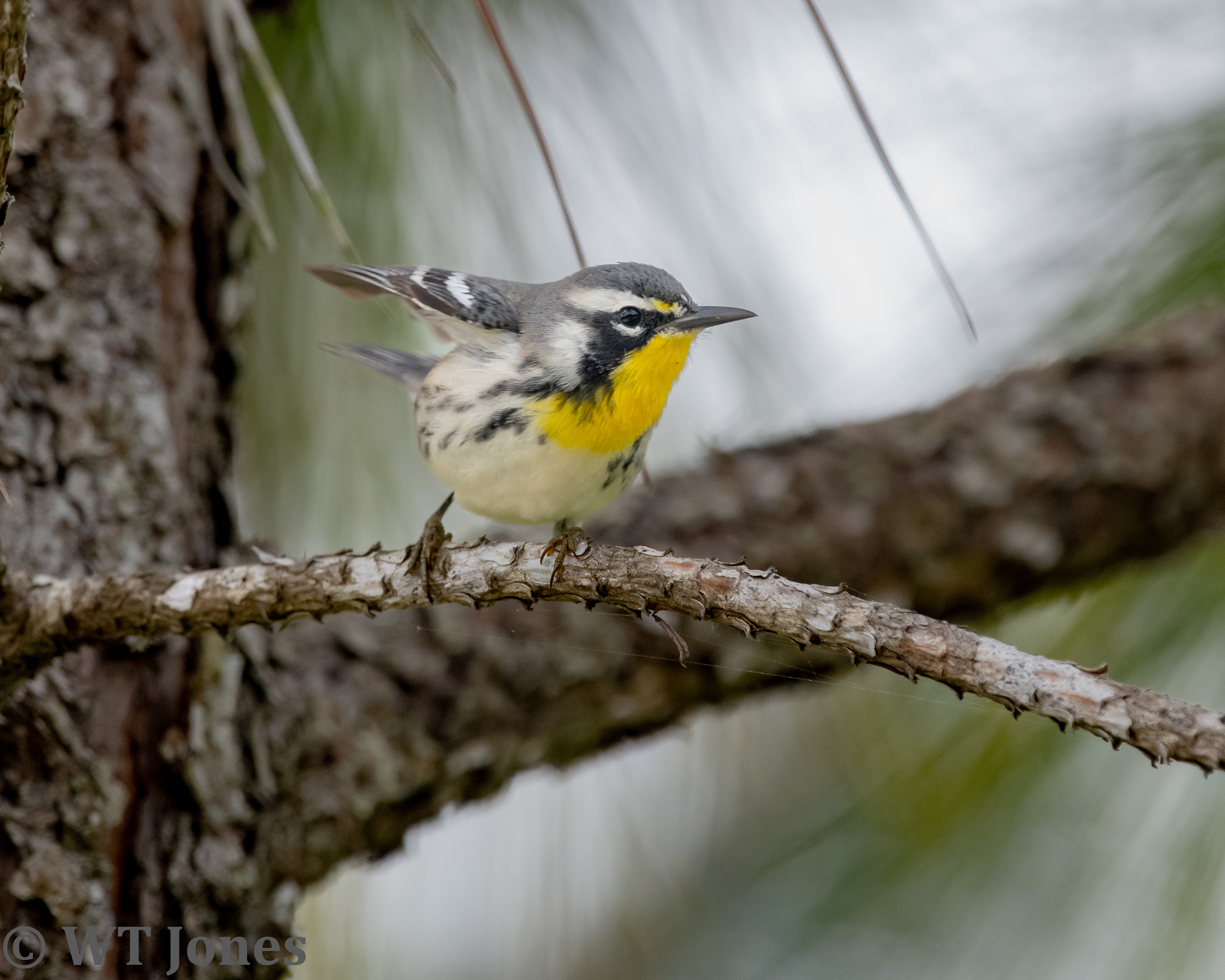
This Yellow-throated Warbler was taking off to a higher branch to continue its search for a meal.
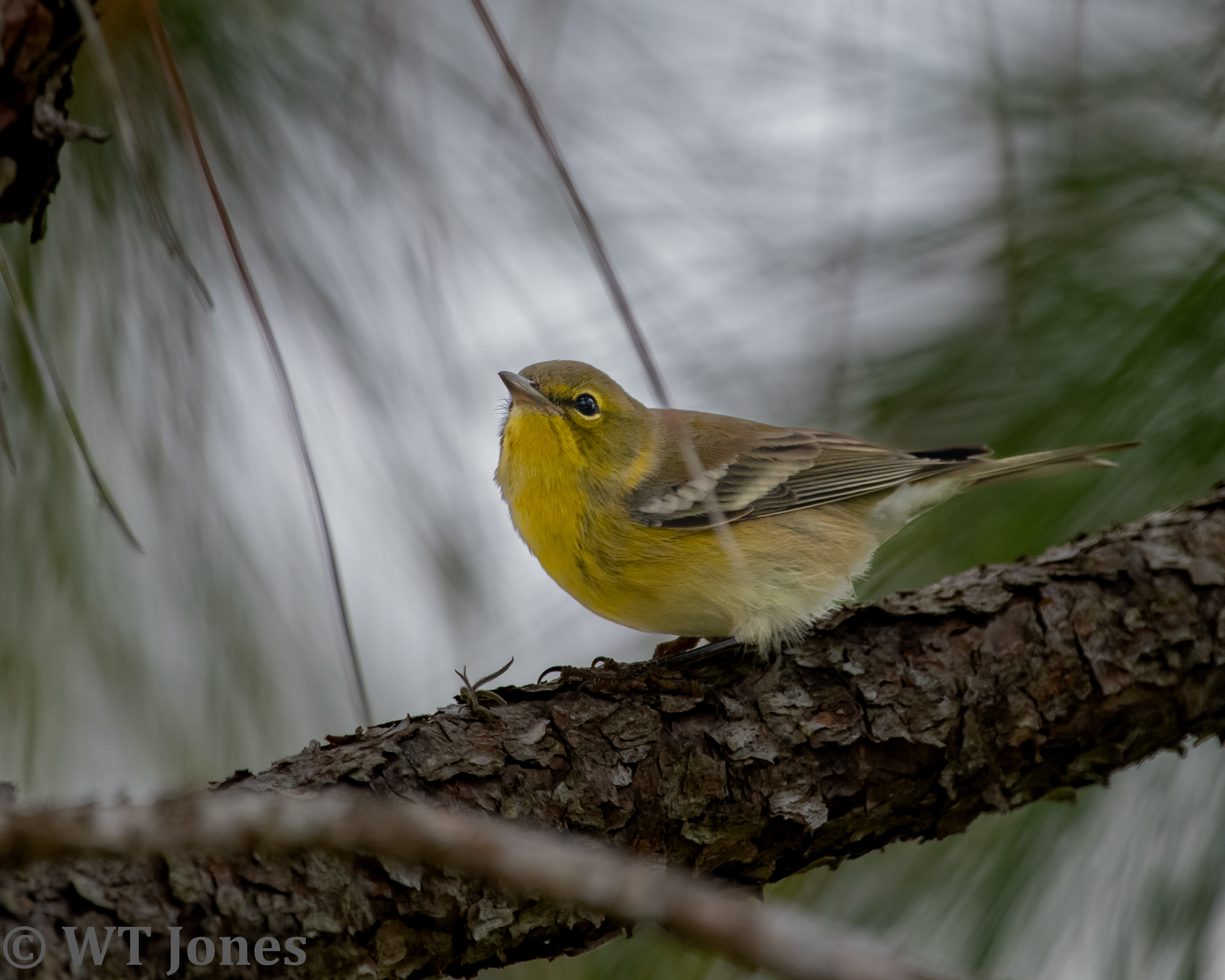
No sooner had the above warbler departed than a Pine Warbler lit on the same limb looking for leftovers.
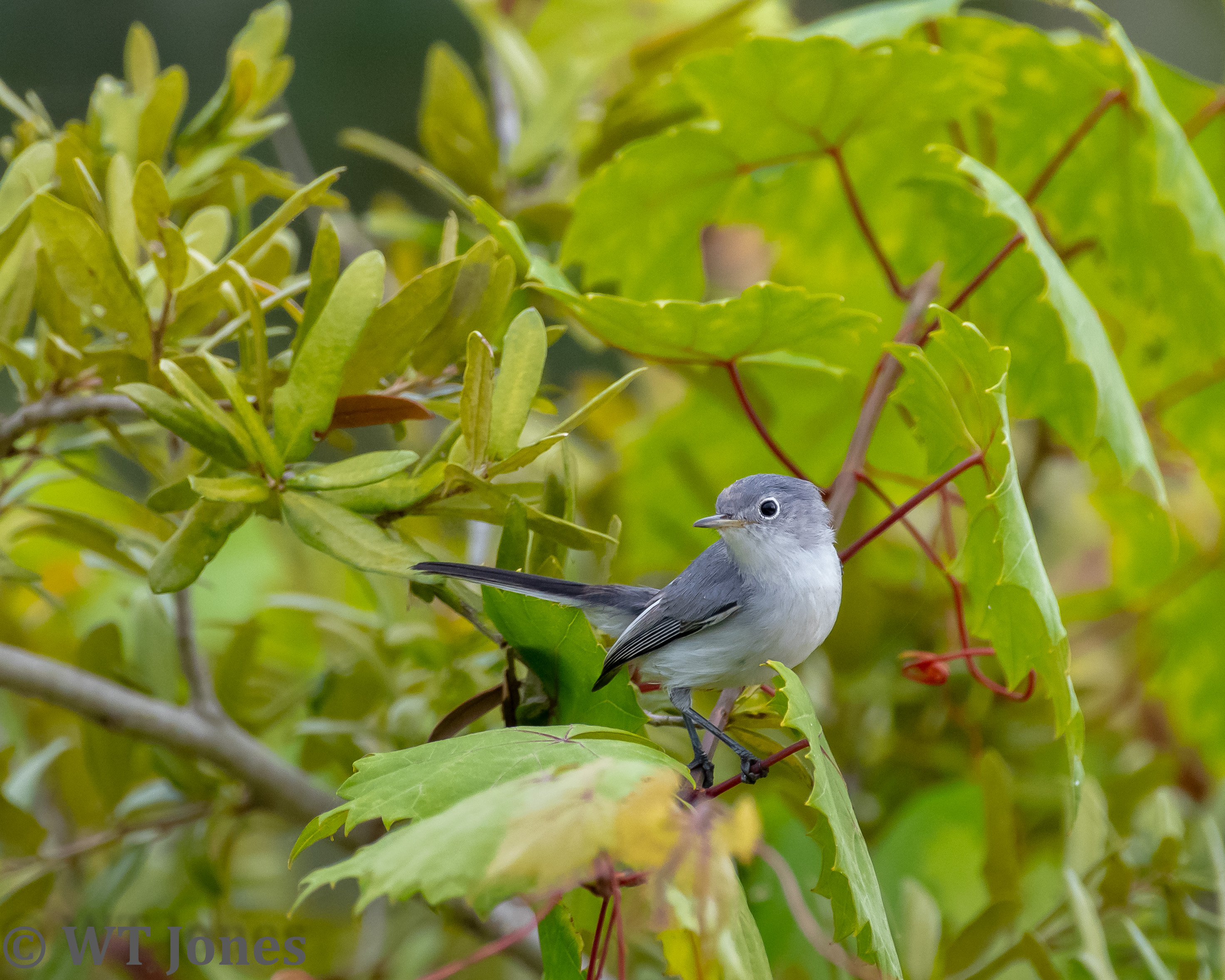
Seemingly in perpetual motion, a Blue-gray Gnatcatcher moves at high speed and checks out every twig and leaf it encounters.
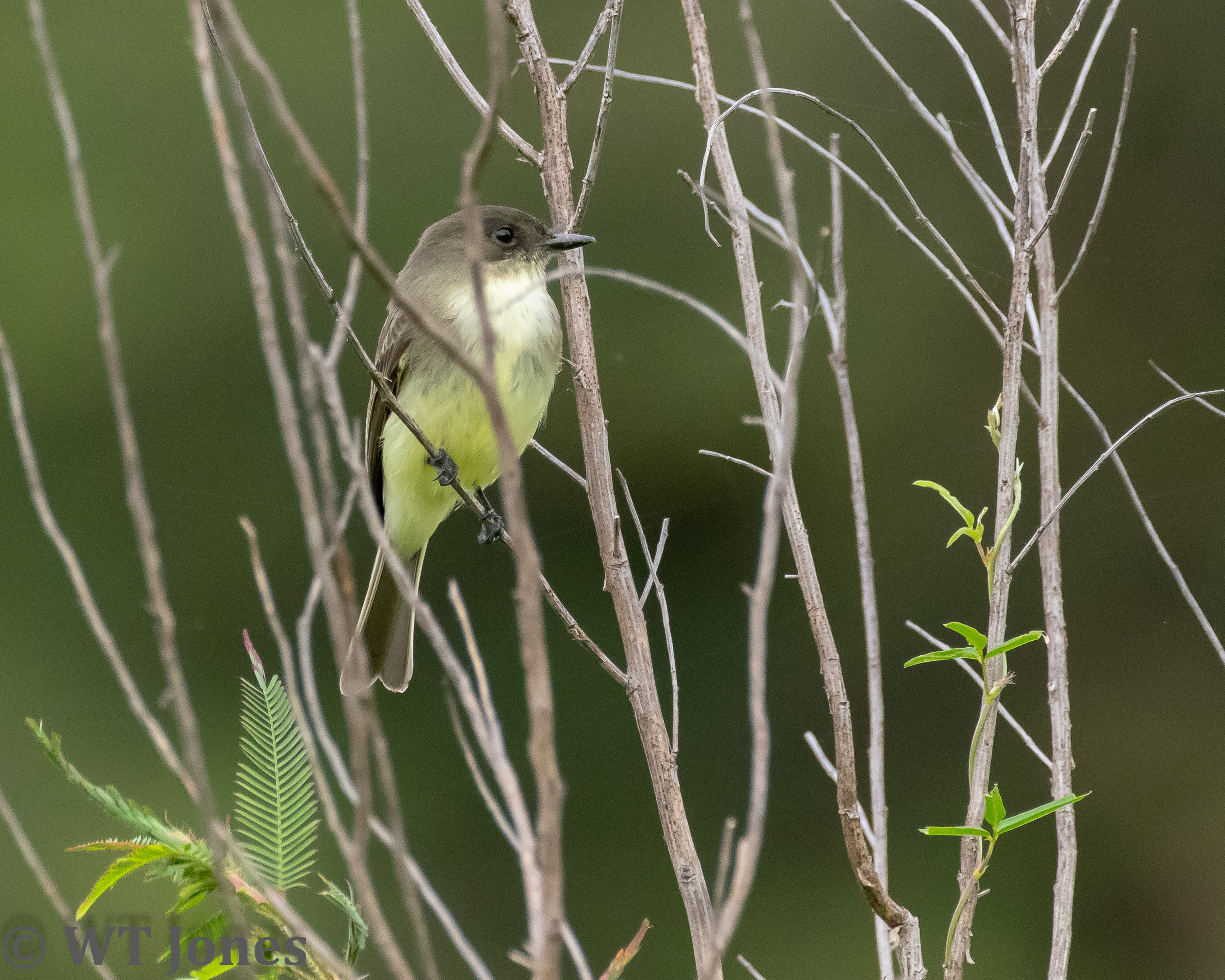
Gini says all birds should be as thoughtful as the Eastern Phoebe. It lets us know its name is “Pheee-Beee“! Loudly. And often.
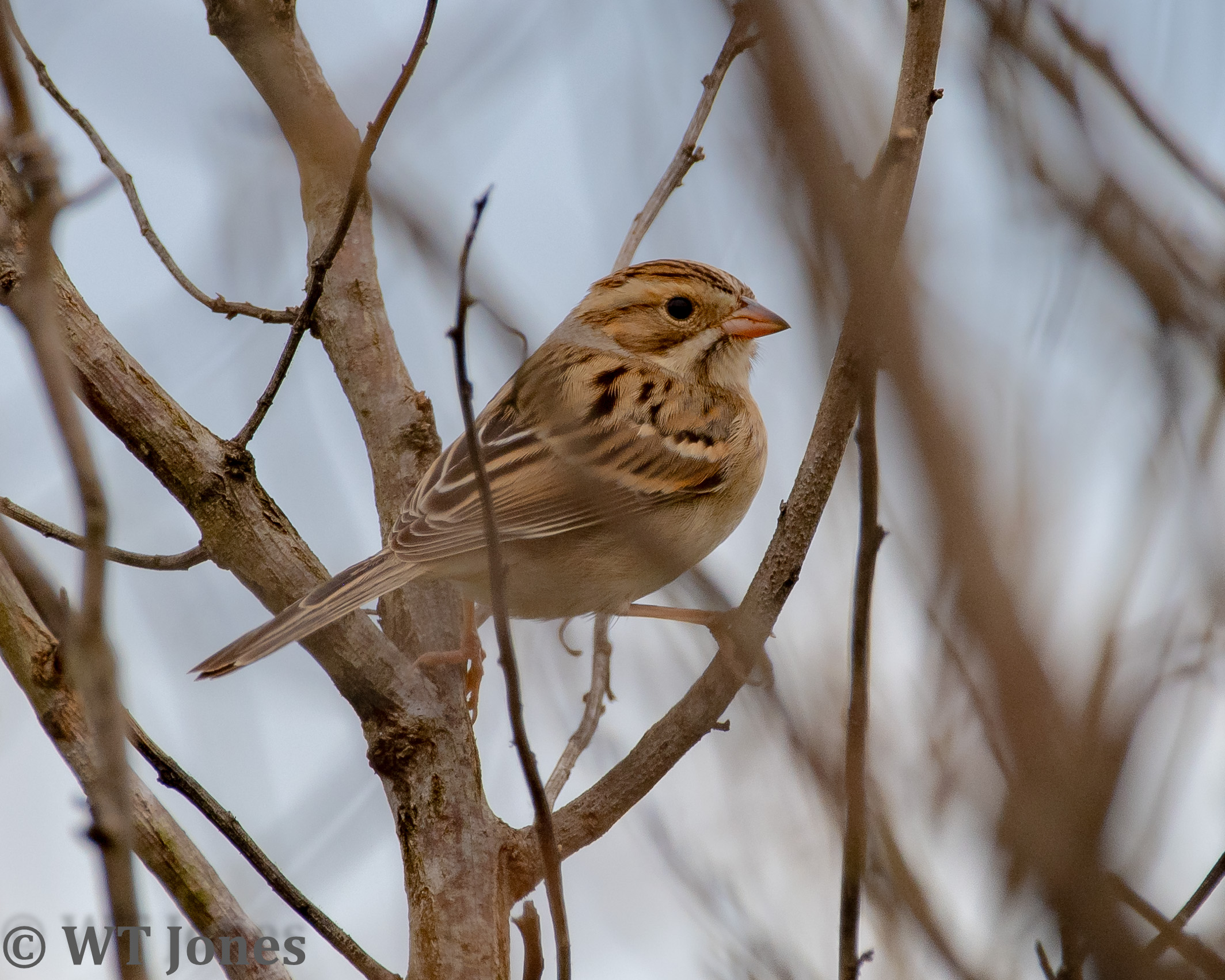
“That’s something different!” Gini’s sharp eyes knew this was not what we might expect to see at this spot. (We typically find Savannah and Swamp Sparrows here in the fall.) We were surrounded by weedy fields but there was a low, damp place where a few Willow Trees and Scrub Oaks provided shelter from potential predators. Following her outstretched finger, I finally saw what she had discovered. The face pattern, the pale bill, the gray neck nape – an uncommon Clay-colored Sparrow! Very nice, Sweetheart! Very nice, indeed.
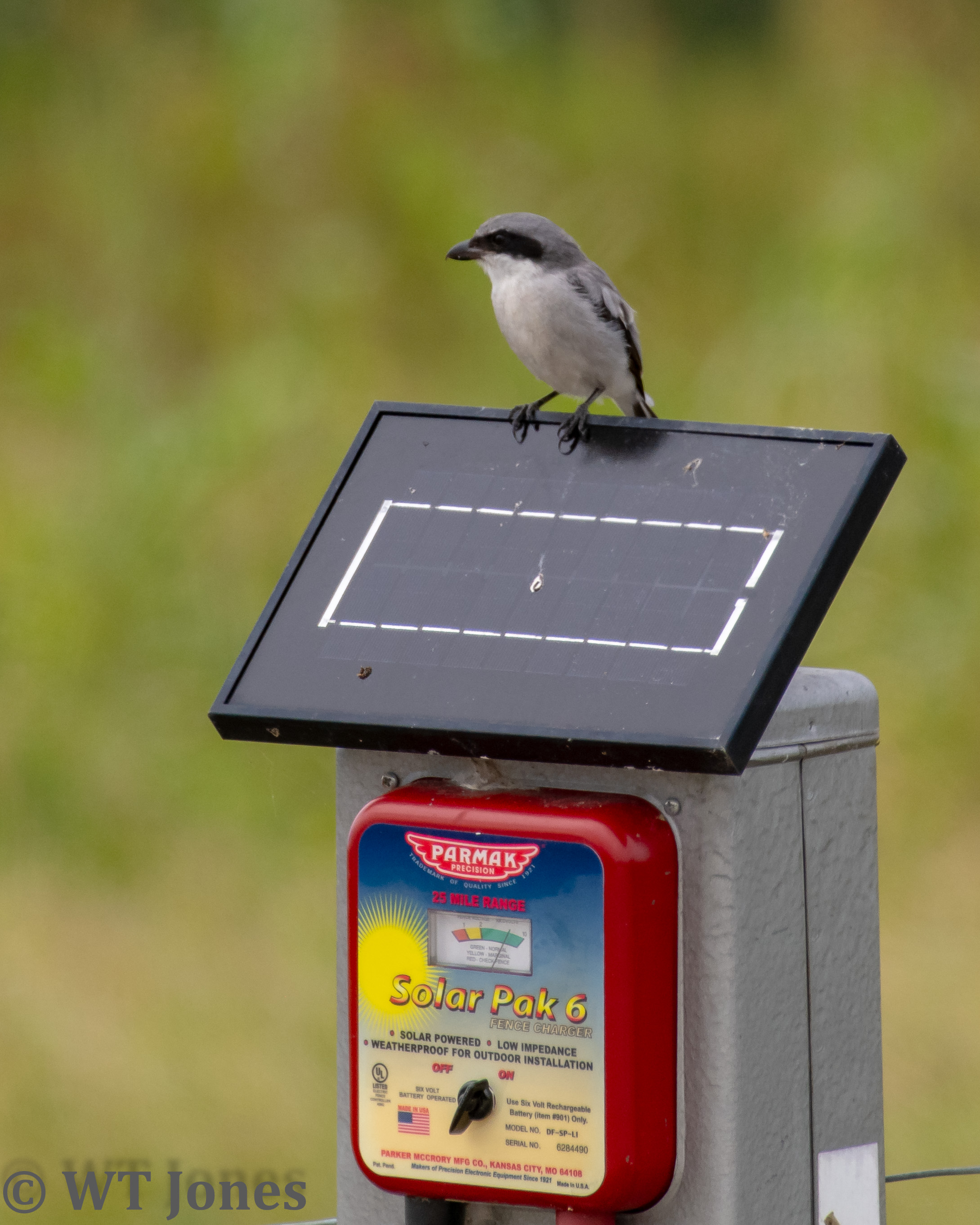
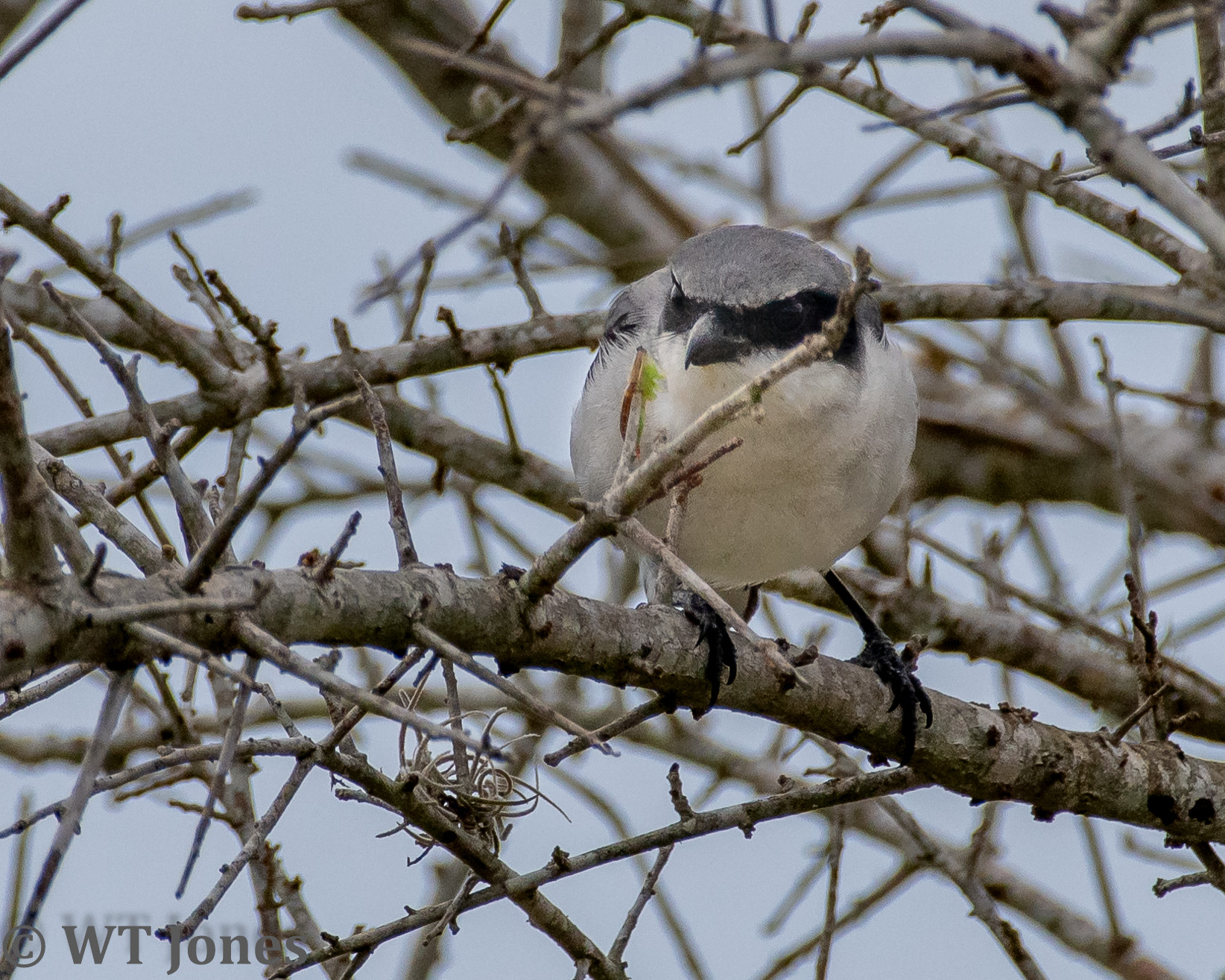
Sometimes, you just need to take a break and recharge your batteries. A Loggerhead Shrike appreciates the convenience of a solar charging station.
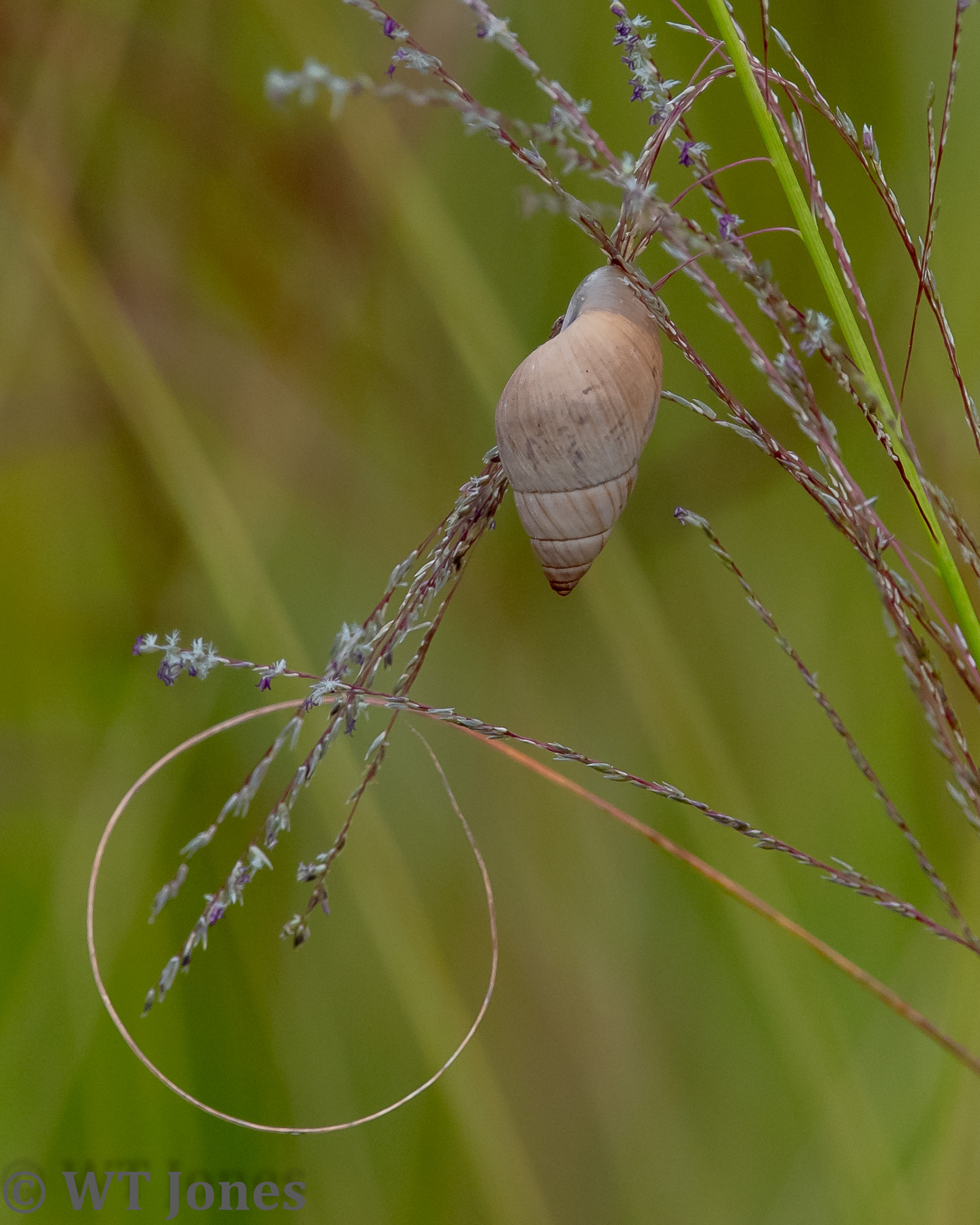
Research indicates this is a snail. Further research indicates this is still a snail. I have failed to find a specific identification. So, I celebrate the fact that this is – a snail. (They don’t move away from the camera as quickly as a bird.)
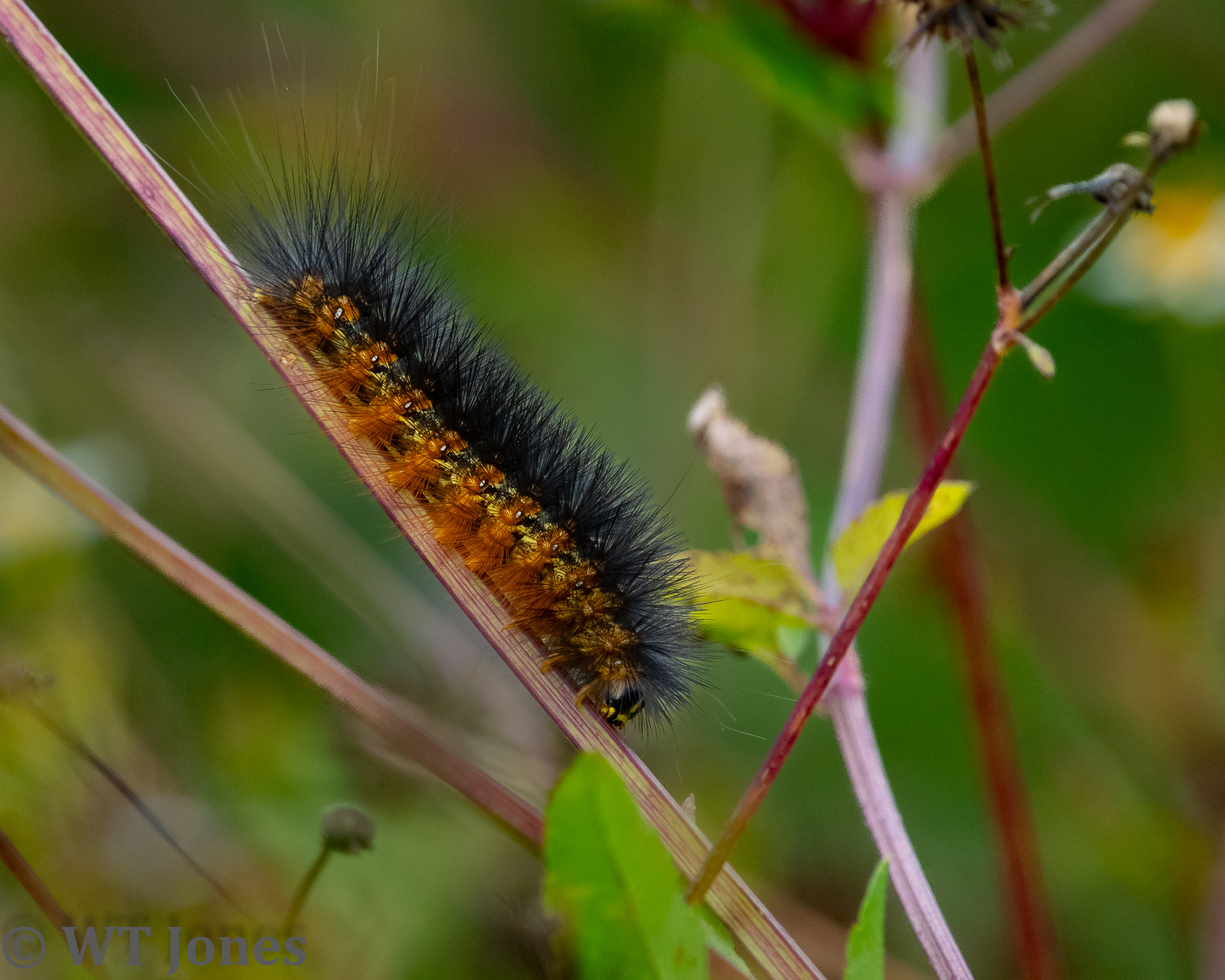
The hungry, hungry caterpillar. In this case, it is the larva of a Salt Marsh Moth (Estigmene acrea).

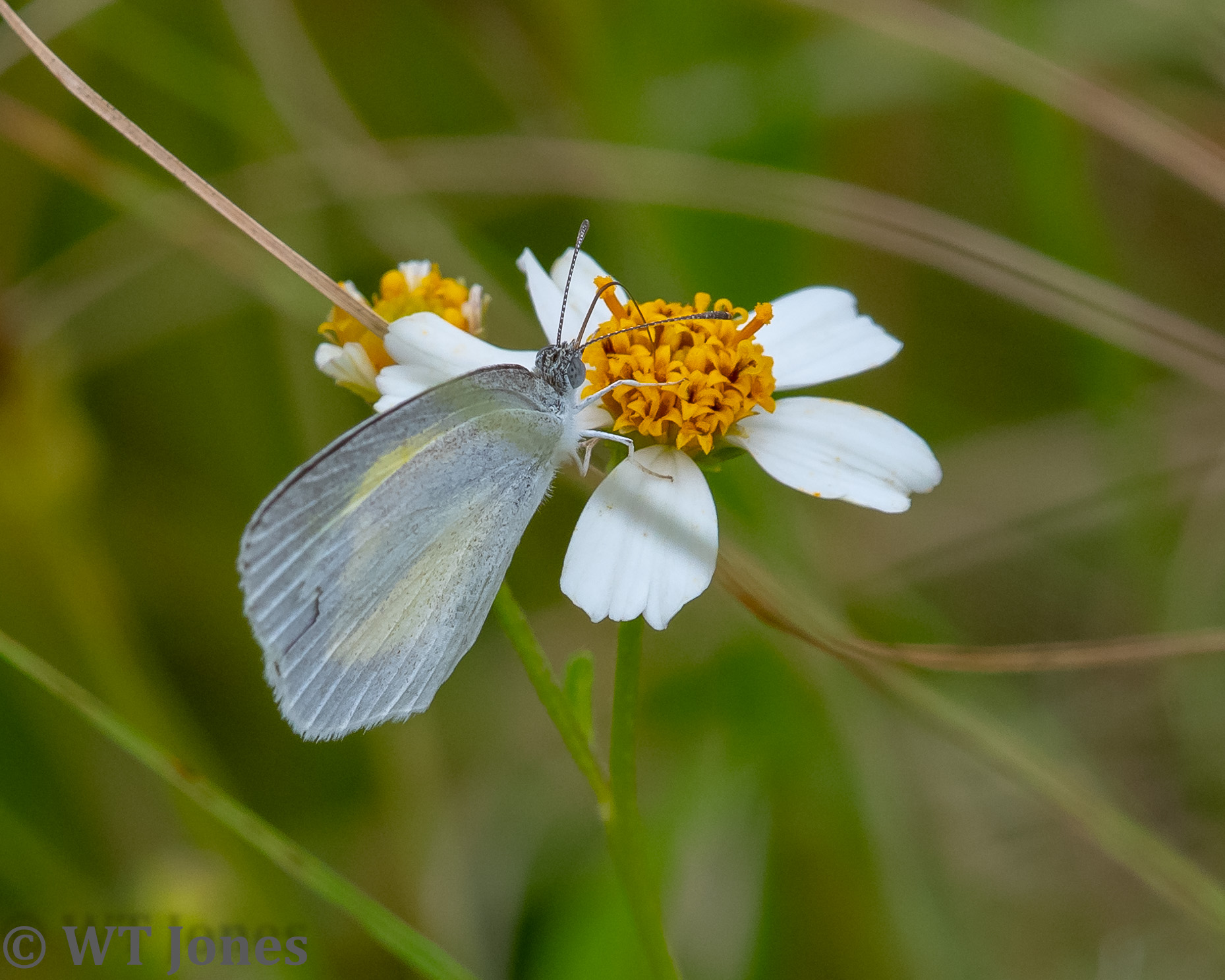
Today we encountered dozens of Barred Yellow (Eurema daira) butterflies.
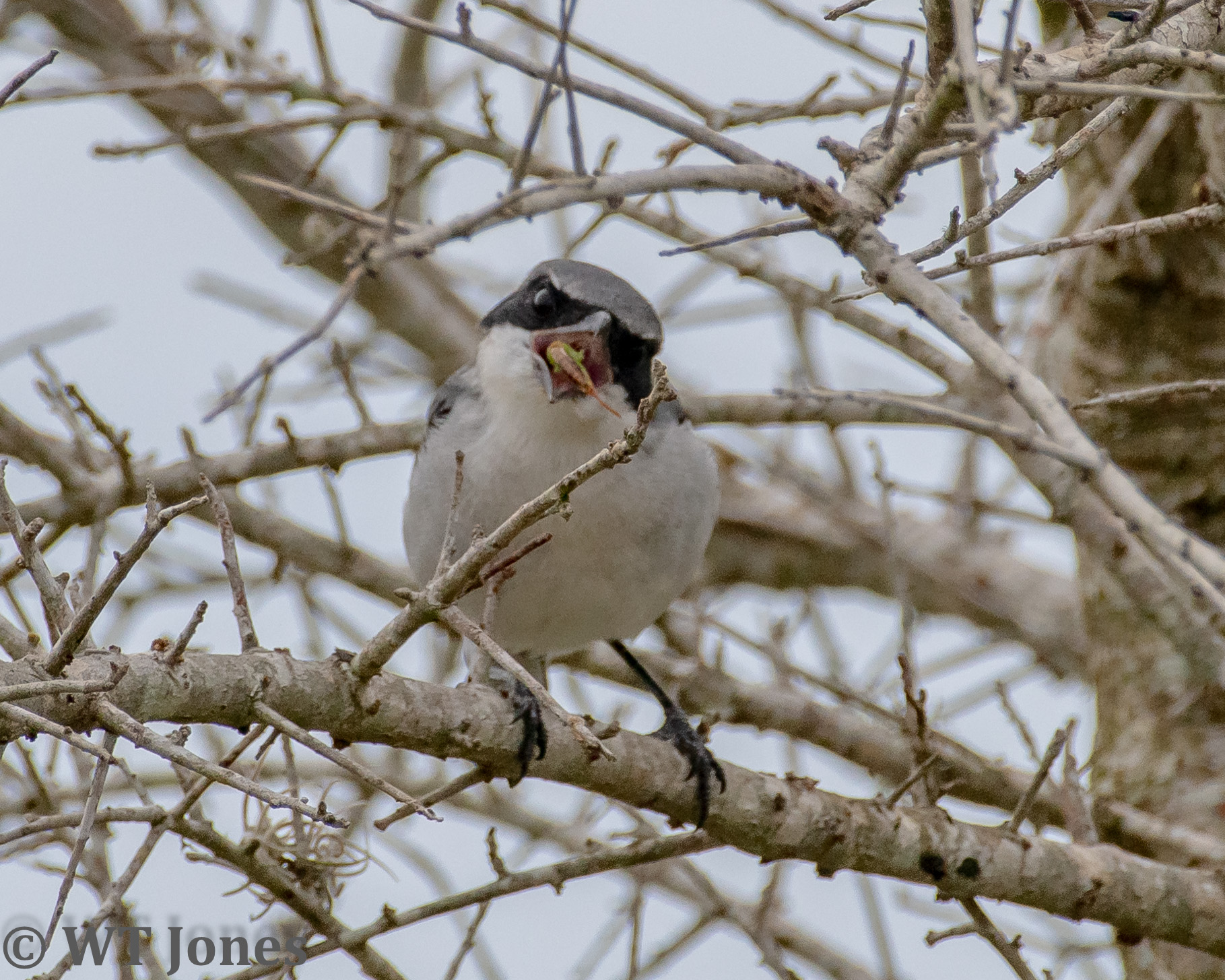
Having fully recharged its batteries, the Loggerhead Shrike captured a katydid and impaled it on a twig, as any self-respecting Butcherbird would. After admiring it for a bit, brunch from a branch.
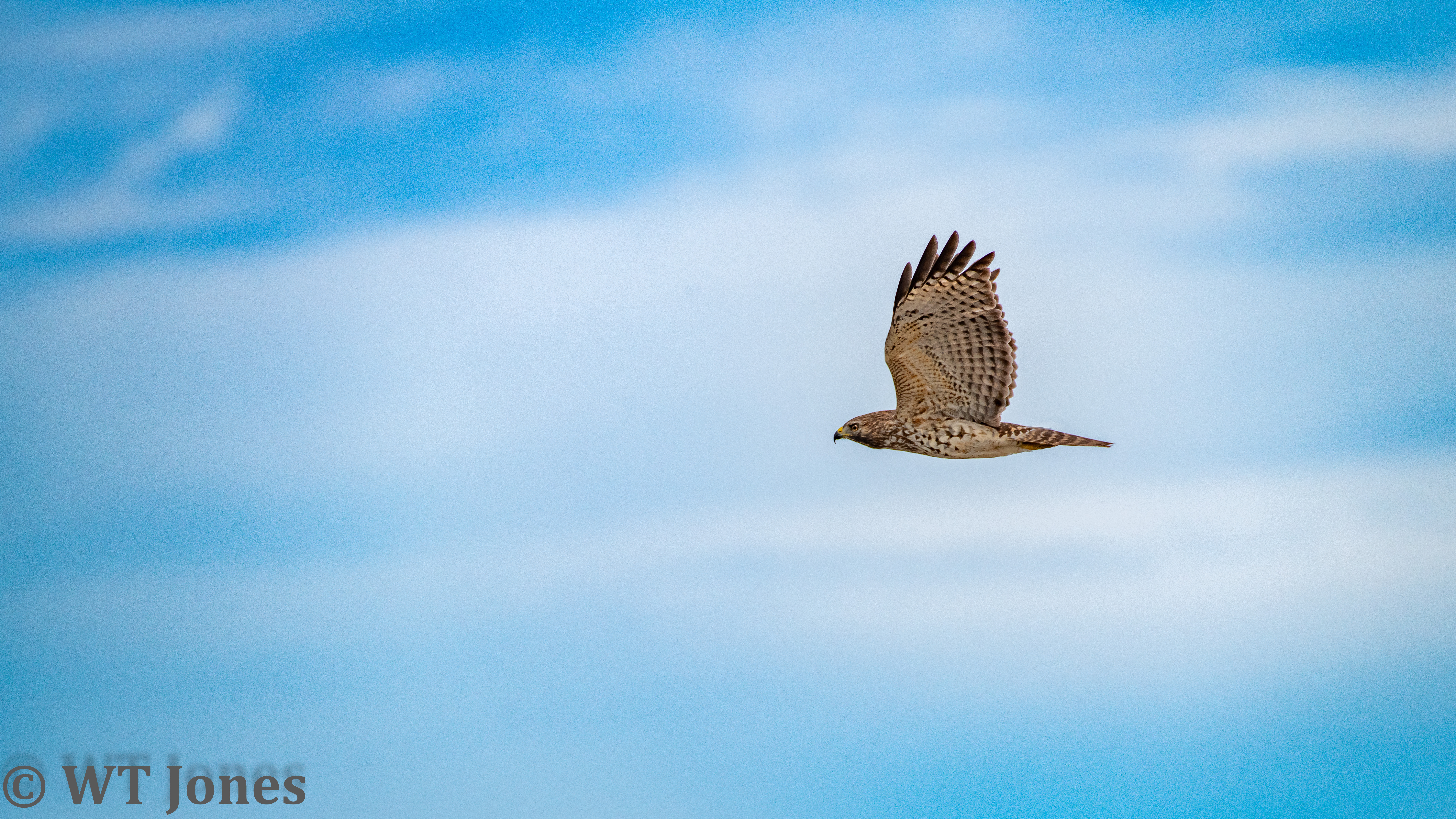
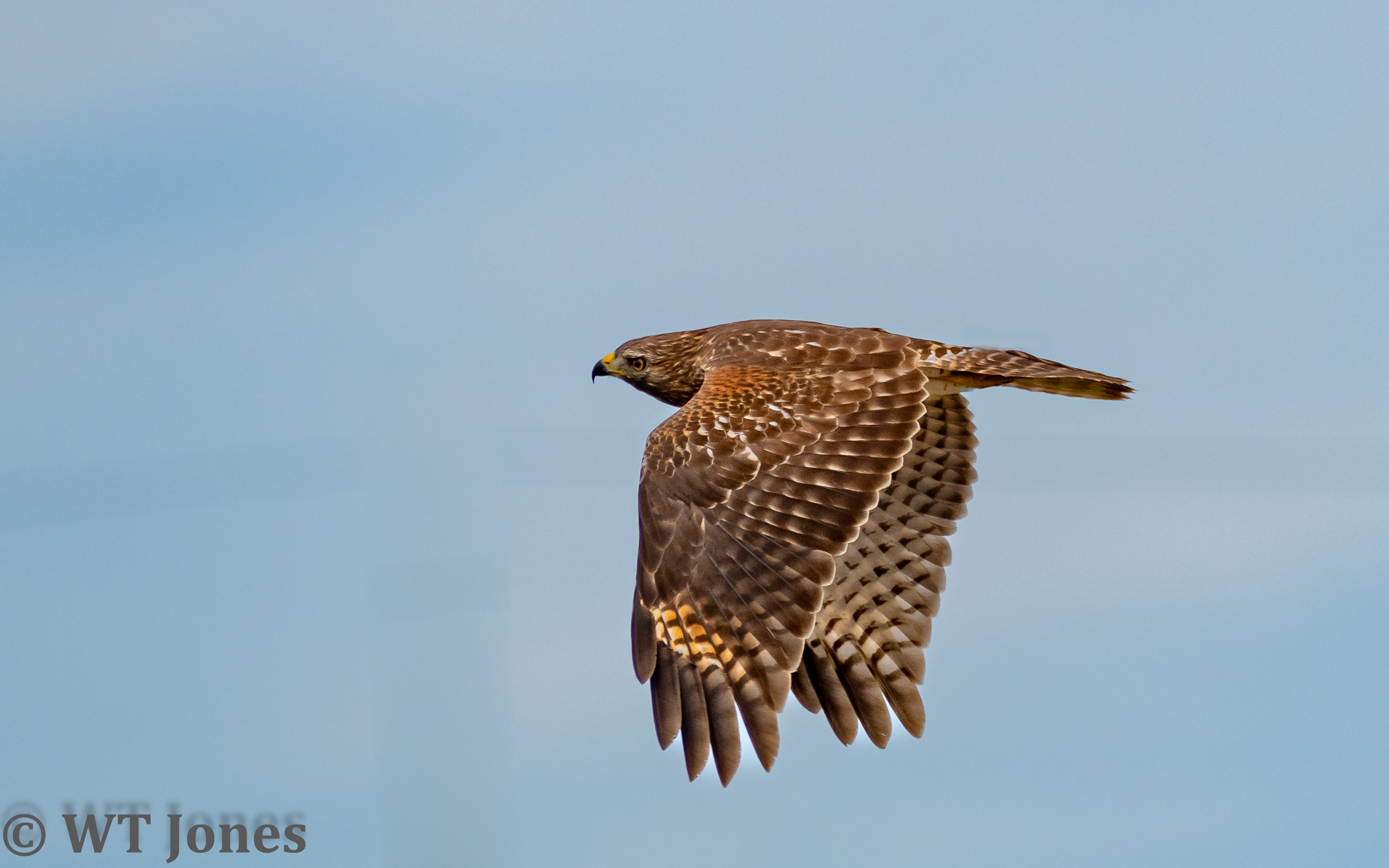
A young Red-shouldered Hawk provides a good view of its namesake red “shoulders” and the pale crescents near the wingtips which help identify this species.
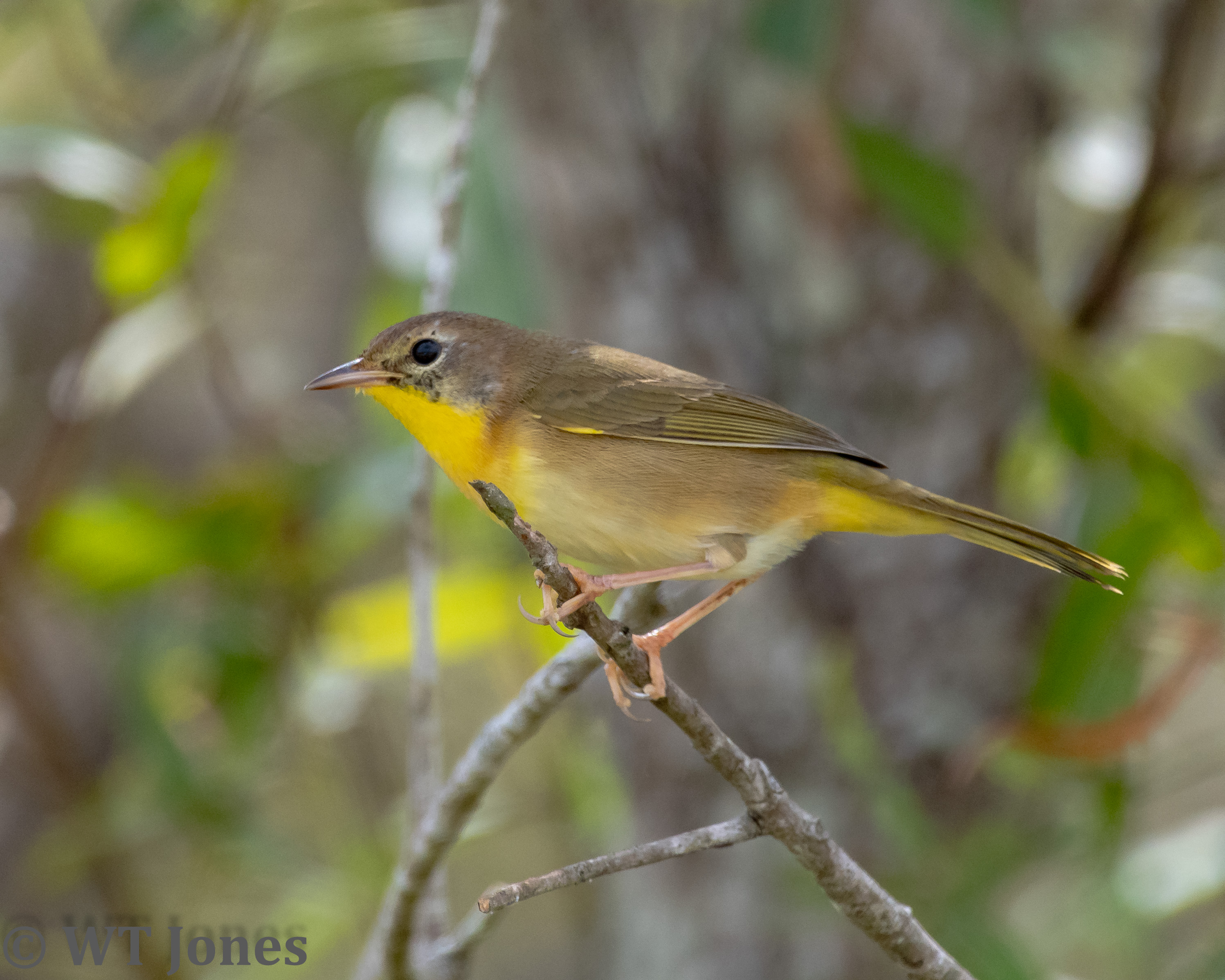
Gini did it again. “Oh, look!” A lovely Common Yellowthroat spent a few minutes hopping around the branches checking us out.
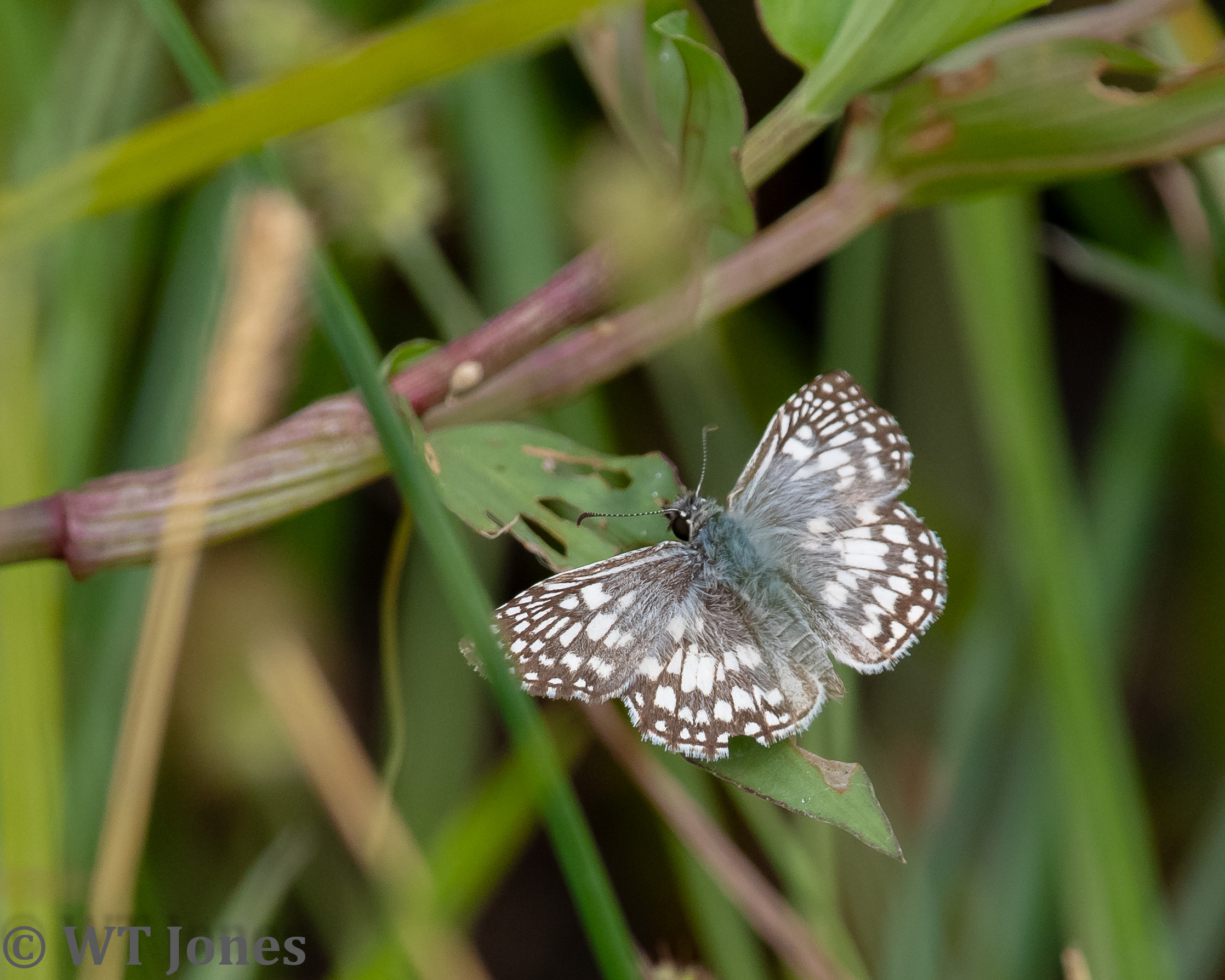
Although small, the fluttering black-and-white checks near the ground help us spot the Tropical Checkered-Skipper (Burnsius oileus). We found several enjoying today’s sunshine.
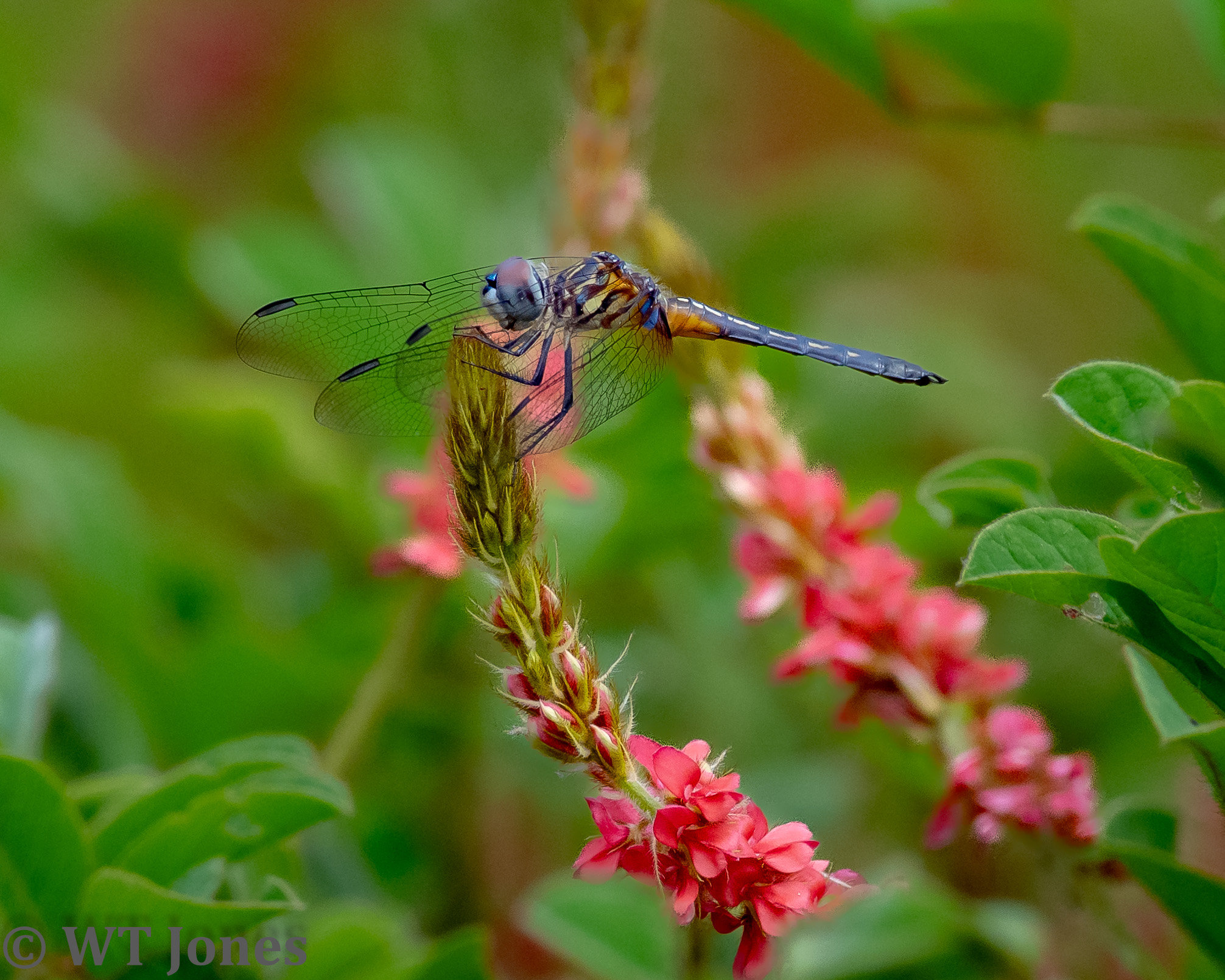
Florida may not boast much in the way of colorful autumn trees, but if one looks around, there is plenty of color to be found. An example is this male Blue Dasher (Pachydiplax longipennis) on Hairy Indigo (Indigofera hirsuta).
An oasis near the house provides welcome relief from the hustle and bustle of modern life and allows us to observe Nature’s diversity. It is an amazing blessing. On any given day our patch is filled with a bounty of satisfying exploration. Today that bounty defied containment.
Enjoy your search for a natural place and come back for a visit!
 Our Natural Places
Utter bliss, I say!
The Easter Phoebe is a cutie indeed.
I feel you should now write a book on our Natural places entries. Your story telling skills are par excellence.
Blessed December dear Wally and Ginni. 🙂
Somethings brewing in our cauldron too, watch out. 😉
LikeLike
You are too kind. But don’t stop! We appreciate your visits to Our Natural Places any time.
It’s cool here this morning so a brewing cauldron sounds quite interesting.
Enjoy This Day!
LikeLiked by 1 person
Ha! Ha! Here you go, Wally:
https://natashamusing.com/2023/12/notes-from-the-wilderness-natasha-musing/
and some coffee to boot. 🙂
LikeLike
Maybe as you have a spare room, the doctors could come stay while bringing a suitcase full of medications? If I could get to speak to one as opposed to a “practice nurse” I could do the same.
I never did quite get the hang of the difference between “practice” and “practise”. I had forgotten how you have an American Kestrel form all to yourself. in Florida. It’s much better than sharing it with those uncouth northerners. We have the same here north v south where everything revolves around London or as we call it “that sh£%hole down south.” but we let them get on with their strange ways and bide our time. Karma comes to those who wait.
I have been reading Birds of China. A country not far from you, a short drive to Alaska, a ferry cross the Mersey and Bob’s your uncle. Say Hi to Gini and give her a hug from me.
LikeLike
“… doctors come and stay …” is not a phrase with which I am comfortable.
Our Florida Kestrels are easy to discern from the tourists as they have a distincitve tan and sport a pair of flip-flops on their deadly talons.
Tell Karma to hurry, please.
That tome of Chinese avian life appears to be daunting. To lift, never mind to read. It seems China is daily becoming much closer to us than your travel directions.
When I give Gini a hug, it is from me. No apologies. I shall pass along your wish for a hug. That’s about the best I can do. I will say Hi to her on your behalf.
My grandson has informed me there is, apparently, such a thing as a “virtual hug”. I’ll try that on Gini and let you know her reaction. There will be a delay as I am awaiting “virtual” instructions from the grandson.
LikeLike
So, I have been advised that you may not only have your hug from Gini but she sends a kiss on the cheek as well. Shows what I know.
LikeLike
You caught lots of great birds. That clay colored sparrow is a great find.
LikeLike
Thank you, Dina.
It was a fun morning.
LikeLike
I do believe you’ve helped me solve a mystery. I was so entranced by your photo of the Red-shouldered hawk that I went looking at the range maps. They are resident here, and when I clicked on the ‘sounds’ link, it was an “Ah, ha!” moment. I’m certain now that the call I’ve been hearing every morning just after sunrise is a Red-shouldered Hawk. I’ve known hawks are around; every now and then I see a Cooper’s or Sharp-shinned, and thought they were responsible for the dove feathers scattered beneath my feeders. Now, I have a new suspect to consider. I kept trying to turn its call into one belonging to a Bluejay, even though I knew it wasn’t quite right. Gini would have known!
Our Indigofera miniata, or scarlet pea, is one of my favorites, although your Hairy Indigo looks as though it bears more flowers at a time. It’s always fun to see species here that I recognize, but my favorite photo today is the snail. That loop of grass beneath it made me laugh, imagining the snail contemplating it as a target for a distinctly non-snail-like dive.
LikeLike
We have encountered Blue Jays which have perfected the Red-shouldered Hawk call. One was so realistic it attracted an actual hawk looking for the territorial interloper. The talented jay went silent. Oops.
The I. hirsuta, unlike your miniata, is an introduced plant. Like many experiments, it has been used for its nitrogen-fixing properties as well as livestock feed. Fortunately, it has been found to be non-toxic, unlike its cousin, I. spicata, which is a large problem for horses.
I saw that loop of grass as a traffic circle designed to slow down the snail commuter traffic. It worked.
LikeLiked by 1 person
What a fabulous patch you have there, Wally. So many colourful birds and wonderful insects.
To me, your Cley-colored Sparrow is reminiscent of our female Reed Bunting.
My favourite in this post, however, has to be the Loggerhead Shrike, closely followed by the Tropical Checkered-Skipper.
Temperatures are still sub-zero here but, so far, no snow in this area.
My very best wishes to you and Gini – – – Richard
LikeLike
We try not to take our patch(es) for granted but it isn’t easy. We are so spoiled.
The shrikes always seem to offer us a bit of entertainment whenever we encounter them. Which is just fine with us.
We had four days of cool weather but today it is back to low sub-tropical sunny weather. And, just like you, so far – no snow.
Gini and I hope you and Lindsay are well and have a great weekend.
LikeLike
I’m loving the photos and your descriptions of being out enjoying it. I can’t walk very far at the moment due to illness but your blog gives me a little taste of that joy. Thank you!
LikeLike
Thank you very much for the nice comments. You’re welcome to come along and explore with us any time.
Gini and I hope your recovery is swift and complete.
LikeLiked by 1 person
All those people desperate to get to work. Very sad but very commonplace. We almost witnessed a smash yesterday when we heard a car and white van man collide ahead of us. I think that both drivers would be very late to work, not to mention whiplash, the financial costs coming their ways and the questions from their employers. My car insurance rose 50% this year. Because of these people. Or maybe insurance companies profiteering.
It’s very sunny here too. It’s also minus 5 degrees this morning. Therefore I am busy looking at a new book from Princeton. At 600+ pages and 3.5 kg it is something of a marathon job.
Good news that you still have so many colourful warblers in your area, and shrikes I like!
I might struggle with that Clay-coloured Sparrow House Sparrow lookalike although even here I think the Clay-coloured would probably outnumber our depleted House Sparrow population.
And here’s me thinking that everything in the US was bigger and better when you picture a tiny solar device. I hope that you lot are taking the climate catastrophe seriously?
Enjoy your sunny says together. Sue is off to Poulton on the free bus and I might venture out for an hour or two. How much Christmas shopping can one person do?
LikeLike
I’m reasonably certain most are desperate to pay for food shelter. Their current job is the only way they see to accomplish that. Thank goodness our respective governments take such good care of us, else desperation might really become established.
Many of these visiting passerines will be fooled by our balmy weather and ask why fly to Argentina when we have such an abundance here? Then comes that late December morning when their little feet are frozen to the limb on which they roosted. The semi-circle of life can be so cruel.
Everything in the U.S. IS bigger and better. We just start small and grow. After all, we used to only be one rock at Plymouth, Massachussetts. Now – well……
Of course we are dedicated to solving the terrible, horrible, no goo climate crisis. Just look at the representative we send to our nations capitol all filled with very warm air, thus obviating the need for those other fossil fuels.
All is good here in the swamp. Birds, blooms and bugs galore. The sun is bright, our cold spell is over for the moment and we are off to enjoy another day in paradise.
As to your last question, we shall assume it is rhetorical as the actual answer is too horrifying to contemplate.
LikeLike
So nice to see all my birds have arrived and are delighting you to share & delight me again, as I am missing them already!
LikeLike
We appreciate you sending them along for us. We’ll try to remember to return the favor in the spring.
LikeLiked by 1 person
Please do!
LikeLike
I’m in awe of your Red-shouldered Hawk photo, beautiful lighting. I’d love to see a Clay-colored Sparrow, and it looks like I missed my opportunity, since they winter down in the Rio Grande Valley. All About Birds shows no population in Florida, not even just “migrating”… but the eBird sightings map shows a scattering in Florida, and all along the Gulf Coast over to here in the Houston area. Yay, I’ll have to keep an eye peeled!
LikeLike
The hawk is so common it’s easy to not give it a second thought when photographing. A mistake I’ll try not to repeat too often.
Each winter a handfull of Clay-colored Sparrows are counted across Florida as they migrate south. A few will remain in some areas all winter.
LikeLiked by 1 person
Very nice photos Wally. It’s good to have a wildlife spotter with you, isn’t it. I find I can hardly keep up with the things Jan spots while we are birding.
LikeLike
Thanks, Brad.
She’s not only a great spotter, she can actually hear the little things, too. That helps a lot.
LikeLiked by 1 person
My parents had a ‘looky what I’ve seen whistle’ they used when out and about. Their whistles might rival the birds if they were with you and your observant life partner.
Thank you so much for taking us along.
LikeLike
Don’t tell Gini about the whistle or she’ll be wanting one for Christmas!
I prefer her “Oooohhh, look at that!” signal.
You know you are welcome along any time.
LikeLike
Thanks for sharing all these beauties. My favourite is the Shrike. Awesome bird so well captured.
LikeLike
That’s one of our favorites, too.
Thank you!
LikeLiked by 1 person
Stunning photos of the hawk in flight. I like the shot of the Shrike recharging it’s batteries! Fence charger??
LikeLike
Thanks, Peter.
Yep, electric fence to try (somewhat successfully) to keep the wild pigs out of the grain field.
LikeLike
Ah, sarcasm: “anything which might delay his excitement in being at work.” And nice going with “brunch on a branch.” Good shot of the hawk, for which we can follow your lead and describe the bird as fleet in flight. Your closing photo does justice to the dragonfly and the non-foliar fall color.
LikeLike
We may have to look a bit closer to find “fall color” but hey, we’re the beholder, so we like it.
LikeLike