Finding Lost Lake
Header Image: Cloudless Sulphur (Phoebis sennae) on Prickly Pear (Opuntia spp.)
One of our birding “patches” which we often mention is the Tenoroc Fish Management Area. We mention it often because we visit it often. A few minutes drive from the house, the area consists of over 7,000 acres (2800+ hectares) and offers a fairly diverse habitat. There are 30 lakes, hardwood and pine forests, open grassy fields, wetlands and well-maintained trails. The management area has one large main tract and several smaller tracts which are separated geographically over a few square miles. Today’s visit was to the Lost Lake East tract.
From the main road, it’s just under than a mile to the canoe launch parking area at Lost Lake East. No motorized craft are allowed. The drive is bordered on each side by groves of oak and hickory trees and open pine woods with saw palmetto scattered around abundantly. Leaving the parking area, one can hike in different directions for several miles.
We meandered along a meandering creek. Small things seemed to catch our eyes every few steps. Small treasures became large rewards and before we knew it the clock struck noon. It was almost a shock to discover the walk back to the car only took a few minutes. Surely we had covered a few miles? Apparently not.
Spring is fading into summer. Florida’s “brown” season is in transition to the “green” season. Regular rains have begun and as the aquifer is replenished, lakes return to seasonally normal levels. The air is laden with humidity and temperatures are reaching 90+ degrees (32 C) by noon. We are once again reminded we live in a sub-tropical environment.
Flowers are now prevalent which means insect life is thriving. Resident birds pursue the insect life to nourish their offspring. Softshell turtles lay dozens of eggs in sand and mud. Raccoons locate many of the turtle nests and carry the eggs back to their young. The circle of life rotates 24 hours a day every day. Nature does not take a vacation. We are thankful for that.
We have many images to share. There will be a second part so hurry and only look at the ones you like.
Southern Beeblossom (Oenothera simulans) flowers are quite small but incredibly beautiful. Their sweet fragrance attracts a large variety of pollinators.


A footbridge crossing the creek is in need of some repair but is structurally sound. The path beyond is worth making the crossing.

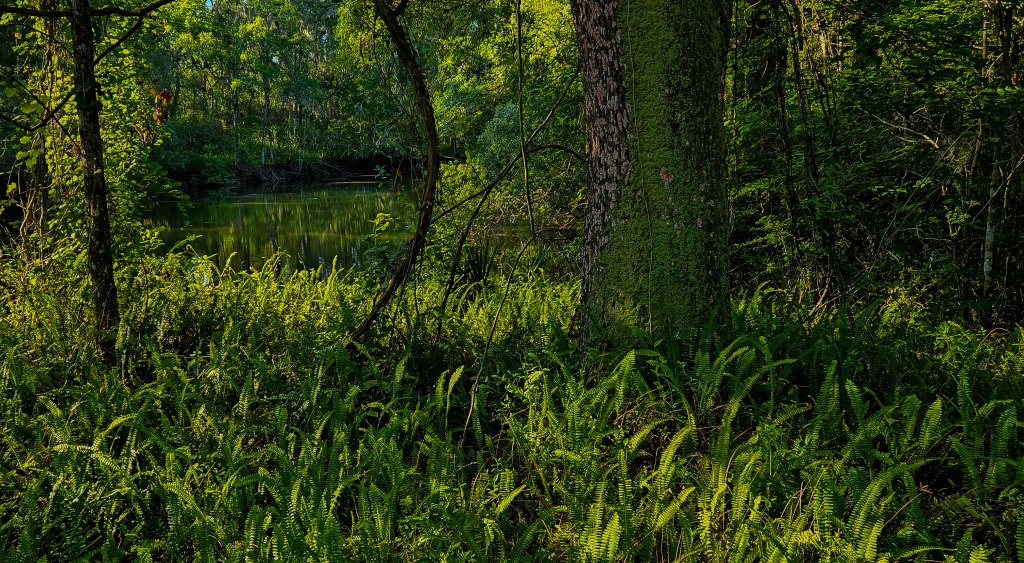
Ferns, trees and vines help frame a morning view of Lost Lake East.
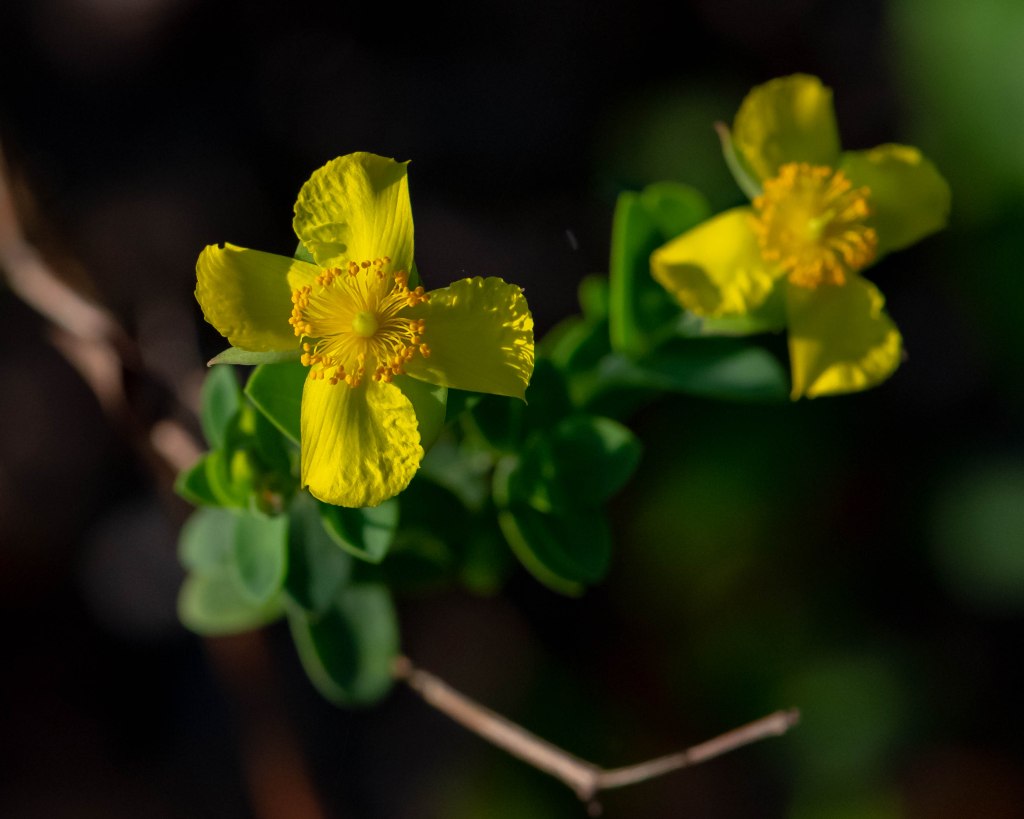
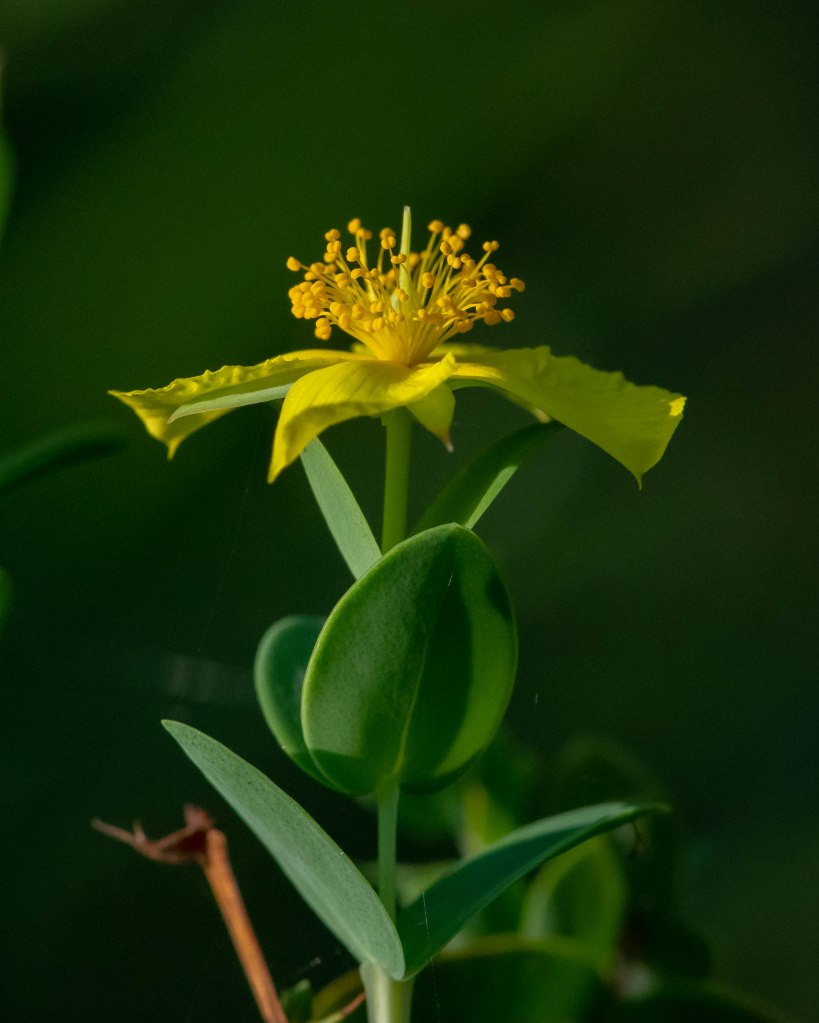
Several plants of Four-petal St. John’swort (Hypericum tetrapetalum) provided buttery yellow beacons within the woods.
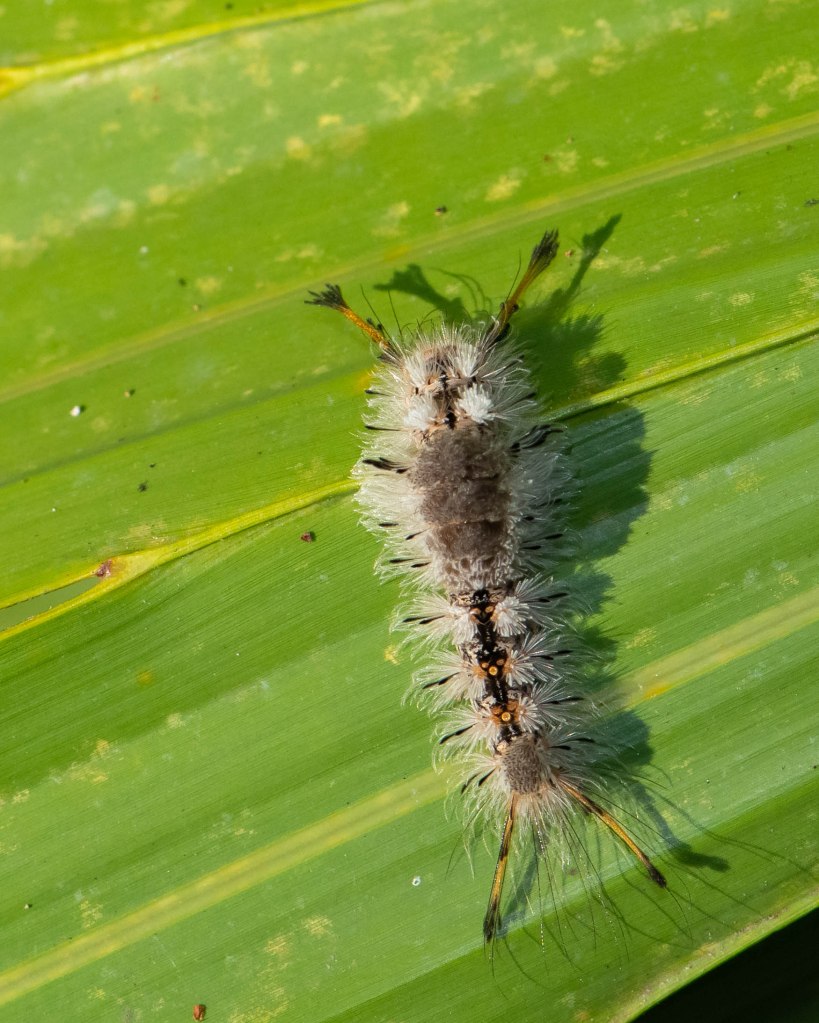
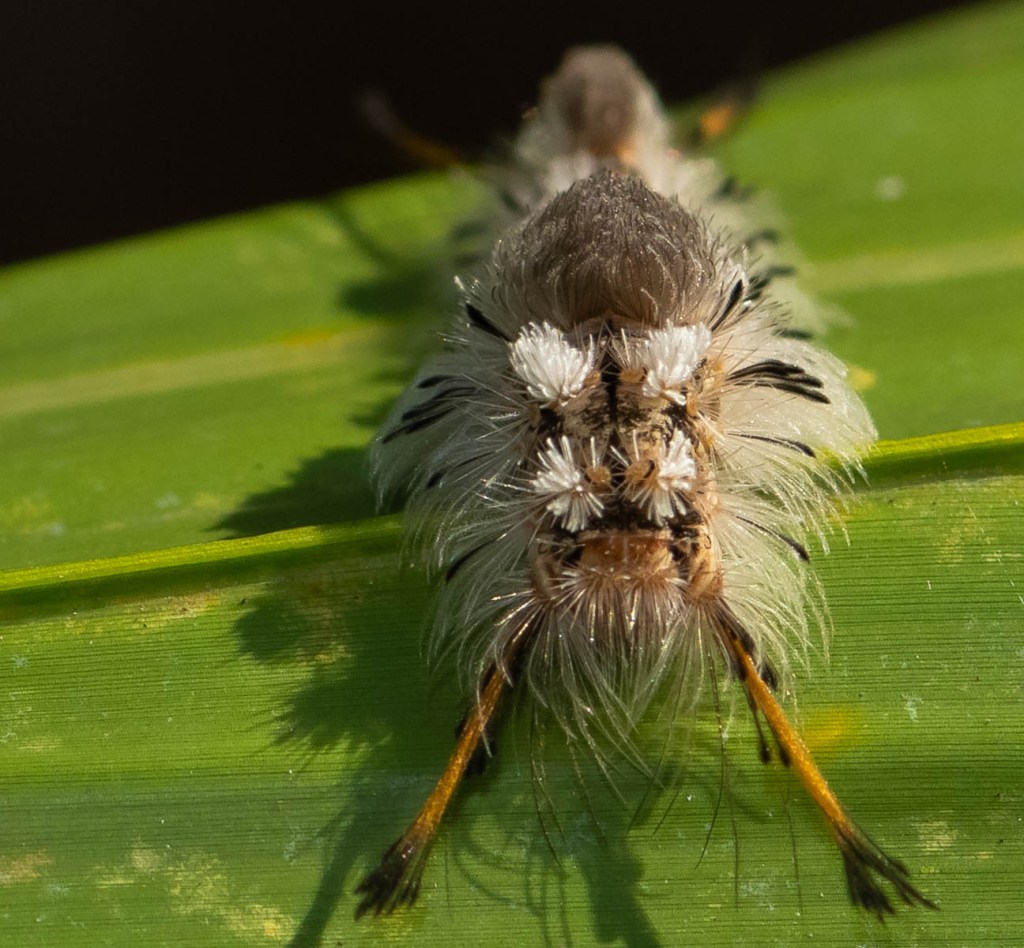
Resting on a Sawtooth Palmetto frond, a larva of the Southern Tussock Moth (Dasychira meridionalis) posed for a few candid portrait shots.
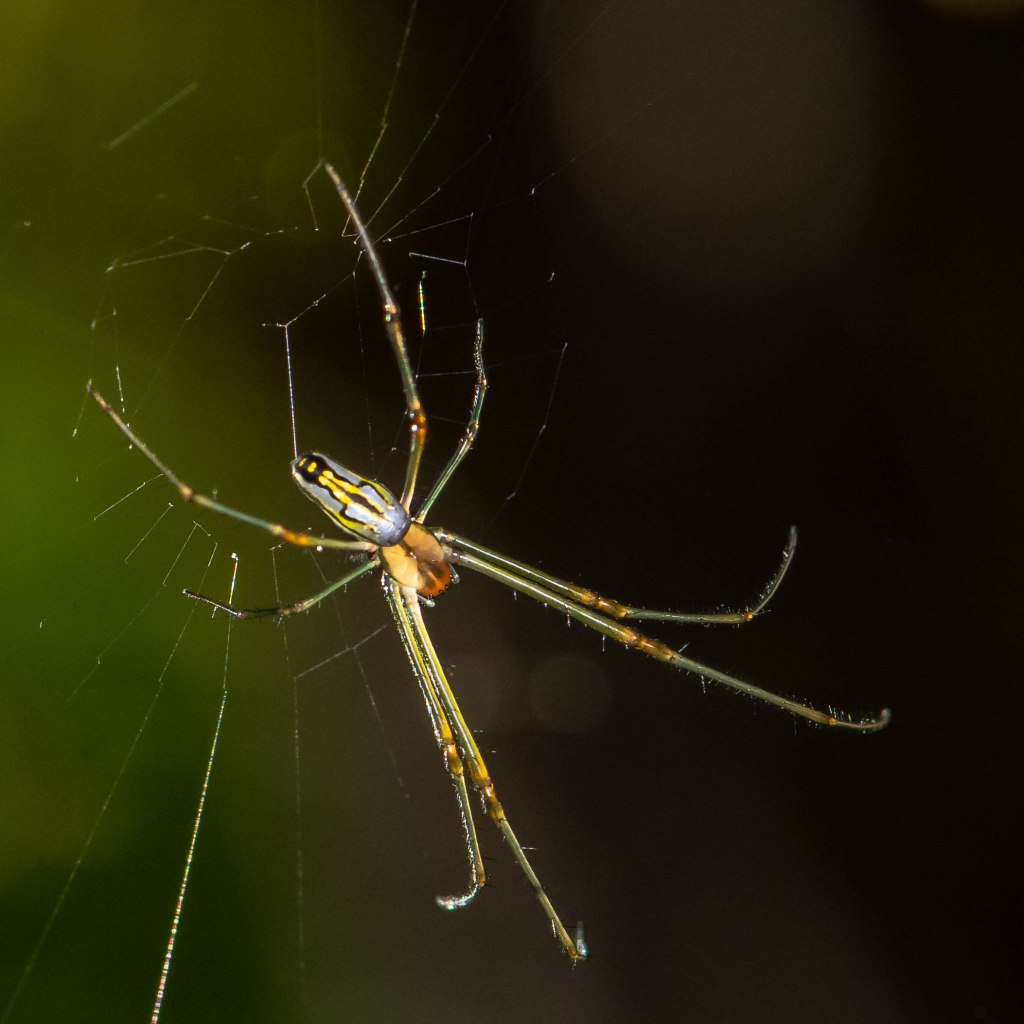
There are two species of Orchard Orbweaver spiders in Florida, Leucauge argyra and Leucauge argyrobapta (sometimes called Mabel Orchard Orbweaver). There are slight differences in appearance and this image is of the former which, in North America, is only found in central and south Florida. A common Orchard Orbweaver of the eastern U.S. is L. venusta, but it is generally not found in Florida. (Yes, there will be a test.)
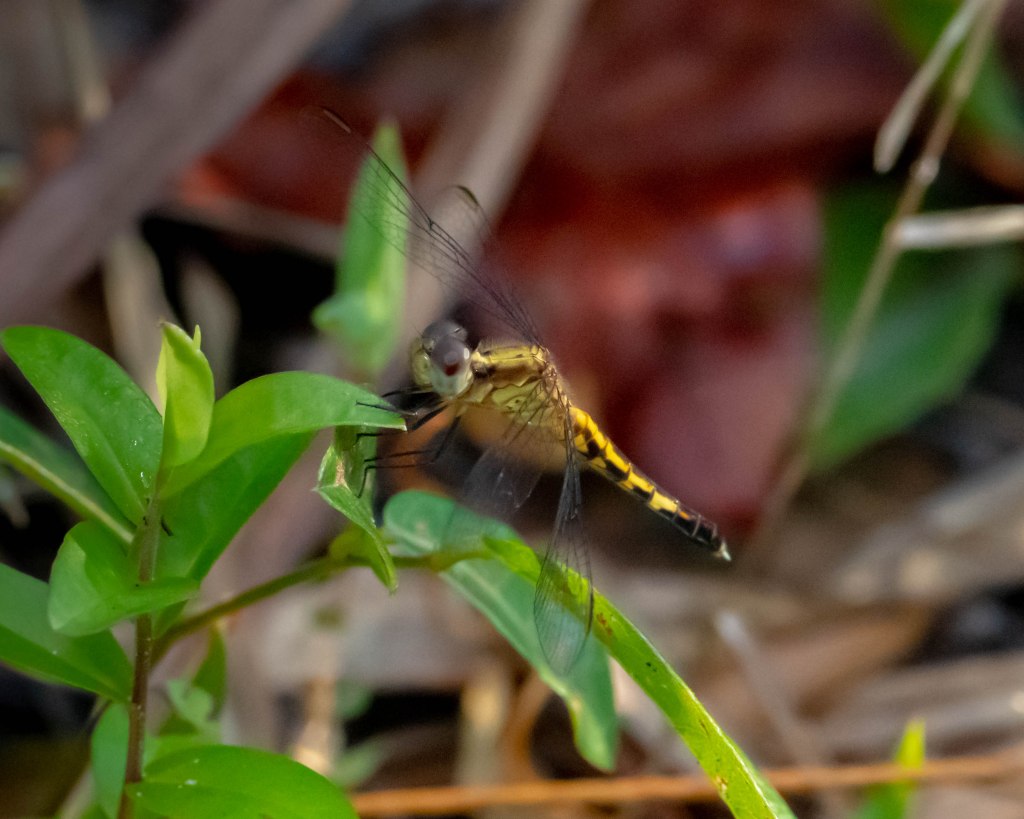
Good at staying under foot but not so good at posing for the camera, a small Little Blue Dragonlet (Erythrodiplax minuscula) kept pace with us for awhile.
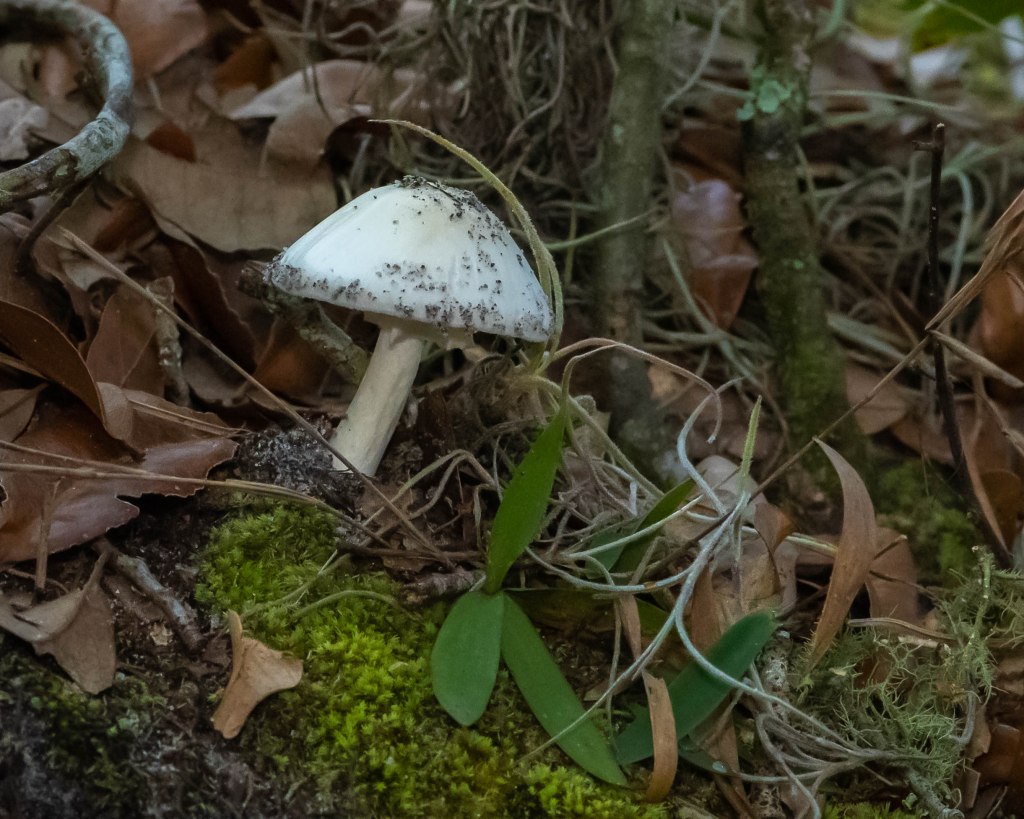
A mushroom as it appears at ground level. This fungi offered me no assistance in trying to stand up again.
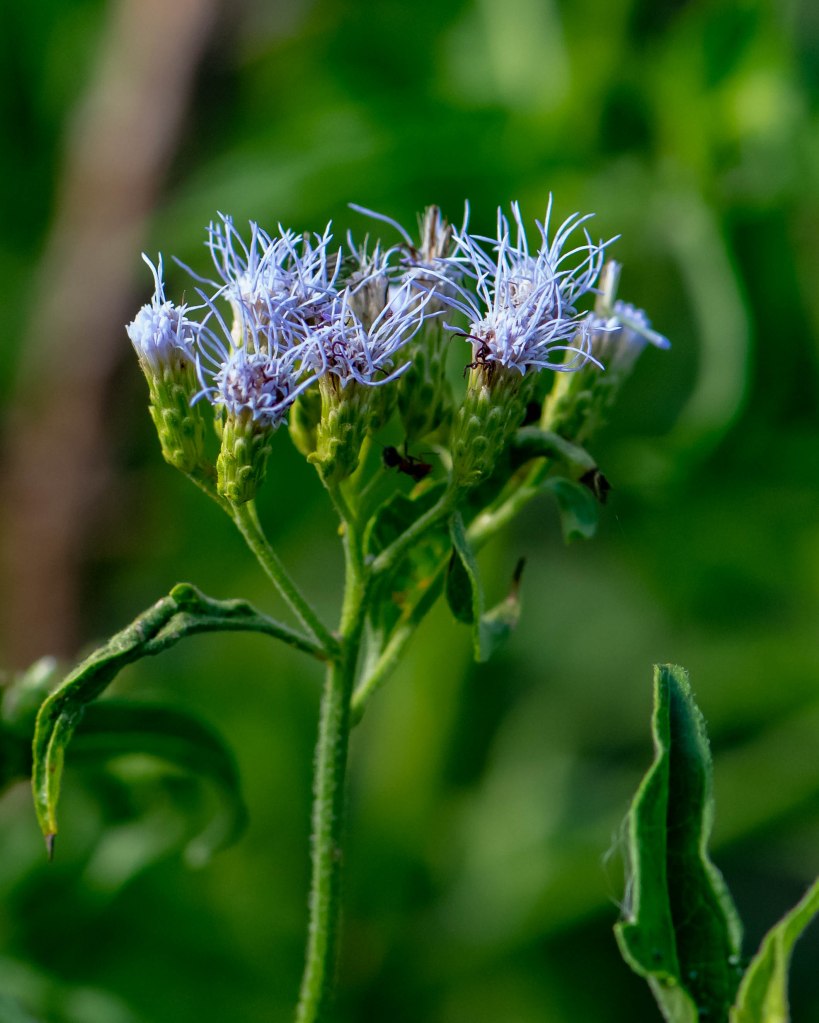
In open areas, especially near water, the area is filled with blue. I’m pretty sure this is Blue Mistflower (Conoclinium coelestinum) but there are a couple of similar plants. If you know its identity I’d appreciate a correction.
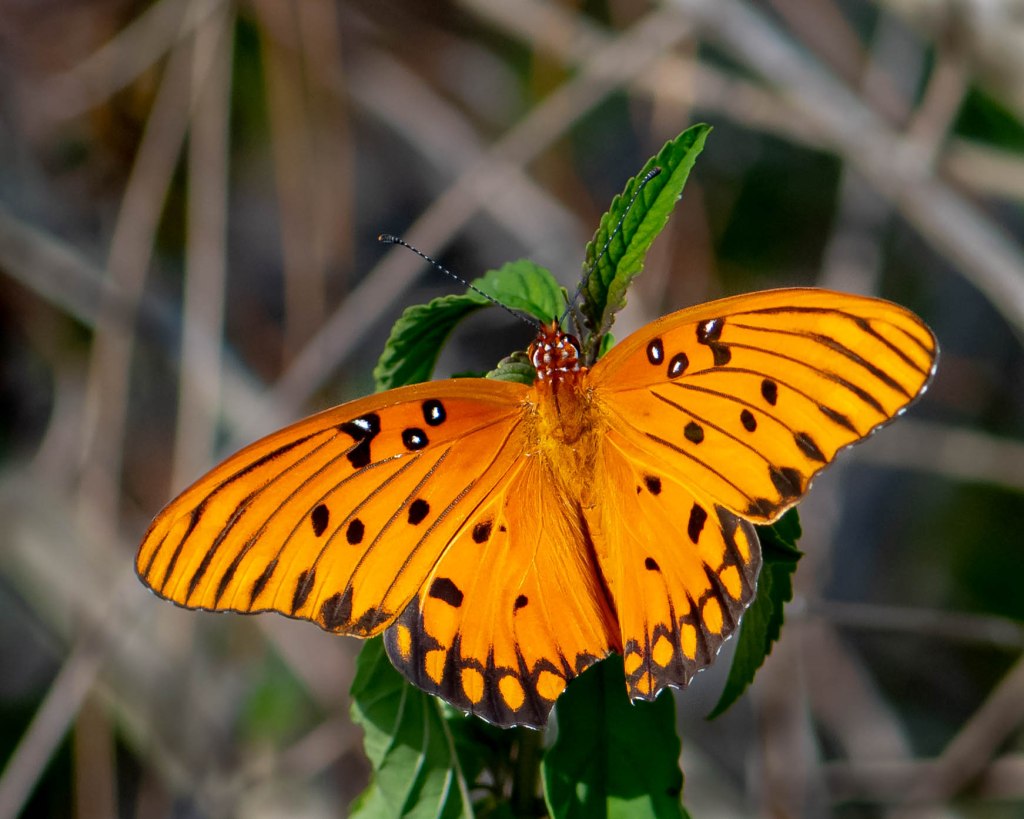
Wandering around in a mostly dark green habitat, a spot of bright orange gets one’s attention. This Gulf Fritillary (Agraulis vanillae) certainly brightened up the morning!
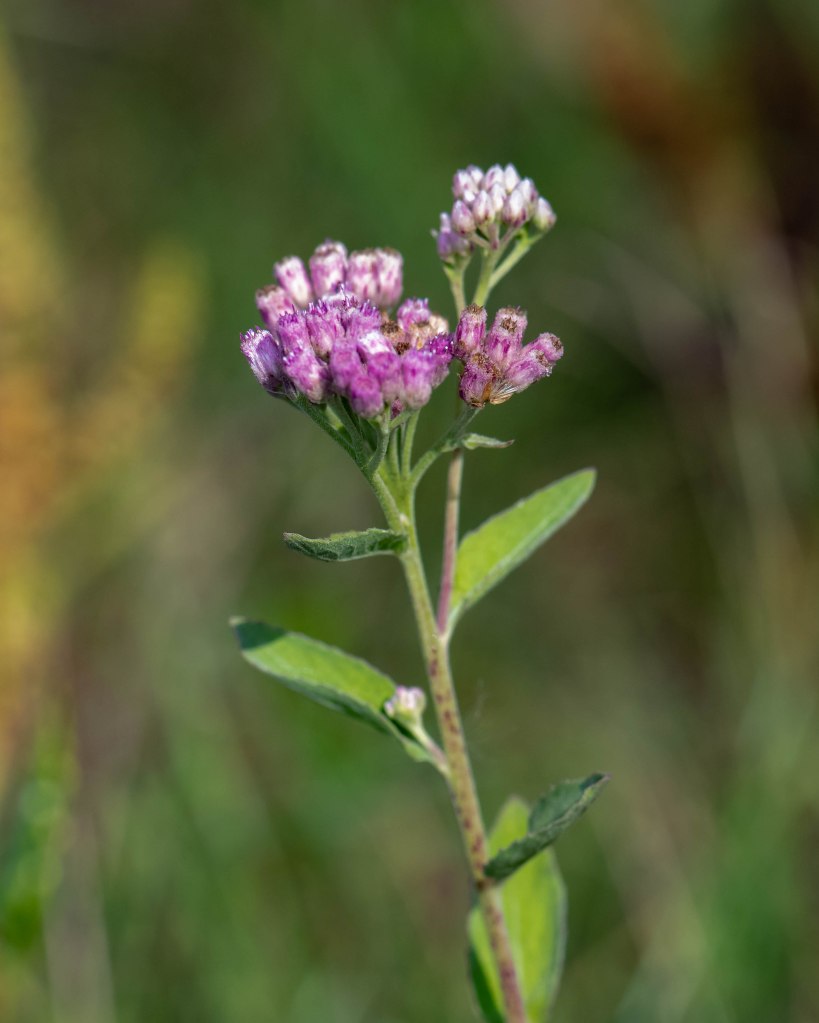
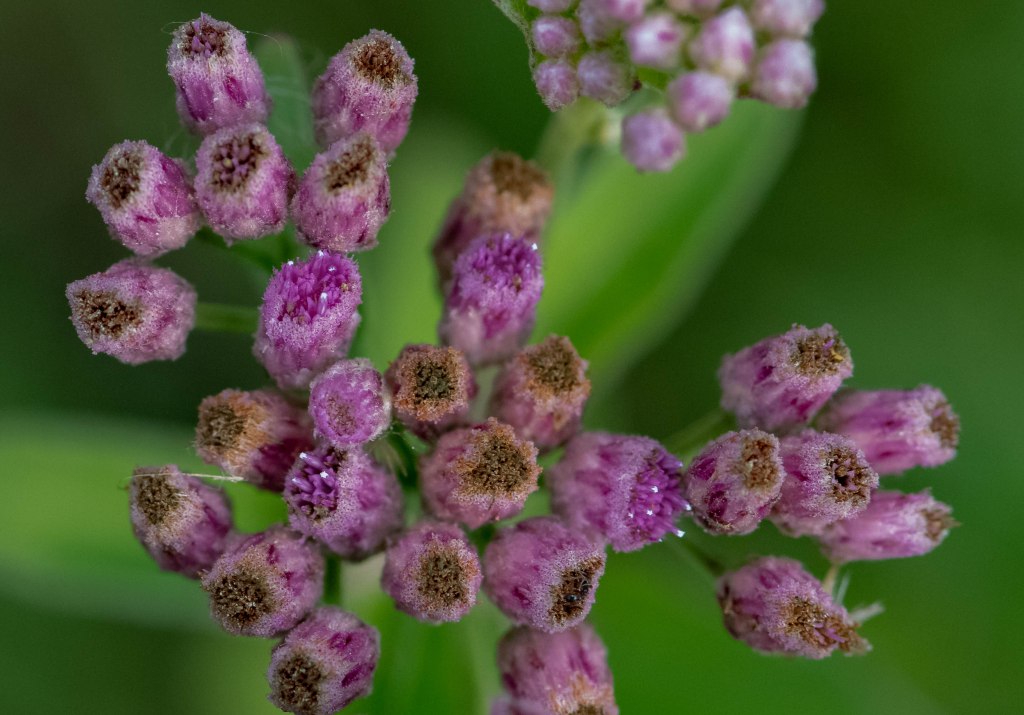
Pretty pink blossoms attract nature lovers, photographers and pollinators. The Rosy Camphorweed (Pluchea baccharis) was supposedly used at one time to repel fleas. When the leaves are crushed, I expected an unpleasant odor of camphor, but instead I had a sense of citrus.
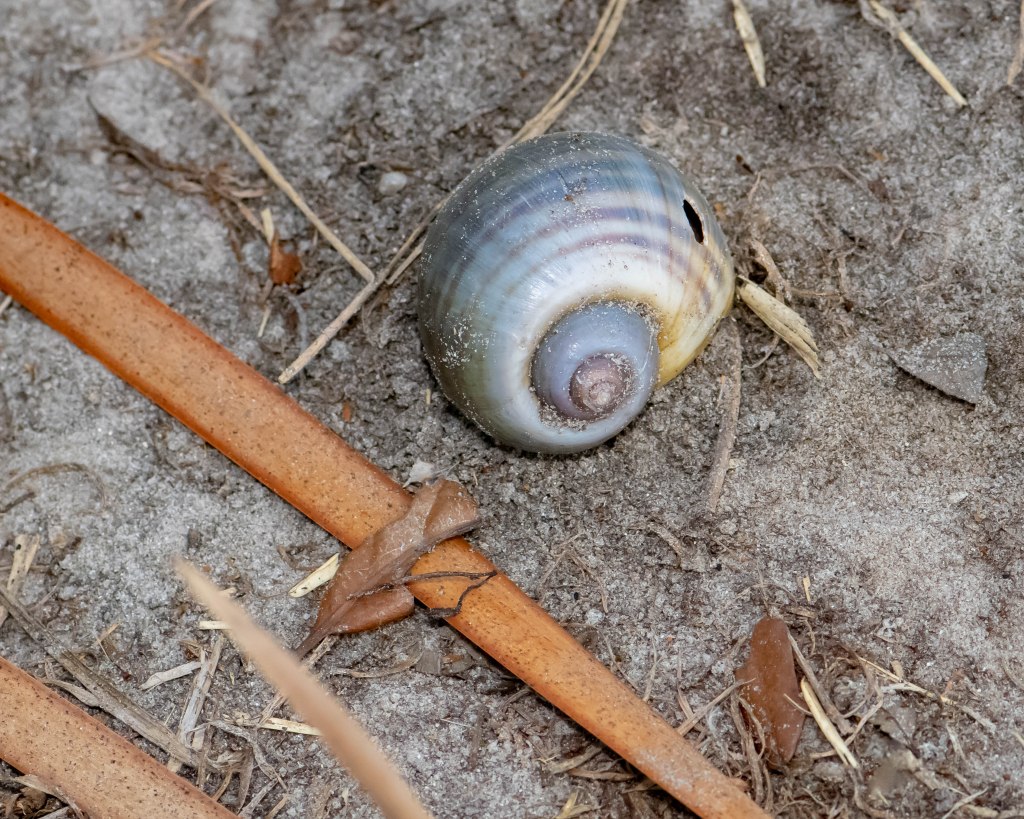
An Apple Snail (Pomacea spp.) shell. This is the shell which contains the favorite food of Limpkins and Snail Kites.
Any port in a storm. Or when there is no storm, a hole in a fence post will do for this Brown Anole (Anolis sagrei).

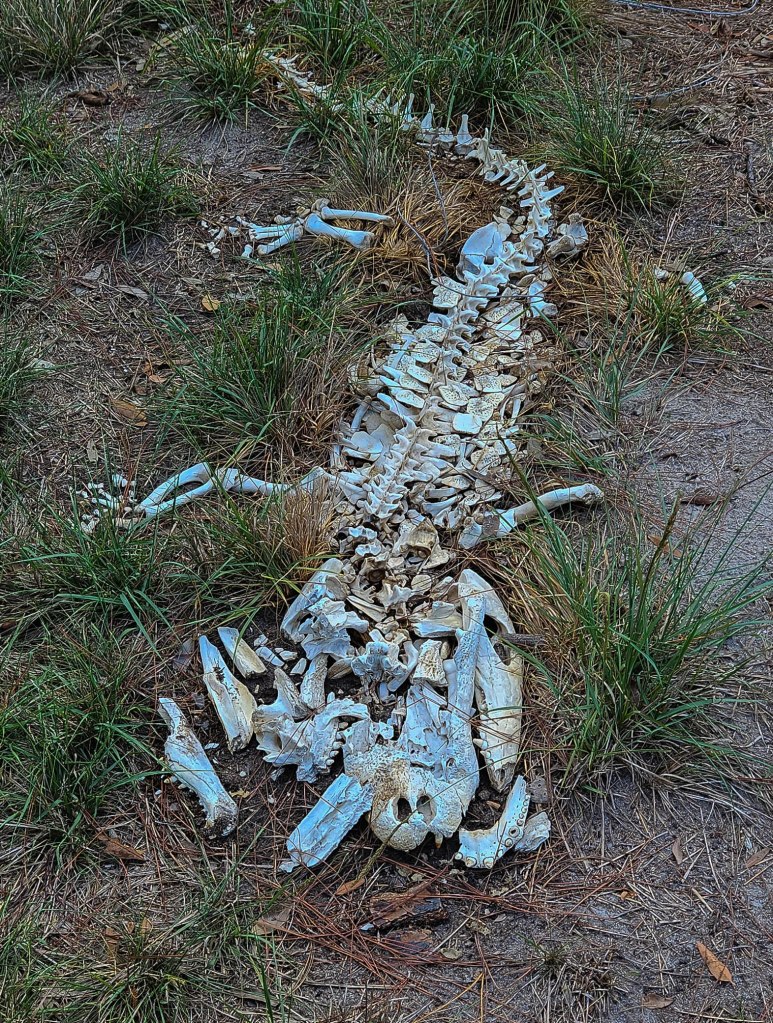
We came across an unusual sight. Likely the result of poachers as Alligator hunting season is August-September. My lovely bride is still mad ’cause I wouldn’t let her bag up the bones so she could spread ’em out on the living room floor and put him back together again. (That’s my Florida Woman!)

Not only did we find the Lost Lake, we thoroughly enjoyed exploring the area around it! The time flew by as we spent much of the morning lingering over flowers or crawling around chasing bugs. We have more to share from the outing and will do so in Episode Two. Stay tuned!
Enjoy your search for a natural place and come back for a visit!
 Our Natural Places
As much as spiders give me a moment of hesitation (we have massive Timber/Wolf spiders in our woods) Orbweaver always fascinate me with their colorings and unique webs. That Gulf Fritillary is a stunner as well. We saw our first Snail Kites (and not surprisingly Apple Snails ) in Gainesville last April,probably my new favorite bird!
LikeLike
Once I started looking for spiders on purpose, I had a whole new perspective on them. Fascinating to see the different webs, capture techniques and diverse appearance.
A fresh fritillary is eye-catching. Yep, Snail Kites are pretty special.
LikeLiked by 1 person
Exciting adventure. That big airplane would need to trim a few treetops to get down to rescue you– lucky that the moss moved our of the way before your “Mayday” call. Love the macros of insects and flowers. We are once again being visited by the Canada smoke.
LikeLike
Thank you, Ken.
Luckily, we managed to return to civilization before firing off our flares for that Hecules to spot!
Very sorry to hear about the continuing smoke situation. Fingers crossed it will soon abate.
LikeLike
A marvelous collection, as usual. Glad the alligator continues his sojourn along the walk – think how much fun it will be to chronicle his wandering bits as other creatures disperse his parts over the coming years. Just a note – your header image continues to the the aircraft in front of storm clouds; I noticed in both the previous post and this one, that the caption and internal references indicate you intended a different header image.
LikeLike
Thank you, Sam.
WordPress displays the most currently used header image when viewing older posts. Haven’t figured a way around that yet, except to use a generic header which never changes. Might go that route.
LikeLiked by 1 person
Heh, had no idea. Mine is likely doing the same thing, then. That will teach me to be tardy in reading my favorite posts 🙂
LikeLike
I was excited to see your photo of the apple snail. Imagine everybody’s surprise when a Limpkin was found east of Colorado Springs along a flooded reservoir 3 days ago. It is a first Colorado state record and birders have reported about its regular diet, but I had never seen one of these snails. Here it seems to be feeding mainly on earthworms.
LikeLike
Kind of wish you had said yes to your bride. It would have been interesting to see the skeleton re-assembled. Great post!
LikeLike
The votes to date are overwhelmingly for us to have re-built a reptile in the living room.
Comments from my lovely paleontologist wanna-be: “See, I told you so.”
Thanks, Peter!
LikeLike
You two found the lost lake and discovered so much more to enjoy too. Your teamwork is amazing, but I agree that Gini should have indulged your new found interest in skeletons and found a space on the living room floor for your first exhibit. Even better, a spot on the living room wall that might become a tourist attraction a la Disney. How cool would that be?
That Tussock Moth is a wonder to behold and perhaps even I could have even identified that one?
I think our summer may have ended with a slightly more breezy week ahead. We may have to eat indoors again.
Enjoy your weekend lovebirds.
LikeLike
Risking a tourist attraction a la Disney is exactly why I would not let my lady assemble a lizard skeleton on the living room floor. She once again accused me of being Goofy so tourism may not yet be completely out of the question.
The only thing rare about finding that Tussock Moth larva is that it was alone. They usually travel in gangs of hundreds.
We are optimistic summer doldrums will soon grace the United Kingdom and allow you to once again do things al fresco. Just be careful.
We are getting a head start on the weekend and enjoyment has already commenced.
All the best.
LikeLike
That Camphorweed is rather attractive, Wally, and your comment about it being used to fend off fleas, and it smelling of cirtrus, brought to mind the insect repellent I use (only to keep the biting ones away) and that contains a citrus-smelling element. It’s a Deet-free solution – which is a good thing as Deet and cameras don’t go well together.
I certainly would have taken at least part of that Alligator skeleton as a souvenir! I reckon that I’d have gone for a jawbone with the teeth in.
Great photography there, and I have a question. Do you use just one lens when making excusions like this, or are you a lens-swapper? I have always been a one-lens photographer in the field, as I fear the ingress of dust if I were to swap lenses in outdoor conditions.
Things are progressing nicely here, and I hope that all is good with you both too.
Take good care – – – Richard
LikeLike
When I was very young, we had a Camphor Tree in the yard and the crushed leaves smelled like medication which contains oils distilled from that species of tree. The medicine was (is?) used to treat itches and skin irritation. I was expecting the Camphorweed to have a similar aroma and was pleasantly surprised!
You and Gini would get along just fine. (Which one of you is going to pay the fine for illegal possession of out-of-season alligator remains?) Don’t worry. I’ll visit you both in jail.
Lens swapping. It depends. If I am heading out with birds as primary targets, the big lens is all I carry. If I suspect an area will have some sort of scenic opportunity, I used to take along the wide-angle. A recent phone upgrade has me using the phone to capture landscape type shots and if I really like the scene I’ll return with wide lens and tripod at sunrise. I have only had a macro lens a few months and am trying to figure out when to take it along.
I am finding taking just the macro lens has many benefits, mostly because it forces me to slow down and observe more carefully.
All of today’s images were taken with the macro lens except the foot bridge, ferns and alligator.
Gini and I send best wishes to you and Lindsay.
LikeLike
And I thought the snake skeleton I found was cool. Your alligator is really something. I wouldn’t have brought it home, but I would have been sorely tempted. Did Gini at least pick up a couple of scutes? There are some really nice ones there.
I remember you mentioning your orbweaver species when I posted a photo of our L. venusta. They’re all pretty — do I remember that yours favor citrus groves? And didn’t I laugh at your comment about the trip out taking far less time than the trip in. After hours following a trail in the Big Thicket, I came to a crossroads and wasn’t sure which way to go. So, I decided to use that old boating trip and walk a reciprocal course. ‘Out’ had taken four hours. ‘Back’ took ten minutes. Amazing.
I found what I think was St. John’s Wort in the Big Thicket the last time I was there, but I’m not sure which species it was. Your two photos of it are splendid! I especially like the ‘profile’ view. As for searching for a natural place, I just can’t bring myself to do that just now. I’ll wait until the heat index drops below a hundred, thank you very much (or stick to auto routes!). Working in this heat reduces my taste for roaming a bit! I’ll just sit in the AC and enjoy your photos, and post from my archives for a bit!
LikeLike
I had to keep spanking that woman’s hands to keep her from loading up on ‘gator bones.
Although one would think “Orchard” Orbweaver would favor – well, orchards or groves. They seem to be equal opportunity web slingers as we find them in very diverse habitat.
Yep. Just got back from one of those mornings. Two hours out, 15 minutes back. But, oh, the flowers! And bugs! And birds! Distractions abounded.
That heat/humidity thing definitely limits us to early mornings just now. That, and the lightning which is now showing up mid-morning.
Our two favorite letters this time of year appear to be the same as yours: AC!
LikeLiked by 1 person
What a surprise to see that skeleton! You just never know what you’ll see around the next bend. I see a lot of the same wildflowers here but I have a terrible time IDing them. I think I saw the Rosy Camphorweed today….I think! That sure is a beautiful place to explore! ENJOY!
LikeLike
Nature rewards our efforts to get outside with beauty and an occasional surprise.
As soon as the thunder quits, we’ll get back out there!
LikeLike
Your exploration and observations skills are extraordinary, Wally! Thanks for sharing your results. I really like the footbridge photo, and the alligator skeleton is unusual and very interesting.
LikeLike
Thank you, Ed. For me, the hardest part in exploring nature is slowing down. I want to see what’s around the next bend and with that mindset I’m likely to miss the beauty right next to my foot.
In that regard, I think my hiking with nothing but a macro lens helps. My vision is refocused to the near instead of scanning distant trees and horizons for just birds.
Enjoy the thunderstorms!
LikeLike
Absolutely enthralling. And all without me breaking into a sweat. Thank you both. Muchly.
LikeLike
You are welcome any time, EC!
We are happy to sweat so you don’t have to.
All the best.
LikeLike
That’s a nice crisp portrait of the spider. I’ve never seen a picture of an alligator skeleton, much less an actual one; that’s probably true for most people. Central Texas shares the gulf fritillary butterfly and the blue mistflower with you. Similarly we recognize your Pluchea and Oenothera from other members of those genera here.
LikeLike
It was a good day, Steve.
‘Gator skeletons usually end up being carted off by various predators. It is not uncommon for us to find dead ones, but still within their skins. Usually a result of attacks from other alligators.
LikeLike
Very nice flower and critter photos, Wally.
LikeLike
Thank you, Brad.
We’re blessed to have really nice flowers and critters ’round here.
LikeLike
Beautiful shots and I hate to say it but that gator skeleton is really cool!
LikeLike
Thanks, Dina.
That skeleton came really close to being a living room rug.
LikeLike
Beautiful details of the flowers… and I love the Gulf Fritillary. 👍
LikeLike
Thank you!
It’s a good time to be outside.
LikeLiked by 1 person